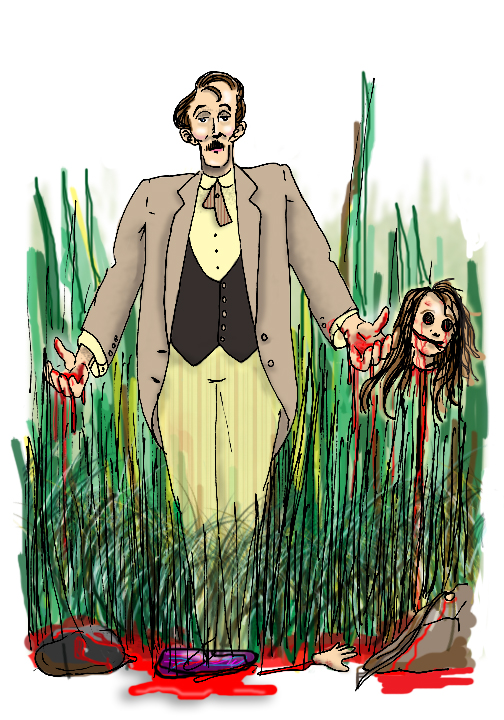
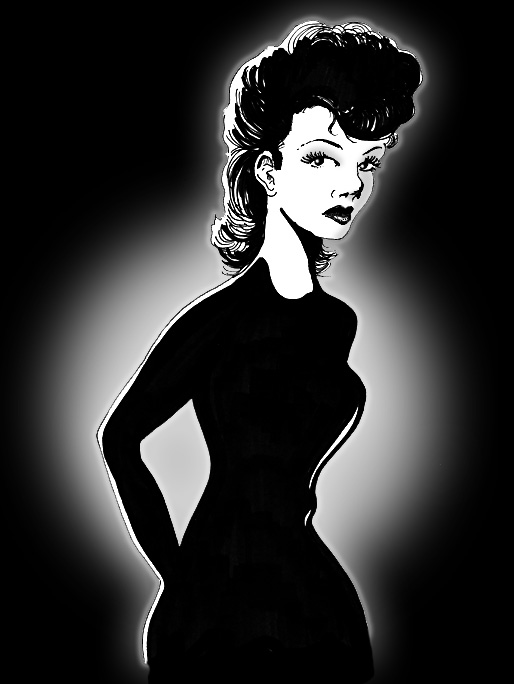
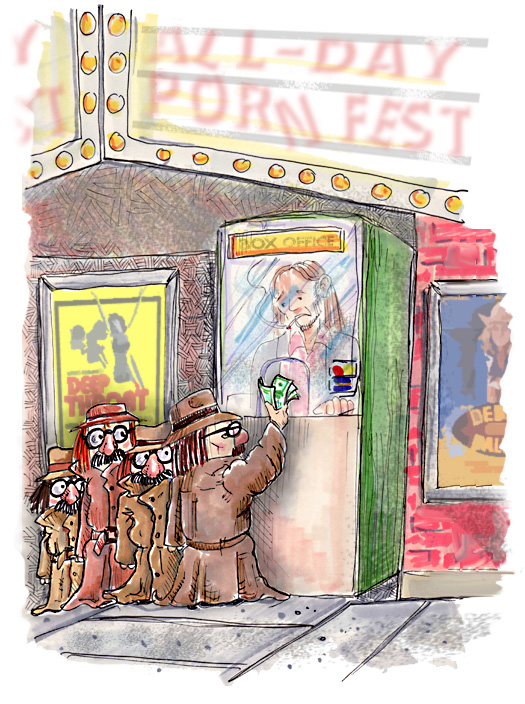
What if super hero costumes were just another option for everyday clothing available to everyone?
I guess super heroes would seem less super.
This week’s Illustration Friday suggested topic is “asleep”.

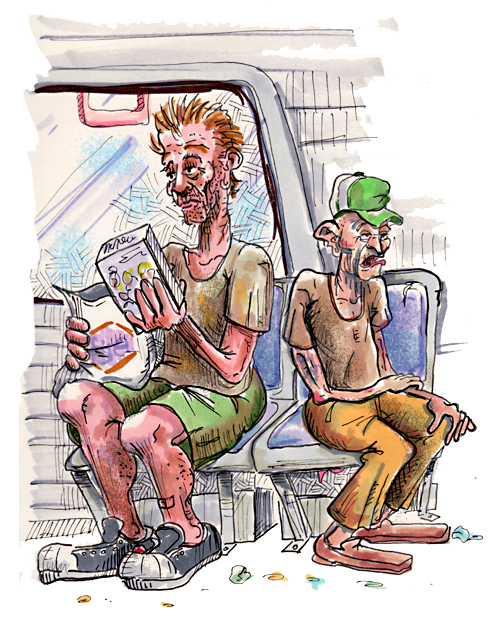
The morning began like every morning begins. My alarm went off at six and I smacked the snooze button every ten minutes until I kicked myself out of bed at 6:30. I showered, brushed my teeth and checked the mirror to see if I could get away without shaving for one more day. I exited the bathroom and headed downstairs. I flicked on our Keurig coffee maker and while the water was heating up I ran down the basement steps to grab a matching pair of socks out of the dryer. Back in the kitchen, I watched as hot water purged through my selection of K-Cup and emptied its brewed contents into a waiting mug. After adding a splash of half-and-half and one packet of Sweet ‘n Low, I carried my coffee and my socks back upstairs to watch the first half-hour of The Today Show while I got dressed. As the clock came up on 7:40 am, I snapped off the TV and grabbed my cellphone and canvas messenger bag. Mrs. Pincus was asleep, still snuggled under several blankets, when I kissed her and whispered “goodbye”. I crossed the hall to say “goodbye” to my son, curled up under his own blankets. Although they each uttered a closed-mouthed “hum”, they may or may not have heard my actual farewell as is the case most mornings. I scrambled down the stairs, grabbed my denim jacket and pulled it on as I hurried out the door. I ambled to the train station at the end of my block, less than a minute walk from my front door. Most mornings, I see my friend Randi and we ride the train together to our destination, as we both work in the same office building in center city Philadelphia. This particular morning, Randi was not on the platform. Too bad for me.
At 7:50, the train stops at Elkins Park and I get on. It then proceeds on to its scheduled station stops at Melrose Park, Fern Rock, Temple University and Market East until it reaches my journey’s end, Suburban Station. My entire morning commute covers five stations and lasts approximately twenty-five minutes. When I ride with Randi, we are engaged in conversation that lasts the whole trip, usually continuing until we reach the elevators in our building’s lobby. Since Randi was obviously relying on another route to work this morning, I turned to my dog-eared copy of Carson McCullers’ The Heart Is a Lonely Hunter to pass the time. I boarded the train, selected a seat at the rear of a relatively empty car, pulled the book from my bag and began to read. I had been struggling through Miss McCullers’ Southern Gothic debut, that it now had taken on the characteristics of a high-school reading assignment rather than a source of enjoyment. The train came to a stop at Melrose Park and, unable to focus, I returned the book to my bag and closed my eyes for a quick nap. Too bad for me.
Suddenly, my eyes shot open. The train was in a tunnel and the car lights were flickering. I was groggy and disoriented. Through bleary and unadjusted eyes, I looked at my watch and I saw it was 8:10. However, since I was in a tunnel, I didn’t know which 8:10 of the day it was. I couldn’t remember how long I had been asleep. The train pulled into Market East, the first underground station on my regular morning journey. My foggy and sleep-addled mind surmised that I was actually on my way home and it was 8:10 in the evening. I convinced myself that I must have traveled all the way to the end of my homecoming train’s line in Glenside where no train staff had awakened me and now I was on a return trip to center city. In a panic, I hopped off the train and frantically dialed my wife at home. As the phone rang, I was annoyed that she had not called, wondering why I had not arrived home at my usual 5:30. After four or five rings, my wife’s hushed voice whispered “Hello” from my cellphone’s speaker. I blurted out, “I’m okay! I’m on my way home. I must have fallen asleep on the train, came back from Glenside and now I’m at Market East. I’m getting on a train to Elkins Park and I’ll be home soon.” I rambled on so quickly, I didn’t allow my bewildered wife to get an interrupting word in. I paused and followed my rant with, “I can’t believe you didn’t call me! Didn’t you wonder where I was?”
She was silent, then she cleared her throat and said, “Well, I was asleep” and she trailed off.
“I’m three hours late coming home and you didn’t think to call me?” I was starting to get angry. “Well, forget it! I’ll be home soon.”
“What are you talking about? Why are you coming home?” She sounded as confused as I felt.
“I’m coming home!”, I said one last time and I pushed the “END” button on my phone as I approached the information desk at Market East to ask the time for the next train to Elkins Park.
My wife sat in our darkened bedroom and stared blankly at the phone. The first thought to cross her mind was “Well, a twenty-seven year marriage was a good run.” Knowing full well that I had just left the house twenty minutes earlier, she began to cry, assuming I had had a stroke while riding the train.
I boarded the Elkins Park-bound train and called home again. I lowered my voice, so as not to attract the attention of my fellow passengers to my slightly embarrassing situation. Once again, I explained the “fell asleep on the train” scenario to my emotional wife. During my explanation, the train emerged from the tunnel into the harsh sunlight of the morning. Suddenly, it hit me. I had been asleep for merely moments, on my way to work not hours, on my way home. It also occurred to me that Mrs. Pincus must have thought I had a stroke. “Um, I’ll call you right back.” I said to her and ended the call. All that had just transpired became instantly clear to me. I looked at my watch again and up to the sky and concluded the correct time of day. I jumped off the train at Temple University and I waited for the next train to my proper terminus. And I called my wife. Again.
Mrs. Pincus answered on the first ring. She hit me with a battery of inquiry. “Are you okay? Where are you? Did you have a stroke?” I assured her I was now fully aware of the situation and I was now headed in the right direction and I did not have a stroke. It took several repeat affirmations but I finally convinced her that I was, indeed, fine.
At last, I reached Suburban Station, ten minutes later than usual arrival. I walked my usual route to my office and as I snapped my office light on, two of my co-workers noted, “You’re later than usual.”
Too bad for me.

Eighteen year-old Leo Gorcey had just lost his job as a plumber’s apprentice. His father and younger brother, both successful vaudeville performers, persuaded Leo to try out for a part in the play Dead End. The Gorceys each got small roles as members of a street gang. When featured actor Charles Duncan left the production, Leo took over the more prominent role of “Spit,” the quarrelsome troublemaker.
In 1937, Dead End made the jump to the big screen and so began Leo’s twenty-year reign as one of the busiest actors in Hollywood. From 1937 to 1939, he starred in seven Dead End Kids films. From 1940 to 1945, he starred in twenty-one East Side Kids movies. In 1944, he had a recurring role in the Pabst Blue Ribbon Town radio show, starring Groucho Marx. (Leo was married five times, including five years to Kay Marvis, who went on to marry Groucho Marx after her divorce from Leo.)
In 1946, he starred in his first of forty-one Bowery Boys films, a franchise that lasted ten years. Leo, the self-appointed leader of the gang, became known for his consistent misuse of words and “get rich quick” schemes. Leo’s wiseguy character Terence Aloysius “Slip” Mahoney was the foil to rubber-faced Huntz Hall as the dim-witted “Sach.” Using the stage name “David Condon” to avoid claims of nepotism, Leo’s brother David was featured in minor roles in the series. Leo’s father, Bernard, played Louie owner of the sweet shop that served as the Bowery Boys’ home base. The series made no bones about its formula. They essentially waited for the more popular (and funnier) Abbott and Costello to make a picture and the Boys would copy the same premise several months later. Bud and Lou would make a film about ghosts and Leo and company would make a film set in a haunted house. An Abbott and Costello comic safari adventure would soon be followed by a “Bowery Boys in Africa” romp.
Leo made several non-Bowery Boys films in the 1940s. During production of Out of the Fog in 1941, Leo repeatedly blew simple dialog, much to the chagrin of director Anatole Litvak. Able to take no more, the frustrated Litvak screamed, “Gorcey, as an actor, you stink!” The always arrogant Leo shouted back, “Don’t you ever, ever scream at me like that again!,” and stormed off the set. A few hours later, he returned to do the scene, and again, blew the same line. Litvak walked over to Leo and quietly whispered in his ear, “Gorcey, as an actor, you still stink. And notice that, this time, I’m not shouting.”
In 1955, Bernard Gorcey was killed in a car accident. A distraught Leo found comfort in alcohol. He regularly showed up drunk for a day of filming. After an intoxicated rage on the set of the film Chasing Las Vegas, Leo was refused a pay raise and he quit the Bowery Boys. The series continued for seven more films without him. He appeared in a small role in the all-star comedy It’s a Mad, Mad, Mad Mad World in 1963. He had a brief reunion with Huntz Hall in the 1966 head-scratcher Second Fiddle to a Steel Guitar, his final role.
In 1967, art director Robert Fraser and designers Peter Blake and Jann Haworth created the Grammy-award winning cover for The Beatles’ Sgt. Pepper’s Lonely Hearts Club Band album. The cover photo showed the Fab Four in full military regalia surrounded by a collage of life-sized cut-outs of their heroes. Among the famous faces were Bowery Boys alumni Huntz Hall and Leo Gorcey. Hall, a favorite of John Lennon, was flattered to be included. Leo Gorcey, however, demanded payment of $400 for using his likeness. His face was edited out of the cover’s final version.
Years of heavy alcohol abuse took its toll on Leo and he died from liver failure one day before his 52nd birthday.

Summer 1979. My friends and I had just graduated from high school. We were all turning eighteen, the then-legal drinking age in New Jersey. Four of us ― Alan, Scott, Sam and ol’ Josh Pincus ― crossed the Pennsylvania border, headed for Atlantic City, for what would be a beer-soaked, debauchery-filled last hurrah before college.
Atlantic City was in a transitional period in the late 70s, caught somewhere between the “America’s Playground” time of the 60s and the new frontier of casino gambling. The grand old hotels on the famed Boardwalk, now dingy gray shadows of their glittery and esteemed heyday, were still out of our league. The more modern family motor inns were also a bit pricey for the likes of four high-schoolers with minimum wage jobs. The most monetarily-appealing option was one of the many rooming houses available just off the Boardwalk. An older couple, usually ones whose grown children had left the nest, would open up several rooms in their large pseudo-Victorian seaside homes for vacationers on a budget. My friends and I happily booked accommodations at Betty’s Rooms, one of the larger rooming houses still within the beach block.
Alan secured the use of his father’s sedan for several days and we all met at his house. Each of us packed a bag with the few items that eighteen year-olds feel they need for a four-day vacation – clothing in pairs (underwear, socks, shorts and a pair of T-shirts), possibly a toothbrush and enough cash to keep us in beer and junk food until our return home. We piled into the car and set off for our Jersey Coast destination. We decided to take the less-frequently used Betsy Ross Bridge instead of the more popular (and possibly traffic-jammed) Tacony-Palmyra Bridge as our cross-over into The Garden State. Finding ours being the only vehicle on the bridge in that early morning hour, Alan maneuvered the car across all eight lanes in a haphazard, zig-zaggy pattern. We all laughed hysterically, unfazed by the potential danger of his actions. Actually, we perceived it more of a foreshadowing of the unbridled revelry that lie ahead.
The ninety-minute drive ended at Betty’s Rooms, a massive, three-story single-family structure, now converted to a labyrinth of odd-shaped rooms and a mixed assemblage of guests, mostly families with an eye on thriftiness and teens like us. We were greeted by Crying Bob, Betty’s partner (possibly her husband – the jury is still out on that call), who managed the large off-street parking lot. Bob, with his white crew-cut and windburned skin, directed us to a designated parking space with a warbling voice sounding as though he was on the verge of tears. We popped the trunk and grabbed our bags. The four of us bounded up the front steps, across the porch and through the front door where we were met by Betty herself. Betty was a frail, wizened, leathery woman with gray hair pulled into a tight bun at the back of her head and a horse-choking wad of paper money tucked securely under her ubiquitous crocheted shawl between a frayed bra strap and a bony shoulder. With a crooked, twig-like finger, Betty pointed up the stairs and handed over the key to the largest room in the house. We recklessly tossed our luggage into the room that would be our home for the next few days. A room that Betty would freshen daily with mismatched towels and hospital-cornered beds. A room whose condition would invariably deteriorate and bring unspoken disgust to Betty’s old-fashioned sense of respect and decency (for a woman who runs a rooming house, that is).
Our first order of business (which would lead to our second order of business), was to stock up on beer, soda, snacks, beer and beer. We made our way to Chelsea Liquors on Atlantic Avenue. Despite its “stripper-sounding” name, Chelsea Liquors was a small, cramped establishment eager to cater to the alcoholic whims of anyone with a valid proof of age. As the oldest of the group, I made my first official legal purchase of beer (four six-packs), while my friends gathered bags of crunchy snacks and two-liter bottles of soda. (No cups needed as we were pretty friendly. What’s a few wipes of a bottle-top between friends?) We returned to our room at Betty’s and, with no regard for the early hour of the day, began drinking immediately. And that’s how we occupied ourselves for four days. It was a veritable race to see who would succumb to cirrhosis of the liver first. And a hotly competitive race it was. We paused briefly to visit the beach or to ogle girls or to eat a normal meal, but mostly, we drank. As the first evening fell, we staggered to the Boardwalk for some fresh air and, possibly, a stop at a bar. The Boardwalk was crowded with peers also experiencing a summertime epilogue to their high school days. Familiar and unfamiliar faces swam past our bleary eyes as we feigned enthusiasm in superficial conversations. We were more interested in pickling our senses. After a few more hours of additional intoxication, we wavered and pitched back to Betty’s to sleep off some of the ingredients of the next morning’s impending hangover.
Before conking out for the night, we indulged in some chips and soda, consciously steering clear of any more alcohol. The cellophane bags were passed around as well as the plastic jug of Coke. I was seated on the edge of one bed and I clapped my hands to get the attention of Sam who was seated at a small table several feet away. I waved my palms towards me in the universal gesture of “send that soda bottle this way”. Sam cocked his arm and hefted the two-liter container up in the manner of an NFL quarterback facing the oncoming defensive line. He lightly bounced the nearly-full bottle and suddenly rocketed it in my direction. In the same instant, Scott decided he had had enough for one evening. He reached up and yanked the cord on the single light fixture on the ceiling ― immersing the room in total darkness. I sat in the obscuring emptiness with my arms outstretched, waiting for the approaching carbonated missile that Sam had launched a second earlier. My wait was minimal as I was immediately slammed in the head by the plastic decanter and sent backwards off the bed. The audible “WHAP” confirmed a direct hit to the three other occupants of the room. In a roar of laughter, someone snapped the light back on to find me laid out on the floor, a large welt already blooming on my forehead. The merriment of my pals faded away at the same rate as my consciousness.
The next morning, my hangover arrived right on schedule. But the bulletproof mentality of an eighteen year-old male is a tough thing to alter. I popped a few Excedrin and minutes later I felt I was ready to accompany my friends to breakfast. Everyone knows that there’s nothing better to fight a hangover than a couple of aspirin and a stack of pancakes.
The next three days took a course similar to Day One, except I didn’t take anymore Coke bottles to the noggin. On Day Four, we disposed of the many beer cans and swept the pretzel crumbs off the beds to leave the room as presentable as possible. We loaded our bags into Alan’s car and started for home, waving to Betty and Crying Bob as we exited the parking lot.
Summer was over. Life awaited us.

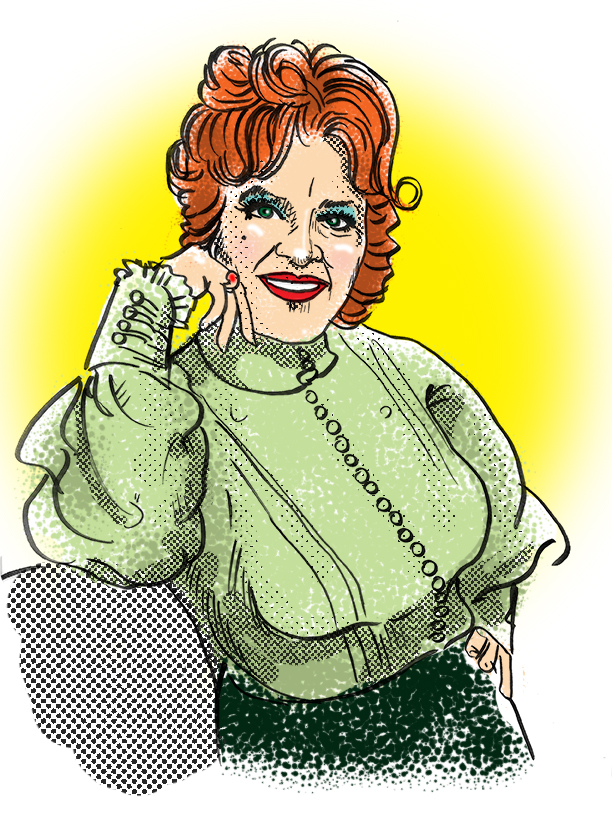
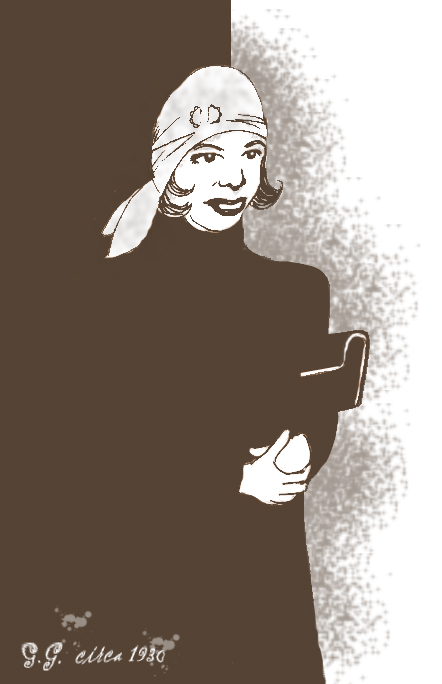
While visiting her aunt in New York City, 16 year-old Peggy Shannon (then, just little Winona Sammon from Pine Bluff, Arkansas) was hired for the Ziegfeld Follies. She was spotted on Broadway by a production head from Paramount Pictures and was offered a contract. Whisked off to Hollywood, she was touted as the next “It” girl, the title given to actress Clara Bow. Bow had suffered a nervous breakdown and Peggy was her replacement in The Secret Call — all within two days of her Hollywood arrival.
So began Peggy’s whirlwind career — working sixteen hour days. Wrapping up one movie and moving immediately to the next. Sometimes, an exhausted Peggy worked on two films simultaneously. Publicity appearances kept Peggy busy as well and she became a fashion icon in the 30s, wearing styles months before they became popular. The work load became more demanding and Peggy turned to alcohol to help cope. Of course, it had the opposite effect. Peggy gained a reputation of being difficult to work with. The acting offers lessened as her drinking increased. She was replaced after a short run in a Broadway show due to “a tooth ailment”. This was a thinly-veiled cover-up for Peggy’s intensified alcoholism.
On May 11, 1941, Peggy’s husband, cameraman Albert Roberts, arrived home after a fishing trip to find 34-year old Peggy dead in their Hollywood apartment. She was seated at the kitchen table with a cigarette in her mouth and an empty glass in her hand. She had been dead for twelve hours. A later autopsy concluded she had died of a heart attack brought on by advanced liver disease. Three weeks after Peggy’s death, Albert shot himself while sitting in the same chair in which he found Peggy. His suicide note read: “I am very much in love with my wife, Peggy Shannon. In this spot she died, so in reverence to her, you will find me in the same spot.”
Ironically, Peggy and Albert are buried in two different cemeteries — six miles apart.

Pete Ham formed his first band at the age of 14. The band evolved over the next few years, experiencing personnel changes until they gained local notoriety as The Iveys in 1965. The Iveys caught the attention of Mal Evans, personal assistant to the Beatles, and they were soon signed to Apple Records.
Changing their name to Badfinger, Pete and his bandmates were recruited to provide the soundtrack to the film The Magic Christian in 1970. They recorded some originals but were reluctant to release a Paul McCartney composition as their first single. After some “convincing” from Apple management, “Come and Get It” became Badfinger’s first international Top 10 single. They followed that up with three more consecutive Top 10 hits. However, Pete’s biggest success was as a songwriter when Harry Nilsson recorded his song (co-written with bandmate Tom Evans) “Without You” in 1972, a song that was eventually recorded by hundreds of different singers. Badfinger exerted a lot of effort trying to shake the obvious Beatles comparisons. After recording four popular albums and making a mark as a defining band in the “power pop” genre, they ended their relationship with the Beatles and Apple Records when their manager, Stan Polley, signed them to a multi-record/multi-million dollar deal with Warner Brothers.
The commitment to Warners was grueling and the subsequent album releases were unsuccessful. Warner Brothers became leery of the lack of communication from Polley over escrow account information regarding cash advances. Polley had been skimming funds from Badfinger and other bands he represented. Additionally, Warners was not satisfied with the quality of the songs for a proposed album. The label halted promotion for Badfinger’s current album, “Wish You Were Here”, and tour. The band’s career was halted. Pete and his pregnant girlfriend had moved into a new home and his funds were beginning to dwindle. The band’s manager Polley had set up several corporations that dictated distribution of salary and publishing rights, touring decisions and song royalties, all with Polley as the decision maker. Pete made countless attempts to contact Polley with no luck.
In April 1975, Pete and bandmate collaborator Tom Evans went out to a pub to discuss their financial situation. Tom dropped Pete off at home around 3 in the morning. Pete wrote a note addressed to his girlfriend and her son saying, “I love you Anne. I love you Blair. I will not be allowed to love and trust everybody. This is better. P.S. Stan Polley is a soulless bastard. I will take him with me.” Pete then hanged himself in his garage studio, three days before his 28th birthday. Pete’s daughter was born a month later.
In November 1983, Tom Evans had a heated argument with Badfinger bandmate Joey Molland over royalties from the song “Without You” (a song in which Molland had no input). The following morning, Tom hanged himself from a willow tree in his yard. Although he officially left no note, it was rumored that a message was left for Molland simply stating “You’re next”. Tom’s widow maintained that he never got over Pete Ham’s suicide.
This week’s Illustration Friday challenge word is “safari”.

Every kid grows up listening to novelty songs and every generation had their favorites. From the early 20th century’s “K-K-K-Katy” and “Yes We Have No Bananas” to the wildly popular “Der Fuher’s Face” during World War II, novelty songs have always been crowd-pleasers.
When I was in high school, I loyally tuned in to the syndicated Dr. Demento Show every Sunday night on local station WYSP. Upon hearing the opening strains of The Roto Rooter Good Time Christmas Band’s instrumental version of “Pico and Sepulveda”, I knew I was in store for two hours jammed with the strangest, wackiest and coolest novelty songs hand-picked by the good Doctor himself. Dr. Demento’s (aka Barry Hansen) playlist spanned several decades. It was on the Dr. Demento Show that I first heard the classics “Shaving Cream” and “Fish Heads”. He played Allan Sherman songs that I had listened to as a kid. He played Frank Zappa songs that may have been considered novelties by the masses, but not by Frank. Dr. Demento even played homemade tapes tapes some kid with an accodorian sent him. That kid, Weird Al Yankovic, made a career out of the novelty genre.
I had some favorites that I would wait for every week, hoping to hear and laugh along with them again. One was Jerry Samuels’ “I Owe A Lot (to Iowa Pot)”. This folk guitar ditty was a vast departure from Jerry’s previous novelty effort. In the middle 60s, Jerry recorded the international novelty hit “They’re Coming to Take Me Away” under the pseudonym Napoleon XIV. I was also partial to “Friendly Neighborhood Narco Agent” by Jef Jaisun. Jef’s fun little ode to getting busted was actually a nightmare for the budding rockstar. Warner Brothers Records gave poor Jef the run-around for years, denying him any royalties. After years of futile attempts for payment, Jef’s career headed in another direction and he became a fairly successful photographer until he passed away in 2006. Folk singer Peter Alsop had a minor hit with Larry Groce’s “Junk Food Junkie”. On his tenth album, Peter recorded “Let’s Go On Safari into My Sister’s Nose” a song, thirty-five years later, I still can’t get out of my head. Peter still records today, but here are the lyrics to his opus about his sibling’s snot:
Lets go on safari\Into my sisters nose,\Ill bet we find some treasure\Like we found between her toes
Be careful that you dont get lost\And tangled-up in hair\I hope that its still open\Cause her fingers always there!
Leave your gas mask in the car\My sisters nose wont smell\But bring along a pack\You might find something you can sell!
Sometimes a loose stalactite\Gives no warning when it falls\So walk only on the hard part\And please dont touch the walls
Or well never get you out of there\Youll slide right out of sight\Although my sisters nose is nice\Its a scary place at night!
So lets go on safari\Into my sisters nose\The Northwest Passage might be open\Usually its closed!
Dont worry about the monsters\That are lurking up in there\If you get one on you, do like her\And wipe it on Moms chair!
Shell blow away our troubles\If we simply ask her, Please?\My sister loves me very much\Because I never tease!!
Yep, it’s still funny.

In the late 70s, Glenn Shadix left his Bessemer, Alabama roots behind him and headed to New York City with dreams of a career in show business. While working as a production assistant at the St. James Theater in Manhattan, Glenn began a friendship with legendary playwright Tennessee Williams. Young Glenn spent long hours at the Èlysèe Hotel’s Monkey Bar listening as Williams spun cautionary tales of the ups and downs of the entertainment industry.
Soon, Glenn headed west to Hollywood and was cast in a small role in the 1981 remake of The Postman Always Rings Twice. While performing the cross-dressing role of Gertrude Stein in a Los Angeles stage production, he caught the attention of director Tim Burton. He co-starred in 1988’s Beetlejuice as Otho the uppity interior designer, the first of many collaborations with Burton. The following year, Glenn took the memorable part of Father Ripper in the black comedy Heathers. Over the next twenty-plus years, he took dozens of small roles in movies and television , sharing the screen with diverse stars like Sylvester Stallone, Faye Dunaway, Jerry Seinfeld, Mark Wahlberg and countless others. He also lent his voice to many animated characters in Batman, Justice League and the Tim Burton cult classic The Nightmare Before Christmas as the head-spinning Mayor.
In 2007, he returned to his native Bessemer after thirty years in Los Angeles and purchased a Victorian era home. The house was totally destroyed by a fire in 2008, along with all of Glenn’s possessions.
Now living in a condominium in Birmingham. Alabama, Glenn was experiencing declining heath and mobility problems and was confined to a wheelchair. On September 7, 2010, he fell from his wheelchair and died as a result of blunt trauma to his head. He was 58 years old.

Michael Dunn wasn’t going let a little thing like dwarfism stand in the way of his career aspirations. A veritable child prodigy (reading at one; spelling bee champ at 13), Michael also began to develop his entertainment skills as a youngster. He would often gather small audiences on street corners and give an impromptu singing performance.
He continued singing and performing when he entered he University of Miami in 1953. He appeared in campus talent shows and participated in the football cheerleading squad. After graduation, he held a variety of jobs switchboard operator, hotel detective (“Who’d ever suspect me of being a detective?”, he’d joke) and eventually, nightclub singer. He took small parts in dramas on Broadway, including a Tony Award nominated performance in The Ballad of the Sad Cafe. He followed that with an Oscar nominated performance in the 1965 film Ship of Fools. In the middle 60s, he teamed up with actress Phoebe Dorin and the two created a popular musical-comedy act known plainly as “Michael Dunn and Phoebe”. This led to the pair being cast in the popular action series Wild Wild West. Michael made ten appearances as the evil Dr. Miguelito Loveless, a mad scientist who schemed to capture and rid the world of his nemeses, Secret Service agents James West and Artemus Gordon. Loveless threatened with elaborate devices, forerunners to the future “steampunk” genre. Phoebe played Dr. Loveless’s devoted assistant, Antoinette.
As his popularity grew, he was in demand and took guest roles in other shows like Voyage to the Bottom of the Sea, Bonanza and the pilot episode of the spy spoof Get Smart. He gave a memorable performance as Alexander in the “Plato’s Stepchildren” episode of Star Trek, notable for the first presentation of an inter-racial kiss on television. Despite his small stature, he gained a reputation as a “ladies’ man”. He attended and was welcomed at many Hollywood social gatherings. A popular anecdote (though most likely an untrue one) relates a meeting between Michael Dunn and tall, statuesque Julie Newmar, known for her campy portrayal of Catwoman on the Batman series. Michael allegedly propositioned Miss Newmar at a party, saying, “I would love to ravage you.” Julie, who stood nearly three feet taller than the diminutive Michael, quickly answered, “If you do… and I find out…”
In 1973, Michael was in London to co-star with Elizabeth Taylor in The Abdication when he died in his sleep in the Cadogan Hotel. Autopsy reports had shown that although the left side of his heart was normal, the right side was hypertrophied to twice its normal thickness. Lifelong heath issues were blamed as contributing factors as well. Michael was 38 years old.

During his two and a half seasons on the Cincinnati Reds, Willard Hershberger primarily served as the back-up catcher for Hall-of-Famer Ernie Lombardi. Though not an everyday player, he had a .316 lifetime batting average and even had two at-bats with an RBI in the 1939 World Series. However, Willard holds a singular, albeit dubious, distinction among ballplayers, although there is no plaque for him in the Baseball Hall of Fame. He is the only active Major leaguer to commit suicide during the season.
In July 1940, Ernie Lombardi injured a finger and Willard was called upon to fill in behind the plate. The mighty Reds blew a late-game lead to the lowly New York Giants and lost 5-4. Afterwards, Willard commented, “If Ernie was catching, we would have won. It’s all my fault.” Several days later, The Reds played a scheduled double header against the poor seventh place Boston Bees. Willard was depressed and sat out the first game, letting third-stringer Bill Baker serve as backstop. The Reds lost the first game as Willard watched from the bench. Reds manager Bill McKechnie took Willard to his office to speak privately. Willard was still blaming himself for the team’s poor performance and related the story of discovering the body after his father’s suicide by gunshot. McKechnie tried to comfort the catcher when he threaten to repeat his father’s actions. Soon, a calmer Willard exited the manager’s office and readied himself for game two against the Bees. The Reds lost the second game 4-3. Willard went hitless in five at-bats. He sunk deeper into depression. He returned to his room at Boston’s Copley Plaza Hotel.
The next morning, Gabe Paul, the Reds’ travelling secretary, called Willard at the hotel and told him to take the day off. He was not scheduled to play and he didn’t need to come to the ballpark. Willard said he would be there anyway. When Willard had not arrived for pregame festivities, McKechnie sent Paul to investigate. The hotel manager admitted Paul to Willard’s room where he discovered Willard dead in the bathtub. The 30 year-old catcher had slashed his own throat with a razor.
McKechnie delivered the tragic news to Willard’s teammates, adding that they pursue the World Series in memory of “Hershie”. At the end of the 1940 season, the Reds defeated the Detroit Tigers in seven games to win the World Series. The Reds retired Willard’s uniform number “5” for two years, reactivating it in 1942. (The number was retired permanently in 1986 to honor Hall of Fame catcher Johnny Bench.)
As an odd footnote, Ernie Lombardi became depressed after his retirement in 1947. In 1953, he attempted suicide in a manner similar to that of Willard Hershberger. He begged to be allowed to die. After a brief hospital stay, Ernie recovered from his self-inflicted injury and received treatment for depression. He passed away in 1977.