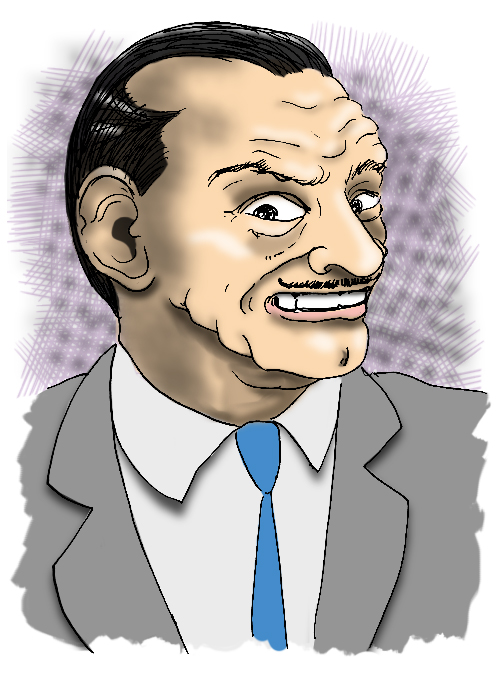
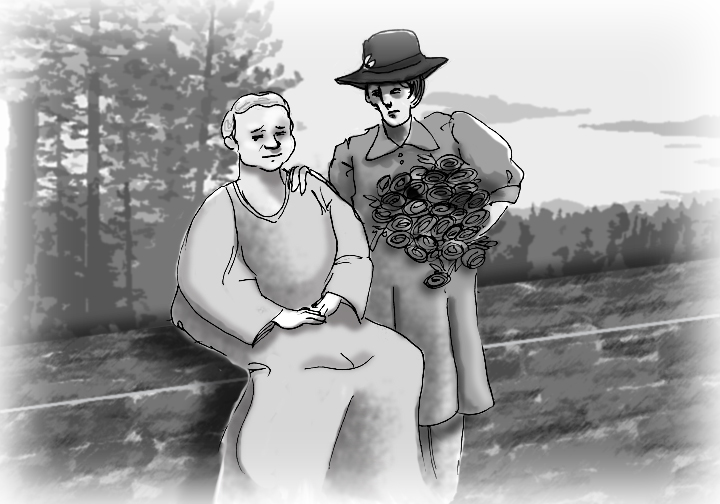
from my sketchbook: bo díaz

Have we got what it takes to advance? Did we peak too soon?
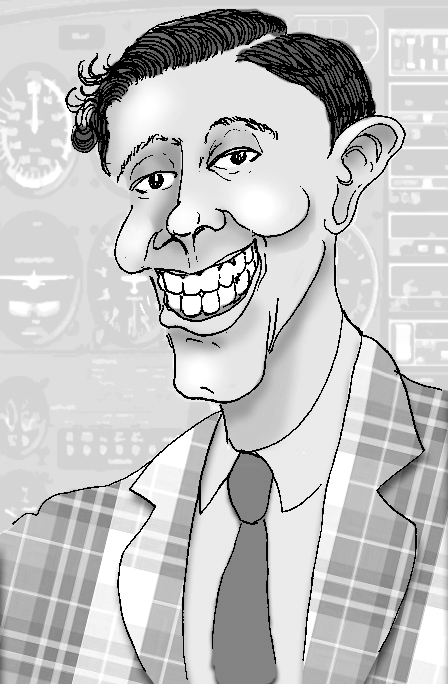
After bouncing between the minor leagues and the bigs, Bo Díaz was traded to the Philadelphia Phillies in the ’81 off-season. With the departure of All-Star catcher Bob Boone, Bo became the Phillies starting backstop. His game-calling skills helped Phils ace Steve Carlton become the league’s only twenty game winner in 1982. Bo finished the season with offensive and defensive stats ranking him second among National League catchers, behind the Expos’ Gary Carter.

Early in the ’83 season, Bo accomplished a feat only performed by eleven other players in baseball history. With the Phillies down 9-6 in the bottom of the ninth with two outs, Bo hit a game-winning grand slam. He ended the season catching Steve Carlton’s 300th career win. In the final week of the 1983 regular season, Bo hit .360 (including a game in which he went 5 for 5), helping the Phillies to the post-season. Despite losing their World Series bid to the Baltimore Orioles, Bo was the Phillies’ leading hitter.

Knee problems and two surgeries later, Bo was traded to the Cincinnati Reds where, once again he became the starting catcher. In one game against San Francisco, Bo caught opposing second baseman Robby Thompson stealing four times, a first-time occurrence in Major League history.

Bo continued for as long as he could, but several more knee surgeries and a shoulder injury forced him to retire on July 9, 1989 at the age of 36.

For nearly twenty years, Bo played winter baseball in his native Venezuela for the Leones del Caracas.  In 1973, 20-year-old Bo caught a no-hitter thrown by pitcher Urbano Lugo. Thirteen years later, he was behind the plate for a no-hitter hurled by Lugo’s son, Urbano Jr.

In November 1990, Bo was at his home in Caracas, adjusting the position of a large satillite dish on the roof. The dish accidentally tipped over and Bo was crushed to death beneath its weight.

Comments

comments

from my sketchbook: frank olson

one pill makes you larger and one pill makes you small and ones that Mother gives you don't do anything at all
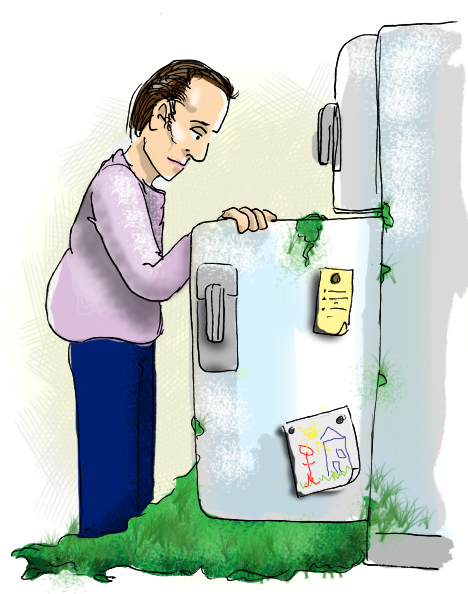
Senior U.S. microbiologist Frank Olson was a scientist at a lab in Fort Detrick, Maryland. Here, Frank worked for the CIA researching and conducting experiments with assassination techniques, biological warfare, terminal interrogations, and LSD mind-control. He was aware of highly-confidential information and he was uncomfortable with that knowledge. On Monday, November 23, 1953, Frank told his boss, Dr. Sidney Gottlieb, he wished to resign his position. On Saturday, November 28, 1953, Frank fell to his death from a tenth-floor window of the Statler Hotel in New York City. The official story was that Frank was unknowingly given LSD as part of a mind-control experiment. The drug caused uncontrollable paranoia and Frank either accidentally fell or purposely jumped from the window.

For 22 years, that was the “truth”, but Frank’s family wasn’t buying it.

Frank’s son, Eric, did extensive investigation on his own and, in 1994, Frank’s exhumed remains were reexamined. A number of cuts and abrasions were found along with a large hematoma on the side of Frank’s head and another large injury to Frank’s chest. The family threatened murder charges against the CIA and federal government. The government responded with an apology for their part in drugging Frank without his knowledge and an out-of-court settlement of $750,000.

Comments

comments

from my sketchbook: jesse belvin

Mr. Easy
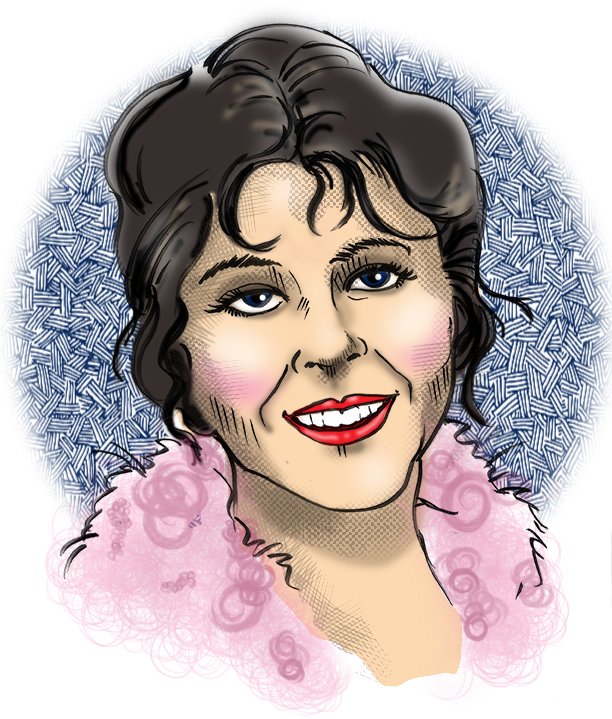
Even as a youngster, Jesse Belvin was interested in music. He joined several bands as a vocalist early in the 1950s. Even an brief stint in the army didn’t hinder Jesse’s songwriting. His composition “Earth Angel” was a hit for The Penguins in 1955 and became one of the first songs to successfully make the cross over from the segregated Rhythm and Blues chart to the mainstream Pop chart.

In 1956, Jesse signed a contract with Modern Records, although he continued to record under pseudonyms for other labels. He co-wrote and recorded “Goodnight My Love”, on which the piano parts were played by an 11-year-old Barry White. The song reached #7 on the R&B chart and was used as the closing theme for Alan Freed’s popular radio broadcasts. In 1959, Jesse recorded an album of songs with a more sophisticated style, influenced by Nat “King” Cole. (The album was later cited as itself being influential for Sam Cooke.)

In February 1960, Jesse (along with Sam Cooke and Jackie Wilson) performed in the first concert played before an integrated audience in Little Rock, Arkansas. The show was protested and halted twice by whites yelling racial slurs at the black performers and attendees. Community members interrupted and screamed for the white teenagers to go home. The performers even received several death threats prior to the concert. After the show, Jesse and his wife were killed in a head-on car collision. It is speculated that the vehicle was tampered with, but no proof has ever surfaced. Jesse was 27 years-old.

Comments

comments

IF: popularity

The new Illustration Friday suggestion for inspiration is “popularity”.
I'm never last picked/I got a cheerleader chick
“Popularity, I have always thought, may aptly be compared to a coquette – the more you woo her, the more apt is she to elude your embrace.”
— John Tyler, Tenth President of the United States

John Tyler knew of what he spoke, as popularity certainly eluded him. Tyler was the first person to succeed to the office of president following the death of a predecessor. When newly-elected William Henry Harrison stood before the crowd and delivered the longest inaugural address in American history, he refused to wear an overcoat or hat, despite the snow and cold rain that fell on Washington, DC. He wanted to show the country the same strength he displayed as a military general. Instead, he came down with pneumonia and died one month later. As per the line of succession as determined by The Constitution, John Tyler was sworn in as the new president of the United States.

Tyler was expected to carry on with Harrison’s ideals, but when he opposed his party’s platforms and vetoed several important proposals, the majority of his Cabinet resigned. Soon after, The Whigs (his political party), dubbing Tyler “His Accidency,” kicked him out of the party.

After a deficit of the federal government under Tyler’s leadership was projected, Tyler proposed to override the Compromise Tariff of 1833 and raise tariffs 20 percent. The defiant Whig Congress would not raise tariffs and Tyler was vocal in calling the act “unconstitutional”.  The House of Representatives initiated the first impeachment proceedings against a president in American history, spearheaded by Whig enemy Andrew Jackson.

Tyler’s pet project for the bulk of his term was the annexation of Texas, a proposal opposed by Democrat leaders Andrew Jackson and Martin Van Buren because they did not think the Union needed another Southern state. Tyler campaigned heavily for his cause, even forsaking his re-election. As his term came to a close, Tyler gave his support to an obscure, but pro-expansion, Democratic candidate named James Polk, who followed through with Tyler’s plan. Martin Van Buren didn’t receive enough support to make the ballot in the 1844 election. Polk defeated Tyler’s former Whig colleague Henry Clay  by a narrow margin and Texas became a state in 1845.

Tyler retired to his Virginia plantation and, in the last years of his life, supported the Confederate states in the Civil War. As a result, his death was the only one in presidential history not to be officially mourned in Washington. Historian Robert Seager II wrote, “Had William Henry Harrison lived, John Tyler would undoubtedly have been as obscure as any Vice-President in American history.”

John Tyler had an unusual method of wooing that coquette.

Comments

comments

from my sketchbook: josh powell

I am the eater of worlds, and of children.
On December 7, 2009 at 12:30 am, Josh Powell packed up his two young sons and set out for an impromptu camping trip in a remote area near the family’s Salt Lake City home. Susan Powell, Josh’s 28-year-old wife and mother of the boys, was still asleep in bed. Josh returned home with the boys sixteen hours later and Susan was not there. Her purse and cellphone were in the house. Her car was parked out front. There was a damp spot on a piece of carpet in the home, but otherwise, she was gone without a trace. A police investigation revealed little. Josh and his four-year-old son were interviewed and the camping story was confirmed.

And that was the story Josh stuck with for two years.

Josh became a “person of interest” in connection with Susan’s disappearance, but he was never charged. He repeatedly proclaimed his innocence and denied any involvement. He believed she had run off with another man, suggesting a likely candidate was Salt Lake Tribune  journalist Steven Koecher, who mysteriously disappeared the same week as Susan. Susan’s parents countered this theory as “impossible”, explaining her intense devotion to her children. Josh’s interviews grew less frequent and his cooperation with investigating authorities lessened as well.

In January 2010, Josh moved into his father’s home in Puyallup, Washington. Police in Utah continued to search for Susan, following all leads and all of them leading nowhere. One day in daycare, Josh’s son Braden drew a picture of a van with three people in it, explaining to his teacher that “Mommy is in the trunk”.

In September 2011, Josh’s father Steven was arrested on multiple charges of voyeurism and child pornography. Police produced evidence of Steven having secretly videotaped numerous young women, including his daughter-in-law Susan Powell. Several explicit photographs of Susan were discovered in a search of Steven’s personal items. After his arrest, Steven told of how his daughter-in-law came on to him and how he happily obliged her offer. With questions about the level of safety the home provided, Susan’s parents were awarded temporary custody of her sons while an investigation into Josh’s possible involvement in the child pornography took place. Josh still proclaimed innocence and denied any knowledge of or participation in his father’s interests. He maintained that he was a good and fit father.

In January 2012, Josh was ordered to undergo psycho-sexual analysis and custody of his children was awarded to his in-laws in the interim. Josh would be permitted supervised visits with his children. A few days before the weekend of the most recent scheduled visit, Josh donated his sons’ toys to Goodwill and withdrew seven thousand dollars from his bank account. On Sunday February 5, a Childrens’ Services worker arrived at Josh’s house to drop off the children . Little Charlie and Braden entered the home and Josh slammed the door in the agency representative’s face. Before the door shut, she got a whiff of the unmistakable scent of gasoline. Moments later, as she frantically called 911, Josh’s house exploded in flames.

An investigation of the charred rubble left from the fire revealed two five-gallon containers of gasoline and a hatchet near the three bodies. It is believed that Josh tried to kill his sons before setting the house on fire, but was overcome by smoke. The two boys had numerous wounds on their heads and necks, although the official cause of death for all three was “smoke inhalation”.

Twenty minutes before his children arrived, Josh — the man who had once told ABC News “I would never harm my children” — left a voicemail message for his church’s pastor and an email to his attorney, explaining that he could not live without his boys. He also detailed where his money could be found and gave instructions to turn off his home’s utilities. He ended the call by saying “I’m sorry to everyone I’ve hurt.”

Comments

comments

from my sketchbook: rusty hamer

Uncle Tonoose is coming!

For eleven years, Rusty Hamer traded barbs with showbiz heavyweight Danny Thomas on the popular sitcom Make Room For Daddy.  Most often, Rusty got bigger laughs than his veteran co-star. For a kid, his comedic timing was impeccable and rivaled that of actors with many times his experience. Shooting had to be halted quite often of the set, as Danny was constantly reduced to uncontrollable laughter by the deadpan delivery of his young castmate. Rusty’s popularity led to guest appearances on variety shows and even a cross-over episode on The Lucy-Desi Comedy Hour  reprising his role of “Rusty Williams”.

After 325 episodes, Danny decided to end the show, as he had grown tired of the role and wished to pursue other projects. Rusty appeared in a few installments of The Joey Bishop Show  (a spin-off of Make Room for Daddy ) and later the ill-fated Make Room for Grand Daddy,  but he soon discovered difficulty in landing more acting jobs.

Rusty had entered show business at age 6 and spent his entire childhood on a sound stage. He was tutored on-set and once Make Room for Daddy  ended, he found that he was not prepared and that he lacked skills to function in a non-show business lifestyle. He bounced around menial labor jobs. He worked briefly on an off-shore oil rig, as a messenger and eventually, as a short order cook in his brother’s DeRidder, Louisiana cafe.

On January 18, 1990, 42-year-old Rusty, depressed and living in poverty in a Louisiana trailer park, shot himself in the head.

Comments

comments

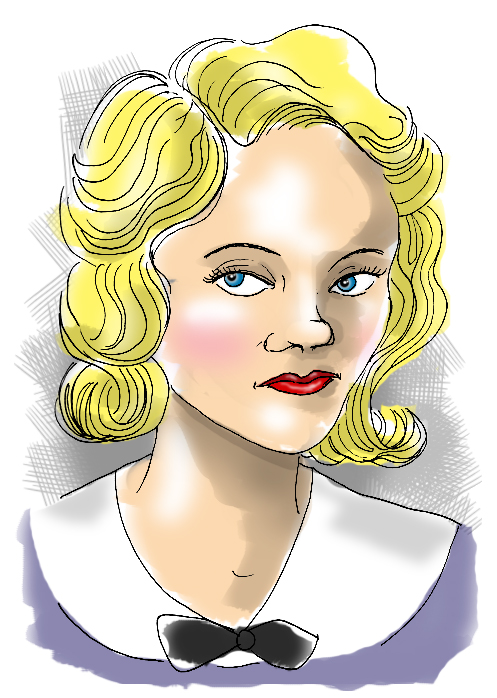
from my sketchbook: debbie boostrom

everybody run! the homecoming queen's got a gun!
Twenty-three year-old Debbie Boostrom auditioned, alongside hundreds of anxious and hopeful young ladies, to become the coveted 25th Anniversary Playboy Playmate. Debbie was unsuccessful, but a little over a year later, she was presented in the magazine as Miss August 1981. In the following months, she appeared in several Playboy videos and participated in some of Hugh Hefner’s celebrity events at the Playboy mansion. Eventually, with her brief, minimal fame fading, Debbie married and settled in Kansas with her husband. When her marriage failed, Debbie returned to her Florida roots and started a small business designing jewelry. Although she acted in a handful of infomercials, for the most part, she stayed out of the public eye.

On July 29, 2008, Debbie, now 53 and diagnosed with terminal breast cancer, put a gun to her head and shot herself.

(HERE’S my original sketch of Debbie.)

Comments

comments