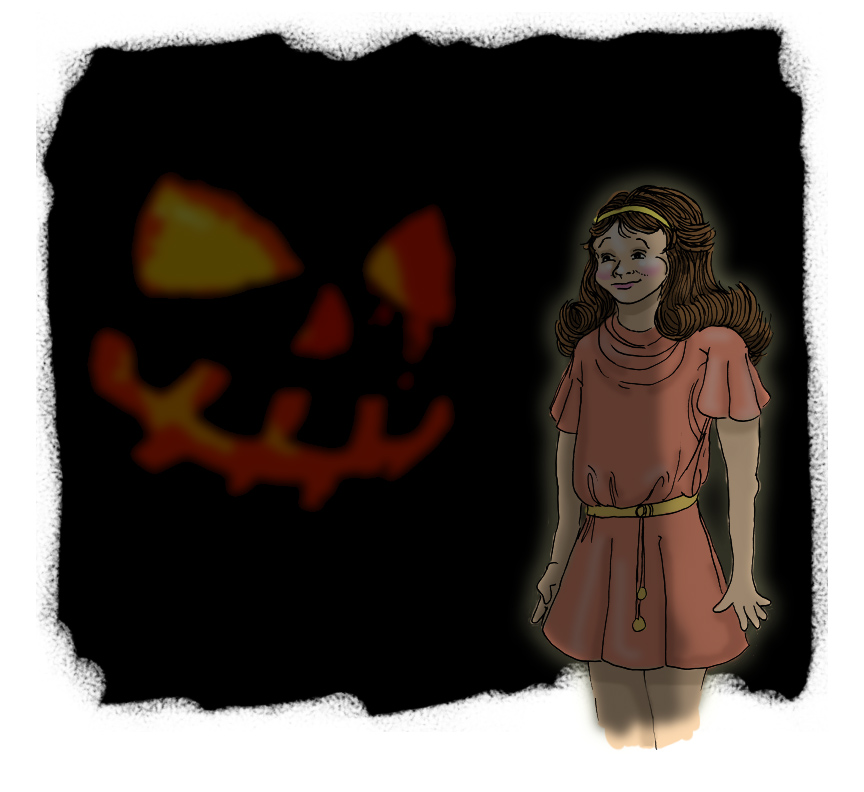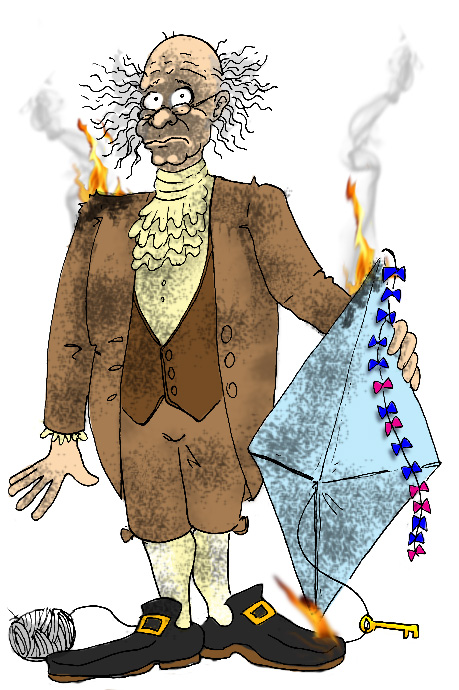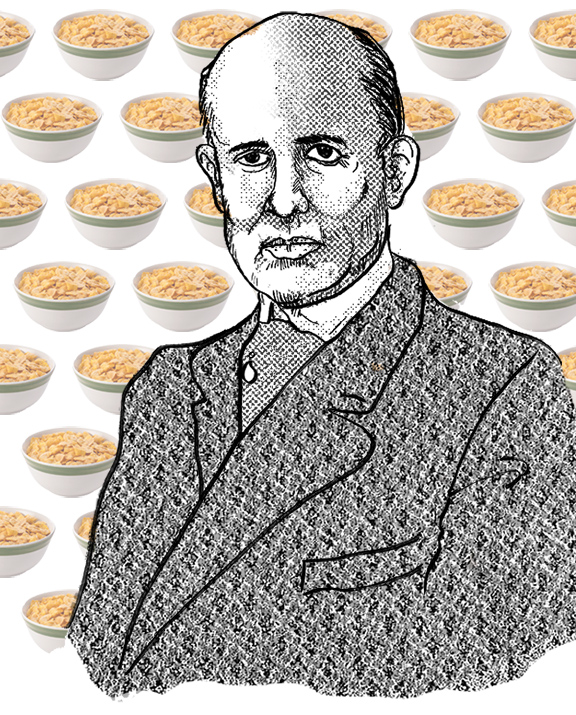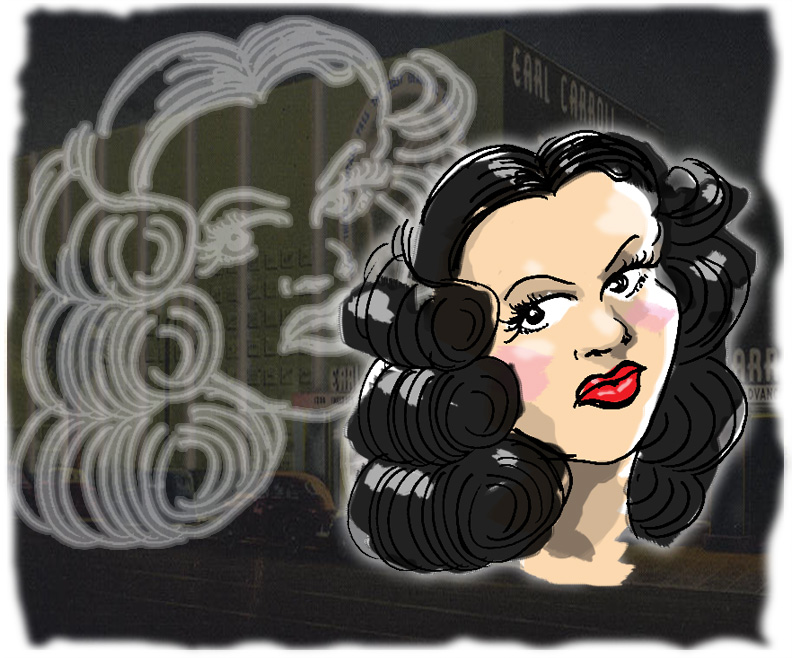
from my sketchbook: rebecca coriam

I'm wishing/For the one I love/To find me/Today
At quarter to six on the morning of March 22, 2011, Rebecca Coriam picked up the phone in a hallway of the Disney cruise ship “Wonder”, dialed an on-board number and, after speaking for a minute or two, began to cry. A fellow crew member, passing her on his way to who-knows-where, stopped to ask Rebecca if she was okay. She nodded in the affirmative and he continued on his way.

That was the last time Rebecca, or “Bex” as she was known to family and friends, was seen.

When Rebecca failed to show up for her morning shift as a youth activities counselor, Disney Cruise Line executives contacted her parents at their northwestern England home to say she was missing. Mr. and Mrs. Coriam were invited to Los Angeles to meet the ship when it made port at San Pedro. They were met by Superintendent Paul Rolle of the Royal Bahamas Police Force. Because the Disney Wonder is registered in The Bahamas, investigations of this nature fall under Bahamanian jurisdiction. The officer informed Rebecca’s parents that police had little to go on.

 Upon arrival in the Los Angeles suburb of San Pedro, Rebecca’s distraught parents hoped to talk to crew and passengers but, instead were greeted by an empty ship as preparations for the next scheduled cruise had already begun. They were able to talk with some crew members, but received only minimal information. They gathered Rebecca’s belongings – photos, clothing, rosary beads – and watched the short surveillance video of Rebecca on the phone in the hallway. They were given cold, vague answers to their numerous questions. The ship’s captain told them a pair of flip-flops, that may have belonged to their 24-year-old daughter, had been found in a private “crew only” area, but they couldn’t be sure. Soon, the bewildered and distressed couple found themselves standing on the San Pedro dock as the ship — emblazoned with the universally-recognized “mouse ears” — sailed off on another journey, leaving them to wonder if they’d see their dear Bex again or if anyone cared if they ever would.

Comments

comments

IF: separated

If one guys colors and the others don't mix/They're gonna bash it up, bash it up, bash it up, bash it up...

My mother’s parents ran an antique store not far from their home at Fourth and Spruce Streets in Philadelphia. In the summer months, they operated a bath house on the boardwalk in the seaside resort of Wildwood, New Jersey. In addition, eighteen years separated my mother from her oldest sibling. Needless to say, “family time” was a rare event. While the three older brothers were out doing “adult things”, my mother and her older sister were left in the very capable hands of Minnie Ellis, or as my mother affectionately called her “My Minnie”. Minnie was technically “the housekeeper”, but she was much, much more. She was cook, baby-sitter, playmate, disciplinarian, teacher and friend. With my grandparents’ overwhelming responsibilities of running one business (and five months out of the year, two businesses), Minnie was the perfect parental supplement. She earned the love and respect of my mother and her family, so much so, that she was viewed as part of the family herself.

One day, my mother at around eight or nine years old, arrived home after school. She found Minnie in the kitchen preparing that evening’s meal. My mother spoke right up and caught Minnie by surprise.

“You’re black.”, my mother said.

“Am I?”, answered Minnie, not at all flustered by my young mother’s assertion, “Who told you that?”

“A boy at school. He said that you’re black and I’m white.”, my mother continued.

Minnie produced a bleached white, cotton dishcloth and draped it across my mother’s arm. “Hmmm”, she began and stroked her chin, ” this rag is white and you don’t look white. You look pink to me.” Then Minnie took off one of her shoes and aligned it with her own arm. She continued, “I sure don’t look like the color of this black shoe. I look brown.”

My mother observed the demonstration and understood Minnie’s message of how ridiculous the statement was. She momentarily felt ashamed, but then hugged and kissed Minnie and went on her way.

Years later, when my parents were dating, my mother met her future in-laws. My paternal grandparents were two textbook bigots, pure and simple in their ignorance and disdain for all people who they saw as “different”. After my parents’ wedding and brief honeymoon, they visited my father’s parents for the first time as husband and wife. Over dinner, they talked about the wedding and the guests. Then, my grandfather – my mother’s new father-in-law – said to my mother, “How could you bring yourself to kiss that…” and he used a horrible word, one that was at one time excised from copies of Mark Twain’s Adventures of Tom Sawyer  but features prominently in the lyrics of many current rap songs. A word that is euphemistically known as “The N Word”. A word that made my mother cringe and nearly throw up. She looked at her father-in-law, staring at him with eyes like twin lasers, and through clenched teeth, slowly and deliberately said, “Don’t you ever  speak about ‘My Minnie’ that way. Ever!”  She pronounced each syllable as though each one was its own word. My grandfather, that ignorant man, got the point loud and clear. My mother had little to say to him (but plenty to say about  him) for the remaining fifteen years of his life.

In 1959, two years before I was born, my parents and my brother drove to Miami, Florida for a vacation. They loaded their packed suitcases and traveling provisons into my father’s brand new orange and white, tail-finned sedan and made their way South on Route 1.  (For years, my mother joked that my brother stood up in the back seat for the entire trip.) The journey predated the sleek concrete highways of Interstate I-95. Route 1 snaked though tiny, quaint burgs along the eastern seaboard. The pre-Josh  Pincus Family eagerly sampled the simple offerings of a culture that moved at a slower pace from the big-city bustle of Philadelphia. One afternoon, they pulled the car into Jessup, Georgia, as my mother was intrigued by the promise of authentic Southern cooking advertised on a sign several miles back. Since the area of commerce was fairly small, locating the eatery was easy and the Pincuses went in and prepared for a Dixie feast. According to my mother’s recollections, the “authentic” Southern cuisine consisted of small, dried-out pieces of chicken, canned vegetables and Pillsbury biscuits (recognized by Mom since she had made them countless times herself). During the meal, a large spider descended from the ceiling on a single strand of web and wiggled its many legs just inches from my mother’s nose.

Her appetite ruined, my mom sought salvation in the fresh air. My father unhappily paid the tab and followed my mother and brother to a gas station across the street. Figuring he’d fill the tank, he parked the car adjacent to one of the pumps and asked the attendant to “fill ‘er up”. My mother spotted a water fountain by the station’s office and felt a cleansing drink would wash away the remnants of the awful lunch. She pressed the button on the spout and leaned down, bringing her lips closer to the stream of water. Suddenly, a scream pierced the air.

“What are you doing???” A windburned man in overalls was rushing out of the office and yelling at my mother in a dry Southern accent.

“What am I doing?”, she asked, bewildered, “I’m getting a drink.”

The man pointed to the base of the fountain, specifically to two lines of words stenciled on the front. “That’s for colored only”, he said.

My mother stepped back and – sure enough – in large white letters, the words “Colored Only” were painted on the tank, reinforcing the same angry, hateful directive that the gas station man initiated. My mother was horrified. Horrified that this situation existed in her world. She said nothing as the man watched her back away from the fountain. She joined her family in the car and sat silently in the passenger’s seat for a good portion of the drive.

These incidents stayed with my mother her entire life and she related these stories quite often as lessons to my brother and me. The most important lesson my mother taught me was not to waste time giving an audience to stupidity.

– – – – –

ho! ho! hum!
My annual Christmas music compilation is available as a FREE DOWNLOAD for a limited time.
26 unusual songs and a custom full-color cover with track listings — all for you and for FREE!
Just CLICK HERE for “A Non-Traditional Christmas 2011.”
(You will be taken to a new window. Click the word “download” next to the title, not the big green “DOWNLOAD” button at the bottom of the page.)

Happy Holidays from your pal JPiC!
(Please contact me if you have trouble with the download.)

Comments

comments

DCS: barbara nichols

it's like she's carrying a cello in that dress!
Barbara Nichols was definitely “in on it”. For nearly four decades, she flaunted her way across Hollywood in small (even uncredited) roles as strippers, gold-diggers, prostitutes, gun molls and other assorted floozies. She played characters with names like “Lola”, “Brandy”, “Candy” and even “Poopsie”. She played her brassy, buxom, wise-cracking dumb-blond scene-stealer to its absolute limits. And she laughed all the way to the bank.

1957 was a banner year for Barbara. That year, she appeared in three hit films, Pal Joey, The Sweet Smell of Success and The Pajama Game,  alongside Frank Sinatra, Rita Hayworth, Burt Lancaster, Tony Curtis, Doris Day and other top Hollywood stars of the day. Barbara was also romantically linked to dozens of Tinseltown’s eligible (and not-so-eligible) hunks. She was funny, talented and “on-the-ball”, unlike similar one-dimensional bimbos (like Diana Dors and Barbara Payton) to whom she was often compared. Unfortunately, she made some low-budget clunkers and, as the 1960s approached, her film career was shot. The always-resilient Barbara turned to television. She appeared in many TV sitcoms and dramas in the 60s, delivering her lines and slinking around the set as she had done in so many films so many times before. Her popularity among producers and directors made her a favorite guest star on The Beverly Hillbillies, Batman, The Untouchables  and The Jack Benny Program.

Two near fatal car wrecks took a toll on Barbara’s health. Despite quick recoveries and an eagerness to return to performing, she suffered severe physical damage that was worse than she let on. She fell into a coma for several months and passed away from complications of a liver ailment in 1976. Barbara was 46.

Comments

comments

from my sketchbook: frank churchill

what can compare to your beautiful sound?
In the early 1930s, Frank Churchill filled the void of house composer just after Carl Stalling left The Disney Studios to join Warner Brothers (along with Disney animator Ub Iwerks). Frank was a veritable music machine, cranking out “feel good” musical scores to accompany the cheerful antics depicted in Disney’s animated cartoons. His music and collaborative lyrics were featured in some of Disney’s most popular shorts, including The Tortoise and The Hare, The Robber Kitten,  several Mickey Mouse cartoons and, famously,  The Three Little Pigs,  which introduced the Frank Churchill-penned hit “Who’s Afraid of the Big Bad Wolf?” Based on the popularity of his catchy tunes, Walt Disney asked Frank to score his upcoming full-length animated film Snow White and The Seven Dwarfs  in 1937. Frank scored the film and wrote eight songs, including “Whistle While You Work”, “Heigh-Ho” and “Someday My Prince Will Come”. The film was an undeniable hit and the songs became instant classics.

Frank became music director at The Disney Studios and continued to compose music for Disney shorts. His next major task was scoring Disney’s 1941 animated film Dumbo,  on which he collaborated with composer Oliver Wallace (who wrote “”Der Fuehrer’s Face” recorded by Spike Jones). Frank earned an Oscar nomination for the song “Baby Mine” from Dumbo and took home one of the coveted statuettes for his score from the same film.

Soon, he began working on the music for Bambi,  Disney’s planned release for 1942. Considering the happy, cheerful tone of his compositions, Frank was a solemn, reserved, troubled, and often depressed, man. While working on the score for Bambi,  he received negative criticism from Walt Disney on the direction in which the music was headed. That, coupled with the death of two close friends and bouts of heavy drinking, proved too much for Frank. On May 14, 1942, just two months after winning the Academy Award, Frank sat down at his piano and shot himself. His score for Bambi,  which was completed by colleague Edward Plumb, received an Oscar nomination.
– – – – –

ho! ho! hum!
My annual Christmas music compilation is available as a FREE DOWNLOAD for a limited time.
26 unusual songs and a custom full-color cover with track listings — all for you and for FREE!
Just CLICK HERE for “A Non-Traditional Christmas 2011.”
(You will be taken to a new window. Click the word “download” next to the title, not the big green “DOWNLOAD” button at the bottom of the page.)

Happy Holidays from your pal JPiC!
(Please contact me if you have trouble with the download.)

Comments

comments

IF: brigade

This week’s Illustration Friday suggested word is “brigade”.
CHARRRRRGE!!!!!!!
Half a league, half a league,
Half a league onward,
All in the valley of Death
Rode the six hundred.

– – – – –

ho! ho! hum!
My annual Christmas music compilation is available as a FREE DOWNLOAD for a limited time.
26 unusual songs and a custom full-color cover with track listings — all for you and for FREE!
Just CLICK HERE for “A Non-Traditional Christmas 2011.”
(You will be taken to a new window. Click the word “download” next to the title, not the big green “DOWNLOAD” button at the bottom of the page.)

Happy Holidays from your pal JPiC!
(Please contact me if you have trouble with the download.)

Comments

comments

from my sketchbook: joyce compton

I just want to say that being chosen as this month's Miss August is like, a compliment I'll remember for as long as I can. Right now I'm a freshman in my fourth year at UCLA, but my goal is to become a veterinarian, 'cause I love children
Joyce Compton had an unusual Hollywood career (unusual, at least, as compared to the multitude of tragic Hollywood careers highlighted on this blog). Joyce starred in hundreds of uncredited roles in a career that spanned five decades. She was regularly cast as the quintessential “dumb blond”, playing the part in big-budget films and B-grade productions. Her portrayals of ditsy hatcheck girls, brassy flirts and sassy prostitutes usually consisted of one or two lines delivered in scene-stealing glory. The roles were one-dimensional and formulaic, but always an audience favorite. Joyce played supporting parts in Imitation of Life, Rose of Washington Square, They Drive by Night, Christmas in Connecticut, Mildred Pierce, Sorry, Wrong Number  and many, many others. She was featured alongside such big names as Barbara Stanwyck, Cary Grant, Al Jolson, Claudette Colbert, Humphrey Bogart and her good friend Clara Bow. Although she appeared in some well-known and revered films, she also worked on pictures with budgets so low, she wore her own clothes instead of lavish, wardrobe department-supplied costumes.

Around the time Joyce turned 40, Hollywood decided she was too old the play “the dumb blond” role. Offers came less frequently and Joyce’s star began to fade. So, at 40 years-old, Joyce became a registered nurse. She got a kick out of being recognized by patients at hospitals and was always eager to relate stories of her acting days and receive praise graciously.

Joyce retired to a life of gardening, painting and occasionally watching herself in an old film on late-night television. She passed away in 1997 at the age of 90. Her death went virtually unnoticed by the press.

Comments

comments

IF: round

This week’s Illustration Friday word is “round”.
I knew right from the beginning/That you would end up winning/I knew right from the start/You'd put an arrow through my heart

Michael Larson was flat broke, unemployed and had few possessions. He did, however, have a lot of time. And he used his time wisely. With no job, he began watching game shows to combat his boredom. One show, Press Your Luck,  piqued his interest.

Famous for its simple general knowledge questions, big money payoffs and the irrepressible Whammy character, Press Your Luck  was one of the more popular game shows. Contestants answered questions posed by host Peter Tomarken and were rewarded with spins on the “Big Board”. The “Big Board” was made up of 18 lighted squares, each briefly displaying a prize of dollar amount in five distinct flashing patterns. Interspersed among the prizes were Whammies, little cartoon devils whose job was to wipe out a player’s accumulated winnings. From the privacy of his home, Michael watched intently (and later videotaped) episodes of Press Your Luck.  He stared and focused on the patterns of flashing lights and prizes on the “Big Board”. Soon, he realized that two squares never showed a Whammy. He figured if he could memorize the patterns, he could surely gain an unbeatable edge and never hit a Whammy. Of course, he would have to be selected to appear on the show, but to Michael, that was a minor detail.

In May 1984, after weeks and weeks of intense preparation, Michael used the last of his savings to travel to Hollywood from his native Ohio for a tryout. Executive producer Bill Carruthers was happy to have Michael as a contestant despite contestant supervisor Bobby Edwards’ distrust and reservations.

In the first round of his appearance, Michael only accumulated three spins and compared to his competitor’s combined fourteen. He even hit a Whammy on one of his spins. The second round was a different story. Michael refocused, answered several questions and finished the second round with seven spins, more than he needed.

When his turn began, his demeanor from Round One changed drastically. He grew silent and stone faced. Ed Long, another contestant, called Michael’s state “trance-like”. Michael furrowed his brow and, with the precision and concentration of a surgeon, he stopped on a square illuminated with a high money amount and an award of an additional spin. He repeated this action over and over again. Over the course of a regulation game (that CBS broadcast over two days, due to the length of Michael’s turn), Michael racked up $110,237, the highest single-day win in game show history (to that date). He also passed the CBS “winnings cap” and was not permitted to return, although he was the reigning champion. CBS didn’t want to pay Michael, accusing him of cheating. The rules were scoured and a clause could not be found prohibiting memorization of the patterns of the board.

Michael divided his winnings, setting aside a portion for taxes, placing some in a bank account and investing the remainder in real estate. He later discovered that his real estate deal was an elaborate ponzi scheme and he lost his entire investment. Then, Michael heard about a contest being run by a local radio station. A random serial number from a one-dollar bill could be matched for a $30,000 payoff. Michael withdrew the remaining funds from his bank account in one-dollar bills. He would sit and carefully check the serial numbers of each bill, intending to re-deposit the bills if a match was not found. In December 1984, Michael and his wife attended a Christmas party. While they were out, their home was broken into and $40, 000 in bagged one-dollar bills were stolen. Michael accused his wife Teresa of having been involved and their already-fragile marriage ended.

In 1994, when the film Quiz Show  was released, interest in the Press Your Luck  scandal was reignited. Michael, recently diagnosed with throat cancer, appeared on Good Morning America  to discuss his brief infamy. A short time later, Michael became involved with a nationwide lottery fraud scheme and went into hiding. He passed away in central Florida in 1999 and it was only then did his family learn of his whereabouts.

Comments

comments

from my sketchbook: edwina booth

And I know it ain't gonna last/When I see your eyes arrive/They explode like two bugs on glass
E. Mason Hopper, a prolific director of the silent film era, saw young Edwina Booth in a stage production and was taken by her performance. He offered the actress a small role in an upcoming film starring Marie Prevost. Impressed with Edwina’s ability, MGM cast her in the studio’s new big-budget jungle adventure Trader Horn.  The cast and crew were sent on location to East Africa. Trader Horn  (1931) was the first major motion picture to be shot in Africa. (Prior efforts were small travelogue films.) MGM hoped the realism of a location shoot would increase the film’s appeal and success.

The production of Trader Horn  was plagued with difficulty. The crew was poorly prepared and poorly equipped to film in Africa. MGM decided, at the last minute, to film with sound. Edwina’s role as “The White Goddess” required her to perform in a skimpy, next-to-nothing, costume. During the long working hours and extended production time, she was overcome by the jungle heat and unfamiliar insects. Edwina contracted malaria and was out of commission (and the movie business) for six years while she recovered. She sued MGM, claiming she was provided with inadequate clothing, inadequate shelter and forced to sunbathe in the nude. Her lawsuit asked for one million dollars. Fortunately for MGM, Trader Horn  was a success. Unfortunately for Edwina, she settled for a reported $35,000.

When Edwina was ready to re-enter show business, the reputation of her lawsuit preceded her and no studio wanted her services. She managed to make two very low-budget adventure serials that met with little fanfare and little success. When Trader Horn  was re-released in 1938, Edwina Booth was a forgotten name. She completely withdrew from the public eye and became very active in The Church of Jesus Christ of Latter-day Saints, although she received fan mail for the rest of her life. After years of false rumors about her death, Edwina passed away quietly and in obscurity in 1991 at the age of 86.

Comments

comments

IF: vanity

This week’s Illustration Friday word is “vanity”.
The people wanted beauty and prettiness and all/So they stretched/and they dressed and they made up/And put mirrors on every wall/'til they all went blind from eyestrain/From the thing they wanted most/Now everybody's so isolated/A good-looking bunch of ghosts
“You walked into the party like you were walking onto a yacht
Your hat strategically dipped below one eye
Your scarf it was apricot
You had one eye in the mirror as you watched yourself gavotte”
— — “You’re So Vain” by Carly Simon

Carly Simon’s 1972 hit “You’re So Vain” has been the subject of controversy for nearly forty years. The subject of the scathing ode to a self-absorbed lover has remained a mystery. In interviews, Simon has continued to be coy and vague when discussing the song. She has adamantly dismissed the speculations of numerous journalists and news commentators and other times has hinted that those same guesses could possibly be correct. Famous names from Simon’s past — session guitarist David Armstrong, singers Cat Stevens and Kris Kristofferson, even Simon’s ex-husband James Taylor — have  all been suspected as the object of Simon’s musical affront.

In 2003, Dick Ebersol, president of NBC Sports, paid $50,000 at a charity auction to have Simon whisper the name of the person in question to him and him alone. As a caveat to the privilege, he was sworn to secrecy. He has kept his word, only volunteering this insignificant clue: the man’s name has an “E” in it.

The general consensus is that the song is about a composite of three gentlemen — actor Warren Beatty (who called Simon to thank her for the song), Mick Jagger (who contributed uncredited backup vocals on the song, along with Harry Nilsson and Simon herself) and producer David Geffen (the then-head of Elektra Records, who lavished attention on Joni Mitchell, much to Simon’s disappointment) .

All obviously vain people, but Carly Simon ain’t admittin’ to nothin’.

Comments

comments

from my sketchbook: sue hamilton

Whatta we gonna tell your mama/Whatta we gonna tell your pa/Whatta we gonna tell our friends when they say ooh-la-la
As a child, little Sue Hamilton had aspirations of becoming a farmer, but sometimes things change. And things changed for Sue.

After high school, Sue began modeling. A photographer with whom she worked sent a sampling of her pictures to Playboy. The magazine was impressed and contacted Sue. She was elated — never believing that, at just under five feet tall and weighing in at 98 pounds, she was Playboy material. A date was set for a photo shoot and Sue (posing under the name “Sue Williams”) became Miss April 1965. She was one of the shortest Playmates in the publication’s history, as well as the first with breast implants.

When the brief fame that the Playboy appearance brought died down, she returned to her job as a secretary at a film processing company in Burbank, California. A scout from American International Pictures (AIP) saw her pictorial in Playboy, sought her out and signed her to a long-term contract. Her debut role as “Peanut” in the beach party romp, How to Stuff a Wild Bikini (Frankie Avalon’s last beach movie), gave her two speaking lines. She went on to make four more films under the directorial guidance of AIP mainstays William Asher (husband of Elizabeth Montgomery and creator of Bewitched)  and Norman Taurog (Oscar’s Best Director in 1931).

In 1965, Sue, along with other AIP contract actresses, went on a publicity tour for the auto racing comedy Fireball 500. During the course of the tour, she was interviewed for a newspaper article about dieting. Sue confided that despite her tiny stature, she strictly avoided butter, potatoes, sauces, gravy, and dessert. Dinners, she explained, were a small sliver of meat and several peas.

Sue continued modeling for four more years, until she committed suicide in 1969 at age 23.

Comments

comments