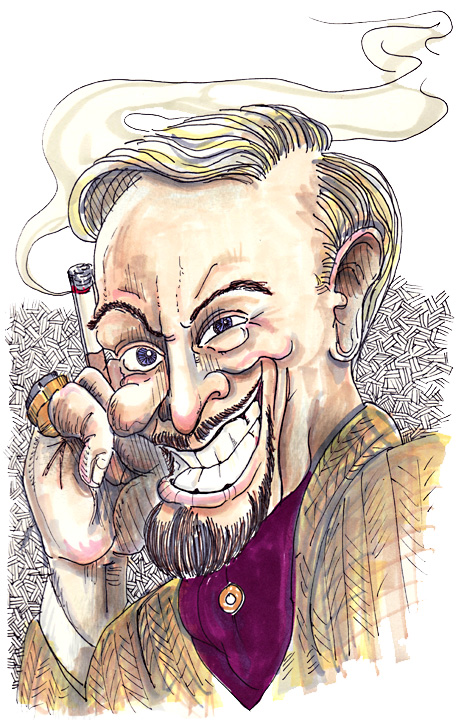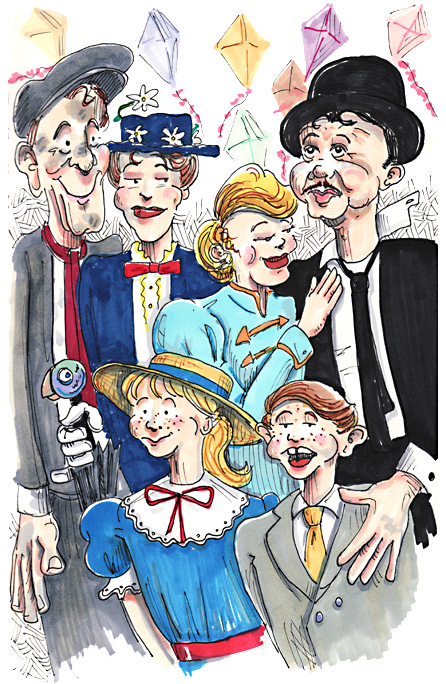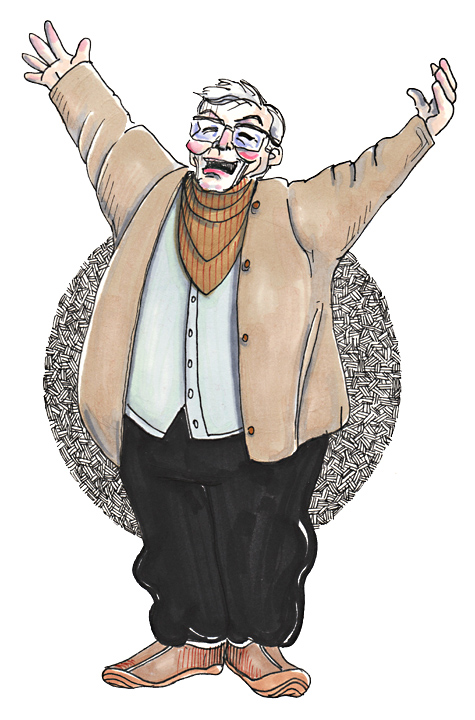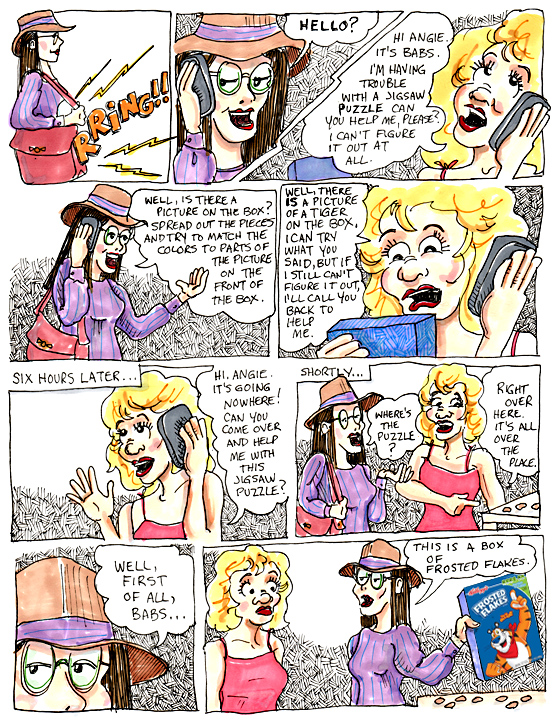
IF: double

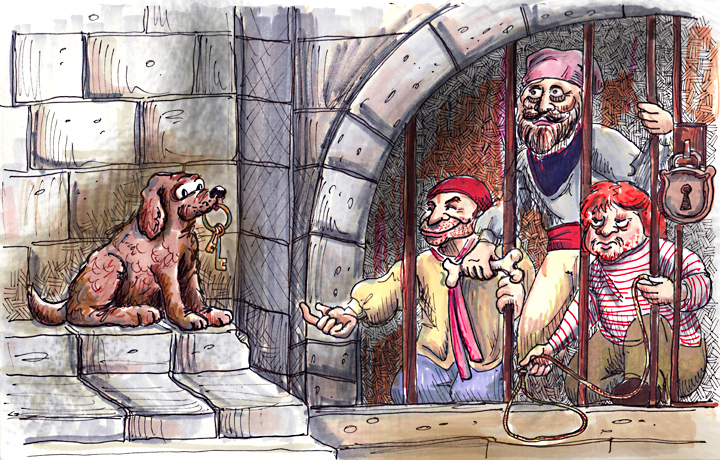
This week’s challenge word on the Illustration Friday website is “double”.
double your pleasure, double your fun
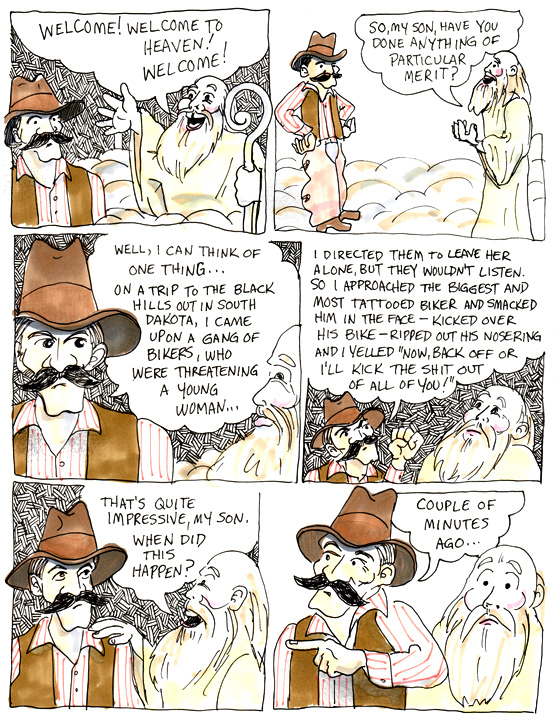
Identical twins Jeen and Sunny Han were born in South Korea in 1974 but lived apart until they were 3. When the girls were 12, their mother, a chronic gambler, moved them to California. She would leave the young sisters alone for days at at time while she went on gambling binges. Jeen and Sunny developed a strong bond during their time together. Their mother sent the girls to live with an aunt and uncle when she no longer wanted to be burdened with parental responsibility.

Both girls excelled academically and graduated high school as co-valedictorians. Sunny went on to college on a scholarship. Jeen, seeking money for college, joined the US Air Force. The twins grew apart and only spoke briefly by phone over the next several years.

Overwhelmed by the rigors of boot camp, Jeen sought a discharge from the Air Force. First, she explained that her father was ill and then, hoping to be expelled over policy, claimed she was a lesbian. Eventually, the Air Force relented and she was released. from service. Jeen found employment as a blackjack dealer in a Lakeside California casino. Like her mother, she became a compulsive gambler. She began stealing friend’s’ and family’s checks and credit cards to repay her debts. She was arrested and skipped out on her probation.

Jeen moved to Los Angeles to live with her twin sister. Sunny, having delivered failing grades for three semesters, lost her scholarship and was working as a receptionist. The sister argued a lot. Sunny broke Jeen’s nose during one dispute. Others were broken up by the police, where Sunny was arrested on an unrelated charge of credit card fraud. Sunny had stolen a friend’s credit card. While Sunny was in jail, Jeen stole Sunny’s car and used her identification to empty her savings. Upon Sunny’s release, Jeen was jailed for six months. She was put on work furlough and escaped.

Soon after, an angered Jeen recruited two teenagers to help her kill her sister. They drove to Sunny’s apartment, purchasing garbage bags, duct tape, twine, gloves, Pine Sol cleaner, and magazines on the way. The also brought guns. Their plan was to have one of the teens pose as a magazine salesman to gain access to the apartment. Then the other two would force themselves inside. This scheme played out perfectly, except the door was answered by Sunny’s roommate, Helen. They tied Helen up, but Sunny, hearing the disturbance from the next room, called the police on her cellphone. The police arrived quickly and arrested one of Jeen’s accomplices, but she left along with the other. Later the same day, Jeen was arrested when she attempted to used Sunny’s driver’s license to withdraw $5,000.

After  a year in jail awaiting trial, Jeen Han was tried for conspiracy to commit murder, two counts of burglary, possession of a firearm, and two counts of false imprisonment. The two teenagers were also tried as co-conspirators. Jeen contested that she merely wished to scare her sister, not kill her. The jury concluded that the items brought to the scene, coupled with Sunny’s roommate’s testimony, amounted to Jeen’s preparation to commit murder. During the course of the trial, an overly stressed Sunny Han attempted suicide by ingesting several dozen sleeping pills.

The two conspirators received sentences of eight and sixteen years. Despite her attorney’s argument that Jeen suffered from a personality disorder that predisposed her to extreme mood swings, Jeen Han was sentenced to 26 years to life. Three days after her incarceration, Jeen attempted suicide with painkillers she had hidden in her cell.

She will be eligible for parole in 2020.

Comments

comments

DCS: mel turpin

I've been leaving on my things/So in the morning when the morning bird sings/There's still dinner on my dinner jacket/'Til the dinner bell rings
At 6′ 11″, Mel Turpin dominated the court as starter for the University of Kentucky Wildcats basketball team in the 1984 NCAA Final Four. He was the Southeastern Conference scoring leader and still holds the record for most field goals in SEC tournament play. At center, he was an aggressive player, scoring 42 points in a game against Tennessee.

He was the sixth overall pick in the first round by the Washington Bullets in the 1984 NBA Draft. Although there were high hopes for Mel, he was immediately traded to the Cleveland Cavaliers. But, Mel never achieved his full potential in the NBA. He struggled with fluctuating weight, earning him the derisive nickname “Dinner Bell Mel”. He was traded to the Utah Jazz and then back to Washington where, after five unremarkable seasons in the NBA, he called it a career. In a year that included future superstars like Charles Barkley, Hakeem Olajuwon, John Stockton and Michael Jordan, Mel Turpin was considered one of the biggest disappointments in draft history.

After his retirement, Mel worked as a security guard.

On July 8, 2010, Mel committed suicide by gunshot. He was 49.

Comments

comments

IF: breakfast (part 3)

This is my third illustration for the Illustration Friday word “breakfast”.  Here is the first one and here is the second.
can we have kippers for breakfast, mommy dear, mommy dear
I get a kick out of seeing new parents cautiously checking the ingredient list on cereal. Not wanting to have their children ingest anything that would be harmful or contain empty calories, today’s parents opt for healthful choices for the most important meal of the day. Grocery store shelves are stocked with fruit juice sweetened organic grain-filled packages adorned with happy children enjoying a sunshiny day in a golden meadow. The colorful boxes of star-shaped marshmallows and sugar-coated crunchy morsels have taken a back seat.

When I was a kid, Saturday morning cartoons were regularly interrupted with instructions to “Ask Mom” to buy the latest cereal. Arrays of crazy characters were plastered on the fronts of every box of cereal, all vying for my attention. A good portion of Kellogg’s offerings displayed familiar Hanna Barbera favorites, but there was something compelling about those created specifically for the product. Animals, leprechauns, birds, spacemen, cowboys  they were all there. Sometimes a new character was placed on a lagging brand to invigorate sales. Kellogg’s Cocoa Krispies featured José the Monkey, Coco the Elephant, Ogg the Caveman, another elephant named Tusk, even popular cartoon mountain lion Snagglepuss briefly got in on the cereal-hawking act. Finally Snap, Crackle and Pop stepped in and took the chocolate version under its Rice Krispies umbrella.

Cap’n Crunch, the soft-palate shredding squares of corn, was introduced in 1963. Its popularity spawned a host of spin-off flavors that were part of the Cap’n Crunch family. Each new flavor featured a new character on its box, starting with the Crunch Berry Beast in 1967. Hot on his tail was pirate Jean LaFoote representing for Cinnamon Crunch, Wilma the Winsome White Whale for Vanilla Crunch, Smedley the Elephant for Peanut Butter Crunch (what’s up with these elephants?) and Harry the Hippo on boxes of fruit punch flavored Cap’n Crunch. Things got a bit out of hand when “Chockle the Blob” appeared on Choco Crunch. I didn’t know what Chockle was and I didn’t want to eat what he was selling.

There was also a parade of characters who made brief appearances in the cereal aisle because their namesake products were ill-conceived or just couldn’t compete with breakfast powerhouses like Tony the Tiger or Toucan Sam. One such mascot was Bigg Mixx. Much like the cereal he promoted — an obvious corporate grain snafu at the Kellogg’s production plant — Mixx was an amalgam of several species. One could pick out a buffalo, a moose and a deer in its makeup, but the creature and the cereal were equally frightening and it disappeared from shelves quickly. Other grain-based disasters were Sir Grapefellow and Baron Von Redberry, a pair of single fruit flavored cereal rivals. And the similar Crazy Cow, a boxful of multi-grain pellets coated in drink mix to flavor milk.

Sometimes the story of the cereal characters, as depicted in commercials, was more important than the product itself. Such was the case with Freakies, Grins & Smiles & Giggles & Laughs and the notorious Crispy Critters. Linus the Lionhearted was the cartoon mascot for Crispy Critters, whose show blurred the line between cereal commercial and children’s entertainment. Linus’ adventures were thinly veiled advertisements for Post products and the show was pulled when complaints mounted.

I miss Saturday mornings in front of the TV, plowing through two or three bowls of some brightly-hued, milk-drenched nuggets. I miss the day-glo neon colors of the supermarket cereal aisle. I fondly look back on the difficult decision of choosing a cereal based on its mascot, its shape, its marshmallow content and the “cool factor” of the toy buried deep inside its sugar-frosted depths. Sometimes I think that Cap’n Crunch and his friends are plotting an attack and will one day blow that low-fructose granola shit into the dog food aisle.


Pictured above: 1- Honey Nut Cheerios Bee; 2-Crunch Berry Beast; 3-Ogg the Caveman; 4-Jean LaFoote; 5-Quisp; 6-The Cheerios Kid; 7-Snorkeldorf (Freakies); 8-BooBerry; 9-Big Yella; 10-Sonny; 11-King Vitaman, 12-Toucan Sam; 13-Newton Owl; 14-Tony the Tiger; 15-Lucky

Comments

comments

IF: breakfast (part 2)

This is my second illustration of three illustrations for the Illustration Friday word “breakfast”.  Here is the first one and here is the third.
the most important meal of the day
A month or so ago, WXPN‘s afternoon drive time DJ Dan Reed was coming out of a block of music and easing into a conversation with Lauren Valle who was about to give a rush-hour traffic report. The last song Dan played before the break was by neo-retro jammers Phish. As part of his regular banter with Lauren, Dan pointed out that the Phish tune boasted some “crunchy grooves”, and without skipping a beat, added that it sounded like “something my son would eat for breakfast”. A confused Lauren chuckled and proceeded with the traffic report. The conversation amused my wife and she asked me to create a box of Crunchy Grooves cereal for Dan. I did and I sent it to him. He got a kick out of it.

Comments

comments

IF: diary

everyday, everyday, everyday I write the book.
“The horse I bet on was so slow, the jockey kept a diary of the trip.”  — Henny Youngman

I grew up watching The Tonight Show with Johnny Carson. I loved seeing the big name comedians like Rodney Dangerfield, Don Rickles, Shecky Greene (although I didn’t get a lot of his material) and the “King of the One-Liners” – Henny Youngman. Henny would part the multi-colored curtains of Johnny’s stage and, with his signature prop violin in hand, proceed to deliver a rapid-fire barrage of jokes about his wife, his doctor, his brother-in-law, the trash collectors and anyone else he could poke fun at. Everyone was fair game and no one was sacred. “My wife dresses to kill. She cooks the same way.” he would say. He’d follow that with “I told the doctor I broke my leg in two places. He told me to quit going to those places.” Henny would wrap up his five minute routine at center stage and then sidle up to the sofa. Then, instead of allowing Johnny to interview him, Henny would deliver another three minutes of material until Johnny and the studio audience were rolling on the floor with laughter.

When I was a junior in high school I met and began dating Henny Youngman’s niece, Janey. We met at a party and dated for several months. I eventually took her to my Junior Prom. One day when I was at Janey’s house, I overheard her mother on the telephone, having a typical Northeast Philadelphia Jewish-intoned conversation. “So, how’s Sadie?,” she inquired, dragging “Sadie” out to a very nasally six syllables. She continued, “When? Oh, this weekend? That’ll be nice.” She wrapped up the call with a few drawn-out “goodbye”s and “see-ya-later”s. Hanging up the phone, she turned to Janey’s father and told him that Henny was coming to Starr’s, a nightclub in Philadelphia’s Old City section. Starr’s was an early venture owned by future restaurant impresario Stephen Starr. Janey’s dad stared off in thought for a moment and suddenly said, “Let’s go see him.” Then, he looked at me and said “Let’s ALL go see him!” “Cool!,” I thought.

When the weekend arrived, I piled into a car with Janey, her parents and her little brother and headed downtown. We pulled into an empty parking space on Second Street — right in front of Starr’s. Janey’s mother informed the guy at the door that she was family and we were led to a stageside table. It was not as glamorous as it sounds. Starr’s was just a bit larger than a good-sized walk-in closet. Janey’s parents ordered cocktails and those of us under 21 had Cokes. Soon, the lights dimmed and out to the tiny staged walked Henny Youngman. Henny Youngman! Right there! A foot away from me! This was so cool!

Just like I had seen a million times on late-night television, Henny Youngman rattled off joke after joke after joke. I had heard the majority of his gags before, but they were just as funny as if I was hearing them for the first time. After his set was over and the applause died down, the house lights came up and Henny Youngman — Henny fucking Youngman — joined us at our table. He kissed and exchanged pleasantries with Janey’s parents. He gave more specific details of family matters than those merely touched on in the earlier phone conversation. Then, I was introduced to Henny as Janey’s boyfriend. I was seventeen. This was Henny Youngman!  I was giddy. I told him I was a big fan. He smiled half-heartedly, but said nothing. The more we chit-chatted, the more I realized that this guy had absolutely no personality. He was as electrifying and engaging as a bar of soap. No wonder he didn’t want Johnny Carson to interview him — he had nothing to say!  He went outside for some air before the next show. We all followed him and we stood awkwardly silent on the Second Street sidewalk for a good, long time. Then, a man at the door signaled to Henny that it was time for his second set. He went back inside and we dutifully followed. He did the exact same act. Word for word.

Just before we left to go home, Henny took a joke book he had authored out of a duffel bag. He opened the front cover and, in a childlike scrawl, wrote: “Marry my niece Janey — Henny Youngman.” With no expression on his face, he handed the book to me and I left with my girlfriend’s family.

My admiration for Henny Youngman diminished greatly that night.

And I didn’t marry his niece Janey.

Comments

comments

from my sketchbook: artist’s lament

Go tell that long tongue liar/Go and tell that midnight rider/Tell the rambler, the gambler, the back biter/Tell 'em that God's gonna cut 'em down
I have chosen a very unusual career. I’m an artist. For most of my life, I’ve had to explain exactly what I do and it’s never been an easy task. Everyone knows what a policeman or an accountant does. My father was a butcher; even vegetarians knew what he did. But, being an artist is different. Unless you are an artist yourself, you can never know how  different.

When I was a kid, I drew a lot. When the other neighborhood kids were out playing, I’d be in the house drawing. My older (and way more athletic) brother would often question my mother about my behavior, but still I’d draw. I’d doodle the inhabitants of worlds that existed in my mind. I’d create characters and illustrate their adventures in elaborate, multi-paneled comics drawn on any spare blank piece of paper I could get my hands on. I decorated my side of my shared bedroom with my drawings as a strange dichotomy to the sports pennants that graced my brother’s allotted space.

I was an average student in school, excelling only in areas that allowed me to express my artistic prowess. Assignments requiring me to create some sort of poster were my specialty. My classmates were amused by the little scribbles I’d pass around just out of the realm of the teacher’s gaze. As my schooling progressed, I began to consider my future plans and options of employment. By high school, most of the teachers of my academic subjects, exasperated by my disruptive and borderline-rude behavior, tossed me out of their classrooms. I gravitated to the art department where I felt comfortable, though not always welcome. As a senior, I had one art instructor who was not much older that I was. She was a sort of mentor to me. One day, without my permission, she submitted a drawing of mine to a local student art show. When I found out, I was furious, as I was not into any type of competition. When she handed me the “Third Place” medal that my piece had won, I was still a bit annoyed, but secretly pleased with my accomplishment. And when she told me that I showed endlessly more talent than she ever did, I was bewildered. I also decided, much to the chagrin of my parents, that I would pursue a career as a professional artist.

Despite little support or encouragement from my parents, I enrolled in a small, but reputable art school in Philadelphia. Offering no academic courses in favor of a full palette of all aspects of art study, it was a difficult curriculum. But the teachers were seasoned professionals in the commercial art field and I learned a lot. I received in-depth instruction and (mostly) constructive criticism from fellow artists whom I viewed as peers. Four years later, with my Associates Degree and honed portfolio, I felt I was prepared to face the worst that the working world could dish out. The deceptively optimistic scenarios depicted by my teachers left me with little idea as to how bad it really would be.

I eagerly began my career as a professional artist as the art director for a chain of popular ice cream parlors. I was responsible for producing the advertising, store signage and material connected with promotion and marketing of the business. For a first job, right out of school, I thought it couldn’t get better or more fun than ice cream. Well, the gentleman who owned the company was the sleaziest, slimiest, shiftiest asshole I had ever met (at least up to that point in my life). He often told me he wished he had more time to teach me from his vast experience of advertising, composition, color theory and general artistic knowledge. The only things that this jerk-off could teach me were smoking, gambling and adultery. He knew how to make chalky-tasting ice cream and that was the extent of his talent. Another executive who felt it was within the boundaries of his expertise to offer me his career guidance was the company’s general counsel. Protecting an ice cream company’s legal interests and rights would seem the ideal background with which to critique my creative and artistic output.

And so began my lifelong battle with bureaucratic decision-makers whose latent artistic tendencies were hindered only by their complete lack of talent. For twenty-five years, I have been hired by organizations that were impressed by my imaginative illustrations, my unique eye for design and my keen wit, only to have those same people belittle and vilify my work out of frustration over their own creative inadequacies. I have been subjected to the artistic judgment of accountants, lawyers, computer geeks, carpet salesmen and one VP who — I swear to God — was stoned every second of the day. The so-called “powers-that-be” are less concerned with producing a quality piece of work than they are with arrogantly showing that they have the last word. I have been told, after hours of “higher-ups” poring over an ad crammed with arrows and bursts and bold type and hundreds of products, to change a small block of background color from red to yellow. I have been asked to “make this bigger, but not too big”. I have changed and changed back and changed again, only to have the final decision revert back to the original incarnation. Logos made large, pictures made small, logos made small, pictures made large — I’ve heard it all!

In the eyes of those outside of the creative field, this is the easiest job in the world. I fool around on the computer all day, for Christ’s sake!  I draw funny pictures with pencils and markers. Kindergarten kids do that! That’s not a job!  That’s not work! I have witnessed some colleagues being told that an eight-year-old who is “pretty good” on the computer could do this job.

Conversely, artists are rarely critical of each other. I think we all agree that art is totally objective. Who’s to say what is good and what is bad. It’s all just different and that’s what makes it all good. My friend Matt is a phenomenal artist. When I see his illustrations, I want to toss my pens and sketchbook in the trash and take up a more respectable trade like plumbing. Then, I’m taken aback when he lavishes praise on a drawing of mine that I would consider sub-par. We tend to be harsher critics of our own works than the works of others. If the perspective is out of kilter in my drawing or I mess up the rendering of a hand or foot, the mistake is amplified, if only in my eyes. I do, however, resent when I am cut down by someone who doesn’t know their ass from a hole in the ground.

I consider myself lucky. Of the 42 students who graduated with me from art school in 1984, I am one of but a handful who continued to follow their dream. A recent reunion revealed that many opted for non-art-related fields as diverse as nursing and home-construction. I plugged along and have managed to maintain an unwavering run in my chosen profession for over twenty-five years. I openly admit that I have voiced my share of un – or under – appreciated opinions, but I felt I was standing up for my convictions. I know that I will never be Picasso or DaVinci, nor do I want to be. I know that I am not smart enough to be a nuclear physicist nor do I pretend to be. I just want to be an artist and do my job. Now, get the fuck off my back.

Comments

comments

from my sketchbook: ernie kovacs

Nothing In Moderation
Ernie Kovacs’ influence can still be seen. Groundbreaking shows like Laugh-In, Monty Python, Saturday Night Live — even Captain Kangaroo  and Sesame Street  owe a large debt to the pioneering techniques of this comedic wizard.

From his humble beginnings as a disc jockey, Ernie landed his own early morning show on Philadelphia NBC-affiliate WPTZ (now KYW). The program, Three to Get Ready, was a blank canvas for Ernie’s creativity. Employing a variety of camera tricks and stage settings, Ernie developed a rapid-fire repertoire of skits, pantomimes and visual illusions for, basically, his own amusement. He figured no one would be watching at the pre-dawn hour at which his show was broadcast. Much to the surprise of both Ernie and the network, the format was a hit. Ironically, it led to the cancellation of Ernie’s show in favor of a network-wide morning show called Today.

While at WPTZ, Ernie created and honed his menagerie of characters including intellectual Percy Dovetonsils, German disc jockey Wolfgang von Sauerbraten, horror show host Auntie Gruesome and bumbling magician Matzoh Heppelwhite. A series of popular monthly specials made way for Ernie’s own show in the 1950s and a twice-a-week stint filling in for Steve Allen as host of The Tonight Show. The biggest stars of the day lined up to appear and perform with Ernie. When he introduced the musical comedy group The Nairobi Trio on this show, it was made up of Ernie as conductor, Ernie’s wife Edie Adams, and close friend, Academy Award winning actor Jack Lemmon, all hidden behind rubber ape masks.

After his seven year marriage to Bette Wilcox ended, he was awarded custody of their two daughters, due to Bette’s unstable mental health. Bette kidnapped the girls, but after a long search and with the help of girlfriend Edie Adams, he regained custody. Ernie and Edie were married in Mexico in a ceremony performed entirely in Spanish, a language that neither one of the couple spoke.

Ernie and Edie appeared together on the last episode of I Love Lucy. It was the last time Desi Arnaz and Lucille Ball appeared together and they barely spoke between takes.

Ernie had brief success in movies, with roles in  Wake Me When It’s Over  and the Richard Quine-directed  Operation Mad Ball and Bell Book and Candle.

In January 1962, Ernie met his wife at a party hosted by Milton Berle. Ernie left in his own car and drove through a heavy southern California rainstorm. While distracted, possibly to light a cigar, Ernie lost control of his car and crashed into a utility pole. He was thrown halfway out of the passenger side of the car and died instantly from head and chest injuries. When Edie learned of the crash, she frantically called the police. When she identified herself, she heard a voice, muffled by a hand over the telephone receiver, say, “It’s Mrs. Kovacs. He’s on his way to the coroner — what should I tell her?” Jack Lemmon identified Ernie’s body at the morgue when Edie was too distraught to do it.

At the time of his death, Ernie was negotiating for the role of Melville Crump in Stanley Kramer’s It’s a Mad, Mad, Mad, Mad World, with Edie playing his wife. Sid Caesar took the part in the finished film.

Comments

comments

from my sketchbook: iva toguri

good evening mister and missus america and all the ships at sea
Tokyo Rose didn’t exist.

The name “Tokyo Rose” was a catch-all  for a collective of women whose voices were heard on Radio Tokyo’s “Zero Hour” broadcasts during World War Two. These were radios shows presented specifically for US servicemen. They featured popular American swing and big-band music and brief comedy and chit-chat mixed with non-political news. The treasonous stigma that became attached to “Tokyo Rose” was pinned, unjustly, on Iva Toguri.

Iva Toguri was born in Los Angeles, California on Independence Day 1916. In her pursuit of a career in medicine, she attended and graduated from UCLA with a degree in zoology. One day after her 22 birthday, Iva sailed from Los Angeles to Japan to further her studies and to care for a sick aunt. She left without a passport and was issued a “Certificate of Identification” by the US State Department. While in Japan, she contacted the US Consul and applied for a passport, but the process was interrupted when Pearl Harbor was attacked later in the year and the US went to war with Japan. Iva, an American citizen now stranded in Japan, remained voluntarily for the duration of the war. She enrolled in Japanese language classes and landed a job as a typist for Radio Tokyo. She was pressured by the Tojo-controlled Japanese government to renounce her American citizenship. She repeatedly refused.

In November 1943, Allied POWs forced to broadcast propaganda selected her to host portions “Zero Hour.” Her producer was an Australian Army officer with previous radio experience. Iva knew some other POWs from the times she smuggled food and blankets into camps. Although she refused to broadcast anti-American propaganda, Iva, using the on-air name “Orphan Ann” (Orphan because of her stranded status and Ann being short for “announcer”), was regularly featured on weekday installments of “Zero Hour”. Scripts for her show never featured any anti-American propaganda. Army analysis suggested that the programs had no negative effect on troop morale and that it might even have raised it a bit. She used some of her $7 per month salary to continue to smuggle food to POWs.

After the war, the several press sources identified Iva as “Tokyo Rose” and the US Army had her arrested. An investigation followed and Iva was released for lack of concrete evidence. Once again, Iva applied for a passport and a campaign, led by broadcaster Walter Winchell, demanded that Iva be considered a traitor be arrested and tried.

Iva appeared before the Department of Justice in what would become the most expensive trial in US history to date. A parade of witnesses offered testimony after perjured testimony, including several who were coached by reporter Harry Brundidge, a zealot of questionable morals. Although Brundidge steered clear of the proceedings, his indelible witch-hunting mark was prevalent throughout. Many of the defense’s witnesses were denied appearances and hundreds of hours of actual recordings of Iva’s broadcasts were never presented. On September 29, 1949, the jury found her guilty on one count of treason. The jury ruled that: “…on a day during October, 1944, the exact date being to the Grand Jurors unknown, said defendant, at Tokyo, Japan, in a broadcasting studio of the Broadcasting Corporation of Japan, did speak into a microphone concerning the loss of ships.”  This verdict was based on several fabricated stories and recorded speeches whose announcer was never identified. Iva was sentenced to ten years imprisonment and fined $10,000.

In January 1956, Iva was released from a federal prison, where she had served a little over six years of her sentence. In 1977, on his last full day in office, President Gerald Ford granted her a full and unconditional pardon. Iva passed away in 2006 at the age of 90.

Comments

comments

IF: giant

This week’s Illustration Friday challenge word is “giant”.
We're bored to tears until he comes/And then we're crying cause he's come

Robert Wadlow was a relatively normal eight pounds six ounces at his birth in 1918, however an overactive pituitary gland would soon change the course of his life.

By eighteen months, Robert weighed sixty-two pounds and by the age of eight, he was 6 feet 2 inches tall. By eighteen, Robert was 8 feet 4 inches tall. His clothes required three times the amount of material as those worn by his peers. He found it difficult to find comfortable shoes and needed them custom-made for one hundred dollars per pair – a huge amount of money in the early part of the twentieth century.

When he turned 20, Robert signed a contract with the International Shoe Company. In exchange for a lifetime of free footwear, Robert would travel the country promoting the company and their products. He, along with his father, visited 41 states and his quiet and friendly demeanor earned him the nickname “The Gentle Giant”.  Robert’s father needed to modify a car, removing the front passenger seat, so Robert could sit in the back seat and stretch out his long legs. Although he required leg braces to walk, and had little feeling in his legs and feet, Robert was always cheerful and delighted to meet so many people.

During a July 4 appearance at a National Forest Festival, an ill-fitting leg brace caused an irritation and subsequent infection on Robert’s leg. He was confined to a hotel bed while doctors worked frantically to lower his fever and treat his ailment. Despite a blood transfusion and emergency surgery, Robert died in his sleep on July 15, 1940 at the age of 22. He had reached a height of 8 feet 11.1 inches.

Approximately 40,000 people attended Robert’s funeral. He was buried in a half-ton coffin that required twelve pallbearers to carry. It was interred in a vault made of solid concrete, as Robert’s family were concerned that his remains would be the target of grave-robbers with exploitative plans. His family also destroyed most of his belongings to deter memorabilia-seeking collectors.

Robert was the tallest person who ever lived and one of only eleven people who ever reached a height of over eight feet. He has been honored and memorialized with life-size statues at Southern Illinois University School of Dental Medicine and six Ripley’s Believe it or Not  Museums throughout the world.

Comments

comments