IF: beneath

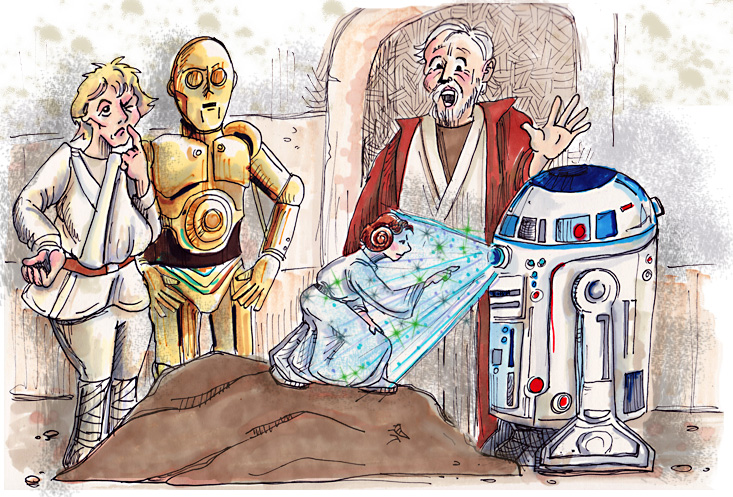
May the Blessings of the Bomb Almighty, and the Fellowship of the Holy Fallout, descend upon us all. This day and forever more.
After a full week of the draining drudgery of elementary school, there was nothing I liked better than spending Saturday afternoon at a movie matinee. I’d call up a bunch of friends from school and we’d hastily make plans to meet at the nearby Leo Theater or the Orleans, which was a little farther away. Rarely, we would opt for the dreaded Parkwood Theater, although it was closer to my house than the other two theaters. The Parkwood was an ominous gray building at the end of a strip center that also housed a drug store, a barber shop and – if my memory is correct – seven beer distributors.

The Saturday matinees of the 1960s and early 70s would show a different offering than the regular evening feature. The program would usually start off with previews of the next weekend’s show, followed by a cartoon and the first of usually two films with – what the theater management believed – an appeal to children. One would think that kiddie entertainment would include Mowgli’s animated adventures in “The Jungle Book” or the musically whimsical “Chitty Chitty Bang Bang.”  I, however, remember seeing such child-friendly features as “Dracula – Prince of Darkness,” “Witchfinder General” and the occasional K. Gordon Murray freak-out. I saw Walt Disney’s “Darby O’Gill and the Little People” with Scott, a friend from school. This deceitful Disney film had Scott screaming and fleeing from the darkened auditorium when the wailing banshee appeared on-screen in her green-glowing glory. It was a far cry from political correctness of “Night in the Museum” or “Legend of the Guardians: The Owls of Ga’Hoole.”

One Saturday, my mom dropped a station wagon full of my friends off at a showing of “Beneath the Planet of the Apes,” the inferior first sequel to the Charlton Heston sci-fi blockbuster. It didn’t matter that I had not seen the original. A couple of my friends were not even aware that an earlier, similar movie had preceded this one. We were there to stuff ourselves with candy and popcorn and not be bored for three hours.

Overstocked with snacks, my nine-year-old pals and I found three seats and sat down as the theater lights dimmed. When the movie began, we sat riveted as we watched stranded astronaut Charlton Heston (you know – Moses! ) disappear behind a wall of fire and a guy who looked just like him (low-budget substitute James Franciscus) begin his quest to find his fellow space traveller.

And then the armies of apes showed up! It was so cool! We didn’t need a plot anymore. All we needed to know was the apes were evil and the few mute and primitive humans had to survive behind the leadership of the guy who kind of looked like Charlton Heston. The ragtag troop of grimy humans came upon a race of other humans in an abandoned subway station. These cleaner humans wore long flowing robes and actually spoke, but, to my young ears, they sure spoke weird!  One of the guys even looked like King Tut from our favorite show “Batman”. They explained that they were a peace-loving people and they showed off the deity they worshipped. It was a giant atomic bomb. (We knew what that was because it was brought up constantly by our parents and on the news amid speculations about the ongoing Vietnam War.) Despite the political overtones going right over our heads, we were pretty entertained.

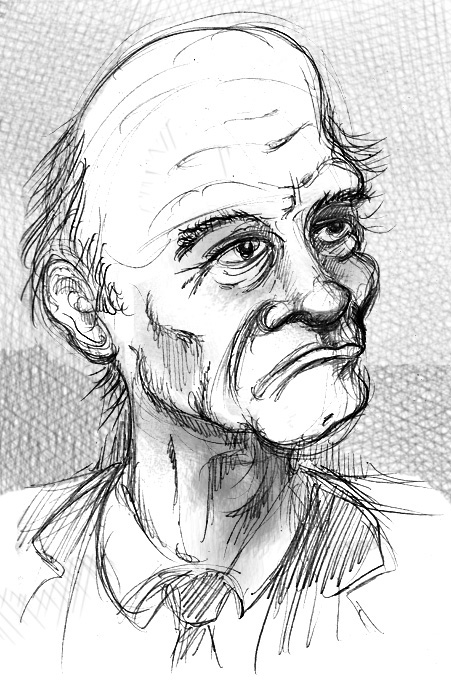
Suddenly, the robe-wearing people began their worship service and, in unison, they announced “I reveal my Inmost Self unto my God.” Then, they all reached up and pulled their facial skin off of their heads, revealing a poorly-executed special effects appliance, slightly reminiscent of a mass of veins and Silly Putty. However, I thought it was pretty effective and it succeeded in scaring the proverbial shit out of me. I recoiled against the back of my seat and stared in horror at the hundreds of actors up there on that screen, baring the results of four hours in a make-up chair and holding a flimsy rubber replica of their real face.

Forty-plus years later, I can’t get that image out of my mind. And I’ll still watch any of the “Planet of the Apes” films, if I spot one in the television listings. Just, not the Tim Burton one.

Comments

comments

from my sketchbook: barbara pepper

farm livin' is the life for me
When she was just sixteen, blond-haired, blue-eyed bombshell Barbara Pepper was chosen to be a Ziegfeld Girl on Broadway. That was the springboard she needed to start her career in show business. Soon, she and friend, fellow Ziegfeld girl Lucille Ball, were chosen to join the Goldwyn Girls, as contract group of female dancers at MGM. She made her debut with Eddie Cantor in Roman Scandals  in 1933. Her flashy appearance and hard-boiled “tough gal” personality allowed her to be featured in countless films throughout the 30s and 40s. She was romantically linked with a full spectrum of notable names like Howard Hughes and Peter Lorre to popular comedian Harry “Parkyakarkus” Einstein.

In 1943, she married actor Craig Reynolds. The couple had two sons before divorcing in 1949. Later the same year, Reynolds was killed in a motorcycle accident, leaving Barbara to raise her two small children as a single mother. She had to turn down acting jobs in order to devote time to her family. Soon, the demand for her acting services dried up and the one-time showgirl was forced to take jobs waiting tables and managing a laundry. She turned to alcohol to help her cope. She gained weight and her voice grew raspy as her alcohol intake increased.

Some of her showbiz friends, like Jack Benny and Lucy, offered her small roles when they could. Through the 50s and 60s, she humbly accepted guest spots on TV sitcoms and Westerns. Barbara desperately wanted the role of Ethel Mertz on I Love Lucy,  but known alcoholic William Frawley had already been hired for the series and the production couldn’t risk having another drunk on the set.

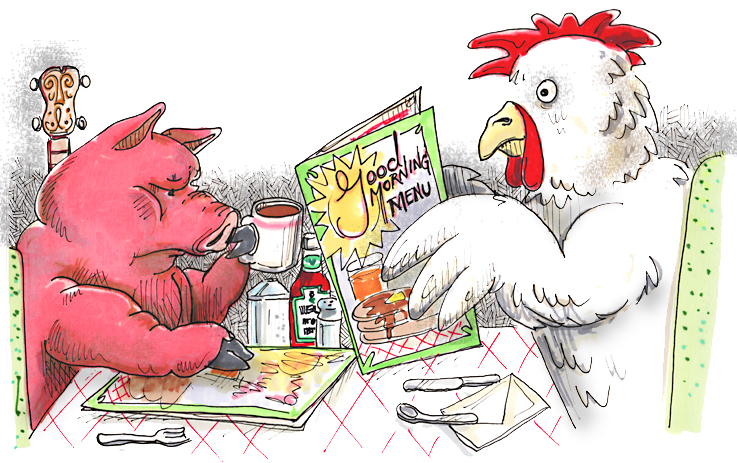
Barbara continued to take any part she could, no matter how small. Finally, in 1965, she landed the supporting role of Doris Ziffel on the sitcom Green Acres.  It was a steady paycheck despite her being upstaged by Arnold the Pig (who received more fan mail than Barbara and co-star Hank Patterson combined). After four seasons, Barbara’s failing heath forced her to turn the Doris Ziffel role over to character actress Fran Ryan.

Barbara Pepper, the glamorous showgirl turned TV dirt farmers wife, died of a coronary blood clot at age 54. Colleagues said she looked at least a decade older.

Comments

comments

IF: old-fashioned

Every weekend through the door come words of wisdom from the world outside
You know those time-lapse scenes in movies from your parents’’ youth? The ones that show a montage of events beginning with a spinning newspaper hurtling towards the camera, stopping to display a significant headline splashed across the front page in big, attention-getting letters? How quaint and dated they seemed. Remember the boy on the street corner— with his cap and his knee-britches supported by suspenders, — a stack of newspapers under his arm and a single issue waving wildly over his head while his calls of “”EXTRY! EXTRY!”” split the air with urgency? Remember the star reporter, sniffing out the inside scoop, his press card tucked in the band of his cocked fedora, his pad and pencil poised at the ready? These are images that will seem more and more unfamiliar as time passes, not unlike horse-drawn carriages and hoop skirts. But horse-drawing carriages and hoop skirts were never popular in my life time or my parents’, but newspapers were.

When I was young, I loved waking up early on Sunday mornings and being the first one to the newspaper. I’’d carry that heavy folded mass of colorful pulp to the living room and carefully pull out my favorite sections. First the comics, then the movie section, then the glossy Sunday magazine and TV schedule. I’’d spread the comics out on the floor and read and savor each primary-colored panel. Sometimes my ritual was interrupted when my cat would park herself smack in the middle of Dennis the Menace or Smokey Stover. I’’d pore over the full-page movie ads that previewed the films that were promised to be coming ‘to a theater near me”. I’’d read the questions in Parade, the full-color magazine supplement, posed about celebrities I’’d never heard of. Soon, my parents would awaken and my dad would scan the front page of the paper, curse a few times, light the first of many cigarettes of the day, and tear into the sports page. My mom would call out over the sounds of breakfast preparation to “save the coupons” for her.

Years later, I bought and read a newspaper every morning as I took the hour-long ride on public transportation to art school in center city Philadelphia. I was surrounded by fellow newspaper readers who silently reviewed the events of the previous day in a cheap and convenient package and at their own pace.

My tradition of purchasing a daily newspaper continued well into the time I entered the working world. I’’d buy a paper at my regular stop for coffee on my morning commute. Coincidentally, my career path took me to the production end of the newspaper business. In the days before computers, I was employed as a layout artist doing “paste-up” at several composition houses, — an occupation that is met with blank stares and is difficult to explain to those outside of the industry. I physically prepared and pasted together pages of ads and copy to ready newspaper pages for the printing process. The tools of my trade were an X-acto knife, a ruler and a keen eye. The last time I worked at a newspaper “comp house” was 1995. We produced over forty daily and weekly newspapers for area communities and colleges. On my last day of employment there, several editors brought their entire paper in on a floppy disk, only requiring us to print out the fully-composed pages. The death-knell for newspapers had been sounded. I had just given my two-week notice, leaving to take a position at a legal publisher whose entire operation was done on computers. I haven’t touched an X-acto knife since.

Even as the Internet became more accessible to more people, the newspaper business perceived itself as eternally invincible. However, newspapers found it necessary to continually increase prices as advertisers cancelled print ads in favor of the instant gratification of the Internet. News sources like CNN, with outlets on cable television and the Internet, could now provide information to the masses as events unfolded. By the time the news appeared in the newspaper, it was as old as — pardon the phrase — “yesterday’s news”. With the immediate availability of the Internet, an east coast sports fan whose home team was playing a crucial game in San Francisco would never again have to read the words “game ended too late for publication.” On my daily train rides to work, I see passengers accessing the Internet on their Kindles and smartphones to check the morning headlines. Suddenly, the mighty newspaper has begun to get thinner in both its editorial and advertising content. Smaller market papers have ceased publication in favor of “online-only” editions. It’’s only a matter of time until the large city papers follow suit.

Just last week at a family soiree, my twenty-three year-old son was confronted by a seventy-two year-old cousin who smugly maintained the viability and relevance of newspapers. My son at first countered, then clammed up and politely listened as the old-timer got misty-eyed standing up for his beloved newsprint-and-ink friend.

With the exception of the occasional glance at one of several alternative weeklies, I haven’’t read a newspaper in years. As a matter of fact, I don’’t know anyone under the age of 40 who has. Newspapers will eventually go the way of the coffee percolator and the VCR, two revolutionary advancements that are now just plain old-fashioned. It may take a little longer to accept, but newspapers, if I may paraphrase the insightful philosopher Samuel L. Jackson, “are “as dead as fucking fried chicken.”

Comments

comments

from my sketchbook: racism is alive and well

This is where the party ends/I can't stand here listening to you
Racists are like the lowly cockroach – filthy, repulsive and filled with the endurance to have kept it going for thousands of years. You catch one skittering by in your peripheral vision every once in a while. Smoosh a cockroach and there’s always another to take it place. Always.

I grew up in one of a handful of Jewish households in my neighborhood. I was on the receiving end of a regular barrage of racist comments from my misguided community peers who were parroting their parents’ twisted judgment. My father would try to comfort me and tell me to “just ignore them.” Meanwhile, he would toss about “the N word” the way most people say “Pass the salt.” My father learned that from his  mother and father, so, in his mind, there couldn’t possibly  be anything wrong with it. Ah, my grandmother! Once, she spent several days in the hospital. On a visit during her stay, I asked how things were going. She told me the nurse brought her medication in the morning and in the afternoon the (insert a derogatory word for Blacks not regularly used in this country since the Civil War) came in to take a blood pressure reading. The afternoon caller, of course, was also a nurse, but not in the antiquated narrow-mind of my grandmother. This sentiment was not limited to my family, as I later learned. When I got married, I attended a family dinner at my wife’s parents’ home. A cousin arrived late and related an incident involving some kids throwing apples at their car during the drive over. An older uncle, uninformed and unprovoked, questioned “Were they colored kids?” I was dumbfounded.

Those are incidents of malicious racism. I have also experienced innocent racism. You know, the statements that are made with the preface of “I’m not a racist, but… .” by the poor saps who genuinely don’t know any better. Of course, innocent  racism is like getting a small kick in the balls. Years ago, I was employed at a small graphic arts studio that did a lot of preparation work for local quick printers. In the days before home computers, I produced flyers and invitations and a lot of menus for local sandwich shops and pizzerias. One day, the well-dressed owner of several hoagie shops came in to discuss the design for his take-out menus. In the course of our exchange, this man – in his three-piece suit, coiffed hair and pinkie ring – noted that the prices and items differ for the locations in the “less-affluent/more urban” areas because (and I quote) “Black people eat different food from the rest of us.” Some time later, I had a job in the layout department at a legal publisher, where I worked closely with manuscripts. The nature of the job had me dealing with the proofreading department on a regular basis. One afternoon, close to deadline, I was waiting for a manuscript to make its way back to me. I inquired about its status to the proofreading manager – a gum-snapping, teased-haired ancestor to Jersey Shore’s  Snooki. She motioned to a clump of empty desks laden with overflowing “IN” boxes and informed me that the manuscript in question was given to (and I quote) “the little Chinese girl” before she went to lunch. The object of her offensive comment was a young lady whose parents were from Guam – a US territory – and was as American as apple pie.

For many years, my wife’s family owned and operated a general merchandise store in a farmer’s market in a rural area just outside the fifth largest city in the country. In addition to stocking an unusual combination of basic household staples and novelty items, my wife and mother-in-law were renowned for their eclectic inventory of pop culture collectibles. The clientele for the weekend-only market consisted of old-time country folk and their possibly inter-married offspring. In 1954, when my in-laws opened their store, they were the only Jews anyone in that area had ever seen. Black and Asian customers were rarities and repeatedly turned locals’ heads. On one particular Saturday, a potential customer was perusing the substantial selection of items featuring the rock group KISS. The shopper turned to my mother-in-law and said “He’s a Jew, you know”, gesturing towards a likeness of bassist Gene Simmons. Taken off-guard, my mother-in-law replied with a confused “Huh?” The patron continued, “Him! That’s why KISS goes on so many tours. ‘Cause Jews have to make more money.”

During my time in retail advertising, a general manager was adamant about the targeting of our mailed promotional material. “Watch the zip codes where this goes,” he said expressing solemn concern, “I don’t want to advertise in Black neighborhoods.” As though their money is not as valuable. He was also uneasy about driving his Lexus through areas that he deemed “questionable”.

My responsibility with my current employer is to produce advertisements on a more sophisticated level. (Without going into revealing detail, my main client base consists of those members of the working world who practice jurisprudence.) Recently, a respected attorney, who is African-American*, cited our selection of ads depicting silhouetted  figures in varied poses as “having no appeal to African-American women.” He offered additional criticism, indicating he could tell that none of the silhouettes were African-American. Upon closer inspection of the figures, I observed that no Asians, Italians or gays were featured either.

I believe that it is just human nature to be leery of anyone different; anyone we don’t see as a reflection of ourselves. And that, by definition, is “racist.” So, we are all racist in our own way, whether we like it or not. And if you say that you are exempt and you have never had a racist thought, well, then you are a racist and  a liar.

* I usually refrain from using that term, as I find it offensive and misleading. My wife is friendly with a lovely family of four; the mother is a local girl, the husband originally from Cape Town, South Africa. The children were all born in the United States. Based on their lineage, those kids are fully within their rights to be referred to as “African-American,” even though their skin is as white as a scoop of vanilla ice cream.

Comments

comments

Monday Artday: medical

After a long hiatus, Monday Artday, the Monday illustration blog to which I have contributed since 2007, has returned with a new challenge word. The word this week is “medical”.
Can you make a sound to distract the nurse/Before I take a ride in that long black hearse
Mildred Ratched, the sadistic tyrant who maintained strict order as head administrative nurse at the Oregon State Mental Hospital, in Ken Kesey’s 1962 novel One Flew Over the Cuckoo’s Nest, was the bane of Randle McMurphy’s existence.

Despite his own fate, McMurphy made sure he got his revenge.

Comments

comments

IF: acrobat

This week’s Illustration Friday challenge word is “acrobat”.
The band begins at ten to six/When Mr. K. performs his tricks without a sound/And Mr. H. will demonstrate/Ten somersets he'll undertake on solid ground
Vaudevillians Billy Wells and The Four Fays were booked to appear on the February 9, 1964 episode of the wildly popular Ed Sullivan Show. The group, who were introduced by Sullivan as performing their “unique brand of acrobatic physical comedy”, waited backstage, anxious to make their television debut.

Unfortunately for the tumbling troupe, a British musical group called The Beatles were also making their American television debut that night, scheduled just before Wells and The Four Fays’ performance.

(Incidentally, The Four Fays featured Jacqueline Jessica Anderson, mother of singer/dancer/choreographer Toni Basil. Toni sang the popular 1982 hit “Mickey”.)

Comments

comments

from my sketchbook: mike edwards

now my old world is gone for dead
Mike Edwards was the flamboyant cello player in Electric Light Orchestra from 1972 until 1975, when he left by his own choosing. He was a crowd favorite, known for his unusual playing techniques, sometimes involving dragging a sliced orange or grapefruit across the strings of his cello, then having his solos culminate in the instrument exploding. When he left the band, he did so to concentrate on playing classical music in a baroque trio and offering lessons in his favored instrument.

In the early 1980s, Mike became a follower of the Indian mystic Bhagwan Shree Rajneesh. He changed his name to Swami Deva Pramada and briefly lived within a commune run by the religious organization.

Recently, Mike had successfully battled bouts of depression and a cancer diagnosis. On September 3, 2010, Mike was driving in a rural area, near his home in Devon, England, when a 1300-pound cylindrical bale of hay fell off a tractor, burst through a hedge and smashed the van he was driving. He was killed instantly.

Comments

comments

IF: proverb

This week’s Illustration Friday challenge word is “proverb”.
Eli's coming, hide your heart now
“A baby is an alimentary canal with a loud voice at one end and no responsibility at the other. ”

Several evenings ago, there was a family dinner at my in-law’s house. My wife and I attended, along with my wife’s younger brother, his wife and two daughters, ages… um… somewhere between four and eight… or something close to that. Also on the guest list were my wife’s cousin, her husband and two young sons, both in the approximate age range of my nieces. My thirty-year-old niece was there too, but since she is relatively well-behaved and doesn’t fit into the “child” category anymore, she will merit merely this mention in the story.

Dinner proceeded like most dinners, with cross-table conversation punctuated by clinking glasses, rattling flatware and my father-in-law rolling his eyes in exasperation and saying, “I can’t hear you.” As usual, the children picked, uninterested, at their meals and bolted from the table early while the adults lingered over their plates. My eldest niece (hmmm! Two mentions!) stealthily began the preliminary clearing of the table to ready it for dessert. The living room, adjacent to the dining room, came alive with the unruly loudness of four rambunctious young cousins. The noise settled slightly after a visit by one of the parents — impatiently prompted by my father-in-law. Still, the muffled sounds of children’s voices could be heard, though no actual words could be discerned.

The hushed tones from the living room, it would soon be revealed, was my niece (not the thirty-year old. Jeez! Three mentions!) recounting the legend of Bloody Mary for the benefit of her cousin. The tale of Bloody Mary, for those who never attended camp, never attended a public school or was never a kid surrounded by other kids, is a word-of-mouth ghost story. Although it has various origins and numerous colloquial nuances, the basic story remains. The evil spirit of a woman of undetermined background can be invoked by facing a mirror in a darkened room (usually the claustrophobic confines of a bathroom) and reciting her name — “Bloody Mary” — a specific number of times (anywhere from three to a hundred, depending on whose giving the instructions). My niece, at eight years of age, is a voracious reader, an avid TV and movie junkie and, just like her father at that age, a budding horror fan. Unfortunately, most children are scared shitless by things of that nature, and much to her delight, her slightly older yet very impressionable boy cousin was no exception. And judging by the sly smile spread across her lips, she knew that would be the result.

As the evening wound down, my wife’s cousin rounded up her family and, as all good mothers are prone to do, insisted that her children visit the bathroom before the long drive home. Her older boy, the recently spooked one, reacted as though he was just asked to ingest a healthy serving of cockroach and broccoli casserole. His eyes widened in terror and his feet remained firmly planted as his mother directed him towards the small powder room just off the dining room. “No!,” he shrieked, his face growing flush, then pale. His parents exchanged bewildered glances. The poor boy shook with real fear as he protested any persuasion to get him to enter that bathroom. My mother-in-law, my father-in-law, his mother and his father (okay, maybe not  his father so much) tried to reason with the terrified child, as his younger brother danced with indifferent joy, revelling in the fact that the journey home was being temporarily delayed. “There’s nothing to be afraid of!,” his mother said, “It’s just a bathroom.” My father-in-law suggested they take advantage of the bathroom on the second floor. That was just as bad, because obviously to the frightened boy, Bloody Mary’s portal to the world of the living was any  bathroom and he wanted no parts of any of them. He continued his ear-splitting screams until my niece sheepishly admitted that she may have  inadvertently mentioned  part of a story that may have implied  that an evil, child-grabbing ghost lived inside all mirrors. Bringing it out in the open didn’t help. That kid was not going into the bathroom. He screamed louder, pleading to be taken home “right this instance”, as he put it. Finally, my mother-in-law took the frantic boy aside and leaned over to present her proposal face to face. With his full attention, my mother-in-law produced a large and shiny silver dollar from her pocket. She explained that if he entered the bathroom and completed the task that customarily takes place in a bathroom, this silver minted beauty would be his. He briefly considered, turned on his heels and while unbuttoning his pants, slammed the bathroom door behind him. One tinkle later, he emerged to collect his reward.

Money trumps everything. Even ghosts.

Comments

comments

IF: dessert

You just made a yummy sound, so I thought you liked the dessert.

When you’re a kid, dessert is always the best part of a meal. Who doesn’t love to find a package of Yodels in their lunch at school or have dinner followed by a chilled bowl of Jello or a slice of the cake you hungrily watched Mom bake and frost that afternoon? When I was younger, there was no better dessert than ice cream at Greenwood Dairies. Maybe what made it so great was the ritual involved in a visit to the Bucks County, Pennsylvania landmark.

My mother had three brothers. They were three bad-ass youths who lived briefly in rural Oklahoma before settling in Philadelphia with their immigrant parents. (Actually, the family was asked to leave after the three brothers burned down a barn.) There was gravelly-voiced Abe, who resembled Manny from The Pep Boys, but with a pipe instead of a cigar. There was boisterous and barrel-chested Nat – burly, animated and childlike. He was a magnet at family gatherings, with nieces and nephews lining up to be the next one tossed in the air and caught in Uncle Nat’s huge protective hands. My mother’s oldest brother was Sam. Sam was a wonderfully balanced combination of gruff and sweetness, not unlike Ed Asner’s portrayal of Lou Grant on The Mary Tyler Moore Show. Even though Sam was eighteen years older than my mom, he was warm and friendly and since he and my Aunt Dorothy had no children of their own, he felt a special bond with those of this little sister. My mother loved and felt closest to her brother Sam and he was the only one of my mom’s siblings that my father could stomach.

Several times during the summer, Uncle Sam and his wife, Aunt Dorothy – a lovely and genial amalgam of Katherine Hepburn and Carol Channing – would drive from their tiny and cluttered apartment on the second floor of Sam’s rare book store to our cookie-cutter neighborhood in Northeast Philadelphia. My brother and I loved visits from Sam and Dorothy. They’d pull up into our driveway in a shiny new car, usually twice the size of my father’s current vehicle. My brother and I would run out to the front lawn and watch as Sam ambled around to the open the car door for his wife in the most gentlemanly fashion. Sam and Dorothy would sit on the sofa in our living room and have the “catching-up-with-family” conversation with my mom while my dad stood at the front door and smoked one cigarette after another. My brother and I would play at their feet on the turquoise carpet, occasionally interjecting into the conversation. But we were actually just biding our time until we heard the announcement we anticipated. The announcement that capped every visit from Sam and Dorothy. “Do the boys want to go to Greenwood Dairies for ice cream?,” Aunt Dorothy would covertly whisper to my mother. Oh, damn straight we do! What took you so long to ask? was the look that swept across my face. By the expression on my brother’s face, the sentiment was the same.

Greenwood Dairies was a twenty minute drive up Route One in Langhorne, Pennsylvania. Aside from stuffing ourselves with creamy summertime treats, my family’s only other reason to make the trek to Langhorne was to trade in one of our two current automobiles for a new used one at Reedman’s, a sprawling car dealership where everyone in Northeast Philadelphia bought their new used cars. My brother and I (mostly me) fidgeted in the back seat of Sam and Dorothy’s car until we recognized the crunch of gravel under the tires alerting us that we had pulled into Greenwood Dairies’ parking lot. Greenwood Dairies was a large, odd-shaped structure made odder by years of additions to the original building. The spacious eating area was crammed with green and cream-colored vinyl booths around the perimeter and chrome-trimmed tables with matching chairs upholstered with the same green and cream vinyl. A massive gold-flecked Formica counter snaked through the dining room equipped with stools whose metallic green cushions spun when given a good flick of the wrist. We bounded through the doors and waited with Aunt Dorothy for a table in the bustling seating area. As my brother and I occupied ourselves by spinning the aforementioned stools, Uncle Sam made a beeline for the retail store on the far side of the restaurant to buy a bag of Rold Gold pretzels. Sam couldn’t eat ice cream if it wasn’t accompanied by pretzels. They were like another utensil to compliment his spoon.

Once seated, Aunt Dorothy would shiver and express her dislike for how low they kept the thermostat. Despite wearing a sweater draped over her spindly shoulders, a single opalescent button clasped at her throat, she still hunched over trying to generate warmth. Her gray hair was pulled impossibly tight to the back of her head where it all met in a thick bun tamed by two wooden sticks and a network of bobby pins. As she bent forward to read the plastic-covered menu, her bun bobbed atop her head silently surveying the room. Reading the menu was only a formality, as we always ordered the same thing. Sam would order several scoops of various flavors of ice cream topped with whipped cream and jimmies*. Dorothy would order a fruit-flavored ice cream, usually peach or cherry vanilla. My brother would get two scoops of vanilla or, if he was feeling adventurous, vanilla fudge. I’d get the “Clowny Sundae”, an inverted ice cream cone on a plate with a cake-frosting face decorating the scoop, the pointed cone mimicking a clown hat. Dorothy would also request that the waiter bring two small gravy boats – one filled with marshmallow sauce and the other with hot fudge – each to be added to our desserts at our liking. Once our orders were placed and the waiter scurried off to the preparation area, Sam would pretend call the waiter back to change his order. “Instead,”, he’d announce, “I think I’ll get a Pig’s Dinner!”  The Greenwood Dairies “Pig’s Dinner,” if the memories of a seven-year-old serve me correctly, was a mountain of four thousand scoops of every ice cream flavor the dairy offered, blanketed in fudge and strawberries, slathered in marshmallow and butterscotch sauces, dusted in nuts, fortified with fifty-seven sliced bananas and crowned with enormous, fluffy clouds of whipped cream and a single cherry. (Perhaps I have gotten some of the quantities wrong, but you get my point.)  Every time we went to Greenwood Dairies, invariably one brave diner would order the Pig’s Dinner.  The staff would ring bells and blow whistles and make a general fuss. When the frozen concoction made its arrival to the patron’s table, it did so perched majestically upon a wood stretcher transported by two paper-hatted and aproned teens. They presented the customer with a single spoon and, amid thunderous applause, he would dig in! My brother and I marveled at Uncle Sam. Would this be the actual time he would actually order it? Of course, my Uncle Sam never ordered the Pig’s Dinner, but he feigned the threat on every subsequent visit.

When my brother and I got older and preferred the company of our friends to that of our extended family and the taste of cheese fries and beer overtook the appeal of a Clowny Sundae, the visits to Greenwood Dairies stopped. Soon, we settled for the offering of close-by ice cream chains like Friendly’s, rather travelling the extra distance to Langhorne. Sam and Dorothy continued their regular visits into my teens until my early twenties when I got married and moved out of my parent’s house. By that time Greenwood Dairies had permanently closed its doors. The quirky maze of buildings was razed and Reedman’s expanded their dealership into the newly available grounds. Although many claims have been made by friend’s brothers and neighbor’s cousins, I still don’t know anyone who ever conquered the Pig’s Dinner.


(* In the Philadelphia area, we call “jimmies” what most everyone else calls “sprinkles”, except in England where they are called “hundreds and thousands” and in the Netherlands where they are called “hagelslag” although they are primarily used as a sandwich topping.)

Comments

comments