IF: perennial

Let us cling together as the years go by

In the long-ago days when a band called Led Zeppelin still existed, when the mention of  The Rolling Stones entering a recording studio did not evoke an exasperated “eye roll” and Cat Stevens was singing about the joys of moonshadows instead of Jihad, a local stop on your favorite band’s concert tour came with the perennial regularity of Daylight Savings Time, the swallows triumphant return to Capistrano and a visit from Saint Nick. The unwritten agenda the majority of popular rock groups followed was to release an album and embark on a national publicity tour. Bands maintained that schedule until a founding member resigned or adoration waned. Before the ubiquity of the Internet, obtaining tickets to said concert was a grueling task. Today, a few clicks of the mouse or taps on your iPhone will effortlessly yield a pair of front-row seats. Back then, the quest for concert tickets was a rite of passage.

From the time I discovered Queen in 1974, you could set your watch by their annual itinerary. Like the larger part of their contemporaries, Queen would release an album and follow it with a multi-city (or possibly multi-country) tour. When I first saw Queen live, in support of their 1976 effort A Day at the Races,  admission tickets, purchased from the Ticketron service at neighborhood sporting goods store, banished us to the upper level of the Philadelphia Civic Center.

Along with other counter-culture innovations, the 1960s introduced a ticket-purchasing phenomenon known as “sleeping out.” Tickets for an announced show would be available for purchase on a particular morning at 9 o’clock. Wiley fans would arrive at the venue the night before and sleep in their cars all night guaranteeing a choice spot in the queue when the box office displayed its “Open for Business” sign at sun-up. As the 1970s rolled around and “sleeping out” was hitting its hey-day, fans, anxious to get a jump on their compatriots, would appear earlier and earlier. Usually the first person to show up in the evening would become the unofficial list-keeper. The main responsibility of this unelected position was to compile and maintain a list of the subsequent ticket hopefuls in the order of their arrival. As the group of interested patrons increased, their names would be added to the list and, in the cases of a particularly desirable concert, roll calls at regular intervals throughout the night would be enacted. Sometimes, a band’s fanbase was – shall we say – less patient and orderly.  Sometimes, the existence of several, conflicting lists would cause heated disagreements as to which was the true “unofficial” official list. The venue itself steered clear of the melee and let the crowd duke it out on their own. After all, they were only selling  tickets and they didn’t care who they were selling them to.

In 1978, my older brother offered to purchase my tickets to Queen’s upcoming News of the World Tour, as he and a friend were going to “sleep out” at the Spectrum, the now-defunct and demolished, premier concert facility in Philadelphia. He returned home the following afternoon with a pair of tickets for me in the center section fourth row. I was ecstatic, until I saw that he kept the first row seats for himself. (I was back to “ecstatic” when, the night of the concert, his seats butt up against a twelve-foot tall bank of speakers.)

The following year, Queen toured in support of their seventh release Jazz and, just like clockwork, the announced Philadelphia date was the approximate anniversary of the previous years’ show. Rather than relying on someone else’s efforts to secure tickets, I decided to take matters into my own hands.  I knew that Queen did not command the same level of popularity among my peer group as other bands, so the competition for excellent seats would be minimal. Since the majority of local fans would patronize the local Ticketron outlet (the closest one located in the Gold Medal Sporting Goods store near George Washington high school), it would be to my advantage to “sleep out” at the Spectrum. I proposed the plan to Danny Silverberg,* a fellow Queen fan and the only one of my friends with his own car. He was all in. He’d pick me up Friday evening at 11 PM and we’d sleep in his car in the Spectrum’s parking lot to wake up first in line Saturday morning and nab seats within spitting distance of Freddie Mercury (that was actually better than it sounds!)

Danny’s car horn honked outside my house at the designated hour and, grabbing a few sodas and a bag or two of chips, I ran out the door and into his awaiting front seat. We sped down I-95, pleased and contented by our ingenious scheme to outsmart every Queen fan at Washington High School. It was smooth sailing as Danny navigated his Datsun down the Packer Avenue off-ramp and turned onto Pattison Avenue, now desolate under the orange glow of the streetlamps. The Spectrum stood just a few blocks away, quietly looming in the darkness, the curve of its roof blending into the near-midnight sky. Danny hung a left into the parking lot…. and screeched to a halt.

The lot was packed with cars and vans and campers. It was alive with dancing and music and the unmistakable reek of patchouli. A group of people possessed by a sort-of tribal energy swayed and twirled around a raging bonfire at one end of the lot. Another cluster of folks congregated beside a brightly painted former delivery truck where several inhabitants were dishing out translucent shreds of cabbage wrapped in tortillas in exchange for a few coins. Still another collective had formed an impromptu jam session, some strumming out-of-tune guitars while others slapped their bare thighs and chests in percussive accompaniment. Every vehicle was plastered with stickers displaying skeletons and roses, lightning bolts and colorful bears. Several shirtless individuals wandered aimlessly in circles. Others slept under the landscaped trees that dotted the parking area.

Danny rolled his car into one of just a handful of unoccupied spaces and we slowly got out, baffled by the spectacle playing out around us. Suddenly, a voice cut through the incessant din of guttural yelps and plucked guitar strings. “Roll call!” screamed the voice. The lion’s share of the crowd shuffled off and formed a semi-circular wall of humanity around a long-haired, dirty young man standing on the rusted hood of a beat-up car of indiscriminate make and model. Caught in the onslaught of the troupe, I asked one of the stragglers, “Hey, what’s going on?”

“Dead tickets, man!” was the answer I received from the tie-dye wrapped, barefoot object of my query. It seemed that tickets for the Grateful Dead’s upcoming show were going on sale the same morning as tickets for Queen. Danny and I were at Ground Zero of the mother of all “sleeping out” events, since it was practically invented by Dead Heads.

We didn’t bother adding our names to a list, since we weren’t going to be purchasing Grateful Dead tickets. But, we assessed our situation and, as they say, “when in Rome.” Danny and I mingled through the crowd laughing and shaking hands and joining in the sing-alongs of the few Dead songs we knew. We gratefully declined the many offers of food from our new friends, remembering the horror stories depicted in fifth-grade films about “hippies putting heroin in candy bars” and “drug pushers forcing LSD-laced stickers on unsuspecting children.” Danny even borrowed a guitar from one fellow, but his musical selection was met with frowns when he plunked out a pizzicato version of The Who’s “Behind Blue Eyes” on the pot-leaf emblazoned instrument. For the rest of the night, we wandered in and out of the makeshift circus that filled the otherwise unassuming Spectrum parking lot. We got no sleep and we had a blast.

When the black sky gave way to streaks of orange and yellow sunlight, the masses assembled for a final roll call and to claim their spot in the queue. Danny and I gravitated towards a second ticket window. We were accosted by several suspicious Dead Heads leery of our possible attempt to buck the line. We had to explain multiple times that we were not buying Dead tickets. We were buying Queen  tickets. Our affirmation was at best satisfactory, however we were still on the receiving end of a ton of dirty looks as we approached the other ticket booth. The time spent pleading our case and protesting any wrong-doing cut into our window of opportunity, cooling our plan to “strike while the iron was hot.” We managed to score seats in the seventeenth row for the concert, but we had a once-in-a-lifetime experience for which one couldn’t buy a ticket — an experience that has since been totally eliminated by the Internet.

Footnote: By the time the date of the Queen show finally arrived, I had contracted a horrible case of pneumonia. Sick as a dog, I went to the concert anyway.

*not his real name.

Comments

comments

IF: gesture

This week’s Illustration Friday‘s challnege word is “gesture”.
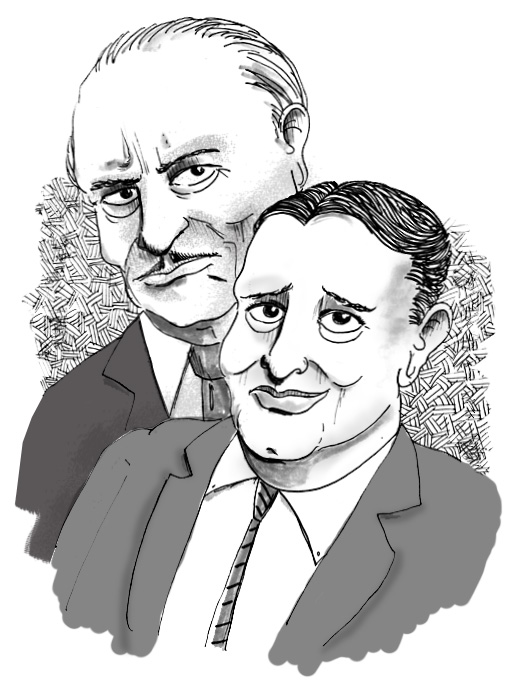
Holding the flag means taking care of the nation. Folding the flag is putting it to bed for the night.
“If you want a symbolic gesture, don’t burn the flag; wash it.” — Norman Thomas

Norman Thomas was a noted pacifist, war critic, conscientious objector, co-founder of the National Civil Liberties Bureau (the precursor to the ACLU) and six-time presidential candidate for the Socialist Party of America. He was outspoken against the United States’ involvement in World War I, World War II and, later, Vietnam. He opposed Japanese interment camps in the US. He worked to welcome victims of Nazi persecution to the US and campaigned against segregation and racism. He criticized the Catholic Church’s stance on birth control. He was very critical of Zionism and of Israel’s policies towards the Arabs and often collaborated with the American Council for Judaism. A plaque in the library of Princeton University honoring Mr. Thomas reads: “I am not the champion of lost causes, but the champion of causes not yet won.”

And Mr. Thomas loved his country with the passion of the Founding Fathers.

Comments

comments

from my sketchbook: ahmet ertegun

 Just because you sell a lot of something doesn’t mean that it’s good. McDonalds sells a lot of hamburgers.
In 1935, Münir Ertegün moved his family to Washington, DC when he served as the first ambassador of the new republic of Turkey. Son Nesuhi Ertegun took his nine year-old brother Ahmet to jazz clubs to see Duke Ellington and Cab Calloway. Soon Ahmet and Nesuhi were staging jazz concerts, booking the acts themselves. Expanding on his love of music, Ahmet got a record cutting machine when he was fourteen, using it to add his own lyrics to instrumentals.

In 1947, Ahmet and his friend Herb Abramson got backing from a family acquaintance to start a record label for jazz, gospel and R & B. This was the birth of Atlantic Records. The fledgling company’s first 22 releases were unsuccessful, until Stick McGhee’s “Drinkin’ Wine Spo-Dee-O-Dee” became their first major hit. Atlantic enjoyed great success through the 1950s, signing such acts as Ruth Brown, Big Joe Turner, The Coasters and Ray Charles.

In the 1960s, Ahmet heard a demo by a band called Led Zeppelin and signed them immediately. He convinced David Crosby, Graham Nash and Stephen Stills to allow Neil Young to join them on tour. Later, Ahmet personally negotiated the deal to allow Atalntic Records to distribute the Rolling Stones independent label. Additionally, Ahmet wrote “Mess Around”, made popular by Ray Charles, and sang back up on Big Joe Turner’s “Shake Rattle and Roll”. He also made time to start the New York Cosmos soccer team (which introduced soccer legend Pelé to the United States).

On October 29, 2006, Ahmet attended a Rolling Stones concert at the Beacon Theatre for the Clinton Foundation, which was attended by former US President, Bill Clinton. Prior to the show Ahmet was backstage in a VIP area when he tripped and fell, striking his head on the concrete floor. He was rushed to a hospital where he remained in stable condition. His condition eventually took a turn and he slipped into a coma. Ahmet passed away in December 2006 at the age of 83.

A series of tribute concerts were held during the following year to honor of “one of the most significant figures in the modern recording industry.” Performers, like Eric Clapton, Phil Collins and a one-night-only reformed Led Zeppelin, came together to remember the man who, for some, was responsible for their careers.

Comments

comments

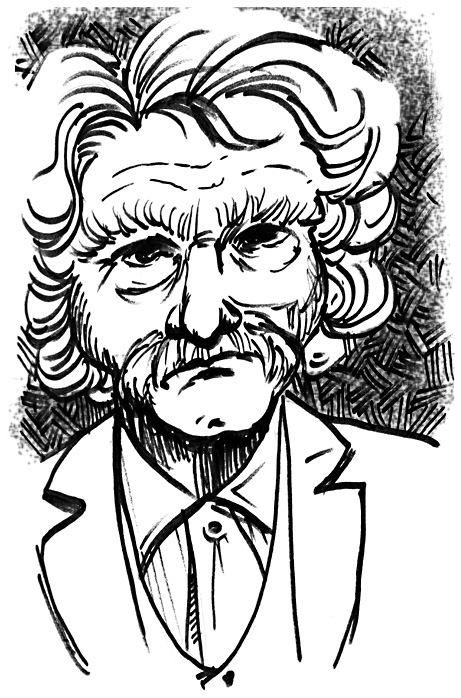
from my sketchbook: kitty genovese

I think we're alone now/there doesn't seem to be anyone around
Kitty Genovese was headed home after another late evening at Ev’s Eleventh Hour, the bar in Hollis, Queens where she worked as the night manager. She parked her car in the Long Island Railroad parking lot and began to walk the one hundred feet to her apartment across the street. The entrance was located at the end of an alley at the rear of the building. The early morning hours of Kew Gardens, New York were quiet and Kitty expected to take the walk home undisturbed. Except on that particular night in March 1964, Winston Moseley, a 28 year-old man with no previous criminal record, stood in Kitty’s way.

Kitty was startled by Moseley’s figure in the shadows. She began to hasten her stride, but Moseley attacked and stabbed Kitty twice in the back. Kitty stumbled and screamed, “Oh my God, he stabbed me! Help me!”, but at three in the morning, the windows of the surrounding apartments were all shut tight and most neighbors were sound asleep. As Moseley closed in, a lone neighbor hollered, “Let that girl alone!” from an upper-floor window. Moseley panicked, ran to his car and backed up to the next cross street. Kitty staggered, bleeding and in need of assistance — but the darkness hid her from view of anyone looking out the windows of the surrounding courtyard.

Ten minutes later, Moseley returned and searched for Kitty. He checked the train station parking lot and the courtyard of the apartment building, trying the entrance doors to each apartment hallway. The first one was locked. The second was not and he opened it to reveal Kitty lying on the hall floor. She screamed. Moseley stabbed her seventeen more times and as she was dying, he raped her. He stole $49 from her purse before fleeing. Police soon arrived after receiving a call from Karl Ross, a neighbor who briefly heard the second assault. Kitty was transported by ambulance to a nearby hospital, but died en route.

Based on interviews and investigation, police estimated that a dozen people had heard or witnessed portions of the attacks. Many were unaware that an assault or homicide was in progress. Some thought that what they saw or heard was either a lovers’ quarrel or a drunken brawl or a group of patrons leaving a nearby bar and, therefore, saw no reason to call the police.

Winston Moseley was apprehended and, after confessing to two more murders, was sentenced to death. A subsequent appeal commuted the punishment to life imprisonment. In 1968, Moseley was brought to a Buffalo hospital for minor surgery. He overcame a guard, grabbed a gun, and took five hostages, sexually assaulting one of them. Following a tense standoff, Moseley was returned to prison. He has been eligible and turned down for parole several times. His next parole hearing is scheduled for November 2011.

This past Friday would have been Kitty’s 76th birthday.

UPDATE: After numerous denied paroles, Moseley died in prison in 2016 at 81 years old.

Comments

comments

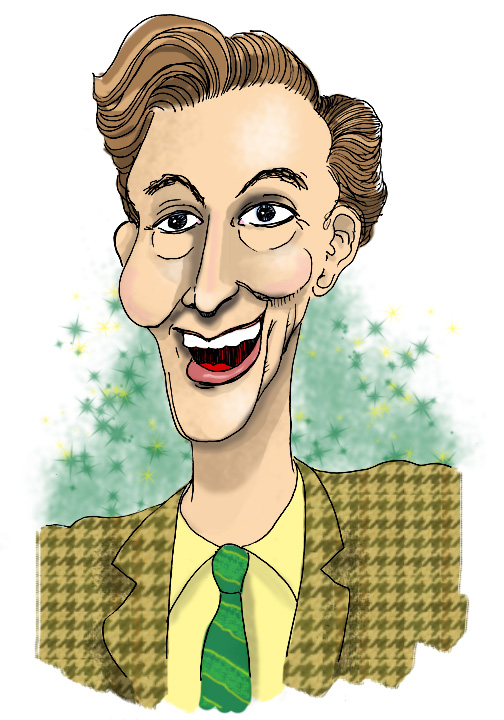
from my sketchbook: billy laughlin

Froggy went a courtin' and he did ride, uh-huh

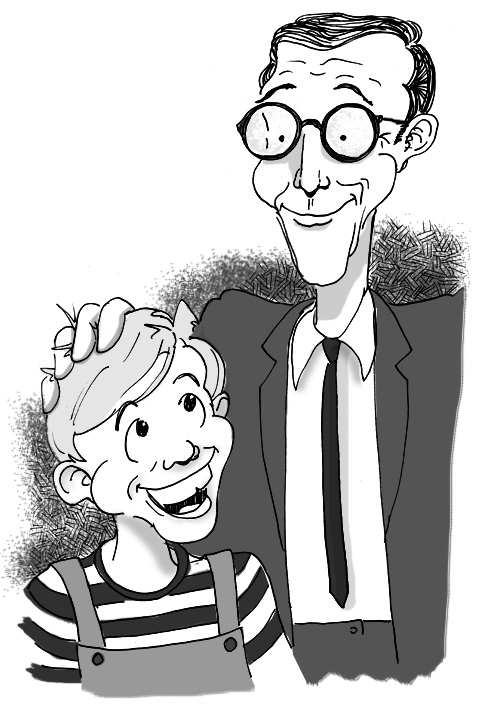
Billy Laughlin was discovered by an MGM talent scout outside a movie theater doing Popeye imitations for his friends. Soon, Billy was starring in the final run of the Our Gang  film series as “Froggy”. He spoke in the gravelly croak that brought him fame in 29 shorts beginning with The New Pupil  in 1940 through Dancing Romeo  in 1944. (In a scene in 1941’s 1-2-3-GO!,  Billy briefly used his actual speaking voice for the only time on camera.) After the Our Gang  series ended, 12-year old Billy told his mother he was no longer interested in acting and wished to be a normal kid. And he did just that. Billy went to school and hung out with other kids and lived the life of a normal teen.

In August 1948, 16-year old Billy was delivering newspapers on his motor-scooter with a friend in La Puente, California. A speeding truck hit the boys and their vehicle from behind. They were killed instantly.

Billy was the youngest former Our Gang  member to die.

Comments

comments

DCS: larry and roger troutman

And the Lord said unto Cain, Where is Abel thy brother? And he said, I know not: Am I my brother's keeper? / And he said, What hast thou done? the voice of thy brother's blood crieth unto me from the ground.
Larry and Roger Troutman had no idea how influential their band would be. They just wanted to play the funk.

Roger made a deal with his childhood friend, bassist Bootsy Collins. They vowed that whoever became more famous would help the other achieve the same level of fame. In 1978, Roger founded Zapp with his brothers Tony, Terry, Lester and Larry.  However, Bootsy’s star rose first, scoring success with groundbreaking band Parliament-Funkadelic. Bootsy introduced Roger to Parliament’s leader George Clinton. George was instrumental in securing a record deal for Zapp with Warner Brothers. Upon the release of their eponymous debut album and its hit single “More Bounce to the Ounce,” Zapp began touring as the opening act for performers like Prince, the Commodores, Gladys Knight and the Pips, Ashford and Simpson, Kool and the Gang and Cameo.

Roger was Zapp’s producer, chief writer, arranger, and composer in addition to being the focus of their stage show. He made generous use of the voice-altering “talk box” both on stage and recordings. Roger incorporated the “talk box” into Zapp’s biggest songs notably “Computer Love”, which hit the Top Ten on the R & B charts in 1985. By the early 1990s, Zapp’s music was being widely sampled throughout the budding hip-hop genre. In ’96, Roger sang back-up and contributed his famous “talk box” to Tupac Shakur‘s “California Love.” Zapp remains one of the most sampled groups by West Coast hop-hop artists.

Larry had become Roger’s manager and the two had many discussions over finances and Roger’s desire to dissolve the partnership. Although the Troutman brothers were always very close, sometimes the arguments escalated to an uncomfortable level. On April 25, 1999, Roger was shot four times outside of his Dayton, Ohio recording studio. Upon his discovery, he was rushed to the hospital and died during surgery. The killer – his brother Larry – was found several blocks away behind the wheel of his car with a single gunshot wound to his head and the gun lying on the seat beside him.

Comments

comments

DCS: barbara colby

All the world's a stage/And all the men and women merely players;/They have their exits and their entrances,/And one man in his time plays many parts.
In 1964, Barbara Colby gave a well-received performance in Six Characters in Search of an Author.  This led to Broadway, where she made her debut the following year in The Devils  with co-stars Anne Bancroft, Jason Robards, James Coco and Albert Dekker. She garnered positive reviews for her roles in numerous plays throughout the remainder of the 1960s.

Barbara met and married Bob Levitt, son of Ethel Merman, and the couple moved into the prestigious Dakota in Manhattan’s Upper West Side. Barbara continued to perform in plays and began to take guest roles in popular episodic television. The demands of a bi-coastal career put a strain on her marriage. She split with her husband as her film and television career was taking off. She appeared in weekly dramas like Kung Fu, Columbo and Medical Center  and took a turn at comedy as a bartender in an episode of The Odd Couple, at the suggestion of her friend Jack Klugman.

In 1974, Barbara was cast as Sherry, the smart-aleck prostitute, in a memorable episode of The Mary Tyler Moore Show.  The character was so popular that Barbara was asked to reprise the role a year later in a subsequent episode. MTM (Mary Tyler Moore’s production company) realized they had the perfect actress to complement Cloris Leachman in the spin-off sitcom Phyllis. Barbara was cast as “Julie Erskine”, Phyllis’ boss at the photography studio in which she worked. Filming began on the show and Barbara and the cast completed three episodes.

On July 24, 1975, Barbara was teaching an acting class in Venice, California. A little before midnight, she and fellow actor James Kiernan stopped to talk in the parking lot after the class. Suddenly, they were each shot by two men that approached them. James was able to give police a description of the event and the shooters before being rushed to the hospital, where he died several hours later. Barbara, however, died instantly. She and James were both 35 years old.

The cast of Phyllis was devastated and Cloris Leachman filmed an emotional tribute eulogizing her co-star. CBS decided not to air the piece, fearing it would interfere with the lightheartedness of the comedy. Barbara’s role was taken over by actress Liz Torres.

Comments

comments

DCS: bobby buntrock

Hey Sport!
Bobby Buntrock got his first taste of acting on an episode of Wagon Train  at the age of seven. He landed the part of little Harold Baxter on the sitcom Hazel with Oscar winner Shirley Booth as the problem-solving maid for George and Dorothy Baxter as played by Don DeFore and Whitney Blake (Meredith Baxter’s mother). During Hazel’s  popularity, Bobby appeared in a memorable TV commercial for the new Marx toy — Rock ’em Sock ’em Robots — in 1964. He stuck with Hazel for its entire run and after the show’s cancellation, Bobby had guest roles in a few more series until he left show business in 1967.

In April 1974, Bobby was killed in a car accident in Keystone, South Dakota. He was 21 years old. The accident allegedly occurred in roughly the same spot as an accident that claimed his mother’s life a year earlier. An interesting coincidence, but it is a claim that has been disputed.

Comments

comments

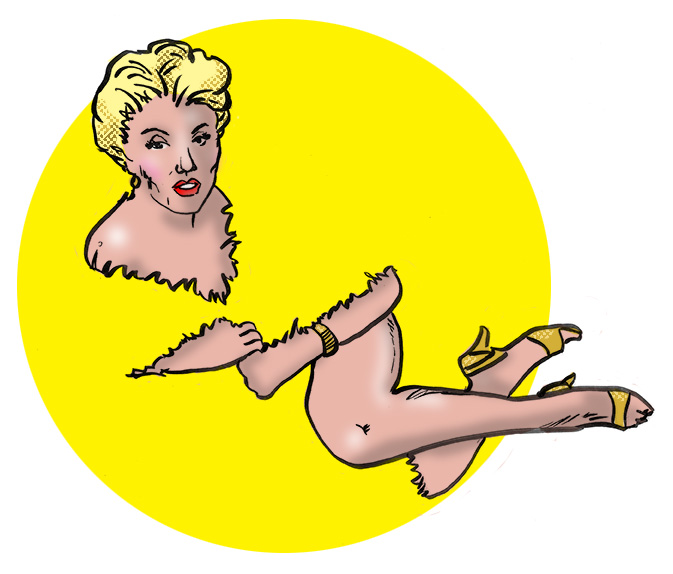
IF: remedy

This week’s Illustration Friday challenge word is “remedy”.
The unavoidable kiss, with the minty fresh Death breath sure to outlast this catastrophe/Dance with me, /'Cause if you gots the poison, /I've gots the remedy

“There is a remedy for everything. It is called death” — Portuguese proverb

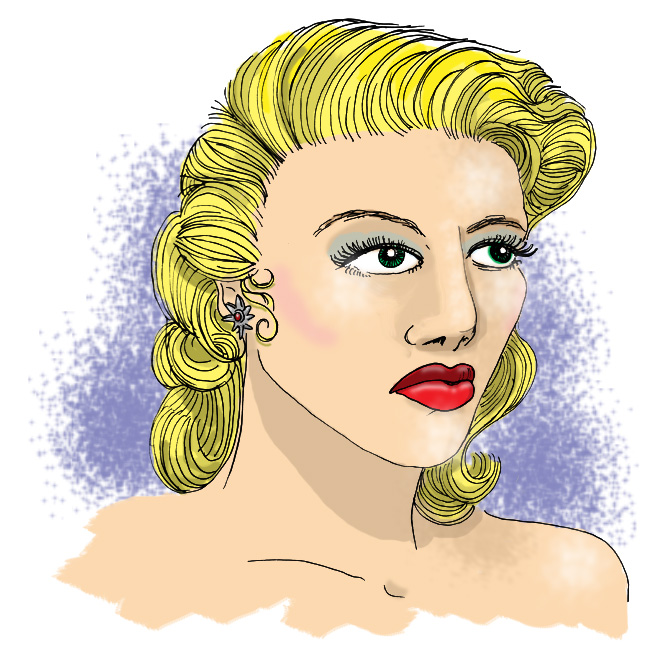
In the nearly five year existence of this blog, I have related over two hundred stories of death. I have also chronicled numerous excursions to cemeteries – one of my favorite hobbies. I guess the Portuguese are on to something. So, for this week’s Illustration Friday suggestion, I offer the story of singer Phyllis Hyman, a fellow Philadelphian who sought the remedy for everything.

The eldest of seven children (and a cousin of Earle Hyman, Bill Cosby’s father on The Cosby Show ), Phyllis Hyman landed a place with a national singing tour upon her graduation from a Pittsburgh music school. She performed with several vocal groups including leading her own band Phyllis Hyman and the P/H Factor. She also played a small role in the 1974 biopic Lenny  with Dustin Hoffman as comedian Lenny Bruce. She caught the attention of a former promoter from Epic Records and signed to his fledgling Roadshow Records label.

Phyllis became a popular background singer for many R & B groups. She had a chart hit with a cover of The Stylistics’ Betcha By Golly Wow  performed as a duet with jazz drummer/producer Norman Connors in 1976. She released her self-titled debut in 1977 and followed it with Somewhere in My Lifetime  in 1978, her sophomore effort produced by label-mate Barry Manilow. As her star was rising, she married her manager Larry Alexander. Alexander introduced Phyllis to cocaine, which started her on a lifelong addiction to the drug. Soon, her personal and professional relationship with Larry ended.

Determined to continue with her interrupted acting career, Phyllis appeared on Broadway in Sophisticated Ladies,  a tribute to Duke Ellington. Her performance netted her a Tony nomination. In 1983, she recorded the title track for the James Bond movie Never Say Never Again.  However, a contract dispute between the songwriters and Warner Brothers kept her version out of the final film and an alternate composition performed by Lani Hall (wife of Herb Alpert) was used instead.

Phyllis continued to release albums, tour and collaborate with other jazz singers and musicians like Chuck Mangione, Grover Washington, Jr. and Lonnie Liston Smith. She also appeared in more films including Spike Lee’s School Daze.

On June 30, 1995, a few hours before her scheduled performance at the famed Apollo Theater, Phyllis’ body was discovered in her New York apartment. She had overdosed on pentobarbital and secobarbital. A suicide note read: “I’m tired of singing. I’m tired of living. Those of you that I love know who you are. May God bless you.” Phyllis was 45 years old.

HERE is my original line drawing before adding color.

Comments

comments