from my sketchbook: spade cooley

in spades
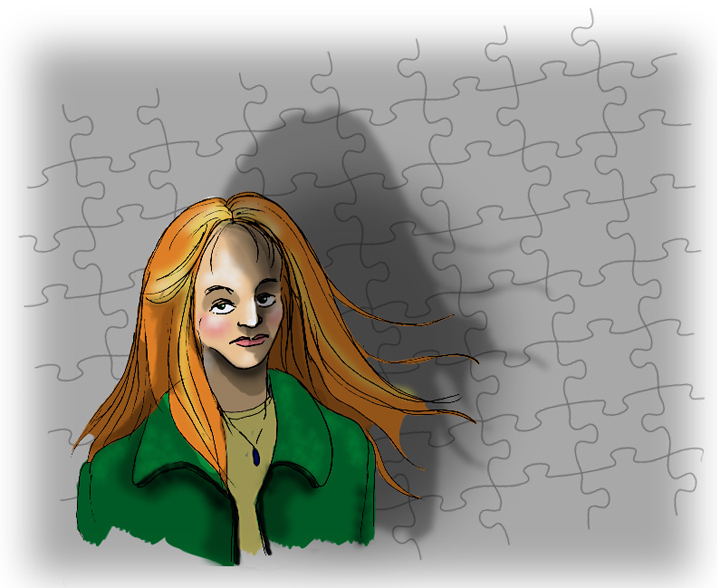
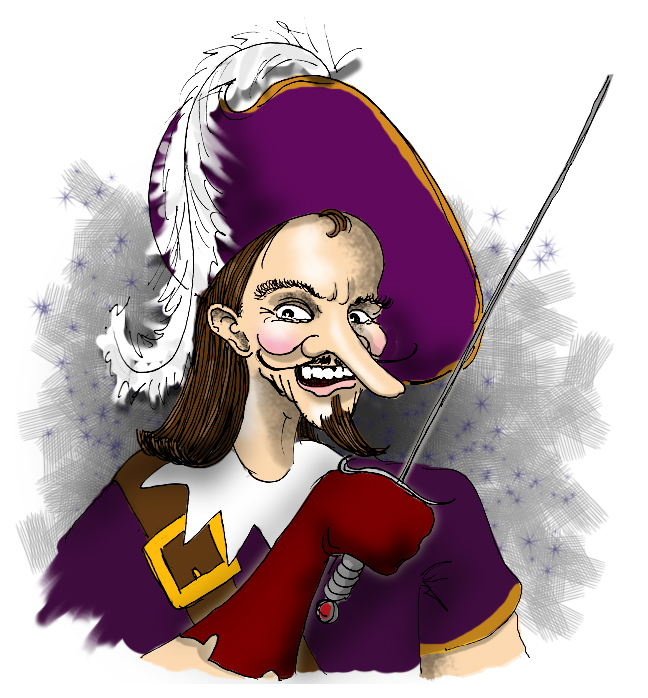
In the late 1940s, Spade Cooley had one of the highest rated TV shows in local Los Angeles television. With his infectious take on a blend of Western honky-tonk and danceable Big Band, the “King of Western Swing” was also the king of Saturday nights on KTLA in Los Angeles, attracting 75 percent of viewership to his live broadcast from the Santa Monica Ballroom. Guests on his show included top stars of the day, like Frank Sinatra and Dinah Shore. In addition to his band-leading, Spade appeared in 38 Western films alongside Roy Rogers. Spade Cooley was riding high and his ego increased at the same rate as his popularity.

As the rock and roll era approached, KTLA needed an excuse to ditch the now-heavy drinking Cooley. He was fired by the station. He managed a daily fifteen-minute show on rival station KTTV, but his popularity waned. He sought other avenues of revenue as he was desperate for income. He had married young Ella Mae Evans, the vocalist from his band and he had three children from a previous marriage. Spade pursued the idea of a themed Southern California water-park hoping to cash in on some of the popularity of Walt Disney’s recently opened park in Anaheim. He faced rejection after rejection as he pitched his idea to potential (and soon uninterested) financial backers. His increasing frustration, coupled with his increased alcohol intake, made Spade delusional. He was convinced that his wife Ella had a long-term affair with Roy Rogers and was still unfaithful.

On April 3, 1961, after another heated accusation of infidelity, and in the presence of his 14-year-old daughter Melody, Spade beat Ella to death, stomping repeatedly on her head as she lay on the floor pleading for her life. He then burned her stomach with a lit cigarette to make sure she was dead. As Melody fled the house in horror, Spade screamed that she was next. Four months later, a jury delivered a unanimous guilty verdict on first-degree murder charges. Spade was sentenced to life in prison.

After eight years, the state of California decided to grant Spade parole in early 1970. In November 1969, Spade received a 72-hour furlough to play benefit concert for the Sheriffs Association of Alameda County. His fiddle playing was inspired and his performance was greeted with a warm reception. Immediately after leaving the stage, Spade suffered a fatal heart attack and died backstage at the Oakland Auditorium. He was 58.

Comments

comments

from my sketchbook: kim walker

Que sera sera/Whatever will be will be/The future's not ours to see/Que sera sera
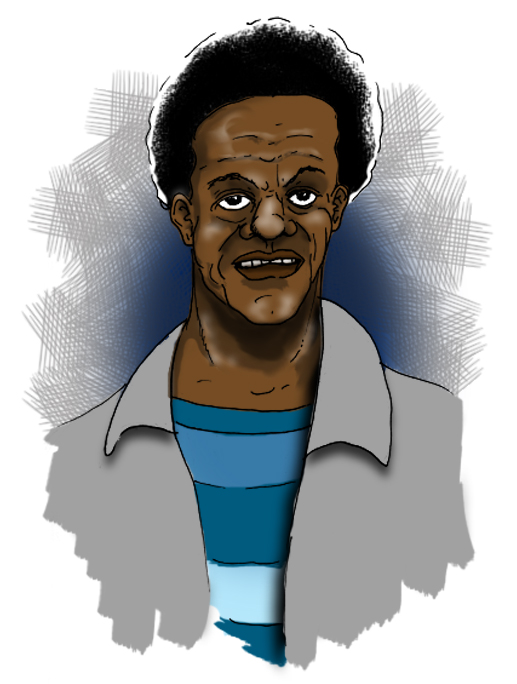
Kim Walker appeared in guest roles on a dozen television shows. She was featured regular cast member in the nearly forgotten, short-lived series The Outsiders,  based on the film of the same name. Kim’s big screen roles mostly included a handful of throwaway roles in little-known films. The exceptions being the John Cusack favorite Say Anything  and the part for which she is most remembered.

Kim embodied the malicious high-school queen bitch Heather Chandler in the 1988 black comedy Heathers.  In the film featuring Winona Ryder and Christian Slater, Kim lit up the screen with her wicked performance as the loathsome leader of the school-ruling clique that passed judgement and spewed insults at her fellow students.  In Heathers,  Kim delivered her most famous and memorable line – “Did you have a brain tumor for breakfast?”

Thirteen years later, Kim died of a brain tumor at the age of 32.

Comments

comments

IF: shades

I'm doing alright/gettin' good grades

But today there is no day or night,
Today there is no dark or light,
Today there is no black or white,
Only shades of gray.

My wife and I are avid accumulators.  Our house is an interesting amalgam of pop culture pieces from our youth and antiquities that predate even our parents’ childhoods. Don’t expect to see us on Hoarders anytime soon. Our collections are displayed in an orderly fashion throughout our three-story residence. We do, however, have a collection of collections. One morning in the early 90s, my wife and I set out to browse the offerings of a collectibles show at a convention center in Valley Forge, PA, not far from our home.

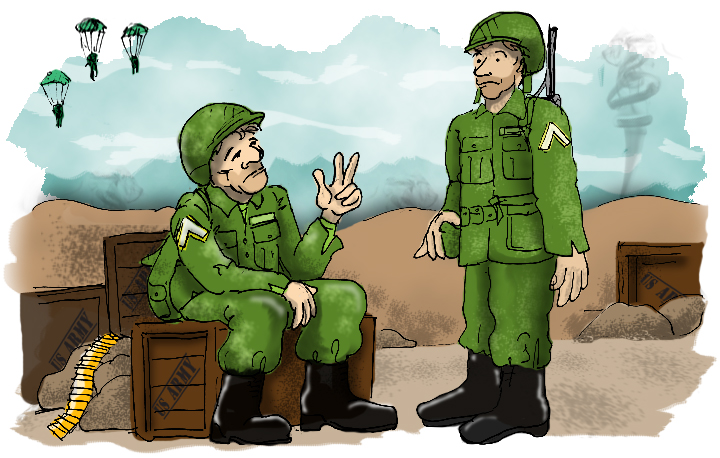
The facility was bustling with dedicated collectors searching for that elusive piece or unusual knick-knack. Mrs. Pincus and I prowled the aisles of merchandise, anxious to spot that one cool item that all others had overlooked. Along with the opportunity to view the wares of hundreds of dealers, the show promoters booked an appearance by two celebrities whose presence would have nostalgic appeal to the attendees. It was here I began another collection — this one of autographed celebrity photos. At a small folding table, covered with various glossy 8 x 10 photos, sat Butch Patrick. Butch played child werewolf Eddie on the 60s sitcom The Munsters. As a youngster, he also starred in the feature film The Phantom Tollbooth and, after the cancellation of The Munsters, he took on a handful of guest roles in episodic television. And then, he grew up. No longer a cute little kid, Butch had much difficulty finding acting work. He began showing up at fan conventions and collector shows, signing autographs and posing for pictures for a few bucks. He essentially made it a second career. I was intrigued at meeting Butch. After all, I had watched and enjoyed The Munsters as a kid and later in countless reruns. Butch was a nice guy and he chatted with my wife and me, as our young son sat in his stroller and played Game Boy, totally uninterested.  I happily handed five bucks to Butch in exchange for a personalized black & white photo of him in full Eddie makeup. We talked more and it seemed as though he didn’t want us to leave. I looked around and, unfortunately, we were the only ones expressing any interest in meeting Butch Patrick. Just a few feet away was the ever-lengthening end of a long, snaking line of fans, excitedly awaiting their chance to meet the event’s other celebrity — Davy Jones. The Monkees, TV’s “Pre-Fab Four,” were enjoying a new-found popularity with a new generation (based on a recent re-introduction by cable television) and the Philadelphia-area contingency were out in full force. The convergence of recent and long-time admirers queuing up to spend a few brief minutes with the diminutive Mr. Jones was so long and so far from his “meet & greet” set-up, we couldn’t even get a fleeting glance of him. We knew he was in the building, but there may as well have been an ocean dividing us. We decided to finish perusing the remainder of the dealers’ tables and call it a day. Hopefully, I’d get the opportunity to cross paths with Davy again.

In 2006, my family attended the annual eBay Live convention where buyers and sellers, who frequent the internet’s largest auction website, interact and rejoice in all things eBay. (Mrs. Pincus has maintained the Mars Hotel eBay store for over 15 years.) This particular convention was held at the Mandalay Bay resort in Las Vegas. For three days, we ate, drank, slept, complained about, marveled at and discussed eBay. It was an interesting experience and the surreal atmosphere of Las Vegas was the perfect setting for the sometimes otherworldly crowd that eBay proudly boasts as its core community. The first evening featured a keynote speech by then-CEO Meg Whitman, who stopped short of waving pom-poms in the air and forming a human pyramid with other eBay staffers, as she sang the company’s praises with crowd-stirring enthusiasm somewhere between that of a high-school cheerleader and a gospel preacher. At the time, eBay was using The Monkees’ tune “Daydream Believer” in their TV commercials, focusing on the lyric “oh, what can it  be,” as an anthropomorphic “IT” cavorted with happy and satisfied eBay customers. At the conclusion of Meg’s speech, the curtains behind her parted to reveal a full band, complete with go-go booted-back-up singers, on a moving platform advancing to the edge of the stage. While the band played the opening bars of the aforementioned Monkees’ classic, none other than Davy Jones himself appeared at the stage-front and belted out the familiar first verse. Suddenly, every woman over 45 — and there were hundreds  of them — rushed to the stage and the orchestra pit became a sea of waving, vintage 1960s female hands. Davy happily leaned his tiny frame over the edge of the stage and pressed the girly palms of as many swooning 70s high-school graduates as he could. For the next forty-five minutes, Davy and the band plowed through hit after bubble-gum hit from the Monkees’ songbook. When the house lights finally flickered back on, the throng was ecstatic, entertained and most of all, sufficiently surprised by the impromptu performance. Especially, one Mrs. Pincus, whose hand was among those graced by a quick brush with Davy’s.

This past September, I drove down I-95 to a nondescript Marriott hotel in the Baltimore suburb of Hunt Valley. It was the site of the 6th Annual Mid-Atlantic Nostalgia Convention (MANC). In addition to the usual vendors hawking movie posters, long forgotten toys (still in their original packages) and poorly-duplicated, unathorized DVDs of films and TV programs that nevertheless elicit smiles, the MANC presented a diverse line-up of celebrity guests with an appeal to post-Atomic Age attendees. Seated behind long, photograph-laden, banquet tables were the likes of Oscar-winner Patty Duke, Room 222  cutie-pie Karen Valentine and her gruff co-star Michael Constantine, Father Knows Best  TV siblings Billy Gray and Lauren Chapin and Leave It to Beaver  big brother Tony Dow. A late addition to the roster and relegated to an outside hallway, away from the majority of his peers, was Davy Jones. When I arrived, the gray-tressed Davy was standing alongside a small folding table, wedged between a guy selling boxed bobble-head dolls and a fellow displaying cardboard crates crammed with theater lobby cards for movies no one has thought about for decades. He was scribbling on a torn sheet of paper, careful to avoid the small stacks of glossy photos covering the bulk of the table’s surface.

“Hey,” I spoke up to Davy, “What’re you doing?”

Davy stopped his writing, touched my shoulder, pointed to the page with his pen and answered me as though he were my best friend and we had spoken regularly. “I’m doing a concert for the Boys and Girls Club of Miami and I’m writing out a set list. I took the show over from Clarence Clemons (Bruce Springsteen’s longtime saxophone player who passed away in June 2011). I have to figure out what songs to do.” He turned his focus back to the paper, his Sharpie poised just above a recently deleted entry on his list.

I thought to myself: “Are you kidding  me?!? Daydream Believer, I’m a Believer,  that song you sang on The Brady Bunch  and Hey! Hey! We’re The fucking Monkees! You’ve been singing these songs for 40 years, for crying out loud!  You really think you need to write a set list?”  Instead, I politely commented, “Oh.”

Davy asked if I’d like to purchase a photo and I selected a standard shot of the youngest Monkee in his signature double-breasted blue shirt shaking a pair of colorful maracas. As Davy inscribed the picture with an exaggerated flourish from his marker, I told him I was in the crowd at the eBay Live event in Las Vegas a little over five years earlier. He gently blew a drying breath towards the ink on the freshly-personalized picture and his eyes looked skyward while he searched his mind to corroborate my reference.

“Oh, right,” he began, “and they dropped green slime all over me while I sang! I remember!”

What?,” I replied with inquisitive disbelief as I narrowed my eyes, “No. No. It was a concert at Mandalay Bay for eBay. You performed after the keynote speech.”

“Oh yeah,” he said and he pointed to the air in front of his nose. It was obvious that he had absolutely no idea what I was talking about. He added. “I thought you looked familiar.”

I cocked my head. “No, we didn’t meet.  I was in the audience. You shook my wife’s hand. She was so happy. You nearly brought her to tears!”

“Why?,” Davy questioned, “Was I that bad?”

“No!,” I said, slightly raising my voice, “because you’re Davy Jones, for Christ’s sake!”

Davy had no reaction and not the slightest glimmer of recognition of the event. He graciously posed for a picture with me. I thanked him, expressed my pleasure of making his acquaintance and walked toward the inside room to meet the other celebrities.

Twenty or so minutes later, I had made the rounds, met the other celebrities, quickly examined wares of the other vendors and finally, exited the room in the direction of the hallway. I passed Davy and, again, he was hunched over his table, busily scribbling.

“How’s that set list going?,” I said as I strolled by Davy’s little table.

Davy looked up and gestured to the paper with his pen. “Yeah,” he began, “I’m doing this concert for the Boys and Girls Club of Miami that I took over for Clarence Clemons.”

“I know, Davy,” I answered, “We just had this conversation a few minutes ago.”

He stared back at me without expression and turned his attention back to his list. I turned my attention to the hotel’s parking lot and to locating my car.

Several weeks ago, I was listening to the radio at work. Between songs, the DJ announced that news came in reporting Davy Jones had suddenly passed away at age 66. He then segued into a Monkees song. As part of the generation that grew up watching The Monkees,  I was genuinely saddened. As someone who had met Davy Jones a mere five months earlier, I was saddened a little more. However, as I reflected on the absurdity of our conversation, I smiled.

Me and Mister, Mister Jones/We got a thing goin' on
JPiC and Davy, September 24, 2011

Comments

comments

from my sketchbook: claudia jennings

I'm sittin' here thinkin' 'bout my red haired dream/If I could only see her tonight
Claudia Jennings’ life was filled with “almosts”.

Born Mary Eileen Chesterton in St. Paul, Minnesota, she moved with her parents and two younger sisters when her father got a job with Motorola in Evanston, Illinois. Mimi, as she was nicknamed, was a star student all through school, bringing home top grades and honors. So, when she opted to forgo college to pursue a career in acting and modeling, her parents were disappointed.

She headed to the nearest big city – Chicago – and got a job as a receptionist at Playboy Enterprises. Nineteen-year old Mimi caught the eye of a photographer at the office and, several test shots later, she was Miss November 1969, using the name “Claudia Jennings” to avoid any embarrassment to her younger sisters. She soon was named “Playmate of the Year” and used her new-found fame as a springboard to an acting career, making her debut in the low-budget, Vietnam melodrama Jud  in 1971. Claudia was on her way to becoming the Queen of the Exploitation Film, with starring roles in such B-grade cult classics as Gator Bait, Truck Stop Women, 40 Carats, The Stepmother and Group Marriage.  In 1972, Claudia starred in The Unholy Rollers,  another shoestring-budget film (edited by a young Martin Scorsese on his first job) made to cash in on the roller derby craze of the early 70s. It could have been the breakout role Claudia needed had MGM not released the similarly-themed Kansas City Bomber  starring Raquel Welch just a few months earlier. The Unholy Rollers  featured the song “Stay Away From Karen” (an ode to Claudia’s character in the film) written by Bobby Hart. Bobby, who had co-written many songs recorded by The Monkees, began a romantic relationship with Claudia.

Claudia also made numerous appearances on episodic television, including a guest role as talent agent Tami Cutler on The Brady Bunch.  She memorably shattered the rock-star dreams of Greg Brady, informing him that “He fit the suit” in the episode “Adios, Johnny Bravo”. (Barry Williams, who played Greg, admitted that he developed a huge crush on Claudia.) She nearly landed the title role on the Wonder Woman  series, until producers decided to go with the taller, more buxom Lynda Carter. Later in the 70s, producer Aaron Spelling campaigned intensely for Claudia to fill the void left by the exiting Kate Jackson on Charlie’s Angels.  The network balked, fearing sponsor backlash from Claudia’s past appearances in Playboy,  and gave the role to model Shelley Hack. Shortly afterwards, her relationship with Bobby Hart ended and she became a frequent fixture in the cocaine-fueled LA nightlife.

Claudia continued her run in low-budget, drive-in fare including such throwaway hillbilly romps as The Great Texas Dynamite Chase  (a kick-ass precursor to Thelma and Louise)  and  Moonshine County Express,  the horror gorefest Sisters of Death  and the Roger Corman-produced sci-fi tale Deathsport,  opposite a post-Kung Fu  David Carradine. She also began a tumultuous affair with Beverly Hills realtor Stan Herman (who, at the time, was still married to actress Linda Evans).

In October 1979, just after finishing Fast Company  for director David Cronenberg, Claudia was driving her Volkswagen convertible down Topanga Canyon Boulevard, when she fell asleep at the wheel. Her car crossed the yellow traffic-dividing line and was struck head-on by a van. Claudia died at the scene as paramedics struggled to free her from the wreckage. She was just weeks away from her thirtieth birthday.

Comments

comments

from my sketchbook: douglas corrigan

You went the wrong way, old King Louie!
Ever since a visit to a California airfield, Douglas Corrigan became interested in flight. He began taking flying lessons at an airfield where aircraft manufacturers B.P. Mahoney and T.C. Ryan ran a small airline. He eventually took a job at their San Diego factory.

Just after Douglas was hired, a young aviator named Charles Lindbergh contacted Mahoney and Ryan with plans for a specialized craft. Douglas assembled The Spirit of St. Louis’ wing and installed its gas tanks and instrument panel. When Lindbergh took off from San Diego to prepare for his famous flight from New York, Douglas personally pulled the chocks out from the wheels of the aircraft. When news of Lindbergh’s success reached Douglas and his co-workers, they were excited, but Douglas vowed to someday make his own transatlantic flight.

In 1929, Douglas received his pilot’s license and he purchased a used monoplane. He began to modify the craft, readying it for his own flight of glory. Unfortunately, the government repeatedly rejected Douglas’ applications for transatlantic flight. He had flown from San Diego to New York on quite a few occasions and was certain that his modified plane could make the trip across the ocean. The US government believed otherwise.

On July 8, 1938, Douglas left San Diego for New York, a trip he had made many times. His official flight plan had him returning to California on July 17. Douglas took off from Floyd Bennett Field in Brooklyn in a thick fog. He flew east and claimed he had become disoriented. With the fog refusing to lift and visibility at its poorest, Douglas was only able to fly with aid from his compass. Twenty-six hours into the flight, he dropped below cloud level and noticed a large body of water beneath him. According to his account, Douglas realized that he had been following the wrong end of his compass’s magnetic needle. After twenty-eight hours and thirteen minutes in the air, Douglas touched his plane down at Baldonnel Airport in Dublin, Ireland.

When officials questioned him, Douglas stuck with his story of getting lost in the clouds and flying the wrong way. Upon his arrival back in the United States, the newly-nicknamed “Wrong Way” Corrigan was given a hero’s welcome. The New York Post  printed a front-page headline that read “Hail to Wrong Way Corrigan!” — and the headline ran backwards. Douglas also received a ticker-tape parade down Broadway with more people lining the sidewalks than had turned out to honor Charles Lindbergh after his transatlantic flight.

Long after his fame had faded, Douglas retired to an orange farm in Santa Ana, California. He passed away in December 1985 and he never changed his story.

Comments

comments

IF: intention

This week’s Illustration Friday word suggestion is “intention”.
I'm just a soul whose intentions are good/Oh Lord, please don't let me be misunderstood

I’m pretty sure my dad’s intentions were good, but he had his own quirky method of making them known.

My father followed an old-time, though slightly skewed, set of ethics. He was a hard worker and blindly devoted to the company he worked for — no matter how little that company gave a shit about him. He tried to instill his work ethic into my brother and me and he somewhat succeeded, as we are both hard workers. However, the Pincus boys just never bought into the “blind loyalty” part, as we came to know after years of working for various employers, that most employers feel that their employees are expendable and easily replaced.

My father loved his family and his way of showing love was to keep constant tabs on their schedules and their whereabouts. As my brother and I came into our teens, that task proved increasingly difficult for my father. Where are you going? How long are you staying there? When will you be home? Who will you be with? these were all part of the regular barrage of questions my brother and I were riddled with when we made a motion toward the front door during our adolescent years. My older brother’s teenage antics made a wreck of my father’s sense of family order and when I reached “driver’s license” age I was no better.

In the summer of 1980, when I was 19, I ran a sidewalk produce stand for my cousin at 16th and Spring Garden Street in downtown Philadelphia. My cousin awakened in the wee hours of the morning and would spend several hours purchasing stock for the stand at the massive Food Distribution Center in South Philadelphia. He’d load his van with crates of fresh fruit and vegetables and I’d meet him at the stand around 8 a.m. to help unload the van and set up for the day. I did this every weekday for the entire summer and, even though I would sometimes stay out fairly late on weekday evenings, I was never on that corner later that 8 a.m. the next day. No matter what. Never.

At the beginning of that summer, I went on my first vacation without my parents. I went to Florida with three of my friends. When I returned home, my cousin recruited me to hawk plums and lettuce and I was just getting into the daily routine that the job required. I had also just met a girl at a local record store and we made plans for a date. Late one afternoon, I came home tired from a full morning of weighing out cherries, bagging bananas and persuading passers-by to pick up some tasty spuds for their family’s dinner. After a shower and a change of clothes, I was ready to take this new girl out to a restaurant and who-knows-what-else. I met my father on the front lawn as I was leaving the house and he was arriving home from work. Right on schedule, the questions began.

He opened with his old favorite — “Where are you going?”

“I have a date.”

“When will you be home?”

“I don’t know. Later, I guess.”

“You know, you have work tomorrow.,” he informed me, as though I would not have otherwise been aware of my employment.

“I know.,” I answered as I opened the driver’s door of my mom’s car and slid behind the wheel. My father stood on the lawn, arms folded across his chest, and watched me drive off. It was apparent that he was not pleased with my limited answers to his inquiries.

I arrived at Jill’s house and offered her the passenger’s seat in my mom’s tank-like Ford Galaxie. We chatted as we drove and at one point I glanced in her direction as she nonchalantly popped a Quaalude into her mouth. We pulled into the parking lot of the Inn Flight Steakhouse on Street Road and I helped Jill through the entrance doors as her self-medication affected her navigational ability on the short walk from my car. At dinner we talked and joked and exchanged other typical “first date” pleasantries. Before we knew it, we had spent several extended hours at that table, although I’m sure I was more aware of the time than she was. (Under the circumstances, I sure I was more aware of a lot  of things than she was.) She invited me back to her house, explaining that her parents were away for a few days (hint, hint). We drove to her house and, once inside,  she motioned to the basement, telling me she join me in a few minutes.

Meanwhile, my father was manning his usual post at the front door. He stood and stared out through the screen with an omnipresent cigarette in one hand, checking his watch approximately every eight seconds.

“Where the hell is he?,” he questioned my mother.

“He’s on a date. He told you. You saw him when you came home from work.,” she replied, as she had countless times before.

“He has to go to work early tomorrow morning. Doesn’t he have a watch? Doesn’t he know what time it is?” My father was convinced that if he personally didn’t inform you of the current time, you couldn’t possibly know. He fancied himself humanity’s “Official Timekeeper”. He would have made a great town crier.

My mother — that poor exasperated, sleep-deprived woman — tried to reason with my father. “He’ll be home. He knows he has to work. He’s responsible. You know  he’s responsible.”

Suddenly, he grabbed his coat and scanned the living room for his car keys. “What are you doing?,” my mother asked, suspiciously.

“I’m gonna go look for him. Maybe he has a flat tire.,” he said, trying to sound concerned, but my mom was not convinced.

“You don’t even know where he is. You don’t know where the girl lives. You don’t even know her name! Where are you going to look?” My mother knew he was up to something. No one could get anything  past my mother. Especially my father.

“Then, I’ll drive around and look for him.” Ignoring her words, my dad got into his car, backed down the driveway and sped off to a planned destination. He had no intention off driving around. He knew exactly where he was going. Somewhere around the time that Jill was descending her parent’s basement steps wearing little more than a blanket and a smile, my dad was bursting through the doors of a police station several blocks from our home.

“My son is missing.,” my frantic father shouted at the policeman on duty, “I don’t know where he is!”

The unfazed officer grabbed a pen and, with it poised above a notepad, asked my father, “When did you see him last?”

“About seven hours ago,” my dad replied, “when he left for a date.”

The policeman dropped the pen, cocked one eyebrow and stared blankly at my father. “He’s probably still on the date, sir.” He instructed my dad to go home, assuring him that I’d probably be home any minute. Annoyed and dejected, my father shuffled back to his car and drove home. A few minutes after he pulled into the driveway, I steered my mom’s car along the curb in front of my house. As I walked up the front lawn, searching for my house key, the front door opened and the shape of my father was silhouetted by the living room lamp. My mother was lurking several feet behind him.

“What are you still doing up?,” I asked.

“Where the hell were you?,” my father yelled, “I just came from the police station looking for you.”

With this information coming to light for the first time, my mother and I simultaneously emitted a loud, angry and incredulous ‘WHAT?’

“You went WHERE?,”  I screamed, “You knew I was on a date! Are you INSANE?”  I glanced down at my watch (contrary to my father’s beliefs, I did own one and I referred to it often). “I don’t have time to talk about this. I have to wake up in a couple of hours to go to work.” I echoed my father’s ingrained work ethic and looked him square in the face. “And so do you.,” I finished.

With that, I stomped upstairs, flopped down on my bed and drifted off to sleep to the muffled tones of my mother’s reprimanding voice coming from my parent’s bedroom below.

I know my father’s main concern was my safety and well-being and his intentions were honorable, but he desperately needed to take a course in Parental Behavior. Lucky for him, I think my mom taught those classes.

Comments

comments

from my sketchbook: allison hayes

And with the way you look I understand that you are not impressed
Even after winning the 1949 Miss Washington DC Pageant, Mary Jane Hayes wasn’t interested in a career in movies. She did some modeling, though, and it was during a photo-shoot that she was approached by a talent scout from Warner Brothers Studios. Mary Jane turned down his offers of “stardom”, but on a subsequent visit to New York City, she gave the scout a call. He invited her to make a screen test at the New York office.

Another scout, this one from rival studio Universal-International, saw Mary Jane’s photo in a Washington DC newspaper and tracked her down. She told him she had done a screen test for Warners. Through industry connections, the Universal scout saw the screen test and Universal-International offered Mary Jane a seven-year contract.

Once in Hollywood, she began shooting her first picture, Sign of the Pagan  with Jack Palance as Attila the Hun. She also changed her name to the more exotic “Allison”. During filming, Allison began a relationship with her co-star Palance. He treated her poorly, both on the set and off. Soon, she moved on to other pictures with a long line of leading men including Tony Curtis, Van Heflin and Raymond Burr. Cecil B. Demille almost cast her as Moses’ wife in his epic The Ten Commandments,  but it was revealed that she was under contract to Universal and she lost the part to Yvonne DeCarlo.

In 1956, Allison worked with legendary B-movie director Roger Corman on the Western Gunslinger  with star John Ireland. The location shoot was plagued with four days of rain and, in the resulting mud,  Allison was thrown from a horse and broke her arm. She quipped to director Corman, “Who do I have to fuck to get off this picture?”

Allison consulted with a doctor for treatment of her arm and was prescribed a calcium supplement to aid in the bone healing. Ready to get back to business, she was cast in a string of horror movies culminating with her best-remembered role in the cult classic Attack of the Fifty-Foot Woman,  in which she played the titular character. In the film, Allison wreaked havoc on those who did her wrong, including co-star Yvette Vickers.

Allison’s career kept her busy, even if the budgets of her pictures were greatly reduced. She also continued to ingest the calcium supplements although she felt they were draining her energy and making her weak. With her films drawing fewer crowds and her health slowly declining, Allison began to take smaller roles in episodic television. She voluntarily stopped taking her calcium medication and decided to give the remaining pills to a toxicologist. Reports came back to Allison with startling news. The pills that she had been taking regularly for years contained a high amount of lead and Allison was suffering the effects of advanced lead poisoning. Even while tending to her personal health needs, Allison mounted a campaign to have the FDA ban the import and sale of the particular food supplement.

On February 26, 1977, the now-invalid, 46-year-old Allison was moved to a San Diego medical center. She was experiencing chills, flu-like symptoms and intense pain. She died the next day. Shortly after her death, a letter arrived from the FDA explaining that, as a result of her actions, amendments were being made to the laws governing the importation of nutritional supplements.

Comments

comments

from my sketchbook: max manning

put me in coach, I'm ready to play
For 28 years, Max Manning taught sixth grade in Pleasantville, New Jersey before retiring in 1983. In those years, how many students knew anything about their teacher’s past?

Max was born in Georgia and grew up in South Jersey, just outside of Atlantic City. He was a stellar athlete on his high school’s baseball team. Word of his on-field abilities made its way to a scout from the Detroit Tigers and a contract offer was tendered. But the offer was rescinded when the team discovered that Manning was black.

Soon he signed a contract with the Newark Eagles of the Negro League. Nicknamed “Dr. Cyclops” because of his thick glasses, Max developed his sidearm pitching style and posted good numbers in strikeouts and wins. However, his baseball career was put on hold briefly when Max entered the Air Force in World War II. During his military service, he faced racial prejudice, with one incident landing him in the stockade for fifteen days. Later, he suffered a back injury in a truck accident and was discharged. Despite the injury, Max was determined to resume pitching for the Eagles.

Max returned to baseball and in 1946 he finished the regular season with a record of 11-1 with the second-highest league strikeout total. Pitching through constant back pain, Max helped the Eagles overcome the mighty Kansas City Monarchs to win the 1946 Negro League World Series. After the World Series, he barnstormed with greats like Satchel Paige, Bob Feller and Buck Leonard, but his physical ailments forced his career to an end.

On his wife’s insistence, he returned to school on the GI Bill and earned a teaching degree from Glassboro State College. He taught, and was beloved by students, at the Pleasantville Elementary School for 28 years. After retiring, Max kept busy with gardening and with his family until he passed away in 2003 at age 84. Just before he died, Max gave a lengthy and enthusiastic interview to the History Channel detailing his baseball career. I wonder how many of his former students watched it?

Comments

comments

IF: capable

This week’s Illustration Friday challenge word is “capable”.
sometimes a man's gotta do what a man's gotta do.

“The difference between what we do and what we are capable of doing would suffice to solve most of the world’s problems.” — Mohandas Gandhi

Mohandas Gandhi began a law practice in South Africa in the late 1800s, after several failed attempts at establishing a practice in his native India. He initiated his form non-violent protest while fighting for civil right in the expatriate Indian community in South Africa. He returned to India in 1915 and further strove for civil rights for the oppressed lower class. He mounted campaigns for women’s rights, religious equality and freedom, fair treatment of laborers and freedom from foreign domination — all employing his non-violent methods. He successfully rallied Indians against the British-imposed Salt Tax in 1930 and later spearheaded the Quit India movement to expel British rule from India. The effort resulted in the suppression of free speech and the imprisonment of thousands, but the British eventually left India, deciding that its people were “ungovernable”.

Gandhi devoted his life to peace and equality, while stressing its achievement through non-violent means. On January 30, 1948, as he approached the podium to address a prayer meeting, Gandhi was shot and killed by Nathuram Godse, a Hindu extremist.

Comments

comments