IF: legendary

A! A! AAAAAAAAAAAAAAA! Fuckin' A!!!!!!!!!!!!!!!!!!!!!!!!
I have always loved watching comedians. I remember seeing some of the legends of comedy on The Ed Sullivan Show, The Mike Douglas Show and (when I was allowed to stay up late) The Tonight Show with Johnny Carson. I remember watching greats like Alan King, Jackie Mason, Shecky Greene and Jackie Vernon, even if I didn’t understand their jokes. My parents laughed, so I assumed these guys were funny. We all had our favorites. My dad liked Rodney Dangerfield, feeling a kinship with his “no respect” laments, and my mom leaned more towards the subtle intellectual likes of Bob Newhart and Mort Sahl. My brother loved the insult-peppered humor of Don Rickles. But we all agreed, we loved to hear jokes. I remember watching the new crop of “cool” younger, hip comedians like George Carlin, Robert Klein and fellow Philadelphian David Brenner. I saw counter-culture comics Cheech and Chong in a 200-seat auditorium at Drexel University. When I was in high school, I dated Henny Youngman‘s niece and got to meet him at a performance in Philadelphia. He was hysterical, however, in regular conversation, he wasn’t funny. On a visit to the famous Catskill Mountain resort Grossinger’s in the early 80’s, my wife and I saw an incoherent (and, most likely, drunk) Frank Gorshin stumble his way through a tedious schtick. He really  wasn’t funny.

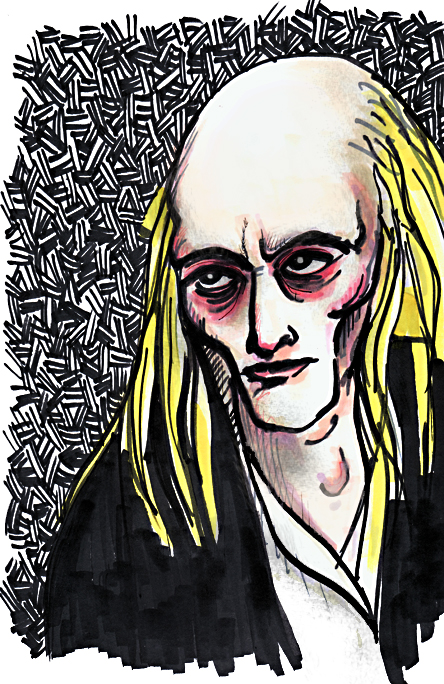
Taking inspiration from my admiration of comedians, I love to tell jokes. I know a lot of jokes. Some good, some awful, but I have the uncanny knack of remembering them all and I like to add my own spin when I retell them. When I was in my early 20s, I frequented a local comedy club called “The Comedy Works”. The club was situated on the second floor of a restaurant that was operated by a corrupt and disgraced Philadelphia city councilman. Appearances were mostly from comedians who haunted the east coast club circuit. One of the best and most memorable was The Legendary Wid, a tall, lanky madman who littered the stage with a collection of odd props and tchotchkes, each used as the punchline in a single gag. He was the original “prop comic” long before Carrot Top — and a million times funnier. Wid was a fixture at The Comedy Works and often served as Master of Ceremonies. In the years that I patronized The Comedy Works, I saw early performances by Bob Saget (with whose father, my father worked), Jackie Martling, Richard Jeni and a young upstart named Eddie Murphy. The Comedy Works hosted an amateur night on Wednesdays. I was constantly cajoled by my friends to take the stage on amateur night. After all, in their eyes, I was just as funny as some the comedians we were seeing each week.

So, in between attending art school, completing assignments, eating and sleeping, I wrote a stand-up act. I meticulously observed everything that was said to me and everything that I saw around me. I wrote down everything that I thought was remotely funny. I wrote, edited, crossed-out and rewrote for almost three months. I gave a practice recital at art school for my class of about fifty. I held a written script in my hand and if a bit didn’t get a laugh, I crossed it out on the spot.

After careful honing, multiple omissions and countless refinements, I was set to make my stand-up debut… to shut my friends up once and for all, as I had no intention of continuing anywhere past this one exhibition. Prior to my one-and-only performance, I invited almost everyone I ever met … with the exception of my future in-laws. I figured it would allow for a better impression if they didn’t witness the guy who was about to take their daughter from them prowling a harshly-lit stage spewing obscenities. My  parents were invited, but I already knew their opinion of me and I didn’t give a shit.

I arrived with my parents about an hour before showtime. We were welcomed by the Legendary Wid, who would be handling the evening’s hosting duties. Soon, Wid got word that an overwhelming majority of the audience was there by my invitation and only cared to see me. When the show started at 9 PM, Wid took the stage and announced to the crowd that the “Josh Pincus” Bar Mitzvah would begin shortly. Then, the parade of comedic hopefuls each delivered their humorous observations in three-minute soliloquies. Some were funny, some were not. A smattering of polite applause punctuated each monologue. However, by the time I was introduced three hours later, the lion’s share of the faction was — how shall I put this — crocked. I could have stood before them and read a telephone directory and still gotten laughs. I commenced with my routine, secretly referring to some notations carefully hidden in the palm of my right hand. Through the blinding spotlight, the crowd was obscured from my view — but I could hear them.

And they were laughing.

I hung up my comedy chops after that night and I never felt the need to attempt it again. Twenty-five years later, I ran into The Legendary Wid at a Halloween party for members of Philadelphia public radio station WXPN. I reminded him of that night and of how funny I always thought he was. He seemed genuinely touched that I remembered him. We joked a little during our conversation. And he is still really funny.

Comments

comments

IMT: swirl (and IF: legendary)

My wife (who I’ll call “Mrs. Pincus”) and I have had a running joke for 27 years. We met in February 1982 and had our first date soon after. Our conversation was always great. We found that we had so many common interests. The joke was that we would never ask each other: “So, what kind of music do you like?” We figured that when we got to that question, we had run out of things to talk about. We still joke about it, even after twenty-five years of marriage. But, the truth is — I know. We both know. We both know the unspoken secret.

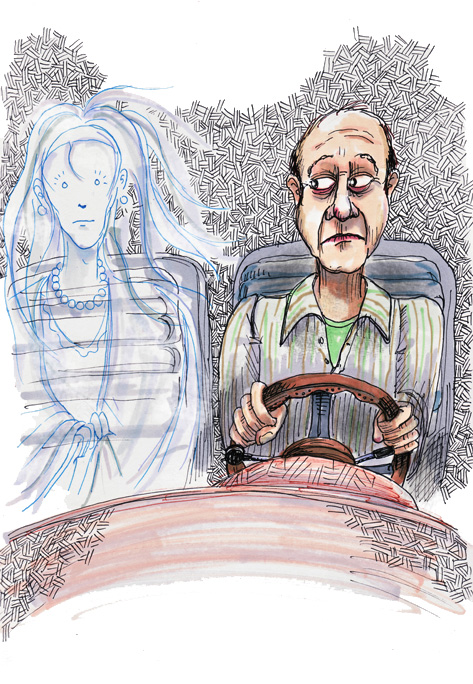
I married a Dead Head.
bakes my chicken when I sleep
I have been a music enthusiast from an early age. I listened to bubble-gum pop songs on AM radio, eventually making the change to cooler FM. I started going to concerts when I was 14. And, of course, I bought 45 singles and LP records (Those are the flat, shiny black vinyl things with a hole in the center for those of you under 30). I was a casual fan of many bands — The Beatles, Pink Floyd, Jethro Tull, Fleetwood Mac, Queen — and I had several albums by each one. I had two Grateful Dead albums — “From The Mars Hotel” and the live recording “Steal Your Face,” — which I bought as “cut-outs” from Peaches Records. These were out-of-print remnants from a record label’s catalog, so named for the physically clipped corner of the record’s sleeve. Cut-outs were the music equivalent of that odd-sized bolt of puke-green colored shag carpeting at the back of the flooring store. I was familiar with The Grateful Dead from a late-night showing of “The Grateful Dead Movie” on television. I’m sure I did not watch the whole film, but I liked some of the songs. I saw these albums in the “cut-out” section for $4.00, so, what the hell, I bought them.

I heard stories about Grateful Dead concerts from two older and cooler cousins. They related tales of cross-country travels to see The Dead, sleeping in VW Beetles and VW minivans (Dead Heads seem to gravitate towards Volkswagen products). They told of four-hour marathon performances featuring long and meandering full-band jams, known as the “space” portion of the show.

After dating for a month or so, the future Mrs. Pincus nonchalantly took me to a Dead show in early ’82. We were accompanied by her then-thirteen year old brother. We planned to meet her older brother at the Philadelphia Spectrum, where the show was presented. Once at the Spectrum, we mingled with the throng of dirty, tie-dye decorated denizens from another time in history. The Spectrum’s parking lot was a mini Woodstock-like carnival of psychedelia, stir-fried cabbage, macrame handbags and poorly-printed T-shirts adorned with skeletal images. There was a guy, with a beard that looked like a bird’s nest, selling brightly-colored balloonfuls of nitrous oxide for a buck. Inside the venue, I watched in bewilderment as the band played for hours (what sounded like the same song) much to the wild delight of the pirouetting kaleidoscopic faithful. Unknown to me at the time, this was to be my first of many Grateful Dead rituals.

Their regular schedule brought the Dead to Philadelphia for several consecutive nights each tour. Mrs. Pincus and a friend went to the show the night after my first experience. After work, I arrived at Mrs. Pincus’ apartment after they had left for that evening’s spectacle. From the empty glasses in the sink, I figured they must have had a few belts before leaving. I flicked on the TV and prepared for a long night of waiting for them to return. After a few minutes I noticed the cat (“Cassidy” was her name, the first in a long line of Grateful Dead-named cats we would have) wasn’t around. I searched under the bed, in closets, behind furniture, but the cat was nowhere to be found. Five hours later, when the totally-rocked pair of concert-goers returned, I asked when was the last time they saw Cassidy. They sobered right up and the three of us ripped that dwelling apart looking for the cat. Retracing her steps, the future Mrs. P opened the refrigerator and a cold but frisky Cassidy bounded out. She had snuck onto a bottom shelf when Mrs. P was dispensing alcohol and looking elsewhere. (Not to worry, Cassidy lived another eleven or so years easily.)

Several years later we even traveled to the Brendan Byrne Arena (now the Izod Center) in North Jersey to see The Dead. We sat in seats that were mathematically as far from the stage as one could get. Late in the show, after two and a half hours of essentially the same song, a wave of crowd recognition ebbed to the higher reaches of the arena. Through binoculars, I spied two fat dots on the smoky yet vibrantly-lit stage. One was obviously Jerry Garcia, spiritual deity of Dead Heads worldwide. The other plump speck, we discovered by way of “whisper down the lane”, was Stephen Stills, who was joining the Dead for the evening’s encore. As the band lumbered through a version of “Love The One You’re With,” I had to check my calendar to see what year this was.

In the early 90’s, my wife’s politically-affiliated cousin Carol offered us tickets to a fundraiser for U.S. Representative Pete Kostmayer. Carol didn’t have a lot of details on the event, but it was our understanding that this was a serious, political, adult benefit. That meant “tie and jacket” for me. The highlight (and presumably the draw) of the benefit was a performance by the Grateful Dead’s Bob Weir. The event was held at the now-defunct The Barn in Bensalem, a bar that served cheap beer, as well as playing host to a plethora of local cover bands. Mrs. Pincus and I dressed in our conservative best. Upon our arrival at The Barn, we realized our miscalculation in attire, as we were greeted by a knot of spinning, patchouli-stinking, tie-dye draped Bohemians, some of whom I’m sure I recognized from the Spectrum’s parking lot years earlier. Swirled Whale, a local band of Grateful Dead wannabes, entertained the crowd prior to Bob Weir’s arrival. Bob, however, was running late. Very late. Very, very late. Swirled Whale, whose lead singer mugged and contorted snake-like around the microphone stand — convinced everyone was there to see him — played for an hour and a half. This is twice the time allotment for a typical opening act. Bob finally sprinted to the stage, acoustic guitar in hand. He stumbled over Pete Kostmayer’s name, raced through three songs, thanked the audience and split. He may have even been checking a train schedule as he departed the stage. His entire presence took up twenty-five minutes… and that is being generous.

My wife and I attended another Dead show at the Spectrum at which, during an extended drums>space>drums jam, the entire section next to us was asleep. I can guarantee that, when they got home, those fans told their friends they saw the best show EVER! The next night, my wife was too sick to attend, so I took her ticket and went to the show with my brother-in-law. Arriving at our section, we began to count off row and seat numbers according to our tickets. Finger pointing in the air, I ticked off “nine, ten, eleven, twelve”. We had seats eleven and twelve. Eleven was empty, however wedged into seat twelve was a giant, tattoo-covered, leather-vested, chrome-chain bedecked biker dude. I turned to my brother-in-law and said, “Uh, he’s in your seat. Mine’s the empty one.” Unfettered and with a “fuck that!” expression across his face, he marched down to the seats, ready for confrontation. “Excuse me,” he started, “I think you’re in my seat.” The biker turned and spoke. “Oh, I’m sorry.,” he said, apologetically, “My mistake.” He extracted his girth from the seat and scurried up the aisle. My brother-in-law turned back to me proudly, as if he had just slew Goliath.

Over the years, I have experienced a Dead Head’s life as an outside observer. Once while driving alone on twisty, almost unnavigable Lincoln Drive in my wife’s Dead sticker-clad Datsun, a long-haired, shirtless teen with a crooked grin, in an equally Dead sticker-covered auto, jockeyed alongside my car, leaned out his car window and screamed “Iko Iko” at me at the top of his lungs. For Dead Heads, the band and its music are always  top of mind. Always. At least that’s what other Dead Heads think.

Late in the summer of 1995, my wife and my son had taken several days vacation in Atlantic City, New Jersey. I was at work. During the day, I was informed there was a phone call for me. I picked of one of the extensions. It was my wife and she was crying. I immediately thought the worst. My wife! My son! “What’s the matter?,” I asked.

Through tears and sobbing, she replied, “Jerry died.”

“Oh my God! Your cousin Jerry died?,” I answered, a chill running down my spine. My wife’s cousin Jerry is a healthy, athletic, energetic man in his early thirties.

“No,” she said, “Jerry Garcia.” See? Always top of mind.

The true spirit and spontaneity of The Grateful Dead phenomenon is gone. Although the surviving members are touring as a band called “The Dead,” it seems forced and planned and plastic.

Even to an outsider.

Comments

comments

from my sketchbook: jimmy boyd

I research a lot. I am always scouring the far reaches of the internet for interesting stories to illustrate. Several weeks ago I came across the story of Jimmy Boyd.
tell me a story
In 1946, seven-year-old Jimmy Boyd was singing with his brother at a barn dance in Colton, California. He was approached by a local radio host with an offer to perform on his show every Saturday night. Jimmy would earn $50 per show, money that would help to pay for cataract surgery for his mother.
The radio performances led to an audition for the Al Jarvis Talent Show in Los Angeles. Jimmy was a hit and was recruited for Jarvis’ five-hour daily show. Jimmy became a regular on the show. His popularity grew until he was performing on The Frank Sinatra Show with Ol’ Blue Eyes himself.
The accolades kept coming as 13-year-old Jimmy recorded the novelty hit “I Saw Mommy Kissing Santa Claus”, a holiday favorite that sold two and a half million copies in its first week of release. Jimmy became an international household name, and he skyrocketed to the status of a major star. Between February 1953 and November 1954, Jimmy made five appearances on the Ed Sullivan Show. Popular singer Giselle MacKenzie was bumped from one of those shows in order to accommodate Jimmy’s performance. Jimmy appeared on many popular variety shows of the day and recorded several more hits with Frankie Laine and Rosemary Clooney.
Jimmy had a great professional relationship with 60’s sing-along icon Mitch Miller. Miller was also an A&R (Artists and Repertoire) man at Columbia Records. He signed Jimmy to a contract and supplied him with a stream of novelty songs to sing. Jimmy disliked the songs but felt a loyalty to Miller. Jimmy longed to sing rock and roll — a music style that Miller publicly hated. Miller presented Jimmy with another novelty tune — “Jambalaya” — to record. Jimmy turned him down, deciding instead to concentrate on pursuing an acting career.
Jimmy’s success still wouldn’t let up. In the 1960s, he had hits with songs written by the likes of Leon Russell, Bobby Darin and Barry Gibb and produced by studio wizards like Terry Melcher. He was personally signed to A&M Records by founder Herb Alpert.
Jimmy conquered acting with guest roles in an array of popular TV programs and a part in “Inherit The Wind” with Spencer Tracy.
Jimmy was the youngest entertainer ever to appear in Las Vegas, starring at the famed Sands Hotel’s “Copa Room” at age thirteen during the swinging “Rat Pack” era. On Jimmy’s opening night, he was cheered to return to the stage for multiple encores. With the audience still applauding, Sands’ boss, Jack Entratter, standing backstage, angrily caught Jimmy and stopped him from going back on stage after his third encore, explaining that the audience needed to get back to the casino. Jimmy toured, selling out 90,000 seat venues. Jimmy was singing and doing TV and movies simultaneously.
In 1960, Jimmy married actress/dancer Yvonne Craig (who went on to become TV’s Batgirl). He entered military service in 1961. His marriage to Craig ended in divorce after two years. Jimmy toured Vietnam in USO shows, once as a solo and later with Nancy Sinatra.
After a full and satisfying career, Jimmy settled down to a houseboat docked in Santa Monica Bay.

When I discovered the tale of Jimmy Boyd, I was intrigued that I knew very little about someone who was obviously a wildly popular and international star. I thought his story would make a great illustration and blog post. However, the story wouldn’t quite fit with my blog’s underlying “dead celebrity” theme, since Jimmy was still alive.

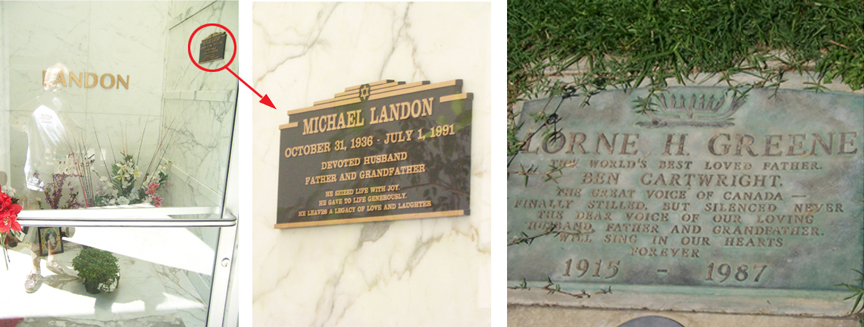
I was patient. Jimmy passed away on March 7 at the age of 70.

Comments

comments

IMT: bamboo

The inspirational word on inspiremethursday.com is “bamboo”.
You'd better never bother with me ol' bamboo
House of Bamboo
(as recorded at various times by Earl Grant, Andy Williams and Southern Culture on the Skids)

Number fifty-four/The house with the bamboo door/Bamboo roof and bamboo walls/They’ve even got a bamboo floor!

You must get to know/Soho Joe/He runs an Expresso/Called the House of Bamboo.

It’s a made of sticks/Sticks and bricks/But you can get your kicks/In the house of bamboo.

In this casino/You can drink a chino/And it’s gotcha swingin’ to the cha cha/Dance the bolero in a sombrero.
Shake like a snake!

You wanna stop in when the cats are hoppin’/Let your two feet move-a to the big beat;
Pick yourself a kitten and listen to a platter/That rocks the juke-box!

I’m-a telling you/When you’re blue/Well there’s a lot to do/In the House Of Bamboo.

Lets go go!/You must get to know, Soho Joe/He runs an Expresso/Called the House of Bamboo

In this casino, you can drink a chino/Let your two feet move-a to the big beat;
Pick yourself a kitten and listen to a platter/That rocks

I’m-a telling you/When you’re blue/Well there’s a lot to do/In the House Of Bamboo.

Number fifty-four/The house with the bamboo door/Bamboo roof and bamboo walls/They’ve even got a bamboo floor!

Here is Southern Culture on the Skids performing the song at Philadelphia’s World Cafe Live

Comments

comments

from my sketchbook: wolfman jack

you thought she was diggin' you, but she was diggin' the cat on the radio
In 1960, 22 year-old budding DJ Robert Smith began his career as “Daddy Jules” on a Newport News, Virginia station. In 1962, Smith moved to a station in Shreveport, Louisiana and became “Big Smith”. It was here that he first began to develop his famous alter ego Wolfman Jack. Later in ’62, Smith was recruited by a Mexican radio station whose high-powered “border blaster” signal could be picked up across much of the United States. Smith’s on-air “Wolfman Jack” persona developed. With phrases like “Who’s this on the Wolfman telephone?”, his national fame and popularity spread.

In the early days, Wolfman Jack made public appearances, usually as an Master of Ceremonies for rock bands at local Los Angeles clubs. At each appearance he looked a little different because Smith hadn’t decided on what “The Wolfman” should look like. Early pictures show him with a goatee; however, sometimes he combed his straight hair forward and added dark makeup to look somewhat “ethnic”. Other times he had a big afro wig and large sunglasses. The ambiguity of his race contributed to the controversy of his program. It wasn’t until he appeared in the 1969 film A Session with the Committee (a montage of skits by the seminal comedy troupe The Committee) that mainstream America got a good look at Wolfman Jack.

In 1973 he appeared in director George Lucas’ American Graffiti, as himself. His radio broadcasts are featured throughout the film and, in a pivotal scene, Richard Dreyfuss’ character meets the mysterious Wolfman. In gratitude for Wolfman Jack’s participation, Lucas gave the Wolfman a percentage of the profits from the film. The extreme financial success of American Graffiti provided him with a regular income for life.

Wolfman Jack’s popularity grew throughout the 1970s and early 80s. He was the regular announcer and occasional host of NBC’s concert show The Midnight Special  in addition to numerous appearances on various popular programs.

Wolfman Jack was also the host of a nationally-syndicated radio show. On June 30, 1995, he had finished broadcasting his last live radio program, a weekly program nationally syndicated from Planet Hollywood in downtown Washington, D.C. That night, the Wolfman said, “I can’t wait to get home and give Lou [his wife] a hug, I haven’t missed her this much in years.” Wolfman had also been on a lengthy promotional tour for his new autobiography “Have Mercy!”. When he got home to North Carolina, he entered his house, hugged his wife, said “Oh, it is so good to be home!”, and died in her arms.

Comments

comments

IMT: moon and IF: launch

giant steps are what you take
The following is a transcript of a recently discovered recording of a conversation from the command module of Apollo 11 on July 19, 1969.
Michael Collins: Well, here we are, heading to the moon. Man, this is cool!
Neil Armstrong: It sure is, Mike.
Edwin “Buzz” Aldrin: Hey, Mike…. um, you missed the meeting we had just before lift-off, didn’t you?
Michael Collins: Meeting? I wasn’t told about a meeting. I had orders to report right to the launch pad and that you guys would be a little late. There was a meeting? What did you talk about?
Neil Armstrong: We discussed the procedure for tomorrow’s moon landing.
Michael Collins: Oh yeah, baby! The moon landing! I can’t wait! The first three men on the moon! Oh, YEAH!
Edwin “Buzz” Aldrin: Uh, Mike…. Mike….. I don’t know how to say this, so I’ll just say it.
Michael Collins: Say what?
Edwin “Buzz” Aldrin: Well, Neil and I are walking on the moon. And since you’re the “Command Module Pilot”, you’re staying in the capsule.
Michael Collins: I’m WHAT ??? Staying in the capsule??? Are you fucking kidding me?? I didn’t travel 238,000 miles to sit in the fucking capsule so you two assholes can get all the glory!
Neil Armstrong: First of all, Mike, haven’t you noticed that your spacesuit isn’t the same as mine and Buzz’s? Yours doesn’t have nozzles for external breathing tanks. Didn’t that make you wonder a little? You step outside the command module and you are a deadman! Besides, this was planned a long time ago. The plan was that me and Buzz are walking on the moon and you’re driving around the block a few times and picking us up later. Got it?
Michael Collins: Got it? Got it? NO, Neil, I don’t fucking “Got it?”  My family will be watching TV tomorrow! What am I supposed to tell THEM? I told all the guys in aerospace training that I would wave to them from the moon. Aw, Jesus Christ, Neil.
Edwin “Buzz” Aldrin: C’mon Mike, you’ll still be in the history books. You’ll still be remembered.
Michael Collins: But, Buzz, I was gonna…
Neil Armstrong (interrupting): You’re not walking on the fucking moon, Michael! End of story!
(A door slams and several minutes of silence pass.)
Edwin “Buzz” Aldrin: That Collins. Jeez.
Neil Armstrong: Yeah, what a douchebag.

(To steve d: I don’t give a shit what you believe. There was a moon landing in 1969. I was it on TV, so it must be true!)

Comments

comments

Monday Artday: portrait of the artist as an eight-year old

take this brother, may it serve you well
I was eight years old in 1969. I wore cool green and blue plaid bell-bottom pants. I watched The Brady Bunch on Friday nights. I watched The Banana Splits on Saturday mornings. I went to third grade at Watson T. Comly Elementary School. I remember being worried that my older brother might have to go to fight in the war in Viet Nam. (When the US involvement in Viet Nam essentially ended, my brother was 15.)

In 1969, when I was eight years old, something else happened.

Sure, I had the 45rpm singles of “Sugar Sugar” by cartoon idols The Archies and “Aquarius” by smooth soul song stylists The Fifth Dimension. I even had the original Broadway recording of the musical “Hair“. I knew every lyric, even if I didn’t know what they were singing about. (I’m sure my parents were proud to have their eight-year old running around the house singing “Sodomy“.)

But, one day, on a shopping trip with my mom to Northeast Philadelphia’s Roosevelt Mall, I browsed the “Rock” section of Sam Goody. I spotted an album that stood out from all of the psychedelic themed covers. It screamed for my attention. It practically glowed. It was plain and square and white. Under the tautly-stretched cellophane, its cover was embossed with two words — “The”, followed by “Beatles”.

I was mesmerized. Was this the same “The Beatles” that cheerfully wailed about wanting to hold my hand on those old, scratched swirly-labeled Capitol 45s that my Uncle Sidney gleaned from an old jukebox when I was five? Those four fresh-faced moptops weren’t pictured anywhere on the album cover. For Christ’s sake, nothing was pictured on the album cover. I dug deep into my pants pocket and extracted a wad of birthday money. I snatched the double record from the rack and excitedly tucked it under my arm. I marched to the cashier and made the coolest purchase of my eight years on earth.

Comments

comments