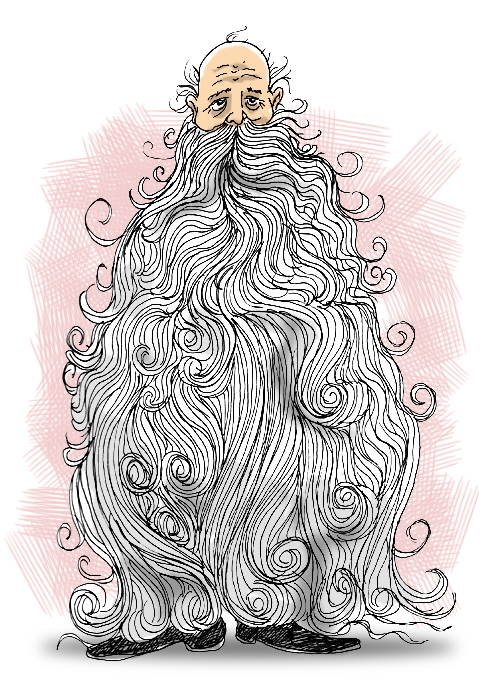
from my sketchbook: steve took

you wore out your welcome with random precision
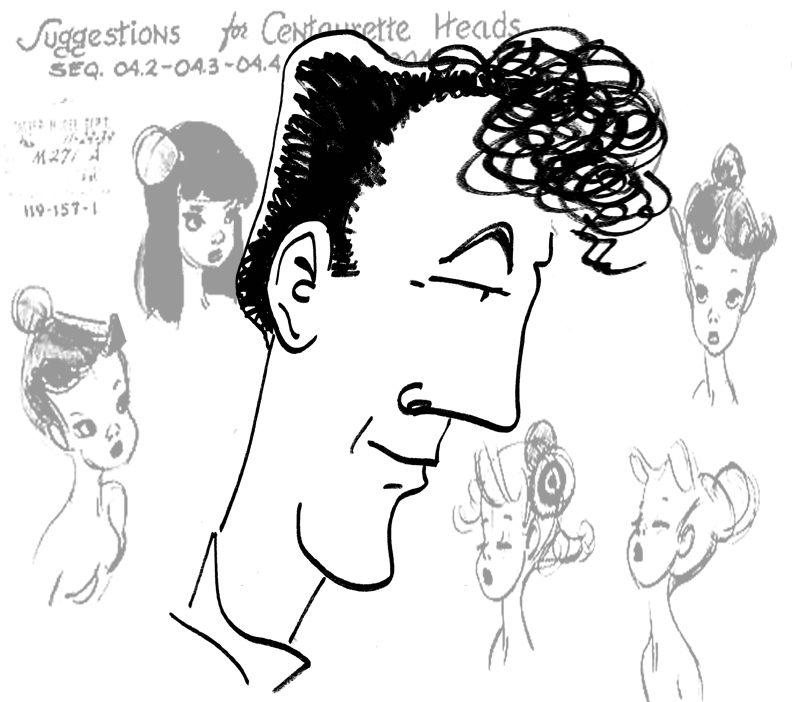
17-year old Steve Took answered an ad in the music newspaper Melody Maker.  Guitarist Marc Bolan was looking for a drummer to join his band and Steve fit the bill. The band, Tyrannosaurus Rex, performed one disastrous show and Bolan fired everyone but Steve. They remained a duo, busking in subways with Steve accompanying Bolan’s acoustic guitar with bongos.

Once in the studio, Steve arranged Bolan’s straightforward rock compositions into a swirly mix of many styles with the addition of African drums, kazoo, pixiphone, and Chinese gong. Their sound was a hit among the hippie crowds that frequented their shows, but Bolan had contempt for Steve’s lifestyle. Bolan, a relatively quiet guy offstage, was awaiting the birth of his first child. Steve, on the other hand, was a heavy drug user hanging with underground bands like The Deviants and The Pretty Things. Steve’s relationship with Bolan deteriorated quickly. After a show, during which Steve spiked the refreshments with hallucinogens, a furious Marc Bolan gave Steve his walking papers and renamed the band T. Rex.

Now on his own, Steve teamed up with his friend Syd Barrett, himself recently canned from Pink Floyd. Steve and Barrett collaborated on a slew of tracks that were never released. Steve then moved on to form the band Shagrat. Shagrat recorded a song called “Syd’s Wine” in which Steve was mysteriously credited as Crazy Diamond , a reference to the Pink Floyd tribute song to Syd Barrett. Steve assembled a few more bands,  but with his drug use steadily increasing, all were short-lived.

Soon, he hooked up with former T. Rex manager Tony Secunda, who promised to fight for unpaid royalties he felt were due to Steve. In 1980, now receiving royalty checks on a regular basis, Steve purchased a stash of morphine and hallucinogenic mushrooms for his live-in girlfriend and himself. After injecting morphine, Steve accidentally inhaled a maraschino cherry from a cocktail and choked to death. He was 31.

Comments

comments

from my sketchbook: billy haines

I'm gonna miss you, Billy/And though I'm trying/I'm hurting so bad, Billy/I can't help crying
Young Billy Haines ran away from his Virginia home, with his boyfriend, at age 14. They worked in a dance hall (that was most likely a brothel), until Billy was discovered by a Hollywood talent scout and offered a $40 a week contract with MGM Pictures. In March 1922, Billy was off to Hollywood.

Billy started off in bit parts until critical acclaim rocketed him to larger and more prominent roles. MGM lent their contracted player to Columbia Pictures for a five-picture deal. With his popularity increasing, Columbia offered to buy out Billy’s contract. MGM refused, taking back to star and demoting him again to smaller parts. After a rare starring role in Brown of Harvard  in 1926, Billy was on his way to real stardom.

He appeared in a string of box-office hits for MGM, acting alongside such Hollywood heavyweights as Mary Pickford and Marion Davies. At this time, he met Jimmie Shields, and the two became constant companions. This relationship did not sit well with MGM, specifically studio head Louis B. Mayer. Despite Billy being the top box-office draw for 1930, Mayer demanded that Billy commit to a “lavender” marriage to hide his homosexuality. Billy flatly refused. MGM immediately terminated his contract. They re-cast actor Robert Montgomery (future father of Elizabeth Montgomery) in all of the roles originally lined up for Billy. Billy got some work at lesser, low-budget studios, but soon found himself blackballed and added to censor Will Hays’ dreaded Doom Book, a sure career-killer.

Disgusted with the unfair treatment from MGM, Billy and Jimmie began a career as interior designers and antique dealers. They catered to the tastes of Hollywood elite like Joan Crawford (who described them as “the happiest married couple in Hollywood”), Gloria Swanson, Carole Lombard, Marion Davies and George Cukor. Their business and success grew and their design services became very much in demand. But their troubles didn’t end . In 1939, Billy and Jimmie were dragged from their Los Angeles home by Ku Klux Klan members and severely beaten – all on the false accusation of a sexual proposition as reported by a neighbor. Friends and supporters, like George Burns and Gracie Allen, Charles Boyer and Claudette Colbert, urged the couple to report the incident to police. They refused.

Billy and Jimmie eventually moved to a home in the Hollywood community in Brentwood. Their design business continued to prosper until they retired in the 1970s. Billy passed away from lung cancer just shy of his 74th birthday. Four months later, a distraught Jimmie lay down in the bed he shared with his beloved companion for nearly fifty years and took a deliberate and deadly overdose of sleeping pills.

Comments

comments

DCS: jenny maxwell

Jenny, Jenny, who can I turn to?
Jenny Maxwell, a distant relative of Marilyn Monroe, began her acting career in small roles — mostly in TV westerns and sitcoms in the late 1950s. She made her big screen debut with an uncredited part in the 1959 teen melodrama Blue Denim, which dealt with the then-controversial subject of abortion.

After an unsuccessful audition for the title role in another controversial film, 1962’s Lolita (which she lost to Sue Lyon), Jenny landed one of several female characters in Blue Hawaii  opposite Elvis Presley. Jenny played spoiled Ellie Corbett, whom The King tames into submission by spanking her on the beach.

Jenny appeared in guest spots on popular TV shows through the 60s, including episodes of Twilight Zone, Bonanza, Route 66  and a brief stint on the short-lived, Jack Benny-produced sitcom Ichabod and Me.

On a sunny afternoon in June 1981, Jenny and her husband, attorney Ervin M. Roeder, were leaving their Beverly Hills condominium, when they were shot to death in the lobby, the result of a botched robbery attempt. Jenny was 39 years-old. Ironically, Jenny’s last film appearance was in the Ed Wood-penned Shotgun Wedding.

* * * * *

josh pincus is crying is on Facebook now. You like him, right? 

Comments

comments

from my sketchbook: jack kerouac

On the road again. Just can't wait to get on the road again.

Jack Kerouac carried a notebook with him wherever he went. He chronicled his life, his actions, his feelings… everything. He traveled across the United States and Mexico — meeting people, observing their lives and writing about what he saw. His journeys and scribblings became the basis for his most famous book, On the Road.  Viking Press, the publishing company that finally accepted Jack’s novel, demanded extensive editing to the piece before publication. Jack complied but this led to heavy criticism of his spontaneous writing style.

Suddenly, Jack was a celebrity. On the Road  was an instant hit and other publishing firms fought for Jack’s stockpile of previously rejected works. Jack was hailed as the voice of a new generation. Jack dubbed it ‘The Beat Generation,” describing a person with no money and no prospects — as in “I’m beat down to my socks!” This new found fame didn’t sit well with Jack. As a way to deal with his unwelcomed notoriety, his drug and alcohol use increased.

CBS premiered the television series Route 66  in 1960. The program followed the adventures of two characters that bore a striking resemblance to the two protagonists in On the Road.  Despite the obvious sanitizing for television, the similarities in the characters and the depiction of the stories were too close for Jack’s comfort. Jack threatened to sue series creator Stirling Silliphant, CBS, the Screen Gems TV production company, and sponsor Chevrolet, but was inexplicably talked out of pursuing the lawsuit.

In 1968, Jack appeared on William Buckley’s Firing Line  to discuss 60s counterculture. The visibly drunk Jack did his best to field questions from the famously acerbic Buckley. It was Jack’s last television appearance.

Early in the morning of October 20, 1969, Jack began to feel ill after downing a shot of whiskey and glass of malt liquor. His wife was awakened by calls of “Stella, I’m bleeding.” She discovered Jack on the bathroom floor, throwing up large amounts of blood. Rushed by ambulance to St. Anthony’s hospital in St. Petersburg, Florida, Jack continued to vomit blood and was immediately sent for transfusions and surgery. Doctors had a difficult time cauterizing burst blood vessels and Jack’s blood wouldn’t clot due to his alcohol-damaged liver. Never regaining consciousnesses after surgery, Jack died the next morning. He was 47.

* * * * *

josh pincus is crying is on Facebook now. You like him, right? 

Comments

comments

IF: sky

This week, the Illustration Friday challenge word is “sky”.
There'll be food on the table tonight\There'll be pay in your pocket tonight
“Twinkle, twinkle, little bat!
How I wonder what you’re at!
Up above the world you fly,
Like a tea tray in the sky.
Twinkle, twinkle, little bat!
How I wonder what you’re at!”
— Alice’s Adventures in Wonderland (1865) by Lewis Carroll

* * * * *

josh pincus is crying is on Facebook now. You like him, right? 

Comments

comments

from my sketchbook: jamison smoothdog

Gonna climb me a mountain, the highest mountain/Gonna jump off, nobody gonna know
In the long ago days before eBay cornered the market on people selling their household castoffs, my wife and I frequented flea markets on a regular basis. Each Sunday morning, when the weather was nice (and sometimes when it wasn’t), we’d strap our unwilling young son into his car seat and head out to the dusty site of a long-closed drive-in theater or the parking lot of a local farmers market. Spread out among the makeshift baked dirt and gravel aisles, an eclectic combination of junk dealers, closeout merchants and Mr. and Mrs. Yard Sale displayed their wares on splintered wooden tables and battered tarpaulins, hoping to unload the bulk of their inventory and make an early exit before the afternoon sun discouraged potential customers. Mrs. Pincus and I would methodically trudge up and down every last aisle, perusing every last item, anxious to spot that elusive bauble missing from one of our many collections — much to the dismay of our young son who thankfully occupied himself in his stroller with some clean  toys brought from home.

Not all flea markets were relegated to some remote overgrown field or patch of abandoned concrete behind a boarded-up strip mall. Sometimes, wily vendors took up residence in the shell of a defunct supermarket, stocking the former produce section with used action figures and the checkout lanes with old board games.

One of our usual stops, after weeding through the piles of unwanted crap at South Jersey’s stalwart Berlin Market, was one such out-of-commission supermarket on Route 30 on our way back to suburban Philadelphia. With a cry of “Oh no! Not here  again” from my son, we’d file into the cavernous husk of an old Acme Market for a quick browse through the… the… merchandise,  for lack of a better word. It was here, at the Route 30 Market, that we met Jamison Smoothdog.

Jamison was an intriguing character. Small and wiry with pitch black hair pulled back into a tight ponytail. When he spoke, his voice was the deep croaking product of years of mistreatment by countless unfiltered Camels. Despite being indoors, he wore dark glasses, lifting them only to obtain a better view of the particular collectible he was trying to convince you to buy. On a small card table, he exhibited a variety of toys — both recent and vintage — and his asking prices ranged from reasonable to outrageous. At first he seemed no different from the parade of collectible toy dealers we encountered over the years, but there was something unique, something mysterious, about Jamison.

We visited the Route 30 Market and Jamison Smoothdog’s setup several times. Each time, he was pleasant and friendly, talking passionately and knowledgeably about the toys he had for sale. Sometimes we’d buy something from him, sometimes we’d leave empty-handed, but some small bit of information was revealed to us with each visit. One time, he told us he played guitar. Another time, he told us his old band played at JC Dobbs, the legendary South Street club that was the embryonic stage for bands like Pearl Jam, Green Day and Nirvana. Then, on one particular day,  he told us that he wrote “Can’t You See,” the anthemic signature song made popular by Southern Rock icons The Marshall Tucker Band. Jamison explained that he received a large sum of money in exchange for the writing credit be given to the band’s lead guitarist Toy Caldwell.

As the months and years moved on and Internet shopping replaced the face-to-face experience of flea markets, Mrs. Pincus began a lucrative business on eBay. She sought merchandise from other sources. We began to enjoy sleeping late on Sundays. The one-time charm of traipsing among dirty jumbles of old playthings began to wane. We passed by the Route 30 Market a few times on return trips from Atlantic City and just never stopped in. Soon, the market’s large sign came down, the parking lot began to fill with weeds and trash and the building fell into a state of obvious disrepair.

And we never saw Jamison Smoothdog again.

One boring evening, a Google search for Jamison Smoothdog yielded sketchy bits and pieces of a melancholy life. I discovered that he had owned a few incarnations of collectibles stores in the small community of Collingswood, NJ, each having a relatively short existence. I discovered that he played numerous shows at JC Dobbs and the North Star Bar (another small Philadelphia venue). I found out that his real name was James “Jimi” Hendrick, but he changed it to his more colorful moniker to avoid confusion with a more popular guitarist with a similar name. I uncovered a brief marriage, ending sadly when his wife was killed in a car accident. I learned that there is a long and bitter controversy concerning the true authorship of “Can’t You See.” I also learned that the controversy will most likely never be solved since Marshall Tucker’s Toy Caldwell passed away in 1993. Jamison subsequently recorded several album’s worth of material, all of which were shelved. Distraught, reclusive and borderline alcoholic, Jamison Smoothdog passed away as well, angry at missed opportunities, missed recognition and missed compensation.

Comments

comments

from my sketchbook: debora sue schatz

deliver the letter, the sooner the better

Twenty-three year old Debora Sue Schatz, on the job as a mail carrier for just over a year and a half, was doing a favor for a co-worker. On June 7, 1984, immediately after finishing up her daily route, Debora drove to a more affluent section of West Houston to cover for a fellow mail carrier who needed some time off. She started off down the 10300 block of Lynwood Hollow and disappeared. The next morning, Debora’s postal vehicle was found containing some undelivered mail and her purse. A little after midnight, Debora’s body was discovered in a wooded area in northwest Houston with two bullets in her head.

Police began an investigation and combed the neighborhood, questioning anyone and everyone. Bernard and Odette Port, residents of Lynwood Hollow told investigating officers that their teenage son David had taken their car the day before and had not been seen since. A search of the teen’s room turned up bloody clothing, shell casings and a recently-fired pistol. David arrived home during the search and, upon seeing police cars in front of his house, sped away. Police arrested the boy when he crashed his parents’ car after a short high-speed chase.

While in custody, David Port confessed to officers that he had forced Debora up the stairs of his home to his bedroom at gunpoint, then shot her when she tried to escape. He explained that he put the body in the trunk of his parents’ car and dumped it in the woods.

David Port was tried, convicted and sentenced to prison in 1985, Two years later, an appeal overturned the conviction, citing an inadmissible verbal confession. Five years later, the Texas Court of Criminal Appeals threw out the lower court’s ruling, and Port was returned to prison. However, after 26 years, Port would be eligible for release with supervision, under a 1977 ruling designed to ease prison overcrowding.

In January 2001, the Debora Sue Schatz Memorial Post Office was opened on Rogerdale Road in Houston with a dedication ceremony.

Comments

comments

IF: mirror

This week, the Illustration Friday word is “mirror”.

You don't answer my call/With even a nod or a twitch/But you gaze at your own reflection!
The coolest movie I ever saw was Brian De Palma’s Phantom of the Paradise.  It was a camp, over-the-top, rock and roll take on the Phantom of the Opera  … and I ate it up. The production was unbelievably low-budget. The songs, by prolific songwriter Paul Williams (who also starred as the malevolent Swan in the film), were just the right blend of cheery pop and contemporary glam-rock paired with slightly sinister lyrics. The acting was… well, what did I know?… I was 13.

Phantom of the Paradise  was soon unseated from the top position on my Cool Movies List in 1975. By then, I was 14 and my sensibilities had become more developed, my tastes more discerning. A friend and I ventured via public transportation, unaccompanied, to Center City Philadelphia. Our destination was The Arcadia Theater on Chestnut Street, in the center of a block of first-run movie theaters. We paid the inflated admission of $6.00 (we were used to paying a buck at the theaters in our Northeast Philadelphia neighborhood to see pictures that had been out for months) and headed inside to see Tommy.

The film was visually stunning. What it lacked in coherent plot it made up for in ocular stimulation. Considering there was no spoken dialogue, casting non-singing actors was a risky move on the part of visionary director Ken Russell. Oliver Reed, as Tommy’s step-father, delivered his songs with the strained voice of an uncomfortable novice, although he was the veteran of the Oscar-winning musical Oliver  only a few years earlier. Jack Nicholson also seemed out of place, singing his one featured song with an inexplicable British accent.

Although I have been a music fan since I was very young, I was not one bit familiar with The Who. I went to see Tommy  to see Elton John who, in 1974, was at the pinnacle of his career. I knew Tina Turner (who played the Acid Queen) from an appearance The Ike and Tina Turner Revue made on American Bandstand  one Saturday afternoon. I knew Eric Clapton (who played The Preacher) from that song on the radio about shooting the sheriff, but I knew nothing of his musical credentials. I had no clue who Pete Townshend and John Entwistle were or why the darkened theater erupted in wild applause at the first glimpse of the adult Tommy, played by Who lead singer Roger Daltrey.

Ann-Margret played Mrs. Walker, Tommy’s mother, despite being only three years older than Daltrey. I was familiar Ann-Margret from numerous Bob Hope specials, her scenery-eating role as Kim McAfee in Bye-Bye Birdie,  and, of course, her cartoon turn as “Ann-Margrock” in a memorable episode of The Flintstones  in which she posed undercover as Pebbles’ babysitterAnn-Margret, a seasoned recording artist, held her own even though her singing style was more suited for a Las Vegas showroom than rock anthems.

Ann-Margret’s most memorable scene in Tommy  was, arguably, during her rendition of “Smash the Mirror.” In this sequence, Mrs. Walker, living the high life as a result of her son’s fame as the new Pinball Wizard, laments that he can’t have enjoyment because he is deaf, dumb and blind. Frenzied and frustrated, Ann-Margret (as Mrs. Walker) clad in a skin-tight, white, chain-mail jumpsuit, flings herself around the plush, white confines of her bedroom. Suddenly, she hurls an empty champagne bottle at the television screen and the pristine room becomes flooded with laundry soap, beer, chocolate and baked beans. Let me tell you, watching hot 34-year-old Ann-Margret cheerfully wallow and writhe in a roomful of baked beans is an indelible image that has been etched into the mind of that 14-year-old that still lives in my  mind all these years later.

Ann-Margret was nominated for an Oscar for that role, probably for that scene alone. She didn’t win.

She was robbed.

(I have seen Tommy numerous times over the past 37 years. It ain’t as good as I remembered.)

Comments

comments