
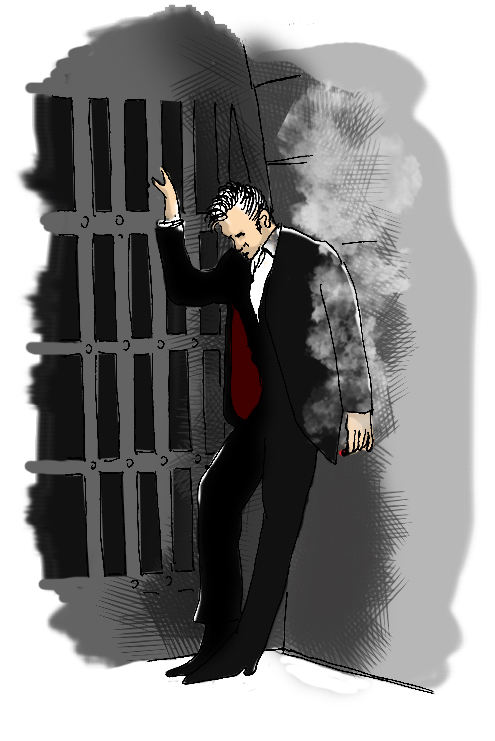
Johnny Cash took a few moments alone to have a cigarette and gather his thoughts before taking the stage at Folsom Prison near Sacramento in 1955 for his iconic concert performance.
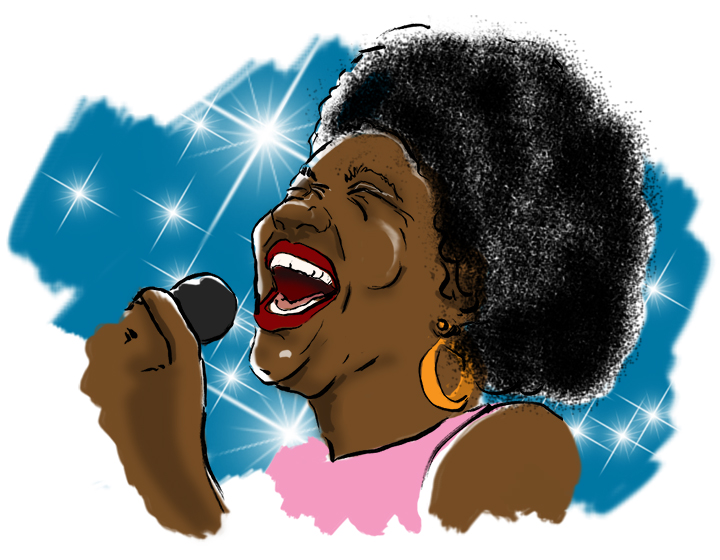
Aretha was the Queen.
These colors don’t run.
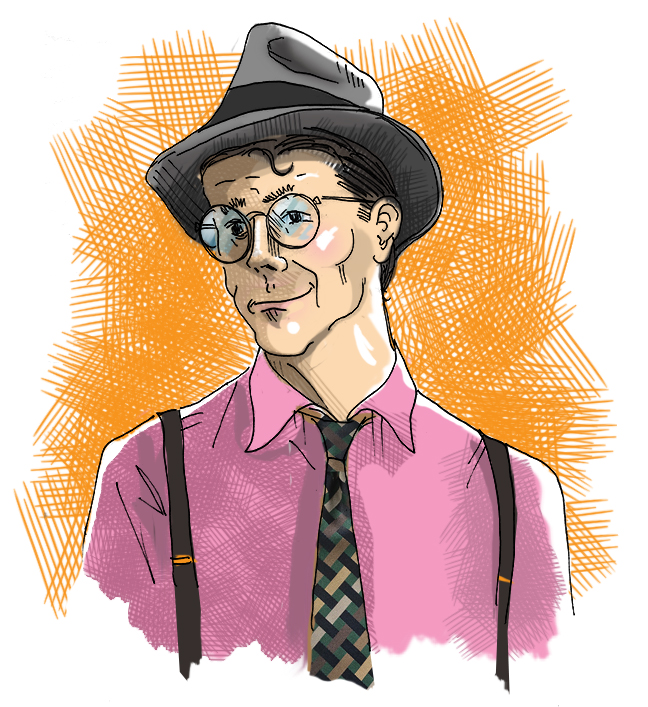
Teen-age Harry Anderson moved from Rhode Island to San Francisco, where he performed street magic for tips. He made eight appearances on early episodes of Saturday Night Live, wielding his cocky humor and close-up illusions under the guise of a street-wise con artist. With a grin on his face, Harry would explain how everything he did in his act was an illusion, then he’d appear to jam a long needle into his forearm as the audience collectively winced. He’d look sternly at the crowd and reprimand, “It’s a trick!,” as blood trickled down his arm. He’d even lick the blood and reveal that it was corn syrup. Audiences would squirm, then applaud wildly.
These stints led to Harry being cast in the recurring role of “Harry the Hat,” a shifty confidence man on the NBC sitcom Cheers. Harry was soon rewarded with his own show, Night Court, which ran for nine seasons on NBC. Harry played quirky Judge Harry Stone, whose love of magic and Mel Torme reflected his own likes. When Night Court ended, Harry was cast in Dave’s World, a sitcom based on the life and adventures of real-life writer Dave Barry.
In 1997, when Dave’s World was canceled, Harry essentially left show business. He and his second wife moved to New Orleans, where he opened a magic and curiosity shop. In 2005, he opened a nightclub in The Big Easy, where he performed a one-man show called, fittingly, Wise Guy. He sold the club a year later, but continued to perform the show.
Early in 2018, Harry suffered from several strokes. His recovery was hampered by a bout of the flu. In April 2018, Harry experienced another stroke and passed away in his sleep. He was 65 years old.

Well, I’m a king bee, baby
Want you to be my queen
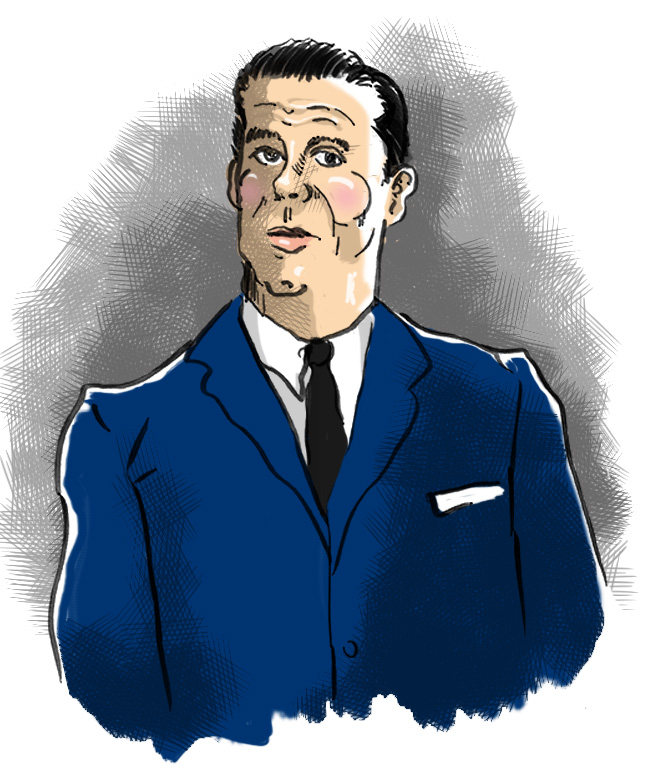
It was while attending the University of Iowa that Don DeFore decided to become an actor. Originally a law major, he enjoyed performing in plays, but was disappointed when he discovered that “drama” was not recognized as a major at the university. He dropped out and enrolled in the famed Pasadena Community Playhouse.
Don was a busy character actor in Hollywood. He was cast in numerous “regular Joe” roles in dozens of movies in the 30s and 40s. However, he enjoyed his greatest success in the early days of television. Don played Ozzie Nelson‘s friendly neighbor “Thorny” on the long-running sitcom The Adventures of Ozzie and Harriet. Later he starred as the irascible, but jovial, “George Baxter,” employer of the meddlesome maid Hazel on the sitcom of the same name.

A long-time Republican, Don was a delegate at the 1980 Republican National Convention. His friend, former actor and 40th President of the United States Ronald Reagan, appointed him to the Presidential Advisory Council to the Peace Corps.
Don retired from acting in 1987 to spend time with his family. He passed away in 1993 at the age of 80.
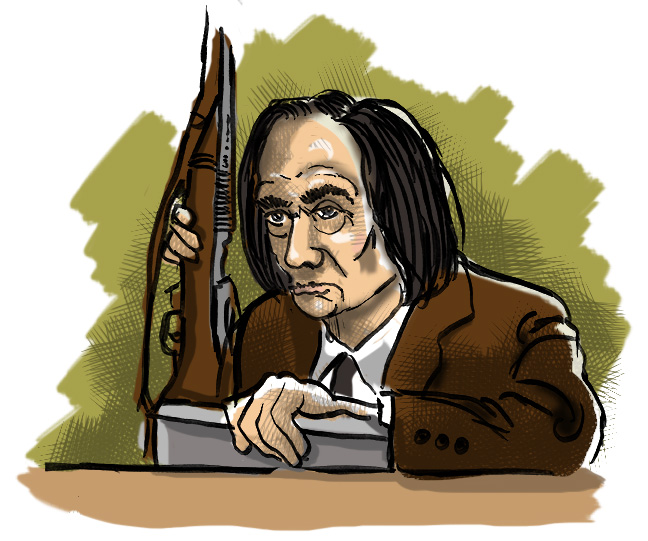
“Is there any special country you wanna go to?”
“Wyoming.”
— Al Pacino to John Cazale in “Dog Day Afternoon” (1975)

Lynne Ripley — “Twinkle”, as she was known to her family — was born in fairly affluent London suburb. She attended Queen’s Fate School, where Camilla Parker Bowles, the future Duchess of Cornwall, was a classmate.
At 16, Twinkle entered the music business with the help of her boyfriend Dec Cluskey, of the popular vocal group The Bachelors. She recorded a song called “Terry,” a somewhat gruesome account of a losing a loved one in a motorcycle accident. The recording featured the talents of popular British session drummer Bobby Graham and a young Jimmy Page on guitar. Taking a cue from the Shangri-Las’ “Leader of The Pack,” the ominous organ and melancholy backing vocals helped the song rocket up the charts, despite its ban from the BBC for “poor taste.”
Twinkle followed up “Terry” with “Golden Lights,” a song she wrote about her disillusionment with the pop music business. Next she recorded an English language version of “Poupée de cire, poupée de son,” the 1965 winner of the Eurovision Song Contest, originally recorded by France Gall. Hoping to score with another “Terry,” producers began offer Twinkle with songs they’d hope she’d record. She turned down most of them, including “The End of the World,” which was big hit for Skeeter Davis.
After several live performances, six single recordings for Decca Records and a brief romance with Peter Noone of Herman’s Hermits, Twinkle called it a career at eighteen years old. twenty years later “Golden Lights” was covered by The Smiths and by Cindy and the Saffrons, a short-lived band fronted by actress Joanne Whalley. Publicity photos of Twinkle are on display in London’s National Portrait Gallery.
Out of the spotlight for years, Twinkle passed away in 2015 at her home on the Isle of Wight at the age of 66.
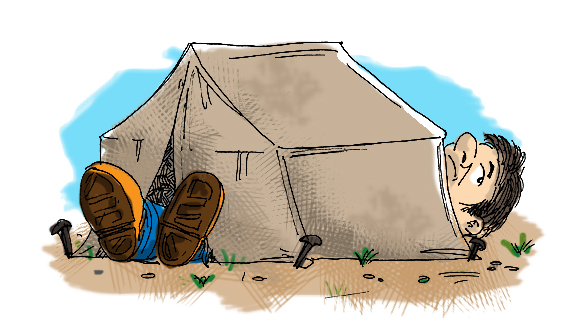
Dan wasn’t wild about camping.
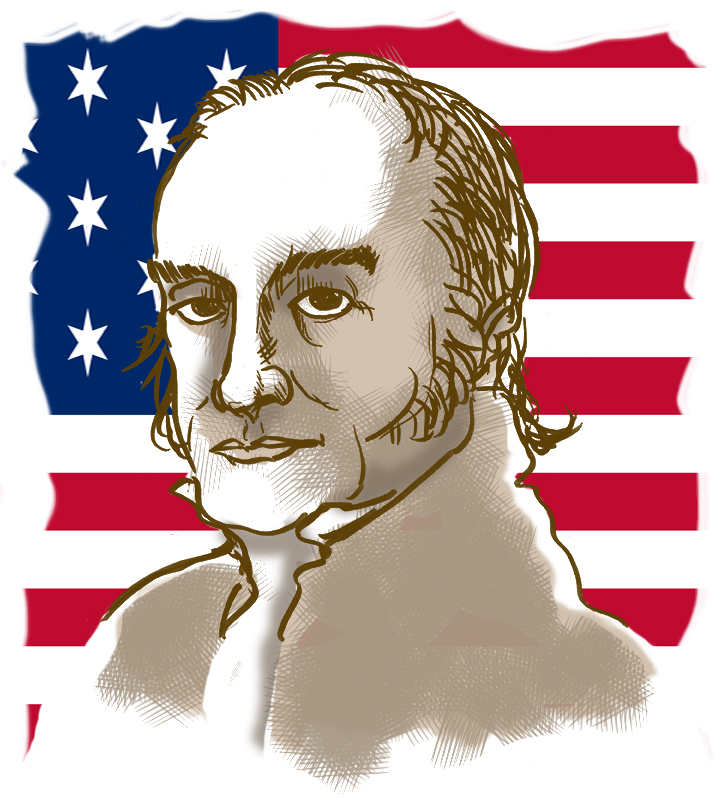
Please open your American History books and turn to the chapter about Francis Hopkinson. What? You can’t find that chapter? You can’t even find a mention of his name? Disgraceful. Francis Hopkinson’s contributions to the fledgling United States were as important and as symbolic as the Liberty Bell or the bald eagle. Oh…. wait a second…. you probably know that made-up story about Betsy Ross, don’t you? Well, let me set you straight…
Philadelphia native Francis Hopkinson enrolled in the first class at the College of Philadelphia (now the renowned University of Pennsylvania) and graduated in 1757. As a member of the Provincial Council of Pennsylvania, Francis drafted treaties with the Delaware and Iroquois tribes. Later, he was appointed customs collector in Salem, New Jersey with hopes of hopes of becoming commissioner of customs for North America. After an unsuccessful bid for that position, Francis left public service, married and eventually opened a dry good business in Philadelphia.
He returned to government as a member of the New Jersey Provincial Council, representing the Second Continental Congress in 1776, where he signed the Declaration of Independence. Later in the year, he resigned his provincial position to serve on the Navy Board in Philadelphia. Francis was soon named the Navy Board’s chairman. He was present at the convention in 1787 as one of the many to ratify the Constitution. During his time in the service of the government, Francis found time to publish a series of satirical pamphlets and essays, commenting and criticizing English rule in order to stir up support for the American movement towards independence. He was also a talented and prolific musician and composer, credited as the first American composer to commit a composition to paper. He was happily recruited as the organist at Philadelphia’s Christ Church.
Perhaps Francis Hopkinson’s most noted achievement came in the infancy of the United States. Based on a large amount of documentation and numerous examples of corroboration, Francis was informally selected by the Second Continental Congress to design a flag to represent the country. Using elements from previous designs for the U.S. Navy, Francis presented a flag with 7 white stripes alternating with 6 red stripes and blue field filled with thirteen six-pointed stars. The flag was officially adopted by the country on June 14, 1777 with a huge celebration. However, three years after the celebration passed, Francis found himself with no compensation — or even acknowledgment — for his efforts. He composed a letter to Congress in a decidedly “tongue-in-cheek” tone. In his letter, Francis specifically requested “a quarter cask of wine in payment for designing the U.S. flag, the Great Seal of the United States [which he also designed], and various other contributions.” His initial request was ignored, prompting a second letter. This one was more to the point and far less jovial. He asked outright for £2,700 — cash. A report from the commissioner of the Chamber of Accounts said that the bill was reasonable, but Congress, once again, balked and stalled. They asked for an itemized list of services and when it was provided, they stalled again. Francis was fuming. Congress then determined that since Francis Hopkinson was already a public servant when his design for the flag was submitted, he was already compensated for all services that he provided and therefore not entitled to any further remuneration of any form. Essentially, he was screwed.
Francis Hopkinson suffered from a sudden apoplectic seizure and died at the age of 53, just a few years into his appointment as a federal judge. He is buried in Christ Church Cemetery in Philadelphia, along with six other signers of the Declaration of Independence.
In 1876, as the United States was gearing up for its Centennial celebration, one William Canby, grandson of a Philadelphia upholsterer named Betsy Ross, invented a story about his ancestor designing and sewing the first U. S. flag for Continental Army General George Washington. The story was supposed to show an example of women’s contributions towards the goal of American independence. The familiar flag — the one with a circle of stars in the blue field — didn’t come into use until after the end of the Civil War. William Canby’s story was just a good piece of marketing.
Unfortunately, while the story of Betsy Ross hogs the spotlight, true female heroes of the American Revolution — like Nancy Hart, Sybil Ludington, Deborah Sampson, Mary MacCauley (better know as “Molly Pitcher”), Margaret Corbin and many others — have yet to get their rightful recognition.