DCS: myrna fahey

Elizabeth Whats-Her-Name

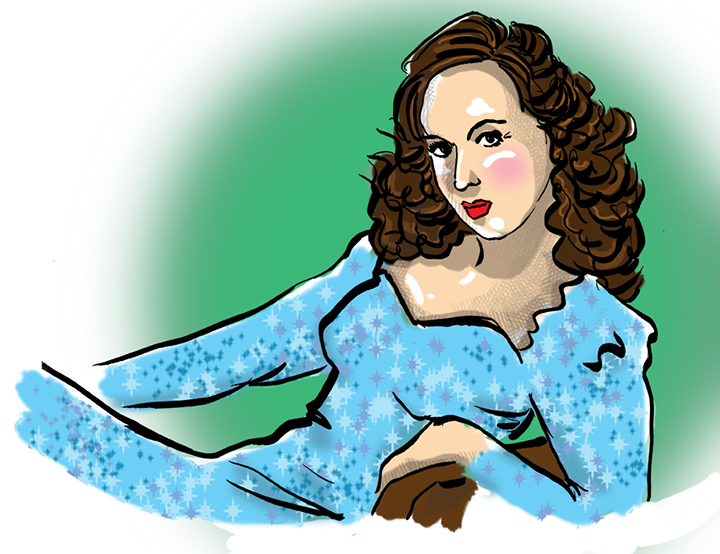
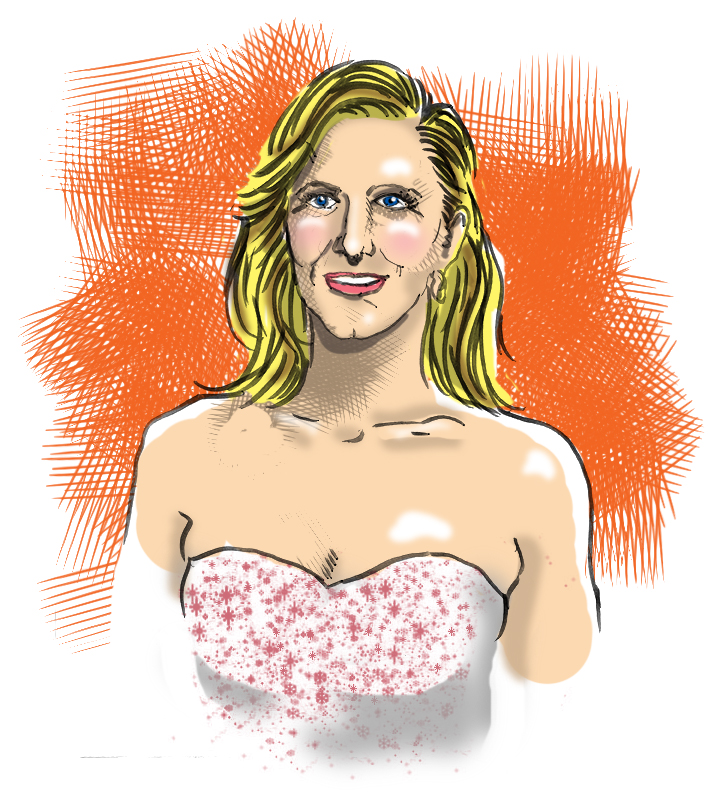
Myrna Fahey was a former cheerleader and beauty pageant winner. However, she refused to coast along on her good looks alone. She was an avid skier and stock investor, insisting that her dressing rooms be equipped with a stock ticker.

Myrna appeared in numerous episodes of TV Westerns, including Gunsmoke, Maverick and Wagon Train. After an episode of Bonanza, the cast presented the feisty Myrna with a tongue-in-cheek “Best Slapper in a Filmed Series” award. Myrna branched out with roles in Perry Mason and Hawaiian Eye, even trying her hand at comedy in Bachelor Father and camp in the popular Batman series. She was not content with the “good girl” roles she was offered. She landed the role of “Madeline Usher” alongside Vincent Price in Roger Corman’s take on the Edgar Allan Poe classic The Fall of the House of Usher.

In 1961, Myrna took a starring role in the TV series Father of the Bride, based on the acclaimed film of the same name. She was cast based solely on her striking resemblance to Elizabeth Taylor, a comparison that Myrna found distasteful, revealing to one interviewer “the fact that I’m supposed to look like Elizabeth Whats-Her-Name had nothing to do with my getting [the part], because we don’t really look alike I don’t think.” Myrna fought to be released from her contract with the show, citing that too much emphasis was put on the “father” character and not enough on her “bride” character. the series lasted one season.

In 1964, Myrna began dating Yankees star Joe DiMaggio. She also began receiving death threats. An FBI investigation determined the threats came from a patient at a mental hospital in San Jose, California. Apparently the patient could not bear to see DiMaggio with anyone other than Marilyn Monroe, who died in 1962.

In the early 1970s, Myrna slowed down her workload, as she was diagnosed with cancer. She appeared in one episode of the medical drama Marcus Welby MD and played a beauty pageant chaperone in the TV movie The Great American Beauty Contest. It would prove to be her final role. Myrna lost her battle with cancer on May 6, 1973 at the age of 40.

Comments

comments

IF: utopia

there's no time to delay on the road to utopia

The origins of the word “utopia” are a bit unclear, as well as little ambiguous. The word was coined by lawyer, philosopher, author and eventual saint, Sir Thomas More in his 1516 book Utopia about an imaginary society of perfect well-being. The word comes from the Greek — but which actual root words — that’s up for discussion. it could be the combination of οὐ (pronounced “you”) meaning “not” and τόπος meaning”place”, making “utopia” translate to “no-place,” which would fit, as it represents a concept that does not exist. However, it could have been formed from the monophonic εὖ (also pronounced “you”) which means “good” and τόπος which still means “place,” making the word mean “good place.” That would be a plausible description, as well. Maybe Thomas More was being deliberately cagey, subtly hinting that the idea of “utopia” is just that — an idea — and can never exist.

Or perhaps he was warning us that the idea of ” The Good Place” is deceptive.

Comments

comments

DCS: doreen tracey

Doreen!

Doreen Tracey grew up singing and dancing, thanks to her father’s dance studio. At 12, young Doreen auditioned for The Mickey Mouse Club along with hundreds of other talented children (including singer Paul Williams and actress Candace Bergen, who didn’t make the cut). She was picked and stayed with the show for all three seasons. Doreen appeared in the Disney-produced family film Westward Ho, the Wagons!, with Fess Parker and several of her fellow Mouseketeers. In the third season of The Mickey Mouse Club, she was featured in the serial Annette (a show within a show) with co-star Annette Funicello.

When The Mickey Mouse Club ceased filming, Doreen performed in teen nightclubs and gave live concerts. She starred on a 1959 episode of The Donna Reed Show as Mary Stone’s (Shelley Fabares) friend along with guest star, singer James Darren. Later, she toured South Vietnam, entertaining US Troops with her rock group Doreen and The Invaders. Later, she moved on to work as a publicist for Frank Zappa.

In the 70s, Doreen posed nude for Gallery, a mens’ magazine. This caused a rift in her relationship with the Walt Disney Company. Years afterwards, she reconciled with the Disney Company, and began appearing at company promotional events. In her 2001 autobiography, Confessions of a Mouseketeer, Doreen related the incident and regretted posing for the photos.

Doreen died in January 2018 after a two-year battle with cancer. She was 74.


Comments

comments

IF: transformation

ch-ch-ch-changes, turn and face the strange changes

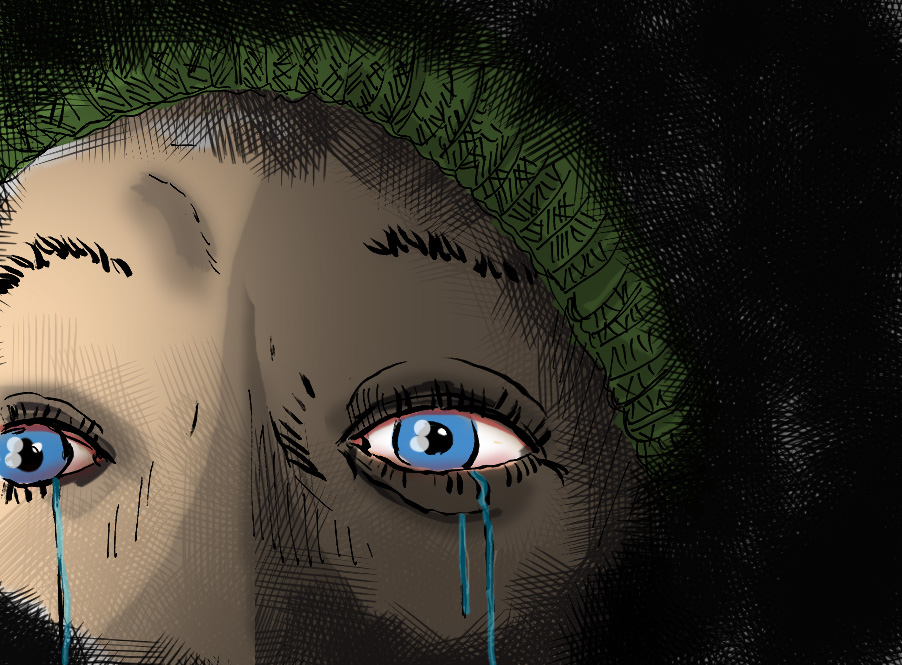
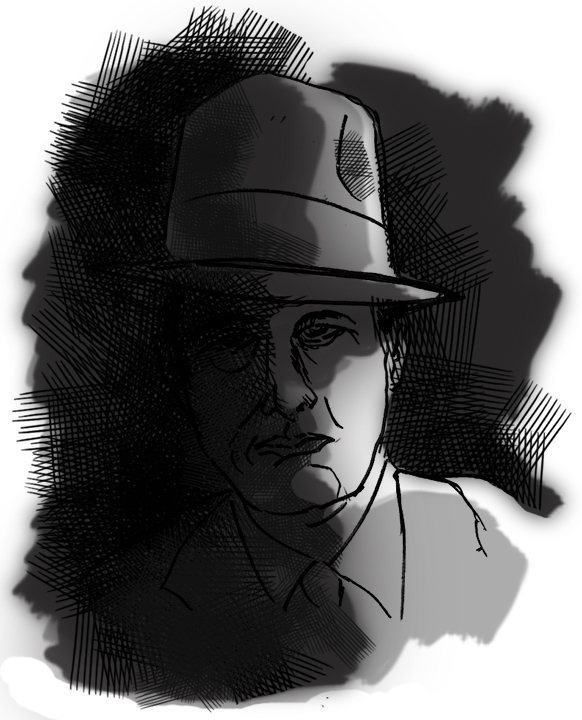
In 1931, Frederic March was cast in Paramount Studios’ film version — the sixth one since 1908 — of the Robert Louis Stevenson study in psychology Dr. Jekyll and Mr. Hyde. The production was made five years before the Hayes Code that monitored morality in motion pictures. The film contained some pretty strong  sexual content for 1931, particularly the role of “Ivy Pierson,” the bar singer portrayed by actress Miriam Hopkins. When the film was re-released in 1936, Miriam Hopkins’s provocative performance was reduced to less than five minutes of screen time.

The infamous “transformation” scene was filmed using a combination of color-coded make-up appliances and corresponding filters for the camera. The result was an effectively frightening sequence, thanks to March’s acting and Wally Westmore’s character design for the fearsome “Mr. Hyde,” including simian-like brow and hair along with prosthetic teeth. March was awarded an Oscar for his performance.

Hollywood remade Dr. Jekyll and Mr. Hyde again in 1941 starring Spencer Tracy. Prior to production, MGM purchased the negatives to the two previous versions, as well as every available copy of the Paramount version starring Frederic March… with the intention of destroying them to avoid comparisons. Despite Spencer Tracy’s acting ability, the MGM version received negative reviews. Frederic March sent a telegram to his colleague to thank him for “the greatest boost to his reputation of his entire career.”

Comments

comments

DCS: reid blackburn, david a. johnston and robert landsburg


buried

After a two-month series of earthquakes, Mount St. Helens, in Washington state, erupted at 8:32 on the morning of May 18, 1980. The entire north face of the volcano slid away, creating the largest landslide ever recorded. Volcanic ash was shot 80,000 feet into the atmosphere, raining down over 11 states. Glaciers melted, forming mudslides that eventually reached the Columbia River nearly 50 miles away.

David A. Johnston, a scientist working under the auspices of the Department of the Interior, had been gathering information in the weeks prior to the volcano’s eruption. His five-word transmission — “Vancouver! Vancouver! This is it!” —  from his outpost, six miles from “ground zero” was the first report of the eruption. David’s body was never found, though thirteen years after the eruption, parts of his trailer were discovered by highway workers.

Reid Blackburn was a photographer who was commissioned by a local newspaper, as well as National Geographic magazine, to cover the eruption. On May 22, 1980, Reid’s body was discovered buried in the ash. Several days later, his camera was found near his campsite at South Fork Coldwater Creek. As a result of the eruption, the creek became dammed, creating Coldwater Lake.

Robert Landsburg, also a photographer, had been photographing the changing landscape in the weeks leading up the the eruption. On the morning of May 18, Robert rapidly shot the approaching ash cloud. He rewound the film and put it back into its case. He put the film and his camera into his backpack. He placed the backpack on the ground and lay down on top of it, protecting the contents. Robert’s body was discovered two and a half weeks later, buried beneath the ash. His film, however, remained unharmed. It was developed as has since provided geologists with valuable information regarding the volcanic eruption.

And then, there was stubborn old Harry R. Truman

Comments

comments

DCS: bruno sammartino

champ

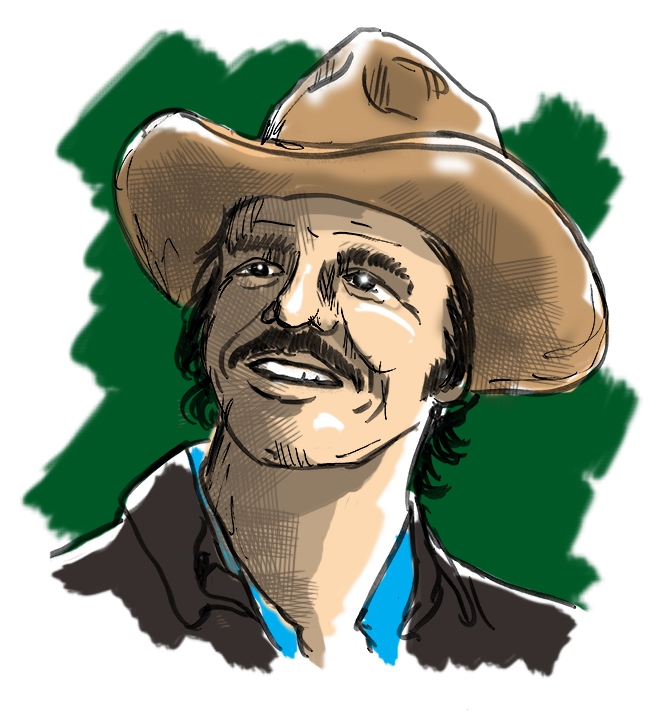
My brother was a big fan of professional wrestling in the late 60s and early 70s. Every Saturday afternoon, he’d monopolize the television and watch match after match after brutal match featuring such celebrated names as Larry Zbyszko, Chief Jay Strongbow, Gorilla Monsoon, Handsome Jimmy Valiant and the champ, Bruno Sammartino.

There was another wrestling fan in my house. My mom.

Casino gambling came to Atlantic City in 1978 and when I turned 18 the following year (the legal drinking and gambling age at the time), my mom and I would go to Atlantic City frequently. For ten bucks, a chartered bus would take us from Philadelphia and deposit us on the famous Boardwalk a mere 90 minutes later. A voucher from the bus company could be exchanged for a roll of quarters and a five dollar discount towards a buffet lunch. So, the trip essentially cost us nothing and offered the chance to break the bank, if luck would have it.

One summer afternoon, my mom and I were wandering through Bally’s Casino after several hours of yanking the handles of slot machines and trying to outsmart blackjack dealers. We decided to use our buffet coupons and made our way toward a bank of elevators. My mom pressed the call button and within a minute an elevator arrived. We piled in, getting a spot by the doors as they whispered closed. We stood silent as the car rose a few floors to our destination. The car stopped. The doors opened and my mom’s face lit up. Less than a foot over the elevator threshold stood Bruno Sammartino. The Bruno Sammartino. My mom blurted out a gleeful “BRUNO!!!” Bruno smiled broadly. No one else recognized him. No one. Just my mom. Bruno quickly shook my mom’s hand and nodded respectfully to her as he entered the now empty elevator car. Still, no one else said a word, though a few folks craned their necks and quietly pondered the identity of the hulking gentleman with the thick features and a cauliflower ear.

But my mom knew who he was.

He was the champ.

Comments

comments

DCS: sharon tate

sexy little me

Sadly, Sharon Tate is remembered more for her senseless murder instead of her budding and potential film career.

Sharon, a native Texan, was entered in numerous beauty pageants as a child. As her family moved around the country, due to her father’s employ with the US Army, Sharon entered more pageants, eventually gaining “celebrity” status when a photo of her appeared in an issue of Stars and Stripes. She befriended actor Richard Beymer who was working on a picture being filmed near her home. Beymer encouraged Sharon to pursue an acting career. Sharon soon landed a part in The Pat Boone Show in 1960.

While living in Italy, Sharon was spotted by actor Jack Palance when she was hired as an extra on the biblical epic Barabbas. Palance sought a larger role for Sharon, but it was not to be. When her family returned to the United States, Sharon contacted Richard Beymer’s agent who put her in touch with Martin Ransohoff, producer and founder of Filmways Inc. Ransohoff was taken by Sharon’s beauty and had her audition for the role of  “Billie Jo Bradley” on CBS’s sitcom Petticoat Junction, a Filmways production. Screen tests showed that Sharon lacked the confidence for a lead role, but she was soon cast in a smaller part on other Filmways shows, The Beverly Hillbillies and Mister Ed. During this time, Sharon began a relationship with Jay Sebring, a noted Hollywood hairdresser.

In 1964, Sharon auditioned, unsuccessfully, for several motion pictures, including The Cincinnati Kid, The Americanization of Emily, The Sandpiper and The Sound of Music. Martin Ransohoff, who was overseeing Sharon’s career, finally allowed her to make her big screen debut in Eye of the Devil, alongside a cast of established acting talent including David Niven, Deborah Kerr and Donald Pleasence. The film, shot in the United Kingdom, was poorly received. She did, however, stay in London and soon met director Roman Polanski. Polanski was arranging pre-production for his upcoming project, a comedy-horror film called The Fearless Vampire Killers. He planned to cast actress Jill St. John in the female lead. Martin Ransohoff insisted that Polanski cast Sharon in the role. He relented, his compromise being that Sharon don a red wig for the film. Filming began, with Polanski in the male lead, as well as at the director’s helm. An unusual chemistry formed between Sharon and Polanski. He praised her performance, improving her confidence as an actress (despite perfectionist Polanski demanding up to 70 takes on certain scenes).

Sharon returned to the United States to begin filming the kitschy Don’t Make Waves with Tony Curtis, designed to capitalize on the “beach movie” craze. Sharon wore little more than a bikini in the role and was very was vocal in her disappointment in the film. Polanski, meanwhile, was making preliminary arrangements for the upcoming film Rosemary’s Baby. He wanted Sharon to star in the film, but no one at Paramount Studios was interested. Instead, Mia Farrow was cast in the role of “Rosemary Woodhouse.” Sharon, holding no ill feelings, freely made suggestions for the film’s production, including the surreal scene in which Rosemary is impregnated.

A 1967 article in Playboy proclaimed: “This is the year that Sharon Tate happens!” The story proved prophetic, as she was cast in Valley of the Dolls, a big screen version of the campy and controversial best seller. Co-star Patty Duke and Susan Hayward noted that the film’s director Mark Robson was overly critical of Sharon Tate’s acting, often berating her and calling her names. Later, though, Robson would tell Polanski: “That’s a great girl you’re living with. Few actresses have her kind of vulnerability. She’s got a great future.” Valley of the Dolls opened to unanimously negative reviews.

In 1968, Sharon was cast in the thriller The Wrecking Crew opposite Dean Martin as suave spy “Matt Helm.” After filming wrapped, a pregnant Sharon moved with Polanski to a sprawling home on Cielo Drive in Los Angeles. They had visited the home before, when the owners, record producer Terry Melcher and his girlfriend Candace Bergen, threw a party. While Sharon pondered her next project, Polanski was off again to Europe to direct The Day of the Dolphin. (Polanski was eventually replaced by director Mike Nichols.) Polanski asked his friend Wojciech Frykowski and Frykowski’s girlfriend, coffee heiress Abigail Folger to stay with Sharon at the house while he was away. He also asked Jay Sebring, now a family friend, to keep an eye on Sharon, as well. Polanski was expected home on August 12, 1969 in plenty of time for the birth of his child.

On the afternoon of August 8, 1969, Sharon invited actress Joanna Pettet over for lunch. That evening, Sharon joined Frykowski,  Folger and Sebring at El Coyote, a Mexican restaurant in the Fairfax section of Los Angeles, just twenty minutes from their Beverly Hills home. They returned to Cielo Drive around 10:30 pm.

Ninety minutes later, all occupants of the home were murdered by members of Charles Manson’s cult. Sharon’s pleas for the life of her unborn child were ignored as she was stabbed 16 times by Susan Atkins.

Sharon Tate was 26 and had her whole life and career ahead of her.


This marks the 1400th post on this blog.

Comments

comments

IF: monkey

music hath charms to soothe the savage breast

“Abba, daba, daba, daba, daba, daba, dab”
Means “Monk, I love but you”
“Abba, daba, dab, ” in monkey talk
Means “Chimp, I love you too”
Then the big baboon, one night in June
He married them, and very soon
They went upon their abba daba honeymoon

Comments

comments