IF: cat

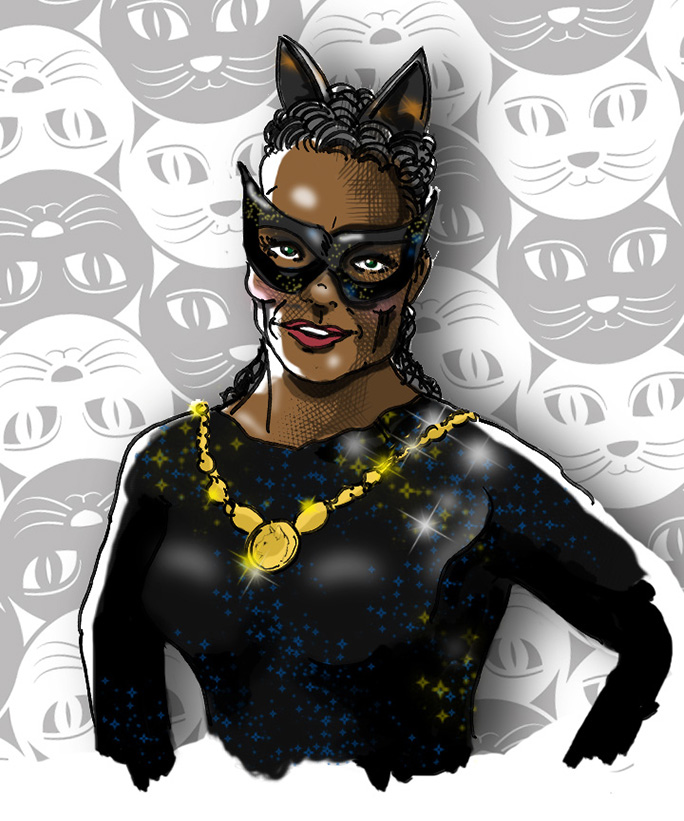
ev'rybody wants to be a cat

I loved Batman, the campy cool TV series whose episodes were broadcast twice weekly on ABC for two of its three-season run from 1966 until 1968. Batman, starring Adam West, in his best ultra-suave put-on, featured a “who’s who” of Hollywood notables in guest villain roles throughout the entire 120-episode run. Since the show appealed to mostly the under 13 demographic, a lot of these featured celebrities were unknown to its target audience. However, moms and dads (like my mom and dad) recognized these personalities immediately, reminisced about their heyday and relished their hammy appearances. As a six-year old, I had no clue that Cesar Romero was a dashing leading man of 1940s cinema or Burgess Meredith was a respected veteran of dozens of films and was briefly wed to screen siren Paulette Goddard. To me, they were larger-than-life cartoons, menacing the Caped Crusaders from the confines of a cockeyed camera shot.

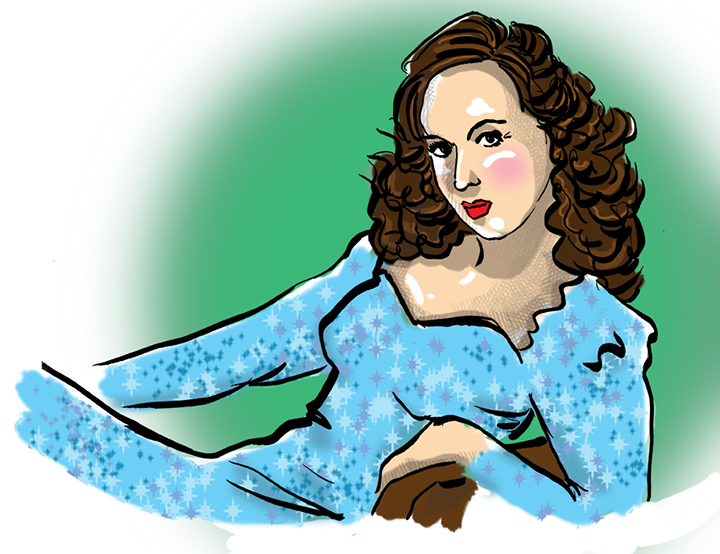
When the third season of Batman began, series favorite Julie Newmar left the role of “Catwoman,” the Dark Knight’s sultry antagonist. She was replaced by the equally sultry Eartha Kitt. This was a pretty groundbreaking move for 1968, considering that no reference was made or concern was given to the fact that Miss Kitt was African-American. She still flirted with the whiter-than-white West and, surprisingly, no one put up a fuss. Eartha Kitt appeared as “Catwoman” on three episodes of Batman (not counting two uncredited cameos announcing the she would be the guest of the following week’s episode). At my young age, I knew as much about Eartha Kitt’s career as I did about nuclear physics, but prior to donning that skin-tight catsuit, what a career she had.

Eartha had a sketchy childhood. According to one story, she was born to a Cherokee/African mother on a cotton plantation in South Carolina, a birth that was the result of rape. Her mother married a black man who refused to care for young Eartha because of her pale complexion. Eartha was passed around from relative to relative until she wound up in Harlem, New York where she lived with her Aunt Mamie and attended the Metropolitan Vocational High School (later renamed the High School of Performing Arts).

Eartha’s career took off during her stint with the Katherine Dunham Company, a performance troupe where she honed her singing skills and perfected her dancing. In the 1950s, Eartha released a slew of popular songs including “Let’s Do It,” “C’est si bon,” “Just an Old Fashioned Girl,” “Monotonous,” “Love for Sale” and her famous holiday favorite “Santa Baby.” From performing in Europe, Eartha learned and spoke fluent French, as well as German and Dutch. She sang and recorded songs in eleven different languages throughout her career.

Orson Welles gave Eartha her first stage role as “Helen of Troy” in his production of Dr. Faustus. He went on to a stellar Broadway run, eventually earning some well-deserved Tony nominations. She also appeared frequently in films and episodic television.

In 1968, Eartha was invited to a White House dinner at the request of President and Mrs. Johnson. First Lady Lady Bird John asked Eartha her views on the Vietnam War. Eartha, an outspoken critic of the war, bluntly replied: “You send the best of this country off to be shot and maimed. No wonder the kids rebel and take pot.” Mrs. Johnson was brought to tears. Eartha’s career took a major hit. She found it difficult to get work as a result of the incident. She was labeled a “sadistic nymphomaniac” by the CIA, who compiled a dossier on the actress filled with falsehoods. Finding herself unjustly blacklisted by the American entertainment industry, she was welcomed in Europe and Asia and her career once again flourished.

She was able to return to Broadway in the 1970s and was very well received. Eartha starred as “The Fairy Godmother” in a successful run of Cinderella, as well as an acclaimed appearance as “The Wicked Witch of the West” in a revival of The Wizard of Oz. With a announcing credit on a TV commercial for Steely Dan‘s “Aja” album, Eartha embarked on a new career as a voice actress, lending her seductive vocal tones to cartoons, including her scene-stealing turn as the oily “Yzma” in Disney’s The Emperor’s New Groove, a role she reprised in two television cartoon continuations, The Emperor’s New School and Kronk’s New Groove. She was even depicted in an episode of The Simpsons as one of Krusty the Clown’s ex-wives.

In her later years, Eartha was a visible and active supporter of the LGBT community, appearing a numerous rallies and fundraisers, campaigning for same-sex marriage and equal rights. She was no stranger to public causes, actively supporting underprivileged youth in the Watts area of Los Angeles in the 60s and 70s, as well as women’s rights throughout her life.

Diagnosed with colon cancer, Eartha passed away on Christmas Day 2008. According to her daughter, who was with her when she died, Eartha “left this world literally screaming at the top of her lungs.”

No wonder “ev’rybody wants to be a cat.”

Comments

comments

DCS: francis crowley

two-gun

Francis Crowley was no good from the very start.

As a teenager, Francis and two friends crashed an American Legion dance. When attempts were made to the remove the trio, Francis drew a gun an opened fire, wounding two men. He went into hiding, but with a week, he was confronted by police. Again, he fired on the officers. A few days after that incident, he was involved in a bank robbery in Westchester County, New York.

A month later, Francis and two accomplices broke into the home of a real estate broker, shooting the man five times when confronted. Later, Francis stole a car with Rudolph “Fats” Durringer and dance hall hostess Virginia Brannen. When Brannen resisted an aggressive Durringer’s advances, Durringer shot and killed her. Francis helped Durringer dump her body outside St. Joseph’s Seminary in Yonkers. When Brannen’s body was discovered, police set out looking for Francis. He was spotted in a car on 138th Street and a high-speed chase ensued. Francis exchanged gunfire with the police and escaped, but bullets extracted from the police car matched the bullets from Brannen’s murder, as well as other unsolved New York crimes.

In May 1931, a month after the chase, Francis killed a police officer who approached him for questioning. The next day, Francis, Durringer snd Francis’s girlfriend were cornered in a rooming house on 91st Street. Police were tipped off by an angered former lover of Francis’s. Tear gas and gunfire finally forced Francis to surrender, but not without a fight.

In just under three weeks, Francis was tried and sentenced to death. During his time spent his time on Sing Sing Prison’s Death Row, Francis was a less-than-cooperative prisoner. He regularly stuffed his prison clothes into his cell’s toilet, set fire to his bed and fashioned homemade weapons out of found objects.

On January 21, 1932, “Fats” Durringer’s trip to the electric chair preceded Francis’s. When it was Francis’s turn, he was asked if he had any final words. He asked for a rag, explaining: “I want to wipe off the chair after this rat sat in it.” Francis Crowley was 19.

Comments

comments

inktober 2018: week one

mother.... the blood! the blood!

Here we go again! It’s October and that means it’s time for “Inktober!” You remember from past years, don’t you? Every October, hundreds of artists… and me…. create special works daily just for October, based on a set of suggestions from the official Inktober website.  I however, follow my own set of rules for Inktober. I will be posting a new, black & white drawing each week for the entire month (in addition to my participation in Illustration Friday and a Dead Celebrity Spotlight). This year, each of my drawings will be based on fear — as depicted in various horror movies.

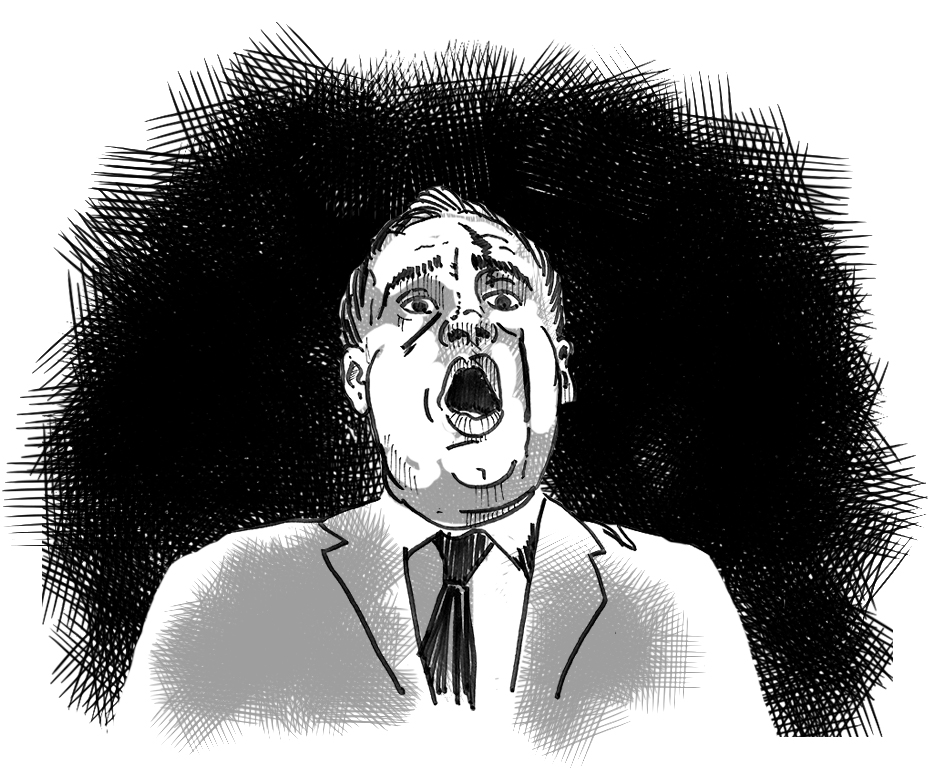
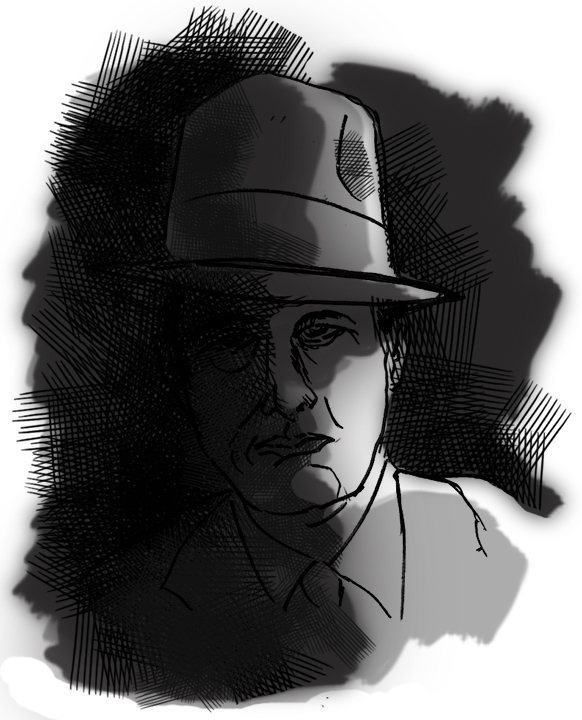
Week One of Inktober 2018 presents Detective Arbogast startled by Mrs. Bates in Alfred Hitchcock‘s 1961 shocker Psycho.

Comments

comments

DCS: sandra giles

you dropped the bomb on me

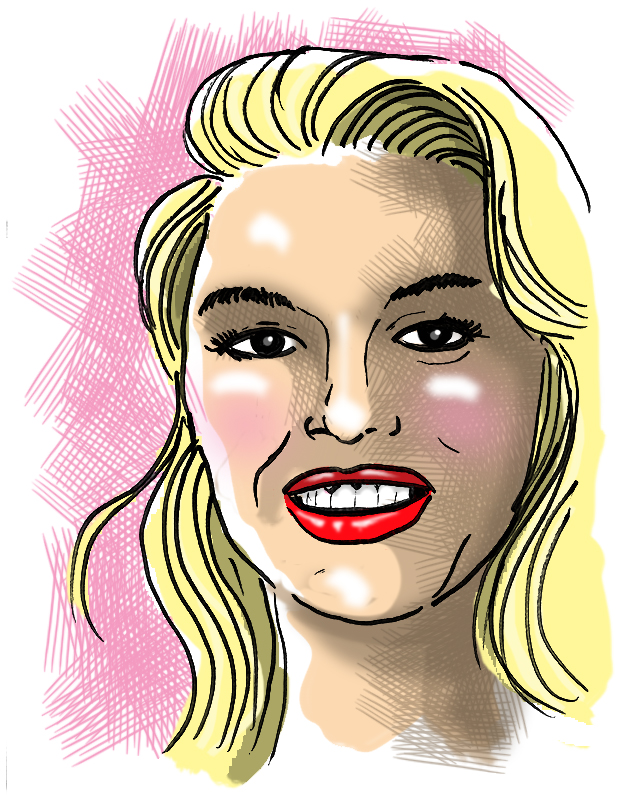
Born in Hooker, Oklahoma, young Sandra Giles moved to Los Angeles with her single mother as a child. Sandra was discovered by a press agent while she was working as a waitress at Canter’s Delicatessen. Not content with being touted as the next “Blonde Bombshell,” Sandra began drama classes at Los Angeles City College.

In 1958, Sandra was cast in three, low-budget films with a teen audience in mind. Later that year, she showed up at the premier of the Clark Gable film Teacher’s Pet in a furry, pink Cadillac convertible. Life Magazine photographers chronicled the publicity appearance in a two-page spread called “The Blond from Hooker.” The pictorial also featured shots of Sandra in a bubble bath.

In 1963, Sandra landed her biggest role, opposite Elvis Presley in It Happened at the World’s Fair. She later appeared in small roles in other films, as well as episodic television. In the 70s, Sandra dated tennis star Bobby Riggs and appeared with him in an episode of the sitcom The Odd Couple. Her on-screen demand dwindled to one or two roles per year and she finished her career with a cameo in an episode of Columbo.

Sandra passed away in 2016 from complications from bullous pemphigoid, a chronic autoimmune skin disease. She was 84.


Comments

comments

DCS: susan hayward

i want to live

Twenty year-old fashion model Susan Hayward headed to Hollywood with dreams of becoming a movie star. Like most hopeful actresses, Susan started in some bit parts in some “B” pictures. Some of her roles never made it past the editing room. It was producer Walter Wagner who, taking a chance on the young actress, launched her career. Signing Susan to a multi-year contract worth a whopping $100,000, Wagner cast her in Canyon Passage in 1946.

Susan became an in-demand actress with her first of five Academy Award nominations for Smash-Up, the Story of a Woman,  in 1947.  Susan was paired with top actors, like Clark Gable, Robert Mitchum and Charlton Heston in numerous big-screen blockbusters through the 1940s and 1950s. Susan was famously cast by Howard Hughes in his misguided epic The Conquerer starring John Wayne in full racist make-up as Genghis Khan. The Conquerer was filmed near a government testing site for atomic weapons and an overwhelming majority of the cast and crew contracted cancer, including  John Wayne, Agnes Moorehead, Pedro Armendáriz (who took his own life), and director Dick Powell. The film was panned. She redeemed her reputation the following year and won an Oscar for her portrayal of convicted murderer Barbara Graham in 1958’s I Want to Live, her last film for producer Walter Wagner.

In the 1960s, Susan’s career began to decline. She replaced Judy Garland in the camp classic Valley of the Dolls and made a succession of forgettable failures.

In 1973, Susan was diagnosed with brain cancer. She continued to act for as long as her health would allow. Susan made her final on-screen appearance at the 1974 Academy Awards as a presenter with one-time co-star Charlton Heston. She passed away in early 1975 at the age of 57.


Comments

comments

IF: fear

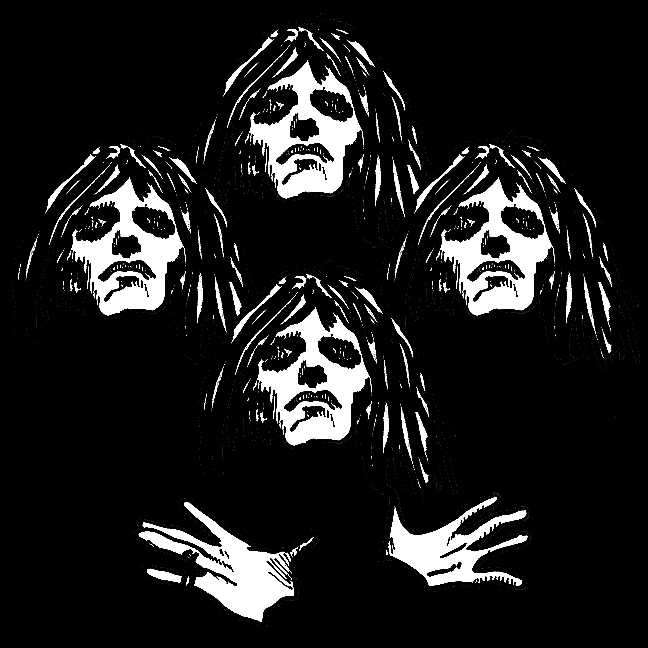
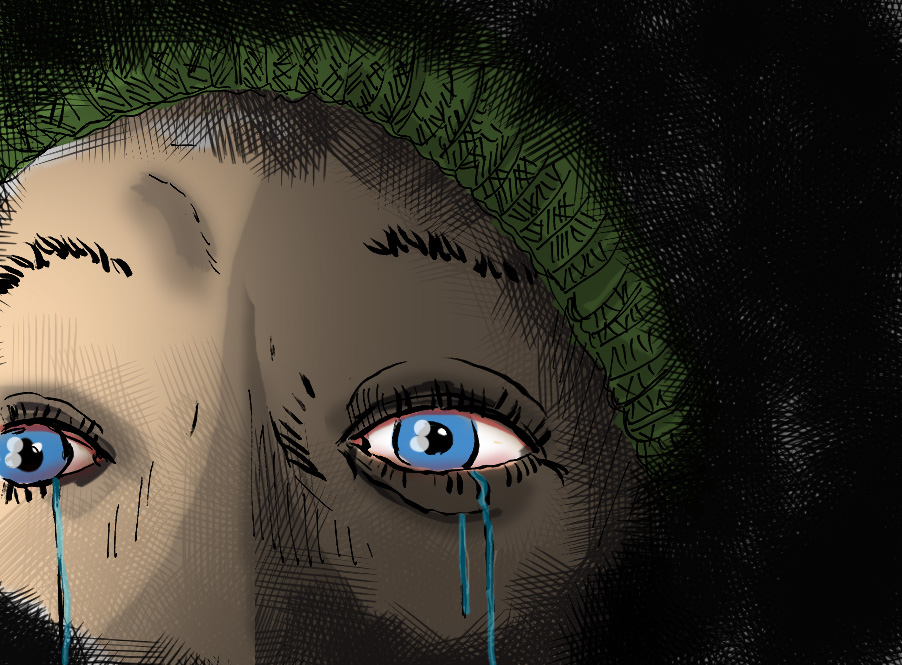
“I’m scared to close my eyes, I’m scared to open them! We’re gonna die out here!” * * * * * * * * * * October is coming… and with it comes Inktober. This is a preview of the drawings I have planned for my annual participation in the Inktober project. 

Comments

comments

DCS: carol vitale

bunny

Beautiful Carol Vitale grew up in northern New Jersey, where she was popular in high school. She was a track star and dated the captain of the football team. Upon graduation, Carol and a friend moved to Florida. Carol’s good looks immediately secured her employment as a model for Oldsmobile, leading to a job as spokeswoman at a Florida racetrack.

Soon, Carol found herself as a finalist in the “Miss Florida World” beauty pageant. Afterwards, she began her five-year stint as a bunny at the Miami Playboy Club. Carol graced the cover of the August 1972 issue of Playboy. Two years later, she was named “Playmate of the Month” in the July 1974 issue. Carol made three more pictorial appearances in the publication.

In 1979, Carol headed to California, where a job in the Publicity Department at Universal Studios sparked her interest in broadcasting. She earned a degree in broadcasting and in 1989, began hosting The Carol Vitale Show, a talk-format program that ran on the USA Network for eleven years. During this time, Carol dabbled in fashion design, introducing a line of lingerie gloves marketed by both Playboy and Frederick’s of Hollywood.

In later years, Carol’s health deteriorated. Suffering from the ravages of lupus and scleroderma, Carol ended her own life in 2008 with a self-inflicted gunshot.

Comments

comments