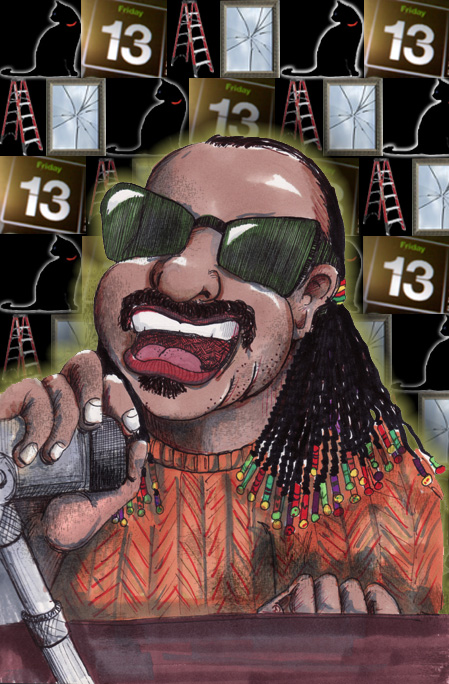
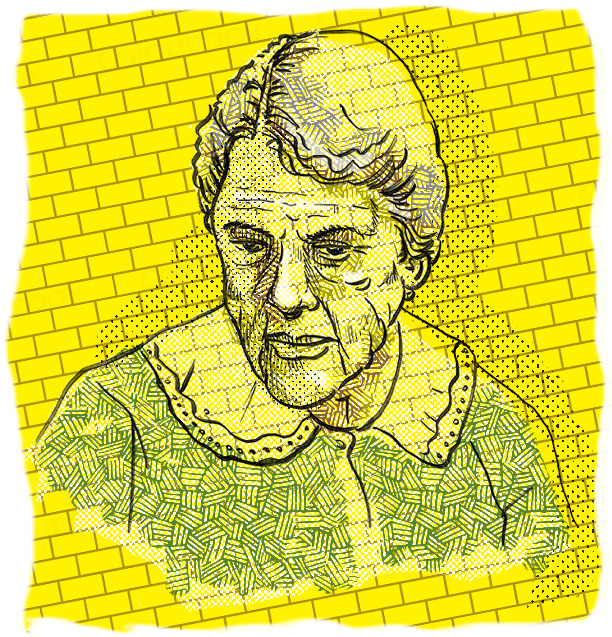
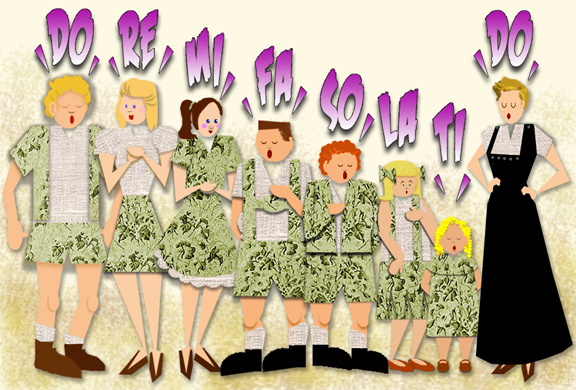
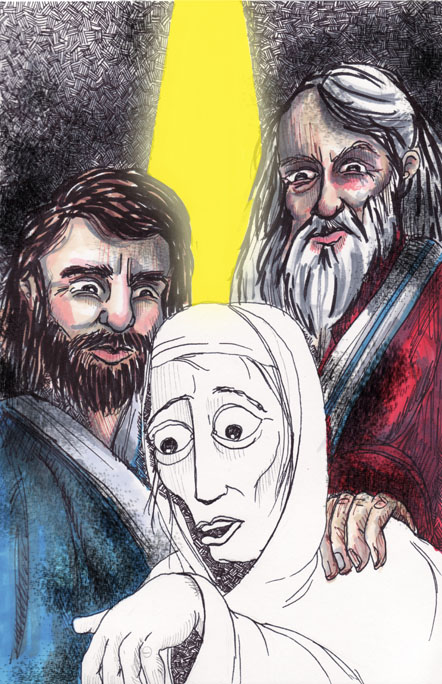
In honor of Hallowe’en, the sugarfrostedgoodness.com challenge this week is “goblins, ghouls and ghosts“.
There have been headline-making serial killers over the years. Names like Ted Bundy, Ed Gein, Alferd Packer and Albert Fish…. all men. Very few women have entered the ranks of serial killers. The majority of women serial killers used subdued methods for their crimes, the most favored being poison. Enriqueta Martí had no time for poisons. She was a self-proclaimed witch in Barcelona, Spain in the early 20th century. She sold charms and love potions to earn a living, but had other activities to occupy her free time. Based on clues pieced together after her arrest, Enriqueta abducted several local children and held them captive until she killed them and boiled their bodies, using the bones in her potions and the flesh to consume. She had already murdered at least six children, when her last abductee, a young girl named Angelita, was rescued alive from Enriqueta’s lair. She described to police a tale of murder and cannibalism. According to the girl, she had been forced to partake of human flesh. Her “meal” had been the remains of another child, kidnapped by Enriqueta a short time earlier.
On the basis of Angelita’s story, police raided Enriqueta’s home. A search revealed bags of bloody children’s clothes, blood-caked knives, jars and vials of bones and human fat and several scalps of blond hair.
Enriqueta was arrested and convicted in 1912. Enriqueta was attacked and lynched in prison by fellow inmates. Although it was a lurid, front-page account, Enriqueta’s story was overshadowed by a bigger one… the sinking of the Titanic.
Happy Hallowe’en…. again.
pumpkins
It’s almost Halloween 2007, so I guess I am obliged to post a Halloween (or “Hallowe‘en“, for you sticklers) entry.
Several years ago, when I worked for a different company than I work for now, we had a Marketing Department Pumpkin Carving Contest. I really wanted to participate (you know, the whole “company morale” thing), but I had never carved a pumpkin in my life. Something about not being permitted to handle knives… but that’s a post for another time. So, in an effort to be amusing, I entered this creation…
On some of the ballots submitted to choose a winner of the contest, some voters noted mine as “angry” and “disturbingly violent”. I was going for funny.
The next year, I entered this guy…
After that year’s voting, I was one portable DVD player richer. And it turns out a co-worker submitted some photos of the contest to the Extreme Pumpkins website, where my entry was chosen as one of the winners of the 2006 contest.
The next year’s contest saw this submission from me…
I saw it as “a pumpkin with cancer”. Everyone else saw it as “disgusting”.
I got no votes.
I don’t work for that company any more.
Happy friggin’ Halloween.
Comments
Monday Artday: glamorous
The US government has always been full of colorful characters. J. Edgar Hoover was no exception. Hoover was the founder of the present form of the Federal Bureau of Investigation and was its director for an unprecedented 48 years. Hoover’s leadership spanned eight presidential administrations, encompassed Prohibition, the Great Depression, World War II, the Korean War, the Cold War, and the Vietnam War. From the beginning of his career with the FBI, Hoover was accused of exceeding and abusing his authority. He is known to have investigated individuals and groups because of their political beliefs rather than their suspected criminal activity as well as using the FBI for other illegal activities such as burglaries and illegal wiretaps. Hoover frequently fired FBI agents by singling out those who he thought “looked stupid like truck drivers” or he considered to be “pinheads.” He also relocated agents who had displeased him to career-ending assignments and locations. A jealous J. Edgar Hoover maneuvered Melvin Purvis, the agent who captured John Dillinger, out of the FBI.
Hoover was a lifelong bachelor, and there has been speculation and rumors that Hoover was homosexual, but no concrete evidence of these claims has ever been presented. It has also been suggested that his long association with Clyde Tolson, an associate director of the FBI who was also Hoover’s heir, was that of a gay couple. The two men were almost constantly together, working, vacationing, and having lunch and dinner together almost every weekday. Upon Hoover’s death, Tolson was presented with the flag that draped Hoover’s casket.
The most famous rumor that attached itself to Hoover was he was a cross-dresser. This is most likely an urban legend. Alleged photos of Hoover in drag engaging in gay sex were the key to his reluctant pursuit of organized crime. As long as “the mob” possessed these alleged compromising pictures, Hoover backed off. These photos probably don’t exist, but it sure would be cool if they did.
Comments
IF: grow
The challenge word this week at illustrationfriday.com is “grow“.
The story of “Jack and The Beanstalk” dates back to the oldest known version from 1807. But, the most popular version is the one told by noted historian and folklorist Joseph Jacobs. His story was published as part of English Fairy Tales in 1890.
If I remember the story correctly, Jack was a very poor boy who lived with his mother in the woods. They were so poor that one day his mother sent Jack into town to sell their only possession, their cow, for money to buy food. On his way, Jack came upon a slick businessman. The businessman offered Jack five “magic” beans in exchange for the cow. This deal made perfect sense to Jack and he traded the cow for the beans.
Jack was a dipshit.
And when he got home, his mother kicked the living crap out of his dumb ass.
…or something like that.
Comments
SFG: blue
The theme for this week’s illustration on sugarfrostedgoodness.com is “blue”
Pablo Diego José Francisco de Paula Juan Nepomuceno María de los Remedios Cipriano de la Santísima Trinidad Clito Ruiz y Picasso is one of the most recognized figures in 20th century art. He is best known as the co-founder, along with Georges Braque, of cubism.
Picasso was born in 1881 and attended art schools throughout his childhood. He never finished his college-level course of study at the Academia de San Fernando in Madrid, leaving after less than a year. Soon, he made his first trip to Paris in 1900, the art capital of Europe. In Paris, he lived with Max Jacob, a journalist and poet, who helped him learn French. Max slept at night and Picasso slept during the day as he worked at night. There were times of severe poverty, cold, and desperation. Much of his work had to be burned to keep the small room warm.
In Paris, Picasso kept a distinguished group of friends, including writer André Breton, poet Guillaume Apollinaire, and writer Gertrude Stein. In 1911, Apollinaire was arrested on suspicion of stealing the Mona Lisa from the Louvre. After questioning he was released, but implicated his friend Picasso. Picasso was also questioned and later the two were exonerated.
Picasso’s Blue Period is the period between 1901 and 1904, when he painted essentially monochromatic paintings in shades of blue. These somber works are now some of his most popular, although he had difficulty selling them at the time. Picasso was influenced by a journey through Spain and by the suicide of his friend Carlos Casagemas, who took his life at the LHippodrome Café in Paris, by shooting himself in the right temple. The suicide marked the onset of the blue period. “I started painting in blue when I learned of Casagemas’s death.,” Picasso said.
His Blue Period was followed by his Rose Period, his experiments in the different aspects of cubism and a period of surrealism.
Picasso died in 1973. At the time of his death many of his paintings were in his possession, as he had kept off the art market what he didn’t need to sell. In addition, Picasso had a considerable collection of the work of other famous artists, some his contemporaries, such as Henri Matisse, with whom he had exchanged works. Since Picasso left no will, his estate tax was paid in the form of his works and others from his collection.
Comments
Monday Artday: retro
The challenge over at Monday Artday this week is “retro“.
I love old television shows. Mostly, I love shows from the late 1950s through the 1970s. Shows like Leave It To Beaver, The Andy Griffith Show, The Munsters and many others. These were true situation comedies. Totally unreal, far-fetched and implausible. These shows usually depicted perfect families faced with a horrible crisis, like Beaver losing his baseball glove or Opie knocking a bird’s nest from a tree. After a while, these simple shows made way for more realistic sitcoms, like All in the Family, and M*A*S*H, leaving their cast to try to shake typecasting or to fade into TV oblivion.
Of all of these shows, the best example of a true “retro” sitcom was The Many Loves of Dobie Gillis. It presented the wholesome adventures of a teenager and his family and friends. Dobie’s main concern was girls, especially Thalia Menninger. Dobie’s best friend was beatnik Maynard G. Krebs and his rival for Thalia’s affections was Milton Armitage. And there was Zelda Gilroy, for whom Dobie was “the living end”. A happy little TV world. A far cry from the reality of the assassination of President Kennedy, Fidel Castro and the Cuban missile Crisis and the impending war in Viet Nam. When the show ended its four-year run, its stars entered a real life of which their characters could never have dreamed.
Dwayne (Dobie) Hickman became a high-ranking programming executive at CBS. Bob (Maynard) Denver was stranded on an uncharted island off the coast of Hawaii for 3 seasons, until he became a radio DJ in West Virginia, where he smoked a lot of marijuana. Warren (Milton) Beatty slept with every woman in Hollywood (except Shirley MacLaine), eventually settling on Annette Bening. Tuesday (Thalia) Weld became the cover girl for Matthew Sweet’s awesome album “Girlfriend“. Sheila (Zelda) James, who longed to have her unrequited love for Dobie reciprocated (even though anyone with a minimal sense of “gaydar” knew otherwise) was the first openly gay person elected to the California State Senate.
Comments
IF: extreme
The challenge on illustrationfriday.com this week is “extreme“.
Here is the thought process for how I arrived at this illustration. When I first saw the word “extreme“, I thought “skateboarding“. I have never been on a skateboard and I am only familiar with it from seeing kids in the neighborhood, Tony Hawk on TV and the ESPN XGames. I do know that skateboarding falls into the category of “extreme sports“. So, I searched on Yahoo and Google, where I found and printed out some pictures of skateboarders performing some stunts and tricks. Then, I started doing some sketches on scrap paper of skateboarding characters. I kept drawing the same pose, with the board up in the air and the figure off to the right side. Suddenly, that twisted sense that lives in my brain surfaced. That twisted sense that makes me draw Red Riding Hood being eaten, rats running around a restaurant, a guy juggling a baby and a little girl with a “tramp stamp“.
“Jesus,” it said, “Make it Jesus on a skateboard! How much more extreme could you get!?!”
“Sure,” I thought”, it works on a few levels. I have the extreme reference to skateboarding and I have the extreme absurdity of Jesus on a skateboard.”
I’ll consider this my fakie through a half-pipe!
Comments
SFG: video games
The sugarfrostedgoodness.com challange this week is “video games“.
The elusive Polybius may have been a real arcade game. However, it is more likely an urban legend. According to the story, the game was released to the public in 1981, but caused trauma for its players and disappeared shortly after.
A new arcade game appeared in several suburbs of Portland, Oregon in 1981. The game, Polybius, proved to be incredibly popular, to the point of addiction, and lines formed around the machines, quickly followed by clusters of visits from men in black. Rather than the usual marketing data collected by company visitors to arcade machines, they collected some unknown data, allegedly testing responses to the psychoactive machines. The players themselves suffered from a series of unpleasant side-effects, including amnesia, insomnia, nightmares, night terrors, and even suicide in some versions of the legend. Some players stopped playing video games, while it is reported that one became an anti-gaming activist. The supposed creator of Polybius is Ed Rottberg. He developed the game for a company called Sinneslöschen (German for sense-delete), often named as either a secret government organization or a codename for Atari. The gameplay is said to be similar to Atari’s Tempest, a shoot ’em up game utilizing vector graphics.
Or maybe not…
Thanks again to THIS GUY for his suggestion.
Comments
DCS: william frawley
I always hated Lucille Ball. I hated “The Lucy Show.” I hated “Here’s Lucy.” And I especially hated “I Love Lucy”.
Except I loved William Frawley.
I have always been fascinated by William Frawley. Well, maybe not fascinated, but intrigued. Look at him. How did this guy become an actor? And not only was he an actor, by 1951, he had starred in over one hundred movies. He was one of Hollywood’s biggest and most sought-after character actors.
He started in vaudeville, doing musical comedy and was featured in his first film in 1916. His film career continued through four more decades. But, his reputation as a difficult, belligerent alcoholic made him almost unemployable by the early 1950s.
Lucille Ball and Desi Arnaz were about to begin shooting a sitcom, a fictional account of Desi’s everyday life as a band leader. The show, “I Love Lucy”, was still in the casting stage when Frawley heard about it and envisioned it as his opportunity to get steady work. Lucille Ball wanted her friend Gale Gordon to play the part of cranky, penny-pinching landlord Fred Mertz. Due to prior commitments, Gordon was unavailable. Frawley auditioned. Lucy knew Frawley from her days as a film actress in the 1940s. Frawley called Lucy regularly, asking about his chances for the Fred Mertz role. Desi thought having Frawley, a Hollywood veteran, on the show was a good idea.
However, Desi (and the CBS network) was well aware of Frawley’s reputation as a louse (he was fired from the set of “She’s My Baby” for punching Clifton Webb in the nose) and a drunk. Arnaz immediately leveled with Frawley about the network’s concerns, telling him that if he was late to work, showed up drunk, or was unable to perform except because of legitimate illness more than once, he’d be written out of the show. Contrary to expectations, Frawley never showed up drunk to work, and, in fact, mastered his lines after only one reading. Arnaz became one of his closest friends. Frawley, a huge New York Yankees fan, had it written into his contract if the Yankees made it to the World Series, he didn’t work during the games.
Frawley and his co-star Vivian Vance hated each other almost instantly. Vance (the second choice for Ethel Mertz after Bea Benaderet) was 22 years younger than Frawley and complained that he should be playing her father, not her husband. Frawley said, of Vance, “She’s one of the best things to come out of Kansas. I wish she’d go back”. Despite their contempt for each other, they played a married couple for 175 episodes for nearly seven years. When the run of “I Love Lucy” ended, CBS offered Frawley and Vance a spin-off called “Fred and Ethel”. Even though he openly hated Vivian Vance, Frawley was anxious to work and agreed to the series. Vance said no, vowing to never work with Frawley again.
Frawley landed steady TV work again, playing grandfather Bub O’Casey on “My Three Sons”, but poor health forced him to leave the show. His last TV appearance was as a maintenance man on an episode of “The Lucy Show” in 1965.
In March 1966, a sick and frail 79 year-old William Frawley was walking down Hollywood Boulevard after seeing a movie. He collapsed right on the sidewalk, was dragged into the lobby of the Knickerbocker Hotel, was taken to a hospital where he was pronounced dead. While dining in a Hollywood restaurant, Vivian Vance, upon hearing of Frawley’s death, announced “Champagne for everyone!”
I’ll paraphrase Edward Norton…
“Who would I fight? Frawley. I’d fight William Frawley.”
Comments
Monday Artday: bird
The challenge word this week on Monday Artday is “bird”.
Tall, lanky Mark Fidrych was a certified flake. “The Bird”, as he was affectionately known because of his resemblance to Sesame Street’s Big Bird, pitched for the Detroit Tigers from 1976 until 1980. That tumultuous five year run began with Fidrych being named Rookie of the Year and ended with an undiagnosed and untreated torn rotator cuff that never healed. But in between, Fidrych was a character. He made the Tigers as a non-roster invitee out of the 1976 spring training. He made his first start because the scheduled starting pitcher had the flu. Fidrych responded by throwing seven no-hit innings, ending the game with a 2-1 victory in which he only gave up two hits. That season, he went on to win a total of 19 games, led the league in ERA and complete games, was the starting pitcher in that year’s All-Star Game, won the American League Rookie of the Year Award, and finished second in voting for the Cy Young Award.
But it was his on-field antics that endeared Fidrych to his fans. He would crouch down on the pitcher’s mound, talk to himself, talk to the ball, aim the ball like a dart, strut around the mound after every out, and throw back balls that “had hits in them,” insisting they be removed from the game. He would make sincere statements like “Sometimes I get lazy and let the dishes stack up, but they don’t stack too high. I’ve only got four dishes.” and “That ball has a hit in it, so I want it to get back in the ball bag and goof around with the other balls in there. Maybe it’ll learn some sense and come out as a pop-up next time.” Every time he pitched, Tiger Stadium was jam-packed with adoring fans. In his 18 starting appearances in 1976, attendance equalled almost half of the entire season’s 81 home games. He appeared on the cover of numerous magazines, such as Sports Illustrated, The Sporting News, and became the first athlete to appear on the cover of Rolling Stone. At the end of his rookie season, the Tigers gave him a $25,000 bonus and signed him to a 3-year contract worth $255,000. It was estimated that the extra attendance Fidrych generated around the league in 1976 was worth more than $1 million.
Injury ended Fidrych’s career. At the end of the 1981 season, Detroit gave Fidrych his outright release and he signed as a free agent with the Boston Red Sox, playing for one of their minor league teams. However, his unhealed torn rotator cuff forced him to retire at age 29.
Fidrych lives with his wife and daughter in Northborough, Massachusetts. Aside from fixing up his farmhouse, he works as a contractor hauling gravel and asphalt in a ten-wheeler and his family owns and runs a diner.
UPDATE: On April 13, 2009, Joseph Amorello, owner of a road construction company who occasionally hired Mark to haul gravel, stopped by Mark’s farm to chat. He found Mark, dead, beneath his 10-wheeled dump truck. He had been doing repairs on the truck and suffocated after his clothes became entangled with a spinning mechanism on the truck’s underside.