IF: jungle

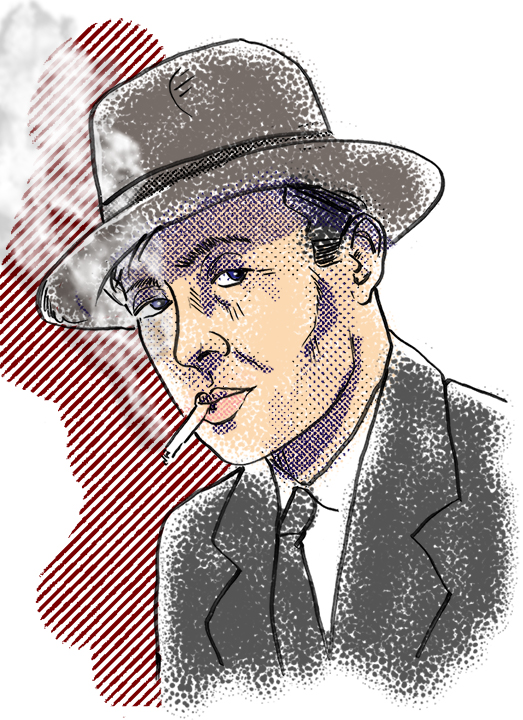
Why don't you quit cryin' and get me some bourbon?

One of my favorite movies is Singin’ in the Rain. I have seen it countless times and I could watch it again and again without a second thought. Although it is primarily remembered as a showcase for the considerable dancing talents of Gene Kelly and Donald O’Connor, the film was recognized by the Academy of Motion Picture Arts and Sciences in only one acting category. Jean Hagen was nominated for Best Supporting Actress for her hilarious portrayal of the ditsy and talentless Lina Lamont, Monumental Pictures’ vain silent movie star at the dawn of the talkies. Jean, in a blond wig, spews her clueless streetwise Brooklyn-ese in a put-on squeaky voice with intentionally comical results. Aside from the stellar dancing and lavish musical productions, Jean nearly steals the show. She was honored with her one and only Oscar nomination, but lost the award to Gloria Grahame for her role as Dick Powell’s two-timing wife in The Bad and The Beautiful.

Two years before her memorable supporting role in Singin’ in the Rain, Jean starred in John Huston’s gritty crime drama The Asphalt Jungle. In hindsight, this film truly shows Jean’s versatility and underrated acting ability. In the film, Jean plays Doll Conovan, the dim but loyal girlfriend of hired muscle Dix Handley, played by Sterling Hayden. Jean’s performance is restrained, but filled with vulnerability and passion, as she shows support for her lunkheaded boyfriend, despite his involvement in a jewel heist that was doomed from the start. Jean is able to evoke desperation and sympathy for a woman who is dazzled by diamonds and blinded by love – but too dumb to know any better. The entire movie is dark, realistic and hard-hitting. All of the performances are great, but Jean’s is particularly stunning.

After Singin’ in the Rain, Jean co-starred in three seasons of the sitcom Make Room for Daddy as the wife of star Danny Thomas. Though their on-screen relationship exihibited otherwise, Jean grew bored with the role and experienced frequent on-set clashes with Thomas. She announced her plans to leave the series and Thomas became furious. He immediately instructed the show’s writers to kill her character, thus making it impossible for her to return. Jean’s “Margaret Williams” became the first TV sitcom character to be “killed off.”

In the 60s, declining health and a horribly abusive marriage took a toll on Jean’s career. She accepted smaller roles in films and episodic television. Her last role,  in the made-for-television drama Alexander: The Other Side of Dawn (a sequel to the Eve Plumb TV movie Dawn: Portrait of a Teenage Runaway), was broadcast in May 1977. Jean passed away from esophageal cancer three months later at the age of 54.

Comments

comments

from my sketchbook: peter watts

before you die, you see the ring

Peter Watts became the road manager for Pink Floyd in 1967, a few months prior to the departure of band founder Syd Barrett. (In December 1967, guitarist David Gilmour was signed on to take Barrett’s place.) According to an interview, Peter was responsible for “getting everything together onstage, so all the guys have to do is walk onto the stage and play.”

Peter is featured on the back cover of Pink Floyd’s 1969 release Ummagumma. He and roadie Alan Styles are pictured on an airport runway surrounded by every piece of the band’s sound and stage equipment. The mixing boards, speakers, cables and instruments are arranged to mimic the “exploded-view” schematics of military aircraft.

In 1972, during the recording of the ground-breaking Dark Side of the Moon at Abbey Road Studios, Pink Floyd bassist Roger Waters compiled a series of questions. With the studio recorders going, he posed questions like “What’s your favorite color?” and “What’s your favorite food?” to the more serious  “When was the last time you were violent?” and “Were you in the right?”, as a quick follow-up. He asked his questions to crew members and their families, doormen, even Paul McCartney and Wings who were also at the studio working on an album. Although, Paul’s answers were all dismissed as “trying too hard to be funny,” faithful road manager Peter Watts contributed the eerie laughter heard at the beginning of “Speak to Me” and “Brain Damage” (during the lyric “The lunatic is on the grass”). Peter’s second wife Patricia can be heard saying, “He was crusin’ for a brusin’ ” during the fade-out of the song “Money,” as a reference to Peter’s temper.

Peter was married to costume and set designer Myfanwy Roberts before they divorced in 1972. The couple had two children, future renowned fashion and advertising photographer Ben Watts and future actress Naomi Watts, who would go on to star in David Lynch’s Mullholland Dr., 21 Grams, The Ring and 2005’s big-budget remake of King Kong.

In 1976, Peter was found dead in his London apartment of a heroin overdose. He was 30.

His daughter Naomi still enjoys listening to his recorded laugh.

Comments

comments

IF: robot (part 2)

We aren't dealing with ordinary machines here. These are highly complicated pieces of equipment.

Westworld, a 1973 science-fiction movie starring Yul Brynner, Richard Benjamin and James Brolin, was the first feature film to use digital image processing.

It also featured some pretty cool robots that didn’t think twice about killing you.

* * * * * * * *

This is the second illustration for the word “robot.”
HERE is the first.

Comments

comments

IF: robot

You clinking, clanking, clattering collection of caligenous junk!

In the futuristic world of 1997, Earth’s population has hit an all-time high and the continued boom poses a major threat to the planet. Professor John Robinson, his wife Maureen, their children Judy, Penny and Will and hunky Major Don West are sent to establish an annex colony in the Alpha Centauri star system. They set out on their mission aboard their ship, the Jupiter 2. Unknown to them, Dr. Zachary Smith, a medical doctor hired by a foreign government to sabotage the crew’s environmental-control robot, has stowed away on the Jupiter 2. His extra weight throws the ship off course and they become….

Lost in Space!

When the show was originally conceived, Smith was a minor character, but character actor Jonathan Harris made the role bigger than life and stole the show. His rapport with the robot (acted by Bob May and voiced by Dick Tufeld) was the highlight of each episode. The robot — programmed to be straight-laced and by-the-book — was a constant target of ridicule by the self-centered, egotistical Smith. Harris played the part to its most irritating, most annoying hilt. He was an instant fan favorite. As the series continued and gained popularity, more episodes centered around the Smith character, much to the chagrin of other cast members, especially Mark Goddard, who played Major Don West. Goddard voiced his resentment as his role (and amount of lines) were greatly reduced in order to showcase the decidedly more comedic antics of Smith and the robot. Harris actually rewrote and ad-libbed the majority of Smith’s dialog. He interjected his signature phrases like “Oh, the pain! The pain!” and “Will, dear, dear boy!” when he felt the scene needed an extra bit of humor. Harris admitted that he sometimes stayed up nights thinking of new alliterative insults for the robot that he often used on the show (Clod-like Collection of Condensers; Jangling Junkheap; Lily-Livered Lead-Lined Lummox)

After three seasons, Lost in Space was canceled due to high production costs, displeasure from a CBS executive and waning interest from some cast members (although all of these reasons are disputed). Jonathan Harris continued to appear in numerous guest roles on television. He became an in-demand voice actor, providing characterizations for an array of animated films and television shows. The voice of Manny the Praying Mantis in Pixar’s A Bug’s Life was one of his last roles. He passed away in 2002 at age 87. He was survived by his wife of 64 years.

* * * * * * * * * *

This is the first illustration for the word “robot”. Here is the second.

Here is another illustration for the word “robot” that I did in 2008.

Comments

comments

IF: travel

won't you let me take you on a sea cruise

My wife and I went on a cruise at the end of May. It was her second and my first. I had always balked at taking a cruise. I enjoy doing all the things that a cruise offers — obscene amounts of food, extravagant yet hokey stage shows and time away from work. All fine with me, but why does it have to be on a ship? In the middle of the ocean? I can do all those things in a resort on land. Land that can’t sink. And if, by chance, there is a power failure and the plumbing backs up and the hallways are suddenly flooded with shit — I can just hop in my car and go home. I can’t do that on a ship.

But, I agreed and we went.

We were booked on the Norwegian Cruise Lines massive ship Gem for a seven-day excursion to The Bahamas, with stops at Port Canaveral, Florida and Norwegian’s private island Great Stirrup Cay, before docking in Nassau. I was not really excited by the thought of the trip, mainly because I had nothing to which I could make a comparison. My only frame of reference for a cruise was The Jungle Cruise in Disneyland and The Love Boat. I knew I the captain wouldn’t be cracking corny jokes about the back side of water, but I sort of hoped that Isaac would be slinging Mai Tais in the Pirates Cove lounge.

We left New York’s Pier 88 under overcast skies and that’s how it remained for the majority of our trip. Day One and Two at sea were rough and rocky. A constant drizzle enveloped our vessel as large, angry waves lapped at the ship’s sides. It was not pleasant. Luckily, there was an endless array of food to distract us. And a casino. Mrs. P dug the casino.

On Monday (Memorial Day), we docked at Port Canaveral. We disembarked (I was happy to be off that goddamn ship and on solid, non-rocking ground) and boarded a charter bus for an hour’s drive to Orlando. We planned to spend the day at Downtown Disney, the expansive shopping area at Walt Disney World. The weather broke and we were presented with a beautiful day. It would be our last for a while.

Bright and early on Day Four, announcements were made explaining that despite the inclement weather (it was fucking pouring), tender boats would be shuttling guests to the private island for a (possible, if the rain stops) beach party with (possible, if the rain stops) outdoor music and a (possible, if the rain stops) barbecue. The enormous ship could not pull up close enough to the tiny dot of sand that is the deceptively-named Great Stirrup Cay. Instead, guests are to board tender boats in order to get to the island. A tender boat is sort of a water taxi and they look about as safe as a taxi … if one were floating in the ocean. They are not unlike the boat that rescued Red Buttons, Ernest Borgnine, Jack Albertson and those two annoying kids in The Poseidon Adventure — and we know how that turned out. (A shitty sequel and three of those actors are dead.) My wife and I passed, opting instead to spend the day playing group trivia and checking out the buffet.

After another rocky night at sea, the Gem docked at Nassau. I was kind of looking forward to seeing the sights of the tiny island nation. From our ship’s deck, I could see the pastel-colored buildings, the soaring willowy palm trees and the exotic aura of the Atlantis Resort off in the distance. Anxiously, Mrs. P and I made our way to the gangway and set our feet on Bahamanian soil. My expectations sank. The dock area looked like the parking lot of a closed factory. Broken, dirty concrete. Open, rusty trash dumpsters. Hardly the romantic setting I had imagined. We continued with the exiting crowds to a large building that served as Customs and a tourist marketplace. After flashing our passports, we strolled through the makeshift stalls outfitted with faux driftwood signs and plastic island flowers. The food stands boasted such indigenous cuisine as hot dogs and Coca Cola. Several tourist couples were posing with a tarnished and ratty sequined-costumed mannequin. As we exited the building, a few skanky-looking female locals swarmed around, enticing my wife to get her long, lovely hair braided. She politely declined. (The last thing she would do is allow one of these “ladies” to touch her hair.) As we approached the exit gate headed into the small cluster of Nassau shops and restaurants, we were, again, accosted by an enterprising young man who was pacing in front of a line of dated and faded Vespas.

“Hey, mon!,” he began in his island-tinged accent, “How ’bout you rent a scootah? See de island on a scootah, mon.” He was cheerful and smiling as he offered his persuasive pitch.

I smiled back as I waved him off. “No. No thank you.,” I said.

He sidled up close to me and, lowering his voice, he asked, “Pah-tee, mon? You want t’ pah-tee?” He raised his fingers up to his lips and toked on an imaginary joint. He nodded his head and smiled broadly. “Pah-tee, mon?”

Welcome to Nassau. Here are your choices of activities — rent a rusty scooter or get high.

The rest of Nassau was just as inviting. The narrow streets were lined with one run-down structure after another. Open-air stores stocked an inventory of cheap, generic Bahamas t-shirts and plastic souvenir whatevers, all emblazoned with some sort of Greetings from Bahamas sentiment. Garbage-strewn vacant lots were poorly concealed behind the brightly-painted buildings. On the main street, cars — unrestrained by traffic signals (or laws, for that matter) — weaved to avoid hitting the malnourished horses pulling rickety carriages. After nearly an hour of navigating the uneven sidewalks and fearing that we’d be dragged into an alley to be robbed and murdered, we made our way back to the ship. Nassau looks like the setting of every Caribbean drug deal movie you’ve ever seen.

It began to rain. Hard. Very hard. We hurried back to the dry sanctuary of the Gem, where we could shower and change into some clean clothes. And eat.

Finally the clouds disappeared and our last day at sea was filled with calm waters and sunshine. Mrs. P took her place on a deck chair, exclaiming, “I’ve been waiting six days for this. If you need me, I’ll be right here.” I don’t have much patience for sitting and doing nothing so I wandered off to find something to do. I watched one of the ship’s chefs carve fruit into animal shapes. I watched a crew member twist balloons into animal shapes to the delight of a giddy crowd of children. I listened to a drunken lounge pianist bang out unrecognizable melodies on the ivories in a tedious game of Name That Tune. I got some ice cream. I read a little. I got some more ice cream. And a brownie.

I found Mrs. P poolside, still on the deck chair where I had left her five hours earlier. She had acquired a beautiful golden tan. She was happy. We left to get ready for dinner. Now, I was happy.

We have another cruise booked for February.

Wish me luck.

(For another take on my recent cruise, read my post on “It’s Been a Slice” …. HERE.)

Comments

comments

IF: equality

This is a very moving moment. Yeah,I wish they'd move it to Pittsburgh!

I took my inspiration from the cover of this week’s New Yorker magazine. The cover illustration depicts a nationally recognized couple celebrating the Supreme Court’s decision that portions of the Defense of Marriage Act (DOMA) withholding federal benefits from same-sex marriages are unconstitutional. DOMA was signed into law in 1996 by President Bill Clinton.

Although the relationship between Bert and Ernie has been ambiguous for over forty years, the relationship of another same-sex Muppet couple has been a little more obvious.

Statler and Waldorf have occupied the left stage-side balcony of The Muppet Theater since 1975. From that lofty vantage point, the pair heckled every song, dance and comedy routine performed by their fellow Muppets, relishing in each other’s one-upsmanship. They take particular pride in hurling insults at poor Fozzie Bear in his efforts to make the audience laugh.

The pair has appeared on every episode of The Muppet Show, with one exception. One very telling exception. On a 1979 episode featuring special guest jazz trumpeter Dizzy Gillespie, Waldorf informs the audience that Statler is ill and cannot make it to the evening’s performance. However, Waldorf introduces his “wife,” Astoria, who will be taking his colleague’s place. When Astoria appears, it is obviously Statler in drag.

Although Bert and Ernie share a bedroom, they do not share a bed. Perhaps, now they can with pride.

Statler and Waldorf are always snuggled close in the intimacy of their darkened balcony.  Hopefully, now, they can stand proudly in the spotlight… y’know, if they had legs.

I wish the four of them all the best.

Comments

comments

IF: surveillance

Th-th-th-that's all, Ethel

“There was a possibility I could have been under surveillance.” — Julius Rosenberg

On June 19, 1953, Julius and Ethel Rosenberg were executed by the United States for treason. The couple were accused and convicted of supplying the Soviet Union with thousands of classified top secret documents, specifically dealing with plans to build an atomic bomb.

At a Mothers’ Day rally in New York City, protesting the upcoming execution, 14-year-old Lee Harvey Oswald picked up and read one of the pamphlets that was distributed through the crowd. He was inspired by what he read and it put him on the path towards socialist literature and his allegiance to Marxism.

Comments

comments

from my sketchbook: kermit roosevelt

From the moment I could talk I was ordered to listen/Now there's a way and I know that I have to go away

At 20 years old, Kermit Roosevelt — the second son of President Theodore Roosevelt — left Harvard University to accompany his father on an African safari. Upon returning, he re-enrolled and completed four years worth of studies in just two and a half years. While at Harvard, he was a member of the prestigious, though secretive, Porcellian Club.

Following in his father’s adventurous footsteps, he set out again in 1913 for an expedition into Brazil’s Amazon River Basin jungles. Once again accompanied by his father and Brazilian military officer Cândido Rondon, Kermit explored the rain forest and the River of Doubt, later renamed Rio Roosevelt. Over a period of two years, the party lead by Kermit, navigated and charted over one thousand kilometers of previously-unexplored land. Despite being poorly prepared and inadequately equipped, they fared and overcame adverse weather, health problems and even several deaths. The Roosevelts contracted malaria during the journey. Thanks to Kermit’s survivalist instinct (specifically his rope-handling and canoe-rowing prowess), he battled through his own sickness to save the elder Roosevelt’s life. Kermit chronicled the trek in his book, Through the Brazilian Wilderness.

After returning from South America, Kermit married Belle Willard, daughter of the U.S. ambassador to Spain. Their ceremony had been postponed by the trip to the Amazonian jungle.

Kermit was a decorated captain in World War I, serving in Mesopotamia (modern-day Iraq). He mastered the Arabic language and served as a military translator with the locals.

After the war, Kermit founded the Roosevelt Steamship Company as well as the United States Lines*.

In 1925, Kermit and his brother Ted Jr. embarked on a hunting expedition in the Himalayas. They transversed the Kashmir Valley and followed the ancient Silk Route into China. The pair returned with several trophies that are currently part of the collection of the Field Museum of Natural History in Chicago.

With help from his friend Winston Churchill, Kermit became a Second Lieutenant in the British Army. He led battles in Finland, Norway and North Africa, until an enlarged liver (brought on by years of heavy drinking) sidelined his commission. He returned to the United States and sunk deeper into alcoholism and depression. His cousin, President Franklin Roosevelt, made Kermit a major in the US Army and transferred him to Fort Richardson, Alaska. There, Kermit formed a militia with Eskimos and Aleuts.

In 1943,  Dr. Sanford Couch Monroe discovered Kermit in his Alaskan residence with a revolver by his side and a single, self-inflicted gunshot in his head. The official cause of death was released to the public as “heart attack.” Kermit, who was 53, left no suicide note.

* * * * *

* In 1952 (a decade after Kermit Roosevelt’s death), the United States Lines built the luxury passenger ship, The SS United States. The ship is the largest ocean liner constructed entirely in the US and still holds the distinction of being the fastest ocean liner to cross the Atlantic in either direction. The SS United States is featured prominently in the films, Bon Voyage, Munster Go Home, West Side Story and Gentlemen Marry Brunettes. In 1996, the ship was docked at Pier 82 on the Delaware River in Philadelphia. Ownership has been transferred several times and restoration plans were made and postponed and efforts are currently being made to save the vessel from the scrap heap as the once-great ship rots and rusts away. 

Comments

comments