IF: egg

goo goo g'joob
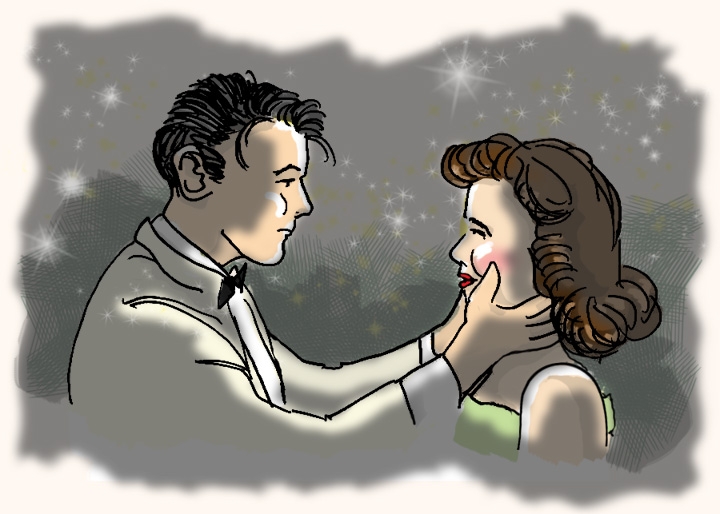
Fred MacMurray was one of the biggest stars in the heyday of Hollywood. He worked with top directors, like Billy Wilder and Preston Sturges. He starred alongside the top stars of the day, like Barbara Stanwyck, Humphrey Bogart and seven films opposite Claudette Colbert. In the late 1950s, Fred’s career was given a shot in the arm with a role in Disney’s family hits The Shaggy Dog, The Absent-Minded Professor and its sequel Son of Flubber.

Fred was approached by TV producer Don Fedderson to star in a weekly sitcom, My Three Sons. Fred, and his wife actress June Haver, had just adopted twin girls and he had hoped to spend more time with his family. The schedule of shooting a sitcom was perfect for him. However, he negotiated an even better deal. Fred arranged to work 65 days per year. All of his scenes were shot at once and the rest of the scenes were shot without him, then pieced together in post-production. While the show’s cast worked a regular schedule, Fred had 10 consecutive weeks off. He’d then return to the set for re-shoots and to wrap things up.

Fred was a wise and shrewd investor in California real estate and became one of the wealthiest men in Hollywood. He was also one of the thriftiest. Co-star William Demarest, who played Uncle Charlie on My Three Sons, remembered, while most of the cast ate at the studio commissary, Fred would bring his lunch to the set in a brown paper bag. Co-star Barry Livingston (who played Fred’s son Ernie) corroborated the story, adding that Fred would bring dyed eggs long after Easter had passed, so they wouldn’t go to waste.

After 12 seasons, My Three Sons was canceled by CBS. Fred appeared in a few films, but retired on his savings in 1979. He lived quietly and very comfortably out of the spotlight until his death from pneumonia in 1991. Fred was 83 years old.

Comments

comments

DCS: stanley myron handelman

no sleep 'til Brooklyn
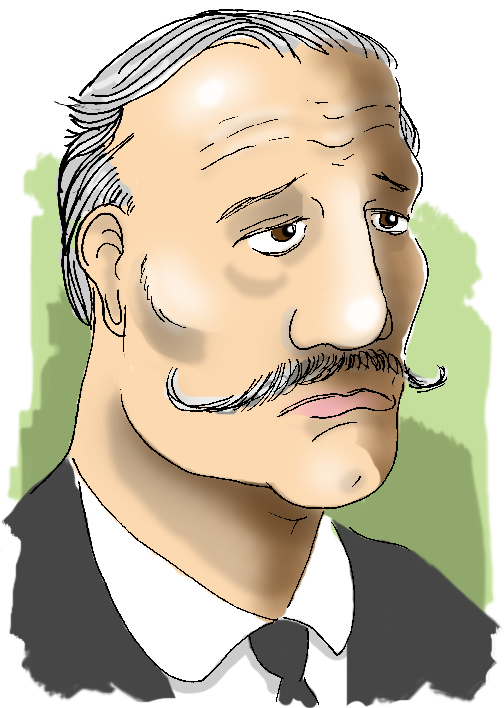
Stanley Myron Handelman was born in Brooklyn in 1929. He worked as a stand-up comic and gag writer as a young man. But for nearly ten years, he was a fixture on variety showcases and late-night talk shows. He made numerous appearances on The Ed Sullivan Show, The Flip Wilson Show, The Merv Griffin Show and The Tonight Show.  He was a semi-regular on Dean Martin‘s popular Golddiggers  program in the late 1960s. His nerdy clothes, gangly stature and trademark horn-rimmed glasses made him look like a walking cartoon character. His surreal brand of humor (think Emo Phillips crossed with Steven Wright) was a refreshing and welcome alternative to the Las Vegas/old-school schtick delivered by contemporaries Shecky Greene and Jackie Vernon.

Stanley was a regular on the Danny Thomas’ revival Make Room for Grand Daddy.  The show was canceled after one season (leading co-star Rusty Hamer down a dark path). Stanley continued to perform stand-up, opening for Frank Sinatra and pal Dean Martin at various Vegas showrooms. Stanley also continued to write jokes for his friend Rodney Dangerfield.

When Rodney Dangerfield passed away in 2004, his will stipulated that Stanley receive a lump sum of $10,000 and a monthly payment of $800 for the rest of his life.

Stanley quietly collected his inheritance and laid low until he died three years later at the age of 77.

Comments

comments

DCS: esther williams

Rush to the pool and dive right in Come up for air, and then you start to swim

Before Gidget…

Before Frankie and Annette…

There was Esther.

A competitive swimmer in her teens, Esther Williams set numerous records as part of the Los Angeles Athletic Club’s swim team. Due to the outbreak of World War II, Esther was unable to participate in the 1940 Summer Olympics. Instead, the anxious 19 year-old joined Billy Rose’s Aquacade, a swimming pool-based musical presentation conceived by the respected show-biz impresario. Esther stayed with the production for five month, during which she swam alongside Tarzan star Johnny Weissmuller.

Esther caught the eye of MGM talent scout who cast the swimmer in a series of small roles in films. Soon she began making a series of “aquamusicals” that proved to be very popular among movie-going audiences. From 1945 to 1949, Esther had at least one film listed among the 20 highest-grossing films of the year. She retired from acting in the 1960s, turning down the role of “Belle Rosen” in the 1972 disaster film The Poseidon Adventure.

A shrewd businesswoman, Esther invested in several successful ventures, including a line of swimwear and a chain of restaurants. She licensed her name for use on a line of swimming pools, as well as a collection of retro-styled bathing suits. In 1984, the now-retired Esther served as commentator for the synchronized swimming events at the Summer Olympics in Los Angeles.

Esther Williams died in 2013 at the age of 91. Fittingly, her cremated remains were scattered over the Pacific Ocean.

* * * * *
This post marks the sixth anniversary of the josh pincus is crying blog.

Comments

comments

from my sketchbook: alfred beach

it's far too rude

Back in 1870 just beneath the Great White Way/Alfred Beach worked secretly
Risking all to ride a dream/His wind-machine
— “Sub-Rosa Subway” by Klaatu (1976)

Alfred Beach and his partner bought the rights to Scientific American  magazine, and began its publication in 1845. Alfred, a patent attorney and inventor, was interested in scientific advancements. He even patented several of his own inventions, including an early typewriter for the blind. But, in 1870, he embarked on a daunting and ambitious undertaking that would only make him footnote in the history of transportation.

In order to alleviate the continuing traffic jams in New York City’s main thoroughfare — Broadway, Alfred proposed an underground railway powered by pneumatics rather than a conventional steam engines. In 1870, senator William “Boss” Tweed introduced a bill backing Alfred’s project. Prominent businessmen Alexander Turney Stewart and John Jacob Astor III objected to the idea, anticipating damage to the buildings on Broadway during the tunnel construction, despite Alfred’s suggestion of a tunnel shield (an underground reinforcement proven to give support to surface structures during construction). In reality, Turney and Astor were backing an elevated train over 9th Avenue, a safe enough distance from their Broadway business interests.

Under the guise of a permit to build a pneumatic package delivery tunnel, Alfred secretly constructed his transportation prototype in only 58 days. Alfred’s railway ran 300 feet with one station stop in the basement of Devlin’s clothing store. (He envisioned the station as a showplace with huge murals, tiled floors and fountains — but those plans would have to wait.) For three years, Alfred offered free ride demonstrations. Municipal transit authorities were impressed by the simplicity of Alfred’s vision, but saw it as nothing but a novelty. They concentrated their efforts on the expansion of the elevated railway. Dejected, Alfred went back to publishing, although technically, his was the first subway in New York City. In 1898, Alfred contracted pneumonia and passed away at the age of 69.

In 1912, Alfred’s tunnel was destroyed by workers expanding the subway system under Broadway.

* * * * *

HERE is Canadian band Klaatu’s tribute to Alfred Beach.

Comments

comments

IF: talent

You got more talent in one lugnut than a lot of cars has got on their whole body.
Poor Steven Duren. He had dreams. He was heavily influenced by AC/DC, Black Sabbath and Alice Cooper. But, he wasn’t nearly at their level… and he knew it. But that wouldn’t stop the ever-determined Steven.

Steven changed his name to Blackie Lawless and fooled around on the guitar and bass. He formed a few bands, the most popular being heavy-metal shock rockers W.A.S.P., best known for their controversial hit “Animal (F**k Like a Beast).” Blackie surrounded his band with gimmicks, from pyrotechnics on stage to the mysterious meaning behind the band’s acronym name. (Fans guessed everything from “We Are Sexual Perverts” to “We Ate Savory Pancakes.” Blackie would sometimes tell interviewers “We Ain’t Sure, Pal.”)

Blackie’s signature stage stunt was lighting his codpiece on fire. During an early performance of the trick, a malfunction in the explosives caused poor Blackie’s crotch to burst into flames. Attentive rescue workers doused the fiery piece of wardrobe with water and foam to extinguish the flames. As a charred and shaken Blackie was carried from the stage, he observed his situation and quipped, “If I could write better songs, I wouldn’t have to do shit like this.”

Comments

comments

from my sketchbook: rita johnson

Give us a wink and make me think of you.
With aspirations of stardom, Rita Johnson set out for Hollywood after two years of acting on Broadway. She made her motion picture debut in 1937’s London By Night,  a lighthearted mystery starring George Murphy, long before he was elected to the US Senate.

Rita continued to be cast in films throughout the 30s and 40s. She was a versatile actress, able to convey a villainous persona as the murderous Julia Farnsworth in 1941’s Here Comes Mr. Jordan (the original version of the Warren Beatty vehicle Heaven Can Wait) and then become the sympathetic mother to young Roddy McDowall in My Friend Flicka  and its sequel.

The pressures of show business led Rita to alcohol and soon she was consuming more than her fair share. However, in 1948, Rita’s career nearly came to an end when a beauty salon hair dryer fell on her head. Her injuries required delicate brain surgery and, although she did  return to the big screen, she was relegated to smaller roles due to her limited mobility and poor concentration.

Rita finally called it a career in 1957, after completing only four films since her accident. Rita passed away from a brain hemorrhage on Hallowe’en 1965. She was 52.

Comments

comments

from my sketchbook: ben raleigh

jinkies!

Ben Raleigh was writing songs as far back as the 1940s.  His songs were recorded by Eddie Fisher, Dinah Shore and Nat King Cole among others. In 1946, Sammy Kaye and his Orchestra had a Top Ten hit with Ben’s composition “Laughing on the Outside (Crying on the Inside).”

Pop singer Leslie Gore recorded Ben’s “She’s a Fool” and song stylist Johnny Mathis had a hit with “Wonderful, Wonderful,” both in the 1960s.

In 1969, Ben was recruited to write the theme song of a new cartoon about a group of teens and their mystery-solving dog. Ben composed “Scooby-Doo, Where Are You?” Hanna-Barbera, the cartoon production company, offered to pay Ben outright for the song. Ben, instead, opted for an ongoing royalty. The cartoon was an instant success and ran for decades. Ben made a fortune.

In 1997, Ben died in a fire that started in the kitchen of his Los Angles home. He was 84.

Comments

comments

IF: whisper

from a whisper to a scream
When it comes to horror in films, there is one true master. You’re probably thinking of names like Alfred Hitchcock, John Carpenter or David Cronenberg. Some might even throw in the name of Italian director Dario Argento, whose beautiful on-screen depictions of blood-and-guts slayings have been compared to fine art paintings. But the real master of scare and overlord of fright is Walt Disney. That’s right — good ol’ Uncle Walt! Walt created some of the scariest moments ever committed to film. Scarier than Dracula, or Jason or Freddie because Walt’s target was innocent and unsuspecting. Walt aimed to frighten children. Fans of horror love to be scared, so they go to movies that they know will deliver on their promise. The devious Mr. Disney hid his scares behind the guise of colorful, song-filled stories like Pinocchio and Sleeping Beauty. Happy little characters dance across the screen, gaily singing and frolicking amid cute woodland creatures, then  BAM!  — a whale eats your father and your best friend turns into a goddamn donkey right before your eyes! That Walt! What a bastard!

In 1993, The Walt Disney Company released its 1937 animated masterpiece Snow White and The Seven Dwarfs to theaters for the last time. Disney touted this re-release by noting that this version of the film was the first to be entirely scanned to digital files, manipulated, and recorded back to film (evidently a big deal in the early 90s). With my wife regularly working late on Friday nights, I took my then five-year-old son to the movies to see Snow White.

We arrived at the theater in plenty of time to buy some popcorn and secure ourselves a pair of choice seats. Soon, the interior lights dimmed and we munched our snack as previews of upcoming films flickered on the big screen. Then, the familiar castle icon appeared announcing the beginning of the feature presentation. We settled in and watched as the story unfolded. The ominous Queen paraded in front of her Magic Mirror asking “Who is the fairest of them all?” When the Mirror replies that Snow White, who the Queen has working as a maid, has grown into a beautiful young lady and is now the fairest in the land, the Queen gets thoroughly pissed off. She immediately summons a huntsman to take Snow White into the forest and kill her. Then, she produces a jeweled box. The Queen orders the huntsman to bring the box back to her filled with Miss White’s extricated heart. My son began to squirm.

The huntsman leads the gullible Snow into the woods. She begins picking flowers or some other girly activity when the huntsman draws his knife from its sheath. The screen darkened as the menacing huntsman closed in, his eyes narrowed and blazing, the blade shimmering in the moonlight, inching closer.

Suddenly, my son leaned in and whispered to me in a quivering voice, “Dad, let’s go.”

I placed a comforting arm around his small shoulders said to him, “This movie is called ‘Snow White and the Seven Dwarfs.’  We haven’t seen the dwarfs yet. I have a feeling that he’s not gonna kill her.”

He sat back down in his seat and, sure enough, the huntsman didn’t go through with it. Instead, he burst into tears and begged Snow White’s forgiveness. Within minutes, the screen was awash with colors and music and woodland creatures, all frolicking and alive in song. But — dammit! — if Walt Disney didn’t succeed in scaring the shit out of another little boy.

Comments

comments