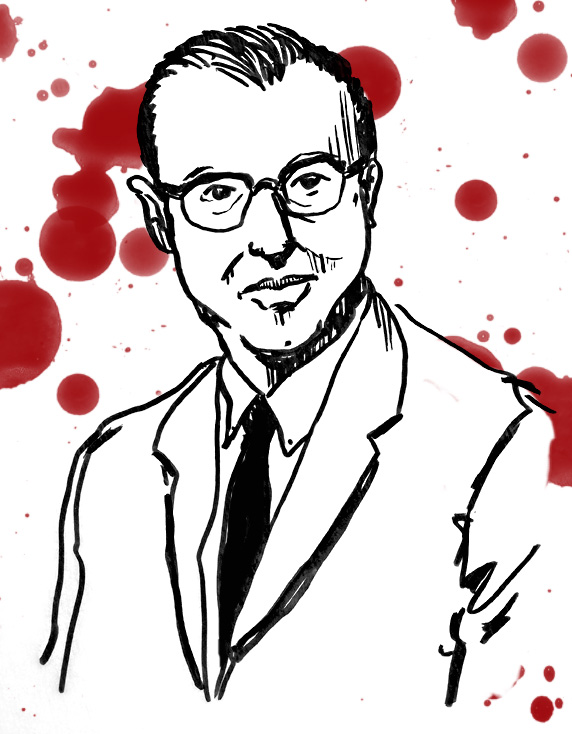
from my sketchbook: desi arnaz

Babalu
Desiderio Alberto Arnaz y de Acha III was born in Santiago, Cuba to the city’s youngest mayor. After the 1933 Cuban Revolution led by Fulgencio Batista, Desi’s grandfather, a wealthy executive with the Bacardi Rum Company, was jailed and his assets confiscated. He was released six months later and the Arnaz family fled to Miami.

In the United States, Desi tried his hand at show business, playing guitar in Xavier Cugat’s band and landing a part in the Broadway production of Too Many Girls. He went to Hollywood to make the film version of the stage musical and he met its star, Lucille Ball. In 1940, he married Lucille.

In 1951, Desi co-starred as a fictional version of himself opposite his wife in the ground-breaking sitcom I Love Lucy. The couple founded Desilu Productions, overseeing such TV shows as The Andy Griffith Show, The Dick Van Dyke Show and Star Trek.

After the pair divorced, Desi formed his own production company. He made guest appearances on television including one week as a co-host on the popular daytime talk show The Mike Douglas Show. He served as host of a 1976 episode of Saturday Night Live, where he spoofed I Love Lucy in one sketch and sang his signature song “Babalu.”

Desi retired from show business in 1982. He owned a horse farm in southern California and raced thoroughbreds. He taught a few acting classes at San Diego State University. In 1986, the 69-year-old Desi was diagnosed with lung cancer and passed away before the year was out.

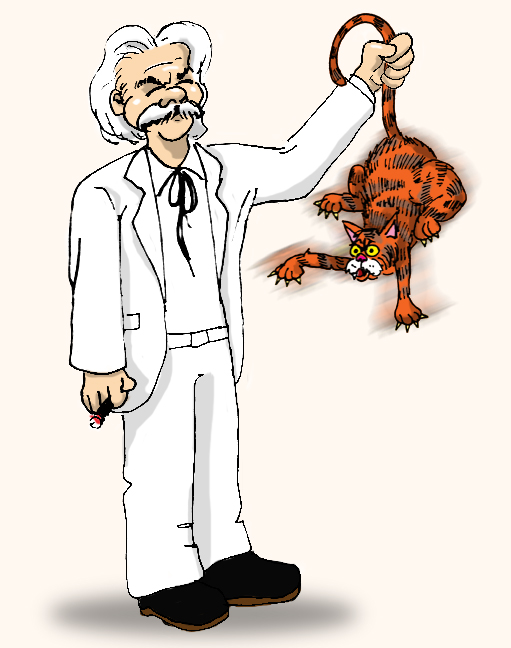
How he kept himself from killing Lucille Ball, I’ll never understand.

Comments

comments

IF: refrain

don't worry if it's not good enough for anyone else to hear

“Are there any requests?”
“Yes, how about ‘the refrain from singing’?”

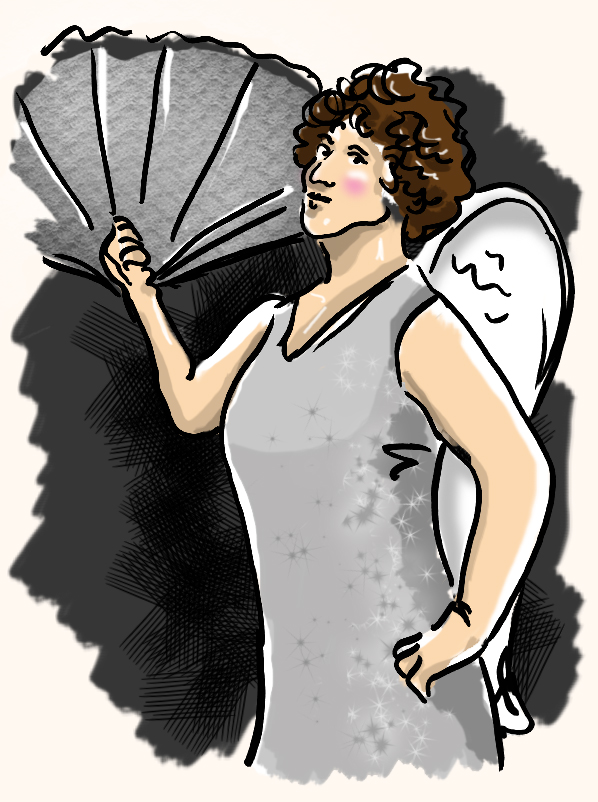
Florence Foster took music lessons and expressed an interest in singing opera. Her father refused to subsidize his daughter’s dream, so she ran off at the age of 22 and eloped with physician Frank Thornton Jenkins. The marriage lasted seven years, ending in divorce in 1902. When her father died in 1909, Florence used her large inheritance to finance her singing career. She took singing lessons and became active in cultural circles in Philadelphia and New York City. She gave recitals and performed for audiences often.

The only problem was that Florence didn’t possess a lick of talent.

She sang off-key and had absolutely no sense of pitch or rhythm. Her accompanying musicians had to constantly adjust their timing to make up for Florence’s erratic tempos. Her pronunciation of the words in foreign operas was atrocious. But despite her horrendous singing, she was very popular as a source of amusement. Her regular pianist Cosmé McMoon would make faces behind her back as she warbled out her tunes. Florence, however, dismissed the laughter and insults as “professional jealousy.” She was convinced that her talent was on the level of internationally-known sopranos like Frieda Hempel and Luisa Tetrazzini. She would respond to critics by saying, “People may say I can’t sing, but no one can ever say I didn’t sing.”

In addition, Florence would make her own stage costumes, usually featuring angel wings and tinsel. She would throw flowers to her audiences and later her assistants would gather the flowers up so she could throw them again a subsequent performance.

In October 1944, at the age of 76, Florence gave a performance at New York City’s prestigious Carnegie Hall. The show was a sell-out. One month later, Florence passed away.

Comments

comments

IF: shadow

Senorita, I feel for you

As far as Dr. Carl Tanzler was concerned, Elena Hoyos stepped out of a dream… and he never wanted that dream to end. Ever.

In 1930, Elena Hoyos was brought into Marine Hospital in Key West, Florida by her mother. Dr. Tanzler was immediately struck by her beauty – her dark hair, her dark eyes. He had visions of such a beauty years earlier and now, here she was, right in front of him. After a series of tests, Dr. Tanzler determined that Elena was suffering from tuberculosis, an incurable disease at the time. Tanzler prescribed homemade medicines, which he personally brought to the Hoyos home, along with gifts of expensive clothing and jewelry for Elena. The remedies did not work and Elena passed away late in 1931. A distraught Dr. Tanzler paid for a funeral for the twenty-two year old Elena. She was interred in a mausoleum in the Key West Cemetery. Tanzler visited the grave every day.

But, that was not enough.

In April 1933, under cover of night, Tanzler crept through the shadows in the cemetery, broke into the mausoleum and removed Elena’s remains. He claimed that he heard her spirit ordering him to do so. At his home, he attached her bones together with wire and coat hangers. He replaced the corpse’s rotting skin with wax-dipped silk. He stuffed the corpse’s abdominal cavity with rags to maintain a bodily shape. He dressed the body in clothing, including silk stockings and dress gloves. He also applied large amounts of perfume and hospital disinfectant to combat the smell of decomposition. Elena’s body stayed in Tanzler’s bed. He slept with “her” every night. He even fashioned a tube that he placed in her pelvic area to accommodate intercourse.

In 1940, Elena’s sister Florinda confronted Dr. Tanzler about a rumor she had heard regarding his theft of Elena’s remains. Tanzler protested, but Florinda notified local authorities and Tanzler was arrested following a search of his house. Tanzler was put on trial for “maliciously destroying a grave and removing a body without authorization,” but the case was eventually dropped and he was released, as the statute of limitations for the crime had expired.

Elena’s body was returned to Key West Cemetery, but buried in a secret, unmarked location. Dr. Tanzler moved to a home on the Gulf Coast of Florida, where he constructed an effigy of Elena (using a death mask he had cast while still in possession of her corpse). He was found dead in the substitute Elena’s arms in 1952.

Comments

comments

from my sketchbook: whitney blake

Missy

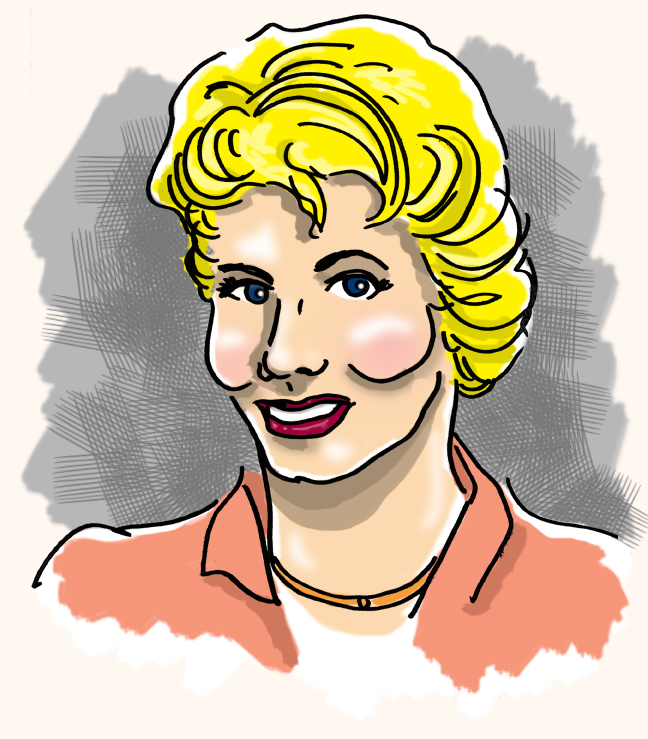
Born to a Secret Service officer who had protected President Woodrow Wilson, Whitney Blake attended sixteen different schools as she traveled the country with her family. An appearance in an amateur stage production led to a role in the 1957 film My Gun is Quick, a big-screen version on Mickey Spillane’s gritty Mike Hammer mystery. The same year, Whitney was featured in the first episode of the long-running courtroom drama Perry Mason.

After guest spots in television and motion pictures, Whitney landed the role for which she is best remembered. She was cast as Dorothy Baxter, wife of  irascible attorney George Baxter (played by Don DeFore) in the NBC-TV sitcom Hazel, starring Oscar winner Shirley Booth in the title role. Whitney stayed with the show for four seasons, until a budget cut relieved her and DeFore of their duties before a move to rival network CBS.

Whitney continued to take guest roles on episodic television and even tried her hand at hosting a local talk show in Los Angeles. Then Whitney turned her efforts to producing and directing. In 1975, she (and Alan Manning, her third husband) created the sitcom One Day at a Time, which ran for nine seasons on CBS and made actress Valerie Bertinelli a star.

Several years earlier, Whitney’s daughter, actress Meredith Baxter debuted on her own sitcom, Bridget Loves Bernie.

On Whitney’s 76th birthday in 2002, she gathered her family for a celebration and revealed a diagnosis of esophageal cancer. She assured her family that she was a fighter and was determined to overcome the disease. She passed away seven months later.

Comments

comments

from my sketchbook: olive borden

Some that you recognize, some that you hardly even heard of.
Olive Borden (a distant relative of Lizzie Borden) knew she could make it. As a teenager, she persuaded her mother to move from their native Richmond, Virginia to Hollywood, where she knew she could be a star. The family made ends meet by running a candy store until Olive’s star took off.

And soon it did.

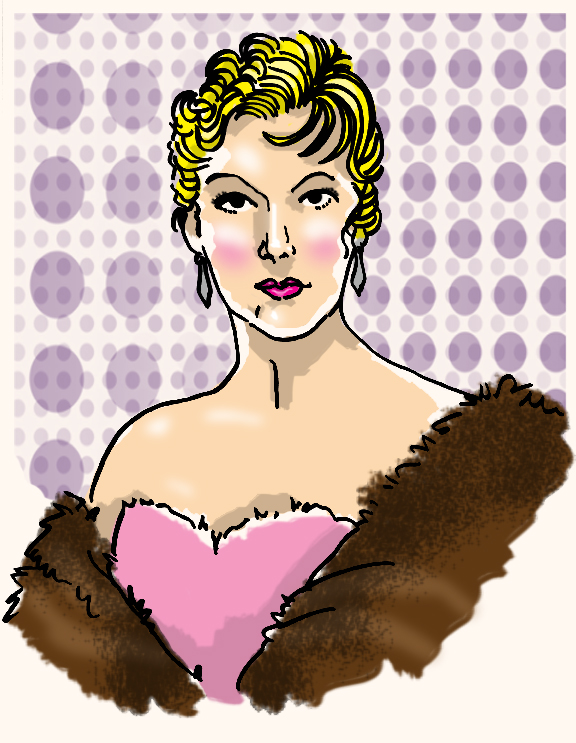
Olive, with her jet-black hair and striking features, became one of producer Mack Sennett’s Bathing Beauties (a springboard for future stars like Mabel Normand, Carole Lombard and Marie Prevost). Olive also appeared in a number of Hal Roach short subjects.  In 1925, Olive was signed by Fox Studios for a whopping $1500 per week. She starred in eleven films for Fox and worked with pre-fame directors like John Ford and Howard Hawks.

Olive developed a reputation for being temperamental and difficult to work with.  In 1927, Fox attempted to reduce her salary and a furious Olive walked out on the studio.  She managed to land roles at rival Columbia and RKO Studios. However, with talking pictures gaining popularity, Olive was passed over for parts because of her prominent Southern accent. Her career began to fizzle in the early ’30s. She made her last screen appearance in Chloe, Love Is Calling You in 1934.

Despite her large salary at the height of her career, Olive was broke by the 1940s. She worked briefly as a post office clerk and nurse’s assistant, but health problems and alcohol abuse made working a struggle. She spent her final years scrubbing floors at the skid-row Sunshine Mission, a home for destitute women in Los Angeles. She died of pneumonia at 41. Her only possession was an autographed photo of herself.

In 1958, Olive was randomly selected as one of the first eight celebrities to receive a star on Hollywood’s Walk of Fame.

Comments

comments

from my sketchbook: john list

our father who art in heaven, hallowed be thy name
John List was faced with a dilemma. He had lost his job as an accountant. He was months behind on the mortgage payments for his nineteen-room mansion in Westfield, New Jersey. Burdened with heavy financial debt and accumulating bills, he could either force his family to accept government-sanctioned welfare or he could send them to Heaven and have God take care of them. He chose the latter.

On November 9, 1971, after his three children left for school, John List shot his wife Helen in the back of the head. He then shot his mother, who lived in an apartment in the family’s attic. When Patty and Frederick, two of the List’s three children arrived home, John shot them each in the back of the head, as well. Then, he made himself lunch. When he finished his meal, he went to watch his son, John Jr., play soccer.

After the game, John drove his son home and, upon entering the house, shot the fifteen-year-old. Later investigation showed that the teen obviously did not die immediately and was shot nine more times. John dragged all of the bodies to the home’s central ballroom and laid them on sleeping bags. He attempted to clean up the massive amounts of blood, but the task was overwhelming. He left bloodied towels and newspapers strewn about various rooms. John mailed letters to his children’s schools, informing them that the family would be traveling to North Carolina for an extended stay. He wrote a lengthy confession to his church pastor, explaining that he saw too much evil in the world and he decided to save the souls of his family. John turned all of the lights on in the house, tuned the house-wide sound system to a Christian radio station and left. His car was found in the long-term parking lot at Kennedy Airport, but there were no indications that he had boarded a flight. John List had disappeared.

Nearly a month later, neighbors alerted police that lights were burning out in the List house and, although the family was reclusive, no one had been seen entering or leaving for quite some time. Police broke into the locked residence and discovered the grisly scene.

In June 1989, almost eighteen years after the murders, John List was arrested in Richmond, Virginia, after a neighbor had seen his picture on an episode of the television program America’s Most Wanted.

John had moved to Denver, Colorado in 1972. He assumed the identity of Robert Clark and found work as an accountant. A decade later, he relocated to Midlothian, Virginia, where he met and married Delores Miller. When authorities in Virginia came for him, he fervently denied the accusations. When fingerprints, military records and crime scene evidence were presented, John List confessed.

At trial, John displayed a minimal amount of remorse. He blamed his actions on post-traumatic stress disorder, mental imbalance and obsessive-compulsive personality disorder. The jury wasn’t buying any of it. He was convicted on five counts of first-degree murder and sentenced to five consecutive life terms. He passed away, in jail, from pneumonia at the age of 82.

In a 2002 interview, news correspondent Connie Chung asked John List why he didn’t kill himself after murdering his family. He answered, “I felt suicide would keep me out of Heaven.”

Comments

comments

from my sketchbook: bea benaderet

Hi neighbor!

Bea Benaderet worked and worked and worked.

Early in her career, Bea appeared on countless popular radio shows in various character roles – telephone operators, landladies, sales clerks and most often “the neighbor.” Her keen knack for vocal inflection and dialects allowed her to portray several characters in one show, unbeknown to the radio audience. Bea also plied her voice talents in Warner Brothers cartoons alongside master voice artist Mel Blanc. She voiced female characters for decades, but, due to an exclusivity clause in Mel Blanc’s contract not permitting screen credit to any other voice artist, she was never acknowledged.

Bea co-starred with Lucille Ball in the radio comedy My Favorite Husband, the forerunner to I Love Lucy. When the decision was made to bring the show to television, Ball offer the role of neighbor Ethel Mertz to Bea. However, Bea was already recruited by George Burns to reprise her “neighbor” role on his TV sitcom, so she had to turn the part down (Gale Gordon, who played Bea’s husband had a similar commitment to the show Our Miss Brooks, allowing second choice William Frawley to step in as Fred Mertz).

After eight years on the Burns and Allen Show, Bea was cast as the voice of Betty Rubble on The Flintstones, reuniting with Mel Blanc voicing her husband Barney. In 1962, she auditioned for the role of “Granny” on a new series called The Beverly Hillbillies. She was told by creator Paul Henning that she was too buxom to portray the frail but feisty mother-in-law of series star Buddy Ebsen. Henning did cast her in the recurring part of Pearl Bodine, the mother of Ebsen’s character’s nephew Jethro, from back in the hills.  Based on the popularity of The Beverly Hillbillies, Henning created Petticoat Junction and awarded Bea the starring role of hotel proprietor Kate Bradley. With two “rural comedies” under his belt, Henning produced Green Acres, based on a radio show called Granby’s Green Acres (again starring Gale Gordon and Bea Benaderet). The lead couple was recast with Eddie Albert and Eva Gabor, although Bea appeared in several cross-over episodes as her Petticoat Junction character.

Four years into the run of Petticoat Junction, Bea was diagnosed with lung cancer. With the show finishing consistently among the top shows on television, Bea took what she had hoped would be a short leave of absence to deal with treatment for the disease. Actress Rosemary DeCamp filled in as “Aunt Helen.” Bea appeared sporadically in the show’s fifth season. Her condition worsened and after three shows in the sixth season, June Lockhart (playing the authoritative Dr. Janet Craig) was brought in as a substitute “motherly” figure. Bea’s stand-in (actress Edna Laird) was stuck into a few episodes, shot from behind with Bea’s voice dubbed into the soundtrack. Bea passed away in October 1968 at the age of 62.

On the day of her funeral, Bea’s husband, veteran sound-effects man Gene Twombly, died of a heart attack.

Comments

comments

IF: secret

listen... do you want to know a secret?

Stephani Germanotta has a secret.

In 2007, young Stephani, a budding singer, was introduced to another singer named Lina Morgana by Sony Records producer Rob Fusari. Stephani and Lina began collaborating on songs, eventually penning nearly two dozen compositions. Lina, with her dark hair and exotic good looks, was the obvious choice for performing them. Stephani was awkward, slightly overweight and not attractive in the eyes of pop music. (Although Stephani was previously signed to Def Jam Records, she was dropped by the label after three months.) Lina, however, looked like she was headed to stardom.

But, in 2008, 19-year-old Lina Morgana jumped from the tenth floor of the Staten Island Hotel to her death.

Just months after Lina’s death, her friend Stephani emerged on the music scene. She had adopted her dead friend’s persona, including outlandish costuming, exaggerated makeup, vocal style and outrageous stage antics. She was even singing their collaborative songs.

And she was calling herself “Lady Gaga.”

* * * * *

The Illustration Friday word was “secret” in June 2012. Here’s my entry from that time.

Comments

comments