IF: space

giant steps are what you take
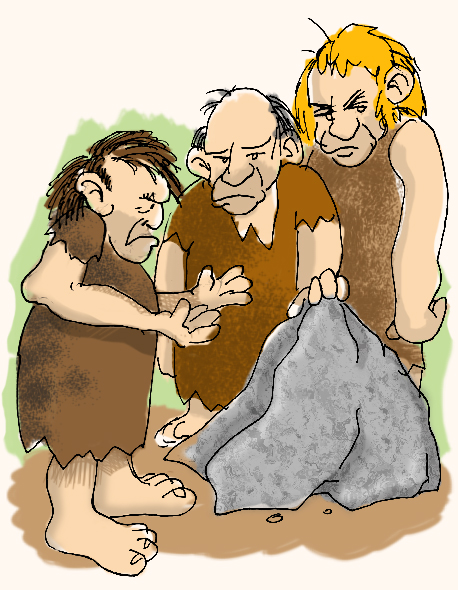
I’ve done several “space”-related illustrations. Most depicting a science fiction theme or NASA-style astronauts, even a few with television or movie references. But this one is to appease my friend  Steve, who, for years, has been trying to convince me that the 1969 Moon Landing was staged.

Happy, Steve?

Here are some of my other “space” illustrations:

Rex Afterburner

Dr. Smith and Robot from Lost in Space

Urban Spaceman

A science fiction story written by my son

A transcript of that “alleged” moon landing (one of my personal favorites)

A bit of retro science fiction

My take on Star Wars

Comments

comments

IF: twisted

We're goin' on a holiday now gonna take a villa or a small chalet

Earnest Evans, a cheerful, fun-loving, energetic young man from the low rent projects of Philadelphia, changed his name to Chubby Checker and cut a record in 1960. It was a cover of Hank Ballard’s “The Twist,” and Chubby turned it into a national dance craze. “The Twist” was the only single to top Billboard‘s Top 100 twice, in two separate chart runs. Chubby became a star. His follow-up, “Let’s Twist Again,” won the 1961 Grammy Award for Best Rock and Roll Solo Vocal Performance. His next single, a similarly themed duet with Dee Dee Sharp called “Slow Twistin’ ” went to Number Three on the charts. Chubby is the only recording artist to place five albums in the Top 12 all at once.

Despite international notoriety, Chubby lamented…

“The Twist” really ruined my life. I was on my way to becoming a big nightclub performer, and
“The Twist” just wiped it out. It got so out of proportion. No one ever believes I have talent.”

Chubby still tours and performs regularly.

Comments

comments

IF: exotic

Tahuwai la a tahuwai wai la Ehu hene la a pili koo lua la Pututui lu a ite toe la Hanu lipo ita paalai

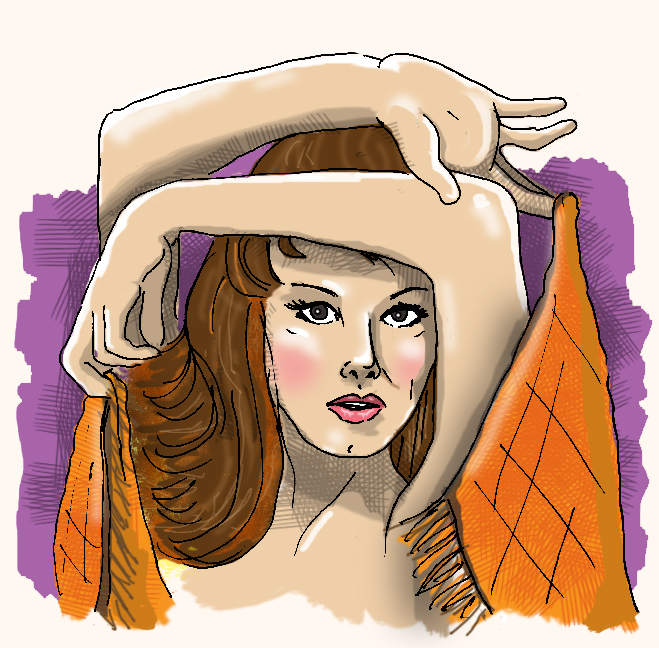
With her dark hair, dark eyes and exotic beauty, Victoria Vetri was destined for stardom. She wrote poetry, sang and tried her hand at acting. In Hollywood, Victoria was cast in early roles portraying women from a variety of nationalities – Mexican, Italian, Native American – in motion pictures and episodic television. She turned down the offer to sing for Natalie Wood in West Side Story, choosing not to to have her talent relegated to “behind the scenes.” Victoria auditioned for, but lost, the title role in Stanley Kubrick’s Lolita.

In 1967, she appeared as Playboy‘s Miss September under the pseudonym “Angela Dorian, ” a sly play on the name of the ill-fated cruise ship SS Andrea Doria that sunk off the coast of Nantucket in 1956. Victoria was showered with gifts when she was named Playmate of the Year in 1968. Her centerfold was secretly attached to the lunar landing checklist of Apollo 12 (the second manned launch to the moon) as a prank on Mission Commander Pete Conrad. A caption was added reading “See any interesting hills or valleys?,” a reference to Victoria’s physical endowments.

She rode her Playboy fame to land a small role in the film Rosemary’s Baby. In a scene early in the movie, Mia Farrow stumbles upon Victoria in her apartment building’s laundry room and notes that she bears a striking resemblance to the actress Victoria Vetri. Victoria was listed in the film’s credits as “Angela Dorian,” and this line was inserted into the script as a joke.

In 1969, Victoria signed a long term contract with Warner Brothers and starred in the prehistoric, though anachronistic, fantasy When Dinosaurs Ruled the Earth. The low budget film, featuring Victoria in a blond wig, was very popular and a box-office hit. Victoria was regularly cast in television dramas, Westerns and comedies. She appeared in such diverse roles as sidekick to Victor Buono’s King Tut villain in Batman, an alien in the “Assignment: Earth” episode of Star Trek, and a potential mother for young Eddie Corbett in the premiere episode of The Courtship of Eddie’s Father. She even posed topless one more time, at age 40, for Playboy in a pictorial entitled “Playmates Forever!”

Flash forward to 2010 –

Victoria Vetri, now Mrs. Bruce Rathgeb, shot her husband in the chest at close range during a heated argument. Police were called to the couple’s modest Hollywood apartment, a far cry from the glamorous surroundings that Victoria was once accustomed to. At first she said her husband was shot by a drug dealer.  She was subsequently jailed on $1.5 million bail. In September 2011,  forty-four years after she graced the pages of Playboy, Victoria was sentenced to nine years in prison for attempted voluntary manslaughter. She will be 76 when she is released.

Comments

comments

from my sketchbook: king curtis

don't talk back

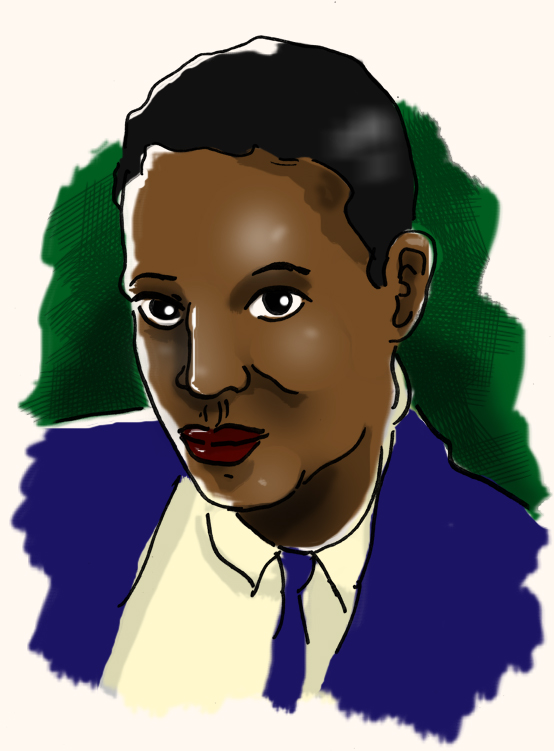
Curtis Ousley began playing the saxophone at twelve years old. In a relatively short time, he became an accomplished musician. Curtis turned down college scholarships in favor of joining the great Lionel Hampton‘s big band.

Using the stage name “King Curtis,” he earned a reputation as a respected session musician, playing on recordings by artists  as varied as Buddy Holly and Andy Williams. His distinctive sax can be heard in The Coasters’ classic “Yakkety Yak.” He also served as leader for Aretha Franklin’s backing band, The Kingpins. When The Beatles played Shea Stadium in 1965, Curtis and The Kingpins opened the show.

Curtis next joined The Rimshots and, in 1971, recorded the funky “Hot Potatoes,” which was adopted as the theme to the television show Soul Train. Curtis continued to record for other artists, including sax contributions on John Lennon’s Imagine album and production for Joe South’s hit “Games People Play.”

In August 1971, Curtis was lugging an air conditioner up the front steps of his brownstone on West 86th Street in New York City. Two known neighborhood drug dealers were getting high on the steps and blocking Curtis’ path. He asked them to leave and, when they refused, a heated argument began. Twenty-six year-old Juan Montañez pulled a knife and stabbed Curtis in the chest. Curtis, who stood over six-feet tall, wrestled the knife away from Montañez and stabbed him several times before collapsing. An ambulance was called, but Curtis died from his injuries before they reached Roosevelt Hospital. Curtis was 37.

Atlantic Records closed their offices on the day of King Curtis’ funeral. The service was attended by Aretha Franklin, Stevie Wonder, Brook Benton, The Isley Brothers and Duane Allman (who would die in a motorcycle accident in two months). Reverend Jessie Jackson delivered the eulogy.

Curtis was pothumously inducted into the Rock and Roll Hall of Fame in 2000.

Comments

comments

IF: disguise

well, we all have a face that we hide away forever
“Let me have a Three Musketeers, and a ball point pen, and one of those combs there, a pint of Old Harper, a couple of flashlight batteries, some beef jerky… and four hundred pounds of carrots.

* * * * * *

It looks like Illustration Friday suggested the word “disguise” way back in August of 2011. Here is my illustration from back then. Hmmm…. I guess if a joke works, you use it again.

Comments

comments

from my sketchbook: gladys george

Everybody's a dreamer and everybody's a star

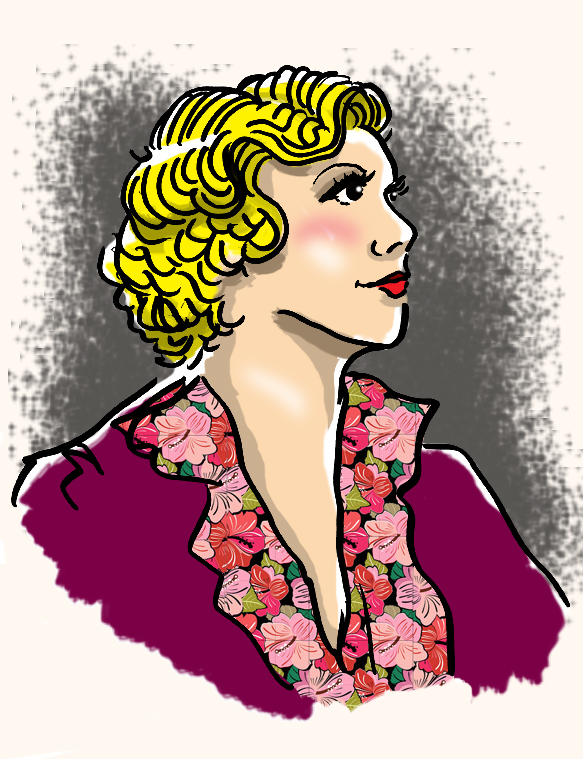
Gladys George made her stage debut at age 3 alongside her showbiz parents. It was her Broadway debut, at age 18 opposite Isadora Duncan, that seemed to be Gladys’ path to stardom.

She was a hit in the comedy Personal Appearance, which Mae West adapted for the film Go West, Young Man. West took Gladys’ role in the film. After a few small parts in movies, Gladys was nominated for an Oscar for her portrayal of prostitute Carrie Snyder in the drama Valiant is the Word for Carrie in 1936. She was unable to parlay her notoriety into bigger parts and was relegated to mostly character roles.

Gladys shared the screen with such Hollywood heavyweights as Humphrey Bogart and James Cagney, but she couldn’t regain her starring status. She played Doris Day’s alcoholic mother in the musical Lullaby of Broadway in 1951 and followed that with guest stints in early episodic television. At 46, she married her third husband, a hotel bellhop, twenty years her junior.

Suffering from a number of ailments including throat cancer, heart disease and cirrhosis of the liver, Gladys eventually passed away from a cerebral hemorrhage at 54 in 1954.

Comments

comments

IF: beginning

my son's gotta go to art school, he's leaving in three days
When I graduated from high school, I didn’t know what the hell I wanted to do with my life. I was working as a cashier at the women’s clothing store that my mother managed. I was planning on a career in the retail business, perhaps one day working my way up to manager myself. But, I hated the retail business and, after a year, I was ready for something else.

I had been drawing since I was a little kid, doodling little cartoons on any spare piece of paper I could get my hands on. I decided to look into enrolling in art school, to hone and refine my natural ability and possibly make a career of it… much to the consternation of my father. My father was a butcher. He had no concept of making a living with something as intangible as — gulp! — art! So, it was understood that if I wished to embark on this frivolous notion of making a living at being an artist, I would have to finance the education portion myself.

I got myself an interview at the Hussian School of Art, a respected establishment known throughout the small, commercial art trade in Philadelphia. I was given a brief tour of the facility — a small, cramped, loft-like area occupying three non-consecutive floors of a dilapidated building in one of the seedier sections of center city Philadelphia, situated between a multi-level adult bookstore and a homeless shelter. Afterwards,  I presented my thrown-together portfolio to Ron Dove, the president of the school. Although Mr. Dove perused my offerings (comprised mostly of projects from high school art classes) with nary a change in expression, I was accepted and welcomed to be a part of the freshman class beginning in the Fall of 1980.

The summer preceding my entrance into art school, I spent a week in Florida with some high school friends in one last fling of youth. I was about to enter the next stage of my life, a path towards responsibility and career goals and adulthood… as I tried to convince my parents and myself.

My first class of my first day of art school was “Graphics,” a sort of catch-all that would introduce printmaking through linoleum and woodcuts, metal etchings, silk-screening and other skills I would never, ever use. I sat at a long table, listening to a long-winded speech from the teacher, matronly Mrs. Spiro, when a guy (later I would know to be “John”) seated across from me asked if I knew the time. I glanced at my watch and answered. That was the first of many friendships I would make at Hussian, kindred spirits all with the same eventual goal.

My next class was “Drawing.” Now, we were talking. I could draw like nobody’s business. I placed my required newsprint pad on one of the many easels strewn haphazardly along the perimeter of the open studio. I selected a few slender sticks of charcoal from a box I had purchased as part of a list of mandatory supplies (including a forty dollar box of pastels that I don’t think I ever cracked the cellophane on). The teacher, a fierce little martinet named Mrs. Clement, arranged a bowl with fruit and flowers on a lacy tablecloth at the center of the room. The class collectively began to interpret the setting in charcoal. Mrs. Clement offered the harshest of criticism as she paraded around the room, weaving in and out of easels, careful not to leave any budding artist without at least one insult and proper discouragement. “Holy shit,” I thought, as Mrs. C. gleefully pointed out my artistic shortcomings, “is this what I signed up for?”

As the semester progressed and we began to fully understand the nature and actual encouraging powers of critique, the drawing class was introduced to the next phase of subject matter. On this day, we arrived for class as usual, setting out our materials and securing a place with a good view of the small riser at the room’s center. Only this time, there was no table, no bowl, no fruit and no lacy tablecloth. Mrs. Clement, instead, silently escorted a tall woman in a bathrobe to the riser. The woman was about the same age as the majority of my classmates. She wore her mousy brown hair pulled up in a loose bun at the top of her head, tied with a small piece of ribbon. With no warning, she dropped her robe and we saw that the ribbon was the only thing on her body she wasn’t born with. A few stifled coughs split the otherwise silent studio. The woman, expressionless, raised her arms above her head and intertwined her hands with her palms to the ceiling. She arched her back and extended one long leg behind her, elegantly pointing her toes. The class stood motionless. This was quite unexpected and quite a change from a bowl of fruit.

“She’ll be changing poses every three minutes,” Mrs. Clement barked, “so get drawing!”

Drawing? Oh, right! That’s why I was here.

We tried to remain as mature and adult as we possibly could, but for goodness sakes!, this woman was standing before us in all her nipples-and-pubic-hair glory, without blushing or batting an eye. Needless to say, there was a reasonable amount of squirming. True to our teacher’s word, she did, indeed, change poses every three minutes to the point where there wasn’t a square inch of that young lady’s body that we didn’t see and, eventually, draw. At one point, she seated herself in a ratty old chair and posed in some of the most immodest positions imaginable. (Didn’t your mother ever tell you “A lady crosses her legs at the ankles when seated.” Obviously, this woman had skipped finishing school.) Finally, we broke for lunch. The model put on her robe and walked to a small dressing (undressing?) room at the rear of the studio. Sue, one of my classmates, turned to me as she gathered up some of  her supplies and said “She’s very graceful, isn’t she?” I replied with a nervous, cockeyed smile… as though I had just been caught with a naked woman.

But, guess what? The naked female body is very difficult to draw, especially for someone like me, who is more comfortable doodling silly cartoon characters. As the time went on, naked women or not, I dreaded that class. Mrs. Clement was a tough and demanding instructor and the realistic drawing style that was expected of me proved very challenging. I equated it with another scenario in my life.

During the time I attended art school, I worked in the buffet room of a dinner theater. Prior to the evening’s performance, patrons would line up to fill their plates and stuff their faces with a wide array of food. Salads, vegetables, casseroles and roast beef — which was carved by yours truly. When dinner time concluded, we closed off the buffet room and began the task of cleaning up. Workers in the buffet were permitted to take as much of the leftover food before returning it to the kitchen. When I first got the job, it was a benefit to end all benefits! I piled a plate to overflowing capacity, as though I was a condemned man offered his last meal. And I did this every night. For a week. Until the novelty wore off and I never wanted to see or eat that shit again.

That’s how I came to feel about the nude models. What started out as “Oh my God!” soon became “Ugh! Not again!?”

Comments

comments

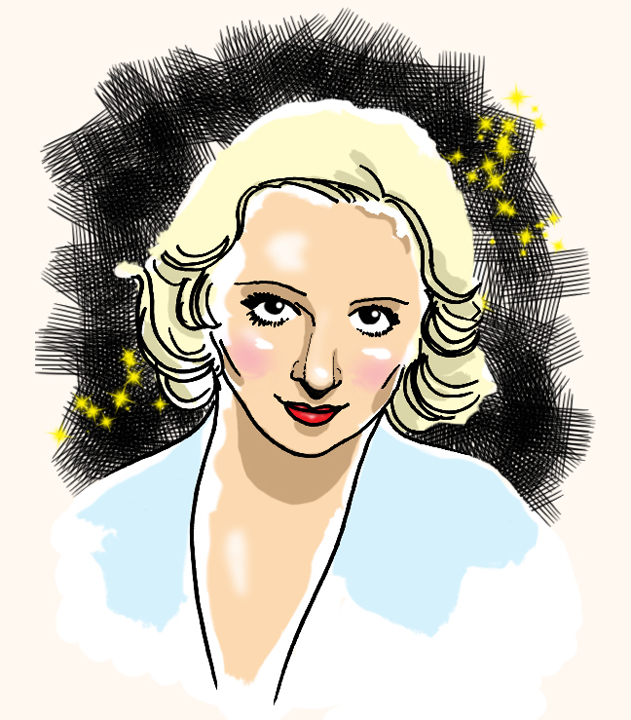
from my sketchbook: carole lombard

Don't ever leave me/Say you'll never go/I will always want you for my sweetheart

Prolific director Allan Dwan saw 12-year-old Jane Peters playing baseball on a Los Angeles street and cast her in his film The Perfect Crime in 1921. Young Jane was a contract player in low-budget films for Fox and Pathé, until both studios dropped her and she signed with Paramount.

Jane, now using the stage name Carole Lombard, met actor William Powell while working on a picture and the two were married in 1931. The marriage only lasted two years and the couple divorced in 1933, but remained life-long friends.

At a party in 1934, Carole met noted director Howard Hawks. Hawks was immediately taken by her beauty and cast her opposite the great John Barrymore in his latest project Twentieth Century. At first, Carole was intimidated by Barrymore, but soon the two developed a working rapport.

Despite turning down the lead in It Happened One Night, Carole’s success increased and 1936 proved to be a banner year for her career. Upon his insistence, Carole appeared with her ex-husband William Powell in the screwball comedy My Man Godfrey. She followed that with Nothing Sacred, for which she became the highest paid actress in Hollywood at the time.

Carole had romantic relationships with actors Gary Cooper and George Raft, screenwriter Robert Riskin and singer Russ Columbo (who died from an accidental shooting at age 26). In ’36, she began an affair with married actor Clark Gable, whom she had met while she was still married to William Powell. Louis Mayer, anxious to cast Gable in Gone With The Wind, offered the actor a bonus to divorce his wife (oil heiress Ria Langham) and accept the role. Gable conceded and during a break in the film of GWTW, the couple ran off to Kingman, Arizona to marry.

When the United States entered World War II at the end of 1941, Carole, along with her mother and her press agent Otto Winkler, traveled to her home state of Indiana for a War Bond Rally. In one night, the popular Carole raised over two million dollars for the war effort. After the rally and anxious to return to Los Angeles, Carole convinced her colleagues to travel by airplane rather than the previously-arranged train. A coin toss was the decision-maker. Twenty-three minutes after a fuel stop, TWA Flight 3 crashed into Double Up Peak, 32 miles southwest of Las Vegas. Everyone aboard — Carole, her mother, Winkler and 15 soldiers — were killed. Carole was 33 years old.

Carole’s final film, the comedy To Be or Not To Be, had a posthumous release in 1942. An inconsolable Clark Gable joined the United States Army Air Force and flew five missions to film aerial gunners in combat. In 1944, he was present at the dedication of the SS Carole Lombard, a cargo ship involved in rescue missions in the Pacific.

Although he married two more times, Gable’s wishes were to be buried next to Carole at Forest Lawn in Glendale, California. The couple were reunited in November 1960, when Gable passed away.


Comments

comments

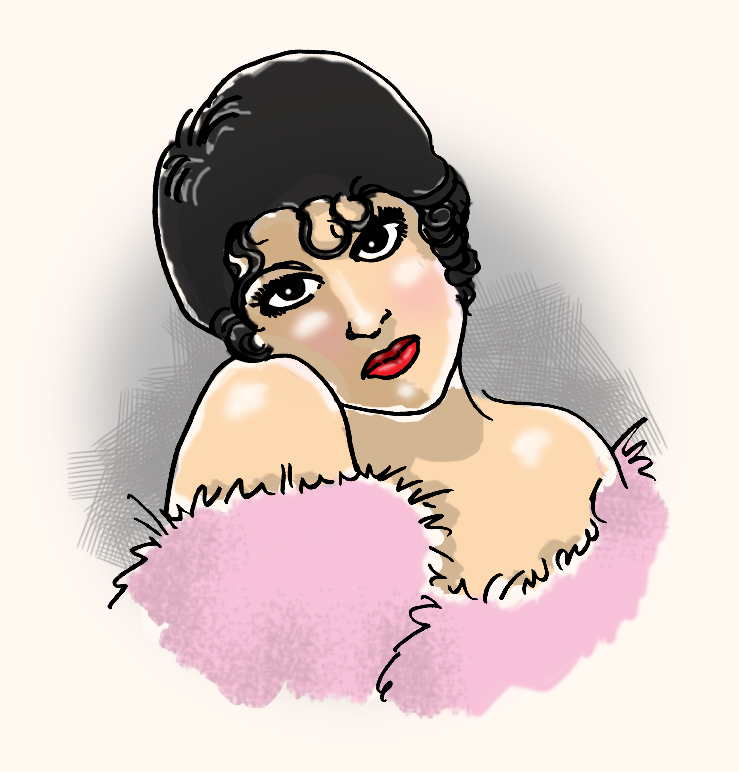
from my sketchbook: lina basquette

America's Prima Ballerina

She was a seven-year old, just dancing in her father’s drug store, when a representative of RCA Victor hired her to advertise Victrolas at the 1915 Panama–Pacific International Exposition. A short time afterwards, young Lina Basquette was studying ballet.

At ten, she was signed to a contract with Universal Pictures to star in a series of silent films called The Lina Baskette Featurettes.  Lina’s father, unable to deal with her mother’s relentless pursuit of fame, committed suicide. Lina’s mother married dancer Ernest Belcher and gave birth to Lina’s half-sister, the future renowned choreographer Marge Champion.

Lina headed to New York and was signed to The Ziegfeld Follies. Florenz Ziegfeld dubbed her “America’s Prima Ballerina.” Noted Russian ballerina Anna Pavlova offered to mentor Lina, but Lina’s controlling mother turned her down. At a Broadway performance, Lina was spotted by Sam Warner, co-founder of Warner Brothers Studio. It was love at first sight and Warner immediately proposed marriage, despite being twenty years Lina’s senior. Lina was hesitant, but her mother insisted that she accept. They remained a couple until Warner’s untimely death two years later (the night before the world premiere of Warner’s groundbreaking The Jazz Singer with Al Jolson). She became embroiled in a lengthy legal battle with her late husband’s family and lost custody of their daughter. Distraught, she attempted suicide. She would not see the child for thirty years.

In 1929, Lina starred in Cecil B. DeMille‘s epic and controversial The Godless Girl. The film did blockbuster business in Germany and Austria, despite lukewarm reviews in the United States. Lina was called a favorite by Adolf Hitler. In the late 30s, Lina traveled to Germany, as her popularity was on the decline in the United States. She was offered a contract by a German film company. She claimed that while in Germany, she met Hitler, her self-professed “biggest fan.” She said she gave the Führer a knee to the groin when he made a pass at her.

She married boxer Jack Dempsey’s trainer while she carried on an affair with Jack. When he tried to break up their relationship, Lina attempted suicide for the second time in her life.

In 1943, Lina gave a ride to an AWOL Army private in Burbank, California. He forced her into the back seat of her car and raped her, then robbed her. Although he maintained his innocence, he was found guilty and sentenced to twenty years in prison.

In 1950, Lina and her sixth husband opened Honey Hollow Kennels in Bucks County, Pennsylvania,  and began breeding and showing Great Danes. She became the single biggest winner of Great Dane dog shows. She wrote books on dog breeding and went on to be a respected dog show judge.

In 1994, forty-eight years after her last film appearance, Lina was cast in the independent production Paradise Park. She played the part of a delusional grandmother and costarred with several country music stars (Porter Wagoner,  Johnny Paycheck and Mountain Stage host Larry Groce). She passed away later that year at the age of 87, having led a roller coaster of a life.

Comments

comments