DCS: paige young

warning shot

As Bill Cosby’s sexual harassment and assault retrial begins, the story of his relationship with Paige Young remains a forgotten footnote to the list of Mr. Cosby’s accusers.

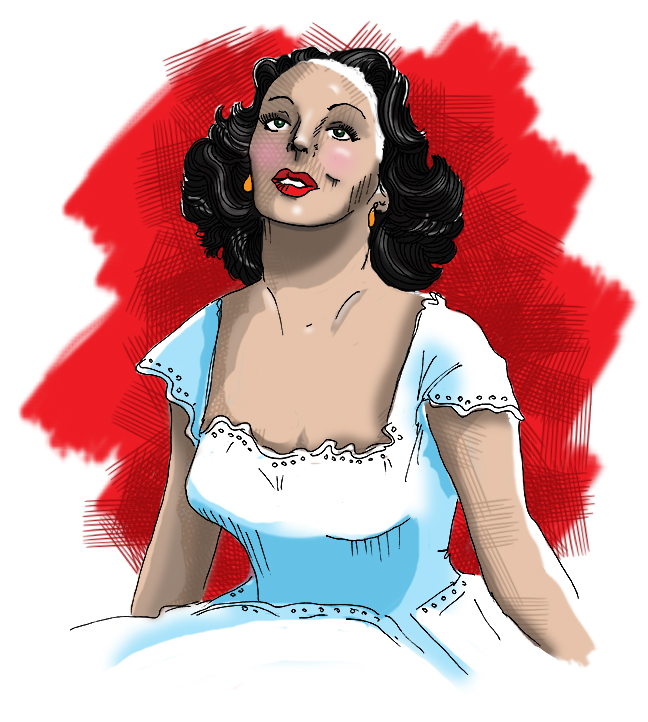
A naïve budding model named Paige Young was presented as “Miss November” in the penultimate issue of Playboy magazine for the year 1968. The pretty and petite brunette became a favorite of publisher Hugh Hefner and was a regular at his notorious, star-studded parties held at the famed Playboy Mansion in Los Angeles. However, it appeared that Hefner had specific plans for Paige.

The parties at the playboy Mansion were storied affairs. Guest lists were regularly comprised of the most famous names from the world of Hollywood, professional sports and the media. They were alleged to be awash with a level of debauchery that would rival Caligula’s soirées of ancient Rome. The alcohol flowed freely, as did the drugs. As a special service, Mr. Hefner would often hand-pick a “companion du jour” for those male guests that made the request. Hef received one of those requests from his good friend, comedian Bill Cosby. Cosby, at this time, was a popular stand-up comic who had great success co-starring in the TV series I Spy with Robert Culp. He was an in-demand performer, whose comedy records were lauded as “comic masterpieces.” He was also married with two children and a third on the way. But, Cosby had taken an instant liking to Paige Young and mentioned his desire to Hugh Hefner. Hef arranged for Paige to “date” Cosby, but it wasn’t a “date” in the conventional sense. Paige was plied with drugs and subjected to CIA-caliber mind control. She was coerced into sexual slavery, first with Cosby then with a number of Hef’s stable of elite acquaintances, including married actor-director John Huston, who was 38 years her senior. Paige was part of this “program” for years.

People who knew Paige — like her neighbor, model Melanie Myers — said she always looked tired and dazed. She was distant and detached in her speech and seemed “out of it.” After a while of observing Paige’s distressing behavior, Myers was invited into Paige’s apartment. In one room, Paige had arranged a pentagram on the bare wooden floor. One wall of the room was covered from floor to ceiling with photos of Hugh Hefner. Across each photo was scrawled the words “Hugh Hefner is the devil.” Myers was speechless as Paige expounded on her hatred for the Playboy publisher. Suddenly, Paige produced a .38 caliber handgun and told Myers that she had planned to kill herself. Myers panicked and fled Paige’s apartment, fearing that her neighbor may harm her. She headed straight to the police to explain what she had just witnessed.

Returning to her apartment complex with police officers, Myers entered Paige’s dwelling. She directed officers to the room where she had seen the photos. When they entered the room, they discovered Paige’s blood-soaked body lying on the floor on top of an American flag. It appeared that, after positioning herself on the flag, Paige had put the barrel of the gun in her mouth and pulled the trigger. An investigation speculated that Paige wanted to send a message to her mental “captors.” Paige took her own life just a few months after her thirtieth birthday.

Comments

comments

DCS: lesley duncan

love song

Despite some pretty impressive connections, Lesley Duncan never achieved the stardom for which she was destined.

Born in the British port town of Stockton-on-Tees, Lesley left school as a teenager. At 19, the aspiring songwriter was placed on a retainer by a local music publisher. She signed a recording contract with EMI Records before her 21st birthday.

Lesley soon hooked up with Elton John. He recorded her composition “Love Song” for his 1970 concept album Tumbleweed Connection. The song went on to be recorded by 150 different artists, including David Bowie and Olivia Newton-John. As a favor, Elton John played piano on Lesley’s first solo record, which failed to chart, in spite of its critical praise.

Lesley shunned live performances due to her crippling stage fright, opting instead, to offer backing vocals to numerous singers. She sang on recordings by her idol Dusty Springfield, as well as Pink Floyd and the studio recording of Jesus Christ Superstar. She also returned to help her friend Elton John with backing vocals on his Madman Across the Water album. Her final album appearance was on The Alan Parsons Project’s 1979 release Eve.

Lesley retired from the music business, preferring the quiet life of tending to her family and working in her garden. She passed away from cerebrovascular disease in March 2010 at the age of 66.

Comments

comments

DCS: shirley hemphill

Can I take your order?

Born in North Carolina, Shirley Hemphill was an aspiring comedian while she supported herself with a job in a factory. She sent a cassette recording of her routine to popular comedian Flip Wilson. Impressed by the tape, Wilson sent Shirley a new cassette recorder, a dozen roses and an invitation to visit the set of his television show. She was so motivated and inspired by her meeting with Wilson, she quit her job and bought a one-way bus ticket to Los Angeles. She performed evenings at The Comedy Store, while she waited tables during the day.

In 1976, a casting agent in the audience at The Comedy Store was so taken by Shirley’s act, she offered her a guest role on the sitcom Good Times. Producer Norman Lear offered Shirley her own show, but she declined. Instead, she auditioned for, and eventually won, the role of “Shirley,” the sarcastic waitress on What’s Happening!, a comedy loosely based on the 1975 film Cooley High. What’s Happening! was a fairly successful series for ABC, but tensions and demands among the cast members – not including Shirley – forced a cancellation after three seasons.

Shirley auditioned, unsuccessfully, for the role of the cook on the continuation sitcom Archie Bunker’s Place. The role went to actress-comedian Anne Meara. One day after losing that part, Shirley was given her own show, One in a Million. The series, after failing to attract an audience, was cancelled six months into its initial run. She returned to the stages of comedy clubs and made infrequent guest appearances on episodic television. She made her motion picture debut in 1993 in CB4, co-starring with Chris Rock. She followed that with a role in the comedy Shoot the Moon. She continued to perform stand-up, making appearances on The Tonight Show, Evening at the Improv, and BET’s Black Comedy Showcase. She was a regular at The Laugh Factory comedy club in Los Angeles.

In December 1999, a gardener working outside of Shirley’s West Covina, California home, saw her lying on the floor of her bedroom. An autopsy revealed that she had died from renal failure. She was dead for nearly two weeks when she was discovered. Shirley was 52 years old.

Comments

comments

IF: house

AKA mr. proper

In the 1950s, Linwood Burton ran a successful ship cleaning business with accounts up and down the east coast of the United States. His workers, however, suffered regular injuries from the caustic nature of the cleansers they used. A concerned Burton, using his basic knowledge of chemistry, began formulating a solution that could cut through grime without the danger of injury to his workers. He developed Mr. Clean.

In 1958, Burton sold his invention to consumer goods giant Proctor & Gamble. Within six months, it was one of the best selling cleansers on the market. Proctor & Gamble began marketing Mr. Clean as a household cleaning agent. As a part of their advertising campaign, they hired actor House Peters Jr., who had been featured in numerous B Westerns and episodic television, to be the embodiment of the Mr. Clean character. House Peters portrayed Mr. Clean in television commercials for the better part of two decades.

Comments

comments

DCS: tammi terrell

aint no mountain high enough

A teenage Tammi Terrell, still using her birth name of Montgomery, signed on as a back-up singer with soul legend James Brown in 1963. While on tour, she entered into a sexual, yet physically abusive, relationship with the singer. Tammi eventually left Brown after he beat her for not watching his entire performance.

Following a brief and unsuccessful stint with Checker Records, Tammi enrolled in a pre-med program at the University of Pennsylvania in her hometown of Philadelphia. She was approached by singer Jerry Butler who asked the young ingenue to accompany him on some nightclub dates, a performance schedule that would still allow her to continue her studies. After a performance in Detroit, Motown Records founder and producer Berry Gordy offered Tammi a contract. Tammi signed with Motown just prior to her 20th birthday. She joined the “Motortown Revue” tour and became the opening act for The Temptations. She also began a heated romance with Temptations singer David Ruffin. Ruffin proposed marriage, but Tammi soon discovered that he already had a wife and three children, in addition to another girlfriend. Ruffin became abusive and once even hit Tammi in the head with his motorcycle helmet. There is speculation that this action aggravated a pre-existing condition that had earlier surfaced as the migraines Tammi suffered as an adolescent.

Motown later paired Tammi up with singer Marvin Gaye. The duo recorded separate versions of the song “Ain’t No Mountain High Enough.” Motown engineers edited the two versions together and released it to high praise. In the spring of 1967,  it reached Number 19 on the Billboard Hot 100 and Number 3 on the R&B charts, thus making Tammi a star. The pair’s follow-up tunes, “Your Precious Love,” “If I Could Build My Whole World Around You,” and “If This World Were Mine” were all hits, as well. Tammi and Gaye went out on a promotional tour, despite Gaye’s reluctance to give live performances. During a show at Virginia’s  Hampden–Sydney College, Tammi fell and Gaye was able to catch her. She was helped off the stage and was later diagnosed with a malignant brain tumor.

Tammi went through surgery and recovery, returning to Motown to record a pair of songs with Marvin Gaye, including “Ain’t Nothing Like the Real Thing,” which hit Number 1 on the charts. Her condition, however, worsened and Tammi was subjected to additional surgeries. She was confined to a wheelchair and suffered from blindness and substantial hair loss. Following her eighth operation in January 1970, Tammi went into a coma, never to regain consciousness. She died on March 16, one month before turning 25. Marvin Gaye was devastated and never fully recovered, emotionally, from the loss. His 1971 album What’s Going On, was inspired, in part, by Tammi’s death.

Comments

comments

IF: olympics

the greatest 45 minutes ever in sports

At the 1936 Summer Olympics, held in Nazi-controlled Berlin, Germany, Jesse Owens single-handedly crushed Adolf Hitler’s myth of Aryan supremacy. Jesse, an African-American son of sharecroppers, won four gold medals in track and field in Berlin before an astonished crowd. Despite his achievements and the accolades he received, he was not offered an invitation to the White House upon his return to the United States.

Comments

comments

DCS: lorraine hansberry

first

When A Raisin in the Sun opened at the Ethel Barrymore Theater in 1959, it was the first Broadway show written by an African-American playwright. Lorraine Hansberry, at 29, was also the youngest to win a New York Critics’ Circle award.

Lorraine grew up in Chicago’s South Side, where her father, a successful real estate broker, regularly incurred the wrath of his white neighbors. Lorraine, however, benefited from the wealth of intellect brought into the home by family friends Paul Robeson and W.E.B DuBois. When she enrolled in the University of Wisconsin’s writing program, she became politically active and her writing took the same course.

At 23, Lorraine married producer-songwriter Robert Nemiroff and the couple moved to New York City. Nemiroff wrote “Cindy, Oh Cindy,” which was a hit in 1956 by Vince Martin and the Tarriers, and later covered by Eddie Fisher. This sudden income for the couple allowed Lorraine to write full-time.

Based on discovered writings, it is believed that Lorraine was a closeted lesbian. She contributed pieces to The Ladder, the magazine of the Daughters of Bilitis, the first lesbian civil and political rights organization in the United States. Lorraine was a vocal activist for gay rights and often wrote about feminism and homophobia.

In 1957, Lorraine completed her most famous work, A Raisin in the Sun. It was produced on Broadway two years later and featured a nearly exclusive African-American cast, including Sidney Poitier, Ruby Dee, Louis Gossett, Ivan Dixon and Glynn Turman, with John Fiedler being the sole white cast member. Based on the play’s success, NBC tapped Lorraine to write a program about slavery. She presented the network with a script called The Drinking Gourd. Although NBC executives were pleased by the piece, the show was never produced.

Lorraine was selected to direct the 1961 interracial musical Kicks and Co., but after a lukewarm reception in previews, the production never made it to Broadway as intended.

A heavy smoker for most of her life, Lorraine was diagnosed with pancreatic cancer in 1963. She underwent two unsuccessful operations. Her show, the controversial (for its time) The Sign in Sidney Brustein’s Window, which was currently running on Broadway, closed the night of her death. Lorraine was 34.

After her death, Robert Nemiroff adapted a number of Lorraine’s unpublished works into the play To Be Young, Gifted and Black, which became the longest-running Off-Broadway play of the 1968–69 season.

Comments

comments

IF: mythology

I love me and you love me

In Greek mythology, Liriope, a nymph, was raped by Cephissus, the river god. A mystical seer told Liriope that their son, Narcissus, would live a long life, as long as he never recognized his own beauty.

Narcissus discovered his reflection in the waters of a spring and stared at himself for eternity.

Comments

comments