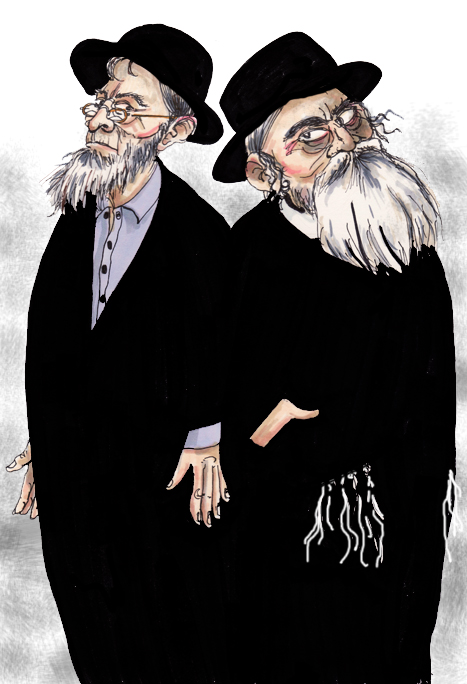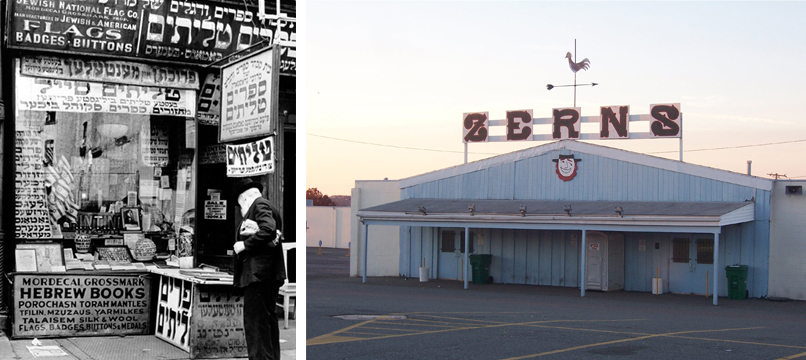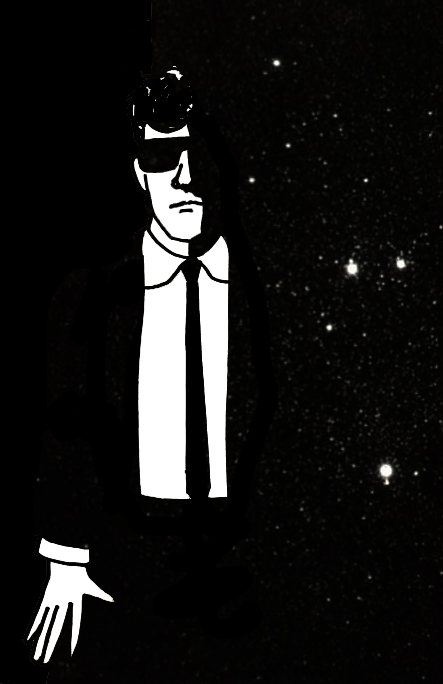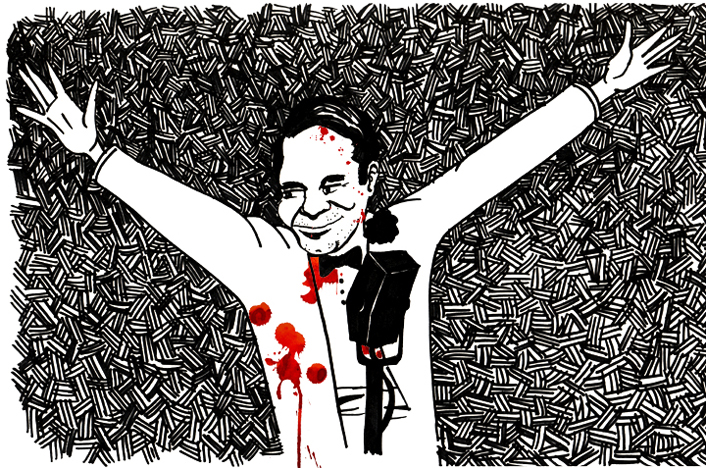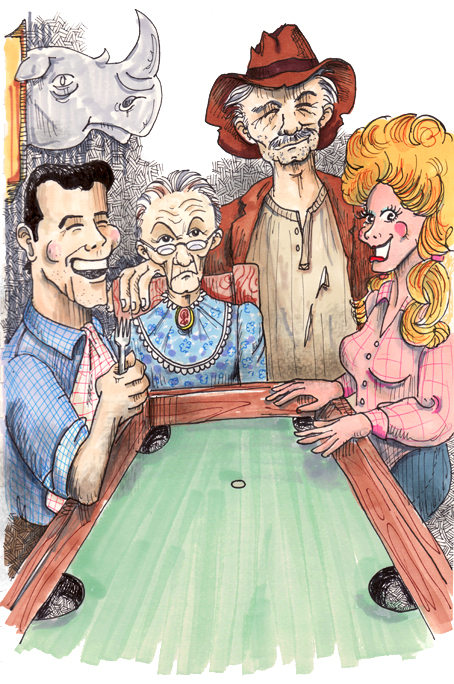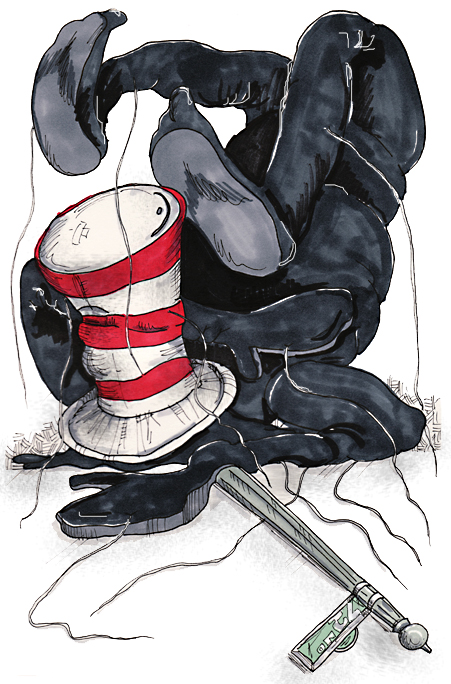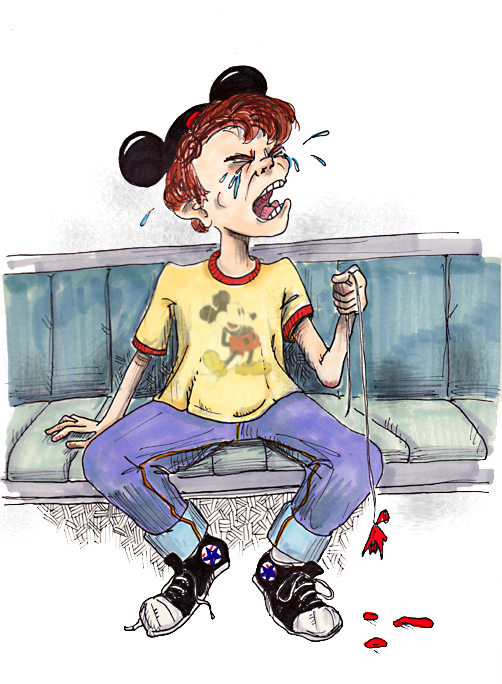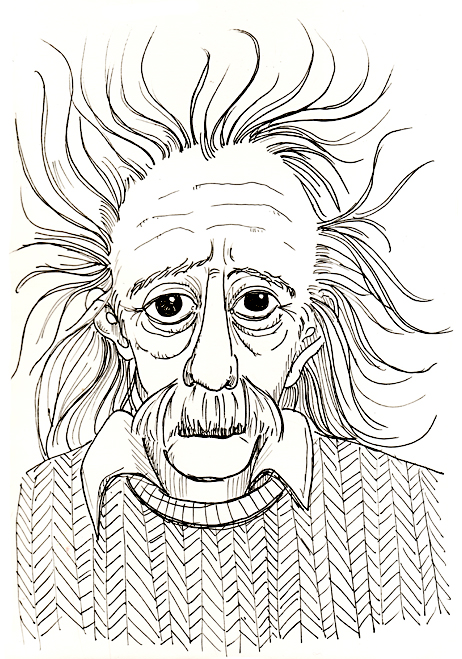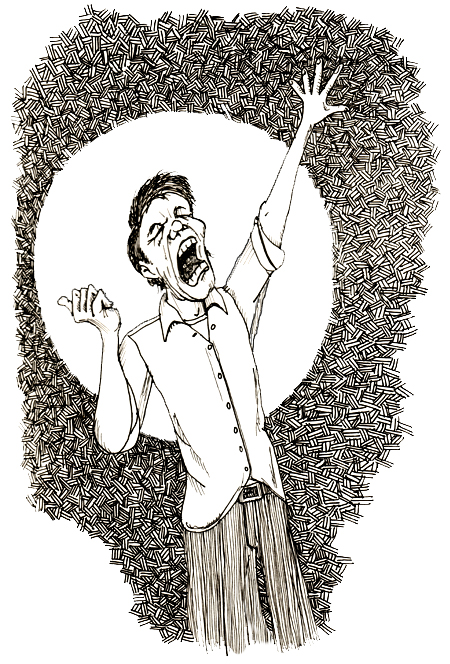
from my sketchbook: hope?

If she gives me a sign that she wants to make time, (Stop.) I can't stop. (Stop.) I can't stop myself.
Everyone on this earth has felt some kind of unsubstantiated prejudice. At some point in their lives, everyone — the cashier at Target, Michael Douglas, the woman who takes your picture for your new driver’s license, The Pope — dislikes someone for a stupid reason. If you say “Oh no. Not me.”, then you’re prejudice and a liar.

In the weeks leading up to the recent presidential election, I have witnessed plenty of prejudice. Most people believe that everyone thinks like they do. It’s amazing the things that total strangers will say to you just because you “look like they do.” People loudly make the most racist comments and think nothing of it. While my wife was getting a manicure, a woman publicly expressed her concern about having a black president. Even Republican vice-presidential candidate Sarah Palin hinted at it.

That fact never concerned me at all. I had another concern.

Barack Obama is 47 years old — one week older than I am. In history books, in movies, on money, presidents are old guys. From the powdered wigs and mutton chops, the country’s leaders have always been stodgy, old windbags. I can imagine the fear my parents’ generation felt when they saw this inexperienced kid mounting a campaign for president! Prior to the election, I asked my father-in-law how he felt about the possibility of having a 47 year-old in the White House. I said “You don’t think a 47 year-old can back a car out of your driveway, let alone run the country.” Honestly, a president my own age didn’t sit too well with me either.

Until my 21 year-old son put it into perspective.

He said “What have old white guys ever done for you?” I pondered the question. I answered, “Well, they’ve criticized my work, talked down to me, pushed me around, exhibited incompetence in the workplace, screwed up the economy and gave convoluted and incoherent answers to questions.”

My son then asked, “What have black guys your own age done for you?” I thought about that question. I answered, “They have been pleasant, funny, helpful and shown mutual and professional respect.”

He looked at me with that look.

I hope Barack Obama takes that driveway at ninety miles an hour.

Comments

comments

DCS: james whale

Forgive me, but I'm forced to take unusual precautions
James Whale didn’t care what people in Hollywood thought of him. Whale was openly gay in 1930s Hollywood, at time when gay actors and actresses had to hide their sexual orientation at a risk of jeopardizing their careers. He was an innovative director. Universal Pictures owed its stellar success in the 1930s much in part to the huge box-office receipts of Frankenstein, The Invisible Man and The Bride of Frankenstein — all blockbusters Whale directed for the studio. Whale personally selected Gloria Stuart, Colin Clive, Elsa Lanchester, Boris Karloff and Claude Rains, for their roles in those films. He had known them in his native England and he essentially gave them careers in movies in the United States.

While Whale was primarily known for directing horror movies, he also helmed the 1936 version of the musical Showboat and The Man in the Iron Mask in 1939. Whale was eventually relegated to B-grade films and retired from directing in the early 1940s.

In his later days, Whale suffered a debilitating stroke and experienced difficulty with his memory. He became lonely and battled depression. On May 29, 1957, he wrote in a note: “The future is just old age and illness and pain… I must have peace and this is the only way.” He left the note for his estranged lover, producer David Lewis. Whale committed suicide by drowning himself in his swimming pool.

Comments

comments

DCS: irene gibbons

goodnight irene/goodnight irene/i'll see you in my dreams
Irene Gibbons was an Oscar-nominated costume designer in Hollywood for thirty years. She took over from Adrian at MGM, and went on to establish her own company, Irene, Inc. She was known only as “Irene” in her screen credits.

Doris Day wrote in her 1975 autobiography that she got to know Irene quite well. One night after a few drinks, Irene told Day that the “love of her life” was Gary Cooper. On several other occasions Irene spoke about the intensity of her love for Cooper, and Day got the feeling that Irene had never mentioned this to anyone before her. Day wrote that she honestly could not tell if they actually had or were having an affair, or if it was a one-sided love. Day did know that Irene was extremely distraught over Cooper’s death in 1961.

On November 15, 1962, Irene checked into room 1129 of the Knickerbocker Hotel in Hollywood. She finished nearly two pints of vodka. She wrote a suicide note that read “I’m sorry. This is the best way. Get someone very good to design and be happy. I love you all. Irene.” At 3:12 that afternoon she pushed out the screen of her hotel room window and jumped.

A guest in room 429 heard a crash on the roof, and contacted the hotel manager. Irene’ s body was discovered on the 3rd floor roof, 9 feet in front of room 329.

Comments

comments

IF: repair

The illustrationfriday.com challenge this week is “repair”.
epiticka
This guy is one of the coolest guys I know. And I’ve known him for a very long time. Twenty-one years, as a matter of fact.
He began to read at three. He recognized Beatles songs and sang Grateful Dead songs at four. He began to master Hebrew by second grade. He gained a vast musical knowledge that stretched across many genres and reached far beyond his years. He is as smart as a whip, having made dean’s list in four consecutive college semesters. He hosts a weekly four-hour internet radio show (that is also broadcast on local HD radio here in Philadelphia), where he manages to sneak in some selections from his own eclectic musical tastes among the regular alternative rock programming. He assists in production on a popular long-time folk music radio show. He plays guitar, bass, ukelele and digeridoo. He’s a vegetarian. He doesn’t drive (by choice).  He has given me inspiration for many of my illustrations. And he can really make me laugh.
Early one August morning in 1987, several hours after Joan River’s husband commited suicide in a Philadelphia hotel room, this cool guy was born. He weighed nine pounds and six ounces. He measured twenty-four inches long. I told his mother, “At that size, when he’s sick, aren’t you glad he doen’t have to go back in for repairs?”
I watched this cool guy come into the world.
This story continues to be written.

Comments

comments

SFG: nice

The challenge word on sugarfrostedgoodness.com is “nice”.
the madcap laughed at the man on the border
Syd Barrett was a founding member of Pink Floyd. He provided the musical direction and psychedelic influence in the band’s early work. He recorded two albums with Pink Floyd and two solo releases before mental illness and heavy drug use put him into a self-imposed seclusion lasting more than thirty years.

Due to his abundant use of LSD, Barrett’s behavior on stage was unpredictable. He would strum on one chord through the entire concert. Sometimes he would not play at all. At a show at The Fillmore West in San Francisco, during a performance of “Interstellar Overdrive”, Barrett slowly detuned his guitar. The audience seemed to enjoy such antics, unaware of the rest of the band’s consternation. Before a performance in late 1967, Barrett apparently crushed Mandrax and an entire tube of Brylcreem into his hair, which subsequently melted down his face under the heat of the stage lighting, making him look like “a guttered candle”.

Following a disastrous abridged tour of the United States, David Gilmour, a school friend of Barrett’s, was asked to join the band as a second guitarist to cover for Barrett as Barrett’s erratic behavior prevented him from performing. For a handful of shows David played and sang while Barrett wandered around on stage, occasionally playing. The other band members soon tired of Barrett’s antics and, in January 1968, on the way to a show at Southampton University, the band elected not to pick Barrett up: One person in the car said, “Shall we pick Syd up?” and another person said, “Let’s not bother”.

Years later, in 1975 during the recording sessions for the “Wish You Were Here” album, Barrett showed up at the session unannounced, and watched the band record “Shine On You Crazy Diamond” — a song, coincidentally, about Barrett. By that time, Barrett had become quite overweight, had shaved off all of his hair, including his eyebrows, and his ex-bandmates did not at first recognize him. Eventually, they realized who he was and Roger Waters was so distressed that he was reduced to tears.

Barrett died in July 2006 of pancreatic cancer. The occupation on his death certificate was given as “retired musician.”

In 2006, his home in Cambridge, England, was placed on the market and attracted considerable interest. After over 100 viewings, many by fans, his house was sold to a French couple who bought the house simply because they liked it – —reportedly they knew nothing about Barrett.

Syd Barrett once said, “Fairy tales are nice.” In his mind, he likely experienced a bunch of fairy tales.

Comments

comments

Monday Artday: zombies

This week’s challenge word on Monday Artday is “zombies”.
but dogs CAN look up
A zombie is a reanimated human corpse. Stories of zombies originated in the Afro-Caribbean spiritual belief system of Vodou.

One origin of the word “zombie” is “jumbie”, the West Indian term for “ghost”. Another is “nzambi”, the Kongo word meaning “spirit of a dead person.” According to the Merriam-Webster dictionary, the origin is from the Louisiana Creole or Haitian Creole “zonbi”, and is derived from Bantu. A zonbi  is a person who is believed to have died and been brought back to life without speech or free will. It is similar to the Kimbundu nzúmbe  ghost.

But, zombies were brought into popular culture by director George A. Romero in his shoestring budget film “Night of the Living Dead”. Originally conceived as an allegory for the dire times of late-1960s society, “Night of the Living Dead” emerged as a cult classic. A film historian described it as “subversive on many levels”. Although it is not the first zombie film, “Night of the Living Dead” is the forefather of the contemporary “zombie apocalypse” genre of horror film, and it became original model of all zombie films that followed.

Filming took place between June and December 1967. Props and special effects were fairly simple and limited by the budget. The blood, for example, was Bosco Chocolate Syrup drizzled over cast members’ bodies. Roasted ham was used for consumed flesh. Costumes were purchased at second-hand clothing shops, and mortician’s wax served as zombie makeup.

Romero produced the film for $114,000, and after a decade of cinematic re-releases, it grossed some $12 million domestically and $30 million internationally. On its release in 1968, “Night of the Living Dead” was strongly criticized for its explicit content. In 1999, the Library of Congress included it in the National Film Registry as a film deemed “historically, culturally or aesthetically important”.

And in the course of the entire 96 minutes that the movie runs, the word “zombie” is never spoken.

Comments

comments

Monday Artday: robot

The Monday Artday challenge word this week is “robot”.
Freedom, freedom, we will not obey/Freedom, freedom, take the wall away
In the Oz books by L. Frank Baum, the origins of the character are rather gruesome. Originally, he was an ordinary man named Nick Chopper. Nick made his living chopping down trees in the forests of Oz. The Wicked Witch of the East cast a spell on his axe to prevent his marriage to the girl he loved. The cursed axe chopped off his limbs, one by one. Each time he lost a limb, Nick replaced it with a prosthetic limb made of tin. Finally, nothing was left of him but tin. The tinsmith who helped him, neglected to replace his heart.
SO ― He was eventually made entirely of metal, he had moving parts and he performed a designated task. Technically, each physical body part was replaced by a mechanical prosthetic appendage.
SO ― technically, he was a robot.

That’s my story and I’m sticking with it.

Comments

comments

from my sketchbook: Phillies postseason

show me how you drop a cake!
With The 2008 Philadelphia Phillies headed to their first World Series in fifteen years, I can only think of my father. My father died the day The Phillies won the 1993 National League pennant. This would be the Phillies’ first trip to the World Series since their loss to The Baltimore Orioles ten years earlier. He didn’t live to see the team that went “from worst to first” — his team — go on to play their hearts out against The Toronto Blue Jays. He didn’t get to see the longest game in World Series history, most total runs scored in a single World Series game, and most runs scored by a losing team in a World Series game. He didn’t get to hear about the death threats made to Phillies closer Mitch “Wild Thing” Williams. He especially didn’t get to see Joe Carter’s walk-off home run. I believe that had my father lived, that would have killed him.

My father was the typical Phillies fan. He loved them when they were winning. After a Phillies win, he would smile and pump his fist, proclaiming “All the way, baby! All the way to the World Series.” When they were losing, he would snap the TV off in the fifth inning and grumble “Bums! They’re bums!”

My father was a simple guy who led a simple life. He was born in 1926 and was raised by his father, a bigot in the truest sense of the word, who my mother called “the dumbest man ever to walk this planet”. And by his mother, a stubborn, die-hard, Nixon-loving Republican, who my mother said “was too mean to die”. Unfortunately, my mother was right. My grandmother outlived my mother by four years and my father by two. My father’s simple pleasure was watching his Phillies. He grew up following and loving the Phillies. He loved to tell the story about how he cut school to go to a Phillies game. He saw a no-hitter and, because he was supposed to be in school,  couldn’t tell anyone that he was there. Well, my father also liked to make shit up. It’s a great story, but Chick Fraser pitched a no-hitter for the Phillies in 1903 and they didn’t have another until Jim Bunning’s gem on Father’s Day 1964.

My father took my brother to Phillies games at Connie Mack Stadium. My mom and I would stay home and listen to the game on the radio. When I was old enough, my father took all of us to beautiful new Veterans Stadium. My father worked for local supermarket chain Pantry Pride and would get free tickets from his suppliers. My family would usually sit in the Oscar Mayer field box — about ten feet from first base. I remember during one game against The San Francisco Giants, shortstop Chris Spier threw a ball to first about twelve feet over the head of Giants’ 6-foot 4-inch firstbaseman Willie McCovey. McCovey looked at Spier in disbelief and my father said to me “He was throwing that ball to you!”

My father cheerfully related stories about Richie Ashburn and the “Whiz Kids” (the 1950 Phillies). He remembered with contempt the Phillies’ infamous 1964 ten-game season-ending collapse. Of course, he beamed when Tug McGraw struck out Kansas City’s Willie Wilson to win their one and only World Series in 1980.

Sure, the Phils made it to post-season a few more times in the early 80s, but they ultimately suffered some lean years. My father suffered right along with them, cursing them all they way.

I can still picture my father settling down in his chair to watch a Phillies game. He had a Tastykake Chocolate Junior and the biggest fucking glass of chocolate milk you ever saw. To one side there were a few packs of Viceroy cigarettes, which he would run through by the bottom of the third inning. He’d fall asleep by the fifth and wake up in the bottom of the ninth, in time to catch my mom attempting to change the channel. “I was watching that!” he would state indignantly.

Last night, as my wife, my son and I watched the Fightin’ Phils stomp the Los Angeles Dodgers right into the ground of Dodgers Stadium, I couldn’t help but think of my father. I think my son was channeling my father when he said “I can’t believe those bastards are going to the World Series!”

Well, Dad, it’s been fifteen years coming.

Comments

comments