IF: pale

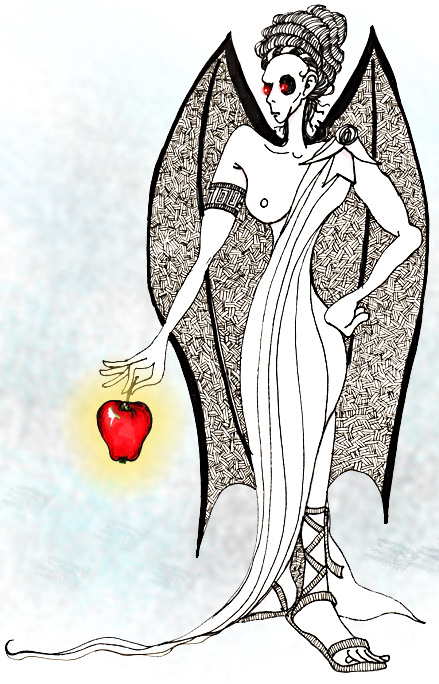
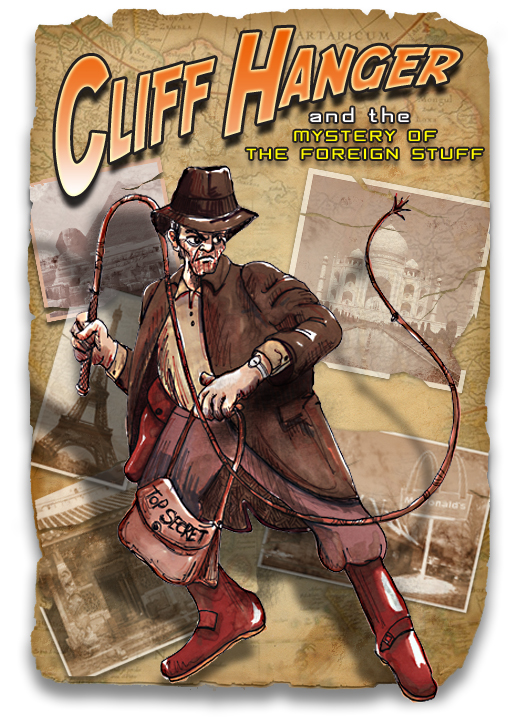
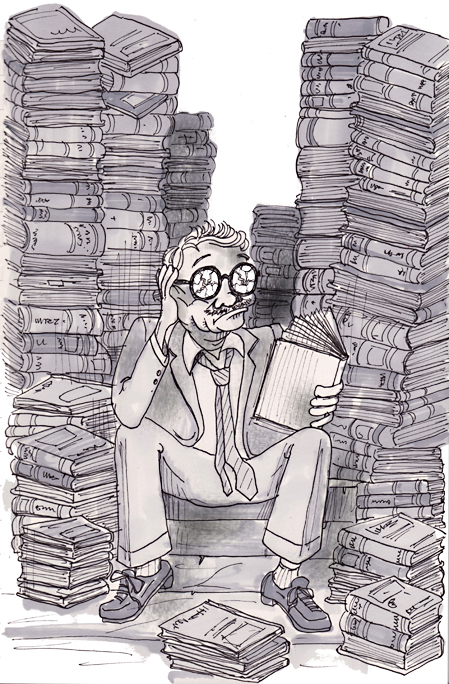
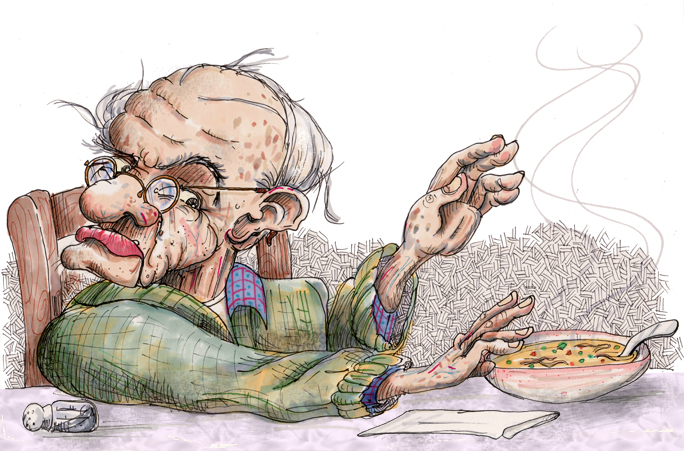
The illustrationfriday.com challenge word this week is “pale”.
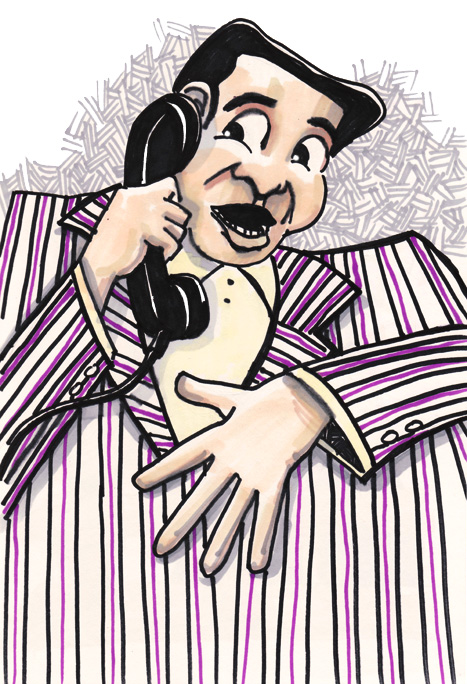
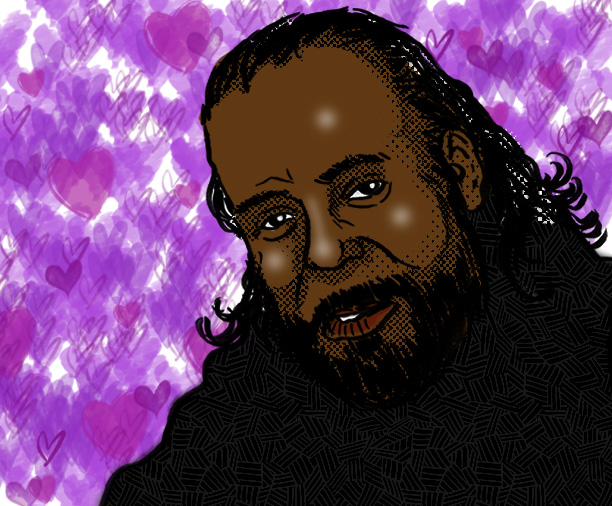
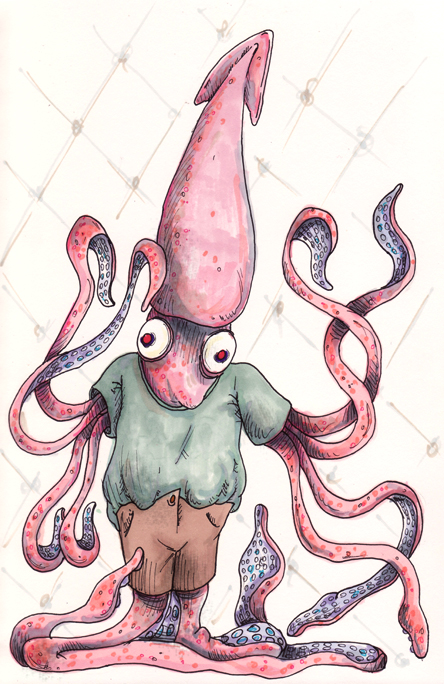
Some people call me maurice
From the day Bill Finger presented Bob Kane with a photograph of actor Conrad Veidt and said, “That’s your Joker”, the villainous arch-enemy of Batman has gone through many changes. His origin does not have a definitive history. One account introduces him as small-time criminal The Red Hood until a chemical accident bleaches his skin white and turns his hair green. In other versions, he is a mob hitman who becomes obsessed with Batman, who ultimately disfigures his face with a batarang. However, in the 1988 graphic novel The Killing Joke, the Joker himself says “Sometimes I remember it one way, sometimes another… if I’m going to have a past, I prefer it to be multiple choice!”
The Joker has been portrayed by three actors on screen. In 1966, it was Latin heartthrob Cesar Romero who first donned the purple suit and green wig in order to torment Batman. He was personally chosen by Batman series producer William Dozier to play the part. Romero refused to shave his trademark moustache for the role, so white make-up was applied right over it.
Most recently, the Joker was played by the late Heath Ledger in the bombastic and over-hyped The Dark Knight. Ledger depicted the character as a grungy sadistic psychopath fixated on antagonizing Batman.
My favorite Joker is Jack Nicholson’s interpretation in Tim Burton’s 1989 version of Batman (one of the most beautifully art directed movies I ever seen, thanks to production designer Anton Furst). Nicholson’s portrayal of the Joker as a dapper, kill-happy schizophrenic set the standard for over-the-top, domineering, nutcase villains for every comic-book movie to follow (including Ledger’s performance). The purest example of the character’s insane malevolence was his signature line — “Did you ever dance with the devil in the pale moonlight?” His deranged immorality becomes apparent when he elaborates, “I always say that to my prey. I don’t know what it means. I just like the way it sounds.”

Comments

comments

from my sketchbook: phil testa

Boom! shake-shake-shake the room/Boom! shake-shake-shake the room/Boom! shake-shake-shake the room/Tic-tic-tic-tic boom
“Well they blew up the chicken man in Philly last night/Now they blew up his house too”.
— “Atlantic City” by Bruce Springsteen

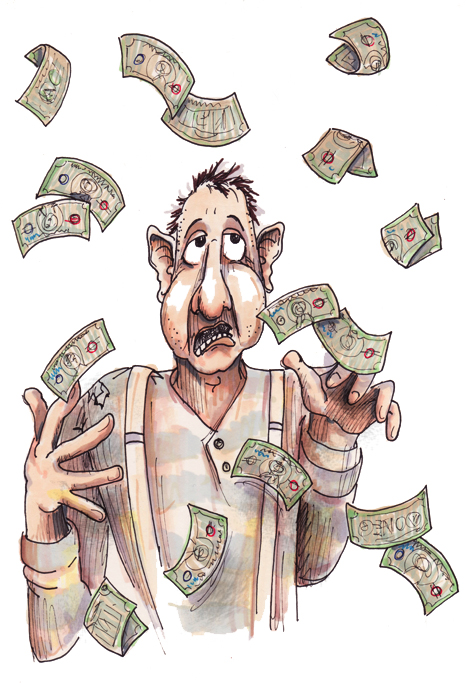
Angelo Bruno headed the Philadelphia branch of the Gambino Family-sanctioned operations for two decades. Bruno’s leadership of the family was regarded as successful. He avoided the intense media and law enforcement scrutiny and outbursts of violence that plagued other crime families. This earned him the nickname “The Gentle Don”. Bruno himself avoided lengthy prison terms despite several arrests. Bruno did not allow his family to deal in narcotics, preferring more traditional Cosa Nostra operations like bookmaking and loansharking. However, Bruno did allow members of the New York Gambino crime family to distribute heroin in Philadelphia for a share of the proceeds. This angered many members of his own Philadelphia family, who were barred from narcotics trafficking and wanted a share of the profits made from drug dealing. Bruno also gained some enemies for not allowing other families a share of the profits in increasingly lucrative Atlantic City. Atlantic City was regarded as part of the Philadelphia family’s domain and no other family could move in without Bruno’s permission.

Soon, several factions within Bruno’s Philadelphia family began conspiring to betray the aging “Gentle Don”. On March 21, 1980, the sixty-nine-year-old Angelo Bruno was killed by a shotgun blast in the back of the head as he sat in his car. It is believed that the killing was ordered by Antonio “Tony Bananas” Caponigro, Bruno’s consigliere (right-hand man and confidante). A few weeks after Bruno was murdered, Caponigro was found stuffed in a body bag in the trunk of a car in New York. In typical organized crime fashion, $300 in bills were jammed in his mouth and anus. It was alleged that the overseeing Mafia Commission ordered the murder because Caponigro had assassinated a family boss without their sanction.

Phil “Chicken Man” Testa, an underboss in Bruno’s regime, became the new head of the Philadelphia crime family. Unknown to Testa at the time, his reign would last one year.

On the evening of March 15, 1981, Testa arrived at his home in South Philadelphia. As he turned the key in the front door, a nail bomb exploded under his front porch. The house was ravaged and witnesses claimed that pieces of Testa’s body were scattered blocks away. The roofing nails in the bomb were to make it appear that it was retaliation by the Irish Mob for the killing of roofing union president John McCullough. After taking over as new family boss, Nicky Scarfo had the real conspirators murdered for the hit on Testa.

Phil Testa’s son, Salvatore, became a rising star in the Philadelphia family. A few months after Phil Testa’s death, Nicky Scarfo made Salvatore a caporegime (a high-ranking family member). Three years later, Salvatore was murdered on orders from Nicky Scarfo. Despite being Salvatore’s godfather, Scarfo began to feel threatened by the young capo’s popularity in the family and was jealous.

Comments

comments

IF: contained

The challenge word this week on illustrationfriday.com is “contained”. I was inspired by a recent post on one of my favorite websites, List Universe. List Universe posts a list of things every day. The list categories cover an enormous range of topics in science, entertainment, literature, history and just plain fun. The list posted on January 8, 2009 was “Top 10 Bizarre Medical Anomalies”. This post was not for the weak of heart in both description and visuals. One of the entries intrigued me.
you're in my heart/you're in my soul/you'll be my friend/'til I grow old
36 year-old Sanju Bhagat of Nagpur, India had an unusually large abdomen. Bhagat’s body gave the impression of being pregnant. On day in June 1999, an ambulance rushed the Bhagat to the hospital. Doctors thought he might have a giant tumor, so they decided to operate and remove the source of the bulge in his belly.
“Basically, the tumor was so big that it was pressing on his diaphragm and that’s why he was very breathless,” said his physician Dr. Ajay Mehta. “Because of the sheer size of the tumor, it makes an operation difficult. We anticipated a lot of problems.”
Mehta said that he can usually spot a tumor just after he begins an operation. But while operating on Bhagat, Mehta saw something he had never encountered. As he cut deeper into Bhagat’s stomach, gallons of fluid spilled out — and then something extraordinary happened.
“To my surprise and horror, I could shake hands with somebody inside,” Mehta said. “It was a bit shocking for me.”
Another doctor recalled that day in the operating room. “Dr. Mehta just put his hand inside and he said there are a lot of bones inside,” she said. “First, one limb came out, then another limb came out. Then some part of genitalia, then some part of hair, some limbs, jaws, limbs, hair.”
Inside Bhagat’s stomach was a strange, half-formed creature that had feet and hands that were very developed. Its fingernails were quite long. At first glance, it looked as if Bhagat had given birth. Actually, Mehta had removed the mutated body of Bhagat’s twin brother from his stomach. Bhagat, they discovered, had one of the world’s most bizarre medical conditions — fetus in fetu. It is an extremely rare abnormality that occurs when a fetus is contained inside its twin. The trapped fetus can survive as a parasite even past birth by forming an umbilical cordlike structure that leaches its twin’s blood supply until it grows so large that it starts to harm the host. The abnormality occurs in 1 in 500,000 births.

Comments

comments

Monday Artday: disaster

After a two month hiatus, a new topic has been posted on Monday Artday. This week’s word is “disaster.”

I have mentioned before that everything reminds me of a joke and “disaster” is no exception.
One day the butcher backed into his meat grinder. He got a little behind in his work.
Next day, the butcher’s wife did the same thing. Disaster!
(Say it a few times. You’ll get it.)
Thank you. I'll be here all week.
My father was a butcher, or as he liked to say “meat cutter”. I guess the difference is that my father never slaughtered a cow or pig or chicken. He just divided their carcasses up into assorted sections for sale to eager carnivorous grocery shoppers.

After my dad received his honorable discharge from the United States Navy in 1946, he became an apprentice meat cutter at a Penn Fruit supermarket in Philadelphia. He worked his way to assistant meat manager, meat manager, assistant store manager and eventually, store manager.

My father loved to work and he loved to cut meat and he loved to talk about the one thing he really knew — meat cutting. He would make a big production of trimming a beef roast for my mom to prepare for dinner. He would give a “play-by-play” as he dissected a whole chicken for barbecuing, pointing out each bone, joint and connective tissue. At work in the market’s “cold room”, he wielded his timeworn butcher knife — a fearsome implement of scarification with a gnarled wooden handle that he carried from job to job — with the expertise of a surgeon. He dismembered larger chunks of beef and pork ribs with an upright band saw, the same type of saw your high school wood shop teacher constantly warned you about. Three days after my parent’s honeymoon, my father nicked the top knuckle of his right middle finger on the rapidly circulating saw blade, almost severing the top of the digit. He calmly telephoned his new bride to tell her he was in the hospital getting stitches. My mother was in hysterics, but my father was back on the job the next day, showing no fear for that saw or for pork ribs.

My father’s dream was to acquire and operate his own grocery store. He envisioned a massive establishment with himself at the helm of a fresh meat department that stretched the entire length of the store. When I was in high school, my father convinced my mother that this opportunity had finally come in the form of an investment in a single location of a local franchise of small grocery stores — stores almost one-sixth the size of the average supermarket. The business was owned by one Peter Maggio. Mr. Maggio was a man of questionable background and the brother-in-law of one-time Philadelphia crime boss Angelo Bruno. Maggio was second generation of the founder of the Maggio Cheese Company. For a long time, Maggio Cheese had little or no competition in the Philadelphia area. A potential business rival attempted to enter the lucrative Philadelphia cheese market. On evening, he was found in his parked car on a section of Interstate I-95 that runs through Philadelphia. He had several bullets in his head. My father felt that Mr. Maggio was an admirable person with which to do business.

The store my father hoped to purchase was situated one block from a bustling public transportation hub in a rather run-down, blue-collar neighborhood. My father’s remarkably cunning strategy was to introduce a fresh meat department to this location. I suppose he mused that he had some kind of furtive insider knowledge, despite the neighborhood boasting a butcher shop at approximately every fifth storefront. My dad had also secured jobs for my immediate family in the store. My mother was a daytime cashier and my brother was an assistant manager and worked a slicer in the deli. I came after school and on weekends and did whatever was asked of me, from stocking shelves and arranging produce displays to emptying the trash and hanging huge signs in the windows. My father attempted to have me follow in his footsteps as a meat cutter. He would wake me at 5:30 AM on Saturday mornings. We’d drive silently to the store’s parking lot and then walk to a diner under the elevated train tracks for breakfast. Thirty minutes later, we’d return to the store’s meat cutting room for my weekly lesson in Butcher 101. My father would meticulously explain the ins and outs of bovine anatomy as his blade whizzed through the pink, fat-marbled, steer flesh. My sleep-deprived brain could barely comprehend or even keep track of his instruction. I do remember my father explaining that hamburger gets its bright red color from the addition of bull meat to the regular ground beef. Bull meat came in a small, frozen box that weighed about the same as a Buick. My dad asked me to retrieve the box of bull meat from the walk-in freezer, warning me to be careful of its deceptive heftiness for the size of the packaging. Half-asleep, I went to the freezer, bent down, slid my hands under the box, lifted and dropped the fucking thing on my foot. I stocked grocery shelves for the remainder of the day.

After a lawyer persuaded my parents that entering a business venture with Mr. Maggio would be the equivalent of entering a wolf’s den in a dog food suit, my father sought new employment in the meat cutting field. My father never had trouble getting a job because, evidently, meat cutting is a specialized trade. Later in his life, my father changed jobs often. If he didn’t like a store for any reason, he would just leave and know he could easily find another job. He was cutting meat until a week before he died.

Needless to say, I never became a meat cutter. Actually, I became a vegetarian.

c'mon, Dor, let's go
The REAL butcher and his wife.

Comments

comments

IMT: fuse

The new word to inspire on Inspire Me Thursday is “fuse”.
why you! I oughta...
If you were not a moviegoer before 1948 or at least a film buff, you most likely don’t remember Edgar Kennedy. A former professional boxer, Edgar started his active film career in 1911. He was one of the original Keystone Cops. He worked with Roscoe “Fatty” Arbuckle, Charlie Chaplin, Laurel and Hardy, The Marx Brothers and Harold Lloyd. He also appeared in the Our Gang comedy shorts. Edgar played the same hapless character. He was the easily irritated, often aggravated, victim of mortification, unable to cope with the star’s absurdities. Possessing a monstrous temper and a short fuse, Edgar perfected the comedic technique known as “the slow burn”. The slow burn is an exasperated facial expression, performed very deliberately. Edgar embellished this by rubbing his hand over his bald head and across his face, in an attempt to harness his fury. Whether he was playing an agitated policeman or a perturbed customer, Edgar delighted audiences with his masterful display of bridled anger. His most famous demonstration is as a lemonade vendor in a short, yet hilarious encounter with Harpo and Chico Marx in 1933’s Duck Soup. Edgar roars to Chico, “I’ll teach you to kick me!” to which Chico answers, “You don’t have to teach me, I know how!” and he kicks Edgar. All during this exchange, Harpo is dancing barefoot in Edgar’s lemonade dispenser.

Three days before Edgar was to be honored by fellow actors at a gala dinner, he passed away from throat cancer at 58. Still in demand, Edgar had appeared in over 400 films and directed 25 by the time he died.

Comments

comments

IMT: elephant

The word of inspiration on Inspire Me Thursday is “elephant”.
The first thing I thought of was a joke that I, unfortunately, couldn’t use. My second  thought was the classic line by Grouch Marx (as Captain Jeffrey T. Spaulding in the 1930 classic Animal Crackers ): “One morning I shot an elephant in my pajamas. How he got in my pajamas, I don’t know.”
take it all, bitch!
Groucho goes on to say: “Then we tried to remove the tusks. But they were embedded so firmly we couldn’t budge them.
Of course, in Alabama the Tuscaloosa, but that is entirely ir-elephant to what I was talking about.”

Comments

comments

IF: resolve

The first word of the new year on illustrationfriday.com is “resolve”.

“You may be whatever you resolve to be.”  — General Thomas “Stonewall” Jackson
I've been on the floor lookin' for a chair/I've been on a chair lookin' for a couch/And I've been on a couch lookin' for a bed
Thomas “Stonewall” Jackson was arguably the most well-known Confederate commander after General Robert E. Lee. Military historians consider Jackson to be one of the greatest tactical commanders in United States history. His Valley Campaign of 1862 and his envelopment of the Union Army at Chancellorsville in 1863 are still studied worldwide as examples of innovative and bold leadership. He excelled as well at the First Battle of Bull Run, the Second Bull Run, Antietam, and Fredericksburg.

Darkness ended the Confederate assault at Chancellorsville. As Jackson and his staff were returning to camp on May 2, 1863, they were mistaken for a Union cavalry force by a Confederate North Carolina regiment who shouted, “Halt, who goes there?,” but fired before evaluating the reply. Jackson was hit by three bullets, two in the left arm and one in the right hand. Several other men in his staff were killed. Jackson was dropped from his stretcher while being evacuated. Because of his injuries, Jackson’s left arm had to be amputated. He was thought to be recovering, although he complained of a sore chest. This soreness was mistakenly thought to be the result of his rough handling in the battlefield evacuation. It was, however, a symptom of pneumonia.

As Jackson lay dying in a make-shift hospital in a southern plantation, General Robert E. Lee sent a message to him through a Confederate chaplain, saying “Give General Jackson my affectionate regards, and say to him: he has lost his left arm but I my right.” Jackson died of complications from pneumonia on May 10, 1863. He was buried in a family plot in Lexington City, Virginia. His left arm is buried one hundred and thirty-one miles away in Ellwood Family Cemetery in Spotsylvania, Virginia.

Comments

comments

from my sketchbook: brief encounter

For my first post of 2009, I’ll relate an interesting story that I recently came across.

As I write this, incumbent Norm Coleman and challenger Al Franken are battling for the lead in a heated race for a US senator from Minnesota. A tedious recount has taken place since November 2008 and a winner has still not been determined. A former writer for Saturday Night Live, Al Franken is an Emmy Award–winning comedian, radio host, political commentator, and politician.

Israel-born grade-school teacher Gene Simmons, the former Chaim Witz, formed the rock group KISS in 1972 with his friend New York cab driver Stanley Eisen, later known as Paul Stanley. Gene parlayed his stint as a blood-spewing, fire-eating bassist in an over-the-top heavy metal band into a multi-faceted career as a musician, singer, songwriter, record producer, actor, entrepreneur and marketer.

In 1982, Al Franken and Gene Simmons’ paths crossed.
Wouldn't it be funny, if underneath all this makeup, he was just a nice Jewish boy?
Al Franken left the writing staff of Saturday Night Live briefly between 1980 and 1985, although he still maintained residence in New York City. One day in 1982, Franken was waiting for a friend at a New York City racquetball club for some scheduled game time. While Franken was waiting, in walked Gene Simmons, looking for trouble. Franken didn’t recognize him because Simmons was not sporting the Kabuki-monster makeup that made him and KISS household names. Simmons challenged Franken to a game. Franken politely explained he was waiting for somebody else. Simmons, the voice behind “Calling Dr. Love,” growled, “I’ll kick your ass!”

Annoyed, but ready for a challenge, Franken agreed to a match and proceeded to humiliatingly defeat the rocker in a matter of minutes. Furious, Simmons demanded another opportunity and still taunted Franken with claims of “I’ll kick your ass!”  By then, Franken’s racquetball partner had arrived. Franken explained he would have to pass on a pointless rematch. Simmons began to cluck his famous tongue in mock chicken noises. The “buck-buck-buck”  teasing pissed Franken off. Franken grudgingly agreed to another round, but only for a $500 stake. This caused multi-millionaire Simmons to back off and sheepishly exit.

Franken’s friend asked, “Do you know who that was?” Franken had no clue. “That was Gene Simmons from KISS!”, his friend informed. Franken shrugged and replied, “I thought he was just some creep who liked to pick fights at racquetball courts.”

Comments

comments

from my sketchbook: parkyakarkus

Park Yer Carcass!
1930s radio comedian Harry Einstein changed his name to Harry Parke. But, he was most famous as “Parkyakarkus”,  a name taken from a line in his act. When he asked you to sit down, he’d say “park yer carcass!” He became known by his character name rather than his stage name. He was a featured performer on Al Jolson’s, and later, Eddie Cantor’s radio show. His shtick was as an English language-mangling Greek restaurateur.

Parkyakarkus was also the father of actor Bob Einstein, Marty Funkhauser on Curb Your Enthusiasm and most famous as dim-witted stuntman, Super Dave Osborne. Bob’s brother is Albert Brooks, the comedic director of Defending Your Life and Modern Romance. (That’s right, Albert Brooks’ real name is Albert Einstein.)

Paryakarkus appeared in eleven movies through the 30s and 40s. He moved on to gag writing when health issues prevented him from the activity that motion pictures required.

On November 24, 1958, Paryakarkus appeared at a Friars Club roast for Lucille Ball and Desi Arnaz. He got bigger laughs than most of the famous speakers. He delivered the traditional jabs and friendly insults associated with a celebrity roast. He finished his bit and received lavish applause as he returned to his seat on the dais next to Milton Berle. The audience and guests were still applauding when Parkyakarkus slumped over against Berle. Parkyakarkus had suffered a fatal heart attack. Berle shouted, “Is there a doctor in the house?” This remark was met with laughter, as the crowd was unaware that Berle was being serious. Berle then directed singer Tony Martin to sing a song to divert the crowd’s attention; Martin’s unfortunate choice was “There’s No Tomorrow.” But Parkyakarkus went out hearing the pure joy of an audience’s response.

In a 1991 interview, Albert Brooks said of his father: “The interesting thing to me was that he finished. He could have died in the middle. He could have done it on the way over there. But he didn’t. He finished. And he was as good as he’d ever been in his life.”

Parkyakarkus was honored on Hollywood’s Walk of Fame.
you can see all the stars as you walk along Hollywood Boulevard/Some that you recognize/Some that you hardly even heard of

Comments

comments