IF: brave

This week’s Illustration Friday‘s challenge word is “brave”.
Now that i'm alone again/I can't stop breaking down again/The simplest things set me off again/Take me to that place
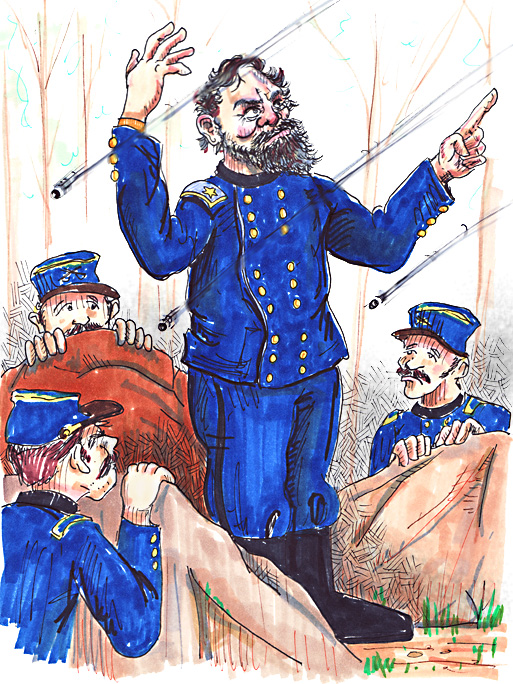
John Sedgwick graduated from the United States Military Academy at West Point in 1837. He entered the artillery as a lieutenant and fought uneventfully in the Seminole Wars and the Mexican-American War. However, upon his return from Mexico and he entered the U.S. Cavalry as a major.

Sedgwick became a colonel at the start of the Civil War. He missed combat action at the Battle of Bull Run, as he was recovering from cholera. Promoted to brigadier general, he commanded his own regimen at Yorktown and Seven Pines and was wounded at the Battle of Glendale. Afterwards, he was promoted to major general. He was wounded again at the Battle of Antietam and his corps arrived to late at the Battle of Gettysburg.

But it was at the Battle of Spotsylvania Court House that Major General John Sedgwick gained his dubious fame. His regimen was preparing for battle against the left flank of Confederate forces. Major General Sedgwick was directing the placement of artillery, when his troops came under fire from a handful of Confederate snipers about a thousand yards away. Sedgwick strode around bravely, out in the open, as his men dove for cover behind rocks and trees. Angrily, Sedgwick berated his men. “What are you doing?,” he asked, as his men cowered. He continued his ranting, “Hiding from single bullets? What will you do when they open fire along the whole line? I am ashamed of you. They couldn’t hit an elephant at this distance!” At that moment, a bullet struck Sedgwick in the head. He died instantly.

Comments

comments

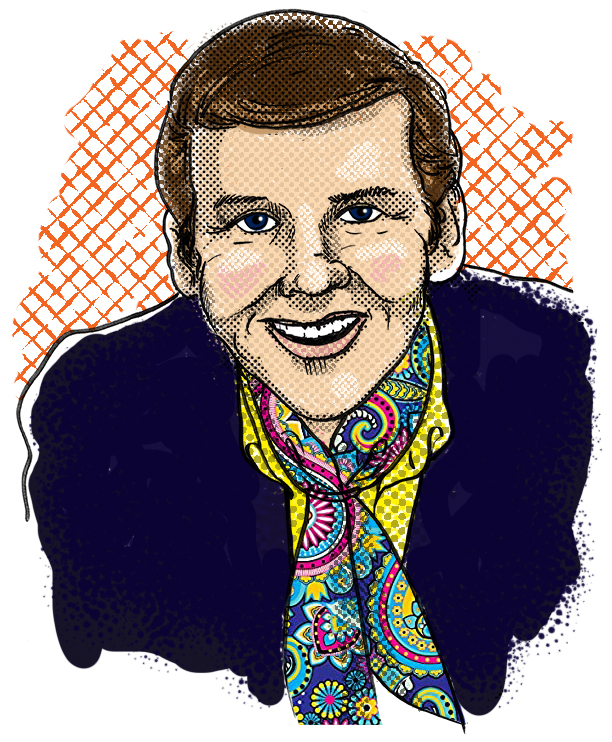
DCS: paul lynde

Kids! What's the matter with kids today?
It’s hard to believe that an entire generation missed out on the humor of Paul Lynde.

Paul Lynde started his career as a stand-up comic, even recording a comedy album. He moved to Broadway, where he appeared in his most famous role as Harry McAfee, the concerned but overprotective father of Kim in Bye Bye Birdie. This led to a variety of guest shots on some of the 60s most popular sitcoms, such as The Munsters and I Dream of Jeannie. He reprised his stage role, along with fellow cast member Dick Van Dyke, in the film version of Bye Bye Birdie. Paul’s role was trimmed considerably from the stage version in order to highlight young rising star Ann-Margaret. Paul said “They should have retitled it ‘Hello, Ann-Margret!’ They cut several of my and the other actors’ best scenes and shot new ones for her so she could do her teenage-sex-bombshell act.”

Paul was cast as the reoccurring character Uncle Arthur in Bewitched. He also did a handful of cartoon voice-overs. Unfortunately, his drinking and partying interfered with his career and he became unreliable and fell out of favor with producers and directors. In 1965, Jim Davidson, Paul’s young partying companion, fell to his death from Paul’s eighth floor hotel room. The subsequent scandal almost ruined Paul’s career, but he managed to bounce back.

When Bewitched was canceled, Paul turned to game shows. He took the coveted “center square” on The Hollywood Squares. Paul was a huge success, giving slyly prepared answers to seemingly innocent questions. His best-remembered quips were thinly-veiled allusions to his homosexuality. When host Peter Marshall asked “You’re the world’s most popular fruit. What are you?,” Paul replied, “Humble.” Another time, Paul was asked “Why do Hell’s Angels wear leather?” to which he answered “Because chiffon wrinkles.” His answers were famous, often skirting the censors with double entendres.

With his regained popularity, Paul was given his own eponymous sitcom. The show was a cheap rip-off of All in the Family, casting Paul as the frustrated uptight dad dealing with his family of liberals. No one believed the preposterous premise and the show was canceled after one season. He next appeared in the salvaged sitcom Temperatures Rising for the remainder of its brief network run. Paul also starred in the infamous Paul Lynde Halloween Special  in 1976. The special featured such diverse 70s guests as Roz “Pinky Tuscadero” Kelly, Margaret “Wicked Witch of the West” Hamilton, Florence “Mrs. Brady” Henderson and the first prime-time network appearance of KISS. All through the series and the special, Paul’s alcohol intake increased, eventually getting him fired from The Hollywood Squares. Paul was the alleged inspiration for a gag which made its way into the movie Groundhog Day. After a drunken high-speed chase through the San Fernando Valley, Paul crashed his car into a mailbox. When the cops approached the wreck with their guns drawn, Paul lowered his window and ordered a cheeseburger with no onions and a large Sprite.

One night in January 1982, Paul missed a dinner date with a group of friends. The concerned group rushed to his Beverly Hills home. Paul was found dead, possibly for several days. He was naked and surrounded by amyl-nitrite poppers, an inhalant used to enhance sex. The unofficial story was that Paul suffered a heart attack while having sex with someone who just walked out when the seizure happened, without calling for help. The official story only mentioned the heart attack.

Comments

comments

DCS: ruby starr

we wanna bring out our kissin' cousin
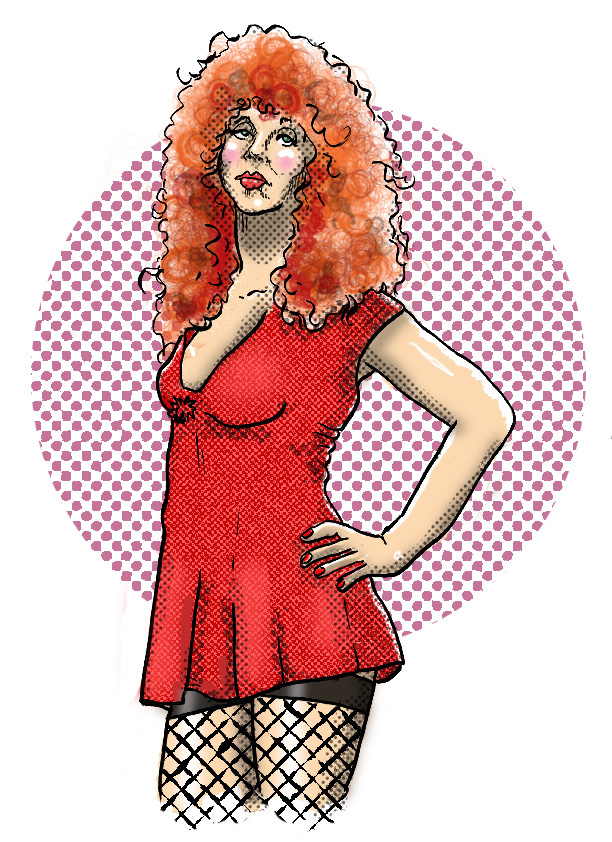
In 1958, when nine-year old Connie Mierzwiak was belting out Brenda Lee songs, she actually had designs on kicking rock and roll’s ass. A little girl with a giant voice, she was signed to a recording contract and released her first album in 1971 under the name Ruby Jones. She performed regularly in her native Toledo, Ohio and the vicinity. Shortly after her debut album’s release, Black Oak Arkansas’ Jim Mangrum spotted Ruby and her band at a club in Evansville, Indiana. Black Oak Arkansas, a ground-breaking band in the blossoming Southern Rock genre, needed something to set them apart from other similar up-and-coming acts — and Ruby was that something. Mangrum asked her to join his band. Even though she was from Toledo, she adopted the stage persona of the sassy, sexy, backwoods hillbilly and changed her name to Ruby Starr.

Ruby toured with Black Oak Arkansas for several years. They scored a Top 30 hit with a cover of LaVern Baker’s “Jim Dandy (to the Rescue)”, with Ruby screeching the familiar “Go Jim Dandy! Go Jim Dandy!” in the chorus. She became a fixture in 70s rock magazines like Creem and Circus, posing for cheesecake pictures and reinforcing her “Southern spitfire” character. In 1974, she left BOA and formed the band Grey Ghost. Ruby toured nationally with Grey Ghost, flooring audiences with her powerful voice when she opened shows for Black Sabbath, The Edgar Winter Band and old friends, Black Oak Arkansas.

Ruby toured relentlessly from the late 70s until the early 90s, when she kissed the road “goodbye” and moved to Las Vegas. She played the Riviera and the Stardust hotels and numerous clubs in Vegas, until she was diagnosed with lung and brain cancer. She, then, moved back to Toledo to be with her family. Ruby passed away in 1995 at the age of 44.

 HERE is Ruby backing Black Oak Arkansas on their signature song “Jim Dandy”

HERE is Ruby performing a cover of Paul McCartney’s “Maybe I’m Amazed” with an introduction from Black Oak Arkansas’ Jim Mangrum.

Comments

comments

IF: perspective

This week’s challenge word on the Illustration Friday website is “perspective”.
You know what I'm craving? A little perspective. That's it. I'd like some fresh, clear, well seasoned perspective. Can you suggest a good wine to go with that?
Giorgio de Chirico was a pre-surrealistic painter and an early influence on Salvador Dalí. His works from the early twentieth century were jumbled assemblages of shapes and arches and empty buildings and mannequins in skewed perspective and random placement. As his career progressed, he adopted a classic style, reminiscent of old masters like Raphael. He also spoke out as an opponent of the modern art movement. Even later in his career, he began painting in a Baroque style, heavily influenced by Peter Paul Rubens. Curiously, during this time, de Chirico began creating back-dated self-forgeries of his earlier work for the sole purpose of profit. He denounced his early originals as fakes.

He remained prolific until his death in 1978 at age 90.

In spite of how it was presented in his paintings, Giorgio de Chirico actually had a great sense of perspective. He was just fucking with us.

Comments

comments

Monday Artday: winter games

The current Monday Artday challenge is “winter games”.
And as you cross the circle line, the ice-wall creaks behind, you're a rabbit on the run. And the silver splinters fly in the corner of your eye, shining in the setting sun.
I am not a fan of the Olympics. I never have been. I have watched a total of fifteen minutes of the 2010 Winter Olympics. I watch the highlights in the morning on The Today Show before I go to work. According to NBC’s Today Show, there has been no other important or life-changing news in the world except the Winter Olympics. NBC has presented the Olympics less as a sporting event and more as a dramatic television series, playing up stories of injuries and hopes and family loss and aspirations, aiming right for America’s heartstrings.

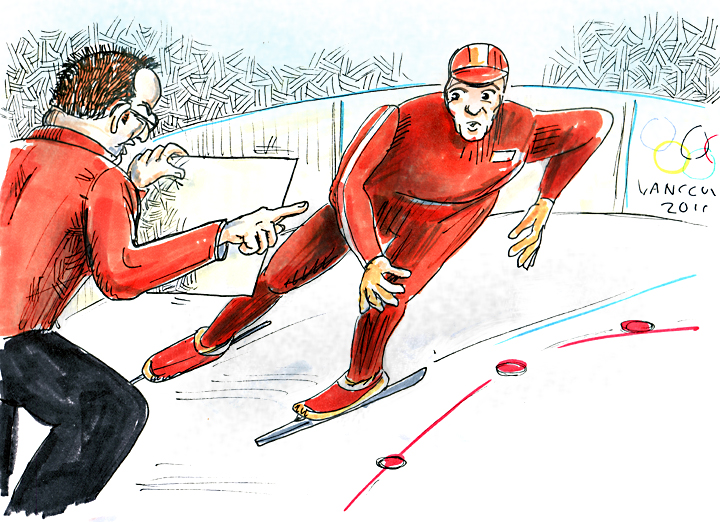
One story this week caught my attention, but for the wrong reason. Twenty-three year old Dutch speed skater Sven Kramer lost his bid for a gold medal in the 10,000 meter competition. Kramer was instructed by his long-time coach Gerard Kemkers to cross over into the wrong lane in his seventeenth lap. Kemkers held up and waved a hand-written sign and frantically guided Kramer to an incorrect inside lane. Despite skating the course in  a world record 12 minutes 54 seconds, Kramer was disqualified. South Korea’s Lee Seung-Hoon, who was in second place, took the gold.

Kramer threw what is commonly called “a shit fit”, for which he later apologized. A truly memorable Olympic moment.

Comments

comments

from my sketchbook: gerald holtom

Ev'rybody's talking about Bagism, Madism, Dragism, Shagism, Ragism, Tagism, this-ism, that-ism, ism ism ism
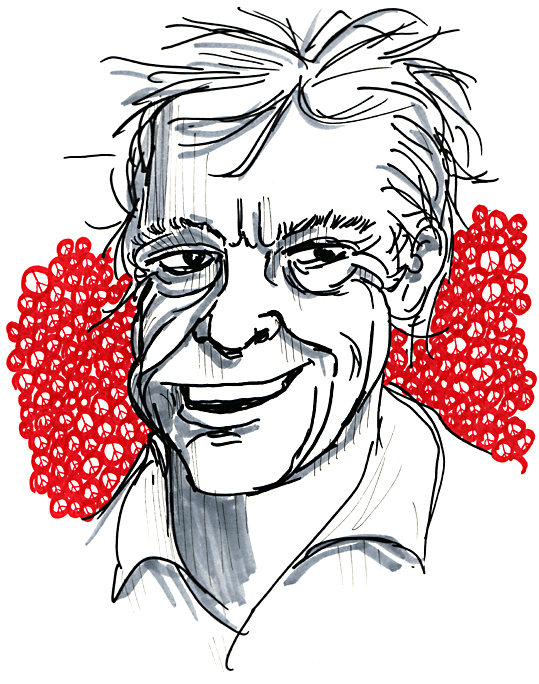
On this date, February 21, in 1958, Gerald Holtom was commissioned to design a logo for the Campaign for Nuclear Disarmament’ upcoming march in London against nuclear war. The march was scheduled for Easter 1958, a little over a month away.

Holtom, a graduate of the Royal College of Art, combined the semaphore sign for “N” for “nuclear”, showing the arms pointing downwards in opposing 45 degree angles to the body and the semaphore sign for “D” for “disarmament” showing the right arm pointing straight up and the left arm pointing straight down. He placed the simple line combination in a circle representing the earth. The result was the peace sign.

Holtom passed away in 1985, but he believed that, since this was a symbol of peace, anyone in the world could use and display it absolutely free of charge.

Forever.

Comments

comments

Monday Artday: caricature

The Monday Artday current challenge is “caricature”.
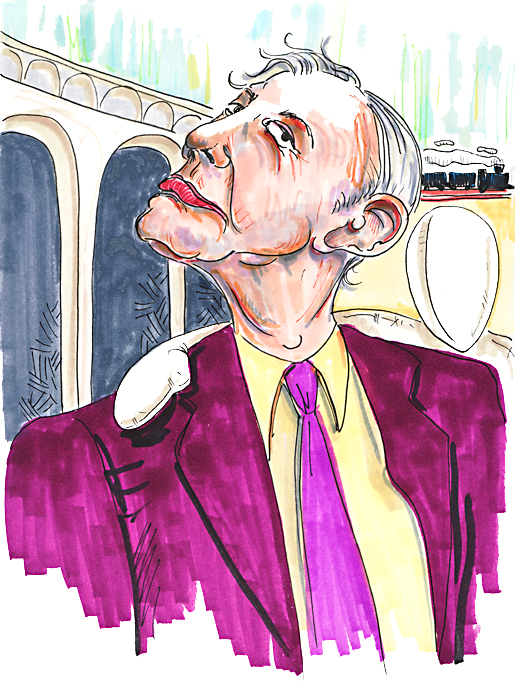
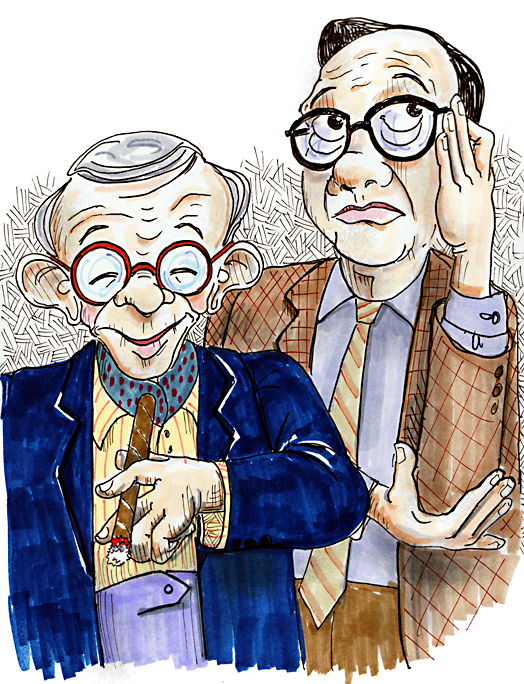
I’ll be honest, I went the easy route and drew two famous people who are pretty easy to caricature (because they are almost caricatures themselves), George Burns and Jack Benny.
Now, CUT that out!
Despite the on-stage jabs at each other, George Burns and Jack Benny were the best of friends. George Burns hosted several episodes of Jack Benny’s radio show in 1943 when Jack was sick with pneumonia.

Jack and George had a running gag in their friendship. George had no problem getting Jack to laugh, but George was always stone-faced in Jack’s attempts to do the same. One evening, at a party they were both attending, Jack pulled out a match to light a cigarette. George announced to all, “Jack Benny will now perform the famous match trick!” A bewildered Jack had no idea what Goerge was talking about, so he proceeded to strike the match to flame. George observed, “Oh, a new ending!” and Jack collapsed in laughter.

In 1974, Jack Benny was cast in the film version of the Neil Simon play, The Sunshine Boys. Just prior to filming, Jack was diagnosed with pancreatic cancer and was too ill to continue his plans for the movie. He suggested his best friend George Burns take over for him, eventhough George had not appeared in a film since 1939. George went on to win the Best Supporting Actor Oscar in 1975 for the role.

Jack Benny passed away in December 1974. George was heartbroken. He tried to deliver one of the eulogies at Jack’s funeral, saying, “Jack was someone special to all of you but he was so special to me…I cannot imagine my life without Jack Benny and I will miss him so very much.” But, George broke down in tears and had to be helped to his seat. Afterwards, George immersed himself in his work, appearing in ten films before his own death in 1996.

He never got over the death of his best friend.

Comments

comments

from my sketchbook: k. gordon murray

baby, although I chose this lonely life, it seems to strangle me now
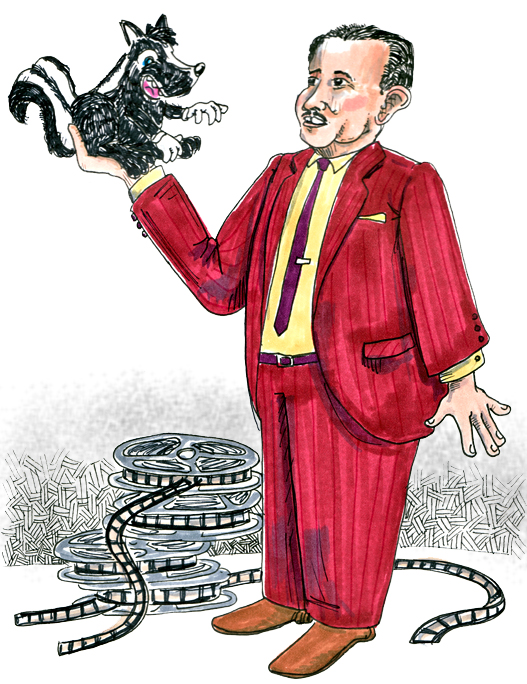
Remember Saturday afternoon kiddie matinees at the movies? Thank K. Gordon Murray.

Murray, an entrepreneur as early as his teen years, set up a makeshift bingo game in one of his funeral director father’s cemetery tents. He took his game on the road with a carnival, eventually becoming the traveling show’s manager. In the late 1930s, Murray was using his circus connections to aid a casting director in hiring little people to act as Munchkins in the 1939 film The Wizard of Oz. Shortly afterward, Murray and his wife settled in Hollywood, where famed director Cecil B. DeMille hired him to help promote his circus epic, The Greatest Show on Earth.

The Murrays moved to Miami, where they launched K. Gordon Murray Productions. Murray imported low-budget Spanish-language Mexican-produced films, re-dubbed them and distributed them to theaters throughout the United States. They were to be shown, according to an agreement, exclusively on Saturday afternoons for a limited engagement. The films were unusually-interpreted live-action versions of traditional fairy tales. They were poorly acted with even poorer production. But, since the target audiences were children gorged on popcorn, candy and soda, the quality of the film was not a priority. Entertainment value was most important. And, to kids, these films were entertaining. Murray added some of his own scenes and characters, specifically, Stinky the Skunk and Ferocious Wolf. Murray had local costume shops create Stinky the Skunk outfits for appearances at theaters. He presented over 60 films in almost fifteen years, single-handedly creating the “Weekend Kiddie Matinee”. Films like Little Red Riding Hood and The Monsters and Puss ‘n Boots played regularly. His most popular film, the holiday head-scratcher Santa Claus, was the only film, besides Disney’s Snow White, to be released profitably in theaters every few years for three decades.

Murray expanded his film endeavors to include horror and adult exploitation films, still keeping the same formula of importing and dubbing foreign productions.

In the late 1970s, Murray ran into trouble with the Internal Revenue Service. which seized his library of films and took them out of circulation. In 1979, as Murray was preparing his case against the IRS, he suffered a fatal heart attack at age 57.

Comments

comments

Monday Artday: train

This week’s Monday Artday challenge word is “train”.
train I ride, sixteen coaches long
I have been riding the train to work for almost three years. It is a pleasure to let someone else take the responsibility of being in charge of my morning and evening commute. I don’t worry about traffic or weather or other drivers. I also get to see a multitude of “interesting” people everyday. It’s sort of pre-work entertainment. My son rides the train regularly, too, and we often trade stories.

Recently, the Southeastern Pennsylvania Transportation Authority (SEPTA) implemented a “QuietRide Car” on rush hour trains, taking a cue from the larger Amtrak trains. Signs were posted at all train stations and on all trains and frequent announcements were made alerting riders about the QuietRide Car policy. And the policy was very clear. The first car on each peak-hour train is the designated as the QuietRide Car. Cellphones were not to be used. Earphones must be used on music devices and the volume must be set low enough so it cannot be heard by other passengers. Conversations between passengers must be kept short and at a whisper. If you do not wish to follow these rules, you should choose another car for your commute.

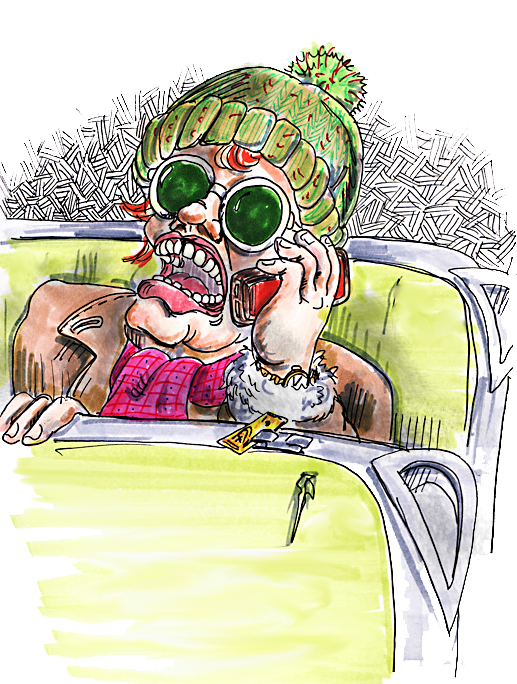
Unless you are that guy  and the rules don’t apply to you.

Just after the QuietRide Cars were put into effect, my son related an incident on a recent train ride. He likes to listen to his iPod on the train, sometimes at high volumes that can be heard by other passengers. This particular day, he boarded the train and accidentally took a seat on the QuietRide Car. He unhappily, but obediently, lowered the volume on his iPod. Seated behind him was that guy — an older woman in mismatched winter accessories. From his detailed description, I knew her from mornings at our local train station. Despite signs posted and regular announcements informing riders of the rules of the QuietRide Car, she prohibitively dialed and prohibitively screamed into her prohibited cellphone: “I’m on the Quiet Car! THE QUIET CAR! Yeah, so I can’t talk! What? NO, THE QUIET CAR! I’m not allowed to talk or use my phone! So, I gotta hang up ’cause I can’t talk! I SAID I CAN’T TALK! I’M ON THE TRAIN IN THE QUIET CAR, SO I’M NOT ALLOWED TO TALK!!!!”

My son said this went on until the train arrived at his stop.

Comments

comments