

When I was young
I’d listen to the radio
Waitin’ for my favorite songs
When they played I’d sing along
It made me smile.
IF: talent
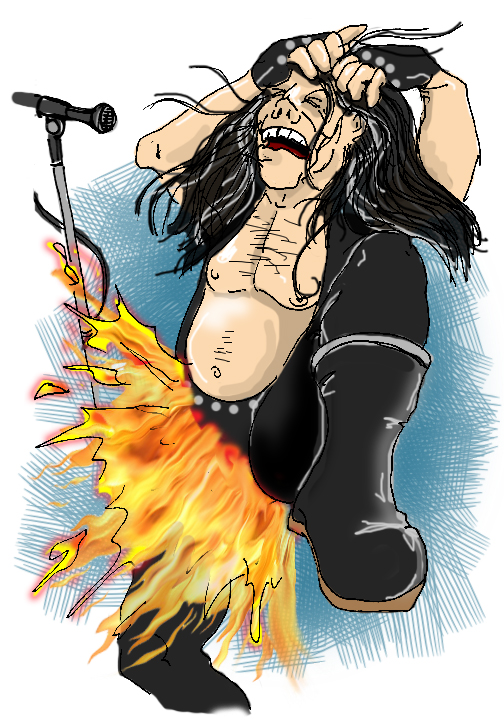
Poor Steven Duren. He had dreams. He was heavily influenced by AC/DC, Black Sabbath and Alice Cooper. But, he wasn’t nearly at their level… and he knew it. But that wouldn’t stop the ever-determined Steven.
Steven changed his name to Blackie Lawless and fooled around on the guitar and bass. He formed a few bands, the most popular being heavy-metal shock rockers W.A.S.P., best known for their controversial hit “Animal (F**k Like a Beast).” Blackie surrounded his band with gimmicks, from pyrotechnics on stage to the mysterious meaning behind the band’s acronym name. (Fans guessed everything from “We Are Sexual Perverts” to “We Ate Savory Pancakes.” Blackie would sometimes tell interviewers “We Ain’t Sure, Pal.”)
Blackie’s signature stage stunt was lighting his codpiece on fire. During an early performance of the trick, a malfunction in the explosives caused poor Blackie’s crotch to burst into flames. Attentive rescue workers doused the fiery piece of wardrobe with water and foam to extinguish the flames. As a charred and shaken Blackie was carried from the stage, he observed his situation and quipped, “If I could write better songs, I wouldn’t have to do shit like this.”
Comments
from my sketchbook: rita johnson

With aspirations of stardom, Rita Johnson set out for Hollywood after two years of acting on Broadway. She made her motion picture debut in 1937’s London By Night, a lighthearted mystery starring George Murphy, long before he was elected to the US Senate.
Rita continued to be cast in films throughout the 30s and 40s. She was a versatile actress, able to convey a villainous persona as the murderous Julia Farnsworth in 1941’s Here Comes Mr. Jordan (the original version of the Warren Beatty vehicle Heaven Can Wait) and then become the sympathetic mother to young Roddy McDowall in My Friend Flicka and its sequel.
The pressures of show business led Rita to alcohol and soon she was consuming more than her fair share. However, in 1948, Rita’s career nearly came to an end when a beauty salon hair dryer fell on her head. Her injuries required delicate brain surgery and, although she did return to the big screen, she was relegated to smaller roles due to her limited mobility and poor concentration.
Rita finally called it a career in 1957, after completing only four films since her accident. Rita passed away from a brain hemorrhage on Hallowe’en 1965. She was 52.
Comments
from my sketchbook: ben raleigh
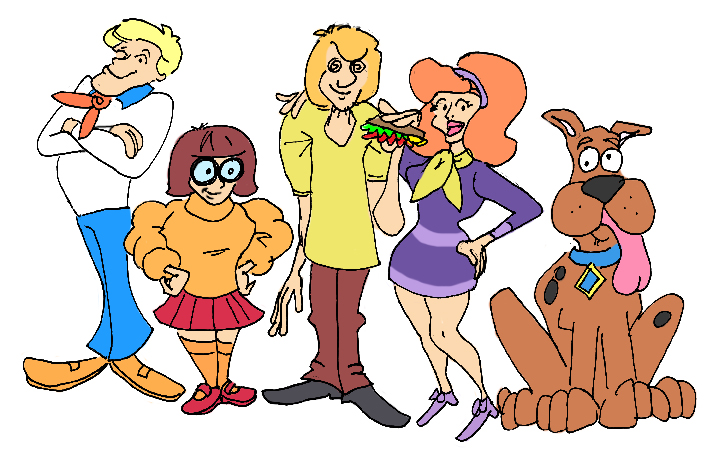
Ben Raleigh was writing songs as far back as the 1940s. His songs were recorded by Eddie Fisher, Dinah Shore and Nat King Cole among others. In 1946, Sammy Kaye and his Orchestra had a Top Ten hit with Ben’s composition “Laughing on the Outside (Crying on the Inside).”
Pop singer Leslie Gore recorded Ben’s “She’s a Fool” and song stylist Johnny Mathis had a hit with “Wonderful, Wonderful,” both in the 1960s.
In 1969, Ben was recruited to write the theme song of a new cartoon about a group of teens and their mystery-solving dog. Ben composed “Scooby-Doo, Where Are You?” Hanna-Barbera, the cartoon production company, offered to pay Ben outright for the song. Ben, instead, opted for an ongoing royalty. The cartoon was an instant success and ran for decades. Ben made a fortune.
In 1997, Ben died in a fire that started in the kitchen of his Los Angles home. He was 84.
Comments
IF: whisper
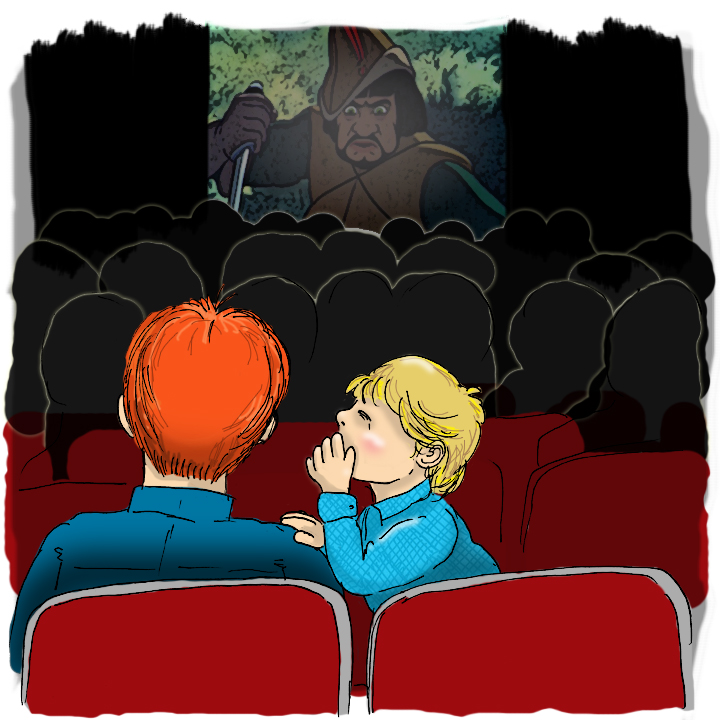
When it comes to horror in films, there is one true master. You’re probably thinking of names like Alfred Hitchcock, John Carpenter or David Cronenberg. Some might even throw in the name of Italian director Dario Argento, whose beautiful on-screen depictions of blood-and-guts slayings have been compared to fine art paintings. But the real master of scare and overlord of fright is Walt Disney. That’s right — good ol’ Uncle Walt! Walt created some of the scariest moments ever committed to film. Scarier than Dracula, or Jason or Freddie because Walt’s target was innocent and unsuspecting. Walt aimed to frighten children. Fans of horror love to be scared, so they go to movies that they know will deliver on their promise. The devious Mr. Disney hid his scares behind the guise of colorful, song-filled stories like Pinocchio and Sleeping Beauty. Happy little characters dance across the screen, gaily singing and frolicking amid cute woodland creatures, then — BAM! — a whale eats your father and your best friend turns into a goddamn donkey right before your eyes! That Walt! What a bastard!
In 1993, The Walt Disney Company released its 1937 animated masterpiece Snow White and The Seven Dwarfs to theaters for the last time. Disney touted this re-release by noting that this version of the film was the first to be entirely scanned to digital files, manipulated, and recorded back to film (evidently a big deal in the early 90s). With my wife regularly working late on Friday nights, I took my then five-year-old son to the movies to see Snow White.
We arrived at the theater in plenty of time to buy some popcorn and secure ourselves a pair of choice seats. Soon, the interior lights dimmed and we munched our snack as previews of upcoming films flickered on the big screen. Then, the familiar castle icon appeared announcing the beginning of the feature presentation. We settled in and watched as the story unfolded. The ominous Queen paraded in front of her Magic Mirror asking “Who is the fairest of them all?” When the Mirror replies that Snow White, who the Queen has working as a maid, has grown into a beautiful young lady and is now the fairest in the land, the Queen gets thoroughly pissed off. She immediately summons a huntsman to take Snow White into the forest and kill her. Then, she produces a jeweled box. The Queen orders the huntsman to bring the box back to her filled with Miss White’s extricated heart. My son began to squirm.
The huntsman leads the gullible Snow into the woods. She begins picking flowers or some other girly activity when the huntsman draws his knife from its sheath. The screen darkened as the menacing huntsman closed in, his eyes narrowed and blazing, the blade shimmering in the moonlight, inching closer.
Suddenly, my son leaned in and whispered to me in a quivering voice, “Dad, let’s go.”
I placed a comforting arm around his small shoulders said to him, “This movie is called ‘Snow White and the Seven Dwarfs.’ We haven’t seen the dwarfs yet. I have a feeling that he’s not gonna kill her.”
He sat back down in his seat and, sure enough, the huntsman didn’t go through with it. Instead, he burst into tears and begged Snow White’s forgiveness. Within minutes, the screen was awash with colors and music and woodland creatures, all frolicking and alive in song. But — dammit! — if Walt Disney didn’t succeed in scaring the shit out of another little boy.
Comments
from my sketchbook: luke easter
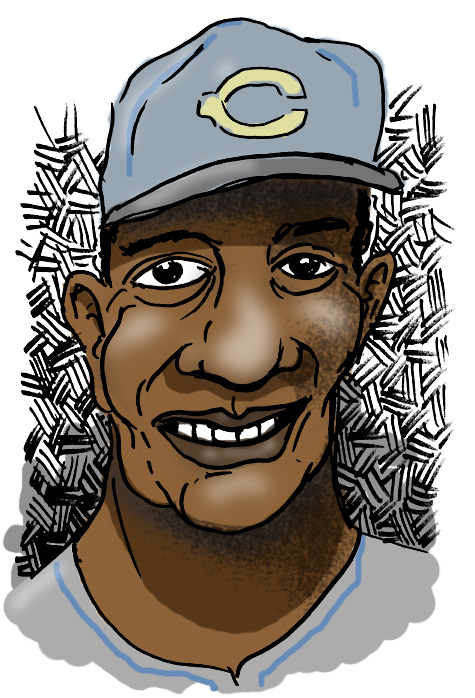
In 1946, Abe Saperstein, enjoying success from his exhibition basketball team The Harlem Globetrotters, decided to try his hand at baseball. In the same fashion, he assembled a squad of barnstorming all-stars called the Cincinnati Crescents. He signed 6′ 4″ Luke Easter to play first base. Luke was thrilled, as he was only able to play baseball in school, since his native St. Louis had no Negro League franchise.
After a year with the Crescents, Luke was signed by the Homestead Grays. In 1948, Luke led the Negro Leagues in home runs and helped the Grays win the Negro World Series in 1948, the final series for the league.
Luke’s stellar performance in the World Series caught the attention of flamboyant owner Bill Veeck. He signed Luke to a contract with his Cleveland Indians. Starting with the Indians’ Pacific Coast affiliate, Luke hit 22 home runs and was promoted to the big leagues. Unfortunately, he hit a slump, going 21 games without a homer. But the Indians believed in him and traded their starting first baseman to make a spot in the roster for Luke. The move paid off and Luke rewarded his team with three consecutive power-hitting, run-producing seasons. He also hit the longest home run in the history of Cleveland’s Municipal Stadium, a 477-foot shot over the right field scoreboard. The distance record stood until 1960 when Mickey Mantle accomplished the feat. Luke’s legendary home runs became known locally as “Easter Eggs.” A fan once told Luke he had seen his longest home run in person, to which Luke replied, “If it came down, it wasn’t my longest.”
In 1953, Luke broke his foot and never regained his momentum. He spent the majority of 1954 in the minors. At 39 years of age, he left the major leagues and bounced around regional independent leagues until he finally retired for good in 1964.
Putting his baseball career behind him, Luke moved to Ohio and took a job as head union steward for the Aircraft Workers Alliance at TRW Inc. On March 29, 1979, Luke was approached by two armed men in the parking lot of the Cleveland Trust Company Bank. He had just cashed TRW payroll checks and was carrying approximately $5000 in cash …and he had no intention of giving the money up. The two men had other plans. They shot Luke twice in the chest at close range. Luke was already dead when he arrived at the hospital. He was 63 years old.
Comments
IF: wool
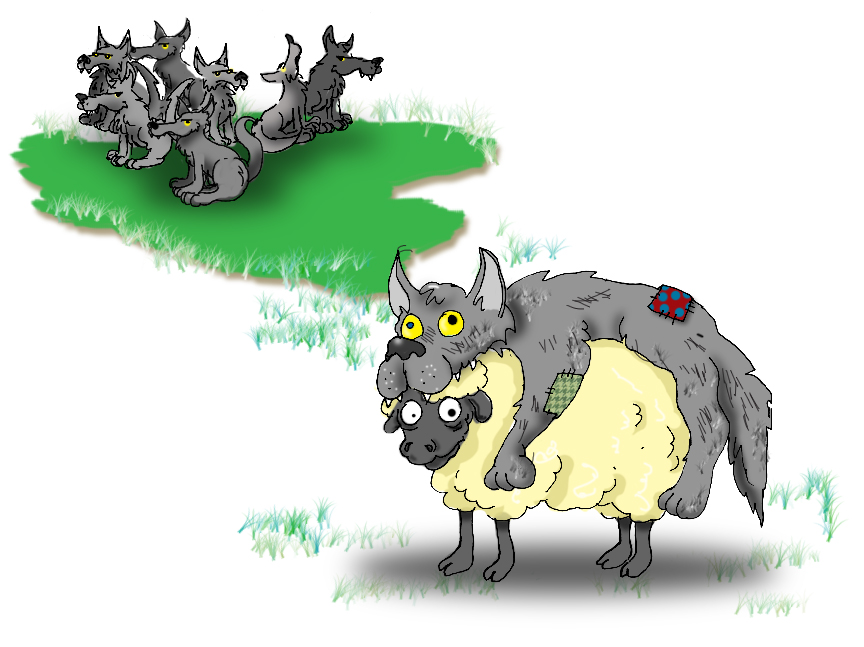
Sheldon, a rookie agent from the S.I.S. (Sheep Infiltration Squad), realized he was on a suicide mission.
Comments
from my sketchbook: mary fuller
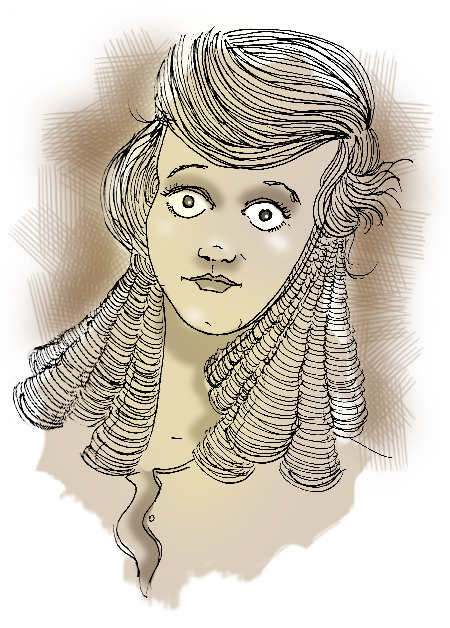
Mary Fuller began making one-reelers for Vitagraph Studios as an eighteen year-old. Soon, she joined the cast of Edison Studios’ 1910 production of Frankenstein, playing the notorious doctor’s fiancée. This was the first filmed version of Mary Shelley’s horror classic.
By 1914, Mary Fuller was a bona fide movie star, rivaling top box-office draw Mary Pickford. She appeared in a wide variety of roles, mostly dramas. Mary even wrote several screenplays that were made into films. But, her last few films were bombs and her contract was allowed to expire and was not renewed. Mary’s career was over by 1917. She was turned down for roles on Broadway and movie studios told her “You are no longer a film type.” She suffered a nervous breakdown and disappeared from the public eye for a decade.
In 1926, Mary tried unsuccessfully to revive her film career and, again, vanished from the spotlight. After her mother’s death in 1940, Mary suffered another nervous breakdown and her sister got her admitted to St. Elizabeth’s Psychiatric Hospital in Washington, DC. She remained there until her death in 1973 at the age of 85. When Mary died, the hospital was unable to locate any of her relatives. She was buried in an unmarked grave in Washington’s Congressional Cemetery, in the company of Alexander Macomb, Jr. (commanding general in the War of 1812), J. Edgar Hoover and John Philip Sousa, among many other celebrated names.
Comments
IF: storm
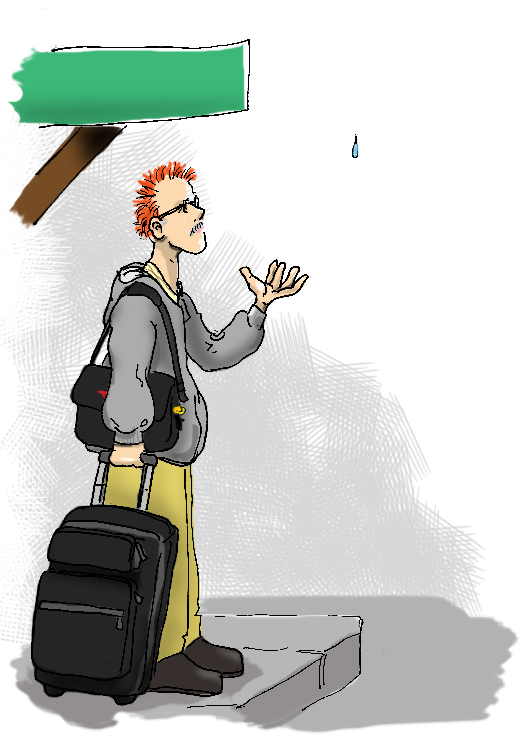
Nothing. Not a single flake of snow. It was only a little overcast, but probably because it was nearing 4:30 and it was just getting dark. But, there was absolutely no sign of the potentially-devastating monster storm that we saw reported on The Weather Channel and on local Orlando news broadcasts. When I’m stuck in a massive, hours-long traffic snarl, and cars are finally allowed to trickle through and skirt the cause of the trouble, I wanna see mangled, bloodied bodies strewn across the highway. Y’know, a little something for my trouble. So, when the ratings-hungry forecast monkeys start predicting the blizzard of the century, I’d at least like to see one goddamn snowflake to make up for rescheduling a flight and cutting a trip short.
But Im jumping ahead.
Several weeks ago, my boss, Elgie, hinted to me that the law firm for which we work was considering sending the two of us to a social media conference in central Florida. Walt Disney World, to be exact. My boss knows of my love of all things Disney. She also knows that I have never been sent to a conference on behalf of our employer. I’ve barely been sent further than Staples to get a black Magic Marker. I have had twelve jobs in my thirty years as a professional artist (or graphic designer, as I am most often tagged). It has taken those same thirty years for one of my employers to deem me (oh, I don’t know? worthy? presentable? mature?) let’s go with qualified to be a representative at a conference. In public. With people. A day or two later, Elgie presented me with good news. I was approved to attend the conference. It was the equivalent to being liberated from the kids’ table at Thanksgiving.
Now, this would not be a carefree romp thorough the Magic Kingdom, clutching balloons, eating cotton candy and riding Splash Mountain. This is two days of session-learning with focus on how different aspects and outlets of social media can impact and benefit blah blah blah blah blah blah. Who am I kidding? I was going to fucking Disney World for three days on the company’s dime! (Shit! I hope my boss isn’t reading this.)
I began preparing like an excited six-year old. I borrowed a small suitcase from my brother-in-law, so I wouldn’t have to check luggage. I accessed the TSA website where I studied the rules for carry-on liquids and how theyre keeping us safe from terrorists. On the morning of the conference, I dutifully went to work for a few hours, knocking out some last-minute ads and cropping a few photos for posting on the firm’s website, before putting my winter coat back on and heading out into the brisk February air for the train to the airport. At 8:30 that morning, while I was at my desk, a gas line ruptured under the train tracks in North Philadelphia, thus disrupting every single train route in the city. I stood on the station platform with an ever-increasing crowd of frustrated commuters. I was off to a great start.
After a thirty-minute delay, I boarded my train. Arriving at the airport with my pre-printed boarding pass in hand, I breezed through security (a humiliating and demeaning process that we are led to believe is keeping us protected from al-Qaeda). Gathering my wallet, keys and other pocket-stuffers and jumping back into my boots, I headed for my appointed gate, threading my belt through my pant loops as I walked. Once at the gate (the furthest one in the terminal, as usual), an announcement was made informing us passengers that a flight attendant was injured on the last flight and we needed to wait for a replacement before we could take off. Through a series of text messages resembling a game of digital Marco Polo, I spotted Elgie at the gate and we waited. And waited. And waited. And waited. Forty minutes after the announcement, an expressionless woman in a US Airways uniform cut through the impatient horde as if they weren’t even there. The boarding process continued. Two hours later, we were touching down on an 81° Orlando, Florida runway. I walked with Elgie to the baggage claim (she checked a bag). We proceeded outside to catch a taxi. Once we crossed the threshold of the terminal’s sliding doors, suddenly, my winter coat felt like I was wearing a gorilla suit. It was muggy and Florida-y and, considering I woke up in a full-on Philadelphia winter, it was great.
One $70 cab ride later, we were deposited at our respective hotels. Elgie was booked at Disneys Yacht Club and I was clear on the other side of the shared convention center, at The Beach Club. With the conference starting bright and early the next morning, Elgie told me of her evening plans a leisurely stroll around the connecting BoardWalk Resort to pick up some toys to bring home for her kids and then dinner. I, on the other hand, was jumping on a Disney bus to wander around the segmented shopping area collectively known as Downtown Disney. Because of logistics, I wouldn’t have enough time to visit a theme park, so I needed some sort of satisfying Disney fix. I couldn’t very well ditch the conference. Since it was just the two of us, I’m pretty sure that Elgie would notice I was missing.
I checked in at the front desk and was given convoluted directions to my room by well-meaning, but overwhelmed, Ming, who, according to the ribbon affixed to his Disney name tag, was Earning his Ears (Disney-speak for trainee). Ming related, in barely comprehensible broken English, directions to my third-floor accommodations. He traced his finger along the scaled-down hallways of a printed map. I couldn’t decipher a single word he said, but I thanked him for his concerted effort and attempted to forge the journey myself. I negotiated hallway after twisting hallway, half-expecting to be rewarded with a giant hunk of cheese at the end. I finally located my room, waved my all-encompassing keycard/charge card in front of the magic lock and the door clicked open.
Soon, I found myself on a jam-packed bus pushed up against giggly children, sparkly-clad teens and over-perfumed grandmas — all anxious to experience a night of shopping, dining and entertainment, Disney-style. For a Wednesday evening in February, my first thought was Doesn’t anybody work? The place was jammed to the point that the crowd was moving along the paved walkways at a pace slightly faster than a shuffle. I weaved in-and-out of hand-holding families and embracing couples and made my way into the World of Disney, the self-proclaimed largest character store in the world, if that is, indeed, a claim to fame. I immediately began texting pictures of Disney merchandise to poor Mrs. Pincus, sitting at my home 900 miles and 60° away. In a matter of minutes, I had spent over a hundred bucks on God knows what. At the next store, Pin Traders, a shop devoted entirely to the Disney phenomena of pin collecting my credit card was declined. Two hours in Florida and no credit card? Oh shit, I was in trouble. I called the good people at Chase, who are obviously watching out for my well-being. An apologetic representative riddled me with a series of security questions and had the whole mess straightened out in a few minutes. She did, however, ask how long I would be in Florida. (Is Chase stopping short of placing a chip in my brain? Or have they already?) I ate at the quick-serve extension of Raglan Road, a raucous Irish pub, where a giant piece of battered cod and crispy chips hit the spot. (My credit card worked there.) I was intrigued by two young Asian women at a table to my left. As I consumed traditional United Kingdom fare from a traditional United Kingdom menu in a traditional United Kingdom setting, they munched on a Caesar salad. So much for tradition. After dinner, I was beat, so I caught a bus back to my hotel.
The next morning, I helped myself to the free breakfast at the conference center and chatted with a few other attendees. (I think the corporate types call that networking.) As I was getting coffee, a young lady made a beeline right for me, stopping just inches from my personal space. She asked me directly and specifically, “Do you know where I can find a trashcan?” I don’t know why she picked me, considering you could swing a name badge lanyard and hit six Disney employees. “No, I don’t,” I answered and I quickly slunk away.
I met up with Elgie at the opening keynote. It was essentially a fifty-minute commercial for Disney. Nobody toots their own horn better than the good Kool-Aid-drinking folks at Disney. They do, however, have every right to do so. There ain’t a better marketer on this planet than the mouse that Walt built. Elgie and I briefly discussed which of the simultaneous seminars we would attend and we parted with plans to meet up again at lunch.
I chose a session led by Paul Flaningan, PR director for Southwest airlines. Mr. Flaningan told some interesting stories about the methods Southwest uses to handle crises. He expounded on the positive and negative ways social media has impacted the company, citing both Twitter-only fare discounts and the infamous Kevin Smith Twitter incident.
My next session featured Gabby Nelson, Director of Communication for Sleep Number beds, and Maggie Fox, CEO of the hired social media group that Sleep Number uses. The session was a fifty-minute promotion for Sleep Number, with the two women giggling at each other. I wanted to smack them both. Soon, it was time for lunch.
Elgie and I and the entire contingency were led to a beachfront buffet set up just behind the Yacht Club. Tables were laden with tempting cuisine for carnivores and vegetarians alike. The alfresco dining dissolved any thoughts of the cold Philadelphia we left behind. We sat at a table and did a little more of that networking stuff. I capped my meal with a heaping serving of tres leches and then we were back at the afternoon session.
The afternoon began with a keynote by author Justina Chen. I’m not quite sure what Ms. Chen spoke about, because she kept on subject with the focus of a camera with a cracked lens. For nearly one solid hour, she bounced from idea to rambling idea with ADD efficiency. She also blurted out a key plot point in the new James Bond film Skyfall without the customary “Spoiler Alert” warning. In addition, she punctuated nearly every sentence with “mmmmmkay,” sounding like South Park’s school counselor Mr. Mackey. Afterwards, Elgie and I opted to attend the presentation on the wonders of Google +. Despite the bubbly enthusiasm of Amy Ravit Korin (@interactiveAmy on Twitter), Google + came off as a feeble attempt at muscling in on Facebooks loyal and rabid following.
I chose to end my day with Jeramie McPeek, VP of Digital for the Phoenix Suns. Mr. McPeek gave an energy-charged address, explaining the many ways that a professional sports team uses social media marketing to their advantage. Afterwards, I cornered poor Mr. McPeek, jamming a Josh Pincus business card into his hand. I told him that I never watched a basketball game in my life. I did, however, make him aware of the Twitter prank that Philadelphia Philles fans pulled on the Arizona Diamondbacks by hash-tagging all of their tweets with #GoDbacks for a month long period. He laughed and commented on my orange hair, noting a possible homage to his team colors. Yeah,” I replied, it’s in honor of what’s your team again? He (@jmcpeek) now follows me on Twitter.
After a full day of seminaring, all attendees were given a short break and told to report back to the convention center to board shuttles destined for a secret surprise Disney event. I hurried back to my room to change. Exiting my room into the daunting labyrinth of hallways, I bumped into a young lady who looked equally confused. She smiled and read my conference-issued nametag. She then identified herself as an employee of the company that planned the conference itself. As we walked together to the shuttles, I pressed her for information.
“So, what can you tell me about tonights secret event?,” I asked.
“Only that its a secret.,” she countered with a smile.
The shuttle buses, loaded with excited conference attendees, glided covertly into a backstage area of the Disney Studios theme park. We were directed down a secret walkway, handed boxes of popcorn by friendly Disney cast members, and found ourselves front-and-center in the Fantasmic Amphitheater. Elgie and I simultaneously pulled out our smart phones and began snapping pictures and texting them off to our respective families. Mrs. P even called me so she could hear the sounds and the music as it happened. After the evenings performance, we funneled through the closed-to-guests theme park to the Indiana Jones Theater, where the stage was decked out in banquet tables, several bars, buffet stations and a blaring DJ keeping a dissonant beat. Mickey Mouse and some of his pals were even on hand to pose for photos. During dinner, Elgie and I lamented about our advanced age as a group of obviously hammered young co-workers snaked a conga line through the dining area. (I’m seven years older than Elgie, so how do you think I felt?) When the gala wound down, we were returned to our respective hotels. I called Mrs. P to give her a rundown of the nights events and then I conked out. But, not before polishing off a Mickey ice cream bar, as no trip to Disney World is complete without one.
The next morning was when we got the report. All of the weather forecasts were declaring it the Storm of the Century (just another in a long line of “Storms of the Century”). It even had a name, for Christ’s sake! — Nemo. A little wussy sounding, but a name just the same. I found Elgie at breakfast and she offered to call our office travel director to arrange for an earlier flight. Hearing the panic in the reporters voices and the footage of various preparations and precautions that East Coast cities were taking, we didn’t want to be stuck. Within minutes, we were booked on a flight scheduled to leave an hour earlier. We each attended one more seminar (Me, a fifty-five minute cheerleading session with a guy who tweets for Marvel Comics. Elgie, the same, except it was Disney instead of Marvel) and grabbed another over-priced cab ride to Orlando International.
We boarded our flight, momentarily delayed by some elitist asshole who stood in the aisle and meticulously folded his $1500 sport coat into the overhead compartment with no regard for the line of passengers waiting to be seated. The plane eventually took off.
As we made our decent into Philadelphia, the scene outside of our tiny windows was quite surprising, based on the hysteria we witnessed on television. Actually, there was no scene at all. It wasn’t even raining. It was just a little cloudy. We landed. Elgie said, “See ya Monday” as she headed for baggage claim. I called Mrs. P and told her my flight came in and I would be taking the train home. She said she was off to supermarket, but would be avoiding milk and bread aisles.
Comments
IF: wheel
This week’s Illustration Friday word is “wheel”.
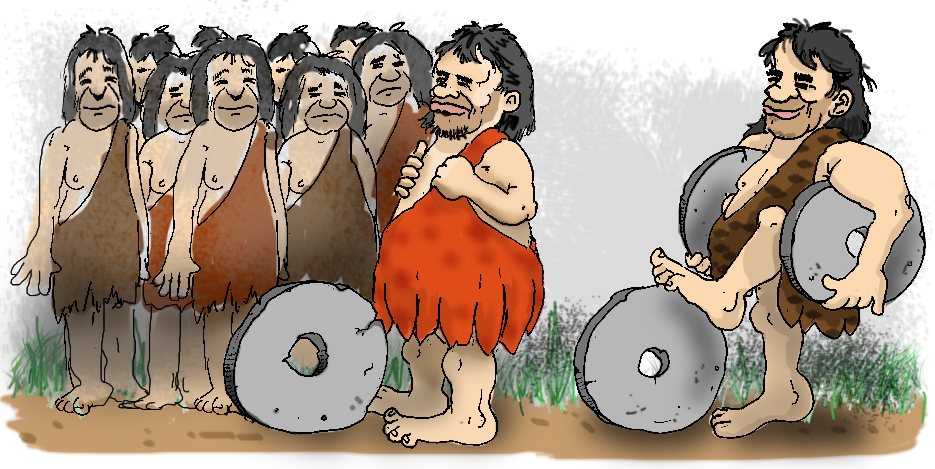
“The guy who invented the first wheel was an idiot. The guy who invented the other three, he was a genius.”
Sid Caesar