DCS: adrienne corri

i'm singing in the rain, just singing in the rain

Scottish-born actress Adrienne Corri made her film debut at the age of 19 in the British drama The Romantic Age. Her career soon blossomed with roles in David Lean’s Dr. Zhivago, where she played Lara’s mother, and in Otto Preminger’s thriller Bunny Lake Is Missing. Adrienne also appeared in a number of low-budget horror films, including Vampire Circus for Hammer Studios.

She was featured in numerous television productions including a 1980 episode of Doctor Who, a version of Shakespeare’s Twelfth Night opposite Alec Guinness and the comedy The Country Wife with Helen Mirren. She also had a long and celebrated career in the British theater. It was, however, not without its controversial moments. During a staging of John Osborne’s The World of Paul Slickey — the actor/playwright’s sole attempt at a musical — the audience began to express their dislike by loudly “boo”ing the cast. Adrienne offered a middle finger the to crowd, accompanying her gesture with a loud “Go fuck yourselves,” then exited the stage.

Adrienne is best known for her role of “Mrs. Alexander,” an assault victim  at the hands of “Alex DeLarge” in Stanley Kubrick’s A Clockwork Orange. Adrienne was offered the role after two other actresses turned it down, finding it too humiliating, since it involved having to be perched — naked — on an actor’s shoulders for weeks on end while the perfectionist director decided which shot he liked the best. Adrienne had no qualms about appearing naked and she earned Kubrick’s respect by her willingness to undergo the grueling process of shooting endless takes. The visually disturbing, physically grueling scene was shot over four days and required thirty-nine takes. It finally concluded when actor Malcolm McDowell (who played the villainous lead) conceded, “I can’t hit her anymore!” After A Clockwork Orange wrapped, Adrienne remained close friends with Kubrick.

When she retired from acting, Adrienne wrote The Search for Gainsborough in 1984. The book, written in diary form, tells the story of her quest to authenticate a painting she owned that she believed to be an early work by the famed artist of the renowned portrait “The Blue Boy.”

In 2016, Adrienne died at her home in London at the age of 85.

Comments

comments

DCS: stanislav bogdanovich

checkmate

It appeared that Stanislav Bogdanovich was poised to take the world of chess by storm. The young Ukranian, a graduate of the National University of Odessa Law Academy, had already won a number of championships. He was awarded the title of International Master in 2009, and Grandmaster in 2017. His opponents described Stanislav as a fierce, but talented, competitor. He was noted for playing particularly well as a fast pace, called “blitz chess” by those in the sport. After defeating Grandmaster Mikhail Golubev, he assessed Stanislav as “perhaps the most talented player in the entire history of Odessa.”

On March 5, 2020, the father of Alexandra Vernigora (Stanislav’s girlfriend, an up-and-coming chess player herself) discovered the couple dead in Stanislav’s Moscow apartment. They were surrounded by balloons filled with nitrous oxide. Stanislav was 27 years old. Alexandra was 18.

Comments

comments

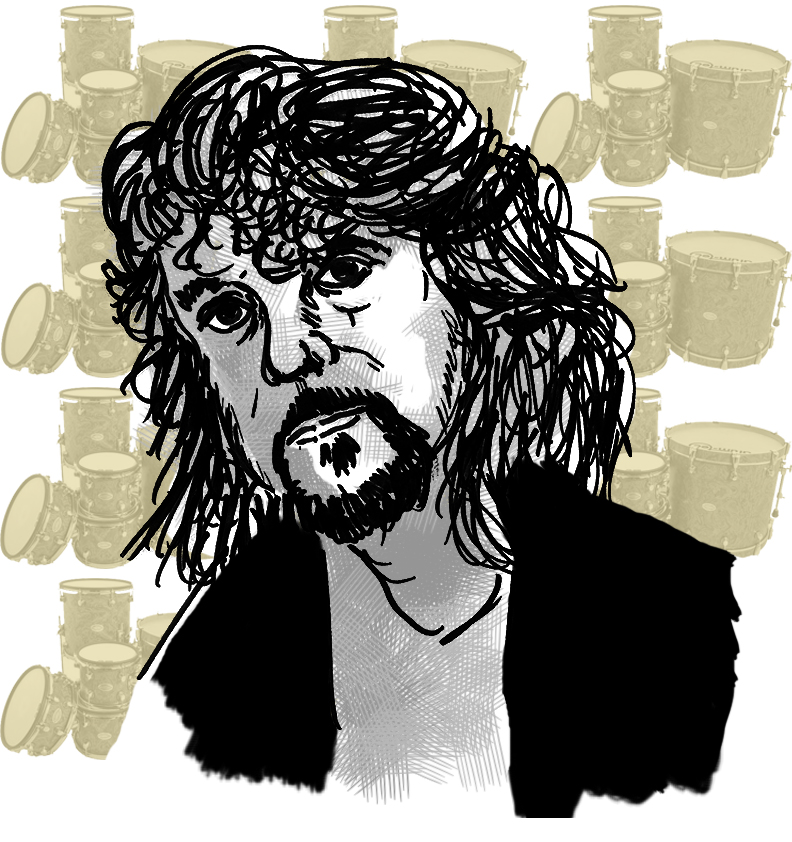
DCS: scot halpin

she fell in love with the drummer another and another she fell in love

On November 20, 1973, The Who’s performance at San Francisco’s Cow Palace was briefly interrupted when Keith Moon passed out behind his drum kit. It seemed that the horse tranquilizers he had downed prior to the concert were too much for the drummer to handle. Moon was carried off by some roadies and the three remaining members — guitarist Pete Townshend, bassist John Entwistle and vocalist Roger Daltrey — soldiered on with the show. Daltrey banged on a tambourine as a impromptu substitute for drums on “See Me Feel Me.” At the song’s conclusion, Townshend thanked the crowd for the kind reception and apologized for Moon’s episode. Then he addressed the crowd, asking “Can anybody play the drums?” He repeated the question, adding forcefully, “I mean somebody good!”

Scot Halpin, who had just moved to the area from Iowa was in the front row with his friend Mike Danese. The pair had been outside the venue for thirteen hours, hoping to score good seats for the evening’s show. Mike began to wave his arms and point to Scot. “He can play!,” Mike yelled loud enough to attract the attention of concert promoter Bill Graham. In reality. While Scot was indeed a drummer, the reality was he had not played in over year. Graham didn’t wait for that explanation. He pointedly asked Scot, “Can you do it?” Scot answered “Yes.” Graham yanked Scot onto the stage, much to the surprise of Townshend and Daltrey. Scot was shown a seat behind the massive drum kit and given a shot of brandy to calm his nerves. The crowd cheered and Townshend instructed Scot. “I’m going to lead you. I’m going to cue you.,” the lanky guitarist said.

Roger Daltrey announced “Scott!” into the microphone and Townshend launched into the opening riff of “Smokestack Lightning,” the Howlin’ Wolf blues song. Scot managed to keep up a good rhythm with Townshend and Entwistle, but stumbled a bit when the song segued into the Willie Dixon rave “Spoonful.” He began to falter on the Who original “Naked Eye,” the final song of the night. Scot was brought to the front of the stage to take bows with the rest of the band. He was ushered backstage where he was thanked and given a Who tour satin jacket… which was stolen later in the evening.

In interviews, Daltrey praised Scot’s drumming and stamina.

Scot left California in 1995, moving to Indiana. He passed away from an inoperable brain tumor in 2008. He was 54 years old.

Comments

comments

DCS: lewis latimer

black history month 2020

Lewis Latimer was the youngest of four children born to slaves George and Rebecca Latimer. Noted journalist and abolitionist William Lloyd Garrison advocated for their continued freedom when their owners sought the couple out after the couple ran away. Garrison raised the funds to buy the Latimers’ freedom.

Seventeen-year -old Lewis Latimer took a job as an office boy at a patent firm in Boston. He learned how to use a set square, ruler and other tools in the drafting trade. His boss recognized Lewis’s talent for sketching patent drawings. By 1872, Lewis was promoted to the position of head draftsman, earning a weekly salary of twenty dollars.

Just two years later, Lewis and a colleague were issued a patent for a toilet for use on railroads. In 1876, Lewis was hired as a draftsman by Alexander Graham Bell. Under Bell’s employment, Lewis executed the necessary drawings for Bell to submit his invention the telephone for patent consideration.

Lewis was soon hired as a manager and draftsman by Thomas Edison’s rival Hiram Maxim. Within two years, Lewis and a colleague designed and were given patents for improvements on the Edison incandescent light bulb. Later, Edison himself hired Lewis. While employed by Edison Electric Light Company, Lewis wrote and published the book Incandescent Electric Lighting. He also supervised the installation of public electric lights throughout New York, Philadelphia, Montreal, and London.

Throughout his career, Lewis was issued additional patents for a process of manufacturing carbon filaments for light bulbs, an early form of air conditioning and a locking rack for hats and coats.

Lewis passed away in December 1928 a mostly uncredited and unsung hero.

Comments

comments

IF: princess

You keep using that word, I do not think it means what you think it means

“I had two little daughters – I think they were 7 and 4 at the time — and I said, ‘I’ll write you a story. What do you want it to be about?’ One of them said ‘a princess’ and the other one said ‘a bride.’ I said, ‘That’ll be the title.'”
— William Goldman

William Goldman was an award-winning novelist, playwright and screenwriter. He passed away in 2018 at the age of 87.

Comments

comments

DCS: baby esther

boop boop a do

In 1930, animator Max Fleischer released the cartoon short Dirty Dishes, featuring a sexy, anthropomorphic French poodle, drawn by staff artist Grim Natwick. The character sang the song “Crazy Town,” which was augmented by a few “boop-boop-a-doo”s. In subsequent cartoons, the character was refined by studio animators Seymour Kneitel and Berny Wolf and soon became “Betty Boop” and scat-singing became her trademark. Audiences were wild for Betty Boop… except for singer Helen Kane.

Helen Kane was a jazz-singing flapper, performing regularly in vaudeville. She appeared on stage in the early 1920s. A few years after her debut, she appeared in a musical called A Night in Spain. In the show, Helen sang “That’s My Weakness Now,” and ad-libbed a bit of scat-singing… specifically “boop-boop-a-doo.” Audiences loved it and Helen became a star overnight.

As the popularity of Fleischer’s Betty Boop grew, Helen filed a lawsuit against the studio. Her suit claimed that Betty Boop was a deliberate caricature of her, created unfair competition, and had ruined her career. The lawsuit was brought to trial in 1934. During the course of the trial, it was revealed that Helen Kane actually stole her entire act after seeing “Baby Esther” Jones, a ten-year-old singer, perform in a Harlem nightclub. An early sound film was shown in the court room and Judge Edward J. McGoldrick watched closely. Baby Esther’s singing, mannerisms and her “boop-boop-a-doo”s were all the convincing the judge needed. He ruled, “The plaintiff has failed to sustain either cause of action by proof of sufficient probative force. In my opinion, the ‘baby’ style of singing did not originate with Helen Kane.” The case was dismissed and Helen was disgraced.

Baby Esther Jones, however, toured Europe. She performed for royalty in public and private shows. Despite her age, Baby Esther was touted as a miniature Josephine Baker. After Europe, Baby Esther was welcomed to South America, where her talents were lauded all over Brazil. She returned to the United States in 1930, where she headlined with Cab Calloway.

Baby Esther fell out of the public’s favor as she grew older. She was replaced in the spotlight by other black child singers. Baby Esther retreated into obscurity. She passed away, but it is unclear exactly when. She has been referred to by jazz scholars and aficionados as “Betty Boop’s black godmother.”

Comments

comments

DCS: korla pandit

black history month 2020

Korla Pandit was a pioneer in the musical genre known as “exotica.” He played the Hammond organ and grand piano, giving a new, otherworldly life to standard tunes like “Over the Rainbow,” adding rapid runs, unusual breaks, and piano intermezzo. Beginning in 1949, Korla Pandit’s Adventures In Music was featured on Los Angeles’ KTLA. Korla would sit silently at his keys and, for the duration of the fifteen-minute program, play a variety of musical numbers while staring intently at the camera. An off-screen narrator would introduce the maestro as hailing from New Delhi, India, the son of a French opera singer and an Indian Brahmin government official. As his popularity grew, Korla was befriended by Hollywood stars like Errol Fynn and Bob Hope and he appeared in several films including The Thief of Bagdad.

Except Korla Pandit was living a lie.

In reality, Korla Pandit was, in fact, John Roland Redd, an African-American born in St. Louis, the son of a Baptist preacher. He adopted the Indian persona at the suggestion of his wife, Disney animator Beryl DeBeeson. The couple married in Tijuana , Mexico, as interracial marriages were prohibited in the United States. Exploiting his light complexion, first John used the name “Juan Rolando” before changing to the more exotic “Korla Pandit” and passing himself as Indian. He and his wife concocted a backstory and they fashioned a flashy wardrobe to complete the illusion. Korla kept up his appearance at all times — both on camera and off. His family would come to see his perform, but never speak to him. He would visit them, in full “costume,” but did so covertly and never with his wife or children.

In 1967, Korla and his family moved to British Columbia to avoid his sons being drafted into service in the Vietnam War. He performed in clubs in the late 70s in San Francisco, where he began to speak, delivering mystic messages of a somewhat spiritual nature. With his television popularity on the decline, he performed anywhere that would hire him — including pizza shops, department stores, supermarkets and car dealerships. He did experience a slight resurgence in popularity during the “Tiki music” revival of the 1990s. Korla even had a brief cameo in the Tim Burton biopic Ed Wood in 1994 and recorded with the Southern California punk band The Muffs.

Korla succumbed to a heart attack in 1998 at the age of 77. His children were unaware of their father’s true identity and heritage until after his death. His son, John, actually debated the truth.

Comments

comments

DCS: abbey lincoln

black history month 2020 week 1

With Billie Holiday as an influence, Abbey Lincoln made a career performing standards, as well as her deeply personal original songs in jazz clubs through the country. She sang on her husband Max Roach‘s civil rights-themed album We Insist! in 1960. Her own lyrics were often connected to the civil rights movement.

Abbey was cast in dramatic roles in several films, including Nothing But a Man with Ivan Dixon and For the Love of Ivy with Sidney Poitier. She made guest appearances in episodic television, including All in the Family, The Name of the Game and Mission: Impossible. Her final role was in Spike Lee’s 1990 film Mo’ Better Blues.

Abbey passed away in 2010 just a few days after her 80th birthday.

Comments

comments