Monday Artday: monkey

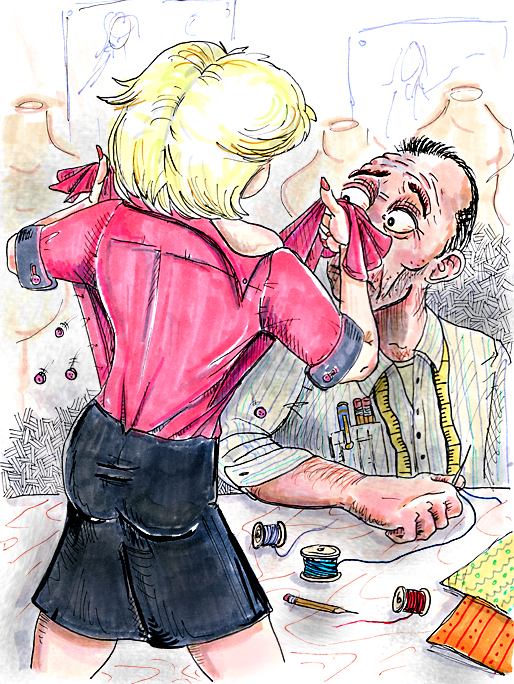
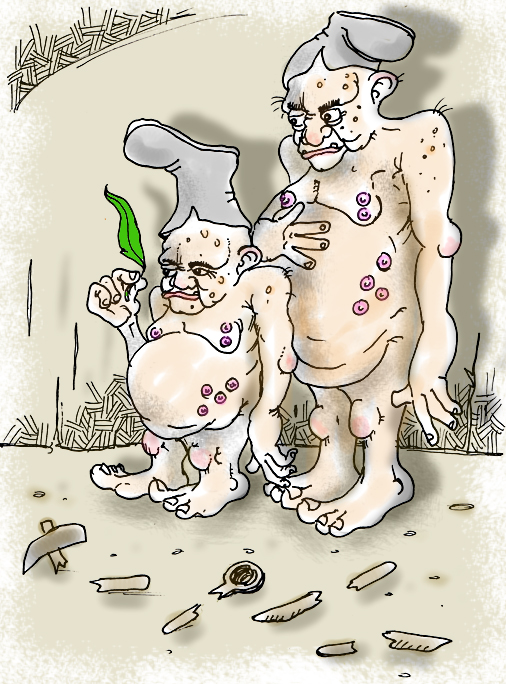
The current illustration challenge on the Monday Artday website is “monkey”.
Come on is such a joy. Come on is such a joy. Come on take it easy. Come on take it easy. Take it easy take it easy.
The early morning campfire gathering that is the current  “Today” show came from very humble beginnings.

“Today”, the brainchild of then NBC vice-president Pat Weaver (actress Sigourney‘s father), made its debut on January 14, 1952. Weaver hand-picked Dave Garroway, a television journalist who hosted a show in Chicago that NBC sporadically carried, to serve as host of his new endeavour. Since “Today” was the first attempt at this type of broadcast, Weaver had free reign as far as format. As a novelty, Weaver chose one J. Fred Muggs as Garroway’s co-host. Muggs was born in French Cameroon and came to New York at an early age. He was a lively and somewhat mischievous performer and his antics delighted viewers of the new show. Muggs was also a monkey.

Garroway and J. Fred Muggs were important contributors to the early success of the “Today” show. Viewers loved the pair’s interaction with guests, especially when J. Fred would whip Garroway’s glasses off of his face during interviews. An often-denied rumor related a time that J. Fred bit the elbow of comedienne Martha Raye. J. Fred was featured in children’s books and games. At the height of his popularity,  J. Fred’s likeness was reproduced as puppets and plush toys.

Garroway always displayed a smile and a relaxed manner on the air. His signature sign-off was a warm smile and saying “Peace” as he raised his open palm to the camera and the home viewers. Despite gossip, he got along well with J. Fred. It was NBC management he had difficulty with. Garroway suffered from chronic depression. To ease his pain, he self-medicated with a daily mixture of vitamin B-12 and the stimulant Dexidrine. He would sometimes disappear during live broadcasts, leaving announcer Jack Lescoulie to quickly cover. In 1961, a delusional Garroway, greatly affected by the recent suicide of his wife, lay down on the studio floor, refusing to leave until his contract demands were met. NBC fired him.

Future NBC News anchor John Chancellor replaced Garroway as the host of “Today”. NBC felt that J. Fred Muggs didn’t fit in with the new format. J. Fred Muggs briefly starred in a local kids’ show in Newark, New Jersey and then, for five years, performed at Busch Gardens in Tampa, Florida. He retired to Citrus Park, Florida under the care of his original trainer’s son. Dave Garroway, however, was found dead of a self-inflicted gunshot wound in 1982.

Comments

comments

Monday Artday: castaway

The current challenge on the Monday Artday illustration website is “castaway”.
oh ain't you glad that you live on a island
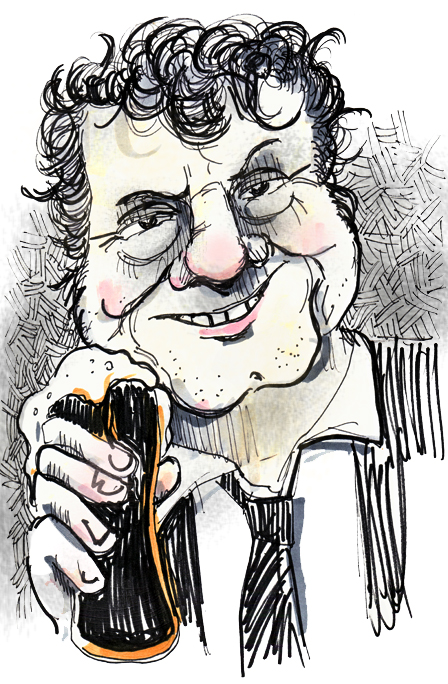
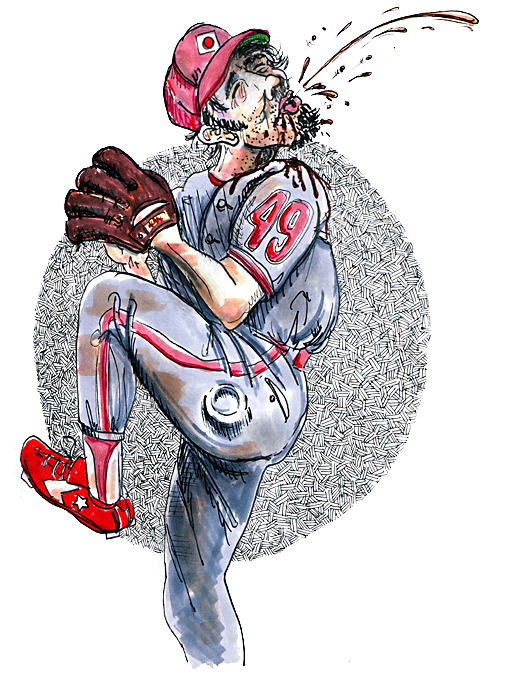
Earlier this week, Corey Haim, another former child actor with a hard-luck story, passed away at a young age. Corey was just another in a long line of former child actors following an unfortunate path — Dana Plato at 35, Brad Renfro at 25, Brittany Murphy at 32, River Phoenix at 23. But there is one former child star that this ultimate fate consistently eludes — Dante Daniel Bonaduce. And it certainly is not for lack or trying, because Danny Bonaduce has tried his darnedest.

For four seasons, Danny Bonaduce was on a television sitcom called The Partridge Family.The show told the far-fetched story of a typical Southern California family that also happened to be a rock group. Danny played second banana — no, make that third banana —to the series stars Oscar winner Shirley Jones and heartthrob David Cassidy. Danny played obnoxious little brother/bass player Danny. As it turns out, Danny was acting when he played bass, but wasn’t acting when he played obnoxious. When the series ended, Danny attempted to continue his acting career, but one thing stood in his way, he didn’t have and ounce of talent. Nope, not a drop. He made a handful of low-budget movie and TV appearances, mostly playing himself with some Partridge Family  reference as the punchline to a joke. Yep, Danny managed to milk his (almost) four year stint on a novelty TV show that aired forty years ago into a career.

So, when a story pops up in the news about a tragedy involving a former child star, Danny is front and center, spewing stories of his own troubled youth. I have heard Danny’s nicotine-ravaged voice relating these anecdotes so many times, on so many news and entertainment outlets, I could tell them as my own. In every analytic discussion of the actors named earlier and others, Danny always manages to push his way into the spotlight. A proud accomplishment for an inarticulate, hot-headed, violent, former drug addict with no talent, who has served time in jail. He was one of three “experts” interviewed on NBC’s Today Show  the morning after Corey Haim’s death. I said to my wife, “How long until he says the words ‘Partridge Family’ ?” She answered, “Only if it preceded by ‘When I was on the’“.

Danny’s latest gig is morning drive-time DJ on Philadelphia radio station WYSP. I live in Philadelphia, and while I don’t listen to him or his station, Danny has traveled to Philadelphia Phillies spring training camp in Clearwater, Florida on behalf of WYSP. Because I follow the Phillies, I have seen Danny during several reports on preseason baseball activity, to my dismay.

I hate Danny Bonaduce. I’m sick of seeing his craggy features splashed across my television. I am sick of hearing his raspy croak telling the same story for the past forty years. I would like Danny to become stranded on a uncharted island, free from TV cameras, radio microphones and all forms of media exposure.

I really hate Danny Bonaduce and I long for the day I never see him again.

Comments

comments

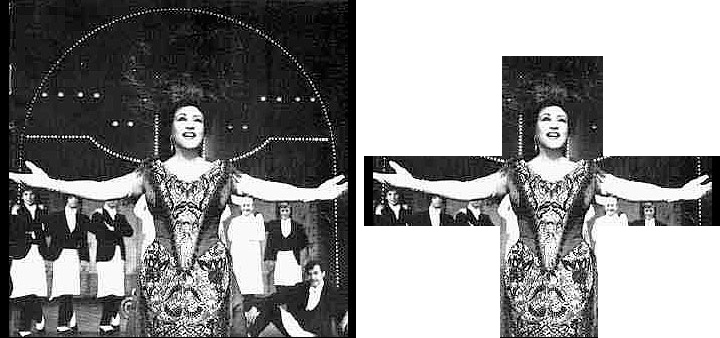
from my sketchbook: patty donahue

you mean you forgot cranberries too!?!?
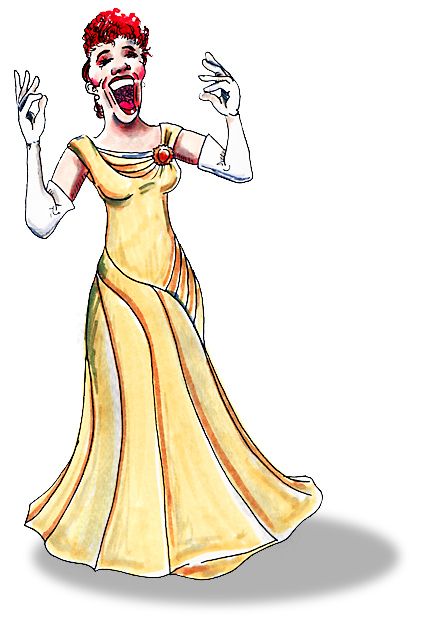
In 1980, a little band from Akron, Ohio called The Waitresses released the catchy novelty song “I Know What Boys Like” to relatively no recognition. The song was re-released in 1982 as the first single from the Waitresses’ debut Wasn’t Tomorrow Wonderful. This time, the song reached number 62 on Billboard Magazine’s Top 100.

In 1982, a new sitcom called Square Pegs took over the time slot once occupied by perennial TV favorite M*A*S*H. The show focused on two friends and their awkward adventures in 80s high school. (One of the friends was played by a young Sarah Jessica Parker.) The show had a new wave vibe to it and The Waitresses were recruited to perform the theme song. They even appeared in the premiere episode. The song “Square Pegs” appeared on The Waitresses’ EP I Could Rule the World If I Could only Get the Parts and was a minor hit. But it was the holiday song “Christmas Wrappings” that earned The Waitresses a place in new wave and holiday history. The yuletide pseudo-rap epic, clocking in at a little over five minutes and anchored by Patty Donahue’s deadpan vocals, has appeared on numerous Christmas compilations and has become a year-end radio staple.

During the recording of The Waitresses’ second full album, Patty Donahue left the band and was briefly replaced by Holly Beth Vincent, former leader of new wave contemporaries Holly and The Italians. Patty eventually returned to the band, but they broke up for good upon the departure of two other members. Post-breakup, Patty laid low. She made a small contribution to Alice Cooper’s Zipper Catches Skin album. She ultimately landed a job in the Artists and Repertoire division of MCA Records, focusing her attention on artist development and scouting talent.

A heavy smoker, Patty died of lung cancer in 1996 at the age of 40.

Comments

comments

Monday Artday: circus

The current challenge on the Monday Artday illustration website is “circus”.
How long do you think this can go on before something happens?
The 1953 Best Picture Oscar went to Cecil B. DeMille’s The Greatest Show on Earth, an overblown, long-winded, documentary-style film depicting the many aspects and personal stories surrounding a travelling circus. The thin main plot involves a love triangle between Holly (as played by Betty Hutton at her overacting best), the vivacious golden girl trapeze artist, her rival The Great Sebastian (an over confident Cornell Wilde) and circus boss Brad Braden, who, as Holly points out, loves only the circus because he has sawdust in his veins. Brad is played by Charlton Heston in hammy serious mode. This film made Heston a star, making way for career-defining roles in Ben-Hur and The Ten Commandments.

In order to fill its bloated 152 minute run time, the film included a typically sassy Gloria Grahame performing an elephant act, 50s Hollywood staple Dorothy Lamour as a showgirl, a spectacular train wreck, long and lovingly-shot crowd scenes, real footage of clowns and acrobats and Hollywood cameos (like Bob Hope and Bing Crosby).

One of the more memorable subplots featured James Stewart in one of the most unusual roles of his illustrious career. Stewart played Buttons the Clown. Buttons never appeared without his familiar makeup. When not performing, Buttons would wear his white face and red lips and nose while dressed in a flannel shirt and fedora. As the story progresses, we find out that Buttons is actually a doctor who helped end the life of his terminally ill wife. Wanted for murder, Buttons joined the circus to hide behind the clown façade. While helping Brad in the aftermath of the train wreck, Buttons reveals his secret in the presence of a police detective. As he is led away in handcuffs in full view of his circus family, Holly the aerialist sadly laments, “He killed the thing he loved most.”

If you can last the entire two and a half hours, you’ll see the great Stewart without his clown makeup. Or you can watch Vertigo if you don’t have that much time.

Comments

comments

IF: brave

This week’s Illustration Friday‘s challenge word is “brave”.
Now that i'm alone again/I can't stop breaking down again/The simplest things set me off again/Take me to that place
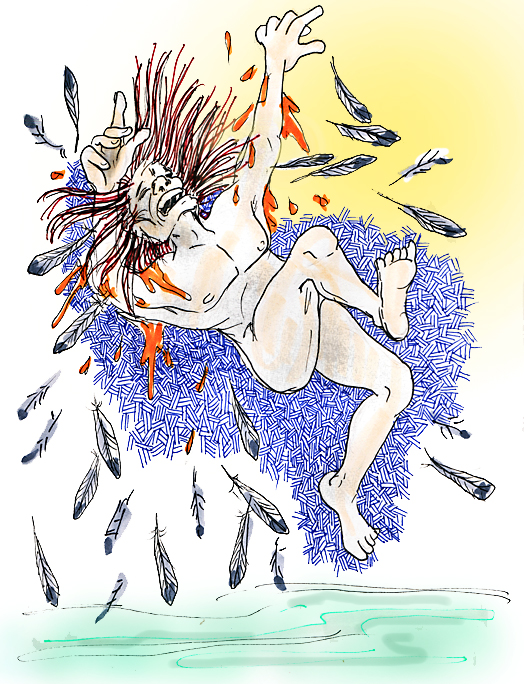
John Sedgwick graduated from the United States Military Academy at West Point in 1837. He entered the artillery as a lieutenant and fought uneventfully in the Seminole Wars and the Mexican-American War. However, upon his return from Mexico and he entered the U.S. Cavalry as a major.

Sedgwick became a colonel at the start of the Civil War. He missed combat action at the Battle of Bull Run, as he was recovering from cholera. Promoted to brigadier general, he commanded his own regimen at Yorktown and Seven Pines and was wounded at the Battle of Glendale. Afterwards, he was promoted to major general. He was wounded again at the Battle of Antietam and his corps arrived to late at the Battle of Gettysburg.

But it was at the Battle of Spotsylvania Court House that Major General John Sedgwick gained his dubious fame. His regimen was preparing for battle against the left flank of Confederate forces. Major General Sedgwick was directing the placement of artillery, when his troops came under fire from a handful of Confederate snipers about a thousand yards away. Sedgwick strode around bravely, out in the open, as his men dove for cover behind rocks and trees. Angrily, Sedgwick berated his men. “What are you doing?,” he asked, as his men cowered. He continued his ranting, “Hiding from single bullets? What will you do when they open fire along the whole line? I am ashamed of you. They couldn’t hit an elephant at this distance!” At that moment, a bullet struck Sedgwick in the head. He died instantly.

Comments

comments

DCS: paul lynde

Kids! What's the matter with kids today?
It’s hard to believe that an entire generation missed out on the humor of Paul Lynde.

Paul Lynde started his career as a stand-up comic, even recording a comedy album. He moved to Broadway, where he appeared in his most famous role as Harry McAfee, the concerned but overprotective father of Kim in Bye Bye Birdie. This led to a variety of guest shots on some of the 60s most popular sitcoms, such as The Munsters and I Dream of Jeannie. He reprised his stage role, along with fellow cast member Dick Van Dyke, in the film version of Bye Bye Birdie. Paul’s role was trimmed considerably from the stage version in order to highlight young rising star Ann-Margaret. Paul said “They should have retitled it ‘Hello, Ann-Margret!’ They cut several of my and the other actors’ best scenes and shot new ones for her so she could do her teenage-sex-bombshell act.”

Paul was cast as the reoccurring character Uncle Arthur in Bewitched. He also did a handful of cartoon voice-overs. Unfortunately, his drinking and partying interfered with his career and he became unreliable and fell out of favor with producers and directors. In 1965, Jim Davidson, Paul’s young partying companion, fell to his death from Paul’s eighth floor hotel room. The subsequent scandal almost ruined Paul’s career, but he managed to bounce back.

When Bewitched was canceled, Paul turned to game shows. He took the coveted “center square” on The Hollywood Squares. Paul was a huge success, giving slyly prepared answers to seemingly innocent questions. His best-remembered quips were thinly-veiled allusions to his homosexuality. When host Peter Marshall asked “You’re the world’s most popular fruit. What are you?,” Paul replied, “Humble.” Another time, Paul was asked “Why do Hell’s Angels wear leather?” to which he answered “Because chiffon wrinkles.” His answers were famous, often skirting the censors with double entendres.

With his regained popularity, Paul was given his own eponymous sitcom. The show was a cheap rip-off of All in the Family, casting Paul as the frustrated uptight dad dealing with his family of liberals. No one believed the preposterous premise and the show was canceled after one season. He next appeared in the salvaged sitcom Temperatures Rising for the remainder of its brief network run. Paul also starred in the infamous Paul Lynde Halloween Special  in 1976. The special featured such diverse 70s guests as Roz “Pinky Tuscadero” Kelly, Margaret “Wicked Witch of the West” Hamilton, Florence “Mrs. Brady” Henderson and the first prime-time network appearance of KISS. All through the series and the special, Paul’s alcohol intake increased, eventually getting him fired from The Hollywood Squares. Paul was the alleged inspiration for a gag which made its way into the movie Groundhog Day. After a drunken high-speed chase through the San Fernando Valley, Paul crashed his car into a mailbox. When the cops approached the wreck with their guns drawn, Paul lowered his window and ordered a cheeseburger with no onions and a large Sprite.

One night in January 1982, Paul missed a dinner date with a group of friends. The concerned group rushed to his Beverly Hills home. Paul was found dead, possibly for several days. He was naked and surrounded by amyl-nitrite poppers, an inhalant used to enhance sex. The unofficial story was that Paul suffered a heart attack while having sex with someone who just walked out when the seizure happened, without calling for help. The official story only mentioned the heart attack.

Comments

comments

DCS: ruby starr

we wanna bring out our kissin' cousin
In 1958, when nine-year old Connie Mierzwiak was belting out Brenda Lee songs, she actually had designs on kicking rock and roll’s ass. A little girl with a giant voice, she was signed to a recording contract and released her first album in 1971 under the name Ruby Jones. She performed regularly in her native Toledo, Ohio and the vicinity. Shortly after her debut album’s release, Black Oak Arkansas’ Jim Mangrum spotted Ruby and her band at a club in Evansville, Indiana. Black Oak Arkansas, a ground-breaking band in the blossoming Southern Rock genre, needed something to set them apart from other similar up-and-coming acts — and Ruby was that something. Mangrum asked her to join his band. Even though she was from Toledo, she adopted the stage persona of the sassy, sexy, backwoods hillbilly and changed her name to Ruby Starr.

Ruby toured with Black Oak Arkansas for several years. They scored a Top 30 hit with a cover of LaVern Baker’s “Jim Dandy (to the Rescue)”, with Ruby screeching the familiar “Go Jim Dandy! Go Jim Dandy!” in the chorus. She became a fixture in 70s rock magazines like Creem and Circus, posing for cheesecake pictures and reinforcing her “Southern spitfire” character. In 1974, she left BOA and formed the band Grey Ghost. Ruby toured nationally with Grey Ghost, flooring audiences with her powerful voice when she opened shows for Black Sabbath, The Edgar Winter Band and old friends, Black Oak Arkansas.

Ruby toured relentlessly from the late 70s until the early 90s, when she kissed the road “goodbye” and moved to Las Vegas. She played the Riviera and the Stardust hotels and numerous clubs in Vegas, until she was diagnosed with lung and brain cancer. She, then, moved back to Toledo to be with her family. Ruby passed away in 1995 at the age of 44.

 HERE is Ruby backing Black Oak Arkansas on their signature song “Jim Dandy”

HERE is Ruby performing a cover of Paul McCartney’s “Maybe I’m Amazed” with an introduction from Black Oak Arkansas’ Jim Mangrum.

Comments

comments

IF: perspective

This week’s challenge word on the Illustration Friday website is “perspective”.
You know what I'm craving? A little perspective. That's it. I'd like some fresh, clear, well seasoned perspective. Can you suggest a good wine to go with that?
Giorgio de Chirico was a pre-surrealistic painter and an early influence on Salvador Dalí. His works from the early twentieth century were jumbled assemblages of shapes and arches and empty buildings and mannequins in skewed perspective and random placement. As his career progressed, he adopted a classic style, reminiscent of old masters like Raphael. He also spoke out as an opponent of the modern art movement. Even later in his career, he began painting in a Baroque style, heavily influenced by Peter Paul Rubens. Curiously, during this time, de Chirico began creating back-dated self-forgeries of his earlier work for the sole purpose of profit. He denounced his early originals as fakes.

He remained prolific until his death in 1978 at age 90.

In spite of how it was presented in his paintings, Giorgio de Chirico actually had a great sense of perspective. He was just fucking with us.

Comments

comments