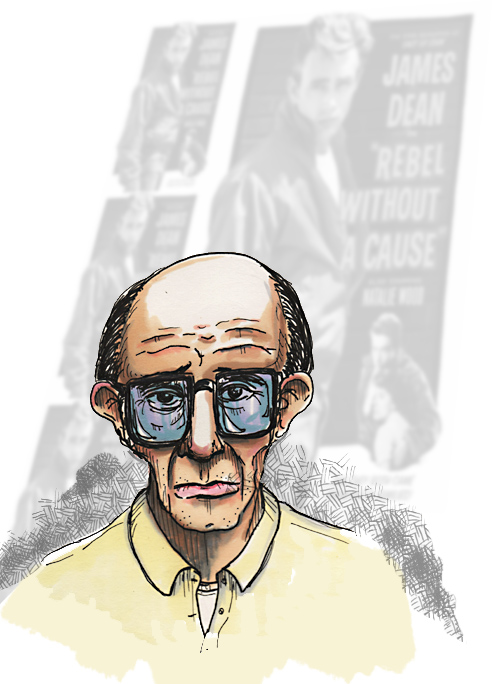
Monday Artday: strange food

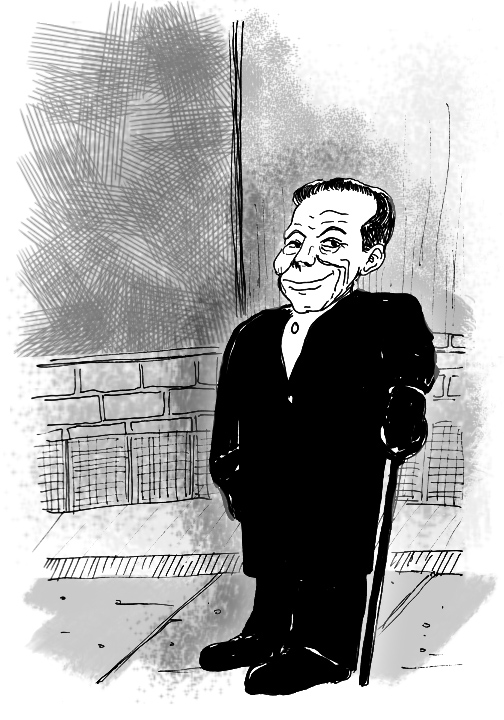
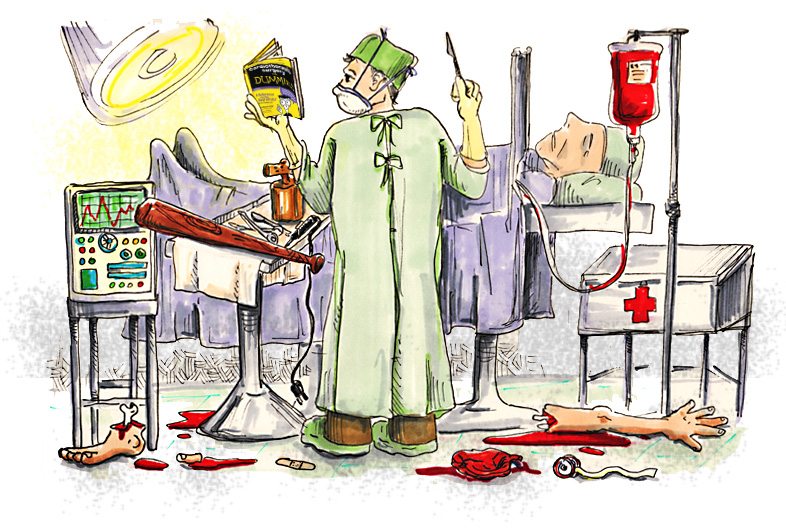
The new illustration challenge on the Monday Artday website is “strange food”.
if it looks good, eat it
To break up the monotony between shots of sun-tanned tourists on cruise ships and Anthony Bourdain’s smoke-filled excursions to out-of-the-way gourmet eateries, the Travel Channel debuted Bizarre Foods with Andrew Zimmern  in 2007. Andrew is a chef, a food critic and, most important, a daring gourmand. He’s a likable and entertaining guy and, for a time, I enjoyed watching the show.

The premise of the show is simple. Andrew travels to a specific country, meets some locals, gets them to cook up a batch of native specialties and Andrew eats ’em — no questions asked. And let me tell you, Andrew has eaten some pretty weird shit in the show’s five seasons. In early episodes of the show, Andrew happily scarfed down balut  (a fertilized duck egg with a duck embryo inside), a still-beating frog’s heart, fermented whale blubber, lamb’s tongue and eye, assorted insects and various internal and external parts of chickens that are usually dropped down a garbage disposal. As the seasons rolled on, a pattern seemed to develop. I became very aware of Andrew’s affinity for the reproductive organs of masculine members of the edible animal kingdom. It was very obvious that Andrew loved a good pair of cojones  at chow-time. On outings to local marketplaces, Andrew always questioned butchers about the availability of Rocky Mountain oysters  or, as they were called in the episode filmed in Spain – criadillas. Extended segments of subsequent shows featured a smiling and anxious Andrew stuffing bollocks  into his maw like movie popcorn. Happy waitresses or humble farmers would present platters overflowing with steamed and deep-fried delicacies — like calf’s brains or jellied moose nose — but Andrew, although grateful, would eye the kitchen, hopeful for a big bowl of balls. Soon, Bizarre Foods got boring.

The novelty of Bizarre Foods  eventually wore off and I started looking elsewhere for entertainment from my cable television provider. Frankly, if I wanted to watch a guy visit Taiwan and gobble testicles for an hour, I’d watch gay Asian porn.

Comments

comments

from my sketchbook: rachel roberts

is that all there is?
Welsh actress Rachel Roberts appeared predominantly in British cinema, earning critical acclaim opposite Albert Finney in the 1960 British New Wave film Saturday Night and Sunday Morning.  Her role in The Sporting Life, with Richard Harris, was recognized with an Academy Award nomination for Best Actress. Rachel was regularly cast as women of questionable character, as in the black comedy O Lucky Man.  Director Peter Weir cast her against type as a teacher in his mysterious Picnic at Hanging Rock. Through the 60s and 70s, Rachel acted in television movies and guest roles in several series, including two seasons as Tony Randall’s irreverent housekeeper in The Tony Randall Show.

Rachel married fellow actor Rex Harrison in 1962. The marriage lasted ten years and ended in divorce in 1971. Devastated over the divorce, Rachel became depressed and turned to alcohol. She moved to Hollywood in an effort to forget her time with Harrison. Her alcohol consumption grew, especially after an unsuccessful attempt to win back Harrison in early 1980. Overcome by insecurity and depression, Rachel overdosed on barbiturates on November 26, 1980. She ingested an unidentified caustic substance in addition to the drugs. The acidic reaction propelled her body through a decorative glass screen. She was found by her gardener, in a negligee on her kitchen floor – her body cut to ribbons among the shards of shattered glass. Rachel was 53.

In 1948, actress Carole Landis took her own life over an ill-fated affair with Rex Harrison. What was it about Rex Harrison that drove two women to suicide?

Comments

comments

IF: surrender

The Illustration Friday challenge word this week is “surrender”.
the dream police dadada da da da da
“This next one is the first song on our new album. It just came out this week and the song is called ‘Surrender’.”
— Robin Zander of Cheap Trick, Live at Budokan 1978

This illustration was done on inspiration from my son. He reminded me of the single dumbest introduction of a song in live album history.

Comments

comments

IF: dusty

This week’s Illustration Friday challenge word is “dusty”.
what have I, what have I, what have I done to deserve this
Mary Isobel Catherine Bernadette O’Brien performed with her brother and a friend as a singing trio. They first practiced in a field in springtime, so they settled on the name “The Springfields” for their group. Ever the tomboy, Mary earned the nickname “Dusty” from her rough style of playing football with the boys. After moderate success as part of the group, young Mary broke out on her own using the name Dusty Springfield.

She was the first public figure to introduce American soul music to England. Her affinity for evening gowns and unique style of make-up caused a sensation with young women in the 1960s. They copied her so-called “panda eye” mascara, a look that rivaled the “Beatle haircut” among their male counterparts.

Because of her love and respect of American pop music, she implored her studio musicians to imitate the sound heard on Motown soul recordings. She was a perfectionist in the studio and produced many of her own recordings without taking official credit. After making a huge name for herself as part of the British Invasion, Dusty switched gears and recorded a more “rootsy”-oriented album. The result was the acclaimed ground-breaking 1969 release Dusty in Memphis.  It was nominated for a Grammy and inducted into the Grammy Hall of Fame. In 1987, she recorded a duet with new wave popsters Pet Shop Boys. In 1994, director Quentin Tarantino featured her recording of “Son of a Preacher Man” in his film Pulp Fiction.  Renewed interest in Dusty’s music surged.

Dusty was diagnosed and battled breast cancer for five years until her death in 1999. She passed away on the day she was scheduled to go to Buckingham Palace to receive her award of Officer, Order of the British Empire.

When Dusty was posthumously inducted into the Rock and Roll Hall of fame in 1999, her friend, singer Elton John, said, “I think she is the greatest white singer that there ever has been.”

Comments

comments

from my sketchbook: victor kilian

No one but the pure in heart/May find the Golden Grail
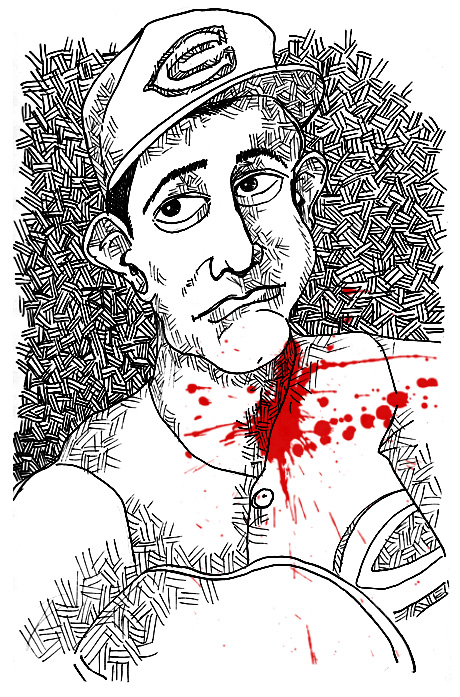
At the age of eighteen, Victor Kilian began performing in vaudeville. In the 1920s, he moved on to Broadway and by the 1930s, he began a career in motion pictures as a character actor. He played minor roles but he was in demand for three decades. In 1942, playing a villain in Reap the Wild Wind,  Victor lost an eye while staging a fight scene with John Wayne.

In 1950, Victor was blacklisted for his political beliefs. He was able to return to Broadway when the Actors’ Equity Association refused to acknowledge Hollywood’s ban. When the blacklisting was finally lifted, Victor appeared in many guest roles on television in the 60s and 70s. In 1976, he was cast in the role for which he is most remembered — Grandpa Larkin AKA “The Fernwood Flasher” on the soap opera spoof Mary Hartman, Mary Hartman.

Since his wife of forty-six years passed away in 1961, Victor lived alone in Hollywood. In March 1979, 88 year-old Victor was beaten to death by robbers burglarizing his apartment. The crime remains unsolved.

Comments

comments

from my sketchbook: brad delp

I understand about indecision/But I don't care if I get behind/People living in competition/All I want is to have my peace of mind
Brad Delp was “the nicest, most considerate guy you could ever hope to meet,” according to colleagues and those close to him. Brad was the primary singer and rhythm guitarist for the popular 70s band Boston. Boston’s 1976 eponymous debut sold seventeen million copies and featured Brad’s soaring vocals and multi-octave range on many of the band’s most famous hits like “More Than A Feeling” and “Long Time”.

Boston co-founder, micro-managing perfectionist Tom Scholz, delayed the release of their next two albums. When Third Stage, Boston’s appropriately-named third effort, was released, only Scholz and Brad remained from the band’s original lineup. Between infrequent tours and infrequent albums, Brad formed a Beatles tribute band called Beatlejuice and performed in the Boston area.

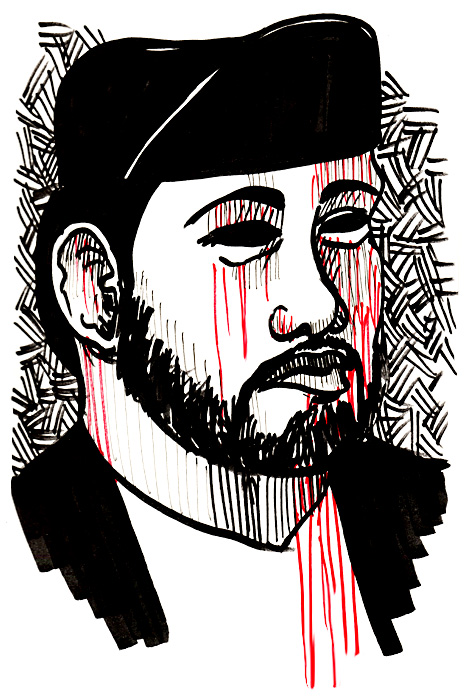
On March 9, 2007, Brad’s fiancée, Pamela, arrived at his New Hampshire home. Something was not right. She found a note taped to the windshield of Brad’s car. It read: “To whoever finds this I have hopefully committed suicide. Plan B was to asphyxiate myself in my car.” She found a dryer vent hose attached to the car’s exhaust pipe. Pamela called the police.

When police arrived, they found another note on an upstairs door directing them to the master bathroom. A third note warned of the presence of carbon monoxide. The police officers knocked on the closed bathroom door. “Mr Delp?”, they asked. Receiving no reply, they forced the door open. Immediately, they were overcome by the smell of burning charcoal. Inside the bathroom, they found two smoldering charcoal grills producing huge billows of gray smoke. The bottom of the door and the windows had been sealed with tape. Brad Delp lay dead on the floor, his head resting on a pillow, another note paper-clipped to his collar. This note read: “Mr. Brad Delp. Je suis une âme solitaire. (I am a lonely soul.)”

Brad was 55. He was thoughtful and considerate to the end.

Comments

comments

DCS: jean seberg

Jean, Jean, you're young and alive/Come out of your half-dreamed dream/And run, if you will, to the top of the hill/Open your arms, bonnie Jean
Jean Seberg made her motion picture debut at age 19 in Otto Preminger’s unusual interpretation of George Bernard Shaw’s play Saint Joan,  about Joan of Arc. Preminger’s daring casting of the unknown Jean received a huge build-up in the press, but Jean’s performance was panned by critics. Jean noted “I have two memories of St. Joan. The first was being burned at the stake in the picture. The second was being burned at the stake by the critics. The latter hurt more.”

Preminger immediately gave her another chance in his 1958 film Bonjour Tristesse.  Again, Jean’s performance was lambasted by critics, almost ending her acting career. However, Jean moved to France and was cast in Jean-Luc Godard’s French New Wave classic Breathless. French film reviewers called her “the best actress in Europe” and Jean became an international success. Jean did not identify with her characters or the film plots, saying that she was “making films in France about people she’s not really interested in.” The critics did not agree with Jean’s absence of enthusiasm, and raved about her performances, causing Hollywood to reconsider and welcome her back. New film offers from the United States began to roll in. Jean’s acclaimed role opposite Warren Beatty, in 1964’s Lilith,  prompted critics to view her as a serious actress. She followed that with several more favorable roles including her only musical, Paint Your Wagon  in 1969. Curiously, Jean’s singing was dubbed while co-stars (and non-singers) Lee Marvin and Clint Eastwood sang their songs themselves. She also was part of the all-star ensemble cast of the early disaster film Airport  in 1970.

Her brief and violent marriage to French director Francois Moreuil ended in divorce. In 1962, she married director Romain Gary, who was 24 years her senior. During the filming of Paint Your Wagon,  Jean had an affair with Clint Eastwood. In 1970, she had an affair with a college student, a union which produced a daughter. Due to her outspoken support of the Black Panthers Party and the political climate in the United States at the time, the FBI created a false story that the baby was not fathered by her husband Romain Gary, but by a member of the Black Panthers Party. The story was reported by a Los Angeles Times gossip columnist. During her pregnancy, Jean claimed that her husband Gary was the father. She gave birth to a girl named Nina on August 23, 1970, but the infant died two days later. Jean soon confessed that her daughter was the result of an affair she had with a college student during a separation in her marriage. She and Gary divorced by the year’s end.

Jean married director Dennis Berry in 1972. She also began an increased dependency on alcohol and prescription drugs. She regularly suffered bouts of clinical depression and separated from Berry, though they did not divorce.

In August 1979, after being missing for eleven days, Jean was found dead in the back seat of her car parked near her Paris apartment. She had taken a massive overdose of barbiturates and alcohol. A note — reading “Forgive me. I can no longer live with my nerves.” — was found in her hand. She was 40.

One year later, Jean’s second husband Romain Gary committed suicide.

Comments

comments

from my sketchbook: bridgette andersen

smile a little smile for me
Seven year-old Bridgette Andersen stole moviegoer’s hearts in her starring role as the title character in 1982’s Savannah Smiles. She followed that with the horror anthology film Nightmares  in 1983, guest roles on television series like Family Ties, Remington Steel, Fantasy Island,  and a TV movie playing a young Mae West.

Despite a part in the Disney Channel-produced sequel The Parent Trap II, Bridgette found her demand as an actress waning and her roles reduced to background characters and extra work in commercials.

Bridgette was not close with her family and turned to drugs in her teen years, eventually acquiring an addiction to heroin. In 1997, she was working in a Los Angeles health food store and trying desperately to kick her drug habit. One evening in May 1997, Bridgette overdosed on a combination of heroin and alcohol. She was taken to Queen of Angels hospital in Hollywood and placed on life support. Bridgette remained in a coma until she was declared brain dead on May 18, 1997. She was 21.

Comments

comments

IF: chicken (part 2)

This week’s challenge word on the Illustration Friday website is “chicken”.  This is the second of three illustrations I’ve done for this word. Here  is the first and here   is the third, which I did over a year ago, but fits the theme.
What's wrong, McFly. Chicken?
“The difference between ‘involvement’ and ‘commitment’ is like an eggs-and-ham breakfast: the chicken was ‘involved’. The pig was ‘committed’.”

Comments

comments