DCS: christine jorgensen

first

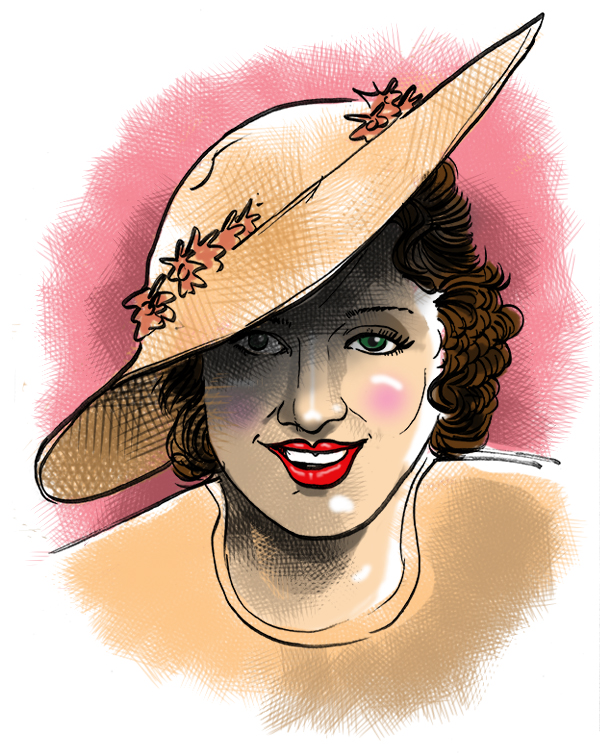
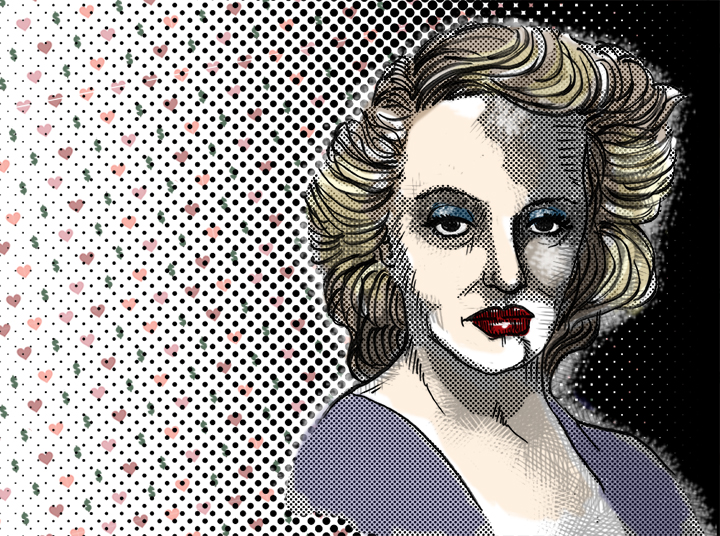
Christine Jorgensen began preparations for sex reassignment surgery just after a discharge the US Army. She started with hormonal therapy before proceeding with physical alterations. After several procedures, Christine was introduced to the world, via a front page story in the New York Daily News in December 1952, as the first sex change in history. (However, she was not. In the 1920s, German doctors had performed a similar procedure, though it did not include female hormones.)

Christine became an instant celebrity. She launched a successful nightclub act and appeared on all media entertainment outlets. In 1967, she published her autobiography. It sold nearly 450 thousand copies. She was a sought-after interviewee. A New York radio host joked, “Christine Jorgensen went abroad, and came back a broad.” Christine admitted that she found the quip funny. However, during an appearance on The Dick Cavett Show, the progressive host asked her about her romantic life with her wife… prompting Christine to walk off the set. Cavett spent the rest of the broadcast apologizing for his callous remark.

During the 70s and 80s, Christine continued to act, as well as sing and record. She also became an in-demand public speaker, relating her life experiences to audiences who were both informed and enchanted by her natural wit. She often noted that she had given the sexual revolution a “good swift kick in the pants.”

In 1989, Christine passed away a few weeks before her 63rd birthday.

Comments

comments

inktober52: puppet

put your hand inside the puppet head

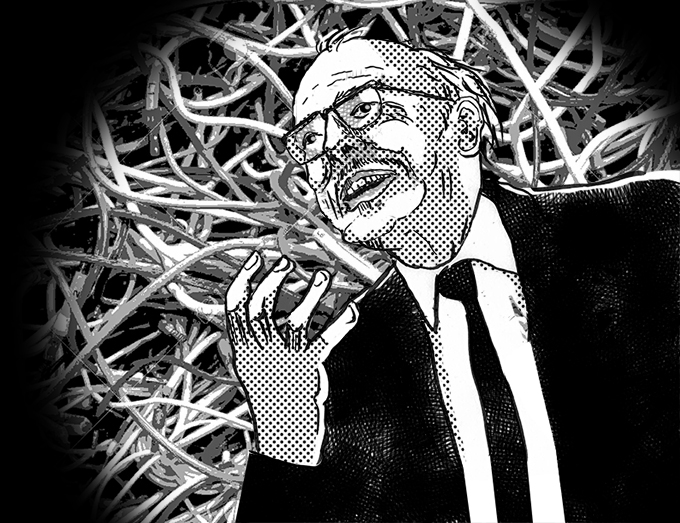
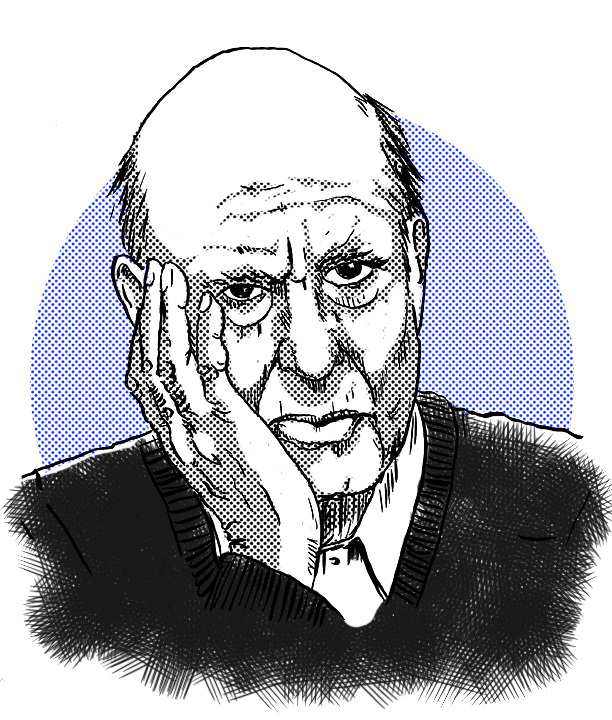
Paul Winchell was an unusual character. He was an accomplished ventriloquist, taking up the hobby to overcome a pronounced childhood stutter and to bide his time while confined to bed as he battled polio. He eventually returned to school, where he constructed a ventriloquist dummy in exchange for class credit. He cobbled together jokes and soon he had a little act with his homemade figure, Jerry Mahoney, a name chosen as an homage to his teacher. In 1938, he took first prize on the Major Bowes Amateur Hour. He was spotted by bandleader Ted Weems, who offered Paul a contract. Paul became a professional entertainer at 14.

Paul enjoyed a very successful career as a ventriloquist, as well as a voice-over artist and live action actor. Paul hosted his own Winchell-Mahoney Time comedy show, and made guest appearance on a variety of network shows, both comedies and dramas. He provided the voice for a slew of cartoon characters, including “Dick Dastardly,” “Gargamel,” “Tigger,” as well as the Toostie Roll owl and the Dow Scrubbing Bubbles.

However, Paul had originally aspired for a career in medicine and medical research. He took pre-med courses, but veered off and became a certified acupuncturist and hypnotist. Between acting jobs, Paul developed an artificial heart, with the help of Dr. Henry Heimlich. His design was nearly identical to a device created by Dr. Robert Jarvik and the similarities were the subject of debate. Paul was awarded patents for a variety of inventions, including a disposable razor, a flameless lighter, a retractile tip fountain pen and battery-heated gloves. He also developed a method for farm-raised tilapia to feed impoverished tribes in Africa.

With all of his success and celebration, Paul was a very unhappy man. He chronicled his depression in a 2004 autobiography. His daughter, voice actress April Winchell, took offense to her father’s book, particularly the way her mother was portrayed. April labeled her father as neglectful and a chronic drug abuser. Although once close, Paul and April’s relationship had become estranged.

Paul passed away in 2005 at the age of 80. April heard the news on the radio.

Comments

comments

DCS: diana sacayán

pride

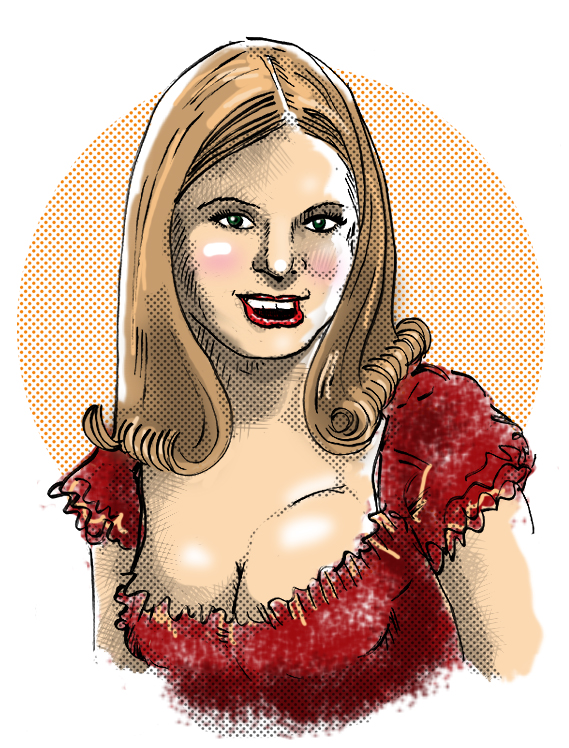
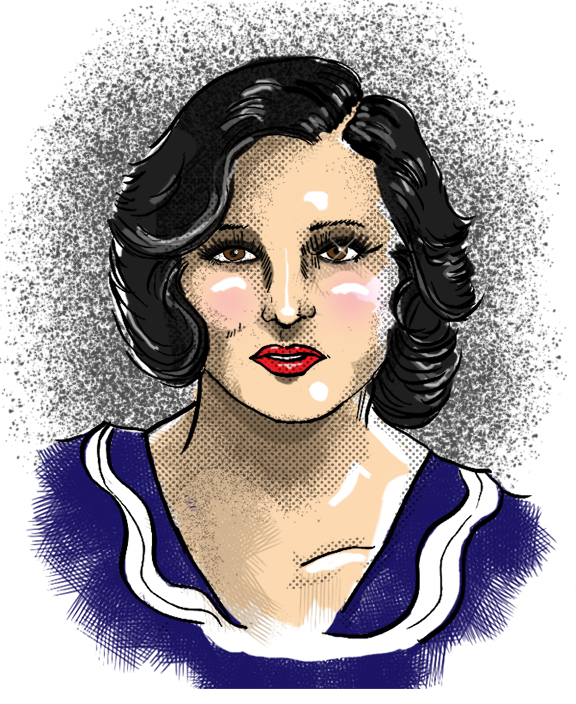
Diana Sacayán came out as transgender when she was a teen. She became very active in the pursuit of maintaining human rights for her contemporaries. She was arrested and jailed at different times because of her leanings towards Argentina’s Communist Party. Once released from jail, Diana created the Anti-Discrimination Movement of Liberation in Argentina. The non-partisan, non-governmental organization worked to empower LGBTQ people, specifically related to healthcare. She went on to serve on the board of the International Lesbian, Gay, Bisexual, Trans and Intersex Association and led the Anti-Discrimination Liberation Movement in Argentina.

In 2012, she ran for the position of Ombudsman, representing the La Matanza Party. Later in the year, she received her national identity card, identifying her as a woman — personally from the former president of Argentina.

In October 2015, Diana was found dead — bound and gagged — in her apartment. She had been stabbed thirteen times. She was 39.

In 2018, her murderer was sentenced to life in prison, marking the first time Argentina’s justice system invoked hate crime laws for transgender victims.

Comments

comments

inktober52: stranded

Great Googa Mooga! Lemme outta here!

“Stranded in the Jungle” was a novelty pop song written by Ernestine Smith and The Jay Hawks tenor James Johnson. The song, a playful comparison between life in the jungle and life in the big city, was recorded and released by The Jay Hawks in 1956. Just a few weeks later, The Cadets, a former gospel group, sometimes known as The Jacks, recorded their own version of “Stranded in the Jungle.” Their cover climbed the Billboard charts, passing the original, and landing at Number 3 on the Rhythm & Blues chart. Just a week after that, a doo-wop group called The Gadabouts recorded a version of the song, scoring a Top 40 hit themselves.

None of these three bands ever again achieved the success that “Stranded in the Jungle” brought them. The Cadets disbanded, its members forming other groups, including Will “Dub” Jones becoming the bass singer for the more popular Coasters.

In 1974, punk rockers The New York Dolls released a cover of “Stranded in the Jungle” as the first single from their sophomore album. In 2003, flamboyant new wave vocalist Adam Ant recorded a version of the song as part of an EP to raise awareness of the plight of the endangered mountain gorilla in Central Africa, though the project was never released.

Here’s The Cadets’ version…. “Stranded in the Jungle

(The line “Great Googa Mooga! Lemme outta here!” was supplied by Prentice Moreland who performed with The Cadets just this one time. Prentice Moreland claimed to be related to comedian Mantan Moreland, but other family members disputed his claim.)

Comments

comments

DCS: eric campbell

the floorwalker

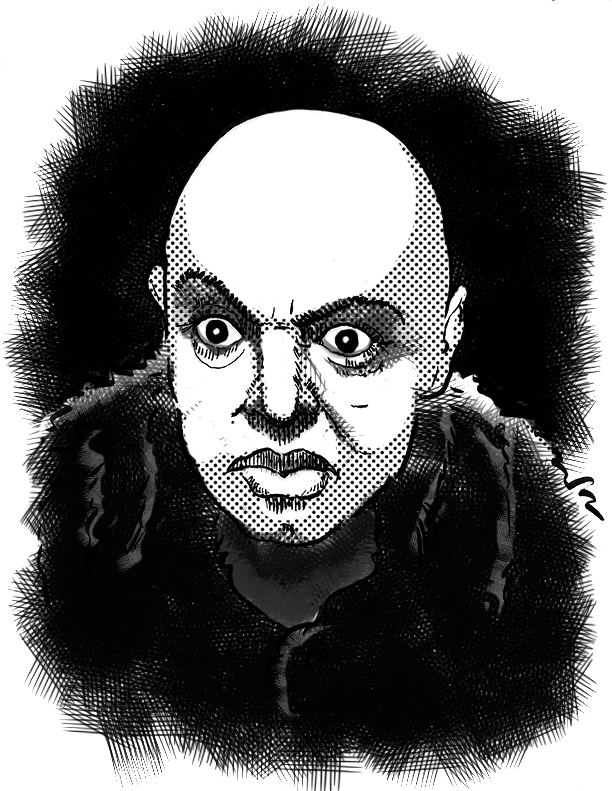
Eric Campbell was performing in local theater in Scotland when he was recruited by entertainment impresario Fred Karno. Karno was a slapstick comedian in his own right and is credited with popularizing the “pie-in-the-face” gag. Karno had assembled a roster of entertainers, including Charles Chaplin and Chaplin’s understudy Arthur Jefferson, later known by the stage name “Stan Laurel.”

Eric came to New York in 1914, immediately continuing his career on the stage. Two years later, he signed with Chaplin who was contracted to produce a dozen films for the Mutual Film Corporation. Eric went with Chaplin to Hollywood. In the spring of 1916, The Floorwalker was released to rave reviews. Eric played the overbearing foil to Chaplin’s endearing “Tramp” character. Eric would reprise this bullying persona in ten more films with Chaplin. He was even lent out to Mary Pickford to appear in Amarilly of Clothes-Line Alley, but fate would interfere.

Eric’s wife Fanny died suddenly while walking home from a Santa Monica restaurant. On her way to purchase a dress to wear to the funeral, Eric’s teenage daughter was stuck by a car and seriously injured.

At a late September 1917 party, Eric met Pearl Gilman, a second-rate comic actress with a reputation for gold-digging. She had married and divorced two wealthy men and now had her sights set on Eric Campbell. They were married just days after they met, however, less than two months after the wedding, Pearl filed for divorce, claiming abuse and Eric’s alleged d heavy drinking. He moved out of their shared home and took up residence near his friend Charles Chaplin. At a party to celebrate the completion of the film The Adventurer, Eric had too much to drink. He crashed his car in the early morning hours and was killed instantly. Eric was 37 years old.

Comments

comments

inktober52: robot

i, robot

The Three Laws of Robotics:

1. A robot may not injure a human being or, through inaction, allow a human being to come to harm.

2. A robot must obey the orders given it by human beings except where such orders would conflict with the First Law.

3. A robot must protect its own existence as long as such protection does not conflict with the First or Second Law.

Comments

comments

inktober52: bubbles

an a one an a two

Norma Zimmer wanted to become a violinist, but her father, a violin teacher, told her that her hands were too small to properly handle the instrument. Disappointed, she perused a career as a vocalist instead.

While singing in her local Idaho church choir, Norma was approached by a visiting guest singer to travel to California to audition for bigger parts in bigger choirs. When she turned 18, Norma headed to Los Angeles, landing a spot on the Norman Luboff Choir, a nationally-known ensemble that performed spiritual songs. With professional singing experience under her belt, she was hired to be part of “The Talking People,” a singing quintet that appeared regularly on the popular Canada Dry Sparkle Time radio show. The host, band leader and composer Meredith Willson, offered Norma a solo spot in early 1947. She shined in her new position, however, Canada Dry dropped their sponsorship and the program was abruptly canceled.

Soon, Norma got work as a movie studio singer, providing the singing voice for “The White Rose” in the 1951 animated film Alice in Wonderland and supplemental (uncredited) vocals on the soundtrack to the film 3:10 to Yuma. In addition, she was part of the backing group on Bing Crosby’s iconic recording of “White Christmas.” She also performed background vocals on a Lawrence Welk holiday album. Welk liked the young singer and persuaded her to appear on his television show. Alice Lon, Welk’s “Champagne Lady,” had just announced she was departing the show. He asked Norma to take her place, or at least fill in while he sought a replacement. Norma agreed and made her debut on New Years Eve 1960. She made more appearances on the show and traveled with Welk’s band, while Welk looked for a permanent “Champagne Lady.” Several singers were brought on to fill the role, but Welk found himself returning to Norma and Norma was called back on a week-to-week basis.

This went on for 22 years.

Norma retired from show business in 1982. She passed away in 2011 at the age of 87.

Comments

comments