Monday Artday: favorite food

The Lord said to Moses, I have heard the grumbling of the Israelites. Tell them, At twilight you will eat meat, and in the morning you will be filled with bread. Then you will know that I am the Lord your God. -Exodus 11:11-12
I began to observe kashrut (keeping kosher) shortly after I got married in 1984. I figured it was easier than trying to explain to our (potential) children “why Mommy eats this but Daddy eats whatever he wants.” So, without as much sacrifice as I had anticipated, I eliminated shellfish, bacon, pork chops and the mixing of meat and dairy products from my diet. I also ceased eating non-kosher certified meat period. The Philadelphia area was home to few kosher eating establishments. I could only choose from a single kosher deli several blocks from my suburban home or my in-law’s house — also several blocks from my home (and the prices were way more reasonable). A few kosher restaurants sprouted up over the years, but they were either not very good or didn’t remain in business very long. Fortunately, Philadelphia is conveniently located just a two-hour drive from New York City, a smorgasbord of kosher offerings, specifically, 2nd Avenue Deli, my favorite restaurant on the planet.

In 1939, the Soviets occupied western Ukraine and nationalized all businesses. Abe Lebewohl’s father was arrested and exiled to Siberia. Young Abe and his mother were banished to Kazakhstan, escaping the horrors of the Holocaust. After the war, the Lebewohl family reunited and returned to western Ukraine and then to Poland. Escaping Poland illegally, the family traveled through several European locales until they arrived in America in 1950. Upon his arrival in New York, Abe found work at a small coffee shop at Second Avenue and 10th Street in East Greenwich Village. In 1954, Abe and his family pooled their funds, purchased the shop and reopened it as a delicatessen. Over the next few years he expanded the deli into a twisting maze of added rooms filled with Yiddish theater posters, cramped booths and tiny tables. The deli, now able to accommodate 250 hungry customers at a time, exuded an atmosphere as warm and comforting as the Old-World fare being prepared in the kitchen. Despite the additional space, there was usually a wait for tables at 2nd Avenue Deli. But, patient customers were appeased with slices of rye bread slathered with homemade chopped liver served by the hostess-on-duty — sometimes right out on the Second Avenue sidewalk. Abe and his operation provided a steady stream of artery-clogging creations, like gribenes, cholent and kreplach, to the customers that paraded through his doors for the next several decades. In addition to the time-honored dishes that could stand flanken-to-flanken  with anything your bubbe could make, Abe and company engineered enormous triple-decker meat-stuffed sandwiches that would make you kvel.

One morning in 1996, Abe took the previous night’s receipts to a bank one block from his deli, like he had done a thousand times before. He was shot twice in broad daylight by an unknown assailant and shoved into his van. Abe was dumped in the street on East 4th, and with his dying breath, he gasped “He shot me.” Even with reward money offered by comedian and long-time customer Jackie Mason, Abe’s murder remains unsolved. After a brief closing to observe mourning, Abe’s brother Jack continued operation of the business.

In 1982, when I was dating Mrs. Pincus, we would often drive to The Big Apple. That’s when I was introduced to 2nd Avenue’s corned beef on rye with Russian dressing and cole slaw. This skyscraper of meat was unlike any sandwich I had ever seen. It was easily six inches tall, dripping with fresh cabbage and carrot slaw and homemade relish-flecked dressing… and it was like biting into manna. Sure, I knew that this sandwich wasn’t doing my circulatory system any good, especially when accompanied by a bowl of hot matzo ball soup and a side of gravy-covered kishke, but it was irresistible. Many, many visits to New York City were capped off with a “dressed” corned beef sandwich, as they called it. Sometimes, we would shoot straight up to the East Village after a Sunday afternoon Phillies game for dinner at 2nd Avenue Deli. That succulent corned beef and those crunchy kosher dills made the two-hour drive worth every minute. The guys behind the deli counter waved and the waitresses would “cheek-kiss” my wife when the couple from Philadelphia dropped in. I could inhale one of those sandwiches and I would often think about the next time I’d have one after polishing one off. My wife and in-laws make an annual trip to a Lower East Side bakery for special cake for Passover. They would stop to eat at 2nd Avenue Deli and to pick up a corned beef sandwich for me, which I would happily consume no matter what time it was brought home to me — even if I had already eaten dinner. Interestingly, I was never a big meat-eater. I even toyed with the idea of becoming a vegetarian. But, as long as 2nd Avenue Deli was in business, I had a reason to continue being a carnivore. I even said that the day 2nd Avenue Deli closes is the day I stop eating meat.

On January 1, 2006, my family and I dined at 2nd Avenue Deli. My wife had her usual roast beef with mustard on a club roll. My son, a vegetarian since the age of two, had a huge plate of plump, tender, potato-stuffed pierogen  with fried onions. I started off with a sauerkraut-topped frankfurter as the lead-in to my usual “dressed” corned beef sandwich. It would be my last. Unbeknown to us, because of a dispute over a rent increase, 2nd Avenue Deli would never open again.

My family and I were planning a trip back to New York on Presidents’ Weekend 2006. My son called a New Yorker friend to arrange a meeting, perhaps getting Mom and Dad to spring for dinner. My son mentioned 2nd Avenue Deli as a possible (read: probable) spot for dinner. His friend said, “I think that place closed.” My son relayed that report to me. “Closed?,” I repeated, dismissing the notion,” They’ve been open for fifty years! We were just there!  There’s no way  they’re closed!” My son’s friend emailed us a link to an East Village neighborhood website displaying these photos:
oy vey izmir!
and an article describing the rent increase and Jack Lebewohl’’s decision not to open on January 2nd — the day after our last visit. I was crushed. However, I pride myself on being a man of my word. As of that moment, I was a vegetarian.

On December 17, 2007, in the former location of a tapas restaurant at 33rd Street and 3rd Avenue, Jeremy Lebewohl continued his Uncle Abe’s legacy and reopened 2nd Avenue Deli. When we heard this news, my family and I anxiously planned our first trip to the new digs. Soon, we found ourselves on tiny 33rd street in the shadow of the Empire State Building and under a familiar awning emblazoned with pseudo-Hebraic block letters. The new restaurant was considerably smaller, narrower and cleaner than the original, but the amiable faces and bustling ambiance made us feel at home. My wife looked at me smiling, but then her expression turned to one of wonder. She didn’t need to ask the question. It was in her eyes. Since 2nd Avenue Deli reopened, would I continue to keep my vow? Would I eat meat?

The Deli always had an extensive menu but I never read it. I always ate the same thing. Always. However, I felt that I needed to be true to the integrity of my word. My son ordered three potato latkes, each roughly the size of his head and a bowl of applesauce that was just a bit smaller than Lake Michigan. My wife ordered a juicy beef burger topped with several slices grilled pastrami. And me?  Well, after a long perusal of the many meatless options, I settled on French toast made from thick sliced challah bread. I also added a piece of kugel, a traditional noodle pudding, the portion of which was about as large as the average sofa cushion.

I didn’t eat meat that night and I haven’t had any since.

Comments

comments

from my sketchbook: trent lehman

...and so many silly things keep happening.
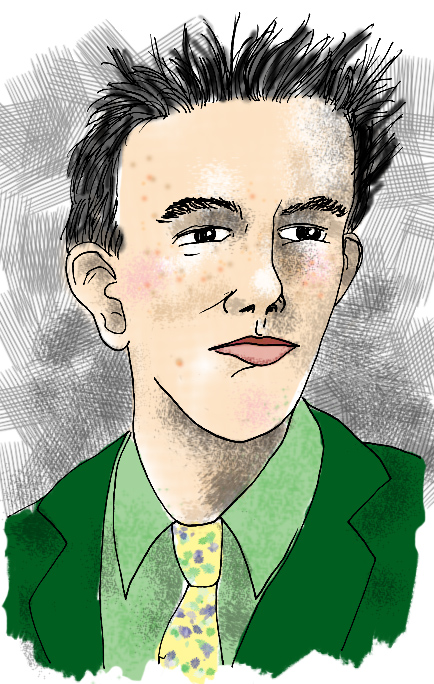
A small role as the young George Jorgenson in the controversial Christine Jorgenson Story  led ten-year-old Trent Lehman to be cast in the sitcom Nanny and The Professor  in 1970. Trent co-starred opposite Juliet Mills as mischevous middle son Butch Everett. Fifty-four episodes of the popular show were filmed and it held a coveted time slot on ABC between The Brady Bunch  and The Partridge Family  on Friday nights.

After Nanny and The Professor  was canceled, Trent had difficulty finding acting roles. By the time he reached his teens, he had given up on seeking the spotlight, electing instead to do odd jobs around his neighborhood. In 1981, he moved back to Los Angeles. He had a short relationship with a girl and was devastated when they broke up.

On January 17, 1982, still upset over his romantic break-up and the recent burglary at his apartment, Trent was drinking with some friends. Late in the evening, he was dropped off at his van that was parked across the street from Vena Avenue Elementary School. Trent had attended the school as a youngster during the run of Nanny and The Professor. His friends told him to get some sleep before a scheduled court appearance the next day for a traffic violation. A drunken Trent stumbled towards his van and his friends drove off.

The friends returned to check on Trent’s condition. They found Trent hanging by the neck from the eight-foot chain-link fence that surrounded the school. He had fashioned a noose from his belt. A hand-written will, leaving his few possessions to his mother, was found in his shirt pocket. It was written on the back of his court summons. An autopsy revealed large amounts of alcohol and cocaine in his system. Trent was 20 years old.

Comments

comments

IF: cocoon

This week’s challenge word on the Illustration Friday website is “cocoon”.
No, I`m still Rael and I`m stuck in some kind of cave
I saw a cocoon
All wrinkled and drawn
Like a deep ocean prawn
From the shore of Rangoon

I poked the cocoon
It had a strange shape
Not unlike an ape
Or a hairy baboon

The cocoon I inspected
‘Twas webby and white
Layered thick and so tight
All predators deflected

For hours I stood
And watched the cocoon
Sunday afternoon
Would it stay there for good?

So, I left the cocoon
So shriveled and dried
Butterfly still inside
That the world would see soon.

Comments

comments

from my sketchbook: elizabeth hartman

Blue, blue, my world is blue/Blue is my world now I'm without you
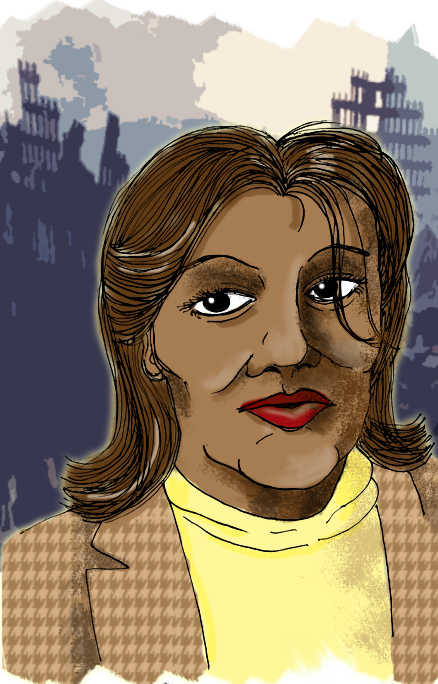
In the fall of 1964, Elizabeth Hartman was offered the leading role of Selina in A Patch of Blue, with Sidney Poitier and Shelley Winters. The role won Elizabeth widespread critical acclaim and the crew at the Youngstown Ohio playhouse, where she got her start, were especially proud. Twenty-two year-old Elizabeth received an Academy Award nomination for Best Actress in 1966. At the time, this made her the youngest nominee ever in the Best Actress category.

Elizabeth’s career took off. In addition to a number of stage productions, she appeared in films with Clint Eastwood, Geraldine Page, Alan Bates and Candice Bergen and worked with such respected directors as John Frankenheimer, Sidney Lumet and Francis Ford Coppola. She played Joe Don Baker’s wife in the original Walking Tall  in 1973 and provided the voice for Mrs. Brisby in the animated The Secret of NIMH  in 1982.

Throughout much of her life, Elizabeth suffered from depression. In 1984, she divorced her husband after a five-year separation and moved to Pittsburgh to be closer to her family. She abandoned her acting career, opting instead to work at a museum in Pittsburgh. On June 10, 1987, Elizabeth called her doctor seeking help for extreme despondency. Shortly after that phone conversation, she threw herself from her fifth floor apartment window.

Comments

comments

from my sketchbook: oliver reed

I do not live in the world of sobriety.
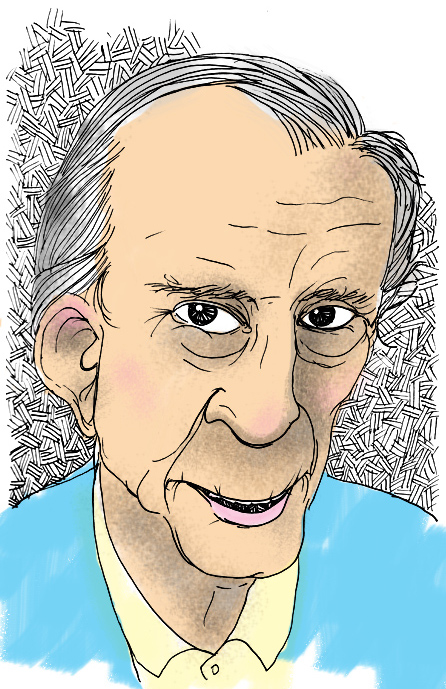
Oliver Reed had no aspirations to become an actor while serving in the Royal Army Medical Corps. He took work as an extra in the early 1950s in mostly comedies. The more extra work he got, the more it looked like this was the career for the young Reed. He was featured in several films from legendary Hammer Studios, including the horror classic Curse of the Werewolf  in 1961. The late 60s brought some groundbreaking achievements for Reed including 1967’s I’ll Never Forget What’s’isname, the first mainstream film to use the word “fuck” and 1969’s Women in Love, the first mainstream film to feature male full-frontal nudity, in which Reed and actor Alan Bates wrestled in the nude. Reed also had a memorable role as the villainous Bill Sikes in his uncle Carol Reed’s 1968 Best Picture Oliver!  The 1970s saw Reed take roles in Richard Lester’s The Three Musketeers and its sequels and the film version of The Who’s rock opera Tommy.  He turned down roles in The Sting and Jaws, both of which were filled by fellow countryman Robert Shaw.

Reed was infamous for his drinking binges. Once, he met with Steve McQueen for a possible film collaboration and, after some heavy drinking, Reed threw up all over McQueen. He made talk show host David Letterman a bit uneasy after Letterman asked one too many questions about his alcohol consumption.

During a break in filming the 2000 Ridley Scott epic Gladiator, Reed was drinking with his wife in a bar in Malta. After consuming three bottles of rum and several pints of beer, the 61-year-old Reed suffered a fatal heart attack. Since not all of his scenes had been completed, director Scott used CGI and some well-placed mannequins in Reed’s place.

Comments

comments

IF: detective

This week’s challenge word on the Illustration Friday website is “detective”.
They beat him up until the teardrops start/But he can't be wounded 'cause he's got no heart.
I read William Hjortsberg’s detective novel Falling Angel  in 1978. The novel began life as a piece of feature fiction in Playboy  magazine, but Hjortsberg fleshed it out into a captivating homage to the hard-boiled detective novels of the 1930s and 40s. Told in the first-person narrative, through the eyes of investigator-for-hire Harry Angel, Falling Angel  follows the search for one Johnny Favorite, a big band crooner who vanishes after World War II. Angel is hired by two attorneys, working for a mysterious Mr. Cyphre, to find Favorite. It seems just prior to his disappearance, Ol’ Johnny owed Cyphre a debt of some sort. And so begins Harry Angel’s adventure into a strange and hidden society living covertly in the bowels of Manhattan. It’s a riveting whodunit that makes a sharp left and catches the reader off-guard.

Nine years after its publication, Hjortsberg penned a screenplay of his novel. It became Angel Heart  starring a miscast Mickey Rourke, a miscast Lisa Bonet and a miscast Robert DeNiro. The awful film bears little resemblance to the clever and twisted novel.

Comments

comments

Monday Artday: friendship part 2

Two hits. Me hitting you and you hitting the floor.

“When you’re a kid, you can be friends with anybody. Remember when you were a little kid what were the qualifications? If someone’s in front of my house NOW, That’s my friend, they’re my friend. That’s it. Are you a grown up.? No. Great! Come on in. Jump up and down on my bed. And if you have anything in common at all ─ You like cherry soda? I like cherry soda! We’ll be best friends!”   

─  Jerry Seinfeld

Growing up, there were a couple of kids on my block that I’d call “friend.” One, in particular, was Donnie Columns. My relationship with Donnie ran the spectrum from close buddy to mortal enemy. Donnie lived three houses away from me on Nestling Road in Northeast Philadelphia. Donnie and I grew up together ─ playing with our Matchbox cars, reading comic books, riding our bikes ─ all the things that adolescent friends did. Sometimes Donnie would steal my Matchbox cars and my comic books and take off with my bike, but I usually overlooked those things because he was my friend. Donnie once stole my entire collection of Partridge Family trading cards and I never even mentioned it to him. Friends just don’t bring stuff like that up.

Every so often, Donnie would turn on me. I think he thought it was funny. We would be happily playing in his backyard or on a neighbor’s front lawn when he would suddenly unleash a spewing fountain of anti-Semitic slurs in my direction. In hindsight, I’m sure he was merely parroting what he had heard his parents say behind closed doors. After all, my family was one of a handful of Jewish families in a predominantly gentile neighborhood and only one of two on the block. Donnie’s father always reminded me of Art Carney, if Mr. Carney was a Klansman. I always got an uneasy feeling from Mr. Columns around the Christmas/Chanukah season, as though the pathetic electrified menorah in our front window posed some sort of threat to him. I’m sure neither Donnie nor I fully understood the true implications of his insults, but we understood their basic purpose. Donnie wanted to start a fight.

Infrequent as they were, my neighborhood did play host to a number of fights. I was involved in a few fights as a kid, though I can’t, for the life of me, remember what initiated them. It was a rite of passage of sorts, but not one I needed to experience on a regular basis. I know I never started a fight (except maybe with my brother, an ill-conceived endeavor as he bested me in all the important fight categories ─ bigger, older, stronger and more athletic). I did run from a few fights, avoiding my predator for as long as it took to be forgotten. I fought with Johnnie Hacker, a little anti-Semitic prick from up the street. He would taunt me from afar, yelling “Jew” and “Kike” at me from the sanctuary of his fenced-in backyard. In winter, he would fire snowballs at me as I made my way home from school. I did my best to avoid him, but one time we went at it and I never let his taunts bother me after that. I even fought with a girl on my block once.

But most of my fighting was with Donnie Columns. Donnie fucking Columns. It seemed that Donnie didn’t need a reason as specific and meaningful as my ancestors standing idly by while his savior was crucified. One time, I was in Donnie’s house and I saw a triptych photo frame displaying images of his two younger sisters dressed in tutus and frozen in ballet poses. In the center frame was a smiling Donnie in a sequined vest, posed in a similar fashion. I was staring at the photo in disbelief for too long until Donnie decided I had seen enough. He took me outside and beat the shit out of me. He was bigger than me. He was stronger than me. He was most likely beaten by his parents, so he had the fighting moves. When I fought with Donnie, he would always beat the shit out of me. One time he sneaked his brother’s off-limits BB gun out to his backyard to show me how cool he was. He squeezed shot after shot out of that gun, the BBs bouncing off tree trunks and empty tin cans that littered his yard. Bored with his static targets, he turned toward me, raised the gun at arms length and in a low voice through clenched teeth whispered, “I’ll give you three to run. Horrified, I turned and fled like a frightened rabbit ─ Donnie’s low snickers echoing behind me. He pulled the trigger attempting to fire one over my head. Instead, the errant BB ricocheted off his overhanging roof and found the dead center of the back of my head. I stumbled and fell on the grass. Afraid that he just killed me, Donnie ran over to check on my well-being. I rolled over on my back, crying from the pain. Donnie’s face revealed a look of relief ─ relief that he had not just committed murder. I managed to get to my feet and I ran home. I told my mother what had transpired and, after tending to my wound, she telephoned Donnie’s mother so no one would be left out of the fun. Donnie’s mother resembled Batman-era Julie Newmar and there was something weird and other-worldly about her. She listened to my mother’s second-hand account of the incident. I have no doubt that Donnie felt her wrath when she hung up the phone. I know this because several days later, totally unprovoked, Donnie beat the shit out of me again.

Donnie beat me up regularly from the late 1960s into the early part of the 1970s. They weren’t horrible or bloody beatings. A crowd of kids from the block, whooping and yelling, would encircle the two of us as we rolled around on the grass. A few minutes would pass and, after a series of blows to my torso, the fight would end with me crying and humiliated and Donnie triumphant. Sometimes, my mother or father would come out of the house and break it up, while Mr. Columns stood off in the distance, smoking a filter-less Camel, calling out “Ahh, they’re just kids!” and chuckling.

One day, enough was enough. I don’t remember what it was that triggered me, but Payback Day had arrived and it arrived expecting a lifetime of compounded-daily interest. I have a clear, indelible picture in my mind of that day. I knocked Donnie flat on his back. I got on top of him, my knees assuring that his arms remained immobile. With my adrenal glands pumping, my unrelenting fists unleashed the fury of countless shellackings as I walloped the motherfucking piss out of Donnie Columns. The fight ended when Donnie’s mortified father pulled me off of his son and berated my parents who were watching from our kitchen window.

Although Donnie and I were the same age and went to the same elementary school, we never had any classes together. Donnie was always in the remedial classes because he was an idiot. When it came time for high school, I vaguely remember some hushed gossip about problems in the Columns household and Donnie either dropped out or moved away with one of his parents.

I would imagine that as life continued for Donnie, he persisted in his fighting ways and eventually met someone who wasn’t as forgiving a friend as I was.

Comments

comments

Monday Artday: friendship

This week’s Monday Artday challenge word is “friendship”.

Well it can take many years to forge a friendship/It can take a lifetime to get close/But we took all the shortcuts/Used our hearts as a map/And we still got closer than most

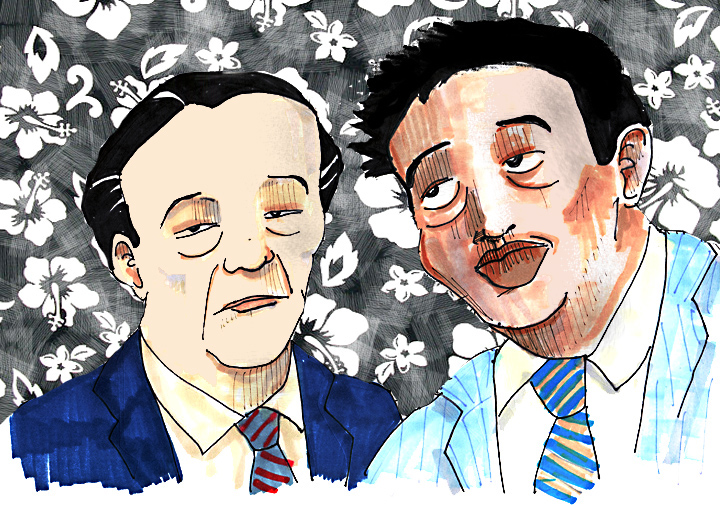
Henry Lee Lucas and Ottis Toole met in 1976 in a Jacksonville, Florida soup kitchen and they became instant friends and eventual lovers. Lucas, the son of an alcoholic father and an abusive prostitute mother, served prison time for armed robbery and had murdered his mother and a seventeen-year-old female acquaintance by the time he met Toole. Prior to his intimate bond with Lucas, Toole was raised by his grave-robbing, Satan-worshipping grandmother, had committed four murders and became a serial arsonist who was sexually aroused by fire. Together, Lucas and Toole were a match made in Hell.

For seven years, Lucas and Toole drifted across twenty-six states on a rampage of robbery, arson, torture, rape and murder. They were a compatible team, as Lucas was a vicious sadist and Toole was a cannibal. Their usual routine involved picking up hitchhikers, both male and female, for sex and then killing and mutilating them.  Sometimes, they would just run over hitchhikers and drive off.  Once, they drove for two days with a victim’s head in the back seat of their car. In all, they assisted each other in 108 murders, fulfilling Lucas’ penchant for necrophilia and Toole’s preference for the consumption of human flesh.

In April 1983, Toole was arrested on arson charges in Jacksonville. While in custody, he confessed to dozens of unsolved arsons and murders, including the 1981 murder of nine-year-old Adam Walsh. Toole was given two death sentences which were later changed to life sentences on appeal. He died in prison of liver failure in 1996.

Lucas was arrested on weapons charges in Texas in June 1983. Lucas confessed to over 3000 murders, recanted his confessions and later confessed again. Some of the murders to which he claimed involvement occurred when Lucas was documented to have been elsewhere. He was eventually convicted of only three murders. Texas Governor George W. Bush commuted his death sentence to life imprisonment. Lucas died of heart failure in prison in 2001.

Comments

comments