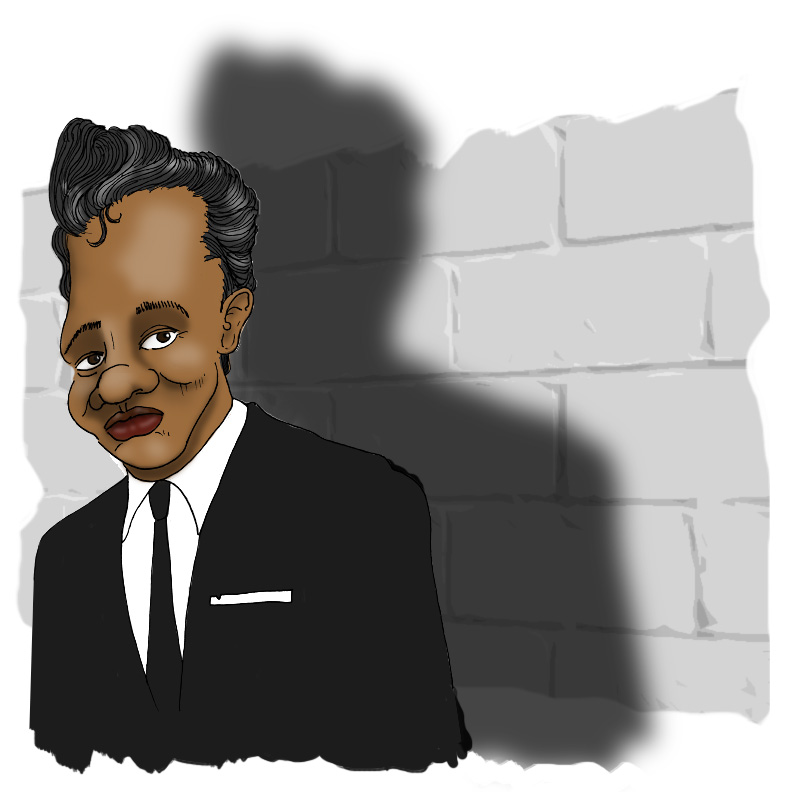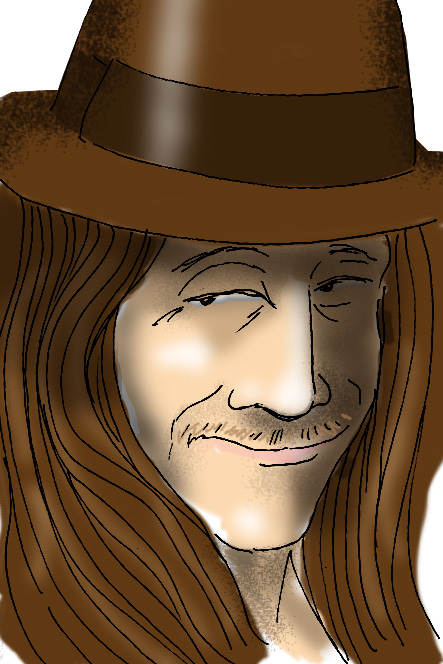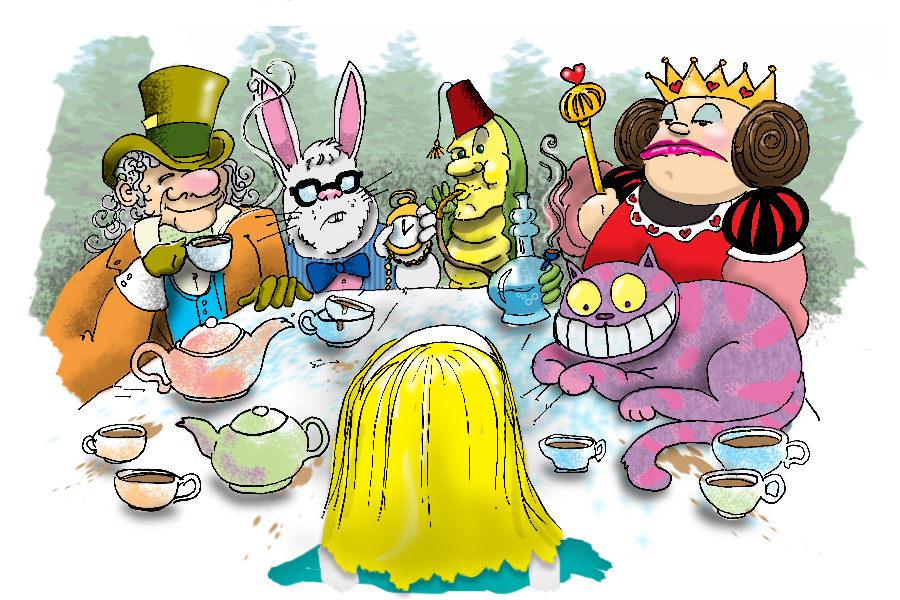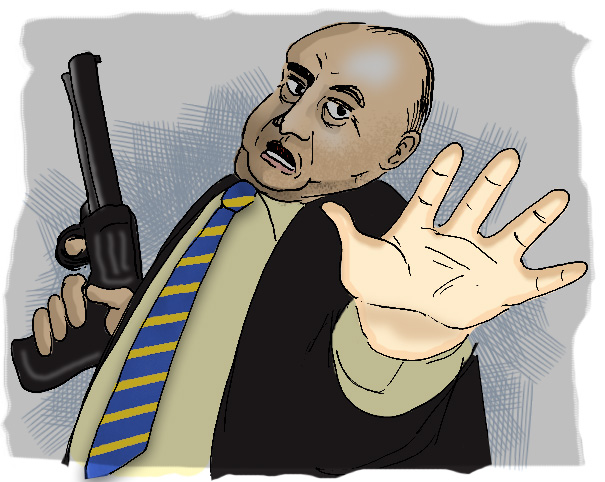
from my sketchbook: they’re feeding our people that government cheese

it's the man in the White House/the man under the steeple
Let me start out by saying I’m not going to vote, so fuck you.

But, if I were  to vote, it would be for Barack Obama. Why? Not because of his political promises or his vision for the country or his plans for the economy. He’s probably full of shit, just like every politician before him. (I think that’s a prerequisite for becoming a politician.) But, I would vote for him simply because he seems like a nice guy. A real guy.  Like, a guy you’d like to be your neighbor. Running into him at the supermarket. Your kids playing with his kids. Out on a Saturday afternoon, mowing his lawn. Y’know… just a guy. I think the average American looks at Barack Obama and thinks, “Yeah, I can relate to him.”

But, Mitt Romney?!? Jesus Christ Almighty!  Who does he  represent? Who can possibly  relate to him? That asshole boss that fired you? That prick down at the bank that declined your loan application? The car salesman who smugly snickers when you are checking the stickers on a Mercedes, then gently steers you towards the Fords while he’s rolling his eyes? You’re damn right! That’s  who Mitt Romney is. He’s that guy you innocently start chatting with at a cousin’s wedding cocktail hour and find out that he’s a filthy rich, out-of-touch, never-worked-a-day-in-his-life, patronizing, elitist little fuck who, when the band starts playing, dances like a stiff-jointed white guy.

One question should be asked at the Presidential Debate and you’d make up your mind in fifteen seconds. Get the two candidates up on the stage and ask just one question — “You’re at work and your wife calls and asks you to pick up a loaf of bread on your way home. How much is that gonna cost you?” I will bet that Mitt Romney hasn’t a clue  how much a loaf of bread costs. Barack Obama? The guy went to a PETCO with his dog! His wife shops for laundry detergent at Target, for crissakes!  He goes on vacation and takes his daughters out for ice cream. Mitt Romney probably sends some domestic out to buy ice cream and says, “Here’s seven hundred dollars. That should cover it, right? Make sure you get vanilla.”

So, all you people who, after the debacle that was the 2000 Presidential election, still think your vote determines who becomes president — good for you. I think that’s adorable. I don’t really care who becomes president, but I do  hope he’s not an embarrassment.

Comments

comments

from my sketchbook: glenn burke

rounding third and heading for home its a brown-eyed handsome man/anyone could understand the way I feel

It was late in the 1977 baseball season. Dusty Baker, the Los Angeles Dodgers veteran right fielder, was coming around third base and trotting home on the final ninety feet of his 30th home run of the season. He was greeted at the plate by on-deck batter Glenn Burke, a youngster in his second year as a big-leaguer. As Dusty crossed home, a smiling Glenn raised his arm up and extended his open palm. Dusty, a bit confused by the gesture, instinctively did what he felt he had to do — he slapped Glenn’s hand with his own palm. At that very moment, the “high five” was born.

Dusty Baker’s baseball career flourished, playing nineteen years and amassing nearly 2000 hits, a Gold Glove in 1981, two consecutive All-Star appearances and three trips to the World Series. After retiring as a player, Dusty was a three-time Manager of the Year, calling the shots for the San Francisco Giants (taking them to the World Series in 2002), the Chicago Cubs and, currently, the NL Central Champs Cincinnati Reds.

Glenn Burke’s baseball career took a decidedly different turn.

After five minor league seasons batting over .300, Glenn was heralded by Dodger scouts as “the next Willie Mays.” The athletic, young Glenn was immediately welcomed into the Dodger clubhouse. His on-field energy coupled with his sense of humor was instantly embraced by his new teammates. However, Dodger management was less that enthusiastic about Glenn. Glenn was gay, and the front office didn’t like it, specifically team manager Tommy Lasorda and general manager Al Campanis. Lasorda’s son, Tommy Jr., was gay and that caused a rift between father and son. The elder Lasorda resented his son’s friendship with Glenn and he made that resentment very clear. Campanis, whose past was already marked by derogatory statements regarding African-American players and a controversial trade involving his own son Jim, was especially bothered by Glenn’s sexual orientation. He offered Glenn $75,000 to get married. The always comedic and easy-going Glenn replied, “I guess you mean to a woman.”

Even after starting in the World Series, Lasorda, Campanis and the rest of the Dodger front office plotted to trade Glenn, much to the dismay of his teammates. Glenn was unceremoniously shipped to the Oakland A’s, where manager, the infamous Billy Martin, introduced Glenn to his new team as “a faggot”. Glenn stayed with Oakland for a year and a half until the hatred, ridicule and hostility from management became too much. He retired from baseball in 1979 at the age of 27.

Glenn participated and won medals in track in the first Gay Games in San Francisco. In an interview in Inside Sports  magazine, he publicly “came out,” proudly acknowledging what his teammates had known for years.

Soon, his notoriety faded and his money ran out. He spent what little he had on drugs. A car accident broke his leg in three places and he struggled with medical bills, even turning to theft, for which he served jail time. The last years of his life were spent wandering the streets of San Francisco — homeless, penniless and self-medicating on crack as a way to ease the pain of AIDS which he had contracted. When word of Glenn’s situation reached his former Oakland teammates, they rallied support and brought as much comfort as they could in his final days.

Glenn died in May 1995 at the age of 42. He said he had no regrets, noting “They can’t ever say now that a gay man can’t play in the majors, because I’m a gay man and I made it.”

Comments

comments

from my sketchbook: the party’s just begun, we’ll let you in

you drive us wild, we'll drive you crazy

Aunt Nancy is awesome! In the thirty years since I was introduced to her, I have known her to be devoted to her friends and family (even family-by-marriage). She is a hard worker, reliable and dedicated to her employer. She is quiet and reserved. And, she is one of the nicest, sweetest, even-tempered people I have ever met. I don’t think I have ever witnessed Aunt Nancy raise her voice. She has always greeted me with a smile and always seems to be happy. On the rare occasion that she has uttered a cross word, it was in reference to a rude store clerk or a bad driver.

One by one, Aunt Nancy’s three children grew up and moved out of the house, into lives of their own. Nancy’s youngest daughter married and made her a first-time grandmother. Nancy’s eldest daughter will marry this weekend. Sadly, Aunt Nancy’s beloved husband of many years passed away in 2008. But despite that and a few health issues, Nancy has remained strong and determined and has maintained her cheerful demeanor. And I recently discovered the source of Aunt Nancy’s strength. Aunt Nancy loves her some KISS.

Last year, at a family dinner at my in-law’s house, Aunt Nancy revealed her affinity for the pop-metal masters of makeup and mayhem. She told us, with the bubbly giddiness of a teenager, of her experience at a KISS show that she attended. We were dumbfounded yet amused. My wife and I tried to imagine the usually-reserved Aunt Nancy thrashing about, arms extended above her head, fingers bent into rock and roll “devil horns,” squealing with delight as bassist Gene Simmons — “The Demon” — exhaled fire and spewed blood over the frenzied rabid throng. Aunt Nancy! In that crowd! Unimaginable! Still, Aunt Nancy enthusiastically related every detail of the concert, from the dazzling pyrotechnics to the spectacular lasers to the special stage-side section reserved for Rascal scooters (the demographics of the KISS fan base have skewed considerably over the course of their five-decade career).

We have since learned that Aunt Nancy has notched another decidedly unNancy-like  concert under her belt — Aerosmith. Although she dismissed the warm-up band as “a bunch of loud no talents I never heard of” (it was Cheap Trick), she was delighted by the geriatric version of Boston’s one-time rock darlings. Aunt Nancy passionately described the stage antics of sinewy vocalist Steven Tyler, fresh off his stint as judge on…. whatever that show he was a judge on.

But, it’s KISS that is the true apple of Aunt Nancy’s eye and the best was yet to come for her.

Last Friday, the leather-clad painted purveyors of lightweight heavy metal brought their “The Tour” Tour to Camden’s Susquehanna Bank Center (or whatever they’re calling it this week). Susquehanna Bank Center (or SBC, as it wants to be known) is one of the most poorly laid-out concert venues I’ve ever seen. Built primarily for summer festivals and hosting big name draws in months when the weather is nice, SBC is comprised of a semi-circular building (“It looks like a big Bose radio.,” observed my wife) that houses the large performance stage, which is easily viewed by those lucky enough to have purchased tickets for actual seats. Those opting for other viewing alternatives are relegated to the massive sloped lawn situated behind the building. The stage is (barely) visible through large square openings at the rear of the building and via dim images projected on off-white brick inlays just below the main building’s roof (once the sun goes down, that is). Adding to the displeasure, the lawn is accessible by a network of steep, narrow, winding staircases, each landing lined with ridiculously overpriced concession stands. But, Aunt Nancy would have none of the “concert-going-for-the-masses” nonsense. No, no, no. An ecstatic Aunt Nancy had pre-purchased her exclusive “VIP Meet & Greet” experience tickets and arrived at the venue ready to meet up with her on-site VIP host. The VIP Super Deluxe Once-in-a-Lifetime Soundcheck and Meet & Greet Experience Package includes: One reserved ticket located in the first 10 rows of the stage, Exclusive Meet & Greet with KISS, Personal Photograph with KISS, Autograph Session with KISS, Exclusive access to KISS’s preshow Soundcheck, Specially Designed KISS Tour Shirt, Custom Designed 18k gold plated KISS Ring, a set of Official KISS Guitar Picks (with custom case), Official Meet & Greet Laminate, Commemorative VIP Ticket, Crowd- free merchandise shopping and the aforementioned host— all at a cost of a mere $1250. No, I didn’t forget a decimal point. I’ll spell it out, so there’s no mistake — one thousand two-hundred and fifty George Washington dollars. I think that was the amount of the last installment of my son’s monthly college tuition payment. Maybe a little less. But, it was worth every last penny to Aunt Nancy and, Goddamnit!,  she deserved it.

Aunt Nancy began making her way to the designated meeting area to be ushered in for her great KISS encounter. Due to recent surgery, Aunt Nancy uses a cane when walking. As she negotiated an uneven walkway, Aunt Nancy tripped on an errant rental chair and fell flat on her face. Her glasses were smashed and pushed into her forehead where they tore a large gash. Attentive medical staff arrived at the scene quickly. They began to wipe away debris and clean up the blood now flowing profusely from the wound. The EMTs insisted on taking Nancy to a facility better equipped to handle such a serious injury, but she would hear nothing of it.

“I have to meet my group for the Meet & Greet!,” Aunt Nancy protested, “I am not going to miss it!”

The workers managed to clean and dress the injury, instructing Aunt Nancy to apply pressure with the wet cloth they supplied. After the briefest of recovery time, Nancy got back on her feet and the medical crew carefully led her to the Meet & Greet entrance.

“No!,” Nancy asserted, “Not here! This is the Motley Crüe line! I paid to see KISS!”

The startled workers guided Aunt Nancy over to the correct entrance. By this time, the small exclusive group had filed in to the meeting area. Aunt Nancy took the one seat that was available, right next to the imposing Gene Simmons. Gene’s attention was instantly drawn to poor Aunt Nancy, a coldpak pressed to her bandaged head.

“Oh my God!,” the bassist gasped, “What happened to you?” His concern seemed genuine.

Aunt Nancy explained the details of her mishap, trying her best to remain serious, but was losing out to her excitement. She had dreamed of this moment, but not exactly in this way.

As part of the VIP experiences, attendees were permitted to bring two items to have personally autographed by the band. (The 2012 version of KISS includes original members Gene Simmons, rhythm guitarist Paul Stanley and two other guys who replaced founding members Peter Criss and Ace Frehley some time ago. But, under a thick layer of theatrical makeup, what difference does it make?) Aunt Nancy happily presented her aluminum cane to the band for an inscription. Gone are the glory days of nubile, young ladies pulling down the skimpy necklines of their tops for a signature scribbled across their breasts. A smiling 60-year-old with a piece of orthopedic equipment is the best the band can hope for at this point in their career. Aunt Nancy was reminded that she was entitled to another autograph. She rummaged through her purse and produced a blank letterhead from her current place of employment — a Jewish elementary school (where, years ago, she was the assistant in my son’s classroom). The letterhead, emblazoned with a logo proudly proclaiming the school’s Jewish heritage, was examined by Mr. Simmons, after which he turned to Aunt Nancy and, noting the appropriate time of year, wished her a solemn “L’Shana Tovah!,”  the traditional salutation for Rosh Hashana,  the Jewish New Year. (Gene Simmons was born Chaim Weitz in Haifa, Israel. His mother, Florence, is a Holocaust survivor.) Gene turned to a KISS crew member and explained “I just wished her ‘Happy Jewish New Year'”, then whispered confidentially to Aunt Nancy, “They don’t know! They’re goyim.”  (A playfully derogatory term that Jews call non-Jews.) Then, Aunt Nancy posed for a picture with the band. The grin on her face is so wide, she looks as though she will burst!

Aunt Nancy dutifully reported to work on Monday. She stood at the front of the classroom of youngsters, as she had done thousands of Mondays before. To them, she is “Mrs. K.,” but, how many of those kids know how cool Aunt Nancy really is?

Comments

comments

IF: book

The Illustration Friday word this week is “book”.
I'll be over when I finish my book

When she wasn’t writing poetry, Sylvia Plath spent a good portion of her life trying to kill herself.  At 21, Sylvia made her first attempt at suicide by taking a handful of her mother’s sleeping pills. When she was discovered three days later, in a crawlspace beneath her house, she chronicled the event with “[I had] blissfully succumbed to the whirling blackness that I honestly believed was eternal oblivion.”

After more attempts at ending her life, including a deliberate car wreck in 1962, Sylvia finally succeeded. Early in the morning on February 11, 1963, while her children slept, she sealed off the kitchen of her small London apartment with wet towels shoved into door jambs and window crevices. She turned the gas oven on, put her head inside and waited. She compared the despair in her life to an “owl’s talons clenching my heart.”

Sylvia’s only novel, The Bell Jar, a not-so-thinly veiled account of her life,  was published only one month before her death.

Comments

comments

IF: crooked

This week’s Illustration Friday challenge word is “crooked”.
there was a crooked man

“Canada Bill” Jones would shuffle and trip into a room, wearing ill-fitting clothes and a cocked grin. His hair was mussed and he’d ask stupid questions. And it was all part of his master plan.

Born in England in the early part of the 19th century, Bill moved to Canada while in his 20s. He apprenticed with a veteran gambler and cheater named Dick Cady, who taught the young Bill the ins-and-outs of Three Card Monte. Cady showed Bill the finer points of marking cards and manipulating deals until Bill was adept enough to take his game on the road.

Playing the role of the simple bumpkin, Bill charmed his way into the confidence of rich travellers on the Kansas City and Omaha railroads. He’d smile broadly, shuffle the cards awkwardly and proceed to cheat his unsuspecting opponents (read: suckers)  out of every last cent they carried. He teamed up with fellow card shark George Devol and together the pair swindled the wealthy — including cheating ministers out of their congregation’s collections — all the way though the pre-Civil War South. Canada Bill lived by the creed: “It’s morally wrong to let a sucker keep money.”

Bill and Devol switched venues and became fixtures on the big riverboats that chugged up and down the Mississippi River. On one occasion, after being caught cheating by a particular ship’s captain, Bill made a sincere and solemn offer to limit his cheating to only the very  rich and Methodist ministers. The captain kicked them off the ship.

Bill’s weakness, however, was his own propensity to gamble and sometimes he became as big a patsy as his own prey. Once, Devol walked in on Bill playing a game of Faro (a popular card game in the 1800s involving a “dealing box” that was easily rigged). After only moments of observation, Devol told Bill to quit, as the dealer was obviously cheating. Without budging, or even looking up at his cohort, Bill confessed, “I know it’s crooked, but it’s the only game in town.” Bill and George Devol  eventually parted company when Bill caught his partner trying to cheat him.

Bill roamed the country, plying his deception in Cleveland and Chicago. Unfortunately, his own love of gambling caused him to lose his money just as fast as he acquired it. Now in his 70s and in poor health, his travels brought him to a charity hospital in Reading, Pennsylvania where he died penniless. His funeral was paid for by out-of-town gamblers that both respected Bill’s ability and were saddened by the loss of an easy mark. As his casket was lowered into the ground, one gambler in the crowd offered to bet $1000 “that Bill was not  in that box”. He received no takers when someone replied, “I’ve seen Bill get out of tighter spots than that!”

Comments

comments

from my sketchbook: peggy knudsen

Come stepping down the stairs, combing back your yellow hair
Nineteen-year-old Peggy Knudsen debuted on Broadway in the title role in the popular play My Sister Eileen,  replacing Jo Ann Sayers, in the role she originated. Soon, Peggy headed for Hollywood, appearing in her first film A Stolen Life  opposite Bette Davis. That performance led to her being cast as the icy Mona Mars in the noir  classic The Big Sleep  alongside Humphrey Bogart. Praised by critics, her career seemed to be ready to explode. With her striking good looks, she was even named “”the girl who fills our stockings best,” in a poll by the Hosiery Designers of America. But, her contracted studio, Warner Brothers, couldn’t quite decide what to do with the pretty young actress. As her contemporaries moved on to bigger and better, Peggy was relegated to small roles in B-grade pictures, playing one-dimensional homewreckers and “other woman” types. After 1957’s Istanbul  with Errol Flynn, she called it quits in motion pictures, turning her attention to the upstart medium of television instead.

In the 50s and 60s, she made guest appearances on both comedies and dramas, acting in several installments of Alfred Hitchcock Presents, Perry Mason, Pete & Gladys  and others. However, in 1965, following an episode of The Adventures of Ozzie and Harriet  that served as her swan song,  Peggy retired from acting for good.

Peggy suffered from crippling arthritis for most of her later years. She was in a degenerative state and was cared for by her close friend, Oscar-winning actress Jennifer Jones. After enduring daily pain for nearly fifteen years, Peggy succumbed to cancer in 1980 at age 57.

Comments

comments

from my sketchbook: ed delahanty

back, back, over the falls
On September 4, 2012, the struggling Philadelphia Phillies dropped another heartbreaking loss – this time to the National League Central-leading Cincinnati Reds. It was during this game that shortstop Jimmy Rollins racked up his 2000th career hit as a member of the Phillies, joining an elite club of only three additional members – each in the Hall of Fame. The leader, with 2,234 hits, is Mike Schmidt, who played eighteen seasons at the “hot corner” for the Fightin’ Phils, helping them to their first World Series title in 1980. Next, with 2,217 hits, is the late Richie Ashburn, a six-time All-Star whose popularity led him to a post-playing career as a Phillies broadcaster for 34 years until his death in 1997. The third name on the list, Ed Delahanty,  is one that may be unfamiliar to even die-hard Phillies fans, but one with the most interesting story.

Ed Delahanty — “Big Ed” as he came to be called — was a true superstar in the early years of professional baseball. His name and statistics were regularly mentioned in the same breath as Ty Cobb and Rogers Hornsby. Ed was a fearsome power hitter, maintaining a .388 average (he batted over .400 three times) and a yearly production of 115 runs batted in. He held the Phillies consecutive games hit record for over hundred years, until he was surpassed again by the aforementioned Rollins. He hit four home runs in one game and went 6-for-6 in a game twice in his career. He is the only player to win the batting title in both leagues, although that stat is still hotly debated.

In 1902 after thirteen seasons with the Phillies, Ed joined the Washington Senators in the fledgling American League. The Senators were terrible and the team’s incompetence greatly affected Ed’s own abilities. He soon turned to liquor and gambling to soothe his unraveling, on-field performance. In July 1903, after another loss, this time 1-0 to the Detroit Tigers, Ed had had enough. He boarded a train in Detroit bound for New York City, with visions of rejoining the National League filling his head. To pass the time on the long train ride, Ed threw back shot after shot of whiskey. He became belligerent and unruly. He pulled a woman out of a sleeper berth by her ankles.  He wielded a razor and began threatening the other passengers. The head conductor stopped the train in Niagara Falls and warned him to calm down or he’d be asked to leave.

Ed, slurring his words, angrily replied, “I don’t care if I’m dead or in Canada.”

True to his word, the conductor kicked Ed off the train. Several minutes later, a drunken Ed Delahanty tried to negotiate the narrow International Railway Bridge into Buffalo, New York. He lost his footing and plunged into the roaring waters below. His body was found a week later at the base of Niagara Falls. Big Ed was 35.

Comments

comments

from my sketchbook: gary vinson

ahoy!
Gary Vinson began showing up in guest roles on popular TV series in the late 1950s. He appeared in comedies like The Adventures of Ozzie and Harriet, dramas like Perry Mason  and Westerns, like Gunsmoke  and Bat Masterson.  In 1960, he was cast as a regular in the short-lived drama The Roaring 20s  with Dorothy Provine.

In 1962, he landed the role for which he was most associated – Quartermaster George “Christy” Christopher on the Ernest Borgnine military farce McHale’s Navy.  He appeared in seventy-nine episodes until the series’ end. He was then immediately cast as the town sheriff in the promising CBS sitcom Pistols ‘n’ Petticoats.  The series, conceived by George Tibbles, producer of My Three Sons and writer of the Woody Woodpecker  theme song,  was a Western spoof. The show was initially very popular, thanks to its star, 40s Hollywood actress Ann Sheridan. When Ann signed on to the series, she was already in failing health and twenty-one episodes in, she passed away. After struggling in the ratings, CBS canceled the show two months after Ann’s death.

From the late 60s until the 80s, Gary’s acting services were in high demand and he kept busy with many guest shots in episodic television.

In 1984, facing legal trouble from serious allegations of sexual misconduct, Gary committed suicide. He was 47.

Comments

comments

IF: imagination

it was just my imagination runnin' away with me

Holy Hero Worship!, did my Uncle Sidney love Batman! And, Holy Relatives!, did I love my Uncle Sidney!

My Uncle Sidney was married to my mother’s sister, Aunt Claire, for an undetermined period of time. I have very fond memories of my mom and Aunt Claire taking me to the zoo, to Cherry Hill Mall, to the swim club in the summer — all over the place. However, I can recall few instances when I actually saw Aunt Claire and Uncle Sidney together. At Thanksgiving, annually hosted at our house, I remember Aunt Claire, anxiously arranging and rearranging the place settings on the aluminum folding table set up in our living room and flitting into the kitchen to assist my mom (but only succeeding in getting in her way). But, I can’t quite place Uncle Sidney at any family gathering. That’s not saying that Uncle Sidney didn’t show up for meals at our house. On the contrary, he made it a point that, when he did stop by, it was just minutes before a designated meal. (My father made angry note of this phenomenon on many occasions.)

In 1966, ABC premiered a new show called Batman. Filled with campy acting, pop-art scenery and purposely hokey dialogue, it was an instant hit. My brother (at nine) and me (at five) — along with my Uncle Sidney — were captivated by the antics of the Caped Crusaders with their wild costumes and their onomatopoeia-filled fist fights with the henchmen of that week’s “special guest villain.”

At the time, Batman  was unique in its broadcast schedule. Paying homage to the movie serials of the 1940s, Batman was shown twice weekly. The first episode would conclude with the Dynamic Duo caught in some impossible-to-escape predicament. The announcer would encourage viewers to tune in tomorrow at the “same Bat-time on the same Bat-channel.” Twenty-four hours later, ABC would air the exciting epilogue to the adventure and my brother and I were right there in front of the TV with Uncle Sidney spread out on the sofa, cheering the action on and eating every last crumb of food raided from my parents’ kitchen. Even after scarfing down a full dinner, courtesy of my mom, Uncle Sidney would park himself on my parents’ living room couch, with his two favorite nephews before him, and eat an entire loaf of bread and drink an entire gallon of milk.

One day while visiting my Aunt Claire at the small apartment she shared with her elusive spouse, my Uncle Sidney uncharacteristically arrived home with a large, empty, cardboard box. After Aunt Claire left the room (they never seemed to be in the same place at the same time), I was instructed by Uncle Sidney to use my budding artistic skills to transform that pasteboard receptacle into my own personal Batmobile. I went to town with an all out crayon assault — coloring, scribbling, emblazoning it with the closest approximation of the Batman insignia as I could — until it resembled The Batmobile, at least to my five-year-old imagination. I climbed in and sat down. Suddenly, Uncle Sidney, a burly fellow with arms like tree trunks, effortlessly lifted me and the box off the carpet and trotted across the floor, growling out “vvrrooom-vrrrrooom”  driving noises and simulating the motion of a superhero’s  car travelling at breakneck speed after an arch-enemy. After spinning in circles a few times, he deposited me — in my vehicle — on the top of the refrigerator for an aerial view of the tiny kitchenette.

As the Batman popularity took a stronghold on national pop culture, Uncle Sidney stepped it up on a personal level. One Friday evening, my mom took us out for dinner to the Cavalier Restaurant, a regular Northeast Philadelphia haunt for the Pincuses. During our meal, Uncle Sidney, who lived nearby, bounded in. He was so excited to tell us something, he could hardly contain himself. He told my mom he had something to show us outside. My mom smiled and watched as Uncle Sidney, as giddy as a six-year-old,  dragged my brother and me out to the the parking lot.

In the 1960s, convertibles were the coolest thing. What could be better than tooling across the open road at top speed with the wind whipping through your hair?! Nobody knew this better than Batman and my Uncle Sidney. Unfortunately, real-life technology had not yet caught up with TV technology. 60s convertibles, at least the one my Uncle Sidney purchased, had a real, solid glass  rear window that had to be zipped out and securely stowed before the soft top was retracted and roadway fun was enjoyed. I cannot stress enough how important this process was.

Once outside the restaurant, Uncle Sidney proudly waved his hand — with the finesse of a game-show model — towards a tank-like, white Pontiac. “Look!,” he began, “I just bought this! We’re gonna have fun!” He hopped in behind the wheel. “And watch this!” Uncle Sidney threw a switch on the car’s massive dashboard. In a symphony of mechanical whirrrs and grinding gears, the Pontiac’s roof came to life and began to fold back towards the rear of the vehicle. My brother and I marveled as my Uncle Sidney announced, nay, yelled, “It’s the Batmobile!”

Just then, our exhilaration was halted by a foreign, sickening sound. My Uncle Sidney’s face dropped. He recognized the sound before we did. In slow motion, he turned around — just in time to witness the rear window crack, compress and shatter, spitting zillions of pebble-sized pieces of glass across the trunk and around the car’s perimeter. My brother and I stood silent. Uncle Sidney, now behind the car and examining the colossal damage, alternately cursed and sobbed under his breath. He looked up at us.

“Don’t tell your mom or Aunt Claire., ” he said.

We were cool with not telling Mom, but what difference did it make to Aunt Claire. Those two hardly knew each other.

In the following weeks and months, Uncle Sidney hid the now-missing window from his wife. On the rare occasions the two were together, the car top would always be down. He would drop her off at their apartment entrance and gallantly offer to park the car. Once parked, he would raise the roof and cover the open space with a blanket in case of rain. Aunt Claire was none the wiser. Until one night…

Aunt Claire was given a lift home by a cousin. They passed by Uncle Sidney’s car as they approached the apartment building. Claire pointed out, “Sid left the back window down.” and she asked Cousin if he could zip it back it, since it looked like rain was headed their way. Happily obliging, Cousin climbed in the back seat and zipped. And zipped. And zipped again.

“Aunt Claire,” he called out through the big gaping space, “there ain’t no window.”

He waved his extended arm in the void that would otherwise be occupied by glass. Aunt Claire was dumbfounded. She turned on her heels and marched right upstairs to have a little talk with her husband. Obviously the ‘window incident” was the last straw in a years-long conflict between my aunt and uncle. I remember seeing him only once or twice after that.

When my brother was in is early twenties, he was in Florida on a vacation. He had heard through various family discussions that Uncle Sidney had moved to Miami. One day on his trip, he located a Miami telephone directory and looked up Uncle Sidney. He found the only one in the book and dialed the number.  A man with a feeble and breathy voice answered. My brother instantly recognized the aged, but unmistakable voice of our beloved uncle.

“Hi, is this Sidney? This is Max Pincus. I’m in Florida and I’d love to see you.”

An audible gasp followed by an audible sob came across the line. “You have the wrong number.’ said the man and the line clicked dead.

Comments

comments