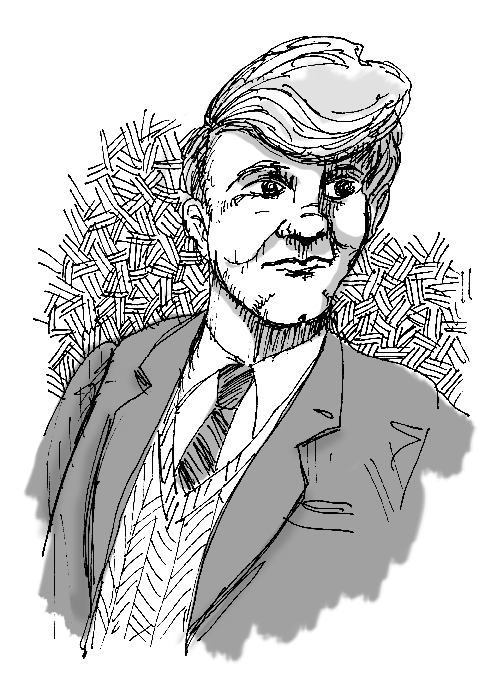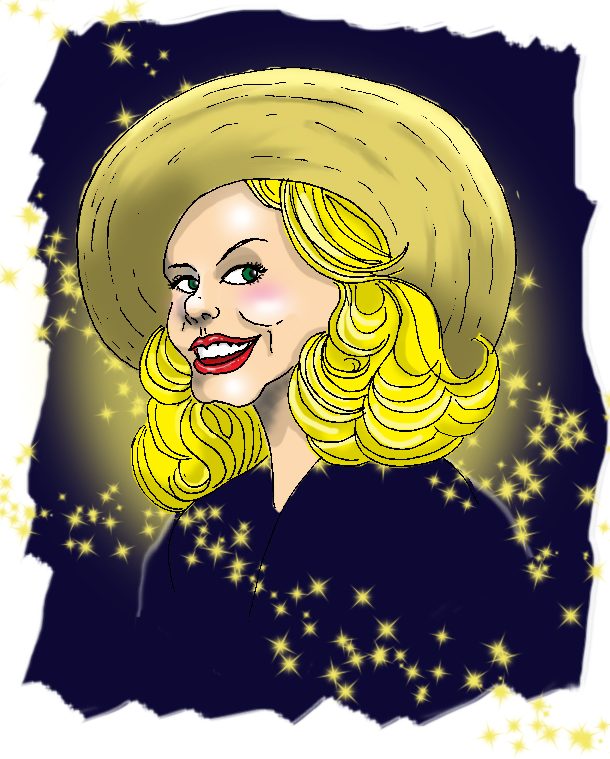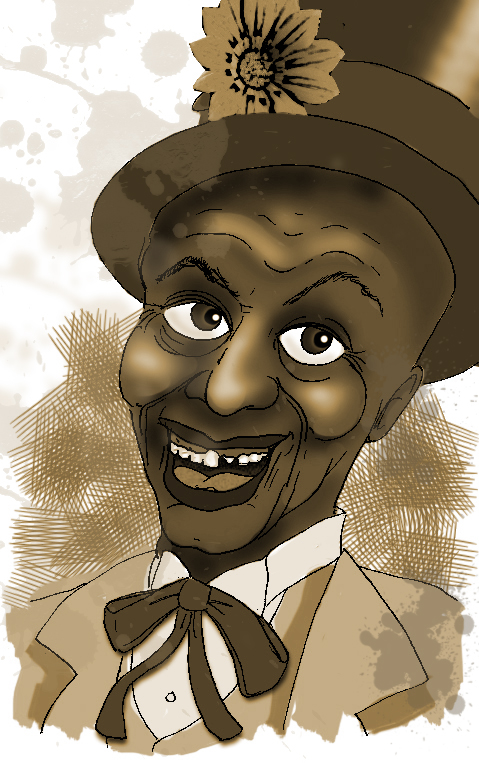
from my sketchbook: ernest hogan

If you care to hear the Swanee River played in ragtime
As a teenager, multi-talented Ernest Crowdus performed as a singer, dancer, musician and comedian in traveling minstrel shows. He changed his surname to “Hogan” to capitalize on the high regard for Irish singers. In 1895, he wrote a comedic song called “Pas Ma La,” based on an exaggerated dance he made up while touring with Pringle’s Georgia Minstrels. Ernest published the song under a genre of music that he invented: ragtime.

He followed the nationwide acclaim of “Pas Ma La” with a song that, despite its wild popularity, he regretted having written. A regret that remained with him for the rest of his life.

Ernest wrote and published “All Coons Look Alike to Me,” a composition he adapted from a song he heard in a bar. Ernest substituted the original lyric — “pimp” — with the word “coon” and accidentally started the widespread trend of “coon songs”. The “Coon Song” trend remained popular for several decades, with hundreds of tunes published by noted and respected composers. African-Americans were infuriated by Ernest’s song and he was ultimately ashamed of what he had innocently started. Because of this stigma, Ernest is overlooked as the originator of ragtime, even though it is documented that he was the first to use the emphasized syncopation that is standard in ragtime and even the first to have the word “ragtime” appear on the sheet music of his songs. When a ragtime championship contest was held as part of the 1900 World Competition in New York, most contestants chose to play Ernest’s “All Coons Look Alike to Me” to prove their skill.

In 1907, Ernest wrote, produced and starred in The Oyster Man,  becoming the first African-American to earn the Broadway “Triple Threat” title.  During the show’s run, Ernest contracted tuberculosis and passed away at the age of 44. Just prior to his death, he admitted his dismay over the song to which he was so closely associated, saying:

That song caused a lot of trouble in and out of show business. That one song opened the way for a lot of colored and white songwriters. Finding the rhythm so great, they stuck to it … and now you get hit songs without the word ‘coon.’ Ragtime was the rhythm played in backrooms and cafes. The ragtime players were the boys who played just by ear their own creations of music which would have been lost to the world if I had not put it on paper.


Comments

comments

IF: wings

This week, the Illustration Friday word is “wings”.
Dead on your feet, you won't get far if you keep on sticking your hand in the medicine jar.
Jimmy McCulloch looked like he was headed in the direction of super-stardom.

At fifteen, he was recruited by Who guitarist Pete Townshend to be a part of a group that would record songs he wrote but would not be released by The Who. Jimmy, along with “Speedy” Keen and Andy “Thunderclap” Newman, formed Thunderclap Newman and released the hit “Something in the Air” in 1969. The song went right to the top of the charts and made Jimmy the youngest performer on a Number One record in the United Kingdom — a distinction that still stands today.

In the early 70s, Jimmy played as a session guitarist with Harry Nilsson, The Who’s John Entwistle and Beatles pal Klaus Voorman. In ’72, he became the lead guitarist for popular British band Stone The Crows, replacing the late Les Harvey after he was electrocuted onstage.

When Stone The Crows disbanded, Jimmy hooked up with Paul McCartney, becoming the lead guitarist for his post-Beatles band Wings. Jimmy’s work can be heard on two Wings studio albums — Venus and Mars  and Wings at the Speed of Sound  — as well as the non-album single “Junior’s Farm” and the million-selling, three-disc chronicle of Wings’ live tour Wings Over America.  Not just a performer, Jimmy collaborated on several compositions, contributing music to lyrics written by former Stone The Crows drummer Colin Allen.

In 1977, Jimmy left Wings to join Steve Marriott and Kenney Jones in the reformed Small Faces. Allegedly, McCartney was relieved, as he had found Jimmy increasingly difficult to work with. The Small Faces reunion couldn’t have come at a worse time, as England’s musical tastes were changing. Punk rock was emerging and the guitar-driven rock of the early 70s was falling out of favor. Small Faces reunion albums were both critical and commercial failures. Jimmy formed a new band with former members of BeBop Deluxe, T. Rex and Nazareth, calling themselves The Dukes. The Dukes recorded one album before 26 year-old Jimmy died of a heroin overdose

Comments

comments

IF: myth

This week’s Illustration Friday challenge word is “myth”.
you should do something about that speech impediment

Walt Disney. Artist. Animator. Innovator. Visionary.

In 1928, Walt produced Steamboat Willie,  the first synchronized sound cartoon. The cartoon introduced the world to a little character named Mickey Mouse. Walt would go on to create the first full-length animated feature, Snow White and the Seven Dwarfs.   Feature-length cartoons were unheard of at the time. Walt was ridiculed and industry colleagues referred to the project as “Disney’s Folly”. Of course, Snow White  went on to become the most successful film of 1938, earning eight million dollars in its initial release. Over the years, The Disney Studios’ short subjects, documentaries and features earned Walt the distinction of the most Oscars awarded to any individual.

In the 1940s, Walt discussed plans for an amusement park unlike anything anyone had seen before. Walt’s dream became a reality when Disneyland opened in 1955. Despite a rocky opening day, Disneyland proved to be wildly successful, introducing a new phrase into the lexicon — “theme park”. Just eleven years after Disneyland’s opening, and during the planning stages of an even bigger venture in central Florida, Walt passed away from lung cancer at the age of 65.

And so began the myth.

Ask anyone. They’ll tell you the fate of Walt Disney’s remains.  You probably know the story yourself. Walt, ever the forward thinker, made arrangements to be cryogenically frozen, only to be revived when a cure for cancer was discovered. The tale goes on to put Walt’s iced body in a specially-constructed, temperature-controlled chamber tucked below the Pirates of the Caribbean  attraction in Disneyland’s New Orleans Square. Lillian Disney, Walt’s widow, cringed whenever she heard this account of Walt’s afterlife and fought for years to dispel the legend.

There is a brass plaque in a small private garden to the left of the entrance to the Freedom Mausoleum at Forest Lawn Cemetery in Glendale, California. The first name inscribed at the top of the plaque reads “Walter Elias Disney”. This is where Walt’s cremated remains are allegedly housed. However, I like to think that Walt faked his own death, à la Elvis or Tupac, and now wanders around Disneyland incognito — taking in the crowds, riding the teacups and eating peanuts. He seemed like that type of guy.

Comments

comments

from my sketchbook: kevin coughlin

Accidents will happen/We only hit and run
Kevin Coughlin was one of those teen actors that was everywhere in the 60s. With his big smile and tousled shock of blond hair, he convincingly played both good kids and delinquents. Kevin showed up in various episodes of popular Westerns like The Virginian, Gunsmoke  and Bonanza.  He was equally adept in comedies, with parts in The Patty Duke Show  and The Phil Silvers Show.  Kevin was also cast in adventure series, such as The FBI  and Dragnet.

Kevin was no stranger to the big screen, appearing in the Tony Curtis/Sidney Poitier prison thriller The Defiant Ones.  He went on to star in a series of “troubled teen” films in the late 60s, including his final film The Gay Deceivers,  one of the first Hollywood productions to present homosexuality in a true and realistic manner. Mysteriously, Kevin’s on-screen career abruptly ended following that film.

In January 1976, Kevin and his wife, Marcia,  had just left a party in Los Angeles.  Marcia sat in the passenger’s seat of their car while Kevin cleared some debris from the windshield. Suddenly, a speeding car struck Kevin, sending him flying nearly 60 feet in the air. He landed in a nearby parking lot with two broken legs and a broken hip. Kevin was rushed to the hospital in an emergency vehicle. He died of bronchial pneumonia ten days later, never regaining consciousness. Kevin was 31. Despite his one-time popularity, his death was not reported in the Los Angeles Times.

Comments

comments

DCS: donny hathaway

compromisin', enterprisin', anything but tranquilizing

From the time he was young, Donny Hathaway expressed an interest in music. He sang in church choir with his grandmother and played in jazz bands. At Howard University, on a fine arts scholarship, Donny studied music and began a life-long friendship with classmate Roberta Flack.

He left Howard University before graduation and began writing, playing and producing for various musical acts, including The Staple Singers, Jerry Butler, Aretha Franklin and The Impressions, before becoming the house producer at Curtis Mayfield’s Curtom record label. In 1969, Donny recorded his debut album, the critically acclaimed Everything is Everything  on Atco Records. His follow-up self-titled second album was mostly covers performed in a wide variety of musical styles. His next recording, an album of duets with friend Roberta Flack, cemented a place for Donny on the pop charts. It yielded the Top Five hit “Where is the Love”.

In the 70s, Donny was busy and unstoppable. He scored the film Come Back Charleston Blue,  wrote the holiday favorite “This Christmas” and sang the theme song for the popular TV sitcom Maude. He also released a live album and recorded a second hit duet with Roberta Flack – the popular “The Closer I Get to You,” which went to number 2 on the Billboard Top 100 in 1978.

Donny also battled depression throughout the 70s, and it caused a temporary rift in his relationship with Flack. In addition, he suffered from paranoid schizophrenia and was regularly heavily medicated to keep it at a manageable level. His personality swings required several lengthy hospital stays. On January 13, 1979, Donny was ranting to two studio musicians about “white people trying to kill him” and “connecting his brain to a machine for the purpose of stealing his music and his sound.” He was delusional and out of control.

A few hours later, Donny was found dead on the sidewalk outside of the Essex House Hotel. He had carefully removed the glass window from his fifteenth floor room and jumped. Donny was 33 years old.

Comments

comments

from my sketchbook: a family

we are family
In 2008, popular South Korean actress Choi Jin-sil hanged herself. She had starred in nearly two dozen movies and television shows and was the veteran of over 100 commercials. She earned herself the nickname “The Nation’s Actress”. She was married to Cho Sung-min, a one-time pitcher for the Japanese baseball team The Yomiuri Giants. The couple split after Jin-sil claimed and exhibited the results of spousal abuse. Despite the publication of her inspirational autobiography, Jin-sil battled depression for years. Jin-sil’s suicide triggered a 70% increase in suicide in South Korea for about a month after her death.

In 2010, Choi Jin-sil’s younger brother, Choi Jin-young hanged himself. Jin-young rose to fame as the star of the Korean television series Our Paradise. He was featured in films, television dramas and commercials, just like his sister. Jin-young also found success as a singer, scoring a hit with his song “Forever,” which was popular among South Korea’s youth.

In 2013, Choi Jin-sil’s ex-husband, Cho Sung-min hanged himself. After his marriage to Choi Jin-sil ended, he was plagued by injuries, forcing an end to his baseball career. He made several bad financial investments, as well as a failed attempt at broadcasting. Sung-min left a note for his mother that read: “It looks like there is no way for me to live in Korea anymore. I am very sorry, but please think that you never had a son.”

Comments

comments

from my sketchbook: jeanne eagels

New York's a go-go and everything tastes nice
Eugenia Eagles quit school as a child to work as a cash girl in a Kansas City department store to help her widowed mother support six children. But, at 15, young Jeanne caught the acting bug and began touring with a traveling theater company.

At 21, she headed to New York City, where she became one of the famed Ziegfeld Girls. Jeanne appeared in numerous stage shows, including three consecutive productions opposite the revered George Arliss, the first British actor to win an Oscar. In 1915, she landed her first motion picture role for the Thanhouser Film Corporation, a pioneer in silent movies with over 1,000 films to their credit.

Jeanne was back on the stage in 1922 with a starring role in Somerset Maugham’s Rain. She toured for two years in the show and returned to Broadway for a farewell performance in 1926. After failing to show up for a play in Milwaukee, she was banned from the stage for 18 months by the Actors Equity Union. Jeanne used the time to go to Hollywood. She made two films, The Letter  and Jealousy,  both released in 1929.

Booked for a big Broadway comeback, Jeanne passed away suddenly in a New York hospital. Three independent coroner’s reports arrived at three different causes of death, but evidence pointed to excessive amounts of alcohol and heroin. Jeanne was 39 years old.

Jeanne was nominated for the 1929 Best Actress Oscar for her role of Leslie Crosbie in The Letter,  making her the first actress to receive a posthumous nomination. She lost to Mary Pickford in Coquette.  (Eleven years later, The Academy nominated Bette Davis for the same role in a remake of The Letter.  She lost as well… to Ginger Rogers in Kitty Foyle.)

Comments

comments

IF: edge

I see the edge. I look. I fall.
Do you even know what this is? Well? Do you?

There was a time when this was cutting edge technology. Once it appeared in offices, it was unimaginable that we ever did with out it. And if your office didn’t have one, well… you might as well have closed up shop, moved back to the cave and chiseled out your messages on a slab of rock.

And then, suddenly, this piece of standard office equipment was obsolete, running its course in just a few years. No further advancements were made in its technology. It was just sidestepped in favor of other — more efficient — methods of telecommunication.

Now it just sits. No need for a second designated phone line. It’s not even plugged in anymore. It just silently gathers dust. An object of curiosity from a time not so long ago.

Raise a final toast to this once-noble, state-of-the-art communication device. Oh, fax machine, we hardly knew ye.

Comments

comments

from my sketchbook: mary mallon

What did I do to make you leave me/Whatever it was I didn't mean to/You know I never would try and hurt ya.

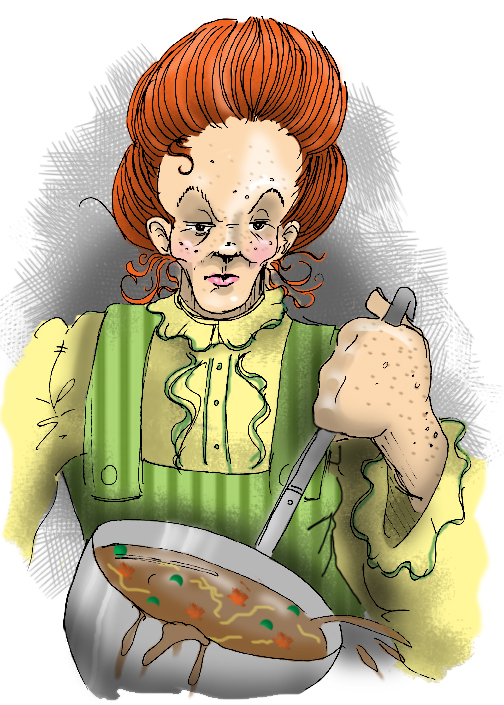
Mary Mallon was an uneducated, hot-tempered Irish immigrant, but, boy, could she cook.

Mary came to the United States in 1884 and worked a succession of menial jobs until she discovered her talents in the kitchen. In 1900, she found employment as the personal cook for a family in Westchester County, just outside of Manhattan. She prepared all of the family’s meals, including her famously delicious peach ice cream. Within two weeks of her employment, several members of the family came down with typhoid fever and Mary left them.

She began working for another family, this time in Oyster Bay, Long Island, but within two weeks, ten of the eleven members of the household were hospitalized with typhoid fever. She secured cooking positions at three more homes, all with similar results.

George Soper, a sanitation expert and medical investigator began researching Mary’s trail of sickness. Always a few steps behind, Soper interviewed Mary’s employers and their families until he finally tracked her down in 1907. He attempted to question her, but she was uncooperative. Actually, she was downright nasty. Mary angrily brushed off the notion of being the source of any sickness, since she never exhibited any symptoms.  Regardless of Mary’s position, Soper published his report in The Journal of the American Medical Association.  This prompted The New York Department of Health to send Dr. Sara Josephine Baker, an early advocate for public health, to talk to Mary. Citing Mary as a source of typhoid, Dr. Baker had two police officers take an obstinate Mary into custody.

Mary was forcibly subjected to testing, including urine and stool samples. Results showed that her gallbladder was teeming with typhoid salmonella. She admitted that she rarely washed her hands while cooking, claiming she never felt that it was necessary. A subsequent report published in The Journal of the American Medical Association  referred to her as “Typhoid Mary,” and she was immediately sent into quarantine at a clinic located on North Brother Island, near Riker’s Island. Mary protested, maintaining that she couldn’t possibly carry any disease since she showed no symptoms.

In 1910, Mary was released when the Department of Health decided that disease carriers should no longer be held in isolation. Mary promised to abandon her career in cooking and got a job doing laundry. But, soon, using the alias “Mary Brown,” she returned to the kitchen. For the next five years, she worked in various kitchens, leaving numerous cases of typhoid in her wake. After an outbreak of typhoid fever at New York’s Sloane Hospital for Women, George Soper discovered that a red-haired, immigrant cook had recently left the facility. Public health officials caught Mary a few months later and returned her to the facility on North Brother Island. She remained there for the rest of her life, giving interviews to curious reporters and investigators and becoming a minor celebrity.

Mary died in 1938 from complications of a stroke. An autopsy revealed live typhoid bacteria in her gallbladder. Her remains were cremated at the autopsy’s conclusion.

Comments

comments