DCS: herb jeffries

Bronze Buckaroo

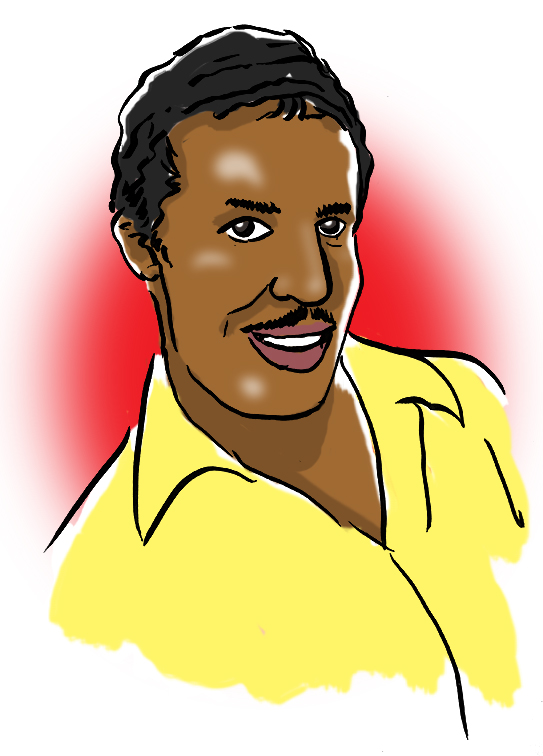
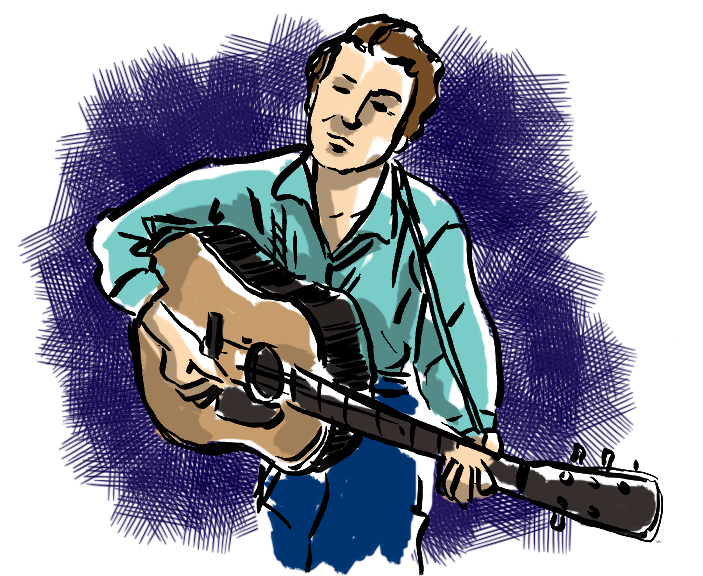
There were a few things that were unclear about Herb Jeffries, the handsome actor/singer/songwriter, whose career spanned seven decades. His year of birth was given, at various times, as either 1913 or 1914. He often told conflicting stories about his father — whether he was French or Sicilian or of African descent. It was also unclear if Herb, Hollywood’s first black singing cowboy, was, in fact, black.

Young Herb Jeffries was singing in a Detroit speakeasy. His beautifully-toned voice caught the attention of legendary jazz trumpeter Louis Armstrong. He embraced the young Herb and recommended him to fellow musician Erskine Tate as a featured vocalist in his all-black band. He told Herb if anyone questions his race, he should explain that he is Southern Creole from Louisiana. After a regular stint with Tate’s band in Chicago (at a club allegedly owned by mobster Al Capone), Herb toured the southern United States with Earl “Fatha” Hines.

While travelling through segregated areas of the country, Herb was distressed by the restrictions to which blacks were subjected. Performances were relegated to tobacco warehouses and “blacks only” theaters. Taking a cue from the popularity of Western stars like Tom Mix and  Jack Holt, Herb decided to produce his own Western films, specifically for black audiences. He hired a B-movie director named Jeb Buell. Herb secured the N.B. Murray Dude Ranch in Apple Valley, California for the setting. He wrote original songs, with help from Spencer Williams (famous for writing “Basin Street Blues”, “I Ain’t Got Nobody” and “Everybody Loves My Baby”), who also would co-star in the film. With his experience with horses from time spent on his grandfather’s farm, Herb cast himself as the main character, a mellow-voiced, smiling “good guy.” The first film, released in 1937, was called Harlem on the Prairie. Its popularity spawned subsequent features, each with a similar premise and an original musical score by Herb.

Herb often enhanced his naturally light complexion with darker makeup. He regularly darkened his skin for the movies, as well as public appearances. He earned himself the nickname “The Bronze Buckaroo” and was notable as a true Western movie star, his name often mentioned in the same breath as Roy Rogers and Gene Autry.

He was quite a ladies’ man, having married four times, including a union with noted stripper Tempest Storm. Curiously, he identified as “Caucasian” on each of his marriage licenses.

In the 1960s, Herb was featured in the Western TV series The Virginian, as well as guest appearances in episodes of I Dream of Jeannie and Hawaii 5-0. He also regularly performed at benefits for autism and music education. He was active until his death in 2014 at age 100. Although he championed for equal rights and racial equality, he never fully confirmed his true ethnicity.
 

Comments

comments

IF: shelter

gimme shelter

‘Twas in another lifetime, one of toil and blood
When blackness was a virtue and the road was full of mud
I came in from the wilderness, a creature void of form.
“Come in,” she said,
“I’ll give you shelter from the storm.”

Comments

comments

DCS: tamara dobson

My jurisdiction extends from Ankara, Turkey to Watts Tower, baby.

Statuesque Tamara Dobson participated in a few fashion shows while attending the Maryland Institute College of Art. Working her way towards a degree in fashion illustration, she began modeling and was soon appearing in commercials. After graduation, she moved to New York, where she modeled, appearing regularly in Vogue and Essence magazines. She represented high fashion brands like Revlon, Fabergé, and Chanel in commercials.

After a few bit parts, Warner Brothers Studios was banking on Tamara becoming the next Pam Grier. In the style of hits like Coffy and Foxy Brown, Tamara was cast in the title role in 1973’s blaxplotation classic Cleopatra Jones and its sequel Cleopatra Jones and the Casino of Gold.  While she wasn’t able to top Ms. Grier’s popularity, she did achieve a dubious distinction. At 6 feet, 2 inches tall, Tamara was listed in the Guinness Book of World Records as the “Tallest Leading Lady in Film.”

She was featured in a dozen episodes of the Saturday morning sci-fi series Jason of Star Command, alongside a post-Star Trek James Doohan (taking a role meant for Jonathan Harris) and the villainous Sid Haig. After the series’ cancellation, she starred in Chained Heat, a “women in prison” film with Linda Blair, Sybil Danning and Stella Stevens. Her final screen appearance was in Amazons, a made-for-TV cautionary tale about powerful women taking over society from men. The film, directed by Starsky & Hutch‘s Paul Michael Glaser, debuted around the time that Geraldine Ferraro was announced as Walter Mondale’s Vice-Presidential running mate.

Tamara retired from show business after a diagnosis of multiple sclerosis. She lived out of the spotlight until her death in 2006 at the age of 59.


Comments

comments

IF: hat

God! He had a hat!

Oh, a cowboy needs a horse, needs a horse, needs a horse
And he’s gotta have a rope, have a rope, have a rope
And he oughta’ have a song, have a song, have a song
If he wants to keep ridin’

Now a cowboy needs a hat, needs a hat, needs a hat
And a pair of fancy boots, fancy boots, fancy boots
And a set of shiny spurs, shiny spurs, shiny spurs
If he wants to keep ridin’

Comments

comments

DCS: lucille bogan

shave 'em dry

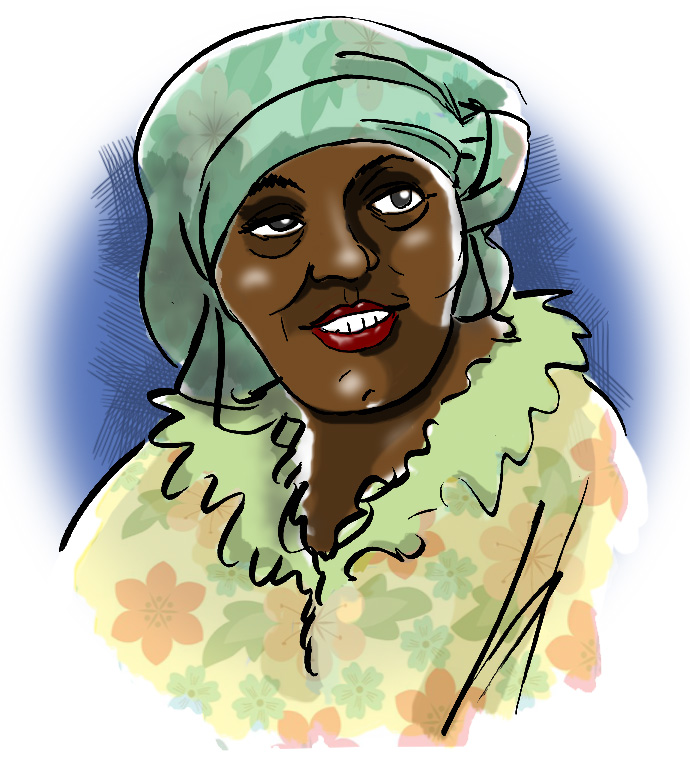
Lucille Bogan began recording in the early 20s, for Okeh Records the record division of the Otto Heinemann Phonograph Corporation. Okeh was a major producer of “race records.” They released early recordings by Duke Ellington, Louis Armstrong and future Academy Award winner Hattie McDaniel. Lucille mostly recorded in New York City, but at the end of 1923, she did some sessions in Atlanta, making her the first black artist to record blues outside of the blues centers of New York or Chicago.

Lucille’s songs, most of which she wrote herself, focused on sex, prostitution and drinking. She performed in rowdy juke joints and speakeasies and the crowds ate it up. Pairing with such well-known instrumentalists as Tampa Red and Cow Cow Davenport, she became famous for her versions of “Black Angel Blues,” “Sloppy Drunk Blues” and “Tricks Ain’t Walkin’ No More.” These songs contained thinly-veiled sexual symbolism, unlike “B.D. Woman’s Blues,” which was fully understood to be sung from the point of view of a so-called “bull dyke.”

Lucille, sometimes using the stage name “Bessie Jackson,” recorded two versions of the notorious tune “Shave ‘Em Dry” – a relatively tame version and an explicit and raunchy version. She managed her son’s jazz combo, after she ceased performing.

Lucille suffered from atherosclerosis and passed away as a result of the disease at the age of 51.

HERE’S Lucille’s version of “Shave ‘Em Dry.” Warning: Contains extremely explicit language

Comments

comments

IF: mystery

reveals on every side a thousand, thousand shades of death begrimed and black

Its numerous jug handles and laws prohibiting self-serve gas pumping aside, New Jersey is, admittedly, a pretty weird place. One of the more mysterious things to happen in New Jersey occurred, quite fittingly, on Shades of Death Road in Warren County.

Shades of Death Road is a stretch of two-lane highway that runs approximately north and south for seven miles, skirting Jenny Jump State Forest at several points. The road, once known as Shades Road, offers several unsubstantiated origins for its current name. Folklore points to the road being a favorite of local highwaymen who robbed and murdered travelers. Other stories claim, due to its abundance of trees with low branches, that many lynchings took place there. In the early 20th century, the road was the site of several brutal murders, including a woman who killed and dismembered her unfaithful husband, burying his head and body on opposite sides of the road. Another story alleges that nearby Bear Swamp was overrun with malaria-carrying mosquitoes. The high death rate and the remoteness from medical assistance prompted local government to drain the swamp in 1884. In addition, the area has been host to alleged sightings of an other-worldly nature. Whatever the real reason for the macabre moniker, the local authorities have had difficulty in keeping souvenir-seekers from stealing the street signs. They have resorted to slathering the sign posts with grease to deter such theft.

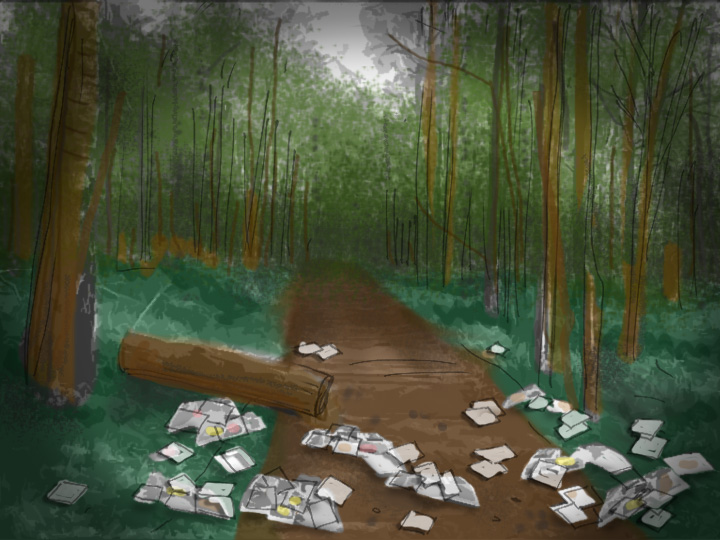
In 1990, the magazine Weird NJ reported on the discovery of hundreds of Polaroid photographs strewn all over a clearing, just off Shades of Death Road. The photos (some of which can be seen here), mostly faded and out of focus, depicted a woman in various states of physical restraint. In some photos, she was shown tied to a metal table. Others were fuzzy close-ups of her face exhibiting distress and fear. In the background of the photos was an old television with dials, its screen filled with electronic snow. In others, the screen shows a broadcast of the action TV series Wonder WomanWeird NJ said that local police were notified of the discovery by an anonymous tip, but the majority of the pictures had disappeared by the time police arrived, leaving little upon which to base an investigation.

Warnings against trespassing have been posted in some sections of Shades of Death Road, as parts run along private property. However, the public areas are open to the curious. But, please, don’t steal the street signs.

Or leave weird pictures.

Comments

comments

DCS: theresa harris

my, my

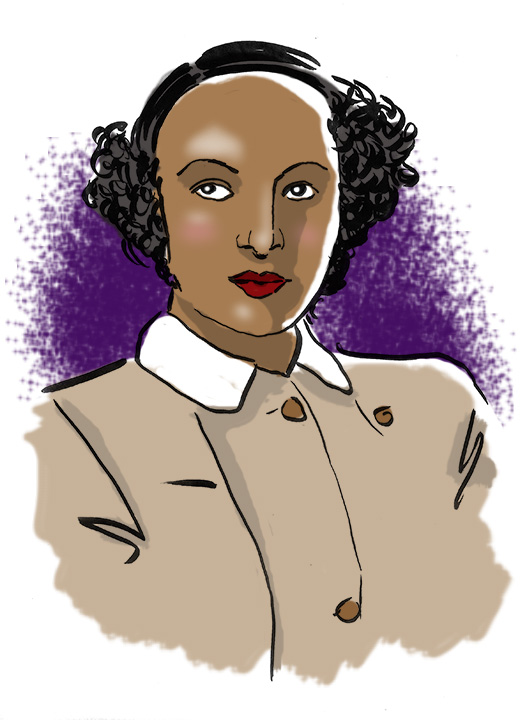
The daughter of sharecroppers, Theresa Harris was born on New Year’s Eve 1906. Her family moved to Southern California when she was 11 and she longed to become an actress.

In 1930, she made he debut in the gangster tale Thunderbolt, where she was featured in an uncredited performance singing “Daddy, Won’t You Please Come Home?” Soon. she found numerous roles in films, acting alongside big names like Fay Wray, Barbara Stanwyck, Myrna Loy, Jean Harlow, Esther Williams and Bette Davis. However, she was relegated, like most African-American actresses, to playing maids, hat-check girls, prostitutes and tribal women. These roles, all uncredited, frustrated Theresa. She was very vocal in her advocacy for better roles for African-Americans, but was offered few opportunities. She was featured in a pivotal role opposite Ginger Rogers in 1933’s Professional Sweetheart, but, once again, she was uncredited.

In the 1940s, she drew favor from director Val Lewton. Lewton was known for casting African-American actors in non-stereotypical roles. Theresa appeared in four films for Lewton, including his most famous, Cat People.

After a few television roles in the 1950s, Theresa married a doctor and retired from show business, lamenting, “My ambition was to be an actress. Hollywood had no parts for me.”

She passed away in 1985 at the age of 78.

Comments

comments

DCS: abe vigoda

Can you get me off the hook, Tom? For old times' sake?

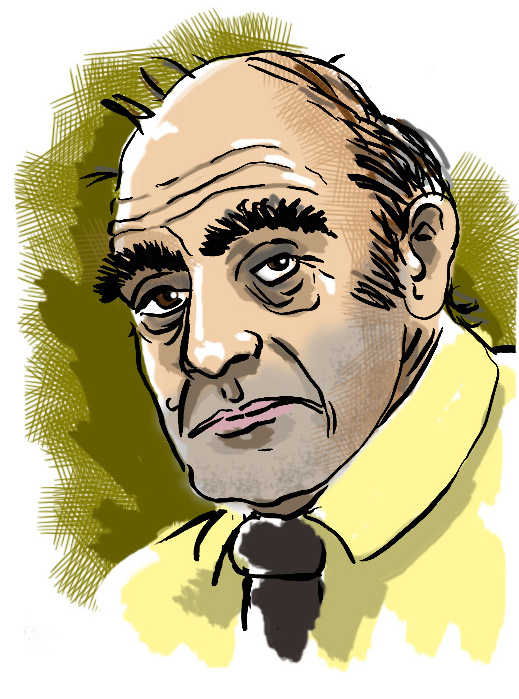
Abe Vigoda died earlier this week. His career bridged eight decades and he spent the last few of those decades convincing the public that he wasn’t dead.

He played mostly bit parts in the early days of television including long stints on the popular soap operas As The World Turns and Dark Shadows. Always giving the appearance of being much older, Abe was just 50 when he was cast in the memorable role of family turncoat “Sal Tessio” in Francis Ford Coppola’s epic adaptation of Mario Puzo’s best-seller The Godfather.

While living in Los Angeles, Abe was a daily jogger, often running up to five mile a day. One day, after returning home from his regular run, his agent called about a role in an upcoming television series for which, he believed, Abe would be perfect.

“Go to this audition at once.” the agent instructed.

” No,” an exhausted Abe protested, “I have to a shower.”

“No, no, no.,” the agent insisted, “Go right now to Studio City, you’re very right for it, they know you from The Godfather, they want to see you.”

“With my shorts?” asked Abe.

“Go.” The agent was firm, so Abe went.

Danny Arnold and Ted Flicker, the producers of the show gave Abe the once-over. Actually, a few once-overs. Finally they said, “You look tired.”

“Of course I’m tired,” an annoyed Abe replied, “I jogged five miles this morning, I’m exhausted.”

The pair laughed and then commented, “Yeah, yeah, you look like you have hemorrhoids.”

“What are you, a doctor or a producer?,” Abe spat back.

That exchange led to Abe being instantly cast as Detective Phil Fish on the new comedy Barney Miller. The character was eventually spun off onto his own show Fish.

Comments

comments