

Stan learned “you get what you pay for” the hard way.
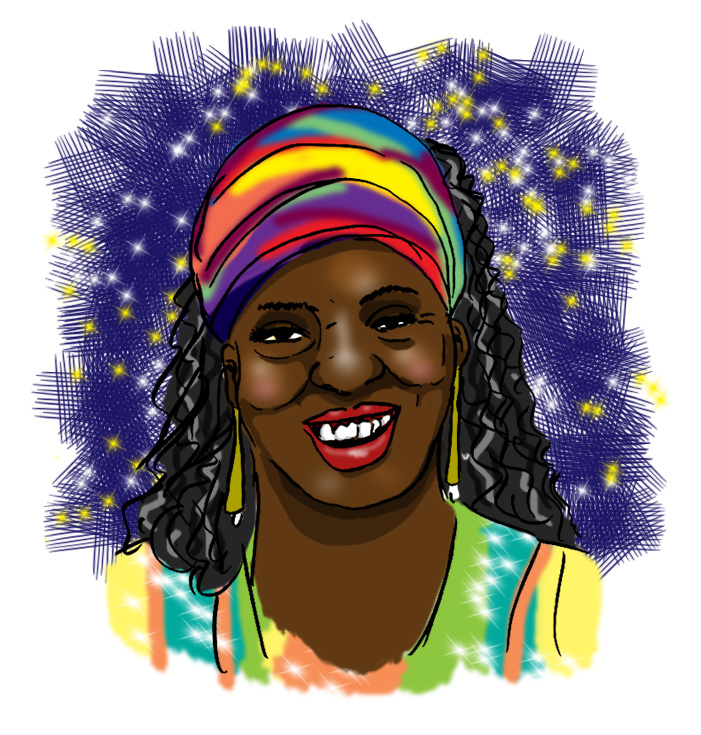
Youree Harris was born in Los Angeles. She attended an all-girls boarding school and was married and divorced with two children by the time she was in her middle 20s.
An aspiring actress, Youree opened a theatrical production company in Seattle. Her first production was an autobiographical play. A year later, after her production of Supper Club Cafe was a flop, she left town with a string of debts and unpaid actors behind her. She told her cast, in individual letters, that medical costs stemming from bone cancer treatment, prevented her from issuing their pay. She let everyone know how much she owed, but never made good.
In the late 90s, Youree began working for entrepreneurs Steven Feder and Peter Stotz in their new venture The Psychic Readers Network. On a series of low-budget commercials, Youree portrayed mystical, Jamaican-born “Miss Cleo,” a supposed shaman and psychic, soliciting pay-per-call psychic readings. The Psychic Readers Network began to receive complaints, allegations of deception and eventual lawsuits. The FCC charged the company with deceptive advertising, billing, and collection practices, but Youree, merely an employee, was not indicted.
Youree bounced around various “projects,’ using an array of different names including LaShawnda Williams, Corvette Mama, Elenore St. Julian, Desiree Canterlaw, Janet Snyder, Maria Delcampo, Christina Garcia, Cleomili Harris, Youree Perris. She landed a voice-over job for the popular video game Grand Theft Auto: Vice City and even wrote a book on spiritualism. In 2015, she appeared, in character, in a commercial for General Mills promoting the cereal French Toast Crunch. The Psychic Readers Network called foul, saying that it owned the character of “Miss Cleo,” and the advertisements were pulled.
Out of the spotlight for almost a year, Youree passed away from metastatic colon cancer at the age of 53. She never saw it coming.

Ready to discover, conquer and start a football team in Minnesota.
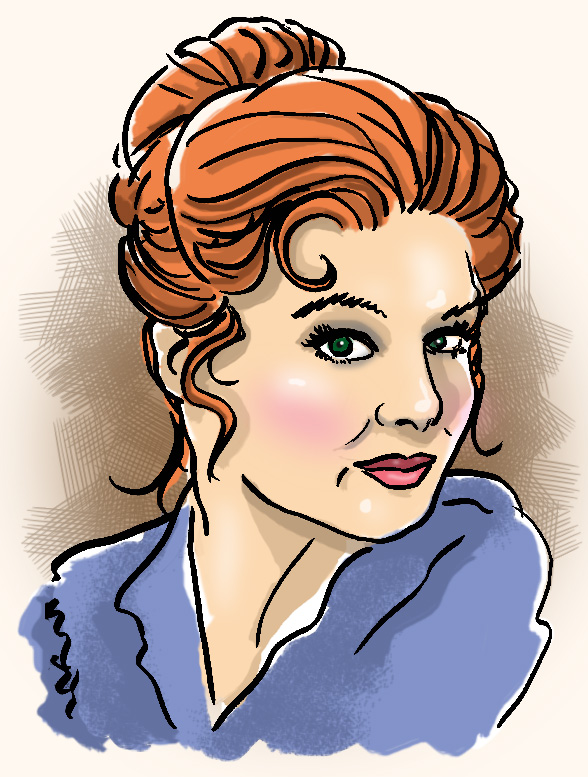
Teenage Patsy Lou Blake did some modeling in her hometown of Dallas, Texas for the Conover Agency. She was spotted by a scout from Warner Brothers Pictures and, soon young Pasty, now using the more sophisticated-sounding name “Patricia Blair,” was cast in the war drama Jump Into Hell in 1955. She had roles in several more films until she landed a small regular role in the TV western Yancy Derringer starring Jock Mahoney. Patricia played “Goldy,” one of the hostesses at Madame Francine gambling club. Later, Patricia appeared in 22 episodes of the popular Western The Rifleman as feisty hotel owner “Lou Mallory,” a potential love interest for series star Chuck Connors. In her debut episode, she duped a group of local farmers out of their land with insider knowledge of a railroad coming into the town of North Fork. Patricia made guest appearances in several episodic television shows, including Perry Mason, The Bob Cummings Show, The Virginian and Bonanza.
In the early 60s, Patricia planned on moving to New York, when screenwriter Gordon Chase helped her get the female lead in the series Daniel Boone. She starred opposite Fess Parker as “Rebecca Boone,” Daniel’s wife and mother to son Israel and daughter Jemima. When the series ended in 1970, Patricia made a handful of guest shots on various TV dramas and until she bid farewell to her show business career.
In the 70s, she began a lucrative and fulfilling second career producing corporate trade shows in New York and New Jersey. She happily stayed out of the spotlight until her death in 2013 at the age of 80.
But there is another part of the story….
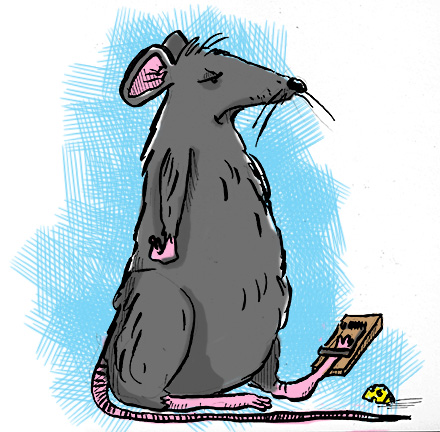
Really? Really? You’ve got to be kidding.
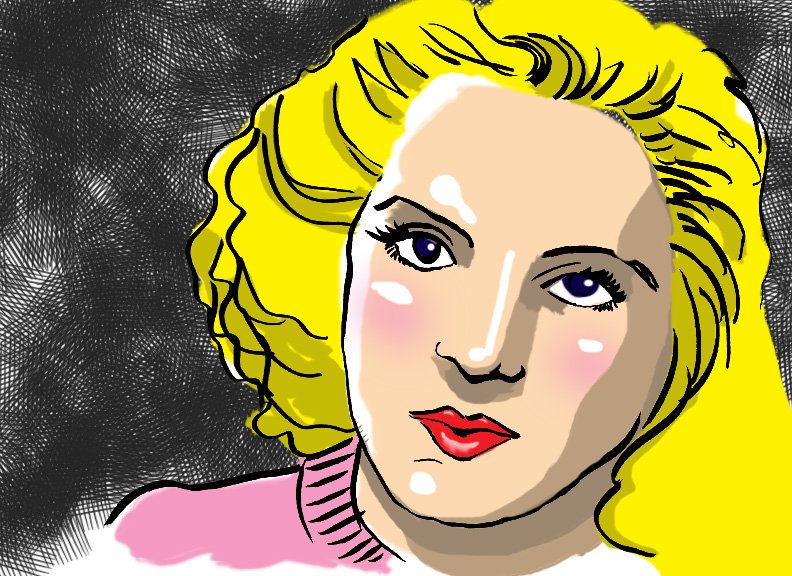
By the time Inge Landgut was cast by Fritz Lang in the 1931 classic M, she was already known in her native Germany, as “The German Shirley Temple.” Inge played Elsie Beckmann, a victim of child murderer Hans Beckert, as played by Peter Lorre. The film was a hit and Inge continued her career well into adulthood. She, however, took a different show business path and became an in-demand voice-over actress. In addition to works produced in Germany, Inge often was the German voice for American actresses for film’s overseas releases. In her career, she provided the German dialogue for Shelley Winters, Hermione Baddeley, and Lois Maxwell (“Miss Moneypenny” in the James Bond film series). On German television, she voiced Barbara Bel Geddes’ “Miss Ellie” on Dallas and she was the long-time voice of “Wilma Flintstone.”
Inge remained active until her death in West Berlin in 1986 at the age of 63.

There are some things I can no longer stomach.
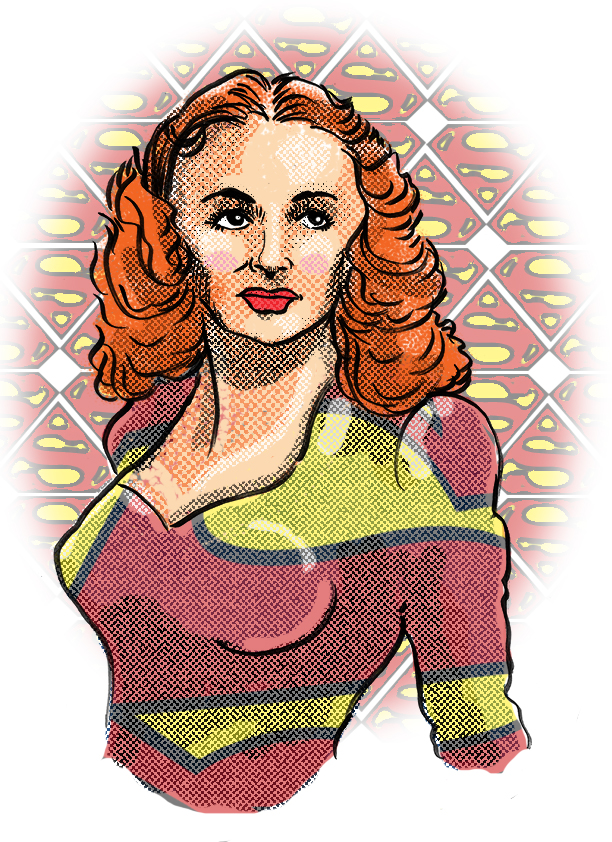
During World War II, Noel Neill was one of the most popular pin-up models, second only to Betty Grable. She was a regular player at Monogram Pictures, a movie studio known for producing low-budget pictures. Noel was featured in “wayward teen” films, as well as Westerns and one of the last Charlie Chan mysteries. She also sang with Bob Crosby’s Orchestra and performed at the Del Mar Turf Club, owned by Bob’s brother Bing.
In 1948, Noel starred as reporter “Lois Lane” opposite Kirk Alyn in a Superman serial. In 1951, the TV series Adventures of Superman debuted with George Reeves in the title role and Phyllis Coates taking the role of Lois Lane. When the second season began production, Phyllis Coates had committed to another project, so producers signed Noel to reprise her film role as the spunky Daily Planet reporter. She stayed with the series for the remainder of its six season run. George Reeves’ untimely death canceled the show’s seventh season, although there were tentative plans to continue, focusing on the adventures of Lois Lane and Jimmy Olsen.
Unlike her predecessor Coates, Noel embraced the role of Lois Lane and her association with Superman. She appeared in the 1978 big-screen version of Superman, as well as cameos in episodes of Smallville and Lois and Clark. She returned to the big screen in Superman Returns in 2006.
Noel made appearances at the annual Superman Festival in Metropolis, Illinois. She was often asked by curious fans: “Why didn’t you know that Clark Kent was Superman, just wearing a pair of eyeglasses?” Her regular reply was: “I didn’t want to lose my job!”
Noel died in July 2016 at the age of 95.
Dave wasn’t much of the partying type.
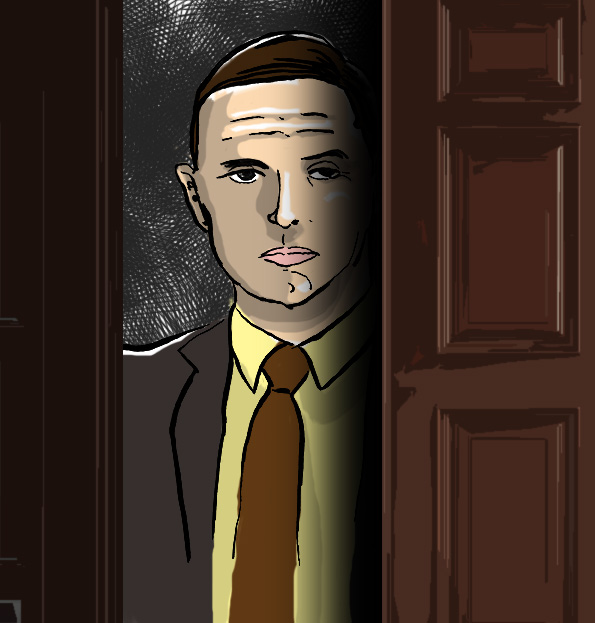
Richard Bright began his career in the 1960s in live television and on the stage. It was during a stage production in San Francisco that the 28 year old actor and his female co-star were arrested for speaking obscenities and simulating sex acts. With guidance and assistance from the ACLU, a charges were dismissed when First Amendment Freedom of speech rights were cited. The case set a precedent for actors’rights.
In the 70s, Richard took roles in a number of popular film, including Panic in Needle Park in 1971 and The Getaway in 1972. He also landed the role for which he is best remembered, Al Neri, the cop turned hit man in Francis Ford Coppola’s The Godfather. His face was the final screen image at the conclusion of The Godfather. Richard was one of only five actors to appear in all three Godfather films.
He was an in-demand character actor thought the 80s and 90s, with parts in Looking for Mr. Goodbar, Pat Garrett and Billy the Kid, Marathon Man and the big-screen adaptation of the Broadway musical Hair. He also appeared on television on Law & Order, Oz, The Sopranos as well as a recurring role on the soap opera One Life to Live.
On February 18, 2006, Richard was waiting to cross a street in Manhattan’s busy Upper West Side. He was struck and killed by the rear wheel of a turning tour bus. The bus driver was unaware of the accident until he arrived at the Port Authority depot. Although the driver’s operator license was suspended, no criminal charges were filed.
Richard Bright was 68.