DCS: roscoe arbuckle

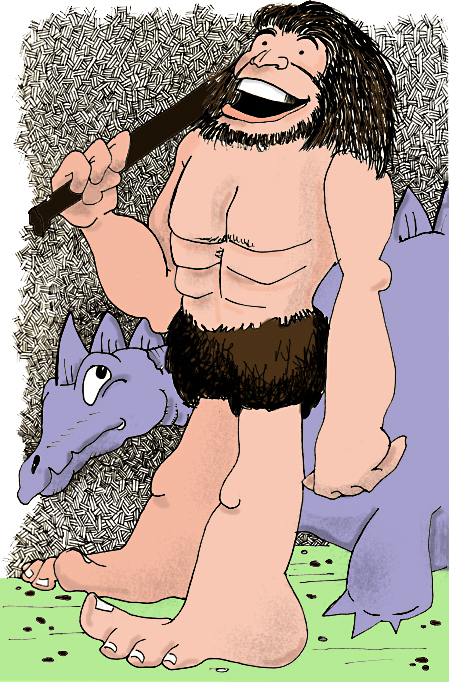
things go better with Coke.
Roscoe “Fatty” Arbuckle appeared in several Keystone Kops shorts in 1913. In 1914 Paramount Pictures offered the then-unknown Arbuckle $1,000 a day, 25% of all profits and complete artistic control of movies he made for them. The movies were so lucrative and popular that in 1918 they offered Arbuckle a 3-year, $3 million contract. In his movies, Arbuckle typically portrayed a bumbling yet well-meaning hero who saved the day by pie-throwing, back-flipping, and generally outwitting his opponent. In spite of his bulky, 250-pound frame, Arbuckle proved to be an able acrobat ― a skill he had perfected during his days in vaudeville. In 1919, Arbuckle was one of the most successful comedians in silent film. Two years later, that would change.

On September 3, 1921 Arbuckle took a break from his hectic film schedule and drove to San Francisco with two friends. They checked into the St. Francis Hotel, decided to have a party, and invited several women to their suite. During the carousing, a 30-year-old aspiring actress named Virginia Rappe became seriously ill and was examined by the hotel doctor, who concluded her symptoms were mostly caused by intoxication.

Rappe died three days later of peritonitis caused by a ruptured bladder. Rappe’s companion at the party, Maude Delmont, claimed before a grand jury that Arbuckle had somehow pierced Rappe’s bladder while raping her. Rappe’s manager Al Semnacker accused Arbuckle of using a piece of ice to simulate sex with her, which led to the injuries. By the time the story was reported in newspapers, the object had evolved  into being a Coca-Cola or champagne bottle, instead of a piece of ice. In fact, witnesses testified that Arbuckle rubbed the ice on Rappe’s stomach to ease her abdominal pain. Arbuckle was confident that he had nothing to be ashamed of, and denied any wrongdoing. Delmont later made a statement incriminating Arbuckle to the police in an attempt to extort money from Arbuckle’s attorneys, but the matter soon spun out of her control. What Delmont did not tell the District Attorney was that as Virginia Rappe lay in pain in Arbuckle’s hotel suite, Delmont had sent a telegram to each of two friends: “WE HAVE ROSCOE ARBUCKLE IN A HOLE HERE. CHANCE TO MAKE SOME MONEY OUT OF HIM.” Her official complaint — with its description of how Arbuckle had dragged Virginia Rappe into his bedroom saying, “I’ve waited five years to get you;” how Rappe had cried for help from behind the locked door and Delmont had banged on the door; how Arbuckle had at last emerged, perspiring from the struggle and she had rushed in to find Rappe naked and bruised and dying — all had been a fabrication. After two deadlocked juries in as many mistrials, the jury at Arbuckle’s third trial deliberated for six minutes and returned a “not guilty” verdict. But it was too late for Arbuckle’s career. By this time Arbuckle’s films had been banned, and newspapers had been filled for seven months with alleged stories of Hollywood orgies, murder, sexual perversity, and lies about the case.

Arbuckle tried returning to moviemaking, but industry resistance to distributing his pictures lingered after his acquittal. He retreated into alcoholism. In the words of his first wife, “Roscoe only seemed to find solace and comfort in a bottle.”

Buster Keaton attempted to help Arbuckle by giving him work on Keaton’s films. Arbuckle also directed a number of comedy shorts under the pseudonym William Goodrich.

In 1921, shortly before his third marriage, Arbuckle signed a contract with Warner Brothers to star in six two-reel short comedies under his own name. The six shorts, filmed in Brooklyn, contain the only recordings of Arbuckle’s voice. Lionel Stander and Shemp Howard appeared with Arbuckle in these successful films.

Arbuckle had finished filming the last of these shorts on June 28, 1933. The next day he was signed by Warner Brothers to make a feature-length film. At last, Arbuckle’s professional reputation was restored, and he was welcomed back into the world he loved. He reportedly said, “This is the best day of my life.” He died that night of a heart attack. He was 46.

Comments

comments

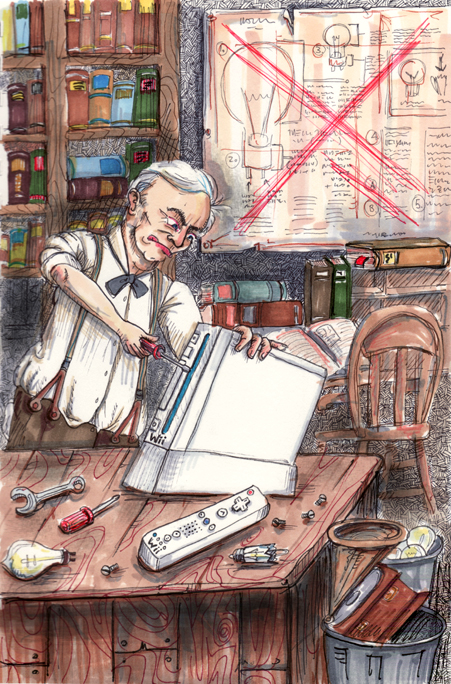
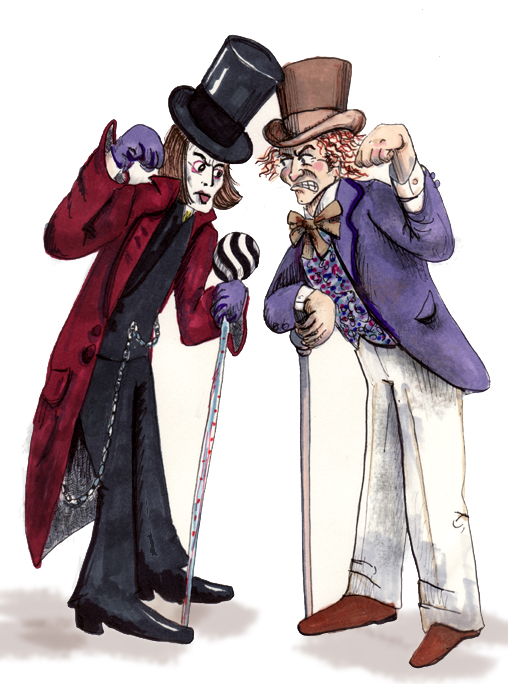
Monday Artday: thirst

The Monday Artday challenge this week is “thirst”.
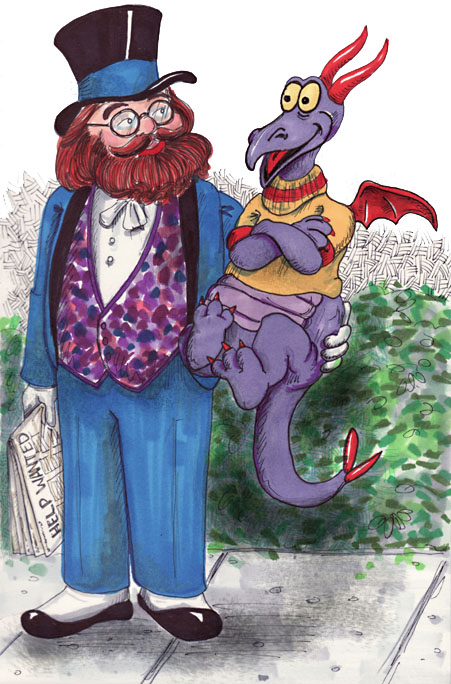
I'm putting on my top hat, tying on my white tie...
I love old jokes and this week’s challenge word made me think of a great old joke.
A guy is crawling through the desert, crying for water. “Water! Water!” he cries. He sees a figure ahead in the desert and he crawls towards it. It’s a man.
“Water! Please! I need water!,” the guy cries to the man.
The man says “I don’t have any water, but I have some beautiful neckties.”
“NECKTIES!”, the guy screams, “I need WATER! WATER! I don’t want a tie!” ― and he crawls off.
The guy comes across another man in the desert. “Water! Please! I need water!,” the guy pleads to the man.
“Well, I don’t have any water, but I have some ties. Look at these great ties.” the man says.
“Again with the TIES!?,” the guy cries, “I don’t need any ties! I NEED WATER! WATER!!”
“I got ties,” the man says. The guy, disgusted, crawls off.
Just over a sand dune, the guy comes upon a huge restaurant ― right in the middle of the desert!  He struggles to crawl up the front steps of the restaurant, pleading for water. A maître d’ in a tuxedo is standing at the doorway. “Please,” the guy says, “Please! I need water!”
The maître d’ looks down at him and says “I’m sorry. I can’t let you in without a tie.”

Comments

comments

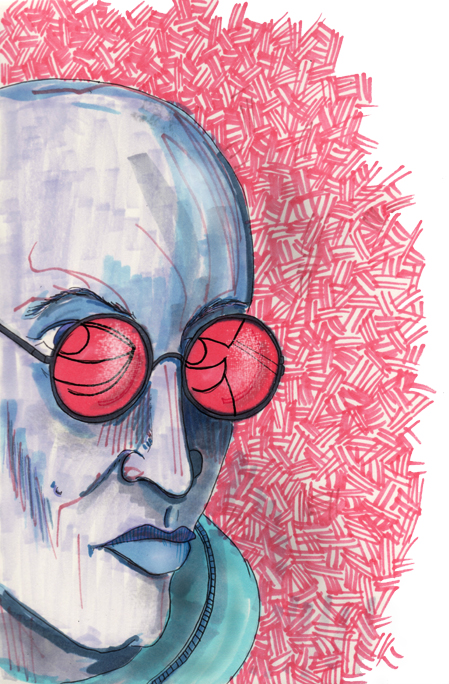
from my sketchbook: albert dekker

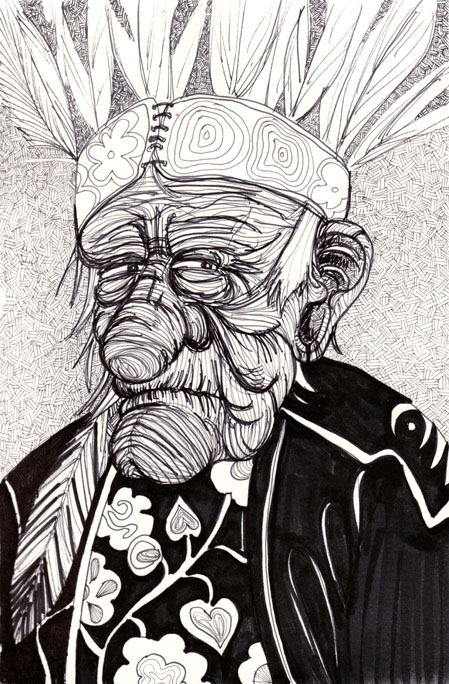
Now you can call me cyclops, because I have one good eye.
Born Albert Van Ecke in Brooklyn, New York, Albert Dekker made his professional acting debut with a Cincinnati stock company in 1927. Within a few months, Dekker was featured on Broadway.

Dekker moved to Hollywood in 1937, and made his first film, The Great Garrick. He returned to the stage and replaced Lee J. Cobb as Willy Loman in the original 1949 production of Death of a Salesman, and during a five-year stint back on Broadway in the early 1960s, he played the Duke of Norfolk in A Man for All Seasons, with Paul Scofield. Dekker appeared in some seventy films from the 1930s to 1960s, but his three most famous screen roles were as a mad scientist in the 1940 horror film Dr. Cyclops, as a vicious hitman in the The Killers, and as an unscrupulous railroad detective in The Wild Bunch, his last motion picture.

Dekker’s interest in politics led to his winning a seat in the California State Assembly for the 57th Assembly District in 1944. Dekker served as a Democratic member for the Assembly during the McCarthy era, and became an outspoken critic of U.S. Senator Joseph McCarthy’s tactics.

Dekker was married actress Esther Guernini. The couple had two sons and a daughter before divorcing. Their sixteen-year-old son, Jan, had been experimenting for over a year on development of a rifle silencer. In 1967, he died of an accidental, but self-inflicted gunshot.

On Thursday evening, May 2, 1968, Dekker and his fiancée, Geraldine Saunders, attended the opening of Zero Mostel’s new play in Hollywood. After the show, Dekker went home to his rented Hollywood apartment. He and Saunders had plans to go out again on Saturday evening. Saturday night passed and Saunders had not heard from Dekker. Saunders became concerned. First thing Sunday morning, she went to his apartment to find his door covered with notes from friends who were also trying in vain to contact him. She slipped a note of her own under the door. When she returned that evening and found it still in place, she went immediately to the building manager. The manager opened the front door which had been locked but not bolted. Everything seemed to be in order until they tried the bathroom door. It was chained from the inside. They forced it open. Saunders passed out from the sight of what they found.

The 6 feet 3 inch, 240-pound Dekker was kneeling nude in the bathtub, a hypodermic needle sticking out of each arm. A hangman’s noose was around his neck but not tight enough to have strangled him. A scarf was tied over his eyes and something like a horse’s bit was in his mouth. Fashioned from a rubber ball and metal wire, the bit had chain “reins” that were tightly tied behind his head. Two leather thongs were stretched between the leather belts that girded his neck and chest. A third belt, around his waist, was tied with a rope that stretched to his ankles, where it had been tied in some kind of lumber hitch. The end of the rope, which continued up his side, wrapped around his wrist several times and was held in Dekker’s hand. Both wrists were clasped by a set of handcuffs. Written in lipstick, above two hypodermic punctures on his right buttock, was the word “whip” and drawings of the sun. Sun rays had also been drawn around his nipples. “Make me suck” was written on his thorax and “slave” and “cocksucker” on his chest. On his lower abdomen was drawn a vagina. He had apparently been dead since Friday and his awkward position had colored his lower body a deep blood purple. He was 62 years old.

During the brief investigation, detectives noted that there were no signs of forced entry or a struggle. Dekker’s death was eventually ruled accidental. The coroner determined that Dekker accidentally asphyxiated himself while attempting autoerotic asphyxia.

Comments

comments

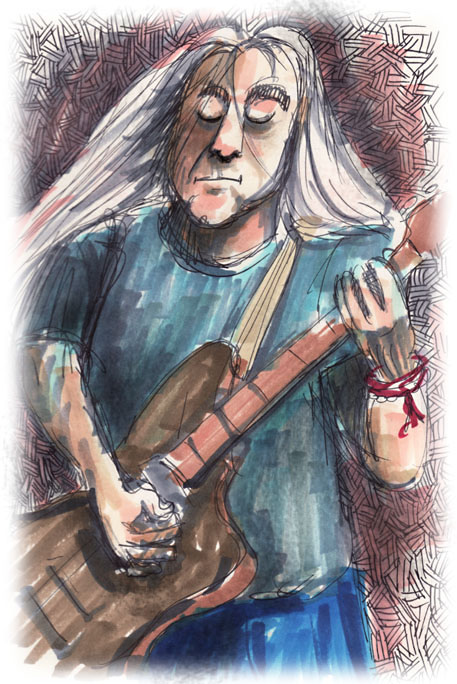
SFG: innocent

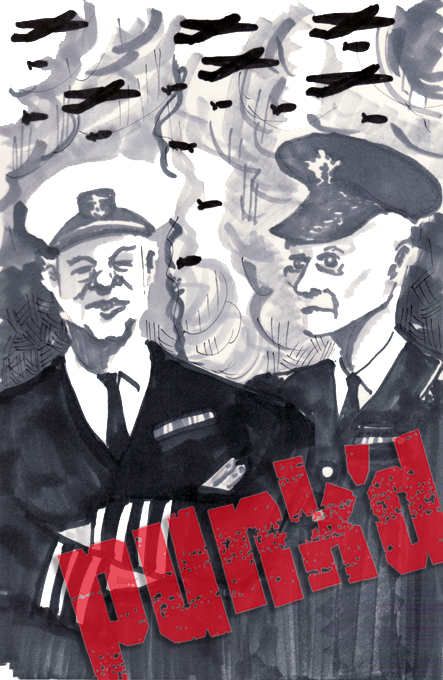
The sugarfrostedgoodness.com challenge word this week is “innocent”.
innocent? yeah, right
On August 29, 1484, Pope Innocent VIII succeeded Pope Sixtus IV (for whom the Sistine Chapel was named). And it was all downhill from there.
After his coronation, he went back all his promises and left his signatures unhonored, slyly revelling in his immunity. He abandoned the decorum of Pope Sixtus IV, and settled down to enjoy life in his own slothful way. He was a despicable creature; ungrateful, avaricious and cowardly. His only interest seems to have been the establishment of his numerous illegitimate progeny. The Vatican became overrun by his sons and daughters, their children and grandchildren.
Innocent VIII slept almost continuously. When awake his favorite pasttime was persecuting Jews. He squeezed every shekel he could out of them, and reduced the Jewish ghetto to a state of misery and terror. Such gross self-indulgence would naturally undermine the strongest constitution. The Pontiff grew immensely fat and his health gradually declined. By the summer of 1492, he had become an inert mass of flesh, incapable of taking any nourishment with the exception of being breastfed by a hired young woman.
A Jewish doctor offered to attempt a blood transfusion to save Innocent VIII’s life. The doctor indicated that the Pope only needed the blood of three healthy young men—Christians presumably. The donors, three 10-year-old boys, were procured from their parents, at one ducat (a gold coin used before World War I) each. The operation resulted in the three healthy young men dying.
Innocent VIII died on July 25, 1492, leaving behind numerous children, of whom only two were publicly acknowledged, the others presented in the usual way as nephews. Octo nocens pueros genuit, totidemque puellas; Hunc merito poterit dicere Roma patrem. – The wicked man begat eight boys, and just as many girls, so that Rome might justly call him Father.

Comments

comments

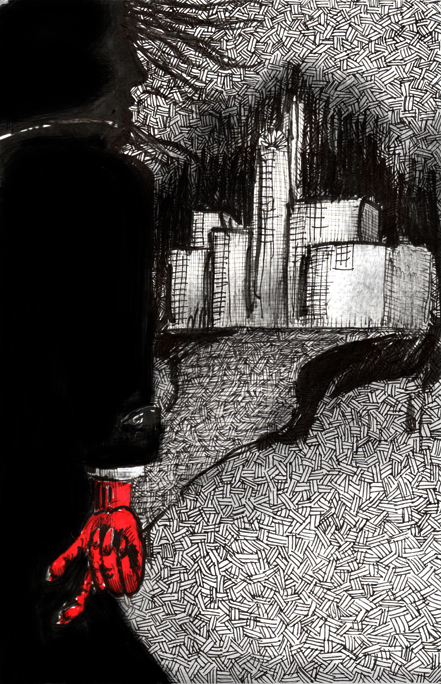
from my sketchbook: edward hickman & marian parker

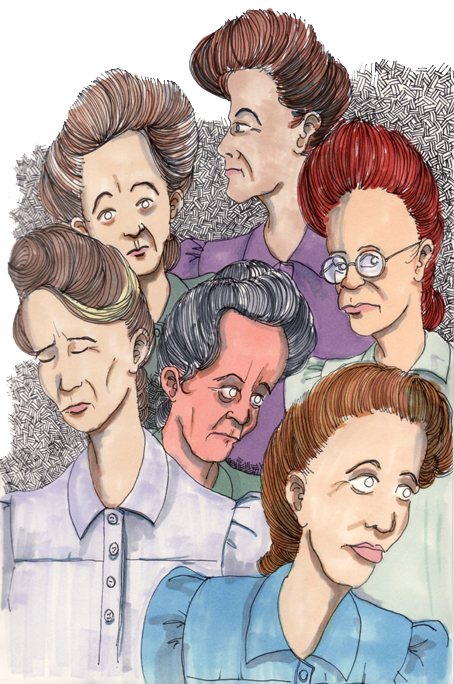
“She left her home one morning/For her school not far away./And no one dreamed that danger/Was lurking near that day”
To make his black soul ready/For the great judgement day
On December 15, 1927, Marion Parker, the 12-year-old daughter of Perry Parker, a prominent banker in Los Angeles, was abducted from her school. Nineteen-year-old Edward Hickman showed up at the school Marian attended with her twin sister, Mt. Vernon Junior High School in Los Angeles. He told officials at the school that the girls’ father had been taken seriously ill and that he wanted “the younger daughter” to come quickly to his side. The girls’ teacher was somewhat confused by the request for just one of the twins as well as the man’s request for “the younger daughter.” When queried again, Hickman corrected himself and asked for “the smaller one.”

After Marian’s disappearance was reported to police, the Parker family received a pair of telegrams, signed by “George Fox.” The telegrams told the family to expect further communication and ransom demands. The next day, Parker received a note from “Fox.” The note began with the header “Δ ε α τ η” meant to spell the word “Death” using Greek characters. “Fox is my name, very sly you know,” began Hickman’s note. “Get this straight. Your daughter’s life hangs by a thread and I have a Gillette ready and able to handle the situation.”

Mr. Parker placed the ransom money, $1,500 in cash, in a black bag and drove off to meet “The Fox.” Hickman and Parker met at the corner of 5th Avenue and South Manhattan Street in Los Angeles about 7:30 p.m. on December 17th. Hickman drove up in his car, pointed a gun at Parker and said “You know what I’m here for. No monkey business.” Parker asked, “Can I see my little girl?” Hickman pointed to a tightly tied package in the car that revealed only Marian’s head. Parker handed over the ransom and as they agreed, Hickman drove a block down the road and pushed Marian out of the car. Parker ran down to where his little girl was lying and picked her up in his arms. Marian was dead. The package contained just her head and torso. Her arms and legs had been chopped off where they joined her body. A wire had been wrapped around her head just above her eyes, keeping them open. Her body had been disemboweled and her empty abdomen stuffed with rags. She had also apparently been flogged to such an extent that the flesh on her back was flayed. Her internal organs had been cut out and, along with her severed limbs, were later found wrapped in newspaper and strewn all over the Los Angeles area.

A massive manhunt for her killer began. Huge cash rewards were offered to anyone who could provide information that led to the identification and capture of “The Fox.” Suspicion quickly settled upon a former employee of Mr. Parker named William Edward Hickman. Several years earlier, Hickman was arrested on a complaint by Mr. Parker regarding stolen and forged checks. Hickman was convicted and did prison time. Investigators compared his fingerprints with prints found on the ransom note. They matched. Hickman’s photo was plastered all over the newspapers and sent to every police department on the west coast. Only a week after the kidnapping murder, two officers who recognized him from the wanted posters, found Hickman in Echo, Oregon. He was conveyed back to Los Angeles where he promptly confessed to another murder he committed during a drug store hold-up. Eventually, Hickman confessed to a dozen armed robberies. Hickman never said why he had killed the girl and cut off her limbs, but he did say he was sorry she was killed. His attorneys attempted to enter a plea of insanity for Hickman. The jury wouldn’t buy it. He was convicted of murder. On October 19, 1928, Hickman was hanged at San Quentin Prison. He never expressed any remorse for what he did.

Comments

comments