DCS: richard manuel

any day now/any day now/ I shall be released
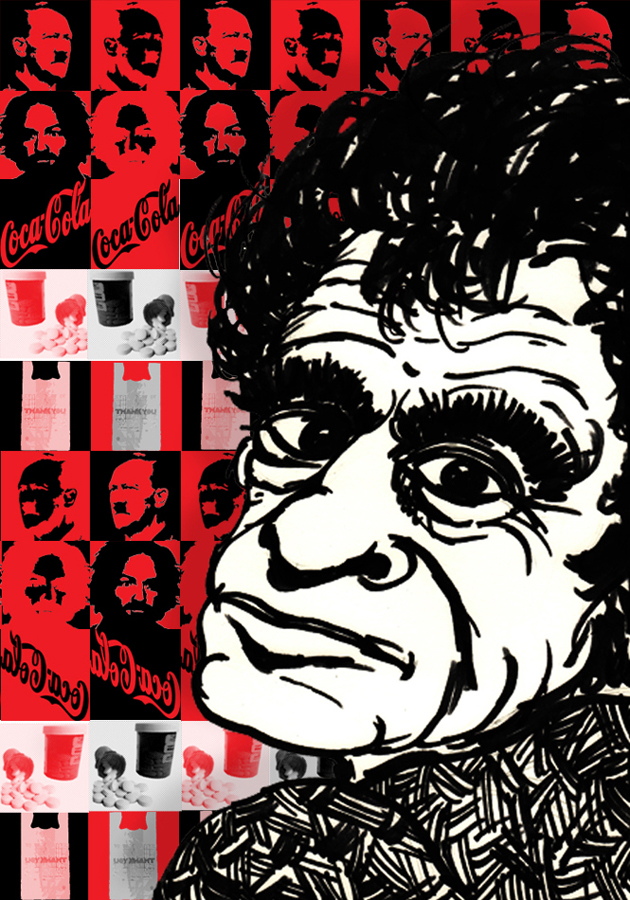
In the summer of 1961, eighteen-year-old Richard Manuel joined Ronnie Hawkins’ backing group, The Hawks, along with Levon Helm on drums, Robbie Robertson on guitar and Rick Danko on bass. Garth Hudson joined the band around Christmas time. After two years, Richard along with Helm, Robertson, Danko, Hudson and saxophonist Jerry Penfound left Hawkins and became Levon Helm Sextet, then later changed to the Canadian Squires, and eventually to Levon and the Hawks. They came to the attention of Bob Dylan. The group of musicians became Dylan’s backing band and Albert Grossman, Dylan’s manager, became their manager.

In 1968, they signed a 10 album deal with Capitol Records. Their first album was released under the name “The Band”, the name they would go by for the rest of their career.

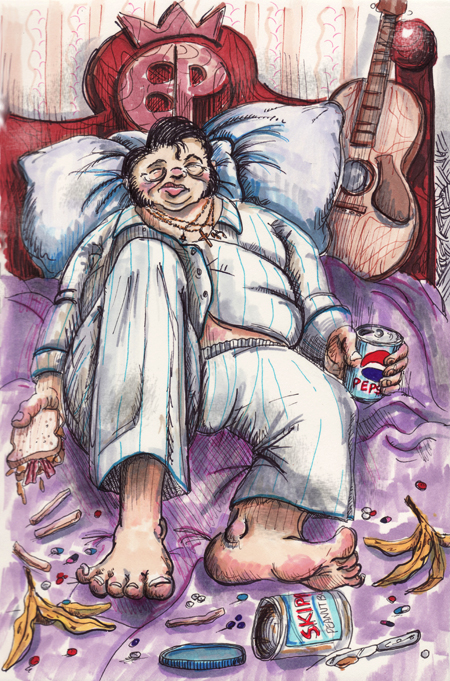
The shy and insecure Richard was the first of the group to succumb to the temptations of the 1960s lifestyle. Already considered by most friends and associates to be an alcoholic, it was not long before Richard added Tuinal, Valium, heroin, and cocaine to his addictions. Through the 60s and 70s, Richard’s drug abuse grew worse. He routinely drank and drugged himself into a blank stupor. At the peak of his alcoholism, Richard was polishing off eight bottles of Grand Marnier a day. By 1976, he had been divorced and had become a shadow of his former self, usually too drunk to play. In The Last Waltz, Martin Scorsese’s documentary of The Band’s last concert, Richard looks older than his age of 33, and even sits out of some of the songs. It was clear that he was shy, insecure, and inebriated.

In 1978, Richard moved to Garth Hudson’s ranch outside Malibu, drying out and eventually remarrying. In 1983, The Band reformed without Robertson. They were relegated to B-List venues and became a “play-your-hits” band, usually opening for bands with far less performing experience. Richard sank into a deep depression immediately following the 1986 death of manager and friend Albert Grossman.

On March 4, 1986, after a gig at the Cheek to Cheek Lounge outside Orlando, in Winter Park, Florida, Richard seemed to be in relatively good spirits. Ominously, after the show, he thanked Hudson for “twenty-five years of incredible music.” The Band returned to the Quality Inn, down the block from the Cheek to Cheek Lounge, and Richard talked with Levon Helm in Helm’s room. Around 2:30 in the morning Richard returned to his room where his wife was already asleep. Sometime during the night, Richard finished a bottle of Grand Marnier and a vial of cocaine, looped his belt around his neck and secured the other end to the shower-curtain rod, and hanged himself.

Comments

comments

IF: seed

The illustrationfriday.com challenge word this week is “seed”.
apples in stereo
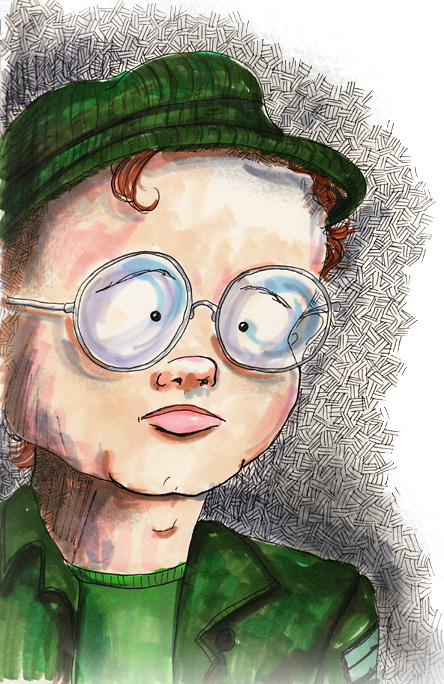
John Chapman was an American pioneer nurseryman. He picked apple seeds from the discarded remains from cider mills in Pennsylvania and travelled across Pennsylvania, Ohio, Indiana, and Illinois, planting apple trees. He became an American legend because of his kind and generous ways, his great leadership in conservation, and the symbolic importance of apples. He came to be known as “Johnny Appleseed”.

He was also a missionary for the Church of the New Jerusalem, (also known as the Swedenborgian Church), teaching the theological doctrines contained in the writings of Emanuel Swedenborg. The Swedenborgian Church counted Walt Whitman, Helen Keller, Andrew Carnegie and Stephen King among its members.

The popular image of Johnny Appleseed had him spreading apple seeds randomly. However, he planted nurseries rather than orchards, built fences around them to protect them from livestock, left the nurseries in the care of a neighbor who sold trees on shares. Appleseed’s “caretakers” were asked to sell trees on credit, if at all possible, but he would accept corn meal, cash or used clothing in barter. Johnny Appleseed dressed in the worst of the used clothing he received, giving away the better clothing he received in barter. He wore no shoes, even in the snowy winter. There was always someone in need he could help out, for he did not have a house to maintain. He spent a good portion of his time traveling from home to home on the frontier. He would tell stories to children, spread the Swedenborgian gospel (“news right fresh from heaven”) to the adults, receiving a floor to sleep on for the night, sometimes supper in return. He would often tear a few pages from one of Swedenborg’s books and leave them with his hosts. He made several trips back east, both to visit his sister and to replenish his supply of Swedenborgian literature. He typically would visit his orchards every year or two and collect his earnings.

Johnny Appleseed’s beliefs made him care deeply about animals. His concern extended even to insects. One cool autumn night, while lying by his campfire in the woods, he observed that the mosquitoes flew into the fire and were burnt. Johnny, who wore a tin pot on his head, which served as both as a hat and a cooking vessel, filled it with water and quenched the fire. He remarked, “God forbid that I should build a fire for my comfort, that should be the means of destroying any of His creatures.”

It has been speculated that Johnny may have had Marfan Syndrome, a rare genetic disorder. One of the primary characteristics of Marfan Syndrome is extra-long and slim limbs. All sources seem to agree that Johnny Appleseed was slim, but while other accounts suggest that he was tall, Harper’s Magazine described him as “small and wiry.”

Those who propose the Marfan theory suggest that his compromised health may have made him feel the cold less intensely. His long life, however, suggests he did not have Marfan’s, and while Marfan’s is closely associated with death from cardiovascular complications, Johnny Appleseed died in his sleep, most likely from pneumonia.

Despite his charity, Johnny Appleseed left an estate of over 1,200 acres of valuable nurseries to his sister, worth millions even then, and far more now. He could have left more if he had been diligent in his bookkeeping.

In addition to my illustration, I have included my original inked pencil sketch, before I added color.

Comments

comments

Monday Artday: tropical jungle

The challenge at Monday Artday this week is “tropical jungle”.
Knock, Knock...Who's there?...Toucan....Toucan Who?...Toucan not fit through the turnstiles at the same time.
Ladies and gentlemen. May I have your attention please? Due to circumstances beyond our control…the Jungle Cruise WILL be operating for the rest of the evening…Thank you.

Watch your step as you enter the boat. If you’re entering from the back, come up to the front. If you’re in the front, just follow the simple instructions of your simple minded boat loader. Come on in, folks…Slide on down! That’s right slide on down, because the more you slide now, the less I have to clean later. Everybody turn around and wave at the people on the dock…wave at them… ’cause you’re never going to see them again!…then again, you’ve probably never seen them before either.

On the other side is my favorite jungle resident, Old Smiley, one of the laziest crocodiles in these parts. I do suggest that you keep your hands inside the boat because Smiley is always looking for a hand out. Here in the rainforest it sometimes rains 365 days per year…some years it even rains every day.

These are the ruins of an ancient shrine, almost totally destroyed centuries ago by an earthquake. Many explorers have tried to steal that priceless ruby, but no one’s ever gotten past that poisonous spider. How many of you think that’s a big spider? How many of you think he’s bigger than the one crawling up that woman’s leg?

Look at that! It’s a large Bengal Tiger. Now, Bengal Tigers are known to leap over five thousand feet in order to catch their prey. That is…when you throw them out of an airplane. You know, the crocodiless are always looking for a hand out. But be careful, I once had an English teacher on board and she didn’t listen to me and now she’s teaching shorthand. And here we have three cobras sticking their tongues out at us with no regards for our feelings. And look at all the elephants out here today! This comes as a complete surprise to me cause I had no idea these guys were going to be here. If you want to take pictures go ahead — all the elephants have their trunks on. As we leave the elephant pool, we head into…uh-oh — a big one is coming up on the right and it looks like he’s aiming for us! Oh no! He’s coming up again — you folks on the right get down! Well…I guess he didn’t have enough trunk space.

And now we come upon a jungle encampment. It’s being overrun by a bunch of women wearing fur coats. Hey! Those are gorillas……….dressed up as women wearing fur coats. I’d like to point out some of the plant life here on the Jungle Cruise. There’s a hibiscus, a low-biscus, and that little one barking is a doggie biscus. Say, there’s the Anheiser Bush, it looks ready to bud. Over there is Schweitzer Falls, named after the famous Dr. Albert Falls. We’ve now turned down the Nile river — the longest river in all of Anaheim. That’s right a whole 200 feet. On the left we have an African Bull Elephant. And for those of you with short term memory problems, on the right we have an African Bull Elephant. Oh, it looks like the entire baboon family has come down to the water’s edge today, along with the other residents of the African veldt. See the striped animals over there? Those are zebras. And the big tall ones with the long necks? Those are giraffes. And the black ones over here with horns — well, I’ve never seen them before. They must be gnu! That rhino seems to be getting his point across, and I’m sure that guy on the bottom will get it in the end! We are now turning onto a pool of dangerous hippos, so please, sit still and don’t rock the boat. These huge creatures are quite curious and could easily upset our boat. So please, don’t do anything that might attract them. Last week, they overturned six of our boats…only FIVE of them were MINE, though! Uh oh, we’re now entering into headhunter territory. Not a good place to be headed. The natives seem to be celebrating the kill of that lion…maybe we can sneak by. Don’t attract their attention. If they hit you with a spear, just pull it out and throw it back at them — you’re not allowed to keep souvenirs. We certainly don’t want you to be stuck with it for the rest of the trip. Beautiful Schweitzer Falls is upon us again. The overhanging rock formation will afford us a different view this time. I have a special treat for you, folks. You may never have seen this before…there it is — the backside of water! Over on the right you can see a branch with two toucans. And, of course, three toucans make a six-pack. See that rock right there, it’s actually made of limestone, but many of my crews just take it for granite. Over here we have a rare species of vegetarian python. You can tell since he has a stranglehold on that tree. Look at the python, sitting in the tree, H-I-S-S-I-N-G. This is my good friend Sam, who runs the Cannibal Cafe. The last time I talked to Sam was at his cafe. I told him that I didn’t like his brother very much. He told me ‘Next time, have the salad.‘ Sam had me over for dinner the other night; unfortunately I arrived late and all he gave me was the cold shoulder.

I certainly enjoyed having you aboard the Jungle Cruise today, and I hope you all enjoyed being had. It’s very important that you wait to get off the boat until one of our dock crew is there to assist you. Just yesterday we had a lady fall in and none of them were around to laugh at her. Please exit the boat the same way you entered…pushing and shoving. Well folks, I hope you all enjoyed your trip around the jungle. I had such a good time — I’m going to go again……….and again, and again, and again…

Comments

comments

from my sketchbook: peg entwistle

Hooray for Hollywood/That screwy, ballyhooey Hollywood
In March 1916, eight-year-old Peg Entwistle came to America with her father and her uncle, both stage actors. In 1922, her father was killed by a hit-and-run driver. Peg and her two half-brothers were taken in by their uncle. 1925 brought Peg her first acting role, a walk-on part in Hamlet. This led to the role of “Hedvig” in Henrik Ibsen’s The Wild Duck, a role that a young Bette Davis cited as the reason she became an actress. Davis praised Peg Entwistle as her major influence for her entire career.

Peg performed in ten Broadway plays as a member of the Theatre Guild between 1926 and 1932. She worked with such Broadway notables as George M. Cohan and Dorothy Gish. Peg continued to appear in plays until May 1932, when she was brought to the West Coast by producers Edward Belasco and Homer Curran to co-star with Billie Burke in the play, The Mad Hopes. It was staged in preparation for a Broadway opening. The Mad Hopesopened to rave reviews. The theater had 1,600 seats, but the house was standing-room only. The play was a hit and, as scheduled, closed on June 4, 1932 to head to Broadway. Peg was set to return to New York, but RKO Pictures called her for a screen test. On June 13, 1932, Entwistle signed a contract for a one-picture deal with RKO and reported early in July to shoot her part as “Hazel Cousins” in Thirteen Women. The film received poor reviews from test screenings. The studio eliminated scenes deemed unnecessary, cutting back Entwistle’s screen time greatly. Her career was at a stand still after that. She did lots of auditions, and hung around her uncle’s house, waiting for work, and trying to save enough money to go back to New York, but couldn’t even manage train fare.

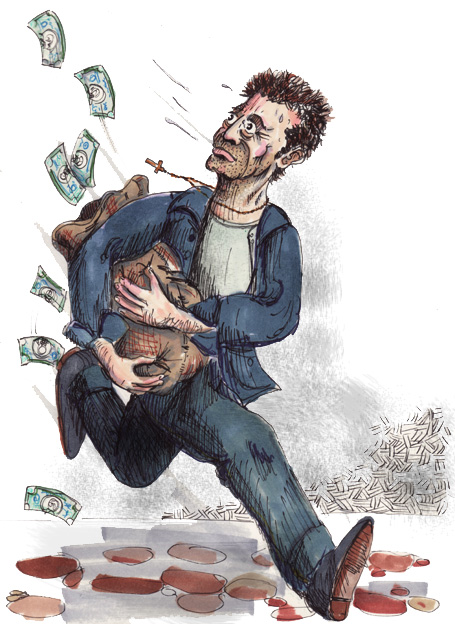
On September 18, 1932, Peg told her uncle that she was going to walk up Beachwood Drive to the drug store, and then to visit friends. Instead, she made her way up the southern slope of Mount Lee, near her uncle’s home, to the foot of the Hollywood sign. After placing her coat, shoes and purse containing the suicide note at the base of the sign, she made her way up a workman’s ladder to the top of the “H” and jumped. Her body was found in the 100-foot ravine below two days later.

The note in Peg’s purse read: I am afraid, I am a coward. I am sorry for everything. If I had done this a long time ago, it would have saved a lot of pain. P.E.”

The LA Times published the letter in hopes that she would be identified. She was dubbed “The Hollywood Sign Girl.” Her uncle recognized the initials and identified her body in the morgue. The cause of death was listed by the coroner as “multiple fractures of the pelvis and probably did not die quickly.”

Several days after her death, Peg’s uncle opened a letter addressed to her from the Beverly Hills Playhouse; it was mailed the day before she jumped. It was an offer for her to play the lead role in a stage production—in which her character would commit suicide in the final act.
Peg Entwistle was 24.

This illustration stirred up anger in at least one viewer. Read all about it HERE. Oh, the shit you have to put up with as an artist.

Comments

comments

IF: wrinkles

The illustrationfriday.com challenge word this week is “wrinkles”.
hey-ho-a-lina wup-wup a-wittena-yea
Chippewa Indian John Smith, also know as Ga-Be-Nah-Gewn-Wonce (Chippewa Indian for “wrinkle meat”) and commonly called “Old Wrinkle Meat”, lived in the Cass Lake, Minnesota area and is reputed to have died on February 6, 1922 at the age of 137.
The exact age of John Smith at the time of his death has been a subject of controversy. Federal Commissioner of Indian Enrollment, Ransom J. Powell argued that “it was disease and not age that made him look the way he did” and according to records he was only 88 years old. Indian biographer Paul Buffalo who, when a small boy had met John Smith, said he had repeatedly heard the old man state that he was “seven or eight”, “eight or nine” and “ten years old” when the “stars fell”. The “stars falling” refers to the Leonid meteor shower of November 13, 1833. Birthdates of Indians of the 19th Century had generally been determined by the Government in relation to the shower of meteorites that burned through the American skies just before dawn on November 13, 1833. Some thought the meteor shower was the end of the world.

This puts the age of John Smith at just under 100 years old at the time of his death.

Comments

comments

SFG: imagine

The challenge on sugarfrostedgoodness.com this week is “imagine”.
what about science?
On March 5, 1983, Journey Into Imagination opened in Walt Disney World’s EPCOT Center (as the theme park was known at that time). The ride began with riders boarding their omnimover vehicles that seemed to be “floating” in the clouds. The clouds would part and riders would see the silhouette of a strange blimp mixed with a vacuum cleaner and hear the humming and singing of its pilot. In the next scene, riders come right next to this vessel and the pilot, an audio-animatronic man with a red beard dressed in a blue suit and top hat. He introduces himself as the Dreamfinder (voiced by Chuck McCann) and he says that he uses his vehicle (called the Dream Mobile or Dream Catcher by some fans) to collect dreams and ideas to create all sorts of new things. Soon he creates a Figment of his imagination: a small, purple audio-animatronic dragon (voiced by Billy Barty). [McCann and Barty previously appeared together in the 1978 film “Foul Play“.] Both of them come up with ideas to fill the “idea bag”. When the idea bag is full, Dreamfinder states that the ideas need to be emptied in the “Dreamport” which he states is “never far away when you use your imagination”. Academy Award winners

The Sherman Brothers (whose compositions include songs from Mary Poppins, Winnie The Pooh, Chitty Chitty Bang Bang and the Disney staple “It’s a Small World”) wrote the song “One Little Spark”, which is played throughout the entire course of the ride.

The omnimovers leave the side of the Dream Mobile and enter the Dreamport’s storage room, which includes a massive washing machine like device for sorting ideas. Also in the room there are numerous objects including boxed applause, a plasma ball, and a birdcage of musical notes. After leaving the storage room, the ride continues to go through several rooms representing Art, Literature, the Performing Arts and Science.

The Art room was mostly white colored, to represent a massive canvas, and had a large painting Dreamfinder was making using a large fiber optic paint brush, a carousel with giant origami animals, and a pot of rainbows held by Figment.

The Literature room was mostly focused on suspenseful tales and had Dreamfinder playing a massive organ with words coming out of it, words that turned into their meanings, a massive book featuring the raven from Edgar Allan Poe’s poem cawing menacingly, and books of horrible monsters Figment tried to keep closed.

The performing arts had Figment trying on costumes backstage while Dreamfinder was conducting a laser light show in the manner of an orchestra conductor.

The last room, Science, featured a large machine that Dreamfinder was operating that took a closer look at the workings of nature such as the growth of plants, the formation of crystals from minerals and looking into space.

At the end, Dreamfinder tells Figment and the audience that Imagination is our key to unlock the hidden wonders of our world. The ride then entered the final show scene as our picture is taken as we see Figment surrounded by several movie screens of him being a scientist, a mountain climber, a pirate, a superhero, a tap dancer, a ship captain, a cowboy, and an athlete. Dreamfinder, who is behind a movie camera gives us one last inspiring message and tells us to use our newly found sparks of imagination in the ImageWorks and the on-ride photo is shown to us on a screen next to the camera. This version of the ride closed on October 10, 1998 in order to begin a major renovation.

The ride reopened on October 1, 1999. This version featured Dr. Nigel Channing (played by Monty Python’s Eric Idle) and a considerably-reduced role for Figment. Figment only appeared in filmed cameos in the ride’s queue area and not at all in the actual ride. And Dreamfinder? Dreamfinder was sent packing. This incarnation closed a mere two years later, on October 8, 2001 and went through another rehab.

The current version of the attraction opened on June 2, 2002. Dr. Channing was back, with an altered storyline and Figment returned with a larger role and appeared in every show scene. The song “One Little Spark” also returned with new verses. Dreamfinder, once again, is nowhere to be seen.

Dreamfinder, I believe, is living in a discarded refrigerator box beneath the water bridge that connects Bay Lake and the Seven Seas Lagoon. Throw him a quarter on your next visit to Walt Disney World.

Imagine that.

Comments

comments

Monday Artday: war

The challenge word this week on Monday Artday is “war”.
Generals and Majors always seem so unhappy 'less they got a war
Ashton Kutcher on “punk’d“, the missing December 7, 1941 episode:
“Dude, we are totally going to set up Admiral Husband Kimmel and Lt. General Walter Short. These two dudes are the two senior military commanders in Hawaii. Our accomplices are President Franklin Roosevelt, the US Military and we even got the Empire of Japan to play along. We are totally going to withhold information of an impending attack on Pearl Harbor. Dude, everyone knows about it, except the Admiral and the Lt. General! For, like, months now, we have been breaking codes and intercepting Japanese radio transmissions. We have tons of vital information that would be so useful if you were in charge of a US military installation, but we are keeping the two commanding officers in the friggin’ dark! This is gonna be awesome! And … wait! wait!….when it’s all over, these dudes will be tried in court for negligence of duty and stripped of their ranks and forced into retirement. Dude! Their families will fight to clear their names long after they are dead! Presidents Nixon, Reagan, Bush and Clinton will all totally ignore their families’ request for posthumous rank reinstatement. This will be the best punk’d yet!”

Comments

comments

from my sketchbook: yfz

I want it long, straight, curly, fuzzy, snaggy, shaggy, ratty, matty, oily, greasy, fleecy, shining, gleaming, steaming, flaxen, waxen, knotted, polka-dotted, twisted, beaded, braided, powdered, flowered, and confettied, bangled, tangled, spangled and spaghettied!
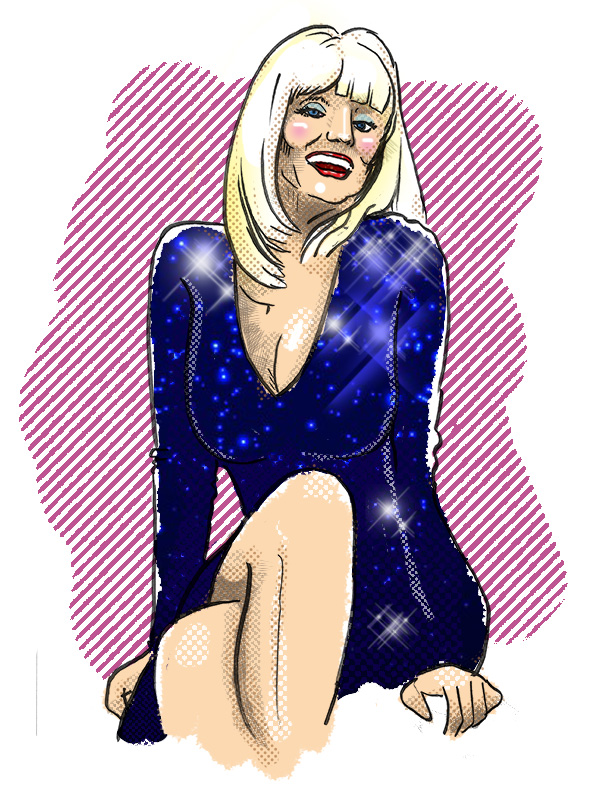
The story of the YFZ (Yearn for Zion) isolated compound in Texas has been front and center in the news for the past few weeks. One of the most intriguing parts of this story is the women of the community. Since the first pictures of the women surfaced, I know I have been fascinated by their appearance. They all seem to share similar characteristics. They are very soft-spoken. They speak slowly, deliberately and monotone. They all have that same calm and far away look in their eyes.
I have seen several television interviews with some of the women, where they were questioned about their plain, solid-colored, pastel dresses and their plain yet elaborately arranged hairstyles. One woman eerily smiled and said their clothes and hairstyles have no significance, that they make their own clothes and they all like to wear long hair.
I read a conflicting explanation. It said: “the dresses are meant to show modesty and conformity. They go down to the ankles and wrists, and are often worn over garments or pants, making sure every possibly provocative inch of skin is covered. The appearance of unity through uniform dress, however, can belie the jealousy that often arises when the women — who might all look alike to an outsider — find themselves in competition with one another over the affections of the same man. The clothing is also stitched with special markings “to protect the body and to remind you of you commitment.” The report went on to explain the hairdos, saying “the women never cut their hair because they believe they will use it to wash Christ’s feet during the Second Coming. A Biblical quote says a woman’s hair should be her crowning glory.”

It brings to mind the Rado/Ragni lyrics….
They’ll be ga-ga at the go-go
when they see me in my toga
My toga made of blond, brilliantined, Biblical hair
My hair like Jesus wore it
Hallelujah I adore it
Hallelujah Mary loved her son
Why don’t my Mother love me?

Comments

comments

IF: primitive

The challenge word this week on illustrationfriday.com is “primitive”.
Tina's here. We're getting back together.
My mom collected records, a hobby I picked up and, in turn, my son inherited from me. My mom and I shared the same unusual sense of humor, and it was reflected in our similar taste in music. I was introduced to Spike Jones by my mom. Spike Jones was essentially the “Weird Al” of the 1940s. Along with his band, the City Slickers, he performed goofy takes on popular songs of the time. He is most famous for “Cocktails for Two”, the raspberry-laden “Der Fuhrer’s Face” (which Hitler hated, much to Jones’ delight) and “The William Tell Overture” complete with a horserace announcer and his cries of “Feetlebaum!“.

My mom also introduced me to the 1960 one-hit wonder by the Hollywood Argyles – “Alley Oop” written by Dallas Frazier.

Click HERE to listen to the Hollywood Argyles version of the song.

With its “oop-oop” backing vocals, the song told of a caveman allegedly appearing in “the funny papers”. When I was a kid, I read the Sunday comics religiously. I never saw or heard of any character called “Alley Oop”. Much the way I currently obsess over useless trivia, I felt this situation called for some research.

Alley Oop was a syndicated comic strip, created in 1932 by cartoonist Vincent T. Hamlin. Alley Oop, the strip’s namesake and leading character, was a caveman living in the prehistoric kingdom of Moo who rode his pet dinosaur, Dinny, carried a stone war hammer, dressed in nothing but a pair of fur shorts, and obviously would rather fight dinosaurs in the jungle than deal with his fellow countrymen in Moo. In spite of these exotic settings, the stories were mostly satires of American suburban life. Alley Oop’s name derived from the French phrase allez, hop!, (meaning “let’s go!”) used as a cue by French gymnasts and trapeze artists. Hamlin wrote and drew Alley Oop through four decades. When Hamlin retired in 1971, his assistant Dave Graue took over. The last daily by Hamlin appeared December 31, 1972, and his last Sunday was April 1, 1973. Graue wrote and drew the strip through the 1970s and 1980s until Jack Bender took over as illustrator in 1991. Graue continued to write the strip until his August, 2001 retirement; on December 10, 2001, the 75-year-old Graue was killed in Flat Rock, North Carolina when a dump truck hit his car. The current Alley Oop Sunday and daily strips are drawn by Jack Bender and written by his wife Carol Bender.

Alley Oop has been referenced throughout pop culture. A thinly disguised Alley Oop was the central figure in Philip José Farmer’s The Alley Man, a 1959 novella about the last Neanderthal who has survived into the 20th Century. An educated Neanderthal known as Alley Oop is a character in Clifford D. Simak’s science fiction novel The Goblin Reservation (1968). In the 1970s, the song “Alley Oop” was used by the American choreographer Twyla Tharp in her ballet Deuce Coup. Alley Oop was a segment in Filmation’s 1970’s animated series Fabulous Funnies alongside Broom-Hilda, Nancy and Sluggo and The Captain and the Kids. It has even been said that Alley Oop was the inspiration for The Flintstones and Jurassic Park.

And that Hollywood Argyles’ song “Alley Oop” has been covered countless times by such bands as The Bonzo Dog Band, Ray Stevens, Buck Howdy, George Thorogood and the Delaware Destroyers and The Beach Boys.

Click HERE to listen to the The Beach Boys cover of the song.

Comments

comments

SFG: noir

The challenge this week on sugarfrostedgoodness.com is “noir”.
You'll see it coming toward you, real slowly for a shake
I saw Scream” a few days ago on one of the many movie channels on cable television. I had seen it several times before. It’s not a great movie, but it is funny the way Wes Craven pokes fun at himself and the genre that made him famous.
The soundtrack features one of my favorite songs, Nick Cave’s “Red Right Hand”.
Nick Cave is an Australian musician, songwriter, author, screenwriter, and occasional actor. He is best known for his work with his band, the Bad Seeds, and his fascination with American music and its roots. He has a reputation, which he disowns and dislikes, for singing dark, brooding songs which some listeners regard as depressing. His music is characterised by intensity, high energy and a wide variety of influences. Cave’s music exhibits his obsessions with religion, death, love, America, and violence with a bizarre, eclectic blend of blues, gospel, rock, and punk. “Red Right Hand”, while obviously falling into the noir category, tells a story that is wide open to interpretation.

Take a litle walk to the edge of town/Go across the tracks
Where the viaduct looms,/like a bird of doom/As it shifts and cracks
Where secrets lie in the border fires,/in the humming wires
Hey man, you know/you’re never coming back
Past the square, past the bridge,/past the mills, past the stacks
On a gathering storm comes/a tall handsome man
In a dusty black coat with/a red right hand

He’ll wrap you in his arms,/tell you that you’ve been a good boy
He’ll rekindle all the dreams/it took you a lifetime to destroy
He’ll reach deep into the hole,/heal your shrinking soul
Hey buddy, you know you’re/never ever coming back
He’s a god, he’s a man,/he’s a ghost, he’s a guru
They’re whispering his name/through this disappearing land
But hidden in his coat/is a red right hand

You ain’t got no money?/He’ll get you some
You ain’t got no car? /He’ll get you one
You ain’t got no self-respect,/you feel like an insect
Well don’t you worry buddy,/cause here he comes
Through the ghettos and the barrio/and the bowery and the slum
A shadow is cast wherever he stands
Stacks of green paper in his
red right hand

You’ll see him in your nightmares,/you’ll see him in your dreams
He’ll appear out of nowhere but/he ain’t what he seems
You’ll see him in your head,/on the TV screen
And hey buddy, I’m warning/you to turn it off
He’s a ghost, he’s a god,/he’s a man, he’s a guru
You’re one microscopic cog/in his catastrophic plan
Designed and directed by
his red right hand

Comments

comments