IMT: family

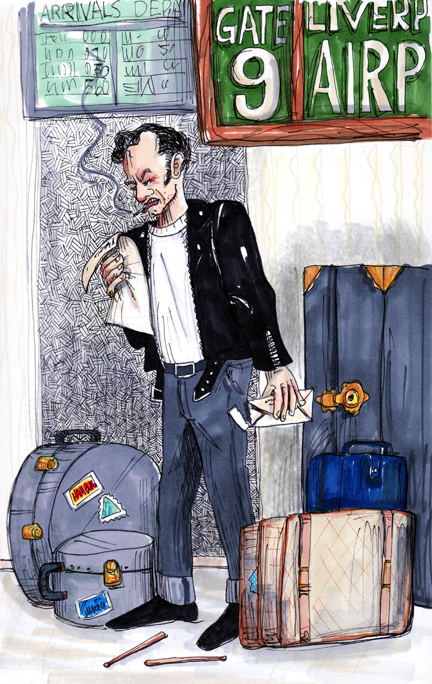
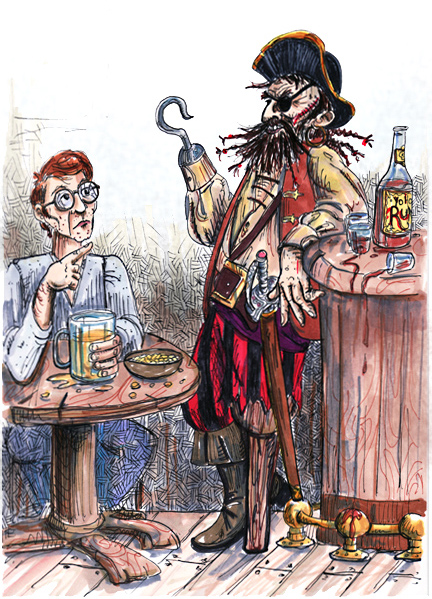
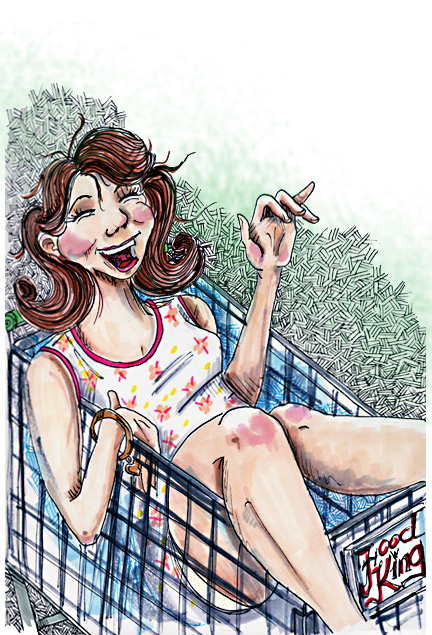
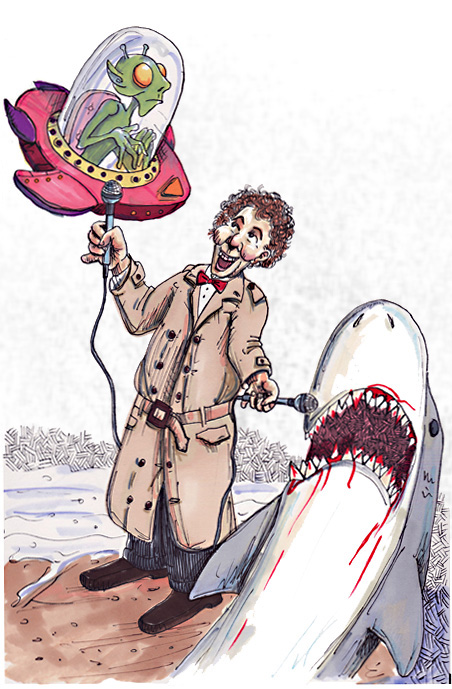
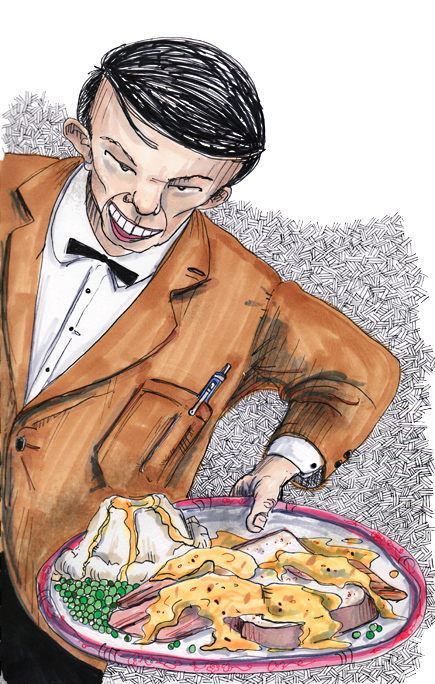
The inspirational word on the Inspire Me Thursday illustration website is “family”.
Blood is thicker than water/But thin and cold in the flood.
Two women meet on the street.
“Oh my goodness! How have you been, Mrs. Nolan? How are your sons?”

“Well, my sons! Let me tell you! My son Christopher, you know, is a big-shot Hollywood director! Oh, yes! He directed that backward movie, Momentus or whatever it’s called. He was nominated for an Oscar for that one. And he directed that other one, with the magicians and Wolverine. Oh, The Prestige!  That’s it. And then he directed that big The Batman movie with that boy who died and the crazy one from the movie set.”

“Oh my! K’neah Horah! That’s wonderful. I always liked Christopher. Such a mensch.

“Oh, and my Jonathan is a big-shot Hollywood screenwriter. He wrote so many of the movies that my Christopher directed. Momentus, the magician movie, that Batman movie. He also writes other big-time movies for other big-shot Hollywood directors. He wrote the new Terminal Man movie, you know, like the old one that had Arnold the Governor in it.”

“That is wonderful! And what about Matthew? I heard that Matthew kidnapped and murdered a businessman in Costa Rica and was an international fugitive until he was arrested in Chicago in March.”

” Um…………. I have two sons. Two.

Comments

comments

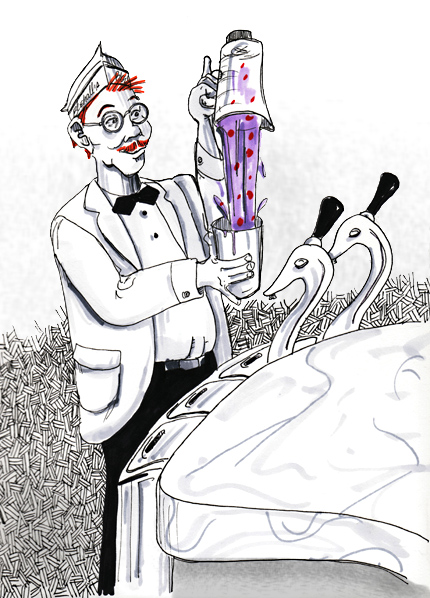
IF: parade

This week, the challenge word on the Illustration Friday website is “parade”.
Listen for the sound and listen for the noise/Listen for the thunder of the marching boys
It has been made clear that I am a big fan of Disney theme parks. I’ve been to Walt Disney World in Florida and Disneyland in California many, many times. I have written about and illustrated many of my adventures in ol’ Walt’s entertainment enterprises. (Click HERE and you can see everytime I’ve mentioned “Disney”.)

In addition to the rides (“attractions”, as Walt preferred them to be called), the shows and the stuff to buy, a popular activity at both Disneyland and Walt Disney World is watching the daily parade. Families with smaller children particularly enjoy watching the parade, as this allows the kids to see their favorite Disney characters up close. It also allows Mom and Dad to stand in one place and keep a watchful eye on the kids instead of chasing them through the park’s maze of walkways. The parade route is similar in both Disneyland’s Magic Kingdom and its Florida counterpart. The parade floats emerge from a large but unassuming door at the head of Main Street USA, wind their way around the small park that harbors some benches and the park’s official flagpole, then make their way up the tourist-clogged Main Street. The parade then circles “the Hub” in front of Cinderella Castle (Sleeping Beauty Castle in Disneyland) and heads out to the walkway through Frontierland. Eventually, the whole parade ensemble returns to its original starting point at Main Street via a huge, unseen and interconnected backstage area. Due to space limitations in Disneyland, the parade is not able to turn around out of public view. The late afternoon performance of the parade, therefore, begins in Frontierland and retraces the route back to its origin on Main Street.

Because the parades are so popular, a prime viewing spot requires some shrewd planning. Seasoned parade watchers have the process down to a perfectly executed procedure, not unlike a drill-trained army regimen. Several hours before the designated parade start time, they will optically scour the walkways. They will mentally note and rank optimum viewing areas. Based on current park attendance, current and future positions of the sun and other variables, they will gather the members of their group, quicken their walking pace and claim the perfect piece of curbside real estate that will allow for heightened parade enjoyment. Sometimes, a portion of their plot is commandeered by some family of yahoos who obliviously wandered into previously-claimed territory. A strategically-placed full shopping bag usually discourages any further movement forward. If that fails, a well-placed elbow will do the trick.

On one particular trip to Walt Disney World, my family and I were getting ready to view one such parade. As long-time visitors to the Florida Magic Kingdom, we found a little-known viewing spot in Frontierland, near where the walkway splits and becomes the faux cobblestone streets of Liberty Square. Most visitors crowd into Main Street, eventhough the very same parade passes through the sparsely-populated Western-themed area mere minutes later. An hour or so before the parade was to make its way to us, my wife, my then-young son (he’s 21 now, and curiously, is still excited by Disney parades) and I were standing in Frontierland, patiently amusing ourselves. We looked in the windows of shops, careful not to stray too far from our three-person parade zone. We discussed which attractions we would visit after the parade. I’m sure a discussion of snacks came up in our pre-parade conversation. As the parade time slowly drew closer, the areas around us began to fill in with other families. To our right, an empty spot welcomed a dad about my age and his son, a boy around the same age as my own son. Dad was doing his best to engage Son in similar pre-parade entertainment. Son, however, was far more interested in defusing the dripping ice cream cone he held tight in his sticky fist. Dad warbled a brief medley of popular Disney film tunes, tripping over or misinterpreting the bulk of the lyrics. Suddenly, a distant thumping caught Dad’s ear. He cocked his hand to his ear in an exaggerated fashion. The thumping got louder. THUMP-THUMP-THUMPITY-THUMP!  Dad’s smile widened. “Hear that?,” he excitedly asked Son. Son continued to eye the ice cream. THUMPY-THUMPY-THUMP-THUMP!  “Oh!,” grinned Dad, “I hear drums! The parade is coming!” THUMP-THUMP-THUMP!  “I hear drums!,” Dad continued, hand still theatrically cupped to his ear, “The parade is coming!” Son finally looked up. In the distance, he spied the source of the thumping. The same source that everyone in the immediate area also spied… everyone but Dad, that is. A Disney custodial worker was pushing a large plastic refuse container loaded with dark-green bags of theme park trash. The employee was steering the rubbish across the cobblestones of Liberty Square, towards an unseen depository. With every bump of the wheels, a rhythmic thumping filled the air. Son pointed at the laborer and his cartful of trash. “Daddy, no,” he began, “Trash. The man has trash.” “No! No! No!,” Dad happily corrected, “I hear the drums!” Son continued to point, showing his proof like a proud prosecutor in court. “Daddy. That man is pushing trash.” Dad once again cut him off. “Drums!” Dad insisted, his voice reaching a climactic crescendo, “I hear drums! The parade is coming!”

Exasperated, Son rolled his eyes and returned to his ice cream.

Comments

comments

JPiC video

A friend of mine works in the marketing department of a local Audi/Porsche dealership in the Philadelphia area. Several months ago, he sent me an email about a contest that the dealership would be sponsoring. Honestly, I didn’t thoroughly read the rules, I just listened to his brief explanation and I’m not sure I even got a grasp on what he was looking for. The basic rules were: it has to include the dealer’s name (Don Rosen Imports), something about “the car of your dreams” and the website address. The rest was up to creativity. I came up with an idea. I figured that most of the submissions would look the same. Sleek cars winding around roads, hugging the turns, being driven by a guy with mirrored sunglasses and a leather jacket. Pretty much the result of stopping ten random people on the street and asking them to write a car commercial.
Here’s a car dealership promo, through the eyes of josh pincus is crying.

CLICK HERE for the actual company web page, where you can vote for your favorite video. I think you know which one to vote for.
By the way, in the production of my video, the bulk of my effort went into looking for my old Hot Wheels cars.

Comments

comments

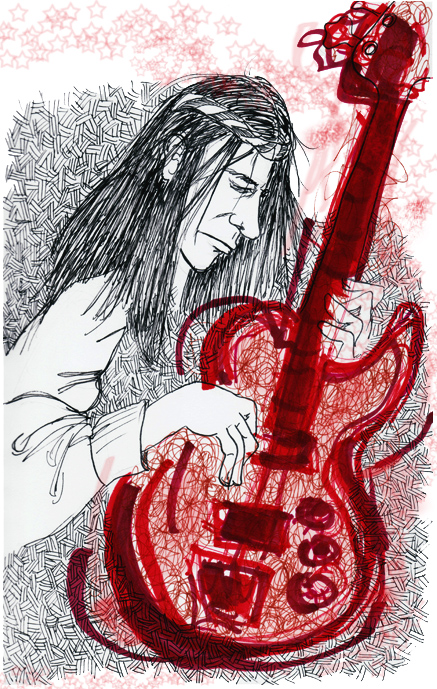
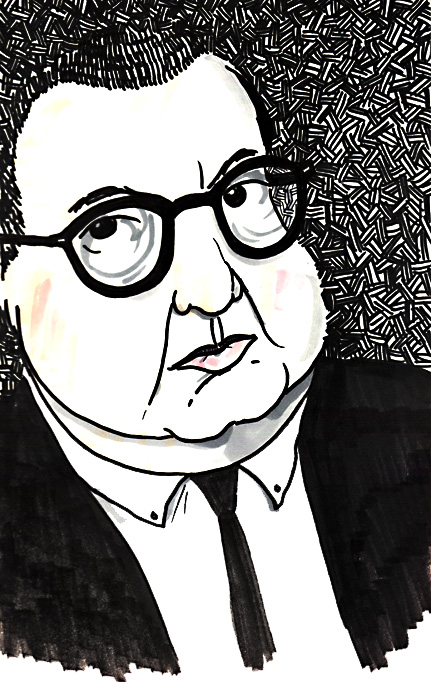
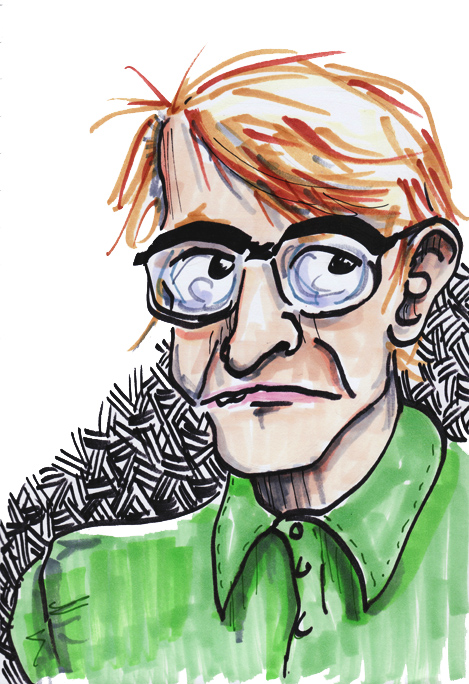
from my sketchbook: robert lees

Chick Young: You're making enough noise to wake up the dead! Wilbur: I don't have to wake him up. He's up.
Robert Lees began his career as a screenwriter in the middle 1930s. He wrote several screenplays for the “Crime Does Not Pay” short subject series produced by MGM Studios and based on real-life crimes. He graduated to science fiction and ultimately wrote for Abbott and Costello, penning screenplays for five of the comedy team’s films, including the classic “Abbott and Costello Meet Frankenstein”. In the early 1950s, Lees’ career was virtually destroyed when he was put on the Hollywood blacklist by movie studio bosses during the McCarthy Era for alleged Communist activities. As a result of his blacklisting, he submitted manuscripts under the pseudonym “J. E. Selby.” After regaining his good name, he wrote for episodic television, including “Alfred Hitchcock Presents”, “Gunsmoke” and “Land of the Giants”, among many others.

On June 13, 2004, one month shy of Lees’ ninety-second birthday, a 27 year-old homeless meth addict named Keven Graff broke into Lees’ home. Looking for money, Graff attacked Lees and decapitated him. Graff left Lees’ home, carrying Lees’ severed head, and broke into a neighboring house. Dr. Morley Engleson, Lees’ 69 year-old neighbor was on the telephone with Southwest Airlines, making a plane reservation. Graff attacked Engleson, stabbing him in the neck and killing him. The ticketing agent heard the attack through the phone and contacted police. Graff stole Engleson’s 2001 Mercedes-Benz and left the scene before police arrived. During a search of Engleson’s house, police discovered Lees’ severed head lying on a bed. Lees’ longtime girlfriend discovered Lees’ headless body, covered by blankets, in his bedroom five hours later.

The following day, Graff caught the attention of security guards at the gates of Paramount Pictures when he began behaving erratically; talking to himself and yelling at passing cars. One security guard identified Graff from a picture that was shown on a televised news conference about the double murders, and he phoned police. When questioned about the crimes, Graff claimed he was high on methamphetamine and Ecstasy the night before and had no memory of committing the murders.

In February 2008, Graff pleaded guilty to ten felonies for the murders of Lee and Engelson. He was sentenced to two consecutive life terms without the possibility of parole.

Comments

comments

IF: hierarchy

I've seen enough to know I've seen too much.I write this at the risk of sounding like a cranky and bitter old man, but here goes. I love music. I especially love going to see live music. When I started to go to concerts, in those days of the early 1970s, the hierarchy of concert-going was as follows: the headlining band at the top, the opening band next, the audience, the people outside the venue who couldn’t get tickets and finally, your jealous friends who had to stay home and wait for your report the next day in school. Somewhere during the past 35 years, the hierarchy has changed and someone forgot to inform me.

In 1975, I scraped together $6.50 and bought a ticket to see Alice Cooper and Suzi Quatro at the Spectrum, Philadelphia’s premier venue to the top music acts of the day. In those days prior to the trampling deaths of eleven fans outside a Who concert at the Riverfront Coliseum in Cincinnati, concert facilities regularly offered “festival seating”, or as the Spectrum called it — a “dance concert”. The massive open floor, usually reserved for Flyers hockey or Sixers basketball, was cleared of all seats. Spectators filed in and staked out their space, a spot where they would stand for the duration of the show. The Alice Cooper show was a first come-first served dance concert. I arrived with my friends (via a begged ride from my mom) and, after getting frisked at the door, we entered the Spectrum for the first of many long and strange encounters with live music exhibitions. The concert crowd was buzzing. Suddenly, the house lights lowered and a pre-Leather Tuscadero Suzi Quatro hit the stage. Lights flashed as crowd screams filled the air. Suzi rocked for 45 minutes and I don’t remember a single song she did. When her set ended, we shook with anticipation, as Alice Cooper’s antics were just minutes away. Curiously, when Suzi Quatro’s set ended, the guy next to me left. Alice was promoting his Welcome to My Nightmare album. His show was mix of new material and classic Cooper tunes, all used as the soundtrack to a Broadway-like presentation involving six-foot black widow spiders, a chorus line of skeletons, a nine-foot tall cyclops and Alice getting beheaded on a guillotine. It was awesome! Alice had the crowd in the palm of his hand and they were mesmerized. Everyone — young and old, concert veterans and first-timers — had a great time, were happy that everyone else was having a good time and were respectful of personal space. My older brother, a veteran of many concerts himself, picked us up after the show. I think he even bought a t-shirt in the parking lot.

And so began my life-long love affair with concerts. I was bitten by the live music bug. A month later, I attended my second concert — America, with their opening act, former Raspberries lead singer, Eric Carmen. Needless to say, their straight-forward, mellow, acoustic guitar-driven folk-rock contrasted greatly with Alice Cooper’s heavy, horror-tinged anthems. Unfazed, I followed the America show with Elton John, Fleetwood Mac, Jethro Tull, three-hour Bruce Springsteen marathons and several Queen concerts — including one featuring Thin Lizzy as the opening act and one in which I attended despite being heavily medicated while battling a horrible case of walking pneumonia. The crowds remained cheerful, upbeat and respectful of one another. Later, I witnessed unusual crowds as I accompanied my Deadhead girlfriend (now my Deadhead wife) to many Grateful Dead events. At one Dead show in particular, the same stoned, dancing hippie fell on my lap four times. The fifth time, my brother-in-law grabbed him, cartoon style by the scruff of his dirty neck and the seat of his tie-dyed pants, and tossed him down an aisle. Although annoyed, I really never gave the incident another thought. Until recently.

As my musical tastes widened and evolved, I continued to go to more shows. Because my music interests skirted the mainstream, the bands I followed tended to play smaller venues. My wife and I saw The Clash at an ice skating rink on the University of Pennsylvania’s campus. We saw Warren Zevon six times at the now-defunct Chestnut Cabaret during his brief residence in Philadelphia. I was also rooked into going to the Chestnut Cabaret, by my ex-sister-in-law, to see what she promised would be a surprise mystery unannounced performance by The Rolling Stones. It wasn’t. The crowd, although disappointed, did not riot.

I saw indie nerds They Might Be Giants at Upper Darby’s Tower Theater. At thirty years of age, I cautiously entered my first mosh pit. That’s right — there was a guy onstage playing accordion and there was a mosh pit. Nevertheless, I got kicked in the head three times and had my glasses knocked off, but the crowd outside the mosh pit was well-behaved and enjoying the entertainment.

For the past five or so years, I’ve been going to concerts with my son. While I have an abundance of common interests with my wife, we part ways on most music. I am the first to admit that my musical leanings are skewed, for lack of a better word. My son, however, does share a love of unusual music and is happy to have me pay for a concert ticket. We saw many shows at the now-closed The Point, the successor to the legendary Main Point in Bryn Mawr, Pennsylvania. We enjoyed incredibly talented but lesser-known performers like DaVinci’s Notebook, Erin McKeown, Michael Penn, Dan Bern and the notorious Asylum Street Spankers. The Point was a wonderful intimate little club that always welcomed a respectful crowd of true music lovers.

My son had friends in a band. They were not the typical high school basement band. These kids were talented beyond their years and, unlike their noisy, out-of-tune contemporaries, they played jazz fusion. We saw them perform at a few tiny venues. They drew audiences comprised mostly of friends and relatives. It was at these shows that I began to notice something. And that something wasn’t right. During their performances, there was always a din of conversation. Loyal friends, there to show support for their pals, were engaging in non-stop conversation. They didn’t bother to lower the volume of their voices. It was as if the music was merely background for their dialogue. And, what’s worse, they weren’t even commenting on the music. They were having everyday conversation. With disregard for the confinements of the small setting, a few of the assembly walked directly in front of the band during the performance.

With each subsequent concert I attended, the respect level lowered. The concert hierarchy had changed. It was now topped at the highest level with each selfish individual and descended to….no one. That’s it. No one else. No one else matters. Concert goers now each perceive themselves as the most important person in the room. More important than the band and certainly more important than any one else in the audience. They exhibit an indignant air of entitlement. They are there to have a good time. Their own good time. And if that includes ruining a good time for someone else, well, fuck you. Several months ago, E. (my son) and I saw James, a British pop band boasting much of their success in the 90s. It was a standing-room general admission show. We arrived early and secured a spot in front of the stage. Almost at the end of the show, a young lady — no more than 17 — screamed something in my ear and then wedged herself into the three inches of space that separated me from my son. She began swaying and dancing and twirling and flailing her arms, knocking the hat off of the poor guy in front of her — a guy who had been really enjoying the show up until now. Then, she turned around and, with her back to the stage, waved her arms high over her head, trying to get the attention of the friends she left at the back of the venue. During the finale, the band invited fans onto the stage. This chick jumped up and kicked the poor guy whose hat she smacked, in an effort to scramble over him and the stage barricade. When the lights went on, she motioned to my son for help getting off the stage. He gave her the “yeah, right” look and abandoned her. Meanwhile, I spotted my friend RobotKasten and her boyfriend (RobotMichael?) and was talking with them. The young girl pushed herself into our conversation, demanding a pen. I handed her the pen from my pocket and said, “You may have this on the condition that you get the fuck away from me. As far away as possible. Your self-centered, unthinking behavior has ruined this show for many around you.” She called me a “bitch” and walked away. I’m pretty sure RobotMichael was entertained by my rant.

This past weekend, E. and I saw an interesting band called King Khan and The Shrines at The First Unitarian Church in center city Philadelphia, an actual working church that leases the building to a local promoter. I’ve been to shows at The Church before, including one where eels’ singer Mark Everett reprimanded audience members for trying to engage him in conversation during between-song banter. The King Khan show was in a small, poorly ventilated room in the basement of the church. The predominantly young crowd pushed and swayed at the stage front like a sweaty, slimy, beer-soaked cancer, stretching and infiltrating the group now retreating the rear of the room. An underage drunken girl was using me as a prop to keep herself from hitting the floor. Kids slammed full-speed into each other and lifted bodies above their heads like a perverse tribal offering. One noticeable gentleman, who had entered earlier dressed in a glitter sleeveless t-shirt, sweatpants and a red sequined elastic headband, now was stripped to the headband and pink bikini underpants and was headed for the stage. In the list of people I’d like to see wearing pink bikini underpants, he was none of them. I excused myself from my post at stage left and waited for E. in a safe position at a side wall. E. joined me several seconds later.

Friday night saw us at the beautiful World Cafe Live for a performance by Swedish indie rockers Peter, Bjorn and John. Once again, E. and I arrived early and found a spot at center stage. As the lights dimmed for the opening act, three women, in their 30s, moved into the crowd behind us. One of them (the one wearing WAAAAAAY too much perfume) showed evidence of a drinking binge that began that afternoon. She screamed and hooted and whistled. She talked non-stop, striving to get her voice above the level of the music, so everyone in the immediate area could hear her words of great wisdom. Her friends were obviously getting very embarrassed, as they were well aware of the sneers and dirty looks being shot in their direction. She, however, was oblivious to anyone and anything but herself. She leaned, full body, over E.’s back, in an effort to touch an imaginary something on the stage. When E.  instinctively elbowed her, she screamed (and I quote): “If this faggot elbows me in the fucking tit again, I’m gonna punch him in the fucking face and call a cop.” Her calmer and more level-headed colleague tried to subdue her and looked at me for a little sympathy and understanding. She picked the wrong person in her search for compassion. I sternly stated my opinion. “Your friend needs to calm down.,” I said, “If she climbs across someone’s back, she has to expect to be elbowed. She has to realize that she is NOT the only person here. If she attempts to punch my son, I will get security and have her thrown out.” She understood. The drunk friend had moved further, now trying to climb a stage monitor. Cautioned by a stagehand, she lowered herself down. Her friend whispered to her and she screamed out at the top of her lungs, “I’m here to have a good time. I don’t give a shit about anyone else. Let them take care of themselves. I’m having a good time. That’s why I’m here!”

I think that sums it up as the voice of the new concert-going generation.

Comments

comments

IF: theater

The illustration friday.com challenge word this week is “theater”.
Ladies and gentlemen, please do not panic! But SCREAM! Scream for your lives!
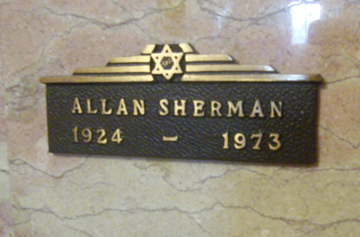
After arriving in Hollywood, William Castle worked as an assistant director with Orson Welles. Castle directed his first film at 29 and went on to make a name for himself as the “King of the Gimmicks”. Always thinking of ways to drum up an audience, Castle introduced in-theater tricks and gadgets with every new movie. To pique his potential audience’s interest, Castle gave the world Macabre in 1958. A $1,000 life insurance policy from Lloyd’s of London was given to each patron in case he/she should die of fright during the film. Showings also had fake nurses stationed in the lobbies and hearses parked outside the theater.

1959’s House on Haunted Hill was touted as being filmed in “Emergo”. Theaters were equipped with a glow in the dark skeleton attached to a wire, which floated over the audience during the final moments of the film to parallel the action on the screen.

The Tingler, also from 1959, was filmed in “Percepto”. Hidden under some theater seats were large versions of joy buzzers. When the titular creature in the film attacked, the buzzers were activated as a voice encouraged the real audience to “Scream – scream for your lives.”

13 Ghosts, filmed in “Illusion-O”, followed in 1960. A ghost viewer/remover with strips of red and blue cellophane was given out to use during certain segments of the film. By looking through either the red or blue cellophane the audience was able to either see or remove the ghosts if they were too frightening.

1961’s Homicidal contained a “Fright break” with a 45 second timer overlaid over the film’s climax as the heroine approached a house harboring a sadistic killer. A voiceover advised the audience of the time remaining in which they could leave the theatre and receive a full refund if they were too frightened to see the remainder of the film. To accompany this film, Castle introduced the ‘Coward’s Corner,’ a yellow cardboard booth, manned by a theater employee in the lobby. When the Fright Break was announced, a frightened audience member could follow yellow footsteps up the aisle, bathed in a yellow light. The patron crossed yellow lines with the stenciled message: ‘Cowards Keep Walking’ and passed a nurse who would offer a blood-pressure test. All the while a recording was blaring, “‘Watch the chicken! Watch him shiver in Coward’s Corner’!”

In 1961, Castle also offered Mr. Sardonicus. The audiences were allowed to vote in a “punishment poll” during the climax of the film – Castle himself appears on screen to explain to the audience their options. Each member of the audience was given a card with a glow in the dark thumb they could hold either up or down to decide if Mr. Sardonicus would be cured or die during the end of the film. No audience ever offered mercy so the alternate ending was never screened.

For the 1962 release Zotz!, each patron was given a gold-colored plastic “Magic” coin which did absolutely nothing.

Strait-Jacket, released in 1964 and starring Joan Crawford, was promoted with cardboard axes being distributed to patrons.

For screenings of 1965’s I Saw What You Did, Castle turned the back rows of theatres into “Shock Sections”. Seat belts were installed to keep patrons from being jolted from their chairs in fright.

Interestingly, Castle produced Roman Polanski’s film Rosemary’s Baby in 1968, with no gimmicks whatsoever. Castle had wanted to direct the film, but the studio insisted on hiring another director due to the reputation Castle had gained through his previous work. They felt that the novel deserved a better treatment than Castle was able to give it.

Castle passed away in 1977 at age 63. No shocks or flying skeletons have been reported at his grave.

Comments

comments

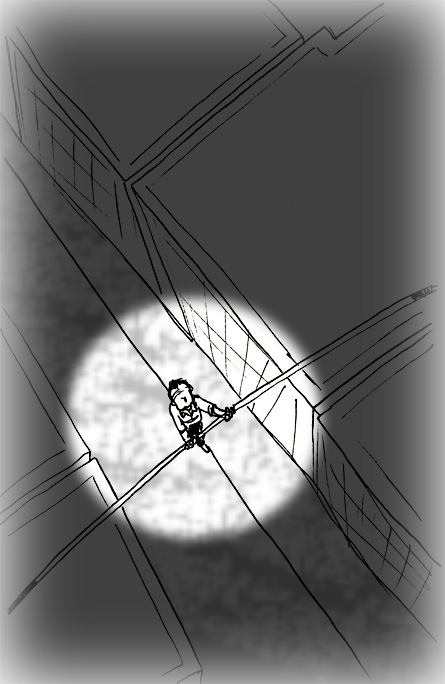
Monday Artday: spider

The Monday Artday challenge word this week is “spider”.
bang bang, my baby shot me down
After finishing 5th in the slalom at the 1968 Winter Olympics, charismatic skier Spider Sabich joined the World Cup circuit for several seasons. He turned professional after the 1970 season. Pro ski racing had just completed its first season, and was conducted in a dual slalom format, with racers going head-to-head in elimination heats.

Sabich helped popularize skiing in the U.S. in the late 1960s and early 1970s. He was the inspiration for the 1969 film Downhill Racer, starring Robert Redford. Sabich won the pro championship in 1971 & 1972. Although the prize money was modest, endorsements contracts followed. This pushed his annual income well over $100,000 and allowed him to move from Boulder to the ski resort of Aspen in 1971. While chasing rival skier Jean-Claude Killy for the 1973 title, Sabich incurred a back injury on the final weekend of the season at Aspen Highlands. In the semifinals of the giant slalom, he hurtled over the second jump at 50 mph and caught his arm on a gate, somersaulted and landed on his back. He struggled to stand up, but was too stunned to walk and was hospitalized. Sabich was out of the next day’s slalom, and Killy won the season title in his only season on the pro tour.

Late in the afternoon of March 21, 1976, Sabich had returned from a day of skiing and was preparing to shower. He was fatally shot in the bathroom of his home by his live-in girlfriend, singer-actress Claudine Longet, ex-wife of singer Andy Williams. She claimed the gun discharged accidentally, as he was showing her how it worked. He was hit in the abdomen and lost a significant amount of blood before the ambulance arrived. He died in the ambulance on the way to the hospital, with Longet at his side. Spider Sabich was 31 years old.

Longet was charged with reckless manslaughter, however she was convicted of a lesser charge, criminally negligent homicide, a misdemeanor. Longet was sentenced to 30 days in jail, but allowed to serve the time at her convenience. She served her sentence three months later, following a vacation with her married defense attorney. After the criminal trial, the Sabich family initiated civil proceedings to sue Longet. The case was eventually resolved out of court, with the proviso that Longet never tell or write about her story.

Comments

comments