
This week’s Illustration Friday challenge word is “artificial”.
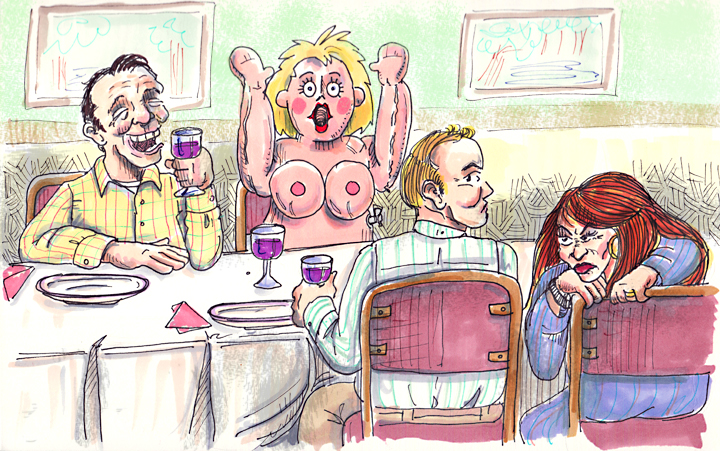
Walt and Valerie hated to double date with Bob and Dolly.
from my sketchbook: karen greenlee
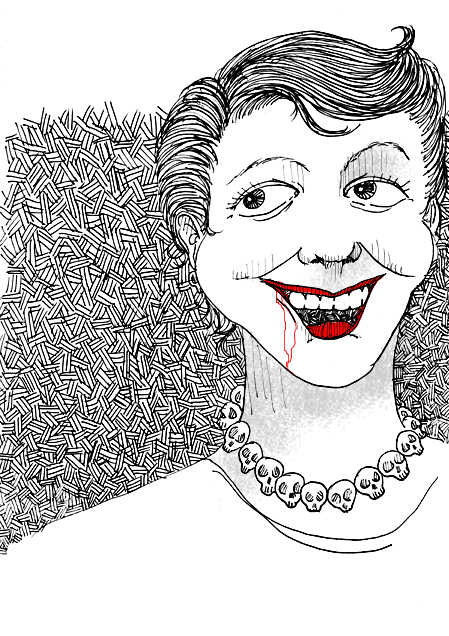
Karen Greenlee worked as an embalming assistant at a Sacramento mortuary. She aspired to work in this field because of her life-long fascination with dead bodies. As a child, she visited and later broke into local funeral homes to observe and “interact” with the corpses. Her obsession turned into infatuation and then into love.
Karen had “encounters” with over forty corpses some by entering mortuaries after hours, some by breaking into sealed tombs in cemeteries. She was caught “in the act” on several occasions, but was merely chased away from the premises by funeral directors fearing bad publicity.
In 1993, Karen was caught driving a hearse carrying a body that should have been delivered to a funeral two days earlier. When police took her into custody, she was in a drug-induced daze. A search of the vehicle revealed a lengthy letter inside the casket in which Karen confessed her sexual relations with deceased males. She detailed being turned-on by the smell of a freshly embalmed corpse. She was sentenced to eleven days in jail and fined two hundred fifty-five dollars. Her crime was interfering with a burial and stealing a hearse and the body it carried. She received a relatively light sentence because, at the time, California had no laws prohibiting necrophilia.
Comments
From my sketchbook: jesus on his day off
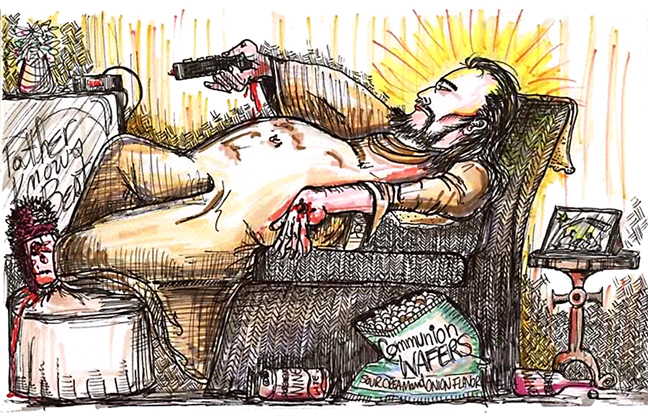
I’ve done many drawings of Jesus. As a character and what he stands for, I love putting him in oddball situations. Some of my Jesus drawings have appeared on my blog (like Jesus as a children’s party entertainer, Jesus as a hockey goalie and Jesus as a skateboarder) and some have just remained in my sketchbook.
Well, here is the drawing that started it all Jesus on His Day Off. I drew this in 2006 and never posted it. I always got a kick out of it, though.
Comments
from my sketchbook: roy sullivan
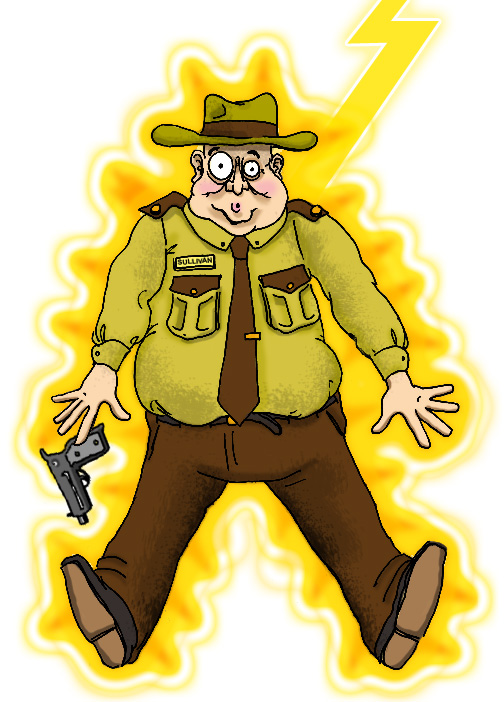
Roy Sullivan, a U.S. park ranger at Shenandoah National Park in Virginia, was hit by lightning on seven different occasions between 1942 and 1977. He survived all of them. Roy was included in the Guinness World Records as the person struck by lightning more times than any other human being.
In 1983, Roy died from a self-inflicted gunshot wound over an unrequited love. He was 71.
Comments
IF: double
This week’s challenge word on the Illustration Friday website is “double”.
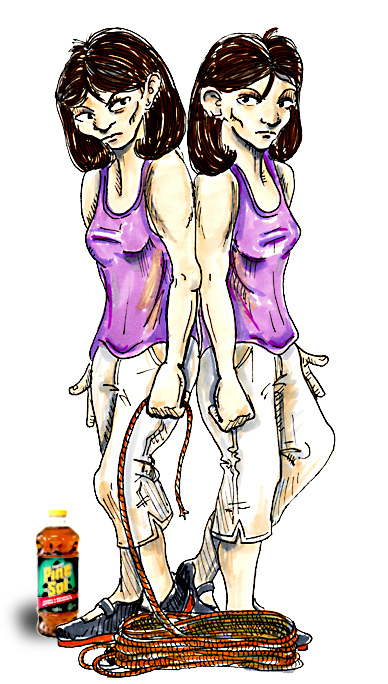
Identical twins Jeen and Sunny Han were born in South Korea in 1974 but lived apart until they were 3. When the girls were 12, their mother, a chronic gambler, moved them to California. She would leave the young sisters alone for days at at time while she went on gambling binges. Jeen and Sunny developed a strong bond during their time together. Their mother sent the girls to live with an aunt and uncle when she no longer wanted to be burdened with parental responsibility.
Both girls excelled academically and graduated high school as co-valedictorians. Sunny went on to college on a scholarship. Jeen, seeking money for college, joined the US Air Force. The twins grew apart and only spoke briefly by phone over the next several years.
Overwhelmed by the rigors of boot camp, Jeen sought a discharge from the Air Force. First, she explained that her father was ill and then, hoping to be expelled over policy, claimed she was a lesbian. Eventually, the Air Force relented and she was released. from service. Jeen found employment as a blackjack dealer in a Lakeside California casino. Like her mother, she became a compulsive gambler. She began stealing friend’s’ and family’s checks and credit cards to repay her debts. She was arrested and skipped out on her probation.
Jeen moved to Los Angeles to live with her twin sister. Sunny, having delivered failing grades for three semesters, lost her scholarship and was working as a receptionist. The sister argued a lot. Sunny broke Jeen’s nose during one dispute. Others were broken up by the police, where Sunny was arrested on an unrelated charge of credit card fraud. Sunny had stolen a friend’s credit card. While Sunny was in jail, Jeen stole Sunny’s car and used her identification to empty her savings. Upon Sunny’s release, Jeen was jailed for six months. She was put on work furlough and escaped.
Soon after, an angered Jeen recruited two teenagers to help her kill her sister. They drove to Sunny’s apartment, purchasing garbage bags, duct tape, twine, gloves, Pine Sol cleaner, and magazines on the way. The also brought guns. Their plan was to have one of the teens pose as a magazine salesman to gain access to the apartment. Then the other two would force themselves inside. This scheme played out perfectly, except the door was answered by Sunny’s roommate, Helen. They tied Helen up, but Sunny, hearing the disturbance from the next room, called the police on her cellphone. The police arrived quickly and arrested one of Jeen’s accomplices, but she left along with the other. Later the same day, Jeen was arrested when she attempted to used Sunny’s driver’s license to withdraw $5,000.
After a year in jail awaiting trial, Jeen Han was tried for conspiracy to commit murder, two counts of burglary, possession of a firearm, and two counts of false imprisonment. The two teenagers were also tried as co-conspirators. Jeen contested that she merely wished to scare her sister, not kill her. The jury concluded that the items brought to the scene, coupled with Sunny’s roommate’s testimony, amounted to Jeen’s preparation to commit murder. During the course of the trial, an overly stressed Sunny Han attempted suicide by ingesting several dozen sleeping pills.
The two conspirators received sentences of eight and sixteen years. Despite her attorney’s argument that Jeen suffered from a personality disorder that predisposed her to extreme mood swings, Jeen Han was sentenced to 26 years to life. Three days after her incarceration, Jeen attempted suicide with painkillers she had hidden in her cell.
She will be eligible for parole in 2020.
Comments
DCS: mel turpin
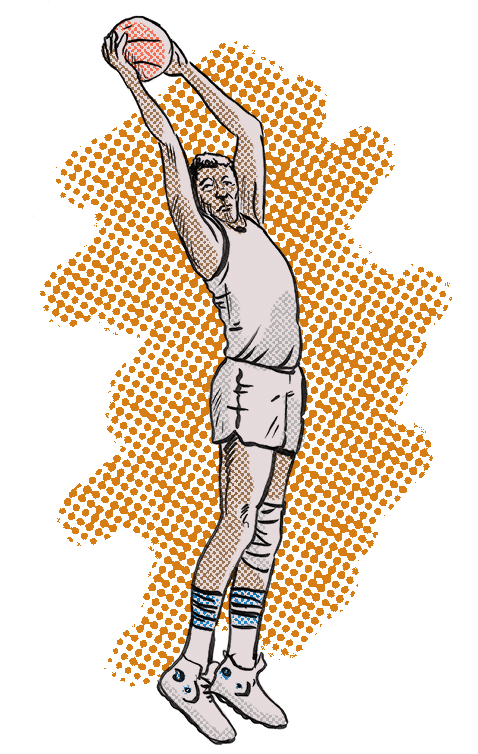
At 6′ 11″, Mel Turpin dominated the court as starter for the University of Kentucky Wildcats basketball team in the 1984 NCAA Final Four. He was the Southeastern Conference scoring leader and still holds the record for most field goals in SEC tournament play. At center, he was an aggressive player, scoring 42 points in a game against Tennessee.
He was the sixth overall pick in the first round by the Washington Bullets in the 1984 NBA Draft. Although there were high hopes for Mel, he was immediately traded to the Cleveland Cavaliers. But, Mel never achieved his full potential in the NBA. He struggled with fluctuating weight, earning him the derisive nickname “Dinner Bell Mel”. He was traded to the Utah Jazz and then back to Washington where, after five unremarkable seasons in the NBA, he called it a career. In a year that included future superstars like Charles Barkley, Hakeem Olajuwon, John Stockton and Michael Jordan, Mel Turpin was considered one of the biggest disappointments in draft history.
After his retirement, Mel worked as a security guard.
On July 8, 2010, Mel committed suicide by gunshot. He was 49.
Comments
IF: breakfast (part 3)
This is my third illustration for the Illustration Friday word “breakfast”. Here is the first one and here is the second.
I get a kick out of seeing new parents cautiously checking the ingredient list on cereal. Not wanting to have their children ingest anything that would be harmful or contain empty calories, today’s parents opt for healthful choices for the most important meal of the day. Grocery store shelves are stocked with fruit juice sweetened organic grain-filled packages adorned with happy children enjoying a sunshiny day in a golden meadow. The colorful boxes of star-shaped marshmallows and sugar-coated crunchy morsels have taken a back seat.
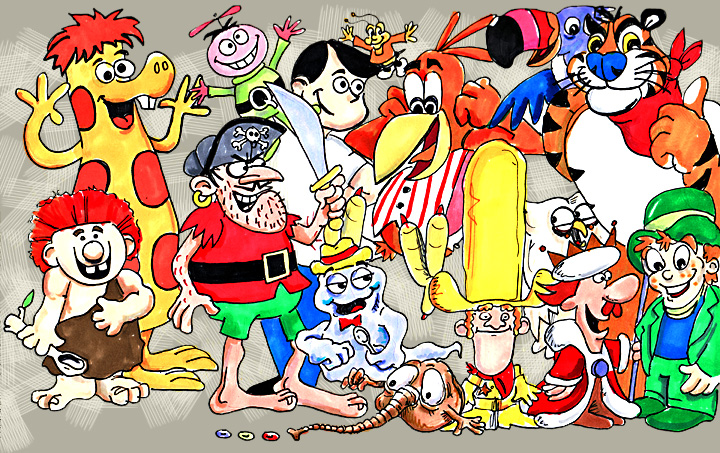
When I was a kid, Saturday morning cartoons were regularly interrupted with instructions to “Ask Mom” to buy the latest cereal. Arrays of crazy characters were plastered on the fronts of every box of cereal, all vying for my attention. A good portion of Kellogg’s offerings displayed familiar Hanna Barbera favorites, but there was something compelling about those created specifically for the product. Animals, leprechauns, birds, spacemen, cowboys they were all there. Sometimes a new character was placed on a lagging brand to invigorate sales. Kellogg’s Cocoa Krispies featured José the Monkey, Coco the Elephant, Ogg the Caveman, another elephant named Tusk, even popular cartoon mountain lion Snagglepuss briefly got in on the cereal-hawking act. Finally Snap, Crackle and Pop stepped in and took the chocolate version under its Rice Krispies umbrella.
Cap’n Crunch, the soft-palate shredding squares of corn, was introduced in 1963. Its popularity spawned a host of spin-off flavors that were part of the Cap’n Crunch family. Each new flavor featured a new character on its box, starting with the Crunch Berry Beast in 1967. Hot on his tail was pirate Jean LaFoote representing for Cinnamon Crunch, Wilma the Winsome White Whale for Vanilla Crunch, Smedley the Elephant for Peanut Butter Crunch (what’s up with these elephants?) and Harry the Hippo on boxes of fruit punch flavored Cap’n Crunch. Things got a bit out of hand when “Chockle the Blob” appeared on Choco Crunch. I didn’t know what Chockle was and I didn’t want to eat what he was selling.
There was also a parade of characters who made brief appearances in the cereal aisle because their namesake products were ill-conceived or just couldn’t compete with breakfast powerhouses like Tony the Tiger or Toucan Sam. One such mascot was Bigg Mixx. Much like the cereal he promoted — an obvious corporate grain snafu at the Kellogg’s production plant — Mixx was an amalgam of several species. One could pick out a buffalo, a moose and a deer in its makeup, but the creature and the cereal were equally frightening and it disappeared from shelves quickly. Other grain-based disasters were Sir Grapefellow and Baron Von Redberry, a pair of single fruit flavored cereal rivals. And the similar Crazy Cow, a boxful of multi-grain pellets coated in drink mix to flavor milk.
Sometimes the story of the cereal characters, as depicted in commercials, was more important than the product itself. Such was the case with Freakies, Grins & Smiles & Giggles & Laughs and the notorious Crispy Critters. Linus the Lionhearted was the cartoon mascot for Crispy Critters, whose show blurred the line between cereal commercial and children’s entertainment. Linus’ adventures were thinly veiled advertisements for Post products and the show was pulled when complaints mounted.
I miss Saturday mornings in front of the TV, plowing through two or three bowls of some brightly-hued, milk-drenched nuggets. I miss the day-glo neon colors of the supermarket cereal aisle. I fondly look back on the difficult decision of choosing a cereal based on its mascot, its shape, its marshmallow content and the “cool factor” of the toy buried deep inside its sugar-frosted depths. Sometimes I think that Cap’n Crunch and his friends are plotting an attack and will one day blow that low-fructose granola shit into the dog food aisle.
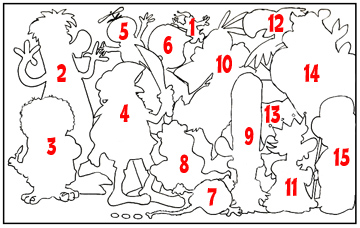
Pictured above: 1- Honey Nut Cheerios Bee; 2-Crunch Berry Beast; 3-Ogg the Caveman; 4-Jean LaFoote; 5-Quisp; 6-The Cheerios Kid; 7-Snorkeldorf (Freakies); 8-BooBerry; 9-Big Yella; 10-Sonny; 11-King Vitaman, 12-Toucan Sam; 13-Newton Owl; 14-Tony the Tiger; 15-Lucky
Comments
IF: breakfast (part 2)
This is my second illustration of three illustrations for the Illustration Friday word “breakfast”. Here is the first one and here is the third.
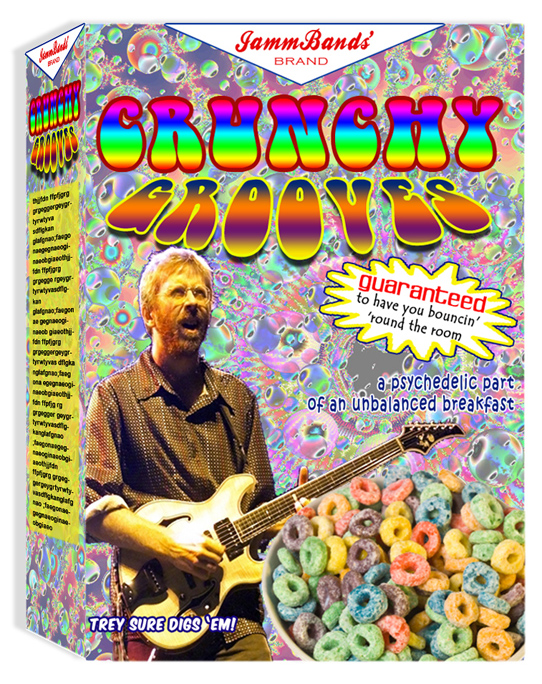
A month or so ago, WXPN‘s afternoon drive time DJ Dan Reed was coming out of a block of music and easing into a conversation with Lauren Valle who was about to give a rush-hour traffic report. The last song Dan played before the break was by neo-retro jammers Phish. As part of his regular banter with Lauren, Dan pointed out that the Phish tune boasted some “crunchy grooves”, and without skipping a beat, added that it sounded like “something my son would eat for breakfast”. A confused Lauren chuckled and proceeded with the traffic report. The conversation amused my wife and she asked me to create a box of Crunchy Grooves cereal for Dan. I did and I sent it to him. He got a kick out of it.
Comments
Monday Artday: silly
The new Monday Artday challenge word is “silly.”
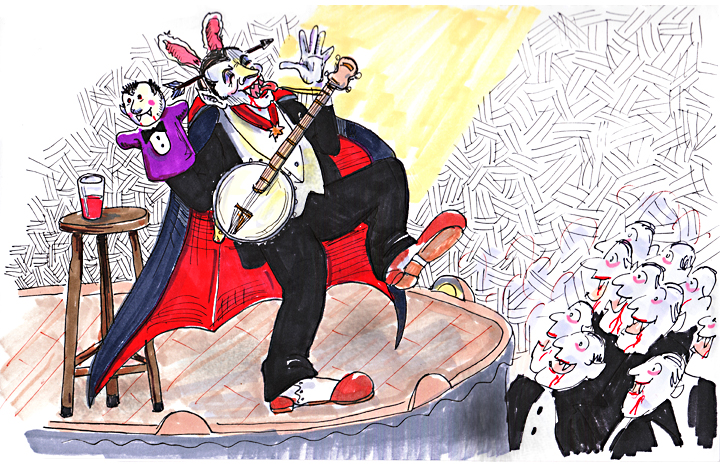
Vampires don’t always act sullen and menacing.
Comments
IF: diary
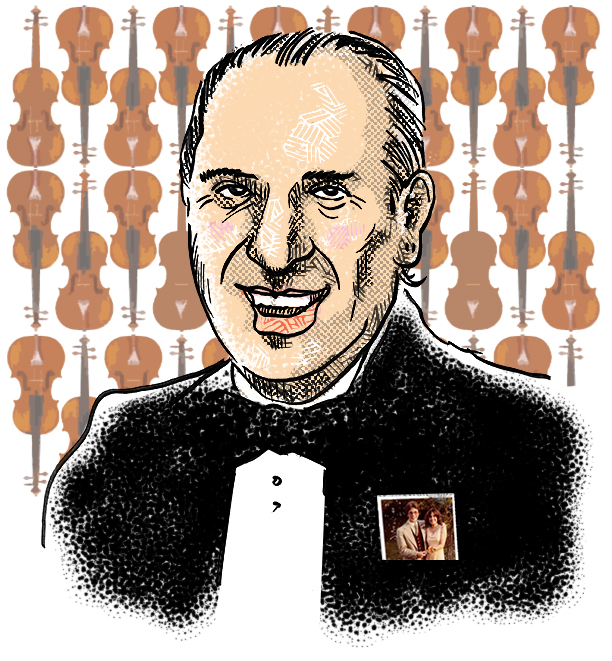
“The horse I bet on was so slow, the jockey kept a diary of the trip.” — Henny Youngman
I grew up watching The Tonight Show with Johnny Carson. I loved seeing the big name comedians like Rodney Dangerfield, Don Rickles, Shecky Greene (although I didn’t get a lot of his material) and the “King of the One-Liners” – Henny Youngman. Henny would part the multi-colored curtains of Johnny’s stage and, with his signature prop violin in hand, proceed to deliver a rapid-fire barrage of jokes about his wife, his doctor, his brother-in-law, the trash collectors and anyone else he could poke fun at. Everyone was fair game and no one was sacred. “My wife dresses to kill. She cooks the same way.” he would say. He’d follow that with “I told the doctor I broke my leg in two places. He told me to quit going to those places.” Henny would wrap up his five minute routine at center stage and then sidle up to the sofa. Then, instead of allowing Johnny to interview him, Henny would deliver another three minutes of material until Johnny and the studio audience were rolling on the floor with laughter.
When I was a junior in high school I met and began dating Henny Youngman’s niece, Janey. We met at a party and dated for several months. I eventually took her to my Junior Prom. One day when I was at Janey’s house, I overheard her mother on the telephone, having a typical Northeast Philadelphia Jewish-intoned conversation. “So, how’s Sadie?,” she inquired, dragging “Sadie” out to a very nasally six syllables. She continued, “When? Oh, this weekend? That’ll be nice.” She wrapped up the call with a few drawn-out “goodbye”s and “see-ya-later”s. Hanging up the phone, she turned to Janey’s father and told him that Henny was coming to Starr’s, a nightclub in Philadelphia’s Old City section. Starr’s was an early venture owned by future restaurant impresario Stephen Starr. Janey’s dad stared off in thought for a moment and suddenly said, “Let’s go see him.” Then, he looked at me and said “Let’s ALL go see him!” “Cool!,” I thought.
When the weekend arrived, I piled into a car with Janey, her parents and her little brother and headed downtown. We pulled into an empty parking space on Second Street — right in front of Starr’s. Janey’s mother informed the guy at the door that she was family and we were led to a stageside table. It was not as glamorous as it sounds. Starr’s was just a bit larger than a good-sized walk-in closet. Janey’s parents ordered cocktails and those of us under 21 had Cokes. Soon, the lights dimmed and out to the tiny staged walked Henny Youngman. Henny Youngman! Right there! A foot away from me! This was so cool!
Just like I had seen a million times on late-night television, Henny Youngman rattled off joke after joke after joke. I had heard the majority of his gags before, but they were just as funny as if I was hearing them for the first time. After his set was over and the applause died down, the house lights came up and Henny Youngman — Henny fucking Youngman — joined us at our table. He kissed and exchanged pleasantries with Janey’s parents. He gave more specific details of family matters than those merely touched on in the earlier phone conversation. Then, I was introduced to Henny as Janey’s boyfriend. I was seventeen. This was Henny Youngman! I was giddy. I told him I was a big fan. He smiled half-heartedly, but said nothing. The more we chit-chatted, the more I realized that this guy had absolutely no personality. He was as electrifying and engaging as a bar of soap. No wonder he didn’t want Johnny Carson to interview him — he had nothing to say! He went outside for some air before the next show. We all followed him and we stood awkwardly silent on the Second Street sidewalk for a good, long time. Then, a man at the door signaled to Henny that it was time for his second set. He went back inside and we dutifully followed. He did the exact same act. Word for word.
Just before we left to go home, Henny took a joke book he had authored out of a duffel bag. He opened the front cover and, in a childlike scrawl, wrote: “Marry my niece Janey — Henny Youngman.” With no expression on his face, he handed the book to me and I left with my girlfriend’s family.
My admiration for Henny Youngman diminished greatly that night.
And I didn’t marry his niece Janey.