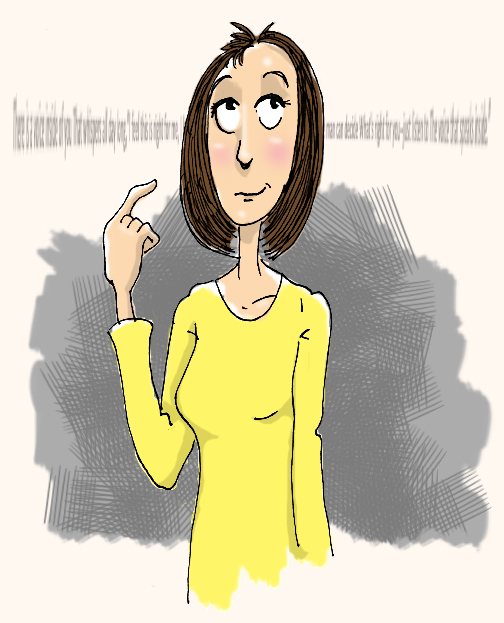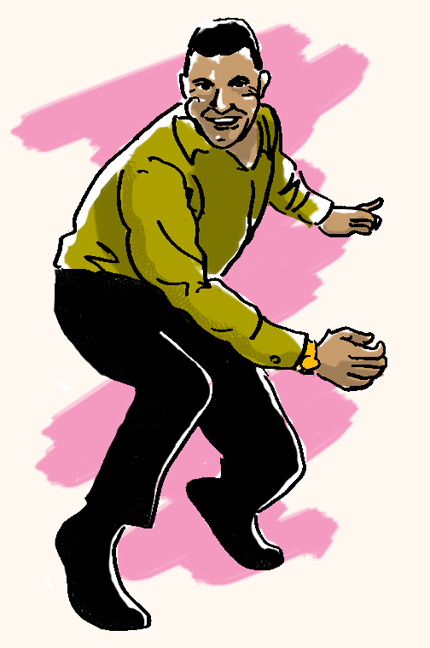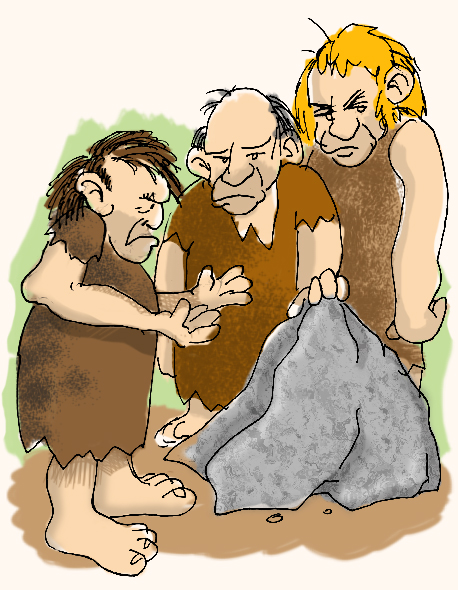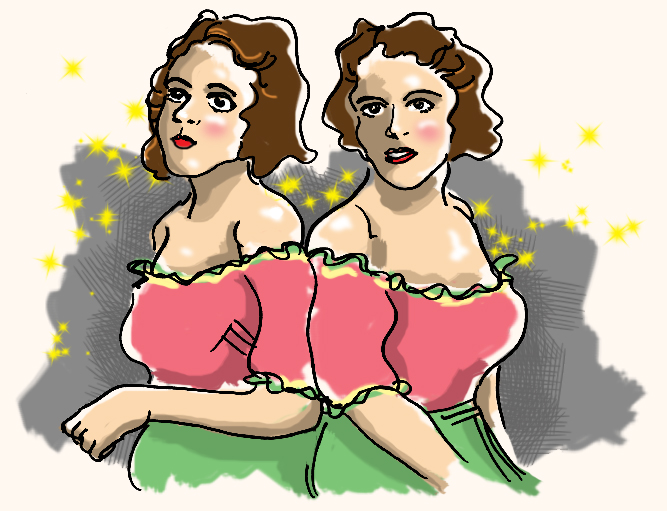
from my sketchbook: ina balin

I know we've come a long way, We're changing day to day, But tell me, where do the children play?

In 1960, Life Magazine graced its cover with a photo of a pretty 23-year-old budding actress named Ina Balin, accompanied by the teasing headline “An Early Look at a Star-To-Be.” By that time, young Ina had received critical acclaim for her performance on Broadway in A Majority of One and she starred alongside Anthony Quinn in her first film The Black Orchid. Life Magazine obviously saw something.

As the 60s progressed, Ina saw her star shine with roles opposite some of Hollywood’s most notable names. She appeared with a wide range of co-stars, from John Wayne to Jerry Lewis to Elvis Presley. Ina supplemented her film roles with guest appearances in popular episodic television like Bonanza, 12 O’Clock High and The Dick Van Dyke Show. Her exotic looks allowed her to play characters of varied nationalities and she was regularly cast as Italians, Jews, Greeks and the mysterious “undetermined ethnicity.”

Because of her popularity, Ina was recruited for a USO tour of Vietnam in 1966, her first of many. Ina was so moved by the deplorable conditions in Saigon’s notorious An Lac orphanage that she returned several more times over the next nine years. She worked tirelessly with other volunteers to help the children who were abandoned or displaced by the battle raging within their country. She managed to make a few more films between her trips to Vietnam and the orphanage, but in 1975 as the war ended, Ina adopted three of the children – two infants and a 16-year-old girl. The harrowing story of Ina’s involvement in the evacuation of the An Lac orphanage during the fall of Saigon inspired a TV movie in 1980, with Ina playing herself.

Ina passed away in 1990 from an unusual case of pulmonary hypertension. She was 52. Posthumous investigation theorized that she may have inhaled or ingested something in Vietnam that caused and exacerbated her fatal condition. She had never previously suffered from the ailment, but, curiously it affected a great number of indigenous Vietnamese women.

While working on the An Lac television movie, Ina met a young aspiring writer named Christy Marx who was working as a producer’s liaison. Christy was so intrigued by Ina and her story that she used it as inspiration for a sub-plot when she created the animated series Jem and the Holograms. The character Ba Nee, one of the foster children cared for by Jem at the fictional Starlight House, was based on Ina’s adopted daughter Ba-Nhi.

Comments

comments

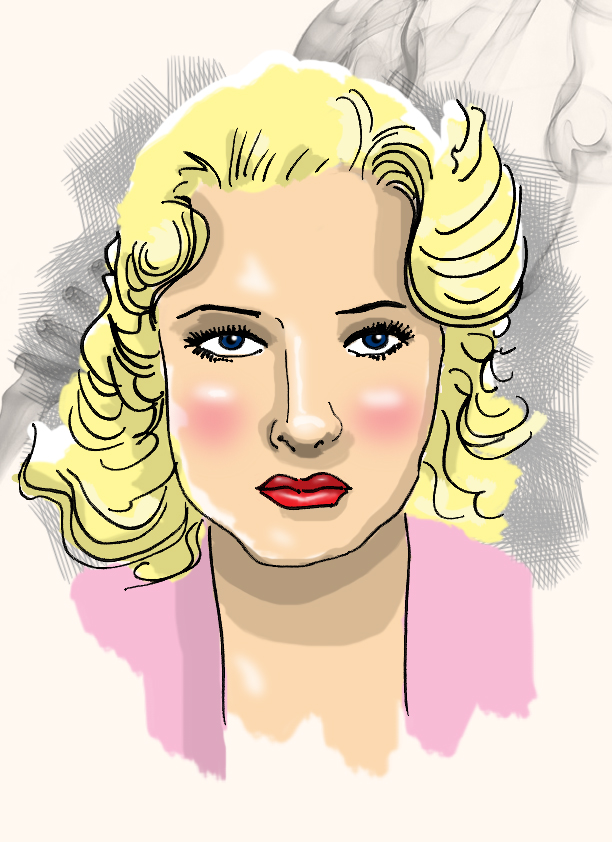
from my sketchbook: jean harlow

Jean. Jean. Roses are red.

Twenty years before Marilyn Monroe‘s big-screen debut, there was Jean Harlow.

No one dreamed the frail and sickly Harlean Carpenter from Kansas City. Missouri would blossom into the world famous “Blonde Bombshell.” The actress, who as a child who fought off scarlet fever and meningitis, caught the attention of eccentric director Howard Hughes and she was cast in his provocative 1930 film Hell’s Angels. Her sultry screen persona was born, as she uttered the oft-repeated line “Would you be shocked if I changed into something more comfortable?” Jean was known to apply ice to her nipples in order to appear sexier in scenes. It worked. The picture was a hit and the country became obsessed with the young star. Peroxide sales skyrocketed. Blonde actresses were now being considered for the roles of heartless vixens, previously reserved for raven-haired seductresses. Jean’s role the following year in Platinum Blonde gave her true sex symbol status.

Jean appeared opposite James Cagney in The Public Enemy as his subsequent girlfriend, after famously dumping girlfriend Number 1, Mae Clarke, with a grapefruit to the face.

Jean was paired with Clark Gable in six films. While filming Red Dust, their second teaming, Jean’s husband, producer Paul Bern committed suicide. The news nearly halted production, with actress Tallulah Bankhead considered as a quick fill-in for Jean. But, she soldiered on and the film was a huge success. She began to pick and choose her roles, turning down the female leads in both King Kong and Tod Browning‘s infamous Freaks.

In 1935, Jean met and fell in love with actor William Powell. However, two years into their relationship, Jean’s health began to decline. While filming what would be her final picture Saratoga, Jean was hospitalized with uremic poisoning and kidney failure, a result of her childhood battle with scarlet fever. Nearly ten years before the introduction of kidney dialysis, doctors were helpless. Jean passed away in 1937 at the age of 26. With creative camera angles and the help of stand-in Mary Dees, Saratoga was completed and released. It became the highest grossing film of 1937.

Jean was the first movie actress to grace the cover of Life magazine, just a month before her death.

Comments

comments

IF: totem

High Man on the Totem Pole

I have a confession to make. I love Gilligan’s Island, the 60s sitcom that, for three seasons, chronicled the totally-implausible antics of seven castaways stranded on an uncharted island somewhere in the vicinity of Hawaii.

Don’t turn your nose up at me. You’ve seen it.

Despite the show exhibiting slapstick humor and unrealistic situations, creator and producer Sherwood Schwartz (the man behind The Brady Bunch) managed to cast some pretty impressive guest stars over the course of three seasons. Remember comedian Phil Silvers hamming it up as eccentric Hollywood producer Harold Hecuba? Remember Hans Conreid showing up twice as confused pilot Wrongway Feldman? Remember insult king Don Rickles as a crazy kidnapper? And then there were the classic episodes — the radioactive vegetables; the silent movie; the robot; the Russian spy that looked like Gilligan. Yep, they don’t write comedy like that anymore!

One of my favorite episodes had Gilligan stumbling upon a native totem pole and observing that the head at the top bore an uncanny resemblance to him! Two of the Kupaki tribe members who believed that hapless Gilligan was their god incarnate were played by Los Angeles Dodgers’ second baseman Jim Lefebvre and outfielder Al Ferrara.

And of course there was the on-going “Mary Ann or Ginger” debate.

In February 2011, my wife and I went to an antique and collectibles show in Gaithersburg, Maryland. Mrs. P looked forward to perusing the tables of vintage treasures offered by the various dealers. I looked forward to meeting Dawn Wells — Mary Ann herself! — who was making a publicity appearance at the show. As my wife wandered among the displays of celluloid jewelry, Bakelite-handled kitchen utensils and piles of cloth-bound books, I made a beeline to the table at which Miss Wells was seated. At 73, she was still as cute as a button.

I waited patiently for my turn to purchase an autographed photo. A man — older than I — was conversing with Dawn in a very animated manner, flailing his wiry arms in exaggerated gestures. I noticed that he was dressed like Gilligan from the show — long-sleeved red polo shirt, floppy white sailor’s hat, baggy khaki pants and deck shoes. It was a tad creepy.

I overheard Dawn explaining to the man that she was planning a Gilligan’s Island-themed book (surprise!) about what life would be like if they were on that island in current times. Finally, the Gilligan look-alike moved on and I greeted Miss Wells with a pitch.

“When it comes time to illustrate your book, you can give me a call!,” I said and I flicked one of my business cards in her direction.

She squealed. “This is great! I certainly will”

We talked a little more. I got her to sign a photo and then went to meet up with Mrs. P. I was borderline giddy.

A few months later, she decided she’d like a logo to use for various promotional applications. After many email correspondences, several revisions and refinements, I presented Dawn with this…

She was thrilled. So was I.


Comments

comments

from my sketchbook: berry berenson

xxxxxxxxxxxxxxxxxxxxxxxx

Berinthia Berenson was born into a privileged, aristocratic family in the upper-class Murray Hill neighborhood of Manhattan. Her father was an American diplomat. Her mother was Countess Maria-Luisa Yvonne Radha de Wendt de Kerlor, but was better known as socialite  Gogo Schiaparelli.  Berinthia, or “Berry,” as her family called her, was also a descendant of prominent fashion designer Elsa Schiaparelli, who waged a post-World War I rivalry with Coco Chanel.

Berry and her older sister Marisa attended exclusive European boarding schools. Upon graduation, Berry expressed an interest in fashion photography and she shot numerous magazine layouts featuring her statuesque sister. Berry, too, tried her hand at modeling and the Berenson sisters were splashed across the pages of 1960s & 70s issues of Life, Vogue and Glamour.

In 1972, through mutual friend director Joel Schumacher, Berry was introduced to actor Tony Perkins. They fell in love and, despite Tony being nearly 20 years her senior, were married in less than a year. Berry gave birth to sons Osgood in 1974 and Elvis in 1976.

With Tony as an inspiration, Berry appeared in several movies, including Winter Kills, the remake of Cat PeopleRemember My Name opposite her husband and the TV mini-series Scruples. She retired from acting to spend more time with her sons, although she remained an active photographer, collaborating with Marisa on a fashion book in the early 80s.

In 1990, Tony tested positive for HIV. Berry was devastated, but never left her husband’s side. He died in 1992. Berry spent the next years watching her children grow up. Osgood followed in his father’s acting footsteps, while Elvis leaned toward music, becoming a singer-songwriter.

In the summer of 2001, Berry  stayed at the family vacation home in Cape Cod, Massachusetts. As the summer drew to a close, she made plans to join her sons on the West Coast to commemorate the ninth anniversary of Tony’s death. She boarded American Airlines Flight 11 from Boston’s Logan Airport headed to Los Angeles. At 8:46 a.m., the aircraft flew into the 92nd floor of the North Tower of the World Trade Center in New York City. Berry died along with 87 other passengers and crew. She was 53.

Comments

comments

IF: hidden

Remember those dreaded visits to the doctor’s office when you were a kid? The only pleasant aspect of that terribly sterile and unwelcoming waiting room was the few cheerful moment spent perusing the latest issue of Highlights for Children.

Remember the lessons we learned from the antics of Goofus and Gallant? Remember the endearing, if somewhat creepy, qualities displayed by The Timbertoes? My favorite part of Highlights was always the Hidden Pictures page. I loved scouring those simply-drawn compositions looking for a toothbrush concealed in the length of a fishing pole or a clown hat camouflaged among a cluster of pine trees. Sometimes, the objects were so well shrouded that I had to tear my mother away from a dessert recipe in the latest Good Housekeeping to assist me in my quest for that elusive picture of a fork.

So, in tribute to my wonderful memories of time spent seeking out those hidden objects, I offer my own take on the hidden objects picture.

Here is a picture of notorious Philadelphia torturer, rapist and serial killer Gary Heidnik. There are fifteen bodies hidden in this picture. Can you find them? (Hint: Check the backyard.)

Good luck.

 Congratulations. You have just discovered the secret message. Please send your answer to Old Pink, care of the Funny Farm, Chalfont

Comments

comments