DCS: rose marie

ro

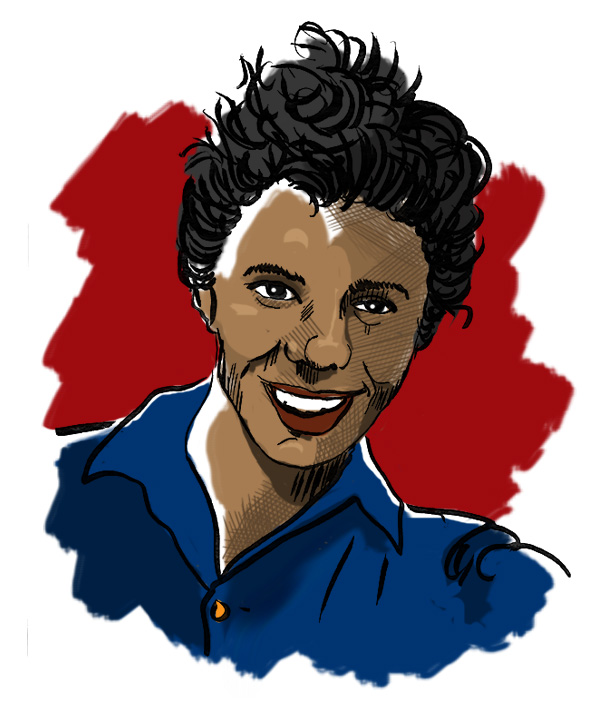
Rose Marie did it all. One of the few survivors from vaudeville, she began her career delighting audiences as a three-year-old songstress. Rose Marie made her mark in film, radio, records, theater, night clubs and television, over a career that spanned nine decades. Nine!

Enjoying a career in short films, where she appeared alongside W. C. Fields, Rose Marie also starred on her own radio show in the 30s. She released recordings on Vitaphone Records, accompanied by famed bandleader Fletcher Henderson. She broke into nightclubs with the help of mobsters Al Capone and Benjamin “Bugsy” Siegel. She performed at the grand opening of Siegel’s Flamingo Hotel in Las Vegas in 1946.

On television, she is best remembered for her role as “Sally Rogers,” the comedy writer who was always on the lookout for a husband, on The Dick Van Dyke Show. She later costarred on The Doris Day Show as “Myrna,” the title character’s office pal. Rose Marie was a frequent panelist on Hollywood Squares. She also had guest roles dozens of TV series including My Three Sons, two episodes of The Monkees and a recurring role in S.W.A.T. In 1966, she starred with Dick Van Dyke Show alum Morey Amsterdam in a seriously silly, but seriously funny film called Don’t Worry, We’ll Think of a Title, that also featured Dick Van Dyke Show costar Richard Deacon.

For nearly a decade, Rose Marie toured in the musical revue 4 Girls 4 with Rosemary Clooney, Helen O’Connell, and Margaret Whiting.

Most recently, Rose Marie was the subject of a career retrospective documentary called Wait for Your Laugh, that she was promoting when she passed away in December 2017 at the age of 94.


Comments

comments

DCS: larry fine

porcupine

Joseph and Fanny Feinberg owned a jewelry and watch repair shop in Philadelphia. One day, their young son, Larry, reached for a bottle of acid that was used to test the gold content of jewelry. Larry mistook the liquid for a drink and raised the bottle to his mouth. Joseph panicked and knocked the bottle from his son’s hand. The acid, however, spilled on Larry’s arm, burning the skin and causing extensive muscle damage.

In order to strengthen the muscles in Larry’s damaged arm, he took up the violin. The more he practiced, the stronger his arm became and the more proficient he grew on the instrument. His parentS considered enrolling their young phenom in a European music conservatory, but the outbreak of World War I halted those plans. Larry also attempted boxing to gain strength in his arm and toyed with making it his profession. Larry’s father would have no parts of it, forbidding his son to fight in public.

Pursuing a career in music, Larry Feinberg, now using the stage name “Fine,” worked as a violinist and master of ceremonies in vaudeville. It was at Chicago’s Rainbo Gardens that Larry met Shemp Howard and Ted Healy. Healy signed Larry up to appear with Shemp and Shemp’s brother Moe in a revue called A Night in Venice. The group, calling themselves “Ted Healy and The Racketeers,” toured through the late 1920s until they headed to California to film Soup to Nuts in 1930. Ted split from Larry and the Howard brothers. Shemp left to pursue a solo career. Moe’s younger brother Jerry, using the name “Curly” joined the act. The rest, as they say, is history.

As the “middle Stooge,” Larry appeared in 206 short subjects for Columbia Pictures. In a few films, the Three stooges are shown playing the violin. Larry is the only one who is actually playing.

A lifelong partier, Larry was a terrible money handler. He never owned a home until much later in life, opting to live in hotels on both coasts. He gambled and gambled poorly. He gave money away to those in need, sometimes more than he could afford. In the late 1950s, when Columbia stopped filming Three Stooges shorts, Larry was nearly forced into bankruptcy.

Larry moved into the Motion Picture Country House, a retirement community for actors in Woodland Hills, California, where he entertained the other residents from the confines of his wheelchair. He passed away in 1975, after several strokes, at the age of 72.

***** ***** ***** ***** *****

happy something or other

My annual Christmas music compilation is available as a FREE DOWNLOAD at ge.tt for a limited time.

This year, it’s a whopping 81 minutes worth of Christmas cacophony that’s sure to ruin your holiday celebration within seconds. You get twenty-seven eclectic Christmas selections plus a custom full-color cover with track listings – all for you and all for FREE! (That’s right! FREE!)

(Please contact me if you have trouble with the download.)

Comments

comments

IF: nightmare

one two freddy's coming for youHe’s the man of your dreams.

***** ***** ***** ***** *****

happy something or other

My annual Christmas music compilation is available as a FREE DOWNLOAD at ge.tt for a limited time.

This year, it’s a whopping 81 minutes worth of Christmas cacophony that’s sure to ruin your holiday celebration within seconds. You get twenty-seven eclectic Christmas selections plus a custom full-color cover with track listings – all for you and all for FREE! (That’s right! FREE!)

(Please contact me if you have trouble with the download.)

Comments

comments

DCS: conrad brooks

thespian

I have been a frequent attendee at memorabilia and autograph shows for over twenty-five years. Among the special celebrity guests, seated at long tables stacked with a modest selection of eight-by-ten glossy photos depicting their most notable roles, I always spotted this spry little man at a table overflowing with photos, scripts, booklets, DVDs and VHS tapes. I had no idea who he was, but he was very friendly and always seemed to be engaged in an animated conversation. He leaned on a stack of tapes and, flailing his arms for emphasis, expounded on his career.

After seeing him at a number of conventions, I decided to do a little research. I discovered this man was Conrad Brooks, son of Polish immigrants who met notorious Z-grade filmmaker Ed Wood Jr. in a Hollywood donut shop. A meeting that would change Conrad’s life. The pair collaborated on fifteen short films and several features including the infamous Plan 9 From Outer Space. Conrad was cast as “Patrolman Jaime” in the convoluted, but compelling, shlockfest. Conrad went on to appear in the horrendous The Beast from Yucca Flats, a 1961 sci-fi clunker that rivals Plan 9 for the title of “Worst Film Ever Made.”

After a two decade break, Conrad came back fast and furious in the 1980s. He appeared in and directed a slew of painfully-low budget films with curious titles like Soul Robbers from Outer SpaceThe Saturn Avenger vs. the Terror RobotCurse of the Queerwolf  (playing a character slyly named “Wally Beaver”), Zeppo: Sinners from Beyond the Moon!  and many more.

He became a staple at east coast horror conventions, telling tales of his extensive film career with the passion of Robert DeNiro, though not remotely the same success. He seemed to be convinced that Hollywood would come knocking at his door any day now. At one show in the early 2000s, I inadvertently made eye contact with Conrad and, after a lengthy anecdote about his friendship with the late Bela Lugosi during the drug-addicted final years of his acting career, I was coerced into purchasing a photo to add to my collection. With a flourish of his black Sharpie, Conrad inscribed a shiny black-and-white still of Lugosi with his arm around a smiling young man that Conrad assured me was him. When I got home, I discovered the picture was an odd size, larger than the standard 8″ x 10″, yet smaller than the next standard size frame. Even in photos, Conrad was a misfit. But a nice misfit. I found out from the promoter at a recent show, that Conrad signed autographs and sold videos to get money for groceries.

Conrad died on December 6, 2017 at the age of 86. I will miss him at the next convention.

***** ***** ***** ***** *****

happy something or other

My annual Christmas music compilation is available as a FREE DOWNLOAD at ge.tt for a limited time.

This year, it’s a whopping 81 minutes worth of Christmas cacophony that’s sure to ruin your holiday celebration within seconds. You get twenty-seven eclectic Christmas selections plus a custom full-color cover with track listings – all for you and all for FREE! (That’s right! FREE!)

(Please contact me if you have trouble with the download.)

Comments

comments

happy holidays from JPiC 2017

happy whatever

My annual Christmas music compilation is available as a FREE DOWNLOAD at ge.tt for a limited time.

This year, it’s a whopping 81 minutes worth of pure Christmas cacophony that’s sure to ruin your holiday celebration within seconds. Need to clear your house of unwanted guest who have overstayed their holiday welcome? Download this compilation, crank it up and watch those ungrateful freeloaders head for the door. (You may even follow them.)

You get twenty-seven eclectic Christmas selections that run the gamut from weird to really weird plus a custom full-color cover with track listings – all for you and all for FREE! (That’s right! FREE!)

(Please contact me if you have trouble with the download.)

we wish you a happy something or other

Did you miss previous years’ compilations? You can still get them here… if you insist:

2016     2015     2014     2013     2012     2011    2010


Comments

comments

IF: wealth

on the road

“The love of family and the admiration of friends is much more important than wealth and privilege.”
— Charles Kuralt

Charles Kuralt, the avuncular newsman and original host of TV magazine CBS Sunday Morning, exuded family values and a warm, comforting wholesomeness as American as apple pie, baseball and fireworks on the Fourth of July. However, when Charles passed away in 1997, it was discovered that he kept a second “shadow family” in Montana, twenty-one hundred miles away from his family in New York City.

Mr. Kuralt’s quote about family takes on a whole new meaning.

Comments

comments

DCS: david cassidy

So much wasted time

When Suzanne Crough passed away in 2015, I was sad and I was moved to write this piece on my other blog, It’s Been a Slice. Suzanne was only 52 when she died. After her very brief time in the spotlight, she led a fairly normal life.

Suzanne’s TV “big brother,” David Cassidy passed away at the age of 67, a mere nine months after revealing to the world that he had been diagnosed with dementia. David was determined to continue performing, but his deteriorating condition began to hinder his shows. He would often appear disoriented, forgetting song lyrics he had sung hundreds of times. Finally, in the closing days of November 2017, David succumbed to multiple organ failure as he lay in a hospital awaiting a liver donor.

For some reason, the sadness I felt when Suzanne Crough died escaped me when I learned of David Cassidy’s death.

I loved watching The Partridge Family every Friday night when it ran on ABC between The Brady Bunch and Room 222. The show, originally a proposed vehicle for real-life family pop group The Cowsills, was retooled as a sitcom starring Academy Award-winning actress Shirley Jones and her real-life stepson David Cassidy. The writing and plot lines were typical sitcom fare, but the target audience — prepubescent girls — was very forgiving, focusing instead on the dreamy good looks of chestnut-tressed star Cassidy. Supplemented by relentless coverage in every teeny-bopper publication, David Cassidy’s fame grew exponentially. That is, until the show met its demise when the network moved it to Saturday evenings opposite the fledgling juggernaut All in the Family. The Partridge Family left the airwaves in March 1974, essentially taking David Cassidy’s career with it.

The post-Partridge Family Cassidy struggled to maintain his stardom, while trying desperately (and angrily) to break free of his “Keith Partridge” pigeonhole.. He continued to release albums with modest success, but the singer who once sold out two consecutive nights at Houston’s Astrodome, was now enjoying popularity predominantly in Europe — his domestic fans having moved on to the “next big thing.” Despite scoring the first hit with “I Write the Songs,” months before it would become Barry Manilow’s signature song, David failed to garner the adoration he once received in the United States. In 1978, however, David returned to network television with police drama series called David Cassidy: Man Undercover. The series was cancelled after one season, although the concept was revamped years later as the basis for the hit Fox series 21 Jump Street.

In the 90s, David collaborated with New York Post music columnist Chip Deffaa on his autobiography entitled C’mon, Get Happy … Fear and Loathing on the Partridge Family Bus. I read the book, just after completing Barry Williams’s tongue-in-cheek memoir chronicling his experiences as everyone’s cool older brother Greg Brady. Where Williams’s volume was lighthearted and self-deprecating, David Cassidy’s account was mean-spirited, angry and filled with accusations, blaming everyone for stifling his true musical calling. David derided the “bubble gum” tunes he was “forced” to sing. He dismissed the show that made him a household name, as well as a very rich man.

Looking back on David Cassidy’s career, I can safely say that his was one of the most ungrateful success stories I’ve ever seen. Sure, his life took some unpleasant turns – three times divorced, struggles with drugs and alcohol, bankruptcy. But, he enjoyed success at a level that few can claim. But, he appeared unsatisfied and, yes, ungrateful.

At 67, he certainly died too soon. Perhaps, too soon to fully assess the life he led.

Comments

comments