inktober52: red

I dood it!
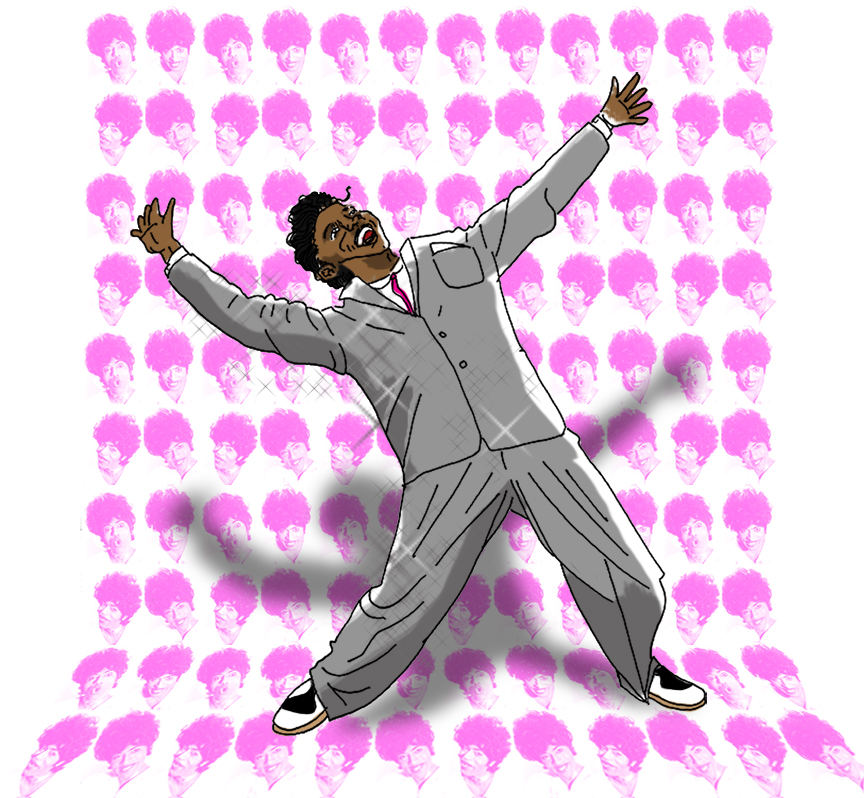
I first became familiar with Red Skelton when I was a kid. My family, like most families across the country, watched Red Skelton’s variety show every Tuesday night. I didn’t know who Red Skelton was or why he had such an unusual first name, but my parents watched, therefore I watched it too. Red had guest stars perform with him on his show, usually some actor or actress that was popular at the time or one of Red’s “show biz” contemporaries, like John Wayne or Jack Benny. He played goofy characters for cheap laughs. He also featured a silent pantomime segment, for which he was apparently famous. His show finally was cancelled after nearly twenty years, in a network-wide “sweep” of variety shows that saw heavy-hitters like Jackie Gleason and Ed Sullivan get the ax. Red was bitter, since his show rated in the top ten for most of its run.

When I got older, I discovered that Red Skelton had a huge career before his foray into television. It seemed in the 1930s and 40s, Red Skelton was a pretty big star in films. Red often was the featured “comic relief,” most notably in a few of the Dr. Kildare film series. Then he appeared in a succession of films as the inept radio detective “The Fox.” He moved on to lavish musicals opposite Eleanor Powell, Ann Miller and Lucille Ball, playing the unlikely leading man. He was one of the first “movie stars” to make the leap to the new medium of television, doing so in 1951.

Red Skelton, along with fellow redhead Lucille Ball and song-and-dance-man Buddy Ebsen, was one of those rare performers who had success in two separate careers, appealing to two separate generations.

Comments

comments

DCS: herk harvey

cut!

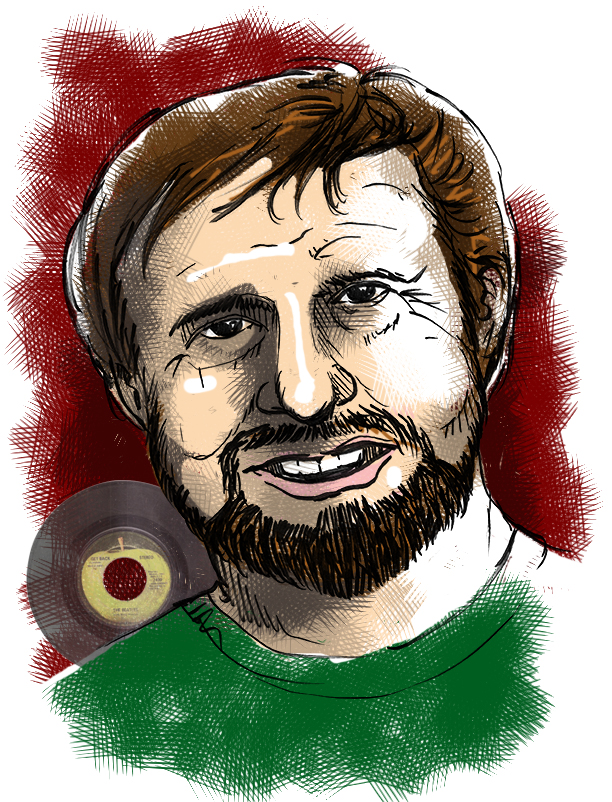
Upon his discharge from the US Navy after World War II, Herk Harvey took a teaching position in the drama department at the University of Kansas. He decided against a career in chemical engineering, the trade he mastered in the service, opting to use the directorial experience he gained before the war.

Herk did some acting on the side at Centron Corporation, an independent industrial and educational film production company in Lawrence, Kansas. He eventually joined the staff at Centron as a director and writer. He made numerous films for corporations and governmental use. He worked with a variety of name stars over the years, including Walter Pidgeon, Rowan and Martin, Dennis Day, Louis Nye, Billy Barty, Anita Bryant, Eddie Albert, Ed Ames, Jesse White, and Ricardo Montalban. He won many awards for his work, including the highest honors from the American Film Festival. Herk was praised for the special effects innovations that he developed while working at Centron.

In 1961, Herk was returning from a work-related film shoot in California. He passed an abandoned resort called Saltair on the southern shore of the Great Salt Lake in Utah. He was taken by the ornate building and recruited John Clifford, a co-worker at Centron, to write the screenplay for a film idea based on the resort. Herk took three weeks off from work to film around Lawrence, Kansas and Salt Lake City, Utah. He raised $17,000 for his initial budget, getting an additional $13,000 on deferment. He hired an assistant director. Reza Badiyi, a young immigrant who was just beginning his film work in the United States. (Badiyi would go on to create some of the most well-known, iconic television series openings and montages, including: Hawaii Five-O, Get Smart, and The Mary Tyler Moore Show.) Through arrangements with local government, Herk was permitted free access to film on a bridge, providing he repair any damage his crew created. He ended up paying $38 to fix a guard rail through which a car crashed on the bridge. Herk bribed a salesgirl to allow him to film for thirty minutes in a Lawrence department store. The only cast member that received compensation was Candace Hilligoss, a budding professional actress who played the lead role of “Mary.” Candace received $2000. The result of Herk’s efforts was the supernatural horror film Carnival of Souls.

Released in late 1962, Carnival of Souls was panned by critics. Disappointed by its poor showing, Herk returned to Centron and never directed another commercial film again. However, in later years, Carnival of Souls gained a cult following and has since been praised for its foreboding atmosphere and homage to German expressionist cinema. George Romero and David Lynch have both cited Carnival of Souls as inspiration for their own work.

After retiring from Centron, Herk became a regular on the horror convention circuit where he signed autographs and posed for pictures with fans. When asked why he only directed one film, Herk would quickly reply, “I directed over 400 films!”

Herk passed away in 1996 at his home in Lawrence. He was 71. The Academy Film Archive selected Carnival of Souls for preservation in 2012.

Comments

comments

DCS: ja’net dubois

movin' on up

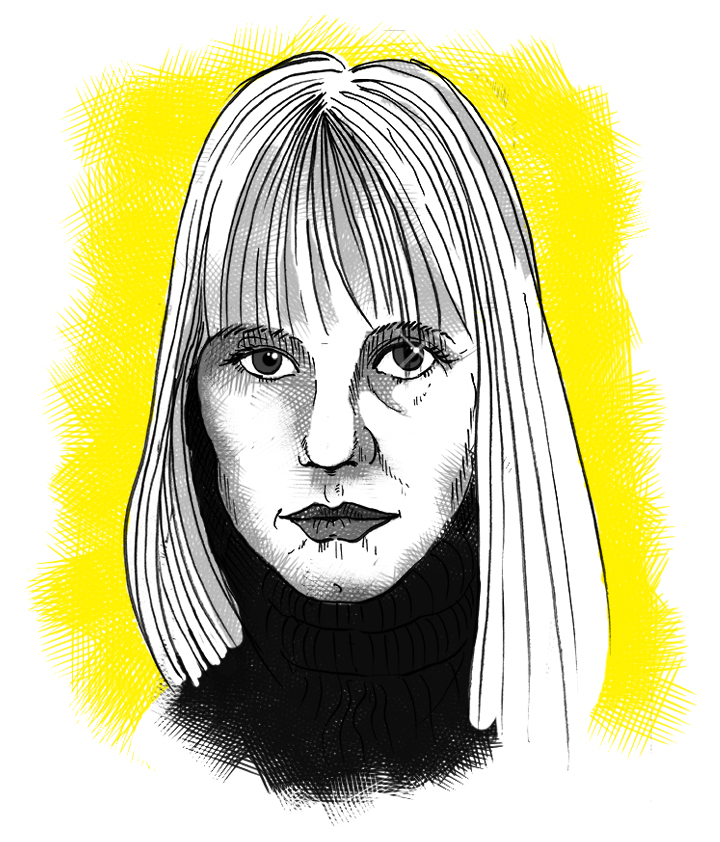
Jeanette Dubois was born in either New York or Philadelphia on August 5, 1932 or possibly 1938 or maybe even 1945… sources are not clear. It is clear, however, that she appeared with the great Sammy Davis Jr. and Louis Gossett Jr. in Golden Boy on Broadway in 1964. In 1970, using the more exotic “Ja’Net” as her first name, she was cast in a small role in the film Diary of a Mad Housewife. The same year, she landed the part of “Loretta Allen” in the popular soap opera Love of Life, making her the first African-American regular cast member on a daytime serial. Ja’Net played the role for three years.

Prolific television producer Norman Lear saw Ja’Net in a production of the play Hot l Baltimore and cast her as feisty outspoken neighbor “Willona Woods” on the TV sitcom Good Times, a spin-off of Maude (which was itself a spin-off from All in the Family) and a vehicle for actress Esther Rolle. During the run of Good Times, Ja’Net’s character adopted a young daughter, played by future superstar Janet Jackson. In 1987, Ja’Net would play Janet’s mother again in the latter’s video for the song “Control.”

After Good Times concluded its network run, Ja’Net was featured in films for the first time in over a decade. Among her big screen appearances were roles in Charlie’s Angels: Full Throttle, I’m Gonna Git You, Sucka and Heart Condition. She also recorded three albums, two of which were released on her own label. Ja’Net’s singing career should come as no surprise. She co-wrote and sang the theme to another one of Norman Lear’s programs — The Jeffersons. She was awarded two Emmys for her voice-over work on the animated show The PJs. She was also recognized with a TV Land Award in 2006 as part of the ensemble cast of Good Times.

Ja’Net passed away in February 2020. Because of her disputed birth year, her actual age was unknown. After her death, Ja’Net’s family made unsubstantiated claims that her birth father was band leader Cab Calloway.

Comments

comments

inktober52: joy

you got my joy I want it back
Oh, somewhere in this favored land the sun is shining bright,
The band is playing somewhere, and somewhere hearts are light;
And somewhere men are laughing, and somewhere children shout,
But there is no joy in Mudville — mighty Casey has struck out.

With the 2020 baseball season delayed, there certainly is no joy.

Comments

comments

DCS: mia zapata

evil stig

Mia Zapata learned to play piano and guitar at the age of nine, influenced by Billie Holiday, Bessie Smith, Ray Charles, Hank Williams and Sam Cooke. In 1986, at the age of 21, Mia and three friends formed a band called The Gits. After playing around the Yellow Springs, Ohio area and the campus of Antioch College, Mia and her band relocated to Seattle to join the blossoming music scene. Mia took a job at a bar and the band released a series of well-received singles over a period of a few years. They enjoyed popularity on the local music scene and release their first full-length album, Frenching the Bully, in 1992.

Mia was a charismatic focus and a rare female voice in the male-dominated grunge and punk circles in Seattle. Never wishing to be political, Mia felt more comfortable connecting with her audience on a personal level. The Gits gained a rabid fan base among the feminist movement in Seattle, despite the rest of the band being male.

At 2 AM on July 7, 1993, Mia left the Comet Tavern in Seattle. She popped her headphones on to take the block-long walk to the studio apartment she rented. She never reached home. At 2:15 AM, she was attacked in the residential Central District of Seattle. Her assailant brutally strangled, raped and murdered Mia, leaving her body to be discovered an hour later by a woman also walking home. Mia carried no identification. A medical examiner, however, was a fan of The Gits and was able to identify the singer. Mia was 27 years old.

The Seattle music community — including members of Nirvana, Pearl Jam and Soundgarden — raised money to hire a private investigator. After three years, funds dried up and they were no closer to solving the crime. The investigator continued to search on her own for another five years, still turning up nothing. In 2003, a Florida fisherman named Jesus Mezquia was arrested in connection with Mia’s murder. A DNA profile for Mezquia was created from saliva found on Mia’s body. A match was reported on a DNA database after Mezquia was arrested for burglary and domestic abuse. He had a history of violence towards woman, as shown by the numerous complaints filed by his ex-girlfriends and his wife. Although he maintained his innocence, Mezquia was sentenced to 37 years in prison. An appeal brought the sentence to 36 years.

In 1994, Enter: The Conquering Chicken, The Gits’ second album — the one they were working on when Mia was murdered — was released.

Comments

comments

inktober52: elephant

It appears, after more than a decade, Illustration Friday (illustrationfriday.com) has packed it in. After failing to post a weekly prompt time and time again, the link (as you will see) now goes right to Illustration Age, the website that hosts the former illustration challenge. I was a regular contributor to Illustration Friday, having never missed a week since 2006. I have 662 posts on my blog tagged “IF.”

Inktober, another illustration website, offers a daily drawing challenge during the month of October. I have participated in the Inktober challenge for a few years now… on my own terms (because I do everything on my own terms). Because I was submitting to Illustration Friday and my own Dead Celebrity Spotlight, I limited my work for Inktober to a weekly submission. Well, just this year, Inktober introduced “Inktober 52.” They are posting a suggestion each week on Instagram, keeping the new one hidden until the week it is revealed. This has been going on since January 2020. In the absence of Illustration Friday, I’m gonna jump in now.

The first word is “elephant,” and I’m trying a different style, too.

never forget

Comments

comments

DCS: adrienne corri

i'm singing in the rain, just singing in the rain

Scottish-born actress Adrienne Corri made her film debut at the age of 19 in the British drama The Romantic Age. Her career soon blossomed with roles in David Lean’s Dr. Zhivago, where she played Lara’s mother, and in Otto Preminger’s thriller Bunny Lake Is Missing. Adrienne also appeared in a number of low-budget horror films, including Vampire Circus for Hammer Studios.

She was featured in numerous television productions including a 1980 episode of Doctor Who, a version of Shakespeare’s Twelfth Night opposite Alec Guinness and the comedy The Country Wife with Helen Mirren. She also had a long and celebrated career in the British theater. It was, however, not without its controversial moments. During a staging of John Osborne’s The World of Paul Slickey — the actor/playwright’s sole attempt at a musical — the audience began to express their dislike by loudly “boo”ing the cast. Adrienne offered a middle finger the to crowd, accompanying her gesture with a loud “Go fuck yourselves,” then exited the stage.

Adrienne is best known for her role of “Mrs. Alexander,” an assault victim  at the hands of “Alex DeLarge” in Stanley Kubrick’s A Clockwork Orange. Adrienne was offered the role after two other actresses turned it down, finding it too humiliating, since it involved having to be perched — naked — on an actor’s shoulders for weeks on end while the perfectionist director decided which shot he liked the best. Adrienne had no qualms about appearing naked and she earned Kubrick’s respect by her willingness to undergo the grueling process of shooting endless takes. The visually disturbing, physically grueling scene was shot over four days and required thirty-nine takes. It finally concluded when actor Malcolm McDowell (who played the villainous lead) conceded, “I can’t hit her anymore!” After A Clockwork Orange wrapped, Adrienne remained close friends with Kubrick.

When she retired from acting, Adrienne wrote The Search for Gainsborough in 1984. The book, written in diary form, tells the story of her quest to authenticate a painting she owned that she believed to be an early work by the famed artist of the renowned portrait “The Blue Boy.”

In 2016, Adrienne died at her home in London at the age of 85.

Comments

comments

DCS: stanislav bogdanovich

checkmate

It appeared that Stanislav Bogdanovich was poised to take the world of chess by storm. The young Ukranian, a graduate of the National University of Odessa Law Academy, had already won a number of championships. He was awarded the title of International Master in 2009, and Grandmaster in 2017. His opponents described Stanislav as a fierce, but talented, competitor. He was noted for playing particularly well as a fast pace, called “blitz chess” by those in the sport. After defeating Grandmaster Mikhail Golubev, he assessed Stanislav as “perhaps the most talented player in the entire history of Odessa.”

On March 5, 2020, the father of Alexandra Vernigora (Stanislav’s girlfriend, an up-and-coming chess player herself) discovered the couple dead in Stanislav’s Moscow apartment. They were surrounded by balloons filled with nitrous oxide. Stanislav was 27 years old. Alexandra was 18.

Comments

comments

DCS: scot halpin

she fell in love with the drummer another and another she fell in love

On November 20, 1973, The Who’s performance at San Francisco’s Cow Palace was briefly interrupted when Keith Moon passed out behind his drum kit. It seemed that the horse tranquilizers he had downed prior to the concert were too much for the drummer to handle. Moon was carried off by some roadies and the three remaining members — guitarist Pete Townshend, bassist John Entwistle and vocalist Roger Daltrey — soldiered on with the show. Daltrey banged on a tambourine as a impromptu substitute for drums on “See Me Feel Me.” At the song’s conclusion, Townshend thanked the crowd for the kind reception and apologized for Moon’s episode. Then he addressed the crowd, asking “Can anybody play the drums?” He repeated the question, adding forcefully, “I mean somebody good!”

Scot Halpin, who had just moved to the area from Iowa was in the front row with his friend Mike Danese. The pair had been outside the venue for thirteen hours, hoping to score good seats for the evening’s show. Mike began to wave his arms and point to Scot. “He can play!,” Mike yelled loud enough to attract the attention of concert promoter Bill Graham. In reality. While Scot was indeed a drummer, the reality was he had not played in over year. Graham didn’t wait for that explanation. He pointedly asked Scot, “Can you do it?” Scot answered “Yes.” Graham yanked Scot onto the stage, much to the surprise of Townshend and Daltrey. Scot was shown a seat behind the massive drum kit and given a shot of brandy to calm his nerves. The crowd cheered and Townshend instructed Scot. “I’m going to lead you. I’m going to cue you.,” the lanky guitarist said.

Roger Daltrey announced “Scott!” into the microphone and Townshend launched into the opening riff of “Smokestack Lightning,” the Howlin’ Wolf blues song. Scot managed to keep up a good rhythm with Townshend and Entwistle, but stumbled a bit when the song segued into the Willie Dixon rave “Spoonful.” He began to falter on the Who original “Naked Eye,” the final song of the night. Scot was brought to the front of the stage to take bows with the rest of the band. He was ushered backstage where he was thanked and given a Who tour satin jacket… which was stolen later in the evening.

In interviews, Daltrey praised Scot’s drumming and stamina.

Scot left California in 1995, moving to Indiana. He passed away from an inoperable brain tumor in 2008. He was 54 years old.

Comments

comments