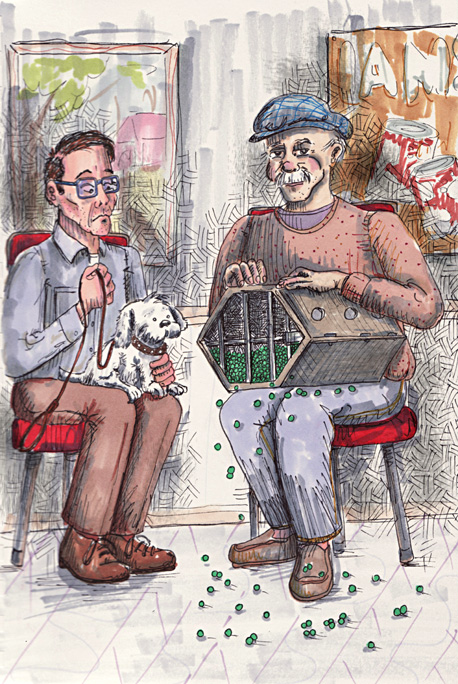
The challenge on illustrationfriday.com this week is “save”.
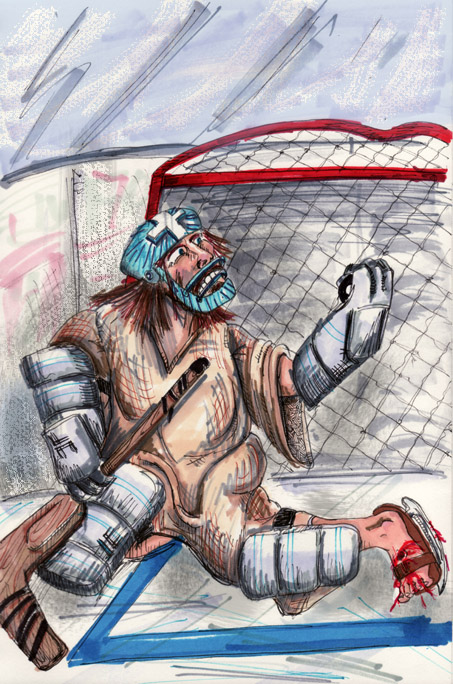
Pass from the left wing. Skates down ice. It’s a breakaway. Slap shot on goal…..
JESUS SAVES!
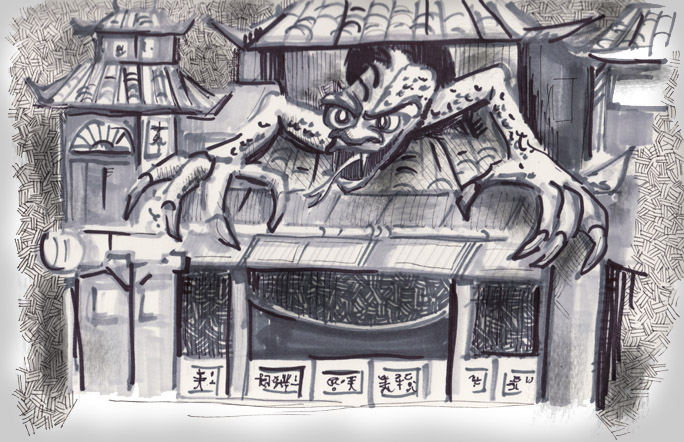
SFG: dragon
When I was a kid in the 1960s, every summer usually included one or two trips to Atlantic City. My parents, my older brother and I would pile into the car and take, what seemed to be, the eleven-hour drive from northeast Philadelphia to the southern New Jersey seaside resort (Of course, as an adult, I discovered this journey is about an hour and a half). My father hated to travel. Everything except driving to work and driving to buy cigarettes was an inconvenience to him. He never liked to go anywhere further than Cottman Avenue. If it began to rain, my father would turn the car around and head back home fifteen minutes into our trip. My mom, however, loved to go anywhere and everywhere. She would plan and talk about our Atlantic City trips as if we were headed to the French Riviera. She would pack lunch, a thermos jug of her world-famous iced tea and an array of activities to keep my brother and me from beating the shit out of each other in the back seat. We would play “Car Bingo” or “Spot the Out-of-State License Plates”. We would discuss what the first thing we would do when we got to Atlantic City. We sometimes would stop for hot dogs and fresh produce at one of the zillion roadside stands that stood every few feet along Route 73 in New Jersey.
Our destination was usually one of the grand old hotels on the Boardwalk – The Traymore, The Shelburne, The Deauville – all eventual casualties of the casino era. Upon arrival, we would hastily put on our bathing suits and rush to the beach. In those days, beach attire was not permitted in the hotel lobby. A wooden walkway that led from the hotel basement to the beach, under the Boardwalk, was set up for beach-goers.
After a full day playing in the sand, eating ice-cream from cooler-carrying, barefoot vendors, and actually swimming in the Atlantic Ocean, we would head to Million Dollar Pier. Opened in 1906 and was situated on the Boardwalk at Arkansas Avenue, Million Dollar Pier was jammed with games of skill, giant spinning wheels where a ten-cent bet might win you a huge, pink plush bear or a full box of Hershey bars and food stands selling hot dogs, cotton candy and Kohr Brothers custard. There was a sideshow featuring the Ape-Girl. The painted poster promised that a beautiful girl would transform into an ape right before your eyes (10 times nightly) and then, shockingly, escape from her cage (also 10 times nightly) – all to the accompaniment of a loudspeaker chanting “The Ape-Girl! The Ape-Girl! Was Darwin right? Did man evolve from ape? The Ape-Girl! The Ape-Girl!” Million Dollar Pier was also home to an overabundance of carnival rides. There was the Tilt-O-Whirl, The Scrambler (my mom’s favorite), Bumper Cars and numerous kiddie rides. After navigating the walkways of the pier, through the maze of rides, there stood the bane of my six-year-old existence – The Orient Express. Looming above the pier was that red, green and black abomination. It was a pagoda-peaked and faux-lacquer finished structure, decorated with funny squiggles I had only seen in Chinese restaurants and topped with a behemothic, blinky-eyed, smoke-breathing (on the summers that they could get it to work) dragon. I believed that dragon waited every year for me to return. For me to step close enough to its perch so it could eat me. I stood frozen in silent horror and stared at that fiberglass beast and I knew that bastard was staring right back at me.
Every year my mom and my brother would ride The Orient Express. Every year they asked if this was the year I would join them. And every year I gave the same answer – “NOOOOOOOOOOOOOOOOOOOOOOO!!!!” Were they blind? Couldn’t they see the way that dragon looked at me? That horrible monster motionlessly and patiently waited for the day I accepted their offer, to finally savor the child it stared at and tasted in its pre-fab plastic and electronic-circuitry-filled mind all those years. So, my mom and my brother rode The Orient Express. I stood a safe distance outside with my dad. They climbed into the two-seat ride car and burst through the first set of shiny red doors towards darkness. At one point in the ride, the cars came back out of the building for a quick, roller coaster-like dip and then were rushed back inside. I waved to my mom and brother when their vehicle emerged from the building for that split-second. I shuddered as it went back in, wondering if they would survive this year’s ride. Finally, they arrived at the unload area, laughing as they had in previous years.
When my brother felt he was too old to take vacations with his family, the remaining three of us headed to Atlantic City. This particular summer I agreed, although with much trepidation, to accompany my mom on The Orient Express. I faced that dragon one more time, trying to convince myself that this was just a ride on a pier in New Jersey and not my ultimate doom. Nervously, I entered the ride car with my mom. She assured me I was safe. We exploded through the first set of red doors (which by this time were dull and in need of repair) into darkness.
And that’s pretty much what the ride consisted of – darkness. Save for the two seconds that our vehicle came outside to encounter the dip, we were in pitch dark. Suddenly a bright light shone on a mirror, giving the illusion of an inevitable collision with an another ride car. Then, the track sharply turned right, we noisily breached another set of doors and we were out.
The ride sucked and I was not eaten.
Comments
DCS: willie stargell
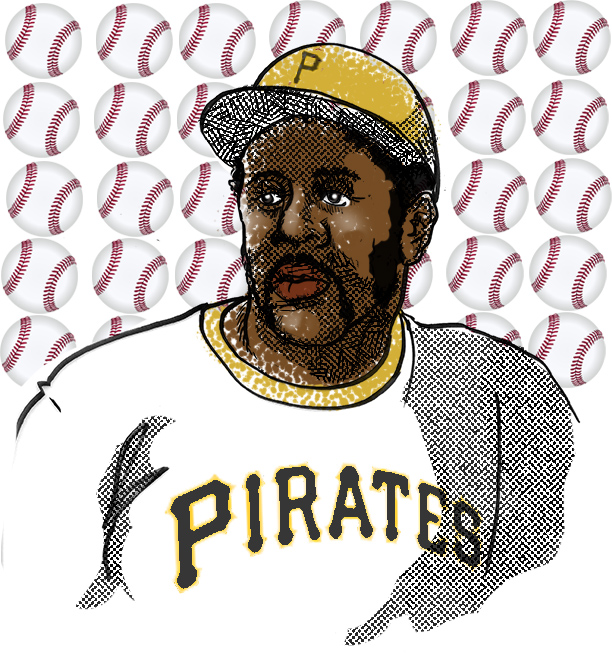
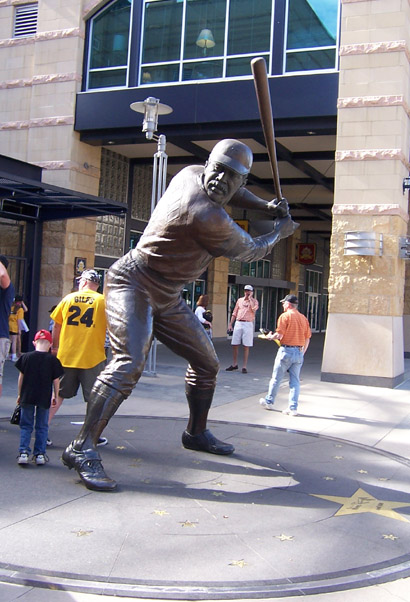
Willie Stargell was unquestionably the guiding force behind the success of the Pittsburgh Pirates in the late ’70s. He played his entire career — 21 seasons — with The Pirates. He was the league MVP at age 39. Besides being the team’s best player, he kept the clubhouse loose. He even instituted the equivalent of a third-grade teacher giving out stickers when he awarded his “Stargell stars” to teammates for a job particularly well done.
There’s no way anyone would try that kind of thing today. … And maybe that’s the problem.
Williel was known for hitting monstrous home runs. At one time, he held the record for the longest homer in nearly half of the National League parks. Standing 6 feet 2 inches, Willie seemed larger than life. When most batters would use a simple lead-weighted bat in the on-deck circle, he took his practice swings with a sledgehammer. Former major league manager Sparky Anderson once said, “He’s got power enough to hit home runs in any park, including Yellowstone.”
He was the only player to ever hit a ball out of Dodger Stadium twice; only four home runs have ever left the premises at Chavez Ravine. Dodger starter Don Sutton said of Willie, “I never saw anything like it. He doesn’t just hit pitchers, he takes away their dignity.” Willie hit the only fair ball ever to reach the upper deck of Olympic Stadium in Montreal. The seat where the ball landed has been since painted in yellow, while the other seats in the upper deck are red. Willie also hit the longest home run ever hit at Veterans Stadium in Philadelphia. The spot where the ball landed was later marked with a yellow star, with a black “S” inside a circle. Pirates manager Chuck Tanner said of Willie, “Having him on your ball club is like having a diamond ring on your finger.” Teammate Al Oliver once said, “If he asked us to jump off the Fort Pitt Bridge, we would ask him what kind of dive he wanted. That’s how much respect we have for the man.”
After retirement, Willie spent several years as a coach for the Atlanta Braves. He was inducted into the Baseball Hall of Fame in 1988, his first year of eligibility. He died of a stroke on April 9, 2001, Opening Day of PNC Park, the new home of The Pirates. That same day a 12-foot tall statue of Willie Stargell was unveiled outside the ballpark.
Two major factors are keeping teams from having that one guy to rally around … and both can be indirectly tied to free agency: 1) Players don’t stay with the same team long enough; and 2) These days, money is just about the only sign of respect.
Comments
Monday Artday: pirates
The challenge word at Monday Artday this week is “pirates”.
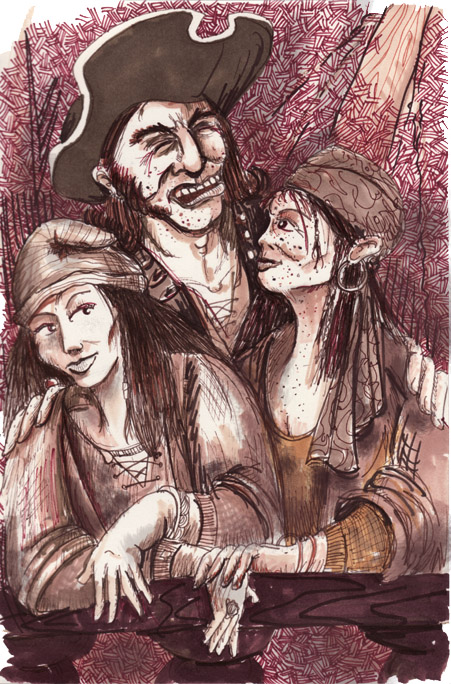
John Rackam, also known as Calico Jack because of his preference for wearing brightly-colored patchwork pants, was a moderately successful pirate. Rather than attacking plump rich targets, Rackam preferred using a small sloop to attack local merchants and fishing vessels. He is most famous for his association with two women pirates, Ann Bonny and Mary Read.
In 1719, Rackam sailed to the Bahamas. He began an affair with Anne Bonny, an Irish-born woman whom he met in a local tavern. When she became pregnant, he took her to some friends he had in Cuba to take care of her during her pregnancy. Once their money began to run out, Rackam returned to piracy and convinced Bonny to come with him, which she did, disguised as a man. He again went back to plundering his standard small local merchants in the West Indies. A woman by the name of Mary Read also disguised herself as a man to join the crew, after her ship was taken during a raid. Bonny and Read became close companions. They met when Bonny walked in on Read undressing one day, and she discovered her secret. The two women agreed to keep this from everyone aboard ship. It is believed that, at first, their attraction to one another was of a romantic nature.
But, Read’s true identity would not remain secret for long. Rackham became suspicious of Bonny’s close relationship with the new sailor, and demanded an explanation. When Read confessed that she was actually a woman, Rackham allowed her to stay on as a member of his crew, eventually revealing her secret to the other crew members. However, this had no effect on her service, and she was accepted on board the ship as Bonny had been.
Mary Read fell in love with one of the younger pirates on the ship. That pirate got in a quarrel with another older crewman and set a duel for the next day. Mary, knowing that her lover stood no chance, started a quarrel with the older man and challenged him to a duel that would take place before the pending duel with her lover.
They proceeded with an ambitious clash of blades. She ably avoided the other pirates attacks, all the while waiting for him to make a mistake. It came when the pirate stumbled while lunging at her, and Mary immediately seized the opportunity. She ripped her shirt open, exposing her breasts to the mans bewildered gaze. While he stood gaping, Mary cut his throat.
In October 1720, Rackham and his crew were attacked by pirate hunter Jonathan Barnet, who was working for the governor of Jamaica. Most of Rackham’s crew did not put up much resistance, as many of them were too drunk to fight. However, Read and Bonny, who were sober, fought fiercely and managed to hold off Barnet’s troops for a short time. After their capture, Rackham and his crew were sentenced to be hanged. Bonny chastised the imprisoned Rackham by saying, “I am sorry to see you here Jack, but if you had fought like a man, you need not be hanged like a dog.”
At their trial, Read and Bonny both claimed they were pregnant. In accordance with English common law, both women received a temporary stay of execution until they gave birth. Mary Read died in prison from a fever and never delivered.
Curiously, it is at this point that Anne Bonny disappears from history.
Comments
IF: homage
The illustrationfriday.com challenge word this week is “homage”.
hom·age (ˈä-mij or ˈhä-mij) n. 1. expression of high regard 2. something that shows respect or attests to the worth or influence of another
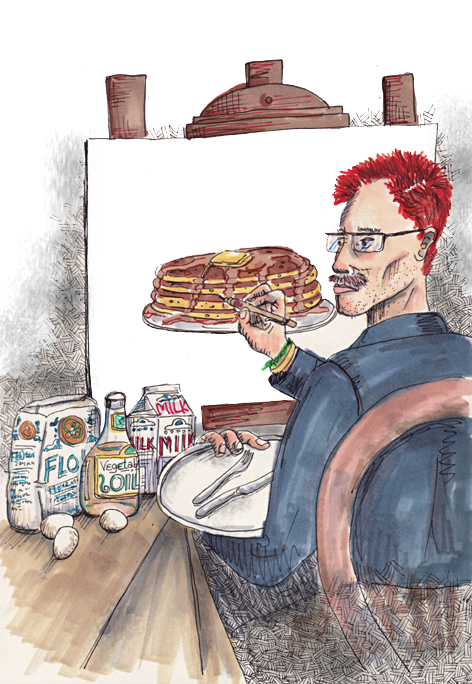
I thought of several ideas for this topic. This guy suggested paying homage to René Magritte. Magritte is his favorite artist. Magritte was also the favorite artist of an illustration teacher I had in art school (many years ago).
Magritte was born in 1898, the eldest son of Léopold Magritte, a tailor, and Adeline, a milliner. He began drawing lessons in 1910. In 1912, his mother committed suicide by drowning herself in the River Sambre. Magritte was present when her body was retrieved from the water. The image of his mother floating, her dress obscuring her face, may have influenced a 1927-1928 series of paintings of people with cloth obscuring their faces, including Les Amants. His work frequently displays a juxtaposition of ordinary objects in an unusual context, giving new meanings to familiar things. The representational use of objects as other than what they seem is typified in his painting, The Treachery of Images, which shows a pipe that looks as though it is a model for a tobacco store advertisement. Magritte painted below the pipe, Ceci n’est pas une pipe (This is not a pipe), which seems a contradiction, but is actually true: the painting is not a pipe, it is an image of a pipe.
My illustration is an homage to Magritte, based on his 1936 painting La Clairvoyance.
Comments
SFG: ape
The challenge on sugarfrostedgoodness.com this week is “ape”.
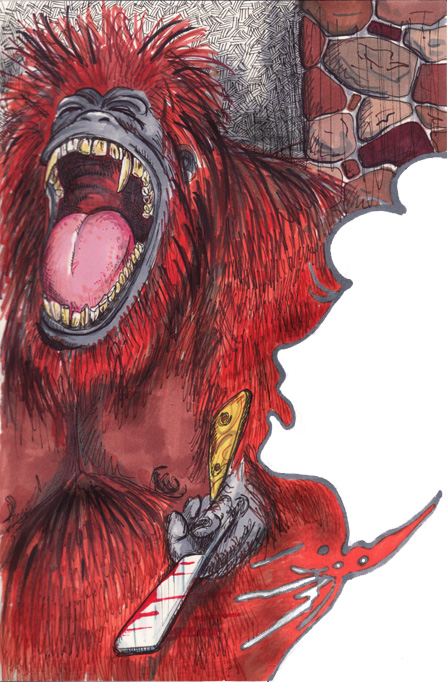
In 1841, Edgar Allan Poe published “The Murders in the Rue Morgue”. It is considered to be the first detective story, preadating the first Sherlock Holmes story by forty-six years and Agatha Christie‘s birth by fifty-nine years. Poe referred to it as one of his tales of ratiocination, meaning process of reasoning.
The story is told by an unnamed narrator and friend of the main character, C. Auguste Dupin. As the first true fictiion detective, Poe’s Dupin is a man in Paris who decides to solve the mysterious brutal murder of two women in that city after a suspect has been arrested. Numerous witnesses are quoted in the newspaper as having heard a suspect, though the witnesses each think it was a different language. At the murder scene, Dupin finds a suspicious hair that does not appear to be human. He places an advertisement in the newspaper asking if anyone has lost an “Ourang-Outang”. When he visits the sailor that answers the ad, he explains how he determined that the animal is the actual murderer in the Rue Morgue.
The Dupin character established many literary devices which would be used in future fictional detectives including Sherlock Holmes and Hercule Poirot. Many later characters, for example, follow Poe’s model of the brilliant detective, his personal friend who serves as narrator, and the final revelation being presented before the reasoning that leads up to it. Dupin himself reappears in two more Poe stories, “The Mystery of Marie Roget” and “The Purloined Letter”.
The word “detective” did not exist at the time Poe wrote “The Murders in the Rue Morgue.” The story establishes an urban theme which was reused several times in Poe’s fiction, likely inspired by Poe’s time living in Philadelphia. His plot twist of “orangutan as murderer” was likely inspired by the crowd reaction to an orangutan on display at the Masonic Hall in Philadelphia in July 1839.
Comments
DCS: roscoe arbuckle
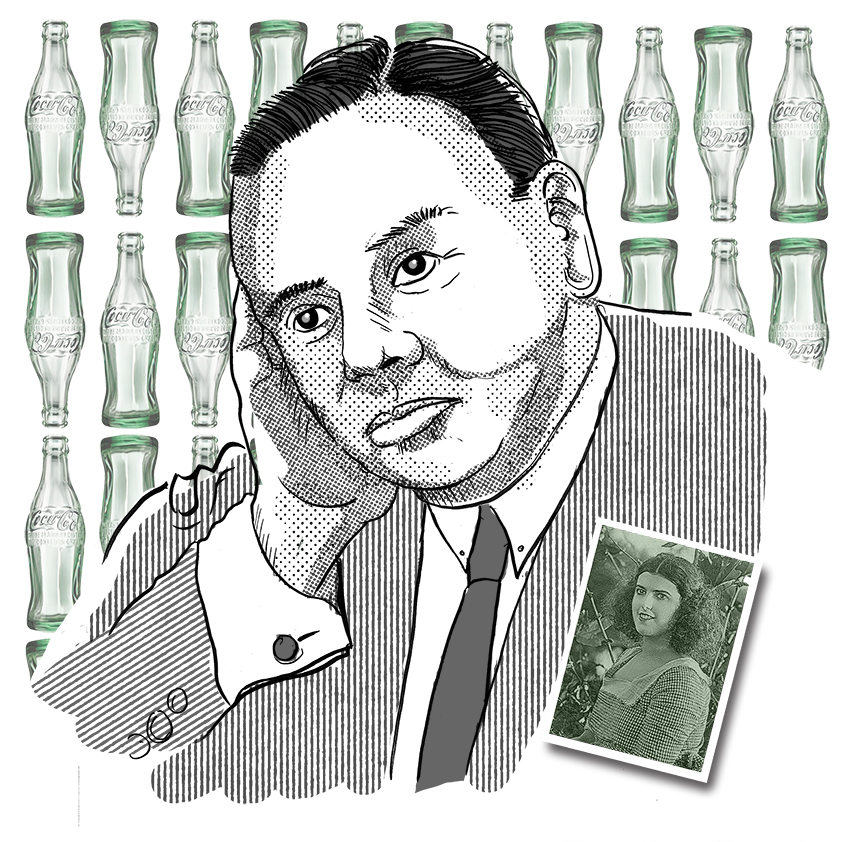
Roscoe “Fatty” Arbuckle appeared in several Keystone Kops shorts in 1913. In 1914 Paramount Pictures offered the then-unknown Arbuckle $1,000 a day, 25% of all profits and complete artistic control of movies he made for them. The movies were so lucrative and popular that in 1918 they offered Arbuckle a 3-year, $3 million contract. In his movies, Arbuckle typically portrayed a bumbling yet well-meaning hero who saved the day by pie-throwing, back-flipping, and generally outwitting his opponent. In spite of his bulky, 250-pound frame, Arbuckle proved to be an able acrobat ― a skill he had perfected during his days in vaudeville. In 1919, Arbuckle was one of the most successful comedians in silent film. Two years later, that would change.
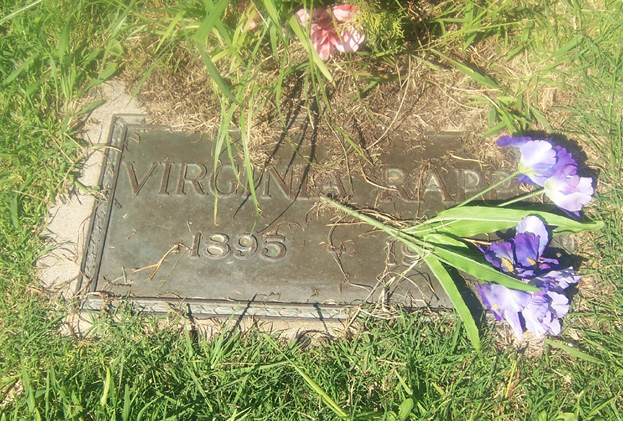
On September 3, 1921 Arbuckle took a break from his hectic film schedule and drove to San Francisco with two friends. They checked into the St. Francis Hotel, decided to have a party, and invited several women to their suite. During the carousing, a 30-year-old aspiring actress named Virginia Rappe became seriously ill and was examined by the hotel doctor, who concluded her symptoms were mostly caused by intoxication.
Rappe died three days later of peritonitis caused by a ruptured bladder. Rappe’s companion at the party, Maude Delmont, claimed before a grand jury that Arbuckle had somehow pierced Rappe’s bladder while raping her. Rappe’s manager Al Semnacker accused Arbuckle of using a piece of ice to simulate sex with her, which led to the injuries. By the time the story was reported in newspapers, the object had evolved into being a Coca-Cola or champagne bottle, instead of a piece of ice. In fact, witnesses testified that Arbuckle rubbed the ice on Rappe’s stomach to ease her abdominal pain. Arbuckle was confident that he had nothing to be ashamed of, and denied any wrongdoing. Delmont later made a statement incriminating Arbuckle to the police in an attempt to extort money from Arbuckle’s attorneys, but the matter soon spun out of her control. What Delmont did not tell the District Attorney was that as Virginia Rappe lay in pain in Arbuckle’s hotel suite, Delmont had sent a telegram to each of two friends: “WE HAVE ROSCOE ARBUCKLE IN A HOLE HERE. CHANCE TO MAKE SOME MONEY OUT OF HIM.” Her official complaint — with its description of how Arbuckle had dragged Virginia Rappe into his bedroom saying, “I’ve waited five years to get you;” how Rappe had cried for help from behind the locked door and Delmont had banged on the door; how Arbuckle had at last emerged, perspiring from the struggle and she had rushed in to find Rappe naked and bruised and dying — all had been a fabrication. After two deadlocked juries in as many mistrials, the jury at Arbuckle’s third trial deliberated for six minutes and returned a “not guilty” verdict. But it was too late for Arbuckle’s career. By this time Arbuckle’s films had been banned, and newspapers had been filled for seven months with alleged stories of Hollywood orgies, murder, sexual perversity, and lies about the case.
Arbuckle tried returning to moviemaking, but industry resistance to distributing his pictures lingered after his acquittal. He retreated into alcoholism. In the words of his first wife, “Roscoe only seemed to find solace and comfort in a bottle.”
Buster Keaton attempted to help Arbuckle by giving him work on Keaton’s films. Arbuckle also directed a number of comedy shorts under the pseudonym William Goodrich.
In 1921, shortly before his third marriage, Arbuckle signed a contract with Warner Brothers to star in six two-reel short comedies under his own name. The six shorts, filmed in Brooklyn, contain the only recordings of Arbuckle’s voice. Lionel Stander and Shemp Howard appeared with Arbuckle in these successful films.
Arbuckle had finished filming the last of these shorts on June 28, 1933. The next day he was signed by Warner Brothers to make a feature-length film. At last, Arbuckle’s professional reputation was restored, and he was welcomed back into the world he loved. He reportedly said, “This is the best day of my life.” He died that night of a heart attack. He was 46.
Comments
Monday Artday: thirst
The Monday Artday challenge this week is “thirst”.
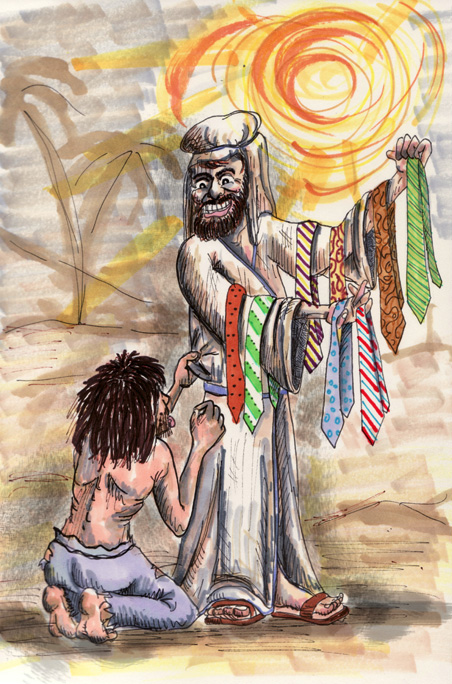
I love old jokes and this week’s challenge word made me think of a great old joke.
A guy is crawling through the desert, crying for water. “Water! Water!” he cries. He sees a figure ahead in the desert and he crawls towards it. It’s a man.
“Water! Please! I need water!,” the guy cries to the man.
The man says “I don’t have any water, but I have some beautiful neckties.”
“NECKTIES!”, the guy screams, “I need WATER! WATER! I don’t want a tie!” ― and he crawls off.
The guy comes across another man in the desert. “Water! Please! I need water!,” the guy pleads to the man.
“Well, I don’t have any water, but I have some ties. Look at these great ties.” the man says.
“Again with the TIES!?,” the guy cries, “I don’t need any ties! I NEED WATER! WATER!!”
“I got ties,” the man says. The guy, disgusted, crawls off.
Just over a sand dune, the guy comes upon a huge restaurant ― right in the middle of the desert! He struggles to crawl up the front steps of the restaurant, pleading for water. A maître d’ in a tuxedo is standing at the doorway. “Please,” the guy says, “Please! I need water!”
The maître d’ looks down at him and says “I’m sorry. I can’t let you in without a tie.”
Comments
from my sketchbook: albert dekker
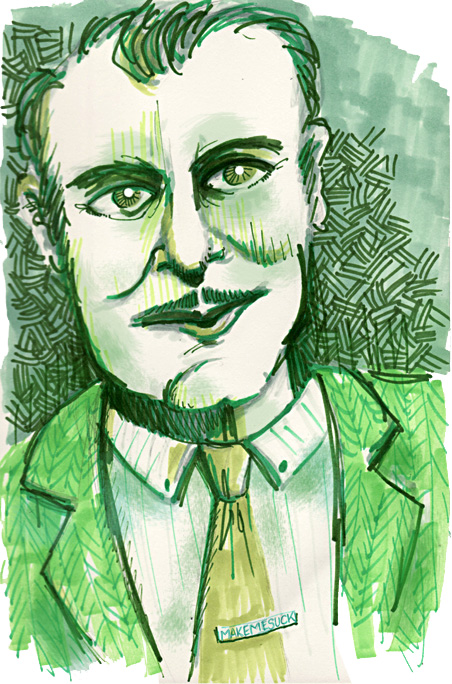
Born Albert Van Ecke in Brooklyn, New York, Albert Dekker made his professional acting debut with a Cincinnati stock company in 1927. Within a few months, Dekker was featured on Broadway.
Dekker moved to Hollywood in 1937, and made his first film, The Great Garrick. He returned to the stage and replaced Lee J. Cobb as Willy Loman in the original 1949 production of Death of a Salesman, and during a five-year stint back on Broadway in the early 1960s, he played the Duke of Norfolk in A Man for All Seasons, with Paul Scofield. Dekker appeared in some seventy films from the 1930s to 1960s, but his three most famous screen roles were as a mad scientist in the 1940 horror film Dr. Cyclops, as a vicious hitman in the The Killers, and as an unscrupulous railroad detective in The Wild Bunch, his last motion picture.
Dekker’s interest in politics led to his winning a seat in the California State Assembly for the 57th Assembly District in 1944. Dekker served as a Democratic member for the Assembly during the McCarthy era, and became an outspoken critic of U.S. Senator Joseph McCarthy’s tactics.
Dekker was married actress Esther Guernini. The couple had two sons and a daughter before divorcing. Their sixteen-year-old son, Jan, had been experimenting for over a year on development of a rifle silencer. In 1967, he died of an accidental, but self-inflicted gunshot.
On Thursday evening, May 2, 1968, Dekker and his fiancée, Geraldine Saunders, attended the opening of Zero Mostel’s new play in Hollywood. After the show, Dekker went home to his rented Hollywood apartment. He and Saunders had plans to go out again on Saturday evening. Saturday night passed and Saunders had not heard from Dekker. Saunders became concerned. First thing Sunday morning, she went to his apartment to find his door covered with notes from friends who were also trying in vain to contact him. She slipped a note of her own under the door. When she returned that evening and found it still in place, she went immediately to the building manager. The manager opened the front door which had been locked but not bolted. Everything seemed to be in order until they tried the bathroom door. It was chained from the inside. They forced it open. Saunders passed out from the sight of what they found.
The 6 feet 3 inch, 240-pound Dekker was kneeling nude in the bathtub, a hypodermic needle sticking out of each arm. A hangman’s noose was around his neck but not tight enough to have strangled him. A scarf was tied over his eyes and something like a horse’s bit was in his mouth. Fashioned from a rubber ball and metal wire, the bit had chain “reins” that were tightly tied behind his head. Two leather thongs were stretched between the leather belts that girded his neck and chest. A third belt, around his waist, was tied with a rope that stretched to his ankles, where it had been tied in some kind of lumber hitch. The end of the rope, which continued up his side, wrapped around his wrist several times and was held in Dekker’s hand. Both wrists were clasped by a set of handcuffs. Written in lipstick, above two hypodermic punctures on his right buttock, was the word “whip” and drawings of the sun. Sun rays had also been drawn around his nipples. “Make me suck” was written on his thorax and “slave” and “cocksucker” on his chest. On his lower abdomen was drawn a vagina. He had apparently been dead since Friday and his awkward position had colored his lower body a deep blood purple. He was 62 years old.
During the brief investigation, detectives noted that there were no signs of forced entry or a struggle. Dekker’s death was eventually ruled accidental. The coroner determined that Dekker accidentally asphyxiated himself while attempting autoerotic asphyxia.
Comments
IF: pet peeves
I suppose it’s only fitting that, on the one year anniversary of the josh pincus is crying blog, I once again misunderstood the topic. I misread the illustrationfriday.com challenge for this week.
It’s “pet peeves”.
Here’s a couple of guys waiting in a veterinarian’s office.