
Here’s an unusual suggestion for inspiration from the website Inspire Me Thursday “peeling paint”. So, it has inspired an unusual illustration. Even for me.
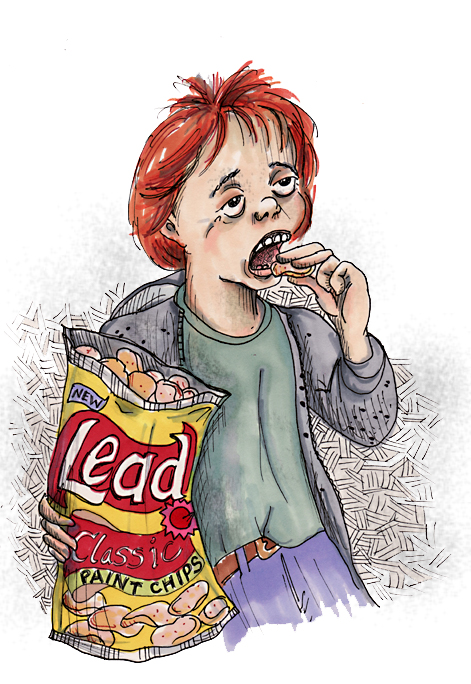
When I was a kid in the early 1970s, TV stations showed a lot of public service announcements. Most of them were for causes that are outdated, like THIS ONE for Radio Free Europe. Some causes have had numerous updating over the years, like this Smokey Bear PSA (featuring narration by the great Paul Frees). There was THIS famous one featuring the late Iron Eyes Cody and narrated by William Conrad, of “Cannon” fame.
But there was one that, even as a child, freaked me out. It was for the dangers of children ingesting lead paint. It was set in a run-down apartment building. While the narrator spoke, a small boy stared out a window, wide-eyed and purposeless and possibly abandoned. As the horrors of lead poisoning are expounded, the boy turns to the camera, picks some paint chips off the crumbling window sill and pops them in his mouth.
“Why doesn’t the cameraman stop him?”, I thought.
IF: climbing
The challenge word this week on Illustration Friday is “climbing”.
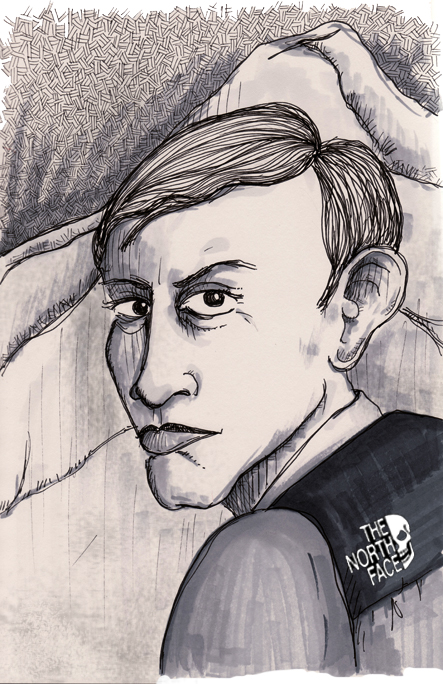
George Mallory, along with Andrew Irvine, joined the 1924 Mount Everest expedition, believing it would be his last opportunity to climb the mountain after two previous attempts. The pair attempted to reach the top via the North Face route. Mallory and his climbing partner both disappeared somewhere high on the North-East ridge of the world’s highest mountain. The duo’s last known sighting was only a few hundred yards from the summit. After their disappearance, several expeditions tried to find their remains. In 1933, climbing colleague Noel Odell identified one of Mallory’s oxygen cylinders and Irvine’s ice axe was also found.
In 1999, seventy-five years after the expedition, a crew sponsored jointly by the BBC and the tv program Nova arrived at Everest to search for the lost adventurers. Within hours of beginning the search, the frozen body of Mallory was found at 26,760 feet on the north face of the mountain. The body was remarkably well preserved due to the mountain’s climate. The team could not locate the camera that Mallory had reportedly carried with him. From the rope-jerk injury around his waist, encircled by the remnants of a climbing rope, it appears that the two were roped together when Mallory fell. The fact that the body was relatively unbroken also suggests that Mallory may not have fallen such a long distance. It is still unclear if they died while still making their ascent or they had already reached the top and were descending.
Just prior to making this third attempt at conquering Mt. Everest, Mallory was asked why was he making the climb. He answered, famously, “Because it is there.”
Comments
Monday Artday: telephone
The challenge word this week on Monday Artday (though it was posted on Wednesday) is “telephone”.
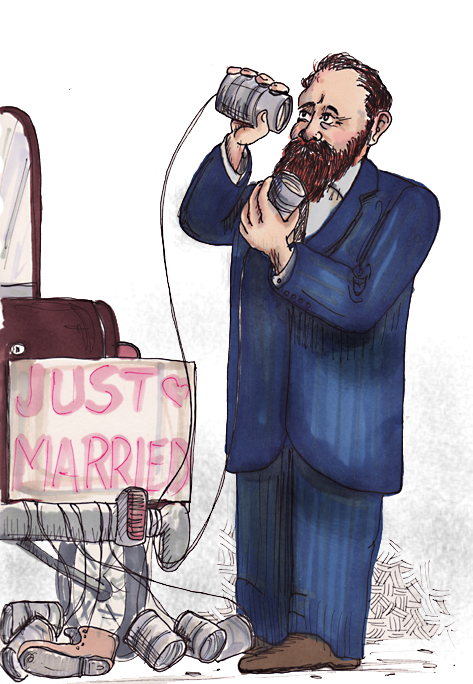
While attending a friend’s wedding, Alexander Graham Bell is inspired.
Comments
IMT: breakfast
I love breakfast.
Growing up, breakfast at my house was usually a bowl of sugared cereal at the kitchen table or on a metal tray-table in front of the TV on Saturday mornings. The heavy marketing of cereal was at its peak in the 1960s. Cool prizes were packed inside boxes to entice children. Popular cartoon characters were emblazoned on cereal box fronts to evoke familiarity and trust. Cereal companies also created their own characters and commercials became mini cartoon adventures that kids eagerly waited to see as much as their regular animated luminaries. Among those were Quisp and Quake, breakfast mascots of the Quaker Oats Company. Both cereals were featured in a series of TV advertisements produced by Jay Ward, the genius behind Bullwinkle. Although shaped differently, Quisp and Quake both tasted like Cap’n Crunch. However, my brother liked Quisp and I liked Quake, so my mom had to buy both. THAT was marketing brilliance.
As a child, I equated eating breakfast in a restaurant with vacations. On trips to Atlantic City and Williamsburg, Virginia, my family would eat breakfast in hotel coffee shops or a nearby diner. In 1955, breakfast titans The Quaker Oats Company opened the Aunt Jemima Pancake House in Walt Disney’s new theme park in California. Aylene Lewis was hired to mingle with guests as the venerable Aunt Jemima. Based on the enormous popularity of the Disneyland location, Quaker opened a nationwide chain of these themed eateries, including a branch on Bustleton Avenue in Northeast Philadelphia. Every so often, usually on a Sunday morning, my family would head to this Aunt Jemima Pancake House. Eating breakfast in a restaurant was an ethereal experience, from the paper placemats printed with pre-meal activities to the array of exotic flavored syrups to a woman other than my mother delivering hot platters of pancakes to the table. Although it was fifteen minutes from our house, it felt as though we were on vacation. Our local Aunt Jemima Pancake House closed in the early 1970s, so for special breakfast outings, we were relegated to my father’s usual weekday morning stop, The Heritage Diner. My dad loved to eat at the Heritage, which has changed names several times since he passed away. In his skewed sense of reality, this place was on par with Le Bec Fin, if Le Bec Fin served a cheeseburger deluxe with french fries and applesauce. My father’s usual breakfast order, which the perennial waitstaff knew by heart, was two scrambled eggs, toast and coffee. His regular waitress — a woman of 80 with nearly-transparent white skin and pitch-black, teased hair, who referred to my dad as “Hon” or “Doll” — would be cautioned to leave the home fries off his plate. My father affirmed that the sight of potatoes in the morning made him ill.
In the summers during and after high school, my friends and I would descend on Atlantic City for several days of drinking, debauchery and drinking. On the first day of our jaunts, breakfast would be a bagel and cream cheese or pancakes from one of a dozen small diners. By Day Two or Three, we were scarfing down Rice Krispies with beer substituting for milk.
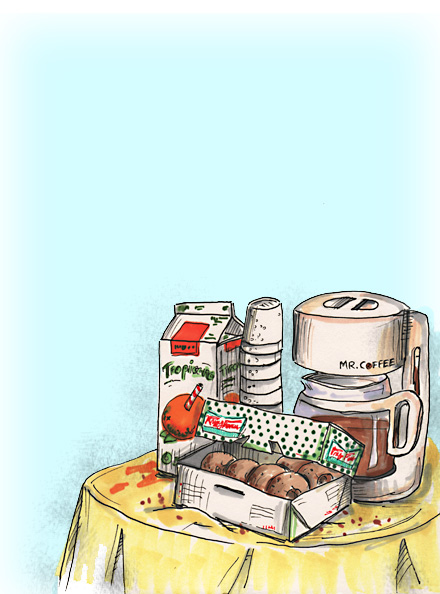
Those days gave way to more logical thinking when I got married. On our honeymoon, my new bride and I drove the 990 miles to Orlando, Florida. We stayed overnight in several hotels along the way. At the end of second day out on the road, we decided to stop for the night in St. Augustine, Florida. We thought it would be nice to wake up and tour the self-proclaimed oldest continuously occupied European-established city in the continental United States. St. Augustine is also the home of the elusive Fountain of Youth. We figured that a sip from the famed fountain wouldn’t hurt, despite being 22. After a long day of driving, we pulled into a non-descript motel at 1 AM. The motel rooms had individual entrances accessible from the parking lot. The motel building itself was situated on both sides of a small road. Obviously, this set-up had been two motels at one time. Now, both buildings belonged to the same owner, as the pair were painted in the same faded turquoise and pink color scheme. We drove to the office to secure a room for the night. After paying, the night manager handed me a key and, with hand gestures, directed us to our room across the road in the other building. He also noted that our stay included a “free continental breakfast by the pool”. Oooh, how swanky! We got back into the car and drove across the street to our accommodations. The next morning, we woke anxious to cover the remaining 100 miles to our Central Florida destination. We drove back across the street and found a parking space adjacent to the short cyclone fence surrounding the meager, standard-issue motel pool. The pool was surrounded by a smattering of rusty chaise-lounges and weather-worn web-back chairs. Off to one side was the morning’s offering — the free “continental breakfast” spread that was included in our stay. A small folding table was draped with a pallid yellow tablecloth that had seen better days. On the table was a carton of Tropicana orange juice, a box of Krispy Kreme doughnuts with several gaps where doughnuts had been removed and a Mr. Coffee tendering a glass carafe containing less than two cups of brew. Amused by the sparse presentation, my wife and I laughed, shrugged our shoulders and reached for the small stack of Styrofoam cups. A man rushed out of the motel office and yelled to us, “Are you folks guests of the hotel? That stuff’s just for guests.” We replied that we were indeed guests and instead of walking over, we had driven from our digs across the street. Seemingly satisfied but unconvinced, the man slowly returned to the office, occasionally glancing back at us. I wondered if this sumptuously abundant buffet was so well publicized that the motel had ongoing difficulty shooing freeloaders.
An hour or so later, we arrived at the Kissimmee hotel that would be our home for the next week. This hotel was a far cry from the shanty we left in St. Augustine. Equipped with a proper dining room, our stay at this hotel included a free breakfast buffet every morning. Upon check-in, it was explained that although the buffet was free, Florida law dictated that we were responsible for the restaurant tax. Interestingly, the posted price for the breakfast buffet remained the same every day, however, our daily tax invoice varied by several cents. Perhaps, Florida restaurant tax works on a “compounded-hourly” basis.
Every morning during our visit, we would patronize the breakfast buffet before heading to Disney World. We’d load our plates with eggs and pancakes and waffles and potatoes and that Southern meal staple grits. At the end of the buffet, we were greeted by an older man who looked not unlike Arsenio Hall’s Reverend Brown in Coming to America. He held out a plate on which sat two slices of browned bread and uttered his morning salutation — “Gooooood mooooooooooooorning. Tooooooooooooooooooooooooooooooooooooooooooooooooast?” — stretching each word into a muted, lethargic yet monotone yodel. We ate essentially the same thing every morning and we’d look forward to our encounter with the “tooooooooast” guy. One morning, my wife said she would try some “different eggs” (I suspect she meant “differently prepared”, as I know of only one type of egg). Perhaps, the “different” eggs were the reason the tax was thrown off.
When my son was old enough, my wife and I tried to guide him in the appropriate method in which to choose breakfast cereal. On supermarket calls, we would shepherd him to the boxes that promised the coolest trinket was contained inside. His choices were met with complete disappointment and a scolding of “What the hell? This doesn’t have a prize!”. He would counter with something about liking the way it tastes. “Taste?,” I’d protest, “Who cares what cereal tastes like? It all tastes the same! The toy, my son! LOOK FOR THE TOY!”
I still love cereal. I still get a special smile and consider it a treat when my wife makes “breakfast for dinner”. I still crane my neck when I pass an IHOP, visualizing myself in a blue vinyl booth waiting for a syrup and whipped butter-covered short stack.
And I still love breakfast. I’ve heard it’s the most important meal of the day.
My Quisp-loving brother, nocomm99, reminded me that in addition to the occasional breakfast at the Heritage Diner, my family ate way more than our normal allotments of Sunday dinners there. Jeez, my dad really loved that place.
Comments
IF: pale
The illustrationfriday.com challenge word this week is “pale”.

From the day Bill Finger presented Bob Kane with a photograph of actor Conrad Veidt and said, “That’s your Joker”, the villainous arch-enemy of Batman has gone through many changes. His origin does not have a definitive history. One account introduces him as small-time criminal The Red Hood until a chemical accident bleaches his skin white and turns his hair green. In other versions, he is a mob hitman who becomes obsessed with Batman, who ultimately disfigures his face with a batarang. However, in the 1988 graphic novel The Killing Joke, the Joker himself says “Sometimes I remember it one way, sometimes another… if I’m going to have a past, I prefer it to be multiple choice!”
The Joker has been portrayed by three actors on screen. In 1966, it was Latin heartthrob Cesar Romero who first donned the purple suit and green wig in order to torment Batman. He was personally chosen by Batman series producer William Dozier to play the part. Romero refused to shave his trademark moustache for the role, so white make-up was applied right over it.
Most recently, the Joker was played by the late Heath Ledger in the bombastic and over-hyped The Dark Knight. Ledger depicted the character as a grungy sadistic psychopath fixated on antagonizing Batman.
My favorite Joker is Jack Nicholson’s interpretation in Tim Burton’s 1989 version of Batman (one of the most beautifully art directed movies I ever seen, thanks to production designer Anton Furst). Nicholson’s portrayal of the Joker as a dapper, kill-happy schizophrenic set the standard for over-the-top, domineering, nutcase villains for every comic-book movie to follow (including Ledger’s performance). The purest example of the character’s insane malevolence was his signature line “Did you ever dance with the devil in the pale moonlight?” His deranged immorality becomes apparent when he elaborates, “I always say that to my prey. I don’t know what it means. I just like the way it sounds.”
Comments
from my sketchbook: phil testa
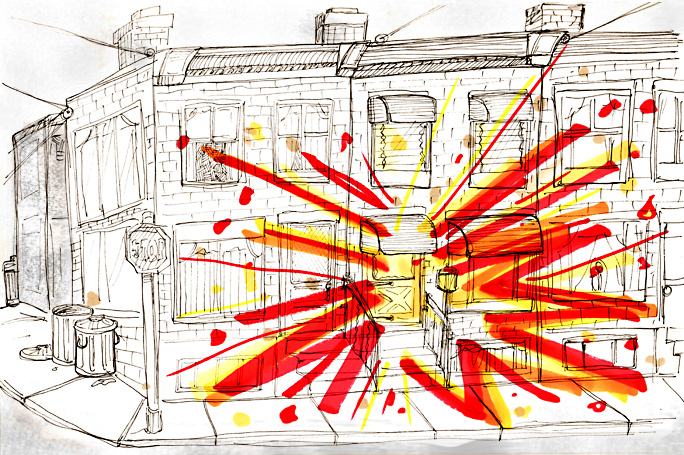
“Well they blew up the chicken man in Philly last night/Now they blew up his house too”.
“Atlantic City” by Bruce Springsteen
Angelo Bruno headed the Philadelphia branch of the Gambino Family-sanctioned operations for two decades. Bruno’s leadership of the family was regarded as successful. He avoided the intense media and law enforcement scrutiny and outbursts of violence that plagued other crime families. This earned him the nickname “The Gentle Don”. Bruno himself avoided lengthy prison terms despite several arrests. Bruno did not allow his family to deal in narcotics, preferring more traditional Cosa Nostra operations like bookmaking and loansharking. However, Bruno did allow members of the New York Gambino crime family to distribute heroin in Philadelphia for a share of the proceeds. This angered many members of his own Philadelphia family, who were barred from narcotics trafficking and wanted a share of the profits made from drug dealing. Bruno also gained some enemies for not allowing other families a share of the profits in increasingly lucrative Atlantic City. Atlantic City was regarded as part of the Philadelphia family’s domain and no other family could move in without Bruno’s permission.
Soon, several factions within Bruno’s Philadelphia family began conspiring to betray the aging “Gentle Don”. On March 21, 1980, the sixty-nine-year-old Angelo Bruno was killed by a shotgun blast in the back of the head as he sat in his car. It is believed that the killing was ordered by Antonio “Tony Bananas” Caponigro, Bruno’s consigliere (right-hand man and confidante). A few weeks after Bruno was murdered, Caponigro was found stuffed in a body bag in the trunk of a car in New York. In typical organized crime fashion, $300 in bills were jammed in his mouth and anus. It was alleged that the overseeing Mafia Commission ordered the murder because Caponigro had assassinated a family boss without their sanction.
Phil “Chicken Man” Testa, an underboss in Bruno’s regime, became the new head of the Philadelphia crime family. Unknown to Testa at the time, his reign would last one year.
On the evening of March 15, 1981, Testa arrived at his home in South Philadelphia. As he turned the key in the front door, a nail bomb exploded under his front porch. The house was ravaged and witnesses claimed that pieces of Testa’s body were scattered blocks away. The roofing nails in the bomb were to make it appear that it was retaliation by the Irish Mob for the killing of roofing union president John McCullough. After taking over as new family boss, Nicky Scarfo had the real conspirators murdered for the hit on Testa.
Phil Testa’s son, Salvatore, became a rising star in the Philadelphia family. A few months after Phil Testa’s death, Nicky Scarfo made Salvatore a caporegime (a high-ranking family member). Three years later, Salvatore was murdered on orders from Nicky Scarfo. Despite being Salvatore’s godfather, Scarfo began to feel threatened by the young capo’s popularity in the family and was jealous.
Comments
IF: contained
The challenge word this week on illustrationfriday.com is “contained”. I was inspired by a recent post on one of my favorite websites, List Universe. List Universe posts a list of things every day. The list categories cover an enormous range of topics in science, entertainment, literature, history and just plain fun. The list posted on January 8, 2009 was “Top 10 Bizarre Medical Anomalies”. This post was not for the weak of heart in both description and visuals. One of the entries intrigued me.
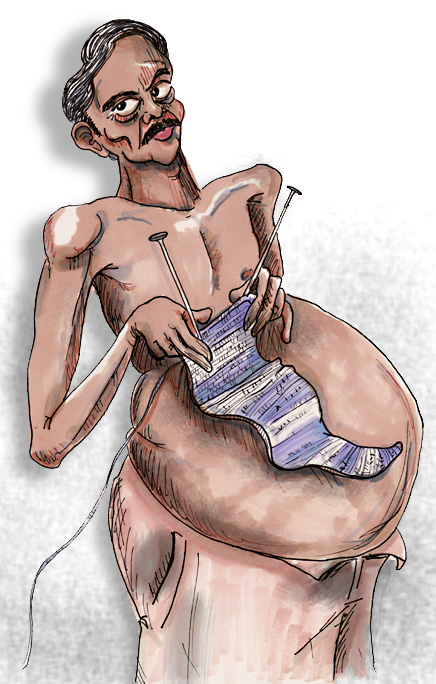
36 year-old Sanju Bhagat of Nagpur, India had an unusually large abdomen. Bhagat’s body gave the impression of being pregnant. On day in June 1999, an ambulance rushed the Bhagat to the hospital. Doctors thought he might have a giant tumor, so they decided to operate and remove the source of the bulge in his belly.
“Basically, the tumor was so big that it was pressing on his diaphragm and that’s why he was very breathless,” said his physician Dr. Ajay Mehta. “Because of the sheer size of the tumor, it makes an operation difficult. We anticipated a lot of problems.”
Mehta said that he can usually spot a tumor just after he begins an operation. But while operating on Bhagat, Mehta saw something he had never encountered. As he cut deeper into Bhagat’s stomach, gallons of fluid spilled out and then something extraordinary happened.
“To my surprise and horror, I could shake hands with somebody inside,” Mehta said. “It was a bit shocking for me.”
Another doctor recalled that day in the operating room. “Dr. Mehta just put his hand inside and he said there are a lot of bones inside,” she said. “First, one limb came out, then another limb came out. Then some part of genitalia, then some part of hair, some limbs, jaws, limbs, hair.”
Inside Bhagat’s stomach was a strange, half-formed creature that had feet and hands that were very developed. Its fingernails were quite long. At first glance, it looked as if Bhagat had given birth. Actually, Mehta had removed the mutated body of Bhagat’s twin brother from his stomach. Bhagat, they discovered, had one of the world’s most bizarre medical conditions fetus in fetu. It is an extremely rare abnormality that occurs when a fetus is contained inside its twin. The trapped fetus can survive as a parasite even past birth by forming an umbilical cordlike structure that leaches its twin’s blood supply until it grows so large that it starts to harm the host. The abnormality occurs in 1 in 500,000 births.
Comments
Monday Artday: disaster
After a two month hiatus, a new topic has been posted on Monday Artday. This week’s word is “disaster.”
I have mentioned before that everything reminds me of a joke and “disaster” is no exception.
One day the butcher backed into his meat grinder. He got a little behind in his work.
Next day, the butcher’s wife did the same thing. Disaster!
(Say it a few times. You’ll get it.)
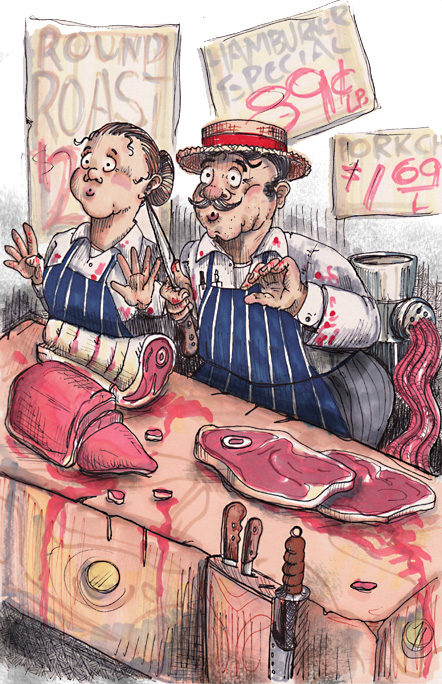
My father was a butcher, or as he liked to say “meat cutter”. I guess the difference is that my father never slaughtered a cow or pig or chicken. He just divided their carcasses up into assorted sections for sale to eager carnivorous grocery shoppers.
After my dad received his honorable discharge from the United States Navy in 1946, he became an apprentice meat cutter at a Penn Fruit supermarket in Philadelphia. He worked his way to assistant meat manager, meat manager, assistant store manager and eventually, store manager.
My father loved to work and he loved to cut meat and he loved to talk about the one thing he really knew meat cutting. He would make a big production of trimming a beef roast for my mom to prepare for dinner. He would give a “play-by-play” as he dissected a whole chicken for barbecuing, pointing out each bone, joint and connective tissue. At work in the market’s “cold room”, he wielded his timeworn butcher knife a fearsome implement of scarification with a gnarled wooden handle that he carried from job to job with the expertise of a surgeon. He dismembered larger chunks of beef and pork ribs with an upright band saw, the same type of saw your high school wood shop teacher constantly warned you about. Three days after my parent’s honeymoon, my father nicked the top knuckle of his right middle finger on the rapidly circulating saw blade, almost severing the top of the digit. He calmly telephoned his new bride to tell her he was in the hospital getting stitches. My mother was in hysterics, but my father was back on the job the next day, showing no fear for that saw or for pork ribs.
My father’s dream was to acquire and operate his own grocery store. He envisioned a massive establishment with himself at the helm of a fresh meat department that stretched the entire length of the store. When I was in high school, my father convinced my mother that this opportunity had finally come in the form of an investment in a single location of a local franchise of small grocery stores stores almost one-sixth the size of the average supermarket. The business was owned by one Peter Maggio. Mr. Maggio was a man of questionable background and the brother-in-law of one-time Philadelphia crime boss Angelo Bruno. Maggio was second generation of the founder of the Maggio Cheese Company. For a long time, Maggio Cheese had little or no competition in the Philadelphia area. A potential business rival attempted to enter the lucrative Philadelphia cheese market. On evening, he was found in his parked car on a section of Interstate I-95 that runs through Philadelphia. He had several bullets in his head. My father felt that Mr. Maggio was an admirable person with which to do business.
The store my father hoped to purchase was situated one block from a bustling public transportation hub in a rather run-down, blue-collar neighborhood. My father’s remarkably cunning strategy was to introduce a fresh meat department to this location. I suppose he mused that he had some kind of furtive insider knowledge, despite the neighborhood boasting a butcher shop at approximately every fifth storefront. My dad had also secured jobs for my immediate family in the store. My mother was a daytime cashier and my brother was an assistant manager and worked a slicer in the deli. I came after school and on weekends and did whatever was asked of me, from stocking shelves and arranging produce displays to emptying the trash and hanging huge signs in the windows. My father attempted to have me follow in his footsteps as a meat cutter. He would wake me at 5:30 AM on Saturday mornings. We’d drive silently to the store’s parking lot and then walk to a diner under the elevated train tracks for breakfast. Thirty minutes later, we’d return to the store’s meat cutting room for my weekly lesson in Butcher 101. My father would meticulously explain the ins and outs of bovine anatomy as his blade whizzed through the pink, fat-marbled, steer flesh. My sleep-deprived brain could barely comprehend or even keep track of his instruction. I do remember my father explaining that hamburger gets its bright red color from the addition of bull meat to the regular ground beef. Bull meat came in a small, frozen box that weighed about the same as a Buick. My dad asked me to retrieve the box of bull meat from the walk-in freezer, warning me to be careful of its deceptive heftiness for the size of the packaging. Half-asleep, I went to the freezer, bent down, slid my hands under the box, lifted and dropped the fucking thing on my foot. I stocked grocery shelves for the remainder of the day.
After a lawyer persuaded my parents that entering a business venture with Mr. Maggio would be the equivalent of entering a wolf’s den in a dog food suit, my father sought new employment in the meat cutting field. My father never had trouble getting a job because, evidently, meat cutting is a specialized trade. Later in his life, my father changed jobs often. If he didn’t like a store for any reason, he would just leave and know he could easily find another job. He was cutting meat until a week before he died.
Needless to say, I never became a meat cutter. Actually, I became a vegetarian.
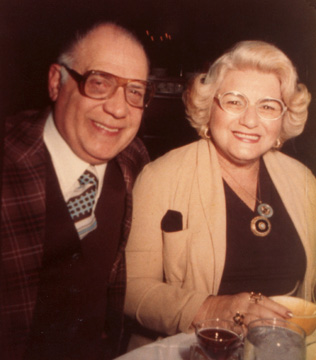
The REAL butcher and his wife.
Comments
IMT: fuse
The new word to inspire on Inspire Me Thursday is “fuse”.
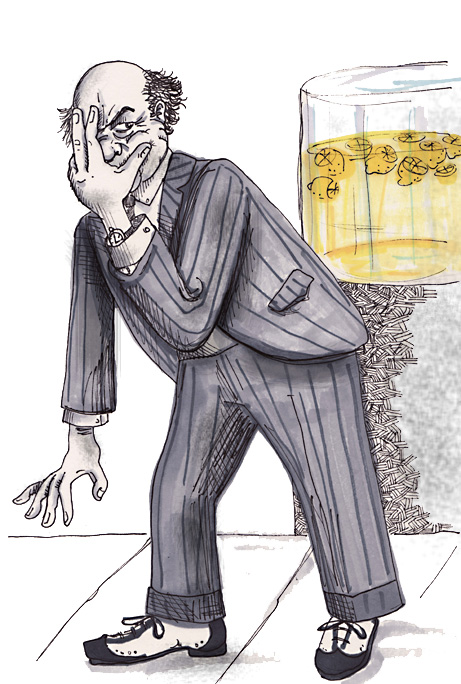
If you were not a moviegoer before 1948 or at least a film buff, you most likely don’t remember Edgar Kennedy. A former professional boxer, Edgar started his active film career in 1911. He was one of the original Keystone Cops. He worked with Roscoe “Fatty” Arbuckle, Charlie Chaplin, Laurel and Hardy, The Marx Brothers and Harold Lloyd. He also appeared in the Our Gang comedy shorts. Edgar played the same hapless character. He was the easily irritated, often aggravated, victim of mortification, unable to cope with the star’s absurdities. Possessing a monstrous temper and a short fuse, Edgar perfected the comedic technique known as “the slow burn”. The slow burn is an exasperated facial expression, performed very deliberately. Edgar embellished this by rubbing his hand over his bald head and across his face, in an attempt to harness his fury. Whether he was playing an agitated policeman or a perturbed customer, Edgar delighted audiences with his masterful display of bridled anger. His most famous demonstration is as a lemonade vendor in a short, yet hilarious encounter with Harpo and Chico Marx in 1933’s Duck Soup. Edgar roars to Chico, “I’ll teach you to kick me!” to which Chico answers, “You don’t have to teach me, I know how!” and he kicks Edgar. All during this exchange, Harpo is dancing barefoot in Edgar’s lemonade dispenser.
Three days before Edgar was to be honored by fellow actors at a gala dinner, he passed away from throat cancer at 58. Still in demand, Edgar had appeared in over 400 films and directed 25 by the time he died.
Comments
IMT: elephant
The word of inspiration on Inspire Me Thursday is “elephant”.
The first thing I thought of was a joke that I, unfortunately, couldn’t use. My second thought was the classic line by Grouch Marx (as Captain Jeffrey T. Spaulding in the 1930 classic Animal Crackers ): “One morning I shot an elephant in my pajamas. How he got in my pajamas, I don’t know.”
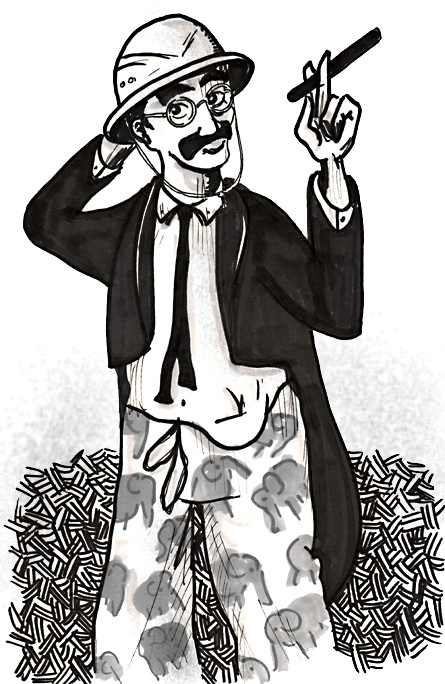
Groucho goes on to say: “Then we tried to remove the tusks. But they were embedded so firmly we couldn’t budge them.
Of course, in Alabama the Tuscaloosa, but that is entirely ir-elephant to what I was talking about.”