DCS: alberta nelson

Alberta, oh Alberta, don't you hear me calling you
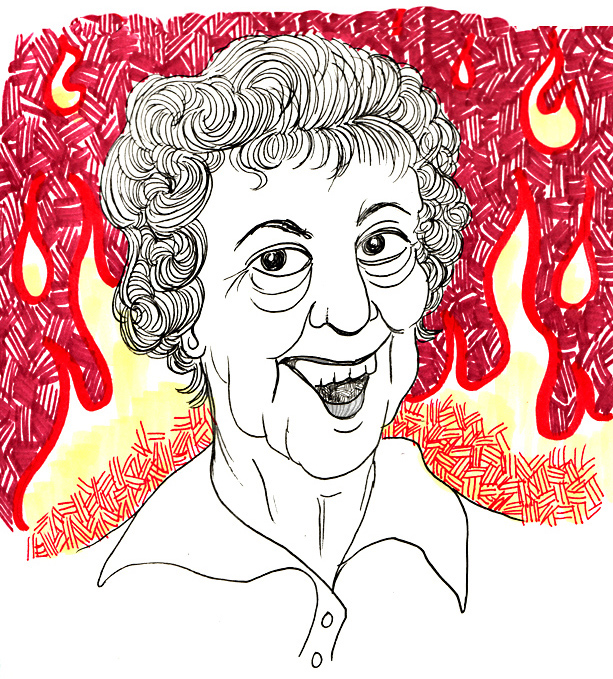
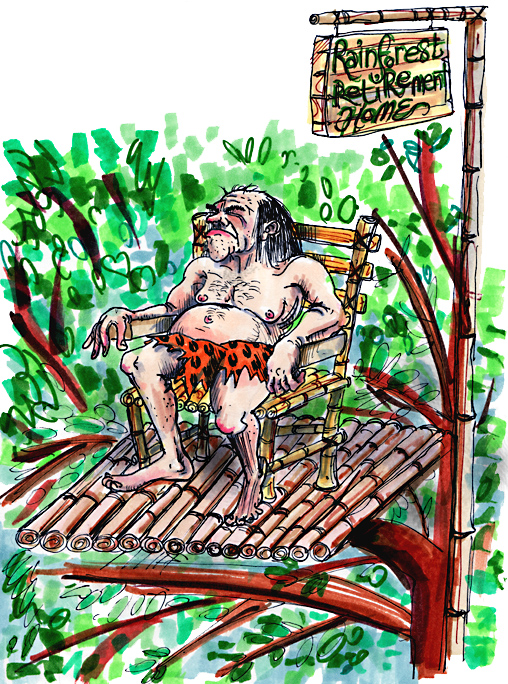
Alberta Nelson played “Puss,” one of the Rat Pack Gang members behind dim-witted leader Eric Von Zipper, as played by Harvey Lembeck, in seven “beach” movies produced by American International Pictures in the middle 1960s. Alberta, the tall, leather-clad blond, had only a few lines of dialogue, but she was the only actress to appear in all seven movies. Frankie Avalon and Annette Funicello didn’t even appear in all of them. Alberta played “Puss” in five of the films, “Muscle Girl Lisa” in the second “beach” film, Muscle Beach Party, and “Reject #12” in the classic Bond spoof, Dr. Goldfoot and the Bikini Machine starring Vincent Price at his campiest.

Alberta also had a four-episode run on The Andy Griffith Show. In the role of Mayberry Diner waitress Flora Malherbe, she first made a play for Sheriff Andy and then, in subsequent episodes, she became grease-monkey Goober Pyle’s girlfriend. In one memorable episode, she took over Goober’s job at the filling station when Goober went on vacation, only to gain huge popularity and increase business in his absence. In another episode, she helped fixit man Emmett secretly pick out a fur coat (how politically incorrect!) for his wife as an anniversary gift. Emmett’s wife saw their clandestine meeting and assumed Emmett was committing adultery with the pretty waitress. Kind of racy for 1968.

Alberta made her final screen appearance in the 1970’s low-budget exploitation film The Wild Scene, a sad career end to her wholesome screen image.

In 2006, Alberta passed away from cancer at age 68.

Comments

comments

Monday Artday: chicken

This week’s challenge on Monday Artday is “chicken”.
finger-lickin' good
In 1930, Harland Sanders owned a gas station in Corbin, Kentucky. He would cook chicken dinners, using his own secret recipe, for travellers stopping to refuel. He served his customers in his living quarters in the service station. Through word of mouth, his local popularity grew, and Sanders moved his operation to a motel with a restaurant that seated 142 people. He still did all the cooking. Over the next several years, he developed a pressure fryer that allowed the chicken to be cooked much faster than by pan frying.

In 1935, Sanders was given the honorary title “Kentucky Colonel” by Governor Ruby Laffoon. Sanders chose to call himself “Colonel” and to dress in the familiar white suit and black string tie as a way of self-promotion.

After the construction of Interstate 75 reduced his restaurant’s customer traffic, Sanders took to franchising Kentucky Fried Chicken restaurants. At age 65, Sanders took $105 from his first Social Security check to fund visits to potential franchisees.

In the middle 1960s, Sanders offered an adventurous young man named Dave Thomas the opportunity to turn around a failing Kentucky Fried Chicken restaurant. He helped save the restaurant by simplifying the menu. At the time, there was more than one hundred items on the menu. Working with Sanders, Thomas stripped the menu down to just the basic fried chicken and side dish salads. Thomas went on to found Wendy’s Old-Fashioned Hamburgers in 1969.

Sanders sold the Kentucky Fried Chicken corporation in 1964 for $2 million. The deal did not include the Canadian restaurants, so Sanders moved to Ontario and continued to collect franchise fees. Sanders and his likeness continued to represent Kentucky Fried Chicken. As its spokesperson, he collected appearance fees for his visits to franchises in the United States and Canada. In 1973, he sued the KFC parent company over alleged misuse of his image in promoting products he had not helped develop. In 1975, the company unsuccessfully counter-sued Sanders for libel after he publicly referred to their gravy as “sludge”.

Sanders died in Louisville, Kentucky, of pneumonia on December 16, 1980 He had been diagnosed with acute leukemia. His funeral service was attended by more than 1,000 people. He was interred at Louisville’s Cave Hill Cemetery, where he was dredged in eleven herbs and spices and served with biscuits and your choice of cole slaw or mashed potatoes.

Comments

comments

from my sketchbook: harry nilsson

In 1968, John Lennon and Paul McCartney held a press conference to announce the formation of Apple Corps, their new multimedia conglomerate. John was asked to name his favorite American artist. He replied, “Nilsson”. Paul was asked to name his favorite American group. He replied, “Nilsson”.
Well, in 1941, the happy father had a son
In the early 60s, Harry Nilsson pursued his song writing and singing career by day and maintained bank computers at night. He sold some songs and recorded some demos until a complement from Little Richard (“You sing good for a white boy!”) led to several records released under pseudonyms. None of Harry’s releases gained much critical attention, although his songs were being recorded by Glen Campbell, Fred Astaire, The Shangri-Las, The Yardbirds, and others. Despite his growing success, Harry remained on the night shift at the bank.

In 1966, Harry signed with RCA Records and released his first album for them, Pandemonium Shadow Show, in 1967. Music industry insiders, especially Beatles press agent Derek Taylor, were impressed both with the songwriting and with Harry’s multi-octave vocals. Taylor excitedly distributed copies of Harry’s album to his colleagues. After listening to Pandemonium Shadow Show  for thirty-six hours straight, John Lennon called Harry to give praise. Shortly after, Paul McCartney called to express his own pleasure. In an interview years later, Harry said he was disappointed that he didn’t receive similar calls from George or Ringo. With a major-label release, and continued songwriting success, Harry finally felt secure enough to quit his job with the bank.

Harry earned his first Grammy for his recording of Fred Neil‘s “Everybody’s Talkin'” from the soundtrack of the film Midnight Cowboy. Harry actually preferred that his song “I Guess the Lord Must Be in New York City” had been used as the movie’s theme. Offers began to come to Harry faster than ever. He was asked to write the theme to the sitcom The Courtship of Eddie’s Father. He reworked an earlier composition, “Girlfriend”, into the well-known “Best Friend” for the show. His songs were recorded by Three Dog Night and The Monkees, which led to a life-long friendship with drummer Micky Dolenz.

Harry’s next project was an animated film called The Point!  which included the hit “Me and My Arrow”. He followed that with Nilsson Schmilsson, an album that included the hits “Coconut”, “Jump into the Fire” and a cover of Badfinger‘s “Without You”, for which he won his second Grammy.

In the heat of the disco era, Harry released a collection of Tin Pan Alley standards that failed commercially. He moved to California and rekindled his friendship with John Lennon. John wished to produce Harry’s next album and the two began to hang out together, drinking heavily, using drugs and causing mayhem where ever they went. They were ejected from the Troubadour nightclub for heckling the Smothers Brothers. Harry and Lennon finally began their collaboration. During the sessions, Harry ruptured a vocal chord. Fearing Lennon would end the session if he found out, Harry hid a bucket under his piano which he would spit blood into out of Lennon’s sight.

Following several more commercially failed albums, Harry left RCA Records and moved to London to an apartment that he happily offered to friends in need of a place the unwind. Harry’s interests took him to the U.S. for extended periods. During one of those times, he offered his place to Mama Cass Elliot, who was playing at nearby venue. After her gig, she returned to Harry’s apartment and died of heart failure. Four years later, Harry’s friend, Who drummer Keith Moon overdosed and died in the apartment.

Harry dabbled in theater and film production, wrote film soundtracks (notably Robert Altman’s 1980 film Popeye ), and campaigned profusely for The Coalition to Stop Gun Violence, after the murder of his friend John Lennon. In 1990, he discovered that his long-time financial adviser had embezzled almost everything he had earned as a recording artist. Harry and his family were left with $300 and a mountain of debt.

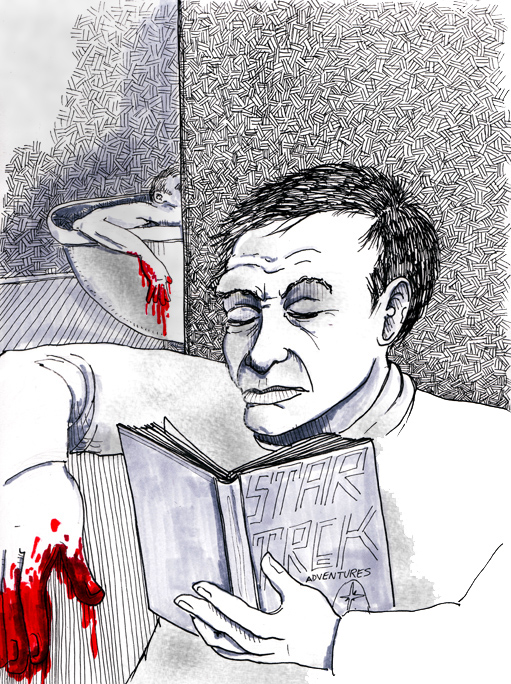
On January 15, 1994, after finishing the recording of backing tracks for what he had hoped to be a comeback album, Harry died of heart failure. He was 52.

Comments

comments

IF: fast

This week’s challenge word on Illustration Friday is “fast”.
Faster, Pussycat! Kill! Kill!

It all happened so fast.

In September 1949, Howard Unruh walked methodically through his Camden, New Jersey neighborhood, and murdered thirteen people in just under twenty minutes. Unruh is considered the first single-episode mass murderer in U.S. history.

Unruh was a decorated hero in World War II. He was an expert marksman and kept meticulous records of every enemy soldier he killed, right down to detailed descriptions of the corpses. After his honorable discharge from the military, the 28 year-old Unruh shared a small apartment with his mother, where his bedroom housed his huge collection of medals and firearms. He had difficulty finding employment and spent the majority of his time attending church services and engaging in target practice in his basement firing range.

Although he kept to himself, he became convinced that his neighbors were ridiculing him and plotting behind his back. Unruh became paranoid about his neighbors and kept a journal detailing every single thing that he thought was said about him. Next to some of the names he wrote the word “retaliate.”

On September 5, 1949, Unruh sat through a double feature three times and left the theater in the early hours of September 6, convinced that actress Barbara Stanwyck was one of his neighbors who was plotting against him. When he arrived home at 3 a.m., his gate that he had recently constructed was missing. Angered, he went inside his apartment and went to sleep.

He woke at 8 a.m., dressed in a suit and had breakfast with his mother before she left for work. At 9:20 a.m, he left his apartment with a loaded German Luger, and set out for the first stop on his list. He entered the shoe repair shop on his block, shot the cobbler twice and exited towards the barber shop. He silently entered the barber shop where six-year old Orris Smith sat on a white hobby-horse as owner Clark Hoover cut his hair. Unruh said, “I’ve got something for you, Clarkie.” and he fired two shots, killing Hoover and little Orris instantly. Unruh left the barbershop, sparing the lives of three other customers.

Unable to enter a locked tavern, Unruh headed toward Cohen’s Pharmacy. He shot and killed an insurance agent on his way to the pharmacy. He then entered the pharmacy and chased the pharmacist and his wife up the stairs to their apartment over the store. He shot and killed Maurice Cohen, the pharmacist, his wife and elderly mother before leaving. Cohen’s twelve year-old son had hidden in a closet and went unnoticed by Unruh.

Back on the street, Uhruh shot a motorist who had slowed down to view the body of the insurance agent on the street. A neighbor, hearing the shots on the street, grabbed his own gun and fired at Unruh, grazing him as he entered the tailor shop. Once inside, Unruh shot the tailor’s newlywed wife and then left. Making his way back to his apartment, he shot two-year old Tommy Hamilton right through his front window as he watched Unruh walk by.

Sixty police officers surrounded Unruh’s apartment. After a brief standoff, tear gas forced Unruh out and into police custody. Once handcuffed, an officer asked Unruh, “Are you a psycho?” Unruh answered, “I’m no psycho. I have a good mind.”

Howard Unruh was determined to be mentally unfit to stand trial. He was diagnosed with paranoid schizophrenia and found to be hopelessly insane, making him immune to criminal prosecution. He was sent to the New Jersey Hospital for the Insane (now Trenton Psychiatric Hospital), to be installed into a bed in a private cell under maximum security. Unruh’s last public words were, “I’d have killed a thousand if I had bullets enough.”

Howard Unruh was transferred to a nursing home in 1993, where he died last Monday at the age of 88. He outlived the judge, the medical examiner, the psychiatrist, and nearly all the investigators from his case. He also outlived his youngest victim by eighty-six years.

Howard Unruh’s last public words, made during an interview with a psychologist, were, “I’d have killed a thousand if I had enough bullets.”

Comments

comments

IMT: Mademoiselle Caroline Rivière

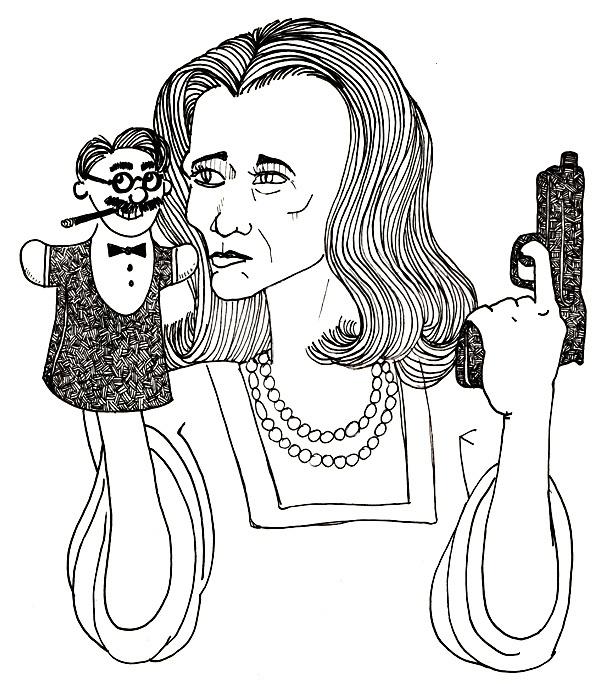
This week’s inspiration on the Inspire Me Thursday website is an unusual one. The challenge is to create one’s own take on the painting “Mademoiselle Caroline Rivière” by French Neoclassical artist Jean Auguste Dominique Ingres.
I don't know what the artist got for that painting, but he should've got life!

So, I forced the most painterly strokes I could from my Prismacolor markers and did the closest thing I’ve done to a “painting” since art school.

Here’s Ingres’ 1806 original that currently hangs in The Louvre in Paris.
Of course I am French. What do you think I am speaking with this outrageous accent!

Comments

comments

IF: frozen

This week’s word on Illustration Friday is “frozen”.
I'm Mr. Ten Below

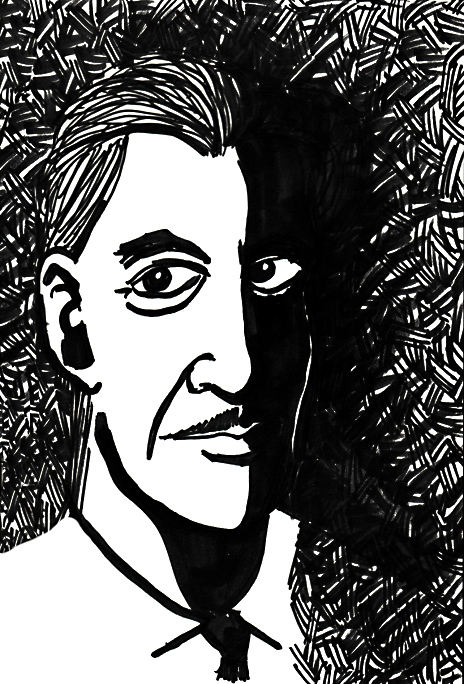
Ted Williams was one of the greatest players in the history of professional baseball. Despite his career being interrupted twice for military service, he was a two-time MVP and a seventeen time All-Star. He was the last player with a single season batting average above .400. Nicknamed “The Splendid Splinter”, Ted was inducted into the Baseball Hall of Fame in 1966. The only team he played for, The Boston Red Sox, retired his uniform number in 1984. In his final years, Ted suffered from numerous cardiac problems. He had a pacemaker installed in November 2000 and underwent open-heart surgery in January 2001. He died of cardiac arrest on July 5, 2002 at the age of 83.

After his death, Ted’s children battled over his final arrangements. Ted’s oldest daughter, Bobby-Jo, wanted to fulfill Ted’s wishes of cremation, with his ashes scattered in the Florida Keys. His children from his second marriage, John-Henry and Claudia, wanted their father to be cryonically frozen in liquid nitrogen at Alcor Life Extension Foundation in Scottsdale, Arizona. After a long and brutal struggle involving lawsuits, forged documents and criminal accusations among family, Ted Williams was shipped to Alcor, where his head was removed from his body and the two pieces were separately preserved.

In a 2003 Sports Illustrated article, fired Alcor executive Larry Johnson alleged that the company had mishandled Williams’ head by drilling holes and accidentally cracking it. Johnson also claimed that some of Williams’ DNA was missing. Alcor denied the allegations of missing DNA and explained that microscopic cracking can result as part of the process of freezing the head. Mr. Johnson asserted that, “They had his head in a container that is like a freezer chest … and it was malfunctioning. So, they wanted to move his head into another vessel to lower the temperature down to minus 321 Fahrenheit. So, they got a tuna fish can, and they put it in the bottom of that vessel. They set the head upside-down on top of the can and filled the vessel with liquid nitrogen. Well, obviously, after two or three days of being in that state, the can was stuck to the top of his head. A technician grabbed a monkey wrench, took a swing at the can and missed. He missed the can and hit the head. He drew back again, took a second swing, hit the can and sent it flying across the room.”

Concerned with the safety of his earthly remains and the dignity of his legend, Red Sox fans took action. After a marathon letter-writing and petition-signing campaign, The Red Sox Nation won the guardianship of Williams’ head. According to a detailed schedule, each fan in the Boston Metropolitan area will be awarded custody of Ted’s head for a period of three days. During this time, the custodian must keep the head frozen and secure. At the end of three days, the fan will pass the head on to the next designated member of the Red Sox faithful on the list.

Comments

comments