IF: retro

Mush and Milk

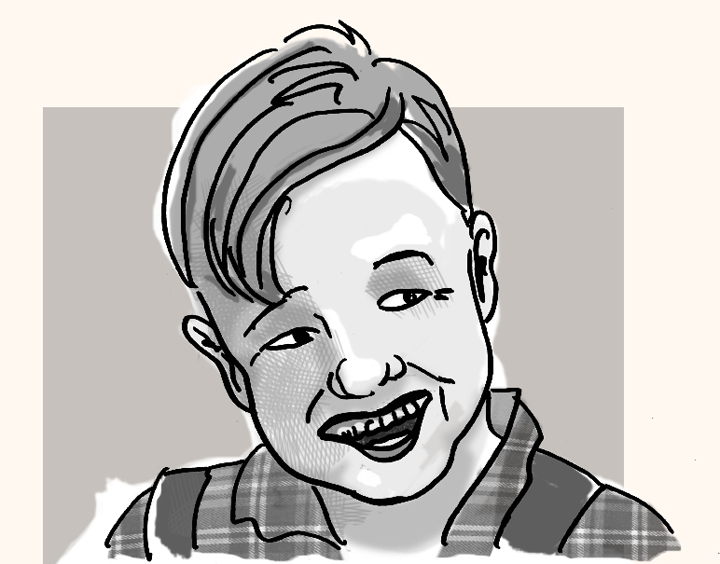
Bobby Hutchins made his debut with Hal Roach’s kid-friendly comedy troupe “Our Gang” at the age of 2. On his first day on the set, little Bobby ran around until he was out of breath, earning him his on-screen nickname “Wheezer.”

Cast as the tag-along little brother, Bobby appeared in 58 of the Our Gang short subjects over a period of six years. His character was popular, however his overbearing father kept him sequestered from the other child actors. Co-star Jackie Cooper remembered “When anyone would try to play with ‘Wheezer,’ his father would pull him away and whisk him off.”

Bobby left Hollywood in 1933 and returned to his native Tacoma, Washington. When his father saw his “cash cow” disappear, he divorced Bobby’s mother. Bobby enrolled in public school and left his brief show business career in the past.

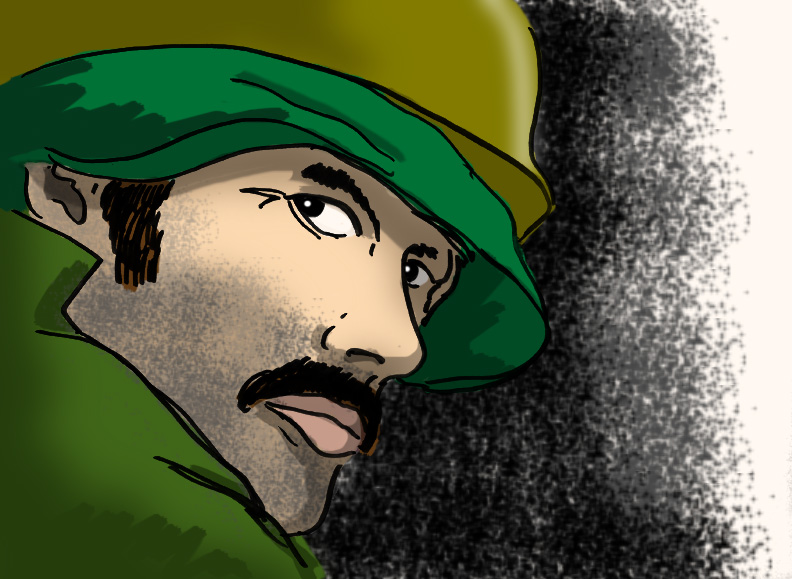
In 1943, Bobby joined the military as an air cadet and entered World War II. In 1945, during a training exercise at California’s Merced Army Air Field, Bobby’s single-engine aircraft collided in mid-air with another plane that was also running training maneuvers. Bobby was killed instantly, though the other pilot survived. Bobby’s mother was planning a trip to the base for Bobby’s flight school graduation the next week.  Bobby was 20 years old.

Comments

comments

from my sketchbook: olive thomas

Pretty weak, but I'll be all right in a little while, don't worry, darling

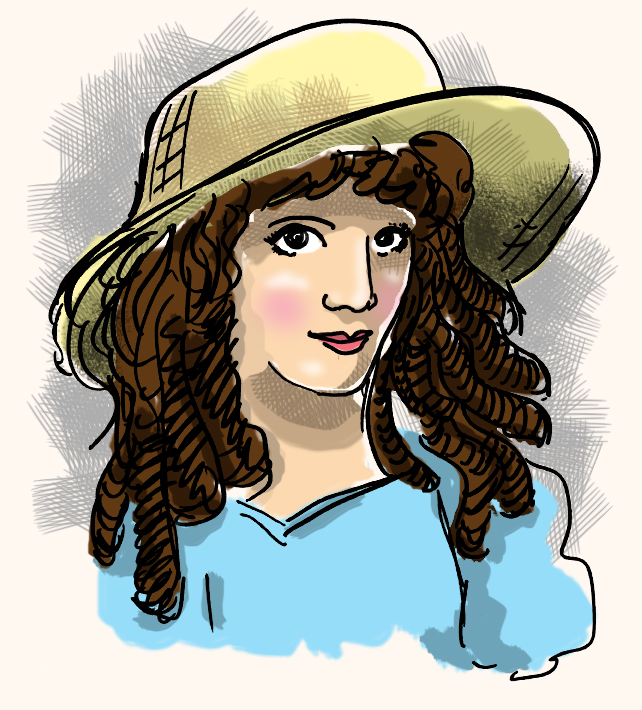
Twenty-year old Olive Thomas entered and won “The Most Beautiful Girl in New York City” contest in 1914. A year later, she made her Ziegfeld Follies debut. She became the star of the risqué Midnight Frolic show, an after hours production that catered to wealthy male patrons. Olive was showered with gifts from her admirers, including a $10,000 string of pearls from German Ambassador Albrecht von Bernstorff.

Olive also worked as a popular artist’s model. She became the first Vargas Girl when she posed nude for Peruvian painter Alberto Vargas, for a portrait commissioned by Florenz Ziegfeld. Olive was having an affair with the married show producer and broke it off when he refused to leave his wife, actress Billie Burke.

In 1917, she made her feature film debut in A Girl Like That. The same year, she married Jack Pickford, younger brother of silent film superstar Mary Pickford. Olive and Jack kept their marriage a secret so the public wouldn’t equate Olive’s success with her relationship with the Pickford family. She starred in over twenty films in three years.

In 1920, Olive and Jack vacationed in Paris. Returning to their hotel room after an evening of drinking, Jack passed out.  A heavily intoxicated Olive drank the contents of a bottle labeled in French. It was mercury bichloride, a topical preparation prescribed to Jack to treat syphilis sores. Olive gagged and shrieked “Oh my God!,” awakening Jack just in time to collapse in his arms. She was taken to a suburban Paris hospital. Olive was unresponsive to treatment and died five days later. She was 25.

Speculation and rumors surrounding the young star’s death ran rampant. Talk of suicide, drug addiction, deception and insurance fraud circulated among  gossip columns, making Olive’s death one of the first Hollywood scandals.

Comments

comments

IF: vanity

mirror mirror on the wall

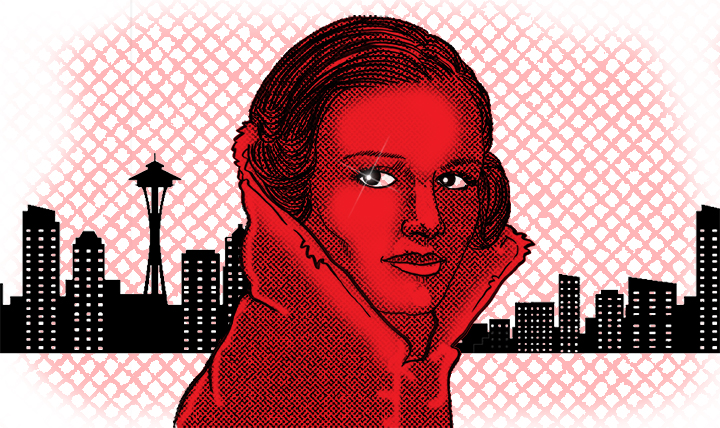
“The people wanted beauty and prettiness and all
So they stretched and they dressed and they made up
And put mirrors on every wall
‘Til they all went blind from eyestrain
From the thing they wanted most
Now everybody’s so isolated
A good-looking bunch of ghosts”

— “Rainmaker” by the Rainmakers

Click HERE for a larger version of this illustration.

* * * * * *

Our good friends at Illustration Friday proposed the word “vanity” in November 2011.
Here is my entry from way back when.

Comments

comments

from my sketchbook: vincent price

these words he speaks are true/we're all humanary stew

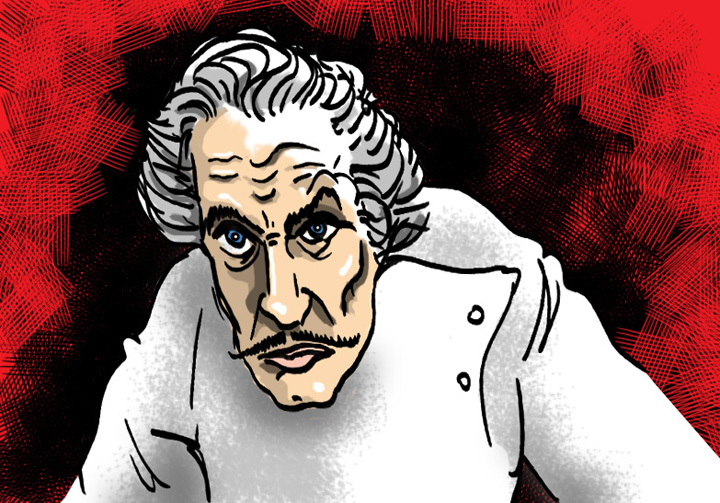
Can you imagine my joy when, in 1975, I brought home a newly-released copy of Alice Cooper’s Welcome to My Nightmare album, popped it onto my turntable and heard a deliciously creepy introduction by none other than the “King of Modern Macabre” — Vincent Price? It was (if I may borrow a word not particularly popular in 1975) awesome! I was a fan of both Alice Cooper, having been mesmerized by School’s Out and Billion Dollar Babies years before, and Vincent Price, whose over-the-top mix of camp and horror was regularly offered at Saturday afternoon matinees. Plus, Mr. Price appeared as the villainous Egghead in a two-episode arc on my favorite childhood TV show Batman. And now, here were these two show-biz heavyweights joining forces for my personal entertainment.

I saw Alice Cooper on the Philadelphia stop of the subsequent Welcome to My Nightmare tour. When the Vincent Price intro to “Black Widow” blared from the speakers, as six-foot tall spiders pirouetted across the stage with a top-hatted Mr. Cooper, it was more that my 14-year old senses could take.

Seven years later, little Michael Jackson — all grown up and no longer the novelty frontman of a family pop band — released his epic masterpiece Thriller, an album that would go on to sell an estimated 51 million copies worldwide. And right there, in the middle of the title track, a spooky homage to the horror genre, was Vincent Price delivering a suitably chilling recitation (a “rap,” if you will) in his malevolent, yet cultured, voice.

Then, in what would be his final film role, Vincent Price once again lit up the screen in a cameo as the creator of the titular character in Edward Scissorhands. Looking genial in a dark smoking jacket, his white hair combed back in a dignified manner, Vincent imparted the secrets of etiquette and grace to a silent and naive (and unfinished) Johnny Depp. His performance was delightful — a perfect cap to a memorable career.

In March, I met Vincent’s daughter, Victoria. We are approximately the same age, just a few months apart. As I spoke with Victoria, my mind slipped back to my youth. I was that 14-year-old listening to that Alice Cooper album. I remembered how cool it was for me. I can only image how cool it was for Victoria.

* * * * * *

This is Post Number 1000 on the josh pincus is crying blog.

Comments

comments

IF: natural

let me die a woman

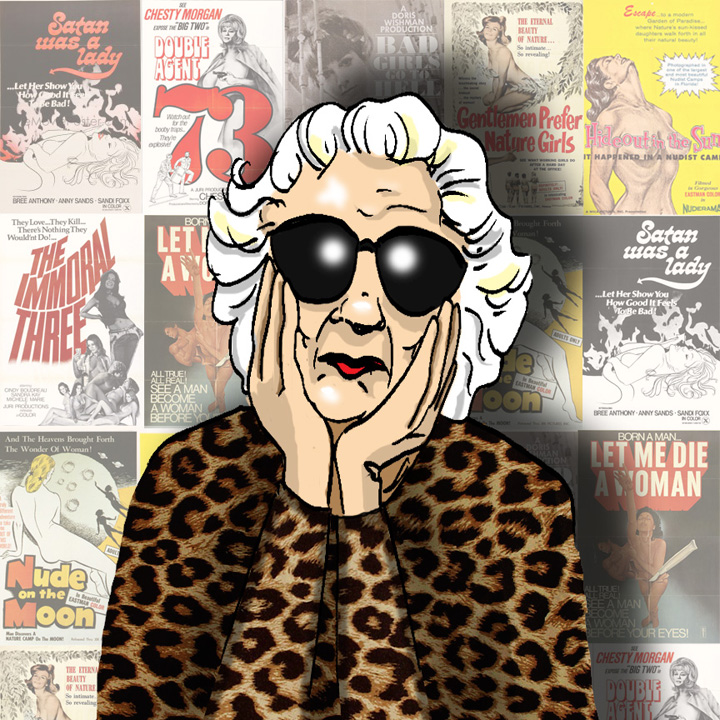
Doris Wishman was bored. As a recent widow, she refused to sit home and spend the rest of her life grieving. So she decided to make movies.

Doris, a New York native, skirted recently-passed nudity legislation. The new law permitted nudity in film in a documentary context. Doris borrowed $10,000 from her sister and produced and directed Hideout in the Sun, a blatant “nudie” film in the guise of a documentary. Acting as a modern-day Susan B. Anthony, Doris breached the all-male world of nudist film-making, releasing at least one film per year. She tried to disguise her efforts, first as “naturalist” films, then as “science-fiction” when she made Nude on the Moon in 1960. She knew nudity in film was a sure money maker, and despite a New York State ban, Doris was pretty successful.

In the middle 60s, Doris jumped on the sexplotation bandwagon. She produced low-budget, black & white shockers like Bad Girls Go to Hell and The Immoral Three. She made two films with cult actress Lillian Stello, professionally known as “Chesty Morgan.” Both films were played strictly for campy laughs and took full comedic advantage of Miss Morgan’s notorious 73 inch bust line. Doris gained respect and was considered a peer of genre heavyweights like Russ Meyer.

After shunning the genre for years, Doris reluctantly entered the world of pornography, teaming up with 70s porn actress/performance artist Annie Sprinkle (the former Ellen Steinberg). She directed the hardcore Satan Was a Lady and Come With Me, My Love. Doris, however, was uncomfortable with filming sex scenes and would leave the set, allowing her longtime cinematographer C. Davis Smith to direct.

In the 70s, Doris became intrigued by a new trend — slasher films. Inspired by John Carpenter’s groundbreaking Halloween and Sean S. Cunningham’s Friday the 13th, Doris produced and directed A Night to Dismember in 1983. It was a bomb.

Doris left the movie business and took a job in a lingerie store in Coral Gables, Florida. Public praise and admiration from cult film maker John Waters and critic Joe Bob Briggs sparked new interest in Doris’s motion pictures. She made a final film,  Each Time I Kill  while she battled lymphoma. Doris passed away in the summer of 2002 at the age of 90.

In 2007, the Philadelphia International Gay & Lesbian Film Festival featured Each Time I Kill as part of its two-week program. Event organizers mistakenly believed the film included a lesbian story line.

Comments

comments

from my sketchbook: rhea mitchell

Ginger, to her friends

While still a teenager, Rhea Mitchell performed on stages across the Pacific Northwest. It was during one performance in Vancouver, British Columbia, that she was noticed by a talent scout from Hollywood.

She began her film career – one that would span five decades – with a short subject called The Hidden Trail in 1912. From there, she added over 100 roles – mostly uncredited – to her resume. She willingly attempted dangerous maneuvers in scenes, earning her the nickname “The Little Stunt Girl.” Rhea took bit parts opposite  film heavyweights, like Western stars William S. Hart and Tom Mix. In later years, she was cast alongside Spencer Tracy and Hedy Lamarr. Rhea’s starring roles were few, but she was content to play in the background.

In 1952, after a small role in Member of the Wedding, Rhea called it a career. She began managing several apartment buildings in Los Angeles. In September 1957, Rhea’s body was discovered by a houseboy at the La Brea District Apartments. As the investigation unfolded, the very same houseboy, Sonnie Hartford, Jr., confessed to strangling Rhea with the sash of her dressing gown. Sonnie stated that he wasn’t sure why he killed her. He had made an inappropriate remark to her and she was offended. Sonnie panicked and killed her in fear that she would tell the building’s owner, resulting in the possibility of him losing his job.

Rhea, long forgotten by Hollywood, was 66.

Comments

comments

from my sketchbook: sean flynn

You know he heard the drums of warSean Flynn, the only child from the marriage of silver-screen swashbuckler Errol Flynn and French actress Lili Damita, seemed to be destined to follow in his father’s footsteps. A brief role in a segment of TV’s The Errol Flynn Theatre and a background part in his friend George Hamilton’s film Where The Boys Are in 1960, led to a contract to star in a big-screen sequel to his father’s adventure classic Captain Blood. After the release of Son of Captain Blood, Sean appeared in several more films until he grew bored with acting.

In 1964, Sean went to Africa to take a shot as a safari guide and big game hunter. Finding himself short on money, he reluctantly returned to the acting world, filming two quickie “spaghetti Westerns” back-to-back. But Sean was anxious for more real-life adventure.

In 1966, he arrived in South Vietnam as a photojournalist for a French publication, then for Time-Life and eventually United Press International. Sean bravely entered combat, seeking realism in his photographs. After one last motion picture, he returned to Vietnam with a parachute jump with the 1st Brigade, 101st Airborne Division.  He also traveled to Israel to cover the Six Day War in 1967. He found himself back in Vietnam with plans for a documentary after the Tet offensive in 1968.

Traveling by motorcycle, Sean and fellow photographer Dana Stone entered Cambodia in April 1970. Along dangerous Highway One, the pair were captured by guerrillas, most likely part of the notorious Khmer Rouge, a military group led by ruthless Cambodian dictator Pol Pot.  That was the last time anyone saw Sean Flynn.

After years of searching and spending huge amounts of money, Lili Damita had Sean officially declared dead in 1984 — fourteen years after he disappeared.

Comments

comments