
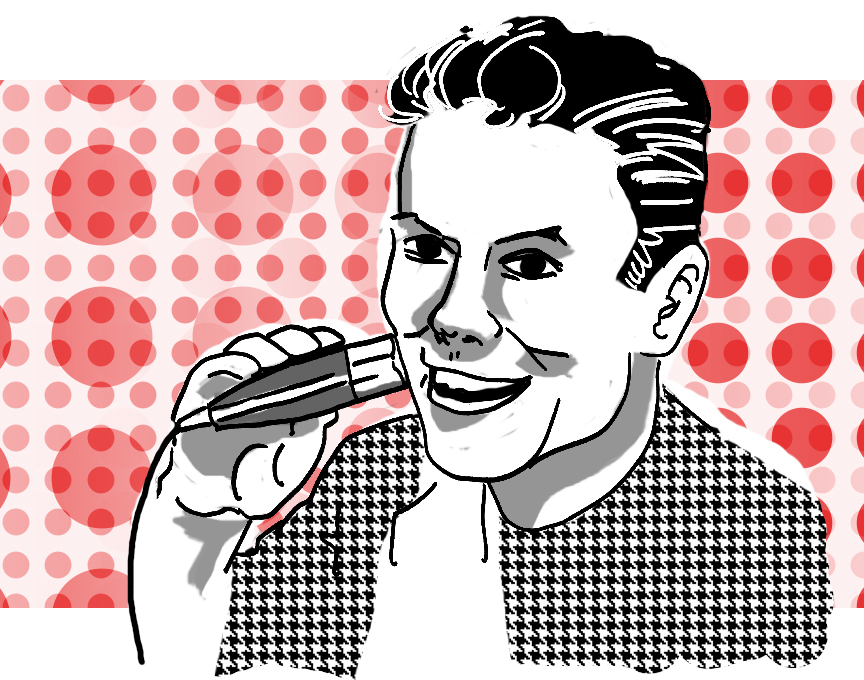
Nothing beats a close shave.
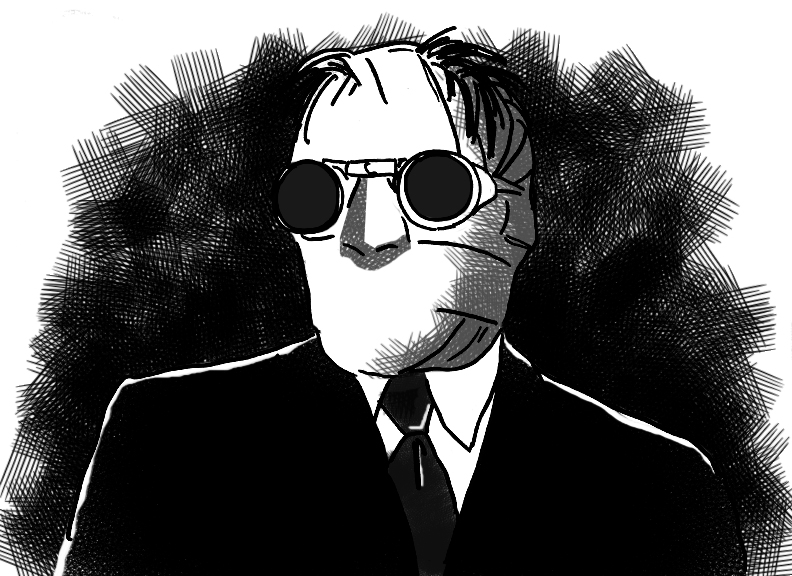
Dr. Griffith discovered the secret… and it made him crazy. This is my final illustration for #inktober.
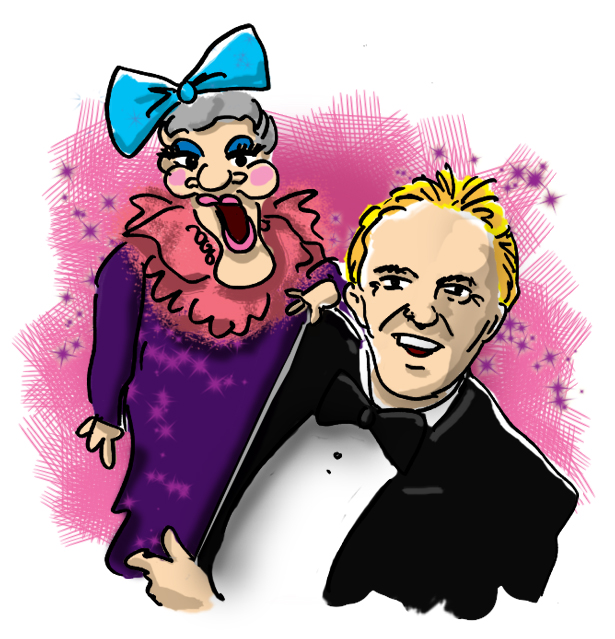
Wayland Flowers began making puppets by hand. A shy child, he was able to express himself through his puppets. One in particular, a loudmouth, crass “old broad” named Madame was his favorite. He patterned the character after a restaurant hostess famous for her outrageous eye shadow and her extremely colorful language.
He landed his first professional job in a play called Kumquats, in which his creation took the persona of a foul-mouthed Mother Goose. When the play closed, Wayland traveled around the gay bars in New York City, telling jokes with Madame for drinks and tips. He decided to move to Hollywood to see how far this show biz life could take him.
Wayland and Madame made their television debut on the Andy Williams variety show, telling a toned down version of the brash routine he delivered in New York. Soon he was booked in Las Vegas showrooms and made numerous appearances on talk shows, movies, even doing his own Showtime special Madame in Manhattan. Wayland holds the distinction of answering the last question on the game show Hollywood Squares in its final incarnation with Peter Marshall as host. (Wayland had taken over the coveted “center square” after the late Paul Lynde.)
In 1983, Wayland and Madame starred in a syndicated sitcom called Madame’s Place. The show costarred Johnny Haymer (Sgt. Zale on M*A*S*H) as Madame’s butler, Susan Tolsky (Biddie on Here Come the Brides) as her secretary and Judy Landers (an excuse to get men to watch the show) as Madame’s niece. A young Corey Feldman appeared as Madame’s neighbor. The premise of the series was a behind-the-scenes look at a television talk show that Madame hosted. The series was canceled after one season. Wayland was never seen on camera. Almost immediately, Wayland joined the musical showcase series Solid Gold and stayed for four years.
Over the years, Wayland developed a heavy cocaine habit. It was reported that an incoherent Wayland was carried on and off the Solid Gold set on many occasions. His drug habit worsened and, to make things even worse, he was diagnosed with HIV. In 1988, Wayland collapsed on stage during a performance in Lake Tahoe. He died a few months later at the age of 48.
Ten years after Wayland’s death another puppeteer took the Madame character back to the stage. In October 2014, a Kickstarter campaign was launched to finance a comeback tour for Madame. The goal of $50,000 was met with less than ten percent. The Madame puppet is currently on display at The Center for Puppetry Arts in Atlanta.
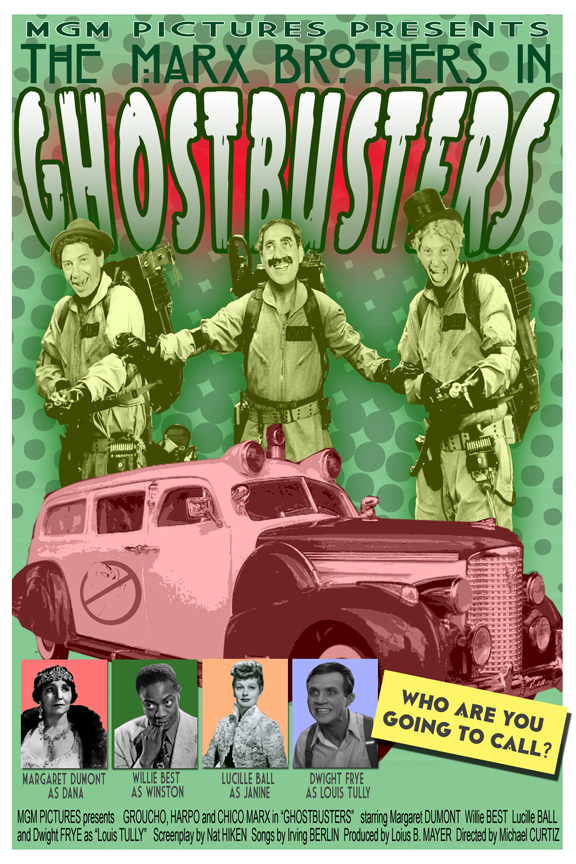
What if the script for Ghostbusters was written in the 1930s?
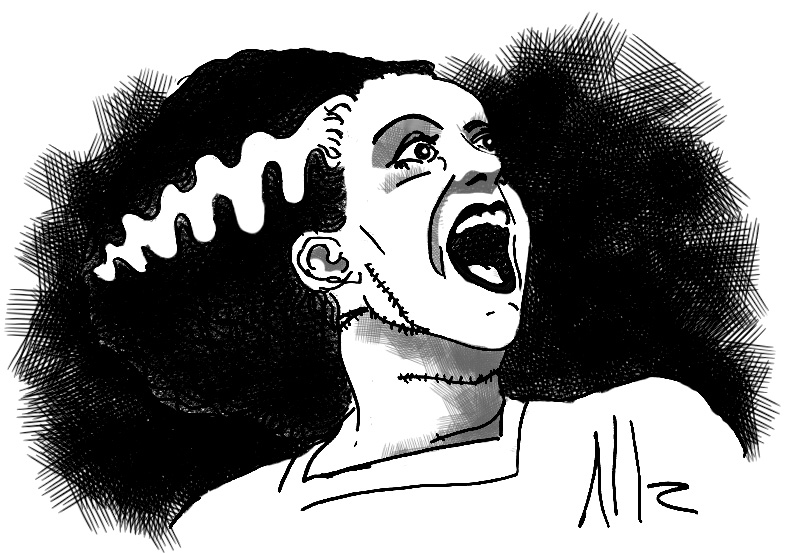
Here we are at Week Three of the Inktober Challenge. I think the guy from Week One needs a mate.
#inktober
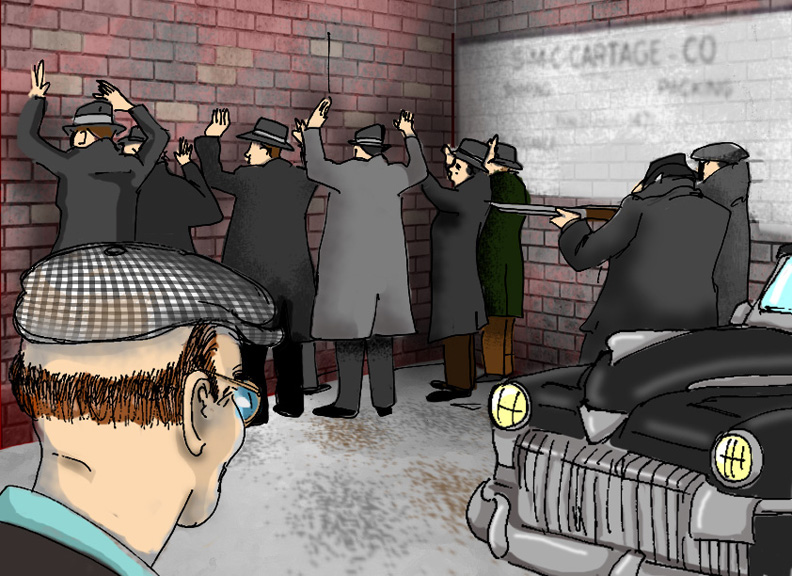
When Donald wandered into SMC Cartage garage to pick up his car on that February morning in 1929, he didn’t know he was walking into a heap of trouble.
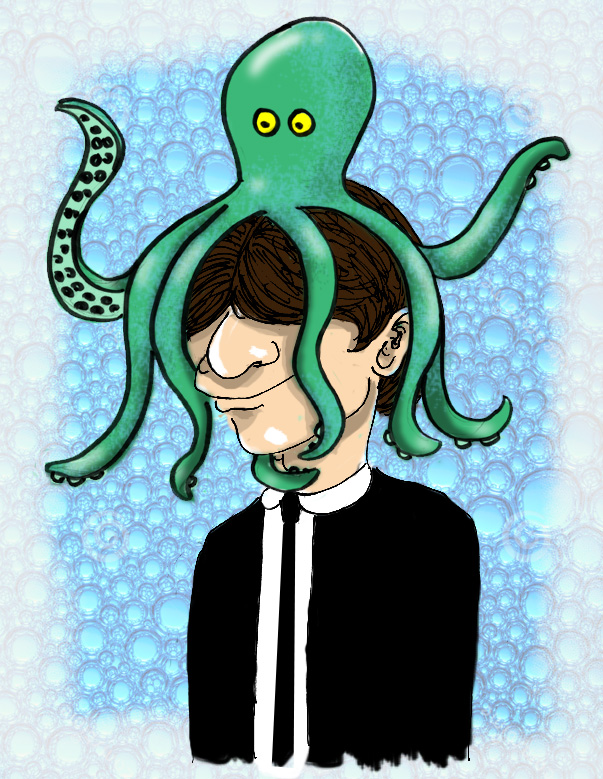
In 1968, The Beatles began recording their ninth studio album, a self-titled release, more commonly known as “The White Album.” Tension was heavy and tempers were high during the sessions, as the four band members were experiencing creative growing pains. Feeling claustrophobic between a controlling Paul McCartney and a passive-aggressive John Lennon, usually easy-going drummer Ringo Starr quit the band, taking his family on a two-week vacation to Sardinia in the Mediterranean Sea. Finally able to relax, Ringo took a boat excursion. The captain pointed out the behavior of octopuses to Ringo, noting that they gather stones from the sea bed to make gardens. Ringo was inspired.
When he returned to the studio, things had simmered down. (As a matter of fact, his drum kit was covered in flowers as a peace offering.) He got to work writing a song based on the boat captain’s story. With the help of guitarist George Harrison (as documented in the film Let It Be), that song evolved into “Octopus’s Garden.”
Ringo took lead vocals, with his band mates providing the music and backing vocals, including synthesizing their voices to mimic the sound of singing under water and George supplying bubbly noises by blowing a straw in a glass of milk. After a whopping thirty-two takes, they were satisfied and the song ended up on side one of “Abbey Road,” the last studio album recorded by The Beatles. It was Ringo’s second and final solo-credited song with the band.
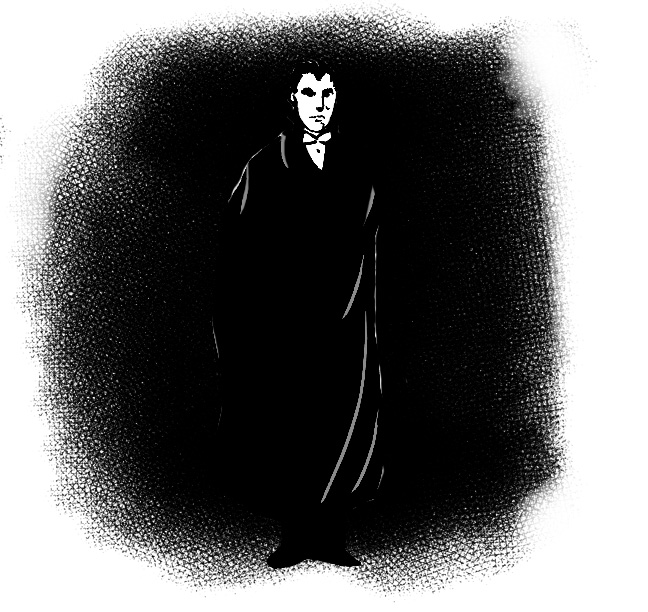
Here we are at week two of the Inktober challenge, and my second entry in the “monster” theme – Dracula.
#inktober
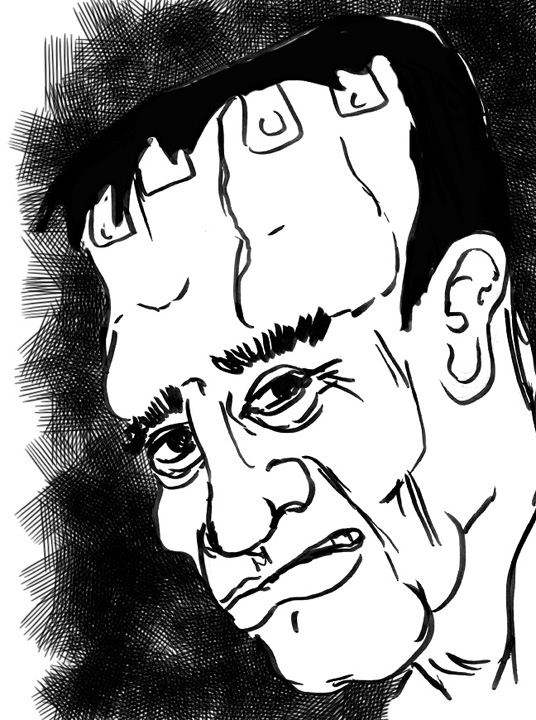
An artist named Jake Parker started this challenge called “Inktober.” The challenge is to do 31 ink drawings – one per day – for the entire month of October. Or, if you’re not as ambitious (or lazy, like me) you can do one per week. I chose that route.
So, every week in October, I will post an ink drawing. Keeping with the time of year, my weekly theme will be “monsters.” My first is Frankenstein’s Monster, inspired by the biography of director James Whale, which I am currently reading. Whale directed the classic 1931 film Frankenstein with Boris Karloff.
I have three more ink drawings to do, in addition to my weekly entries for Illustration Friday. This should keep me busy.
#inktober
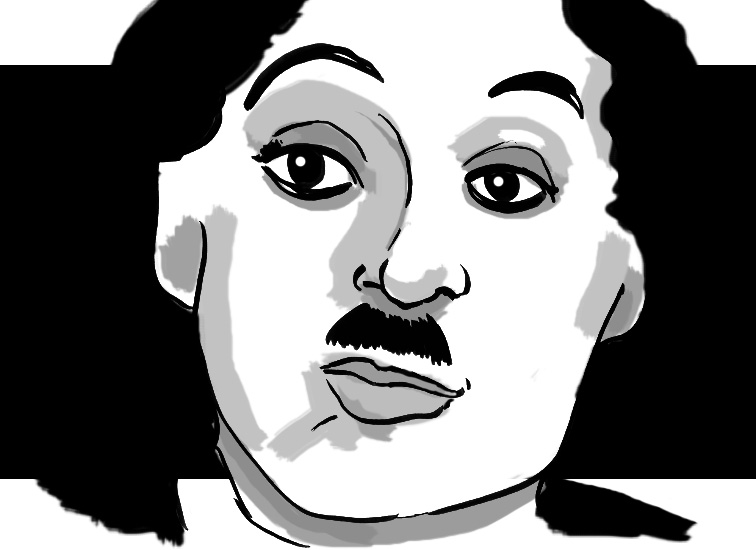
In 1936, Charlie Chaplin made his last silent film, Modern Times. It featured the star battling against progress.
* * * * * *
In 2011, the Illustration Friday word was “silent.” Here is my illustration from then.