

My first submission for Sketch Dailies (@Sketch_Dailies) #meettheartist

Look! It’s moving. It’s alive. It’s alive… It’s alive, it’s moving, it’s alive, it’s alive, it’s alive, it’s alive, IT’S ALIVE!
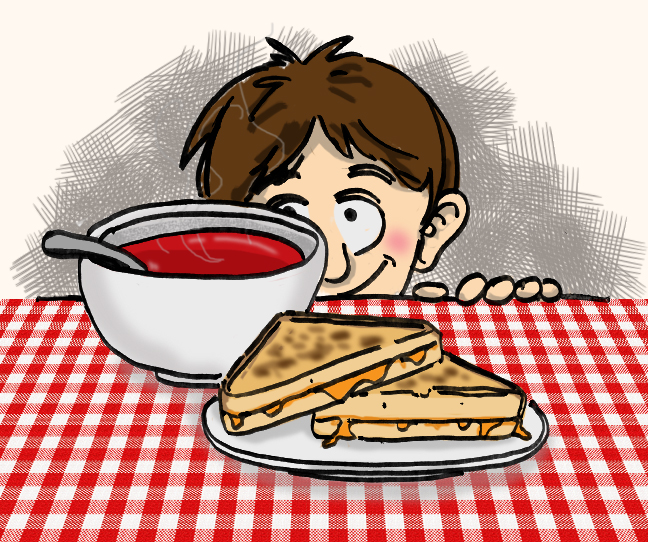
Nothing beats a big bowl of tomato soup and a grilled cheese sandwich.
Melty goodness.
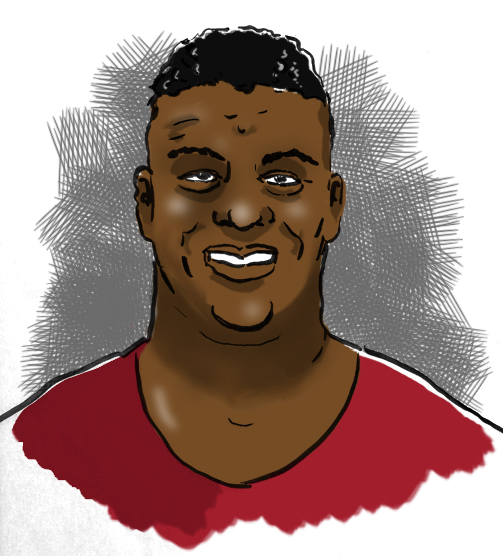
Standing 6 foot 1 and weighing in at 250 pounds, Adrian Robinson was a force on the football field. In high school, he was a two-time all-state honoree. At Philadelphia’s Temple University, he played every game of the 2008 season. He led his team to a victory in the New Mexico Bowl, Temple’s first bowl victory in 30 years.
However, his NFL career was less than stellar.
He was drafted by the Pittsburgh Steelers, playing for a little over a year until a trade sent him to the Philadelphia Eagles. He was released by the Eagles after only a week. Immediately, he was picked up by the Denver Broncos, only to be released a month later. He was then picked up by the San Diego Chargers and again released within a month. The Washington Redskins offered Robinson a stint, but released him eight months later. He was signed to The Tampa Bay Buccaneers’ practice squad, but he was released after two weeks. In April 2015, he signed with the Hamilton Tiger-Cats of the Canadian Football League.
Robinson hanged himself on May 16, 2015. He was 25 years old.
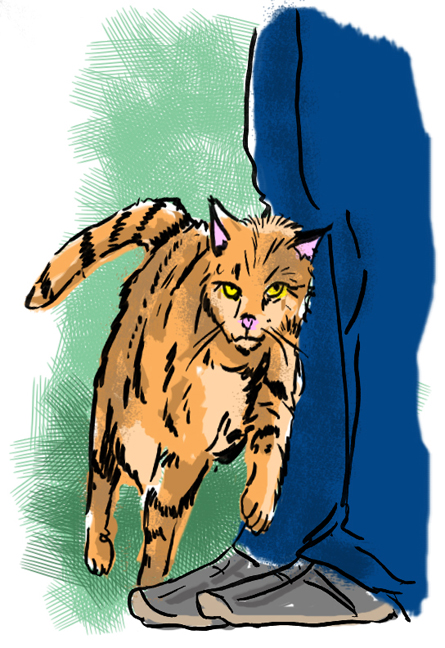
The only reason your cat needs you is because he doesn’t have thumbs and can’t open a can.
Otherwise, as far as he’s concerned, you are useless.

In 1976, Michael Ritchie directed a little family movie called The Bad News Bears. It starred Tatum O’Neal, fresh off her Oscar-winning performance in Paper Moon. Tatum played 11 year-old little league pitching whiz “Amanda Whurlitzer” who, begrudgingly, is recruited by alcoholic coach “Morris Buttermaker” (played by the always crusty Walter Matthau) for his bottom-of-the-barrel team. O’Neal held her own against the veteran Matthau and the film, in all its inappropriate and racist glory, spawned two sequels and a short-lived TV series.
In 2005, Hollywood, in full-tilt remake mode, released a new version of The Bad News Bears with Billy Bob Thornton taking on the Walter Matthau role. With experimental film maker Richard Linklater at the helm, casting began to fill the parts made familiar in the original. Linklater was floored when 13 year-old Sammi Kane Kraft rocketed a 75 mile-per-hour fastball over the plate at a casting call. Pleased that he wouldn’t have to cut in camouflaged long shots of a boy in a wig, he gave the role of “Amanda Whurlitzer” to Sammi.
The remake garnered mixed reviews, most praising Thornton’s performance but condemning the film with the same lackluster, “nothing new” sentiment given to most reboots.
In 2012, Sammi Kane Kraft was a passenger in her friend’s Audi. They were speeding westbound on Los Angeles’ Interstate 10 at 1:30 in the morning, when they rear-ended a tractor-trailer and then were rear-ended themselves. Sammi was rushed from the scene and pronounced dead at Cedars-Sinai Medical Center. She was 20 years-old. Her friend, the driver of the car, was treated for minor injuries and arrested on suspicion of felony drunk driving.

It’s the classic love triangle between a man, a woman and a wedge of Swiss cheese.

Lemonade, anyone?
Happy Mother’s Day to TV lovers everywhere!

I saw them wiggling in the unemployment line.

While working as Lloyd Price’s valet, Larry Williams played piano with several Specialty Records bands, including Price’s. Larry was eventually signed to the label in 1957 and in two years had written a string of hits, most notably “Bony Maronie” and “Dizzy Miss Lizzy.” He also began a life-long friendship with Little Richard.
On a flight over Australia, Little Richard had an epiphany (he was, in reality, unknowingly witnessing the launch of satellite Sputnik 1) and vowed to leave the evil world of rock & roll for the Church. Specialty Records groomed Larry to take Little Richard’s place. He mimicked Little Richard’s singing style and stage antics. His songs were covered by other artists, including up-and-coming British Invasion bands like The Beatles and The Who.
In the early 60s, Larry turned to funk as a comeback, after his career was briefly sidelined by a three-year prison term for drug dealing. Larry dabbled in acting, as well, appearing in an early Herschell Gordon Lewis exploitation film and several in the “blaxplotation” genre.
Larry lived a wild and drug-addled lifestyle, often hanging with a seedy crowd in the Los Angeles drug culture. He once threatened to kill his friend Little Richard over the misunderstanding of a cocaine purchase. As his cocaine and heroin consumption increased, his popularity and demand dwindled. On January 7, 1980, 44-year-old Larry put a bullet through his head.
A short time after Larry’s death, a blues singer, whose real name was Martin Allbritton, began billing himself as Larry Williams. He claimed that he was the Larry Williams that wrote “Bony Maronie,” and toured under that pretense. Despite being confronted by singer Etta James (a friend of Larry’s) and even members of Larry’s own family, Allbritton continues to perform under name “Larry Williams.”