

Aunt Bee is just gonna have to come to the realization that she will never top Clara for “Best Pickles” at the county fair.
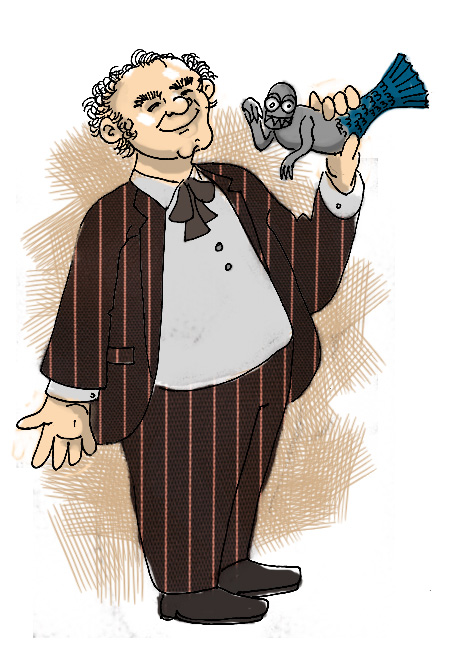
In 1842, master showman P.T. Barum leased a curiosity from Moses Kimball, a Boston contemporary. Barnum had big plans for the piece – the Fiji Mermaid. He wrote letters to newspapers, fabricating a story of the mermaid’s exotic past. He had an associate pose as “Dr. Griffith,” a so-called noted expert on … whatever. The act was convincing and people showed up at Barnum’s New York museum in droves. Barnum distributed pamphlets describing the mermaid’s zoological origins.
The Fiji Mermaid was, in reality, a novelty from Japan. It was comprised of the torso of a small monkey carefully stitched onto the tail of a fish. Additional animal hair was added for a more gruesome effect. These taxidermic specimens were popular in the Far East. However, Barnum wasn’t interested in the actual origin of the thing. The story he made up was more important to him and more interesting to his customers. He made back his weekly leasing payment of $12.50 in no time.
The Fiji Mermaid was allegedly lost in one of several fires at Barnum’s museum, but duplicate versions have surfaced around the world for years.

If we didn’t have villains, how would we know which ones are the good guys?

Jerry Lewis, the son of a popular vaudeville entertainer, is one of the last living connections to the Golden Age of Hollywood.
In 1945, he was performing at a club in New York City. He met a young singer named Dean Martin who was also scheduled on the bill. The pair decided to team up and became one of the biggest acts in show business. They made countless appearances on television, radio (they had their own show), night clubs and, eventually, the movies. After a small role in 1949’s My Friend Irma, the duo made their starring debut in 1950’s At War with the Army. They made seventeen films together over the course of seven years. During this time, they also maintained a grueling pace with personal appearances and guest shots on variety shows. Dean soon resented playing the “straight man” to the manic Jerry. Dean also felt his singing was taking a secondary role in the act and that too much focus was placed on this partner’s crazy antics. That and articles in the press identifying Jerry as the “real talent” were factors in the duo’s demise. They split ten years to the day after their first meeting.
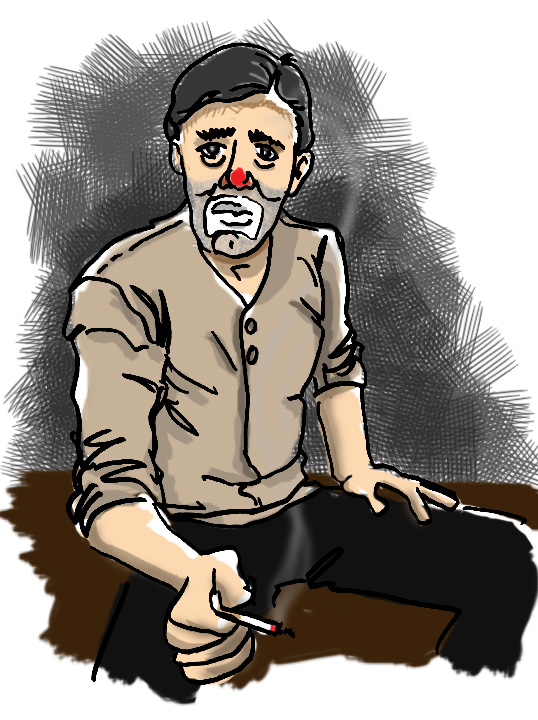
Jerry as Helmut Doork in
“The Day the Clown Cried”
Dean Martin surprised everyone by embarking on a successful solo career as a singer. He also proved to be a pretty good actor. Jerry continued to make films, expanding his already kooky shtick to his solo efforts. He made two dozen films — directing and writing many of them — and became Paramount Studios’ biggest star. Although the plots of his movies were mostly repetitive and formulaic, he gained industry-wide respect and was lavished with many awards and honors. Internationally, Jerry was mentioned in the same breath as comedy genius Charles Chaplin. He even taught a course in filmmaking at USC. Though, in the 70s, he was responsible for the notorious The Day the Clown Cried, the story of Helmut Doork, a clown recruited by the Nazis to lead unsuspecting children to their death in a concentration camp. The film was never completed nor released. Jerry publicly stated that the film is an embarrassment. Allegedly, the only copy remains locked in a safe in Jerry’s home and a handful of people claim to have seen it. However, it was reported recently that the Library of Congress holds a copy of the film and will screen it in “another ten years or so.”
In 1952, Jerry Lewis hosted the first Muscular Dystrophy Association Telethon. In 1996, the title was changed to the Jerry Lewis MDA Telethon. The annual 21-hour broadcast became a cavalcade of stars, all due to Jerry and his show biz connections. In 2011, Jerry was unceremoniously relieved of his hosting duties and the fundraising was cut back to six hours. Jerry disassociated himself with the charity. In 2015, it was announced that the telethon would be discontinued.
Jerry Lewis has been the subject of much personal and professional criticism throughout his eight-decade career. He has been maligned in the press by critics as well as by peers and associates. Hell, I’ve seen almost every one of his movies and I never thought he was funny. Not even a little bit. But, there is no denying the impact and influence he has had on the careers of other actors and comedians, specifically Jim Carrey. In recent interviews, he has been angrily outspoken about the mistreatment he has received and he has been very selective about the things he will discuss.
I suppose that after all this time and the ups and downs of his life and career, he has earned that right. He’s 89. Just leave the old guy alone already.

Edwin Geist taught and composed music and served as occasional conductor in his native Berlin in the early 1930s. However, when Nazi Minister of Propaganda Joseph Goebbels founded the Reichsmusikkammer (The Reich Chamber of Music), Edwin’s music was declared “degenerate,” along with compositions by Debussy, Stravinsky, Mendelssohn, even Artie Shaw and Bennie Goodman. Banned from music in Germany because of his Jewish bloodline, Edwin left for Lithuania. He met and married Jewish pianist Lyda Bagriansky. Here, he wrote operas, as well as pieces for piano and full orchestras. In 1941, the Nazis invaded Lithuania. Edwin and his wife were imprisoned at Ninth Fort in Kaunas.
Edwin was able to persuade the Fort’s commander that he was an important musician and “half Aryan.” He was released in March 1942. Upon his release, he worked hard and forged documents to secure the release of Lyda. He was successful and the couple managed to spend several months together until Edwin was rearrested and executed. A distraught Lyda committed suicide a few weeks later.
Friends broke into the couple’s boarded-up apartment and discovered a suitcase filled with music that Edwin had composed and a diary he had kept while he was separated from his wife. The musical works received a world premiere in 2002, the same year that Edwin’s journal — the account of his efforts to free Lyda — saw first publication.

First the alarm didn’t go off, then the train was canceled, now a goddamn bear trap! At this rate, Bob was never gonna make it to work.

People. All kinds of people. But they’re all just people.
Click here for a larger version.

Anne Frank received a journal as a present for her thirteenth birthday. Nearly a month later, she was hiding from the Nazis in a secret annex with her family. She remained in seclusion for a little over two years until someone, who still remains officially unidentified, exposed the family to Nazi officials. Three days after she penned what would be the final entry in her journal, she was captured and transported to Auchwitz, then Bergen-Belsen where she died of typhus just a few months before the concentration camp was liberated.
During her hiding, she stayed hopeful that one day she and her family would go back to their normal life. She looked forward to returning to school and one day achieve her prophetic aspirations of becoming a writer.
After World War II and the eventual posthumous publication of her famed diary, speculations and criticism arose. There were accusations that her father, a survivor of the Holocaust, had fabricated the entire thing. Other skeptics went so far as to claim that “Anne” never existed. Later, it was the subject of proposed bans, labeling some passages as pornographic.
It is difficult to believe that the young girl who endured two years of fearful seclusion, day after day of turmoil, isolated soul-searching and the daily tedium and mounting frustrations of her family was still able to maintain such a bright and optimistic vision of the human race.
Anne Frank was truly remarkable.

Follow! But! Follow only if ye be men of valor! For the entrance to this cave is guarded by a creature so foul, so cruel, that no man yet has fought with it… and lived! Bones of full fifty men lie strewn about its lair! So! Brave knights! If you do doubt your courage or your strength, come no further, for death awaits you all with nasty, big, pointy teeth…
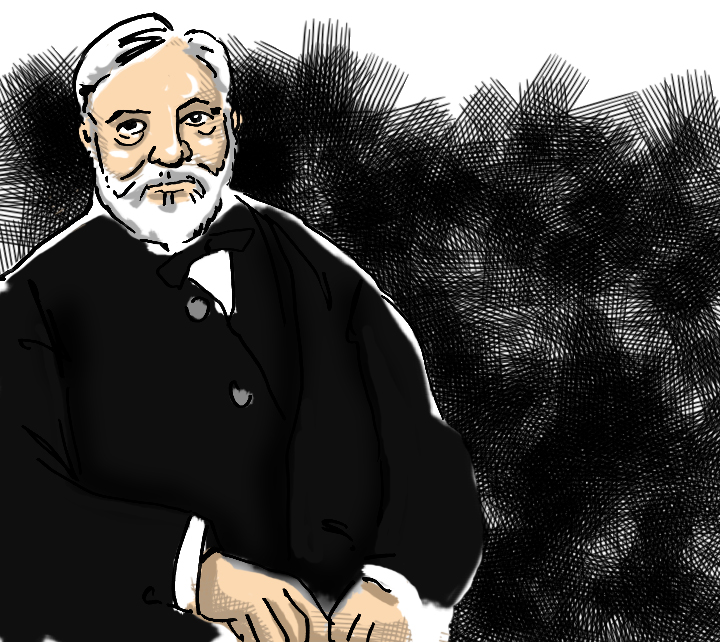
“As I grow older, I pay less attention to what men say. I just watch what they do.” — Andrew Carnegie
In 1889, self-made millionaire Andrew Carnegie wrote an article called “The Gospel of Wealth,” in which he described the responsibility of the country’s wealthy upper class to share and distribute their surplus funds to those less fortunate and in need . He inspired a new wave of nation-wide philanthropy. He made a case against extravagant and wasteful, self-indulgent spending. Instead, he explained, society would benefit most from distribution of wealth in a thoughtful manner and not in a way that encourages “the slothful, the drunken, the unworthy.”
Carnegie was a member of the South Fork Fishing and Hunting Club, an exclusive club whose beautifully-appointed headquarters was located on the Conemaugh River near the South Fork Dam in Western Pennsylvania. The fifty-plus members of the club purchased the dam from the state of Pennsylvania and provided maintenance of the dam in exchange for turning the area into a secretive retreat for its members. On May 31, 1889, the dam gave way after several days of heavy rainfall. The town of Johnstown was flooded under 20 million tons of water rushing at a rate equal to that of the Mississippi River. Over 2200 people died and Johnstown suffered over 17 million dollars in damage. The town of Johnstown unsuccessfully sued the South Fork Fishing and Hunting Club. Andrew Carnegie, however, built the town a new library.