DCS: totie fields

I Think I'll Start on Monday

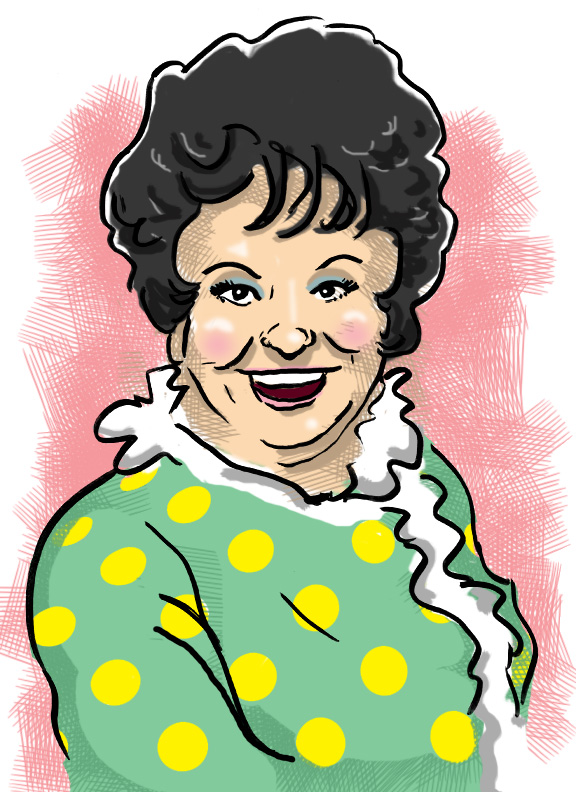
Totie Fields was just naturally funny.

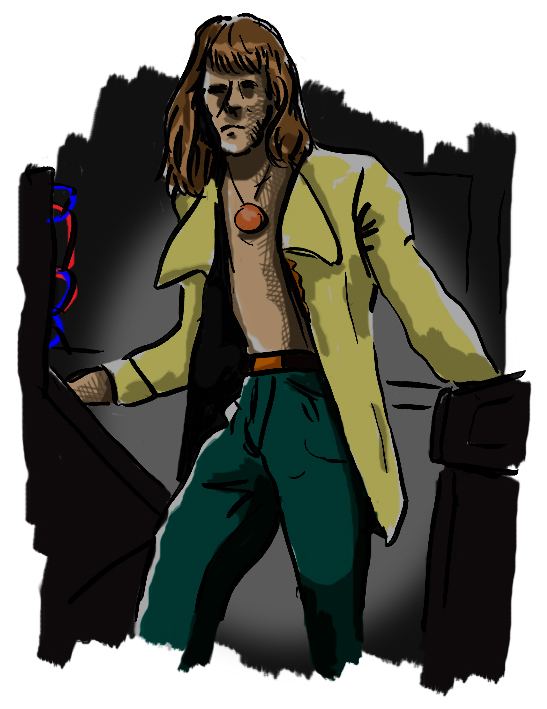
While still in high school, she sang and told jokes in clubs in the Boston area, not far from her native Hartford, Connecticut. Her talent and unique routines brought her to larger venues, including New York’s famed Copacabana. It was here that Ed Sullivan caught her act. Intrigued by her humor in a field dominated by men, Sullivan booked Totie on his popular Sunday night showcase. She was a hit and made numerous appearances. Much in the vein of contemporaries Joan Rivers and Phyllis Diller, Totie used herself as the butt of her jokes. She became a regular guest on talk shows where she spoke her mind poked fun at her weight. During a stint as co-host on The Mike Douglas Show, Totie famously commented to a leather-clad and fully made-up Gene Simmons of KISS, “I’ll bet under all that, you’re a nice Jewish boy.” Simmons smiled and replied, “You have no idea.”

In 1976, health problems resulted in the amputation of Totie’s right leg. After a brief recovery, she went back out on the road, doing her act with the aid of a scooter and still joking about her health issues. The following year, she taped a comedy special for HBO, where she joked from the confines of a wheelchair, “I finally weigh less than Elizabeth Taylor.” She suffered two heart attacks during her rehabilitation. In December 1977, she was diagnosed with breast cancer and had a mastectomy. Afterwards, she still performed and joked about her health.

Just prior to opening a two-week engagement at the Sahara Hotel in Las Vegas, Totie experienced a fatal pulmonary embolism. She was pronounced dead at Sunrise Hospital. She was cremated and her ashes interred in a Las Vegas cemetery, later moved to Los Angeles upon the death of her husband. Totie was 48 years old.

Comments

comments

DCS: andrea feldman

superstar

Native New Yorker Andrea Feldman latched onto the crowd at Andy Warhol‘s Factory. She was featured in three of Warhol’s avant garde films, Imitation of Christ, Trash and Heat. Still a teenager, Andrea performed, what she called, the “Showtime,” a table-top striptease that was wildly popular among the regulars in the back room at Max’s Kansas City, the notorious Manhattan nightclub. She earned herself the nickname “Whips,” although she preferred to call herself “Andrea Warhol.” The patrons at Max’s just called her “Crazy Andy.”  Like most of the crew at Max’s, she was heavily dependent on drugs, specifically amphetamines.

In August 1972, Andrea had just finished filming Heat and she felt she was on the verge of stardom. She phoned several of her former boyfriends, including poet Jim Carroll (of The Basketball Diaries and “People Who Died” fame). She asked them to meet her in front of 51 Fifth Avenue, her parent’s apartment building. While the guys waited out on the sidewalk, Andrea scribbled out this note: “I’m headed for the big time. I’m on my way up there with James Dean and Marilyn Monroe.” She grabbed a crucifix and a Bible and leaped from the fourteenth floor window to her death.

Andrea was 24 years old.

Comments

comments

DCS: dorothy abbott

The girl with the golden arm

Pretty Dorothy Abbott ‘s career began in Las Vegas, when she worked as a showgirl at the Flamingo Hotel. She moved on to Earl Carroll’s Hollywood Revue, where the showbiz impresario gave her the baffling moniker “The Girl with the Golden Arm.”

In the mid 20s, Paramount Pictures offered her an unheard of $150 per week contract. She was stuck in bit parts as showgirls. nurses and waitresses and her career went nowhere. Although she appeared in top movies, including Little Women, Neptune’s Daughter, Annie Get Your Gun, There’s No Business Like Show Business, Rebel Without a Cause, Jailhouse Rock and South Pacific, she is practically unknown.

In the 1950s, she turned to television with guest roles on Leave It to Beaver and a brief stint as Jack Webb‘s girlfriend in Dragnet. At this time, Dorothy married former LA police officer Rudy Diaz. Diaz had quit the force to become an actor. He began to gain attention and was often seen out with other women. Soon he filed for divorce from Dorothy. The end of her marriage and her waning career was more than she could take. She took her own life on December 15, 1968 — one day before her 48th birthday.

Comments

comments

DCS: keith emerson

oh, what a lucky man he was

After I graduated from sixth grade, I moved on to a new school for seventh grade. Several other elementary schools in my area sent students to the same school. I met a bunch of new classmates and one of them was Bryan Liesner. I remember in class, I passed him a note with a smart-ass comment aimed at our English teacher. (Yeah, even back then, I was making smart-ass remarks. Did you think it just started yesterday?) I spelled Bryan’s name “Brain” on the note. He pointed out my error and we became friends.

One afternoon at Bryan’s house, he introduced me to an album I had never seen or heard before. One side on the cardboard jacket was decorated with a creepy monotone painting depicting some sort of machinery clamped around a human skull. It opened up with a custom, circular die-cut, a unique design compared with other albums of the time. The back was plain black with the album title emblazoned in large white block letters — Brain Salad Surgery. Beneath the title was a listing on the song titles. The band was Emerson, Lake and Palmer (known by fans as ELP) and I never heard of them. Bryan plopped the disc on his turntable. From he first, otherworldly sounds I was hooked. The traditional British folk song “Jerusalem” was transformed into a bombastic, spacey symphony heavy with weird, echo-y notes and weirder underlying, unidentifiable instrumentation. The rest of the album was chock full of layer upon layer of the same strange and compelling sounds. Those sounds, I would later learn — were the intricate handiwork of one Keith Emerson.

Keith Emerson was the innovative keyboardist of the band. He was an adventurous musician, tinkering and modifying his equipment to produce new and unusual sounds. Brain Salad Surgery, the first album released under the band’s own label, was a showcase for Emerson’s sonic experimentation. The opening track marked the debut of keyboard designer Robert Moog’s new Apollo model synthesizer, still in the prototype stage. The pinnacle of the disc was the sprawling epic “Karn Evil 9,” a thirty-minute, three movement epic that was bolstered by Keith Emerson’s keyboard acrobatics and eerie vocals, achieved by running his voice through a modulator on one of his synthesizers. It was chilling. And awesome.

Emerson’s stage antics rivaled his keyboard prowess. He would shake and rattle and maneuver his massive keyboard and synthesizer units. He would stab the keys with knives to produce unearthly sounds. He even had a rig that enabled him to sit at a piano, strapped into the seat, while he and the entire instrument were raised up and spun — end over end — like a Ferris wheel. He had used some of these same hi-jinks as keyboardist for the early progressive rock band The Nice.

After ELP went their separate ways, Emerson joined up with rock contemporaries like John Entwistle and Jeff “Skunk” Baxter to form so-called “supergroups.” He performed with an attempted re-grouping of ELP with drummer Cozy Powell replacing the otherwise-committed Carl Palmer. Keith even opened the Led Zeppelin reunion at the tribute for Atlantic Records founder Ahmet Ertegun.

More recently, Keith had been been planning a Spring 2016 tour of Japan. However, he was diagnosed with a degenerative nerve condition and a severe form of arthritis that hampered his keyboard playing. In addition, his home in England had burned down, his wife of over twenty years divorced him and he was experiencing some financial difficulty. On March 10, he decided the only solution was to put a bullet in his head.

Keith Emerson was 71.

If I didn’t thank you forty years ago, I will now. Thanks Bryan.

Comments

comments

DCS: maureen o’hara

The Queen of Technicolor

Maureen O’Hara was a true movie star. From her debut in 1938 until the early 1970s, she made over fifty films. She starred opposite such big names as Charles Laughton, Tyrone Power and, of course, John Wayne. Maureen and Wayne appeared in five films and became lifelong friends. Wayne once remarked, “She’s a great guy. I’ve had many friends, and I prefer the company of men. Except for Maureen O’Hara.”  The feeling was mutual as Maureen sank into a deep depression after Wayne’s death in 1979.

Maureen was feisty, outspoken and stood by her convictions. Her relationship with commanding director John Ford was definitely of the “love-hate” variety. Although he praised her work, Ford never offered that praise to her face. As a matter of fact, he often berated her. During a scene when Maureen was sitting in a speeding cart, the wind kept blowing her hair across her face. Ford hollered “Open your damn eyes!,” to which Maureen replied, “What would a baldheaded son of a bitch like you know about hair lashing across his eyeballs!” However. Maureen always suspected that Ford was secretly in love with her.

In the 1940s, Maureen earned the nickname “The Queen of Technicolor.” With her fiery red hair, creamy complexion and piercing green eyes, she was the best advertisement for the film process. Technicolor’s developers agreed. Technicolor, it seemed, was actually detrimental to Maureen’s career, as she was viewed as just a beauty and not taken seriously as a talented actress.

In the 1960s, Maureen tried to steer away from the Westerns and adventure films with which she had become so associated, although she starred in director Sam Peckinpah’s debut The Deadly Companions. She played against type in a role as a weak and vulnerable woman. The film was panned and Maureen said Peckinpah was “one of the strangest and most objectionable people I had ever worked with.” Soon after, she appeared in Walt Disney’s The Parent Trap. Although the film was a hit and critically acclaimed, Maureen was involved in a contract dispute and never worked for Disney again. As the 60s came to an end and the 70s began, Maureen grew to dislike the current Hollywood trends, commenting on “making dirty pictures” of which she wanted no parts.

She was coaxed out of her 20-year retirement by a script from writer-director Chris Columbus. The film was Only the Lonely and she was instantly enchanted by her co-star John Candy. She said Candy reminded her of Charles Laughton. Maureen went on to make a few television movies and then retired a second time. This time for good.

After suffering a stroke, followed by a diaginosis of short-term memory loss, family members made claims that 92-year old Maureen was a victim of elder abuse at the hands of visiting social workers. For protection, she moved to her grandson’s farm in Idaho where she lived out her remaining years.

Maureen passed away in 2015 at the age of 95.


Comments

comments

DCS: vera ralston

skating away on the thin ice of a new day

Věra Helena Hrubá competed in figure skating the 1936 Winter Olympics, representing her native Czechoslovakia. She placed 17th. During the games, she met Adolf Hitler, who asked her if she would like to “skate for the swastika.” Věra looked him right in the eye and replied that she’d rather skate on the swastika. The Führer was not amused.

In the early 1940s, Vera moved to the United States, settling in Hollywood, with hopes of using her Olympic notoriety to become an actress. Soon, she was signed to a contract by Republic Pictures. Now using the more Americanized name “Vera Ralston,” she was relegated to small roles, mostly immigrants, due to her limited English. She did, however, costar with such notable actors as Fred MacMurray and John Wayne.

Vera married Republic studio head Herbert Yates, who was 40 years her senior. Yates left his wife and children to marry Vera and began securing roles for her, however, Vera’s acting abilities left a lot to be desired. Studio shareholders sued Yates for using company assets to promote his wife. Yates passed away in 1966, leaving his widow Vera over eight million dollars in assets. She was hospitalized, however, for a nervous breakdown. Later, she remarried and lived quietly out of the spotlight until her death in 2003 at age 83. Reportedly, only two of her films were profitable, though she does have a star on the Hollywood Walk of Fame.

The authors of the book The Golden Turkey Awards nominated Vera for the dubious honor of “The Worst Actress of All Time,” along with Candice Bergen and Mamie Van Doren. They all lost to Raquel Welch.

Comments

comments