DCS: rachel corrie

activist

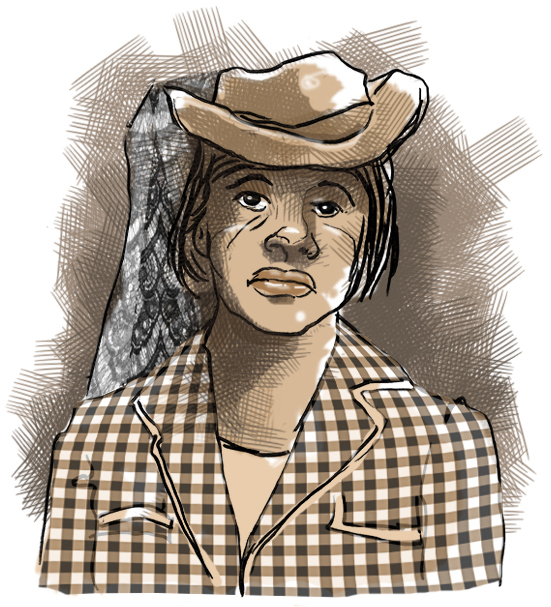
In 2003, college senior Rachel Corrie traveled from her hometown of Olympia, Washington to Rafah, a combat zone in the southern part of the Gaza Strip. Her goal was to make Rafah a “sister city” with Olympia. During her mission, she joined up with a pro-Palestinian activist group called International Solidarity Movement. The group opposed the Israel Defense Forces’ (IDF) common practice of demolishing Palestinian houses in hopes of locating weapons and underground tunnels used to transport weapons and ammunition.

Less than two months after arriving in Rafah, Rachel made herself part of a human shield to block the IDF’s bulldozers from carrying out their demolition. As a result of a three-hour confrontation with Israeli forces, Rachel was killed. Conflicting accounts of Rachel’s death arose from a subsequent investigation of the incident. Fellow protesters claimed that the bulldozer operator deliberately ran over Rachel, while other eyewitnesses reported that it was an accident, explaining the operator had poor visibility from the vehicle’s cab and couldn’t see her. An Israeli Army investigation concluded that Rachel’s death was, in their opinion, an accident. However, Amnesty International, along with B’Tselem and Yesh Din, two Israeli human rights groups, criticized the final decision.

In 2005, Rachel’s parents filed a civil lawsuit against the state of Israel. The lawsuit charged Israel with not conducting a full investigation into the case and with responsibility for Rachel’s death, contending that she had either been intentionally killed or that the soldiers had acted with reckless neglect. As a symbol of their convictions over monetary gain, they asked for an award of one dollar. An Israeli court rejected their suit. In 2014, the Supreme Court of Israel rejected the appeal.

Rachel was 23 years old.

Comments

comments

DCS: sandy west

hello daddy hello mom

From the time she was nine years old, when her grandfather bought her a drum kit, Sandy West had been rocking. Using every spare minute to practice, Sandy became the drummer in her Long Beach, California elementary school band. Later, she was the only female drummer who played in local bands.

Fifteen-year-old Sandy met flamboyant producer Kim Fowley in the LA club scene. Fowley hooked Sandy up with another young, female musician, guitarist Joan Jett. There was instant energy between Sandy and Joan and their pairing became the genesis for the pioneering band The Runaways. With the addition of singer Cherie Currie, rhythm guitarist Lita Ford and bassist Jackie Fox, The Runaways launched a whirlwind career of recording, touring and the obligatory sex and drugs.

After the brief success and subsequent break-up of The Runaways, Sandy found it difficult to secure work in the music industry. She blamed her lagging post-Runaways career squarely on producer Kim Fowley.”I owe him my introduction to the music business but he’s also the reason I’m broke now,” Sandy said in an interview. Sandy was forced to seek work outside the music business, at different times working in construction, tending bar and as a veterinary assistant. She also engaged in criminal activity, eventually spending some time in jail.

Sandy was a heavy smoker and was diagnosed with lung cancer that spread to her brain. She died in October 2006 at the age of 47. Her band mates had nothing but praise for Sandy, both as a drummer and as a friend.

Comments

comments

DCS: paige young

warning shot

As Bill Cosby’s sexual harassment and assault retrial begins, the story of his relationship with Paige Young remains a forgotten footnote to the list of Mr. Cosby’s accusers.

A naïve budding model named Paige Young was presented as “Miss November” in the penultimate issue of Playboy magazine for the year 1968. The pretty and petite brunette became a favorite of publisher Hugh Hefner and was a regular at his notorious, star-studded parties held at the famed Playboy Mansion in Los Angeles. However, it appeared that Hefner had specific plans for Paige.

The parties at the playboy Mansion were storied affairs. Guest lists were regularly comprised of the most famous names from the world of Hollywood, professional sports and the media. They were alleged to be awash with a level of debauchery that would rival Caligula’s soirées of ancient Rome. The alcohol flowed freely, as did the drugs. As a special service, Mr. Hefner would often hand-pick a “companion du jour” for those male guests that made the request. Hef received one of those requests from his good friend, comedian Bill Cosby. Cosby, at this time, was a popular stand-up comic who had great success co-starring in the TV series I Spy with Robert Culp. He was an in-demand performer, whose comedy records were lauded as “comic masterpieces.” He was also married with two children and a third on the way. But, Cosby had taken an instant liking to Paige Young and mentioned his desire to Hugh Hefner. Hef arranged for Paige to “date” Cosby, but it wasn’t a “date” in the conventional sense. Paige was plied with drugs and subjected to CIA-caliber mind control. She was coerced into sexual slavery, first with Cosby then with a number of Hef’s stable of elite acquaintances, including married actor-director John Huston, who was 38 years her senior. Paige was part of this “program” for years.

People who knew Paige — like her neighbor, model Melanie Myers — said she always looked tired and dazed. She was distant and detached in her speech and seemed “out of it.” After a while of observing Paige’s distressing behavior, Myers was invited into Paige’s apartment. In one room, Paige had arranged a pentagram on the bare wooden floor. One wall of the room was covered from floor to ceiling with photos of Hugh Hefner. Across each photo was scrawled the words “Hugh Hefner is the devil.” Myers was speechless as Paige expounded on her hatred for the Playboy publisher. Suddenly, Paige produced a .38 caliber handgun and told Myers that she had planned to kill herself. Myers panicked and fled Paige’s apartment, fearing that her neighbor may harm her. She headed straight to the police to explain what she had just witnessed.

Returning to her apartment complex with police officers, Myers entered Paige’s dwelling. She directed officers to the room where she had seen the photos. When they entered the room, they discovered Paige’s blood-soaked body lying on the floor on top of an American flag. It appeared that, after positioning herself on the flag, Paige had put the barrel of the gun in her mouth and pulled the trigger. An investigation speculated that Paige wanted to send a message to her mental “captors.” Paige took her own life just a few months after her thirtieth birthday.

Comments

comments

DCS: lesley duncan

love song

Despite some pretty impressive connections, Lesley Duncan never achieved the stardom for which she was destined.

Born in the British port town of Stockton-on-Tees, Lesley left school as a teenager. At 19, the aspiring songwriter was placed on a retainer by a local music publisher. She signed a recording contract with EMI Records before her 21st birthday.

Lesley soon hooked up with Elton John. He recorded her composition “Love Song” for his 1970 concept album Tumbleweed Connection. The song went on to be recorded by 150 different artists, including David Bowie and Olivia Newton-John. As a favor, Elton John played piano on Lesley’s first solo record, which failed to chart, in spite of its critical praise.

Lesley shunned live performances due to her crippling stage fright, opting instead, to offer backing vocals to numerous singers. She sang on recordings by her idol Dusty Springfield, as well as Pink Floyd and the studio recording of Jesus Christ Superstar. She also returned to help her friend Elton John with backing vocals on his Madman Across the Water album. Her final album appearance was on The Alan Parsons Project’s 1979 release Eve.

Lesley retired from the music business, preferring the quiet life of tending to her family and working in her garden. She passed away from cerebrovascular disease in March 2010 at the age of 66.

Comments

comments

DCS: shirley hemphill

Can I take your order?

Born in North Carolina, Shirley Hemphill was an aspiring comedian while she supported herself with a job in a factory. She sent a cassette recording of her routine to popular comedian Flip Wilson. Impressed by the tape, Wilson sent Shirley a new cassette recorder, a dozen roses and an invitation to visit the set of his television show. She was so motivated and inspired by her meeting with Wilson, she quit her job and bought a one-way bus ticket to Los Angeles. She performed evenings at The Comedy Store, while she waited tables during the day.

In 1976, a casting agent in the audience at The Comedy Store was so taken by Shirley’s act, she offered her a guest role on the sitcom Good Times. Producer Norman Lear offered Shirley her own show, but she declined. Instead, she auditioned for, and eventually won, the role of “Shirley,” the sarcastic waitress on What’s Happening!, a comedy loosely based on the 1975 film Cooley High. What’s Happening! was a fairly successful series for ABC, but tensions and demands among the cast members – not including Shirley – forced a cancellation after three seasons.

Shirley auditioned, unsuccessfully, for the role of the cook on the continuation sitcom Archie Bunker’s Place. The role went to actress-comedian Anne Meara. One day after losing that part, Shirley was given her own show, One in a Million. The series, after failing to attract an audience, was cancelled six months into its initial run. She returned to the stages of comedy clubs and made infrequent guest appearances on episodic television. She made her motion picture debut in 1993 in CB4, co-starring with Chris Rock. She followed that with a role in the comedy Shoot the Moon. She continued to perform stand-up, making appearances on The Tonight Show, Evening at the Improv, and BET’s Black Comedy Showcase. She was a regular at The Laugh Factory comedy club in Los Angeles.

In December 1999, a gardener working outside of Shirley’s West Covina, California home, saw her lying on the floor of her bedroom. An autopsy revealed that she had died from renal failure. She was dead for nearly two weeks when she was discovered. Shirley was 52 years old.

Comments

comments

IF: house

AKA mr. proper

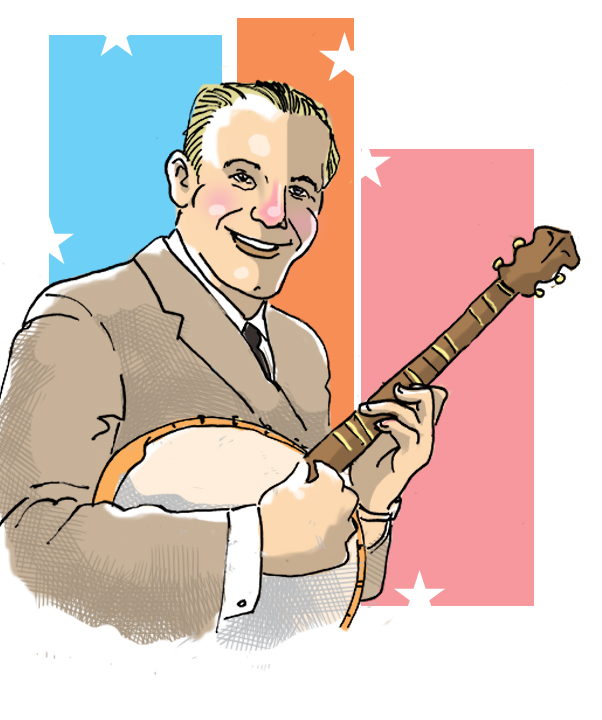
In the 1950s, Linwood Burton ran a successful ship cleaning business with accounts up and down the east coast of the United States. His workers, however, suffered regular injuries from the caustic nature of the cleansers they used. A concerned Burton, using his basic knowledge of chemistry, began formulating a solution that could cut through grime without the danger of injury to his workers. He developed Mr. Clean.

In 1958, Burton sold his invention to consumer goods giant Proctor & Gamble. Within six months, it was one of the best selling cleansers on the market. Proctor & Gamble began marketing Mr. Clean as a household cleaning agent. As a part of their advertising campaign, they hired actor House Peters Jr., who had been featured in numerous B Westerns and episodic television, to be the embodiment of the Mr. Clean character. House Peters portrayed Mr. Clean in television commercials for the better part of two decades.

Comments

comments