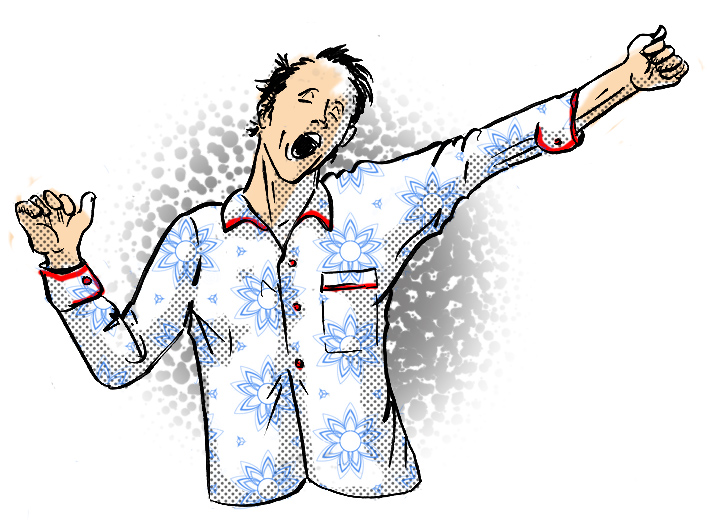
A yawn may not be polite, but it is an honest opinion.
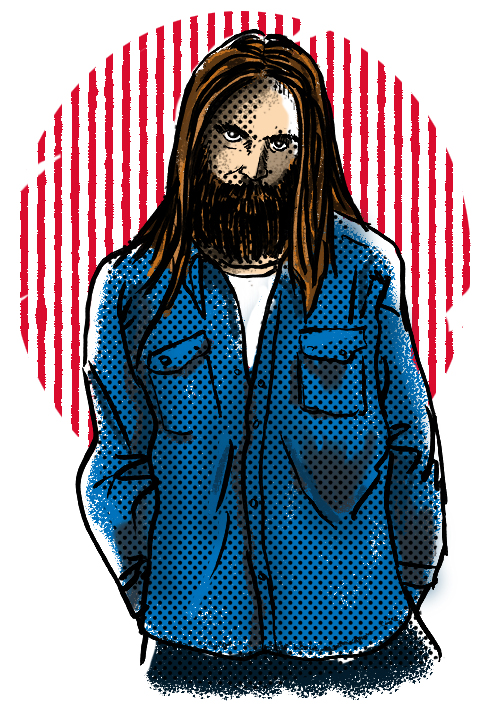
In 1978, Brent Mydland joined Grateful Dead guitarist Bob Weir on a side project called Bobby and the Midnites. Brent offered the band backing vocals along with his keyboard playing. Just a year later, Brent was invited to join the Grateful Dead as the replacement for the departing Keith Godchaux. Brent was a welcome shot-in-the-arm for the venerable jam band, bringing new life with his gravelly vocals and innovative keyboard prowess. While Keith Godchaux insisted on playing a traditional piano onstage, Brent was open to experimentation. He played a wide variety of keyboards, including Minimoogs, synthesizers, sequencers, MIDI systems and the Hammond B-3 organ, of which the band purchased three after he joined. He worked closely with sound technician Bob Bralove in crafting an electronic sound library that was unique to the band. Brent was also an accomplished songwriter and many of his compositions were added to the band’s repertoire. Some of Brent’s songs appeared on Dead studio albums with the keyboardist taking lead vocals. In concert, he was the “go-to” vocalist for the Dead’s covers of “Dear Mr. Fantasy” and “Hey Jude.” He even wrote an additional verse for Willie Dixon’s “Little Red Rooster,” a Grateful Dead show staple.
Brent was a member of the Grateful Dead for over a decade, the longest tenure of any of the band’s keyboard players. However, he always had a feeling of being “the new guy” among fans, as well as in the eyes of his fellow band members.
Brent died on July 26, 1990 just three days after completing the Grateful Dead’s Summer Tour. A coroner’s report revealed lethal levels of morphine and cocaine in his blood, a mixture commonly referred to as a “speedball.” Brent was just 37 years old.
The Grateful Dead began their 1990 Fall Tour in Richfield, Ohio on September 7, just two months after Brent’s death. It was their first show with Vince Welnick on keyboards.
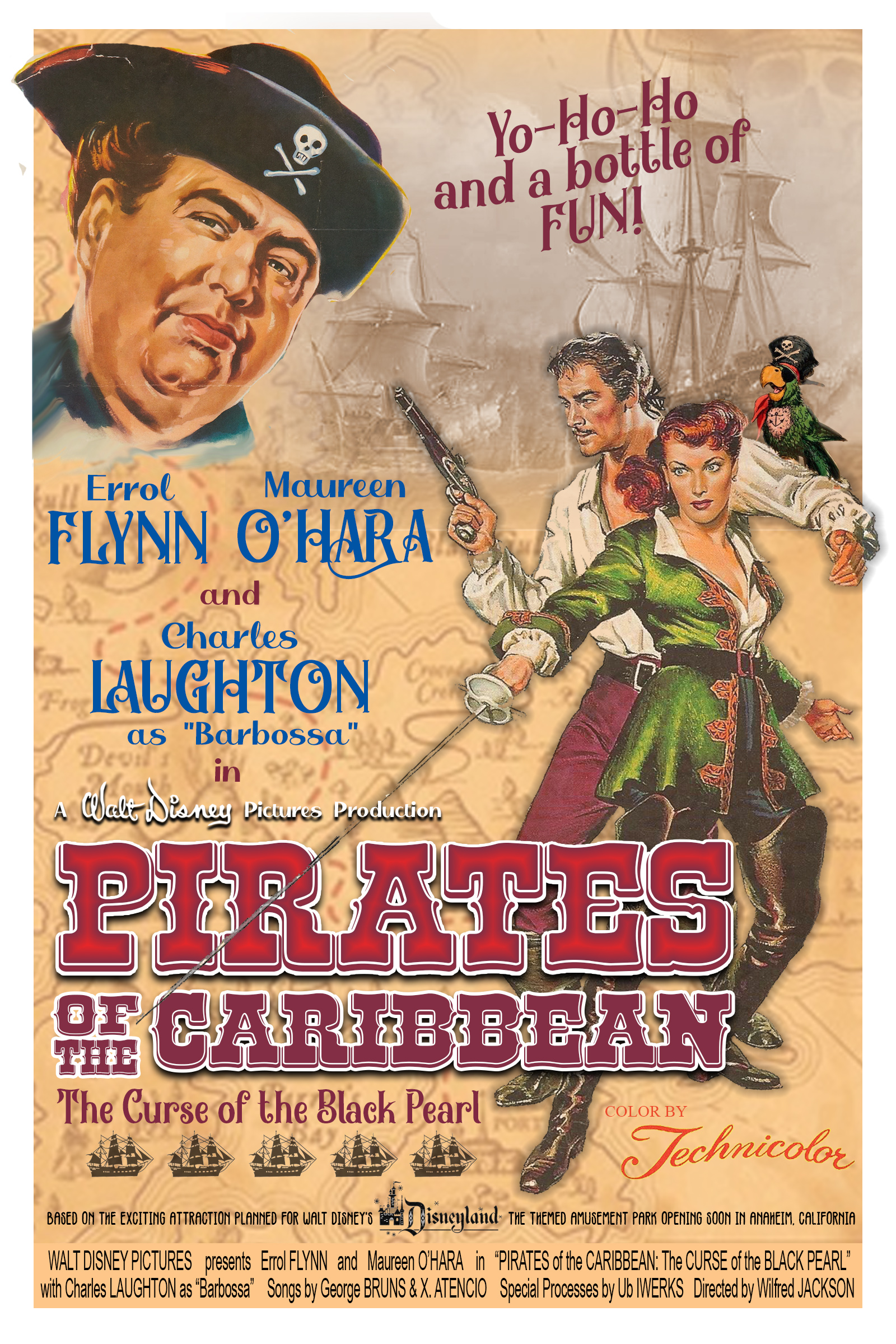
What if Disney debuted their pirate franchise in the 1940s?
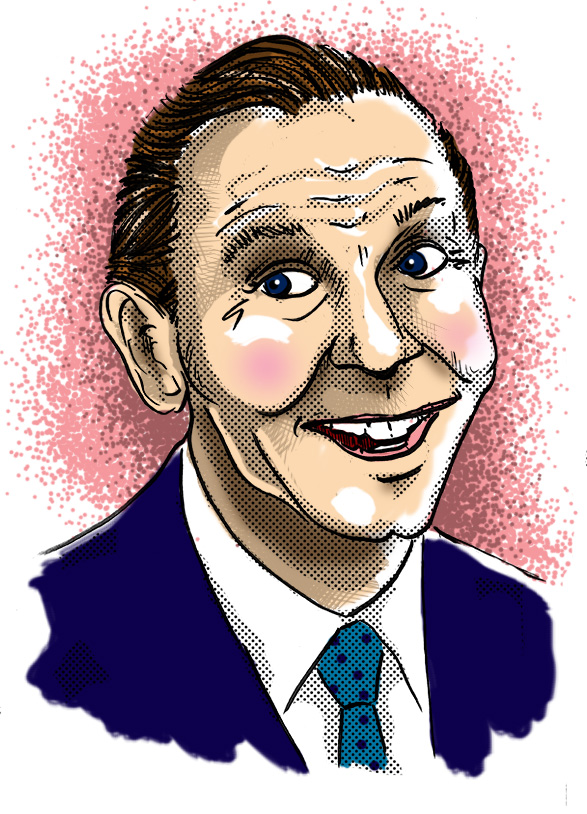
A man falls down a flight of stairs and somebody rushes over to him and asks, “Did you miss a step?”
“Nope,” he answers, “I hit every one of ’em!”
— Milton Berle (a joke he probably stole)
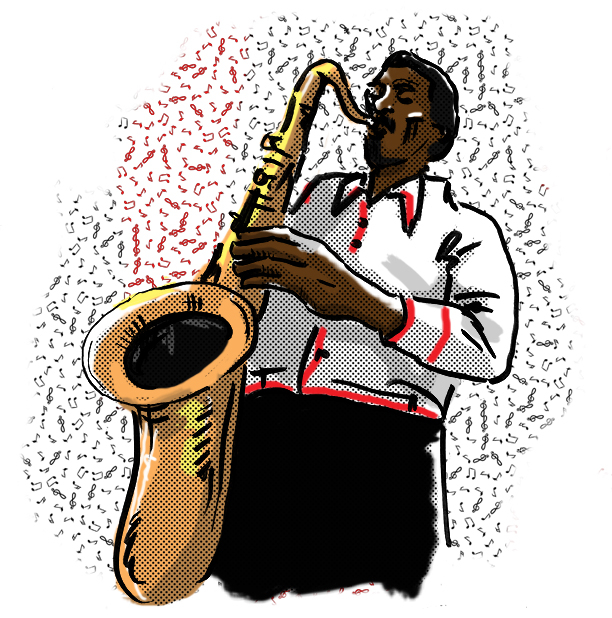
The original Earth, Wind and Fire horn section formed out of the members of a ’70s jazz ensemble called The Pharaohs. After teaming up with the legendary R & B group, they adopted the name The Phenix Horns. Don Myrick was a founding member and maintained saxophone duties for the band, playing alto, tenor and soprano versions of the instrument. His contributions can be heard in a number of EWF songs as well as solo efforts by Phil Collins. Don supplied the iconic sax solo on Collins’ 1984 hit “One More Night.” Don also collaborated with Grover Washington Jr. and Carlos Santana. He earned a Grammy in 1978 for his instrumental work with Earth, Wind and Fire on the single “Runnin’.”
Don branched out, joining up with and appearing on albums by Bobby “Blue” Bland, The Dells, Regina Belle, the Mighty Clouds of Joy, and Heaven 17.
On June 30, 1993, Don was grilling dinner in his backyard when he was interrupted by a knock at his front door. It was a Santa Monica police officer conducting a narcotics investigation. Before a search warrant could be produced, the officer mistook a butane lighter — the kind used to light barbecue grills — in Don’s hand for a weapon. Without warning, the officer fired a single shot that hit Don in the chest. Don was taken to a hospital where he died a short time after the incident. He was 53 years old.
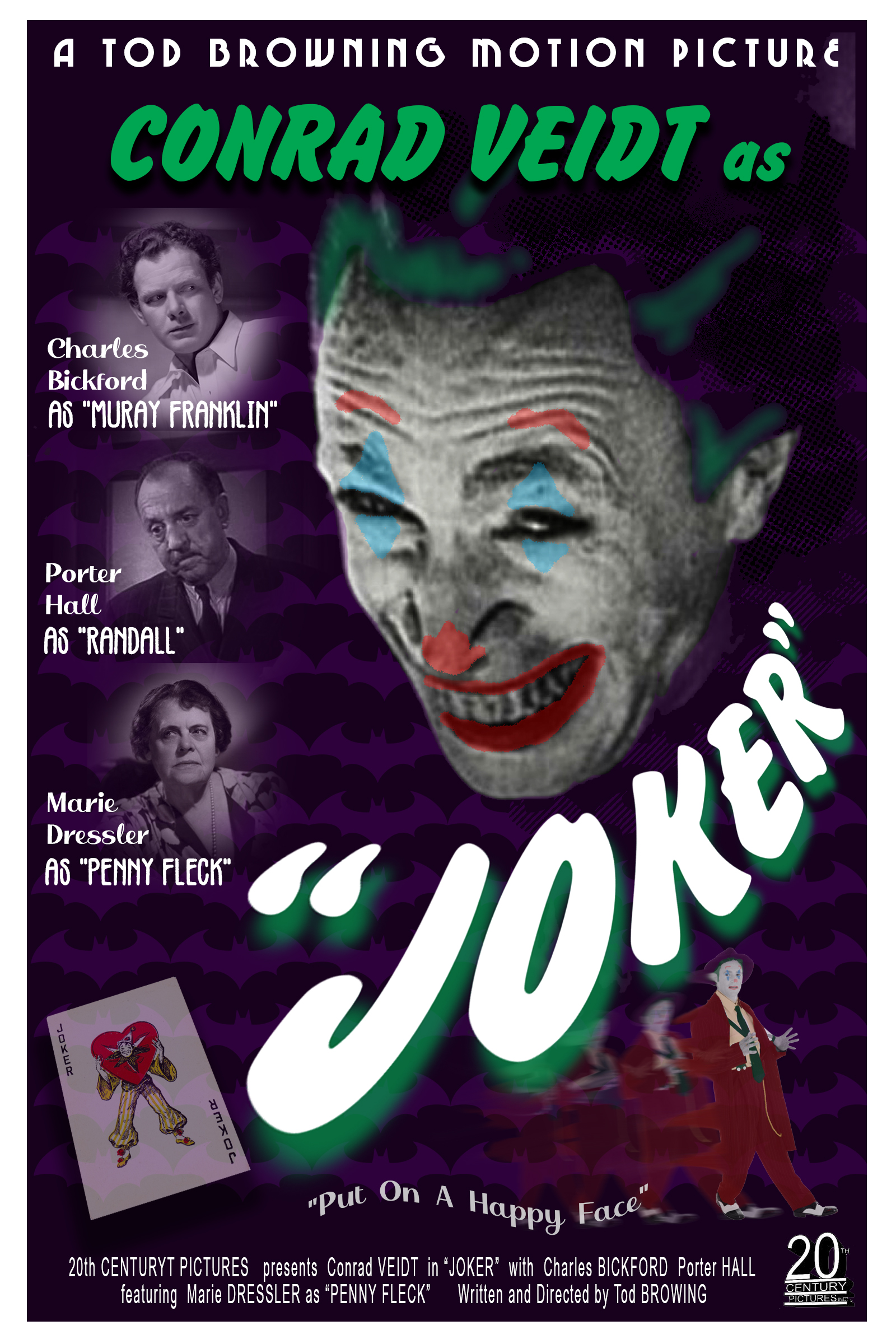
What if the early Batman serials spawned a spin-off?
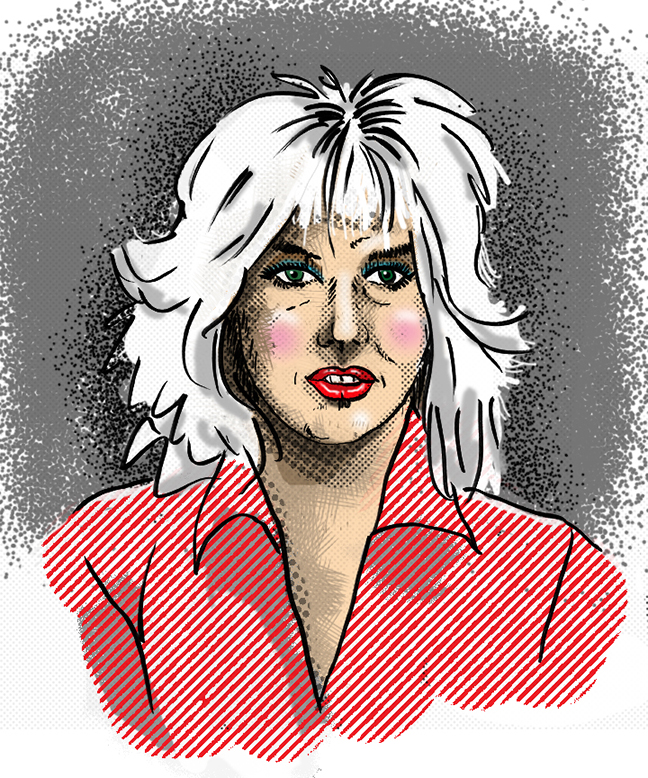
Army brat Kathleen Hetzekian moved around a lot – from her birthplace of Santa Monica to Oklahoma to Texas. At 19, she headed to New York City, where she bleached her hair blond and began calling herself “Cyrinda Foxe.” In her early teens, she developed a love for rock and roll. She listened to — and fantasized about — The Rolling Stones and The Kinks and now, in the Big Apple, she was living her dream.
Cyrinda was a regular at Max’s Kansas City, the notorious nightclub near Union Square and frequent hangout of Andy Warhol and other avant-garde artists, as well as poets and musicians. Cyrinda became fast friends with the regulars, including David Bowie, Iggy Pop and Lou Reed. Her relationship with Bowie got serious very quickly. Bowie fancied Cyrinda his “muse,” often copying her fashion style and wearing her clothes. Bowie was inspired to write The Jean Genie about Cyrinda. Just as the west coast leg of Bowie’s “Ziggy Stardust” tour began, Cyrinda discovered that she was pregnant with Bowie’s child. She, however, had the pregnancy aborted.
As her relationship with Bowie was winding down, she was just starting up with New York Dolls’ front man David Johansen. Her relationship with Johansen took on the same whirlwind pace and the couple was soon inseparable. Johansen, too, was moved to write a song for Cyrinda — this one “Looking for a Kiss.” It appeared on the Dolls’ 1973 debut album.
The Dolls shared management with Boston rockers Aerosmith and Cyrinda was introduced to lead singer Steven Tyler. Although she was attracted to Tyler, Cyrinda married David Johansen in 1977. The same year, she was featured in Andy Wahrol’s experimental film BAD. By the end of ’77, she split with Johansen and married Steven Tyler in early 1978. By the close of 1978, Cyrinda gave birth to a daughter, Mia. Tyler and Cyrinda stayed together for ten years before their marriage ended in divorce in 1987.
In 2001, Cyrinda suffered a stroke which left her partially paralyzed. Nearly tapped from medical expenses, she was bailed out by her former husband Tyler and her ex-lover Bowie. As she recovered, she married again — this time to Keith Waa, a New York musician. The ceremony was paid for by Steven Tyler.
Just a month after marrying for the third time, Cyrinda died from an inoperable brain tumor at the age of 50.
As my wife and I progress into the later stage of our lives, we have begun purging the many items on display in our home. The first thing to go was our massive, thirty-plus year collection of Disney memorabilia. That itself was a huge undertaking. We were kept busy for over a year, listing each and every item on eBay. Once we listed and sold everything that we believed would spark some interest and possibly net a few dollars, we began to assess the other collections that are exhibited throughout our house. We sold our Flintstones collection. We sold our Zorro collection (which we kept separate from our Disney collection, in a kind of obsessive-compulsive justification). We sold our 1964 Worlds Fair collection. We sold our baseball memorabilia collection. We sold our vinyl 45s collection… that is, the ones that escaped a “once-over” by our music aficionado son. We even sold some items that didn’t necessarily fall into the “collectibles” category. The one collection that remains intact is our extensive accumulation of autographed pictures, although, I no longer add to it.
We began collecting autographed pictures about thirty years ago. We often attended large collectible shows where the organizer would contract a few “celebrities” as an enticement for the potential baby-boomer attendees. One of our first encounters was at the nearby Valley Forge Convention Center, where we spent an inordinate amount of time with former child actor Butch Patrick (little “Eddie Munster” from the mid-60s sitcom The Munsters) and couldn’t get anywhere near teen heartthrob Davy Jones. Over the years, we met the full spectrum of celebrities — from Oscar winners to those former child stars forgotten by Hollywood once puberty set in. At the conclusion of these autograph shows, I would leave with an armful of personally-inscribed glossy 8 x 10s and my wallet a whole lot lighter. Our collection, however, did not begin with a face-to-face meeting with an entertainment personality seated behind a folding table stocked with a photographic retrospect of their career. Not at all. It actually began without our knowledge.
Sam, one of my best friends from high school, had had just about enough of dealing with a smothering mother and a ridiculous amount of snow every winter. Just after graduating from college, he packed a suitcase and his Bachelors Degree in Quantitative Business Analysis (whatever that is) and headed 2700 miles west to Los Angeles. He had no plans, no prospects and no place to live. But he went anyway. My relationship with Sam was great, but a little unusual. Months could pass without a single word of contact and then — out of the blue — he’d call and it was as though we had spoken earlier in the day. A few months after Sam’s cross-country pilgrimage, I got that call. He had settled in a small apartment in Redondo Beach and was working as a page at a television production studio. I asked if he was pursuing a position in his chosen major and he laughed. He told me that he was trying out for a role on a soap opera. Then I laughed. Then I thought for a minute. Sam was a good looking guy, frequently fighting the girls off in our high school years. Why not? He would fit in perfectly among those dark-haired, square-jawed hunks that regularly paraded around on those campy daytime dramas. I wished him luck in his new career choice and asked that he keep me informed on his progress. Before we ended our conversation, he told me to check my mail, as he sent me a surprise that would arrive soon.
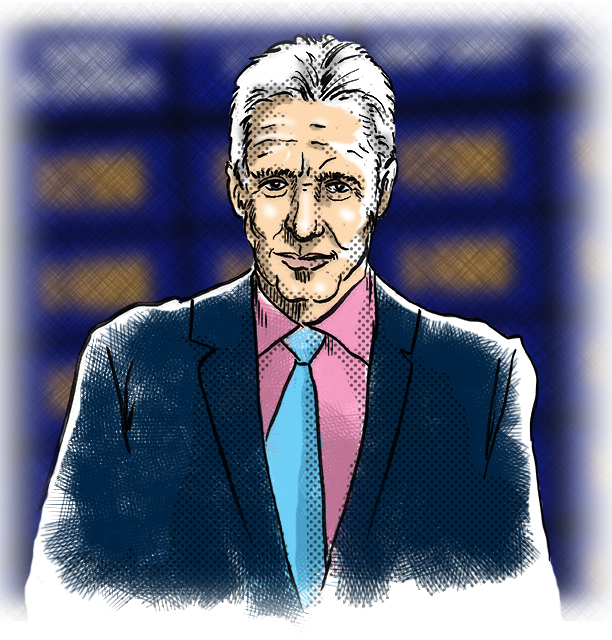
True to his word, a large manila envelope was delivered to my front door a few days later. I excitedly opened it and extracted a glossy black-and-white photo of Alex Trebek, the host of the new revival of the classic game show Jeopardy!, a 60s staple now returning in a syndicated nighttime version. Just above Alex’s dark, curly locks was the inscription: “To Josh & Susan, With best wishes! Alex Trebek Jeopardy!” in purple ink. My wife and I laughed. Sam also included a photo of himself staring intensely at us. It was a typically 80s posed promo shot in which he wore a scoop-neck t-shirt under a popped-collared jacket, his thumbs coolly locked into the edges of his jean’s front pockets. This one, to my dismay, was unsigned. I called Sam immediately (at the last number I had for him — which, in later years — didn’t always work). I thanked him for the picture. He told me that he works a lot in the studio where Jeopardy! is filmed and that Alex Trebek is a really nice, really gracious and humble guy. (On a subsequent call, he told me that Mr. Trebek bought and distributed California State Lottery tickets to each member of the show staff as a holiday gift — a dozen tickets each!)
Sam’s eventual career in front of the camera was only mildly successful. He appeared in the background in scenes of a number of soap operas. He was an uncredited “extra” in Prizzi’s Honor with Jack Nicholson and Perfect with Jamie Lee Curtis and John Travolta. He was in Teen Wolf, as one of star Michael J. Fox’s teammates. Although Sam has no lines and, again, is uncredited in the film, he is featured prominently in several scenes. (He can be spotted in a party scene, catching a basketball tossed over the head of Fox. He can also be seen on the bench with a towel draped around his neck during the climactic basketball game.) Aside from that, he never reached the level of stardom for which we had all hoped.
Sam left the Los Angeles area for the dry, desert clime of Phoenix, Arizona. Here, he used his keen intellect to enter the fledgling world of home computers. He developed software and served as a consultant to large companies. Eventually, Sam dealt with a dark pall of clinical depression which he had successfully hidden from his friends. He took his own life in March of 2010.
Thanks to Sam, I have a basement whose walls are adorned with hundreds of color and monochrome photos of all levels of celebrities — each one inscribed with either a generic message or a personal note that references a highlight of our brief interaction. The photo of Alex Trebek holds a special place in my collection. There is another photo that also holds a special place. But, I could never get the subject to sign it for me.
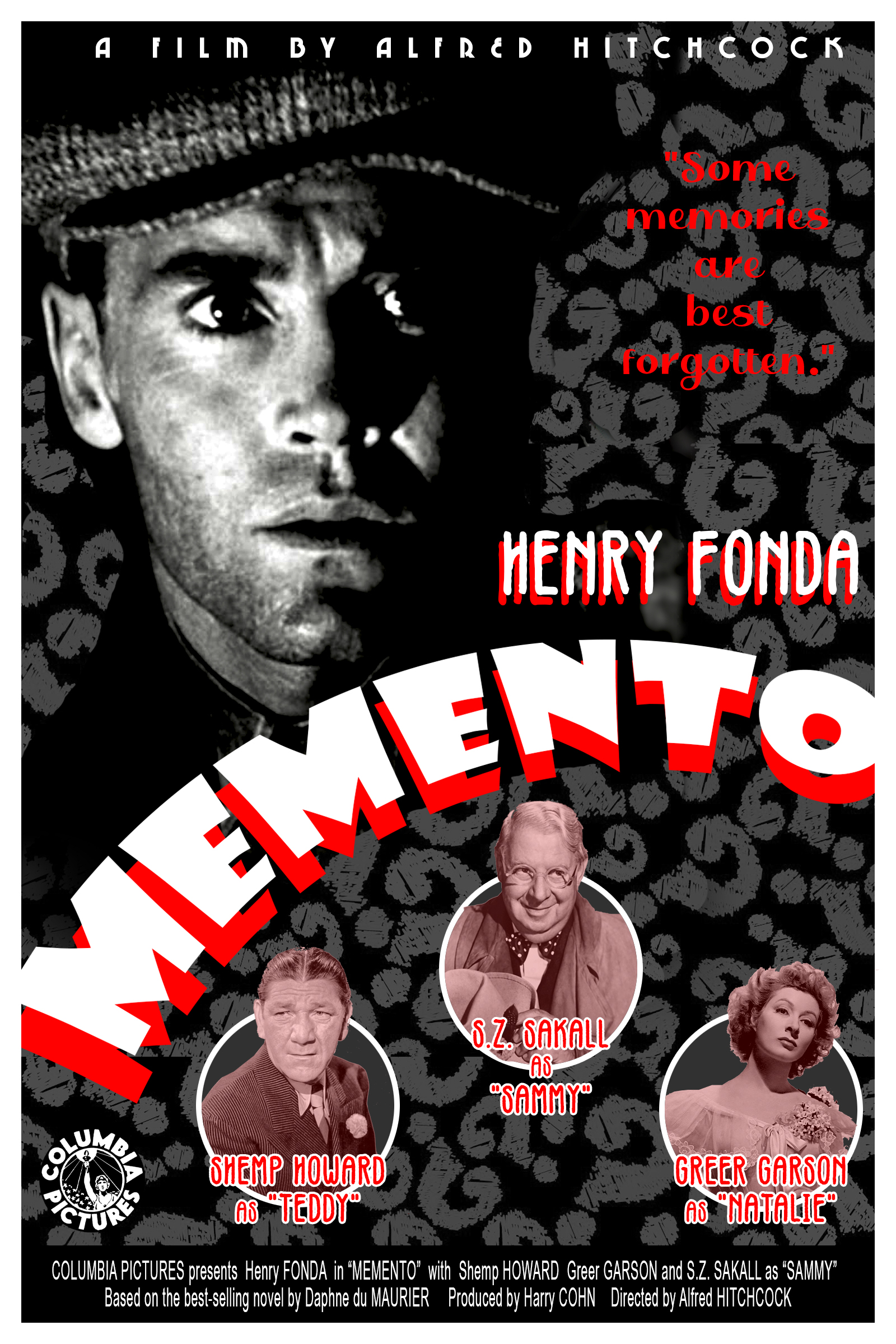
What if Hitchcock got the script for Memento sixty years earlier?