
DCS: sister rosetta tharpe
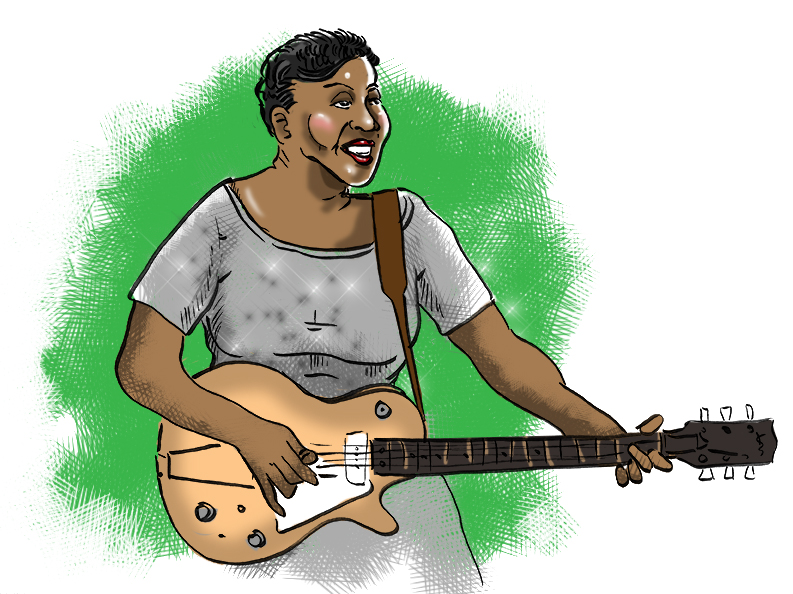
Sister Rosetta Tharpe invented rock and roll.
“What?” you’re probably saying to yourself. “Wait just a second! Little Richard invented rock and roll!” Or maybe you’re saying “Elvis Presley invented rock and roll!” Or perhaps you know that Chuck Berry invented rock and roll. (Maybe you’re saying nothing and just wishing I would get on with this story already!) All of these responses are fine, but none of those performers invented rock and roll. I’m taking about Sister Rosetta Tharpe. She is the true creator of the musical genre that we now call “rock and roll.” How come you’ve never heard of Sister Rosetta, as she was affectionately called? Well, because she was a woman, she was black and she was a lesbian — so, as expected, she was unfairly crushed by history and misinformation.
Sister Rosetta began playing guitar as a child, accompanying her mother musically and vocally on the gospel tunes she learned in church. She began to experiment and started infusing Delta blues and New Orleans jazz into the traditional spirituals. She introduced a unique distorted sound on her guitar,. Although a female guitarist was a rarity at the time, Rosetta was favorably received by audiences and began recording in 1938. 1938!!! Her first record, “Rock Me,” was a sly reference to the term “rock & roll,” which was a euphemism among the African-American community for sexual intercourse. She released three more “rock & roll” selections and joined up with the Cotton Club Revue, teaming with Duke Ellington, The Dixie Hummingbirds and, later, the all-white Jordannaires, presenting a mixed-race performance that was unheard of at the time. In her technique, you can hear the obvious influence from which both Jimi Hendrix and Prince drew. Rosetta remained popular for years until the fickle public (just as fickle as today’s public) moved on to the next sound. But, Sister Rosetta’s spirit weaved its way through rock and roll right up to the present. She was acknowledged as a favorite singer of Johnny Cash and Aretha Franklin. The great Chuck Berry once confessed that his entire career was one long Sister Rosetta Tharpe impersonation.
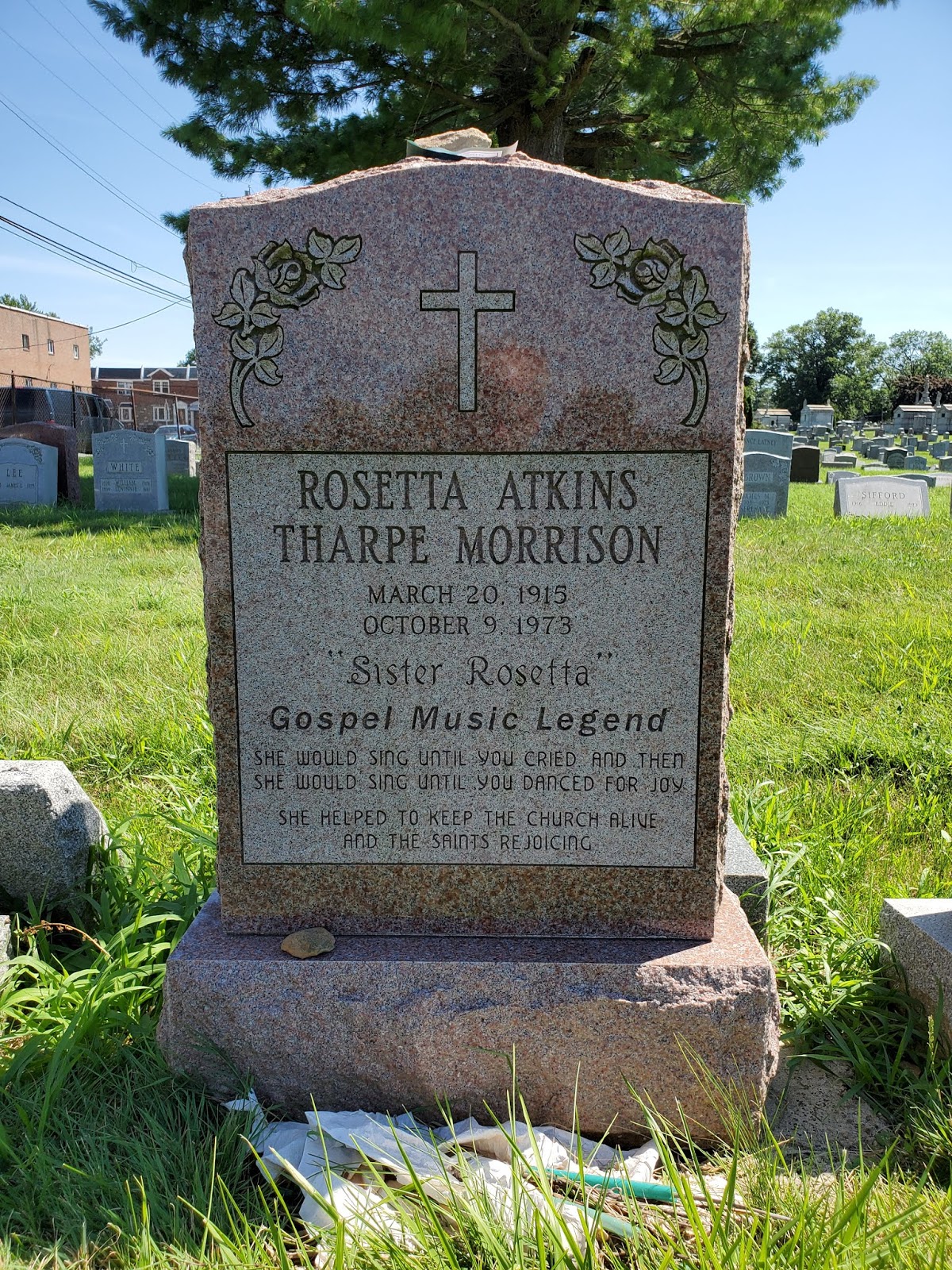
Rosetta passed away in 1973. Her grave remained unmarked for years, just like the acknowledgment of her contribution to the birth of rock and roll.
So now you know.
Portions of this story appeared in a slightly different form on my other blog, It’s Been a Slice.
Comments
inktober52: lush
Comments
DCS: lynn cartwright
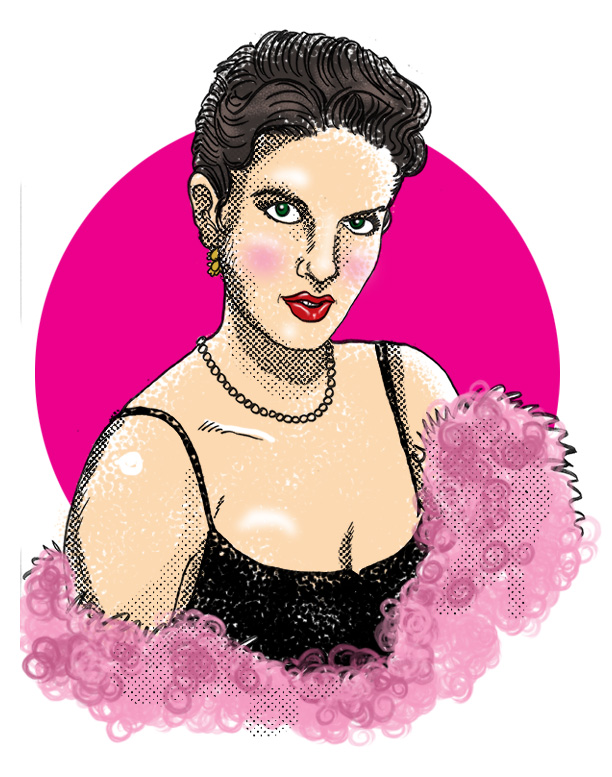
The daughter of a US Congressman from Oklahoma, Doralyn Cartwright attended Stephens College in Missouri and later American Academy in New York with her sights set on a career in acting. At 30, she made her film debut in the Western Black Patch, alongside her husband, actor/writer Joe Gordon. Joe was a prolific character actor, playing mostly lunkheaded bad guys. In addition to his acting, he was a writer who provided scripts for dozens of TV series including Bonanza, Cheyenne and Adam-12.
After shortening her name to the more accessible “Lynn,” she was cast in a number of B-movies including the notorious Queen of Outer Space with Zsa Zsa Gabor and Wasp Woman with Susan Cabot. Lynn later found work in small roles in teenage sex romps and risqué comedies. She appeared as a teacher in the film Seniors, an early vehicle for Dennis Quaid and the final film for Alan Reed, the original voice of “Fred Flintstone.” In 1987, she was featured in Seniors director Rod Amateau’s big-screen mess The Garbage Pail Kids Movie, panned as one of the worst movies of all time. Afterwards, she concentrated on her work with a small theatre company in Los Angeles.
In 1992, she took the role of an older “Dottie Hinson” in bookended scenes in Penny Marshall‘s love letter to women’s baseball, A League of Their Own. She was cast because of her startling resemblance to the film’s star Geena Davis. Some people mistook Lynn to actually be Geena Davis in prosthetic makeup.
Lynn was diagnosed with dementia in her later years. She passed away in 2004 at the age of 76, after suffering a fractured hip.
Comments
inktober52: flight
Comments
DCS: yvette mimieux

Although her career spanned five decades, Yvette Mimieux flew just under the radar. She was in a number of roles for which she received critical praise, but they were in movies that were financial flops, so her efforts were sadly overshadowed and practicality forgotten. Her most notable and memorable role was in George Pal’s 1960 groundbreaking science-fiction film The Time Machine, opposite Rod Taylor. She appeared in guest spots in episodic television, as well as high-profile, big-budget movies, but never seemed to get the “big break” she so rightly deserved.
Yvette was a versatile actress, comfortable in both comedy and drama. She appeared in thrillers, Westerns and even family-friendly Disney films. In the 70s, she starred in and wrote the screenplay for the made-for-TV movie Hit Lady, produced by Aaron Spelling. She ended the 1970s with another groundbreaking science-fiction fan favorite, The Black Hole for Disney.
By the 90s, Yvette became disillusioned with the film business. She cited the lack of good roles for women. Her final screen role was the 1992 miniseries adaptation of the Jackie Collins novel Lady Boss. Yvette devoted her new found time to painting, maintaining a website to showcase her works.
She passed away in January 2022, just days after her 80th birthday.
Comments
inktober52: direction
Comments
DCS: jeanne carmen
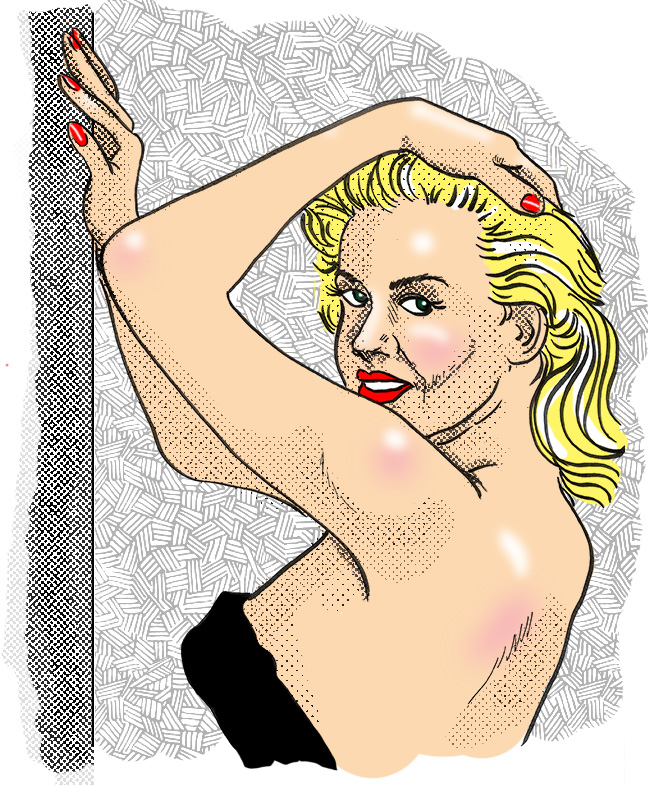
Teen-age Jeanne Carmen left rural Arkansas for New York City with dreams of becoming a star. She worked as a burlesque dancer and posed for pin-up pictures in the 1950s. She was also an expert trick-shot golfer. Jeanne and her manager would tour country clubs and hustle unsuspecting members, betting on whether or not this demure girl could make a difficult shot. Of course, she could.
In her early 20s, she met Chicago mobster Johnny Rosselli, who took her to Las Vegas. The couple continued to scam folks on the golf course of the Desert Inn. Rosselli introduced the budding starlet to Frank Sinatra, who whisked her off to Hollywood. She was cast in a succession of B-movies, in which she played brassy blondes or, using her natural dark hair, sultry Spanish women. She also appeared in a late-era Three Stooges short, playing Joe Besser‘s girlfriend. While in Hollywood, Jeanne began a lifelong friendship with actress Marilyn Monroe, often telling tales of how the two bombshells bonded, sharing stories over late-night glasses of champagne and illegal drugs.
After Monroe’s death, organized crime boss Sam Giancana — Johnny Rosselli’s superior — warned Jeanne that her life may be in danger. Panicked, Jeanne fled to Scottsdale, Arizona, where she laid low and out of the spotlight. She married, had children (and grandchildren) and never spoke of her Hollywood life again… save for a cameo in a low-budget horror film in 2005. It was her first role in over 40 years.
In 2007, Jeanne passed away at the age of 77. Just days after her death, Marilyn Monroe biographers Ernest Cunningham and Mark Bellinghaus reported that their research revealed that Jeanne’s friendship with the celebrated sex symbol was completely fabricated. They went on to say that Jeanne and Marilyn never even met.
Comments
inktober52: spot
Comments
DCS: betty wright
Betty Wright started singing as a child. She performed with her family gospel vocal group, Echoes of Joy, before switching to rhythm & blues. She was spotted by a Miami record label owner who signed 12 year-old Betty to a contract. She released a few songs that gained local recognition.
In 1972, Betty released her signature song “Clean Up Woman.” It reached Number 2 on the Billboard R&B charts, staying in that position for eight weeks. She followed up with “Baby Sitter” and “Let Me Be Your Lovemaker,” which showcased her amazing vocal range. She co-wrote the disco tune “Where Is the Love” with Harry Casey (of KC and the Sunshine Band) and won a Grammy for the composition in 1976. She also sang a duet with Alice Cooper on his 1978 album “From The Inside.”
Her 80s and 90s recordings were far less successful, but it didn’t keep Betty from performing. She released eight albums over those decades. In 1992, Betty sued Color Me Badd’s producers for an unauthorized sample of one of her songs used in their hit “I Wanna Sex You Up.” Betty won her case and received a portion of songwriting credit. In 2011, she restarted her career with a collaboration with ?uestlove and The Roots.
Betty died in May 2020, one month after she appeared in a segment on the music series Unsung. She was 66.