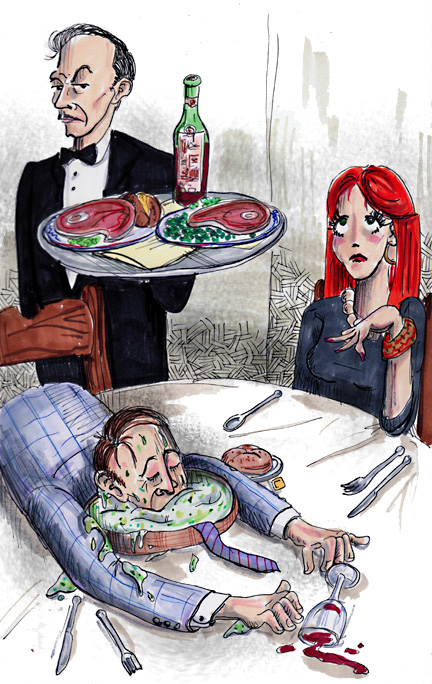
IF: drifting

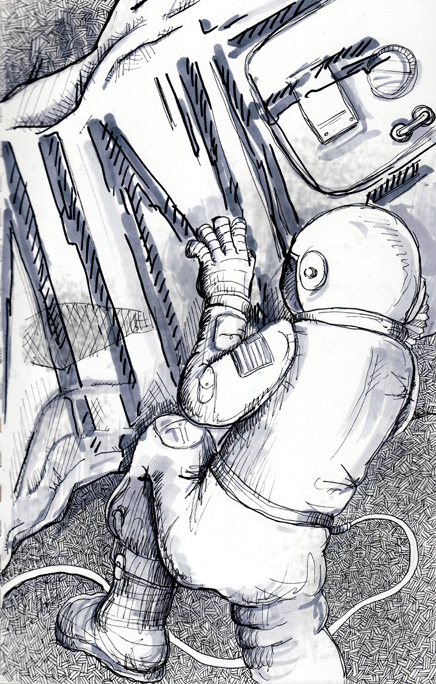
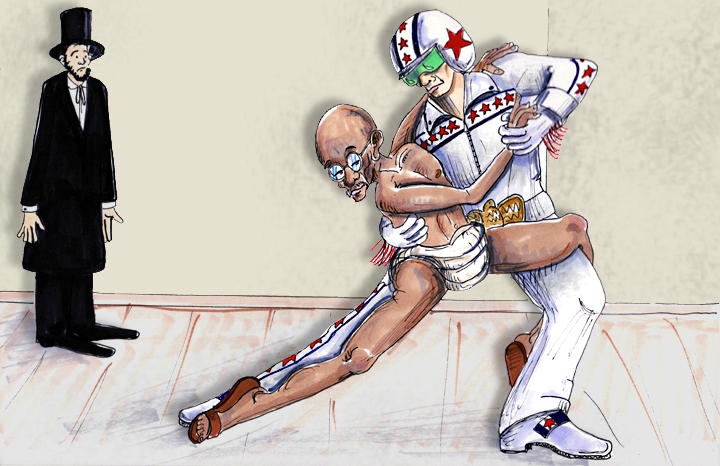
The illustration friday challenge word this week is “drifting”.
Ah come on all you lads, let's forget and forgive
In August 1943, PT 109 was on night patrol in the South Pacific. At 2:30 in the morning, a Japanese destroyer came out of the darkness and cut the small Patrol Torpedo boat in half. The crew of thirteen was tossed about. Two crew members were lost, presumably killed on impact. Of the remaining eleven one was badly burned and another was sickened from swallowing fuel during the explosion. The crew clung to the ship’s forward hull and spent the next several hours drifting through flaming debris in the dark waters of the Pacific. They awaited direction from the young lieutenant who served as the PT’s commanding officer.

The crew knew they could not survive in the ocean. They knew the surrounding islands all contained enemy camps.  They needed to swim to Plum Pudding Island, a small outpost they knew was their only chance. Several crew members were too badly injured to swim on their own, especially Crewman McMahon, who was burned. Several others didn’t know how to swim at all. Using straps from life vests, the non-swimmers were tied to the hull. A harness was created and McMahon was lashed into it as the young commander, a veteran of Harvard’s swim team, towed McMahon as he swam. After a grueling four hours, the crew arrived on the island’s shore.

The island was only a hundred yards in diameter, with no food or water. The crew had to hide from passing Japanese barge traffic. The commander swam an additional 2 miles, to Olasana Island, which had coconut trees and water.

The crew survived for six days on coconuts. Two local islanders were investigating a Japanese shipwreck, from which they salvaged fuel and food. The young commander spotted them on their mission and began shouting to them. He convinced them they were on the same side of the war. He carved a message into a coconut and the islanders braved 35 miles of hostile waters in their canoe to deliver it to the nearest Allied base. The PT 157, commanded by Lieutenant William Liebenow, was dispatched to pick up the survivors of the PT 109.

The PT 109’s commander was decorated as a hero. He didn’t like the praise, claiming he was no hero – the enemy merely sank his ship. Although, he kept the inscribed coconut on his desk when he became President of the United States in 1961.

The commander of the PT 109 was John F. Kennedy.

Comments

comments

IMT: ticket

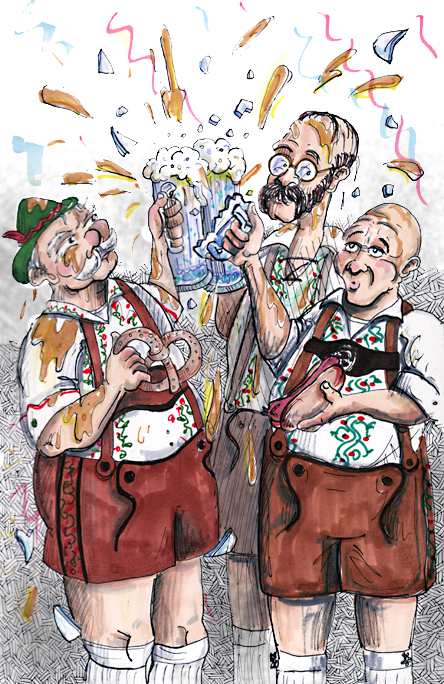
The Inspire Me Thursday inspirational word this week is “ticket”.
pack your bags we'll leave tonight
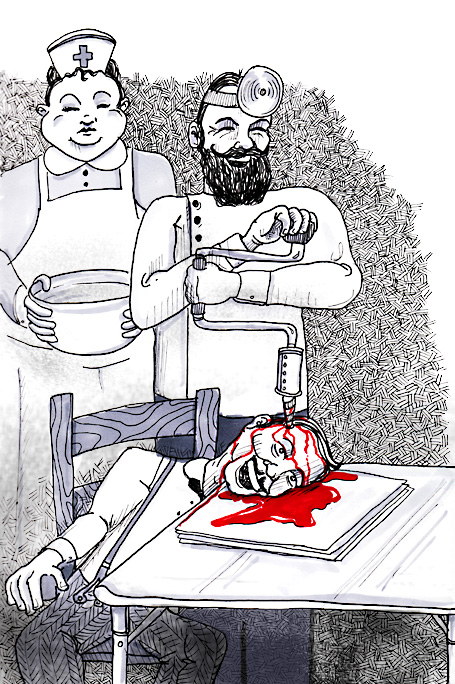
I live in Philadelphia and I’ve been going to baseball games for a very long time. I struggled alongside the struggling Phillies in those years in the late ’90s when they out-and-out stunk! I also sat in the stands as the Phillies fought their way to their second World Series Championship in 2008. To paraphrase James Earl Jones from “Field of Dreams”: There has been one constant through the years…” The parking lot ticket scapers. These guys fascinate me. I see them every game as I drive through the gates to park the car. They prowl the lots displaying a homemade sign of torn corrugated pasteboard. They exhibit their stock of tickets like a burlesque fan dancer. They also look like they don’t have two nickels to rub together. They address everyone who passes by them with, “Need tickets?”, followed by “Selling tickets?” I don’t understand. Can’t they make up their minds?

It not like Phillies tickets are a rare commodity. Sure, they sell out games now that they have a World Series trophy, but usually tickets are pretty easy to come by. Most games have tickets available at the door.

I’m almost positive that the guys in the torn shorts and stained t-shirts aren’t authorized ticket resellers.

Comments

comments

IMT: child art

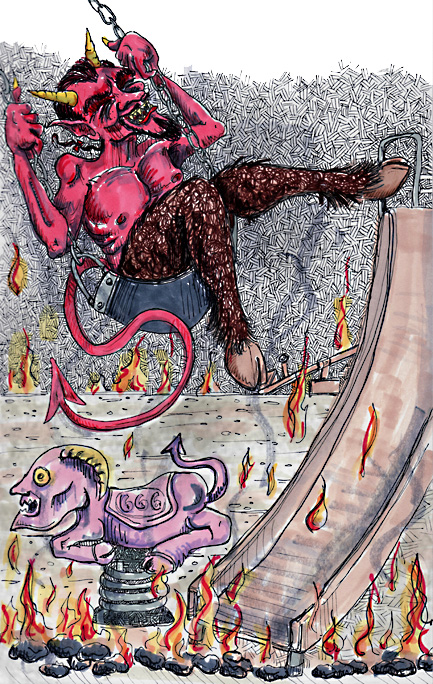
The inspiration this week on Inspire Me Thursday is “child art”.
by the sea, by the sea, by the beautiful sea
When I was a kid, my family would go to the Jersey shore at Atlantic City. Every time we’d go to the beach, my mom would recite this poem:

“When I was down beside the sea
A wooden spade they gave to me
to dig the sandy shore

The holes were empty like a cup
In every hole the sea came up
‘Til it could come no more.”

I was just in Atlantic City this past weekend. Boy, has it changed.

(Pictured above: The Pincus Family on the Atlantic City beach, August 1962.)

Comments

comments

IF: craving

if you've got a passion for fashion
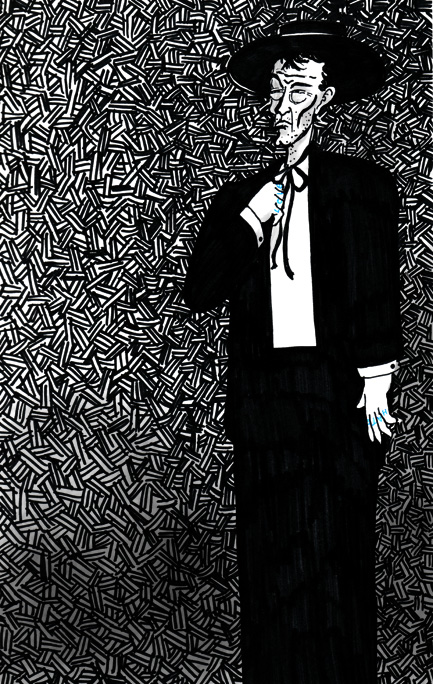
“A Brief History of Josh Pincus is Crying, As Seen Through Chinese Food”

I love Chinese food. I always have. Given a choice of “What’s for dinner?” (and pizza wasn’t available), I’d always pick Chinese food.

My craving for Chinese food began when I was a little kid. Except then, it was Chinese food as I knew it in my little sheltered world. In the late 1960s, my parents’ idea of Chinese food was limited to the offerings of two restaurants in the ethnically diverse Northeast Philadelphia. (By ethnically diverse, I mean Jews and non-Jews.) At that time, Northeast Philadelphia Jews kept these two Chinese restaurants in business. There was Kum Lin and, a short distance away, Kum Tong. They were owned by the same family and their menus each contained identical entries. My parents favored Kum Lin, I suppose, because it was a short driving distance from our house involving very few turns. My father preferred the quickest and least complicated route to any destination. He also had a very low tolerance for waiting in line at restaurants. Kum Lin offered almost immediate seating.

I think always I liked the exotic feel that Chinese restaurants exuded. The atmosphere at Kum Lin, even with its Northeast Philadelphia quaintness, was as mysterious as anything I’d witnessed in my eight year-old life. My family was greeted by the friendly hostess who silently directed us to a table. After carefully perusing the menus, they would order the same thing they always ordered. They requested what they perceived as romantically foreign cuisine. Delicacies they imagined were consumed by Emperor Zhengtong himself in the early reign of the Ming Dynasty. They ordered wonton soup, chicken chow mein and barbecued spare ribs. They were in the lap of Asian luxury. At eight years-old, I didn’t possess the developed palate or the adventurous culinary nature of my Mom and Dad. I sat up proudly and bid the waiter to bring me a hot turkey sandwich – the rarest of all authentic Chinese fare (Kum Lin, to my delight, offered four entrees on their American menu). While my mom munched on the translucent vegetable and chicken-y mixture and my dad gnawed on bony hunks of burnt orange-sauced meat, I savored those slices of white turkey flesh slathered in neon yellow gravy. I imaged that this is what they ate on Thanksgiving in Shanghai.

When I was a little older, my parents ventured out of the Northeast to Philadelphia’s Chinatown. This was a big step for my father, as it required driving more than fifteen minutes and going further south than Cottman Avenue (see previous reference here.) A trip to Philadelphia’s Chinatown was true adventure. Actually, anything outside of Northeast Philadelphia was an adventure. Philadelphia’s Chinatown runs from 8th to 13th and Arch to Vine in center city Philadelphia. Those ten city blocks are clogged with restaurants from almost every Asian culture offering authentically prepared and served food. Some eateries display sauce-smeared duck carcasses in their front windows. Others exhibit tanks of swimming sea-life just moments away from being that evening’s special. Most restaurants are marked by huge red and yellow signs identifying themselves as providing “the best food in Chinatown.” Even while surrounded by endless dinner options, my parents exercised their “devil-may-care” attitude and still ordered wonton soup, chicken chow mein and spare ribs. As restaurants in Chinatown did not offer American dishes, I reluctantly ate wonton soup and a large plate full of fried chow mein noodles covered in sweet duck sauce.

When I got my driver’s license and began dating, I wanted to impress Stefanie Werner. I took her to a small Chinese restaurant, not too far from Kum Lin. I wouldn’t go to Kum Lin in fear I would run into my parents and be embarrassed by their limited Chinese food ordering ability. Acting my role as the big-shot, I was put in my place, as I soon found out that Stefanie was a risk-taker when it came to ordering Chinese food. Her philosophy was “If you can’t pronounce it, order it.” Since I had only ever ordered a Chinese hot turkey sandwich, I was nervous. Stefanie ordered something called “Moo Shu Pork.” When it arrived, she pointed out the small chunks of heart and lung mingling with the vegetables. She deftly rolled a heaping spoonful up into one of the accompanying paper-thin pancakes and popped it into her mouth. She looked across the table at me, expecting me to repeat her action. I gulped, slowly copied her maneuvers and, with eyes tightly clamped, squeamishly took a bite of my assemblage. It was pretty good. A new avenue of eating just opened up and I got pretty courageous in my future Chinese food orders. I even learned to use chopsticks.

For my first date with the future Mrs. Pincus, I took her to Ho Sai Gai, a popular restaurant in Philadelphia’s Chinatown. She had mentioned in our phone conversation that she kept strictly kosher. I had a very lenient (read: non-observant) Jewish upbringing, so “kosher” to me meant complaining like my grandmother. Totally ignoring her dietary restrictions, I took her to this establishment where she was limited to one or two choices from the menu. She settled on plain broccoli over plain rice. I ordered lemon chicken and innocently offered her a trayfe (non-kosher) sample. I was a bit insulted when she refused, behaving as though I offered her a freshly-severed rat head.

My wife spent several years at New York University. When we were dating, she raved about a small restaurant in New York City’s Chinatown called Szechuan Cuisine. She told of their specialty concoction, the likes of which I’d never heard. She described a bowl of cold, cooked vermicelli noodles drenched in thick, dry sesame paste and sprinkled with slivered cucumbers, accented with sesame seeds. “Cold Noodles in Sesame Sauce” was how it was expressed on the menu. Early in our relationship, we trekked to the Big Apple and, while I sat in the car at an expired parking meter, she dashed across Mott Street and returned with a little folded white box of ambrosia — covered in sesame sauce. It was delicious. Sadly, on a subsequent trip, Szechuan Cuisine had closed. The location boarded up.

After I got married, I, too, began to observe the laws of kashrut. To avoid lengthy explanations to uninterested waitstaff, my family and I just announce ourselves as vegetarians. Most Chinese restaurants have plenty of menu selections to accommodate those who wish to avoid meat. With big business becoming aware of more people changing their eating habits to include healthy foods, I was even able to find Chinese vegetable stir-fry at Angels Stadium in Anaheim. Three years ago, I, myself, became a vegetarian. There is a Chinese restaurant in my neighborhood that has an extensive vegetarian menu. Every year they give me a gaudy, gold-embossed calendar decorated with frightening drawings of dragons and fairies. But, the food is good.

My experiences with Chinese food have changed significantly over forty years. My craving for Chinese food has never diminished. Of course, in China, they just call it “food.”

Comments

comments

IMT: the lost art of letter writing

The inspiration this week on the Inspire Me Thursday blog is “the lost art of letter writing”.
got a box full of letters think you might like to read

February 6, 1964

Dear Pete,

Hello, bloke. How’ve you been? I know it’s been about a fortnight since you went to visit your mum. (How is the old bird, by the by?) We haven’t been able to talk to you about some important things in the band. We been invited by a man called Ed Sullivan to appear on the telly in America. He’s got this gear programme and he asked Brian if we’d like to play for an American audience. Of course, Brian said “Brilliant!” It’s really smashing!

Hey, remember that geezer called Ringo what drums for Rory Storm and The Hurricanes? Well, he was kind enough to join us on the trip to America when we couldn’t track you down. We rang up your mum, but she said you borrowed the lorry to pop into town for a pack of fags. She said you wouldn’t be gone but a pinch. I guess in all the excitement, I forgot all about ringing you back. Anyways, we had to make a quick decision and Paul and George thought Ringo could go. I know he’s not a proper drummer, but we were in a bit of a pickle.

Don’t worry, Pete. I’m sure this trip won’t amount to much and we’ll be back gigging the Cavern soon. See you when we get back. We won’t forget about you.

Your mate,

John

Comments

comments

from my sketchbook: jaco pastorius

The Greatest Bass Player Who Has Ever Lived
In 2006, Jaco Pastorius was voted “The Greatest Bass Player Who Has Ever Lived” by reader submissions in Bass Guitar magazine. His short, but extremely influential career ended abruptly, but not unexpectedly.

From unlikely beginnings in Norristown Pennsylvania, Jaco Pastorius moved with his family to Fort Lauderdale, Florida at a young age. He started his first band in high school as a drummer. A football injury to his wrist ended his drumming aspirations and he took up the electric bass to fills a void left by a departed band member. Jaco, however, longed to play the upright bass. He tried to save money to purchase one, but his meager savings didn’t increase quickly enough. At the time, Fender didn’t make a fretless bass. One day, he pried the frets out of his electric Fender bass with a butter knife. He filled the gaps in with wood putty and covered the neck with marine varnish. He listened to and his playing was influenced by jazz bassists like Jerry Jemmott and Harvey Brooks. He performed with his friend, jazz guitarist Pat Metheny. Jaco recorded and released his self-titled debut album in 1976.

Soon after the release of his debut, he joined the band Weather Report. Jaco entered Weather Report during the recording sessions for Black Market, and he became a vital part of the band because of the quality of his bass playing, his skills as a composer and his exuberant showmanship on stage. One night before a gig, Jaco was offered a drink to loosen up. Jaco had never drank liquor before due to his father’s own struggles with alcohol, but after two drinks, he started throwing things and became erratic. Jaco’s drinking grew more out of control as the years progressed. On the verge of being fired in mid-tour, Jaco apologized profusely to Weather Report keyboardist Joe Zawinul, and was admitted back into the group.

In the mid 80s, Jaco began to experience increasingly severe mental health problems. These were worsened by drug and alcohol use, and he was eventually diagnosed as suffering from bipolar disorder. He had to be pulled off stage during the 1984 Playboy Jazz Festival because of his drunkenness. His unpredictable behavior made him an outcast in the musical community. He was relegated to performances at smaller venues, but as his behavior became too much, he was banned by one club after another.

In 1987, after sneaking onstage at a Carlos Santana concert, he was ejected from the premises. He made his way to the Midnight Club in Wilton Manors, Florida. Jaco kicked in a glass door after being refused entrance to the club. He was then severely beaten by the club’s bouncer. Jaco was hospitalized for multiple facial fractures, damage to his right eye and right arm, in addition to irreversible brain damage. He fell into a coma and passed away on September 21, 1987 at 35.


Weather Report, featuring Jaco Pastorius on bass, performs their infectious version of “Birdland” fom 1978.

Comments

comments

from my sketchbook: allan sherman

I know a man, his name is Lang and he has a neon sign. Now Mr. Lang is very old so, they call it....
When I was five or six, my favorite singer was Allan Sherman. I listened to my parents’ Allan Sherman records. They had his first five releases. I knew every lyric to every song. I knew the order of every song on every album. My Mom and Dad roared with laughter at Sherman’s songs and laughed even harder at their six year-old mimic. But the funniest thing of all was that I had no clue what Allan Sherman was singing about. I had no idea that these songs were parodies of traditional and popular melodies. I didn’t understand the double meanings and intricate wordplay that Sherman worked into each of his songs. I just thought they were funny songs with funny words sung by a funny man with big funny glasses.

When I was older, I remember being embarassed the first time I heard Ponchielli’s Dance of the Hours and sang the familar lyrics of “Hello Muddah, Hello Faddah”, thinking it was just an orchestral arrangement of the classic Allan Sherman composition. As the years went on, I heard more and more original versions of songs that Allan Sherman so expertly satirized. And I finally understood why they were funny.

My son grew up listening to a local Philadelphia radio show called Kids Corner. The host, Kathy O’Connell  regularly plays “You Went The Wrong Way, Old King Louie”and has introduced a new generation to Allan Sherman. Someday, those kids will understand why that song is funny.

I'm singing you the ballad/Of a great man of the cloth/His name was Harry Lewis/And he worked for Irving Roth/He died while cutting velvet/On a hot July the 4th/But his cloth goes shining on
Allan Sherman passed away from emphysema just before his 49th birthday.
I visited his grave on August 11, 2008 – my 47th birthday.

Comments

comments